mirror of
https://github.com/kata-containers/kata-containers.git
synced 2026-02-27 09:12:24 +00:00
Compare commits
210 Commits
| Author | SHA1 | Date | |
|---|---|---|---|

|
aa295c91f2 | ||

|
6648c8c7fc | ||

|
49776f76bf | ||

|
dbfe85e705 | ||
|
|
0c3b6a94b3 | ||
|
|
f751c98da3 | ||
|
|
08361c5948 | ||

|
da9bfb27ed | ||
|
|
7347d43cf9 | ||

|
c7bb1e2790 | ||
|
|
e6f7ddd9a2 | ||
|
|
46cfed5025 | ||
|
|
81fb2c9980 | ||
|
|
0c432153df | ||
|
|
6511ffe89d | ||

|
ee59378232 | ||
|
|
ef11213a4e | ||

|
1fb6730984 | ||
|
|
05e9fe0591 | ||
|
|
d658129695 | ||
|
|
ae2d89e95e | ||
|
|
095d4ad08d | ||
|
|
bd816dfcec | ||
|
|
d413bf7d44 | ||
|
|
76408c0f13 | ||
|
|
6e4da19fa5 | ||
|
|
8f8061da08 | ||
|
|
64e4b2fa83 | ||
|
|
7c0d68f7f7 | ||
|
|
82ed34aee1 | ||
|
|
9def624c05 | ||
|
|
6926914683 | ||
|
|
e733c13cf7 | ||
|
|
ba069f9baa | ||

|
cc8ec7b0e9 | ||

|
8a364d2145 | ||
|
|
0cc6297716 | ||
|
|
b6059f3566 | ||
|
|
c6afad2a06 | ||
|
|
451608fb28 | ||
|
|
8328136575 | ||
|
|
a92a63031d | ||
|
|
997f7c4433 | ||
|
|
74d4065197 | ||
|
|
73bb3fdbee | ||
|
|
5a587ba506 | ||
|
|
29f5dec38f | ||
|
|
d71f9e1155 | ||
|
|
28c386c51f | ||
|
|
c2a186b18c | ||
|
|
8cd094cf06 | ||
|
|
b5f2a1e8c4 | ||
|
|
2d65b3bfd8 | ||
|
|
fe5e1cf2e1 | ||
|
|
3f7bcf54f0 | ||
|
|
80144fc415 | ||
|
|
2f5f35608a | ||
|
|
2faafbdd3a | ||
|
|
9e5ed41511 | ||
|
|
b33d4fe708 | ||
|
|
183823398d | ||
|
|
bfbbe8ba6b | ||
|
|
5c21ec278c | ||
|
|
9bb0d48d56 | ||
|
|
64a2ef62e0 | ||
|
|
a441f21c40 | ||
|
|
ce54090f25 | ||

|
e884fef483 | ||

|
9c16643c12 | ||
|
|
4978c9092c | ||
|
|
a7ba362f92 | ||
|
|
230a9833f8 | ||
|
|
a6d9fd4118 | ||
|
|
8f0cb2f1ea | ||
|
|
cbdae44992 | ||
|
|
97acaa8124 | ||
|
|
23246662b2 | ||
|
|
ebe5ad1386 | ||
|
|
c9497c88e4 | ||
|
|
d5d9928f97 | ||
|
|
f70892a5bb | ||
|
|
ab64780a0b | ||
|
|
9e064ba192 | ||
|
|
42c48f54ed | ||
|
|
d3a36fa06f | ||
|
|
fa546600ff | ||
|
|
efddcb4ab8 | ||
|
|
7bb3e562bc | ||
|
|
7b53041bad | ||
|
|
38212ba6d8 | ||

|
fb7e9b4f32 | ||
|
|
0cfcbf79b8 | ||
|
|
997f1f6cd0 | ||
|
|
f60f43af6b | ||

|
1789527d61 | ||
|
|
999f67d573 | ||
|
|
cb2255f199 | ||
|
|
2a6c9eec74 | ||
|
|
eaff5de37a | ||

|
4f1d23b651 | ||
|
|
6d80df9831 | ||

|
a116ce0b75 | ||
|
|
4dc3bc0020 | ||
|
|
8f7a4842c2 | ||
|
|
ce54e5dd57 | ||
|
|
9adb7b7c28 | ||
|
|
73ab9b1d6d | ||
|
|
4db3f9e226 | ||
|
|
19cb657299 | ||
|
|
86bc151787 | ||
|
|
8d8adb6887 | ||
|
|
76298c12b7 | ||
|
|
7d303ec2d0 | ||
|
|
e0b79eb57f | ||
|
|
8ed61b1bb9 | ||
|
|
cc4f02e2b6 | ||

|
ace6f1e66e | ||
|
|
47cfeaaf18 | ||
|
|
63c475786f | ||

|
059b89cd03 | ||
|
|
4ff3ed5101 | ||
|
|
de8dcb1549 | ||

|
c488cc48a2 | ||
|
|
e5acb1257f | ||
|
|
1bddde729b | ||
|
|
9517b0a933 | ||
|
|
f5a7175f92 | ||
|
|
9b969bb7da | ||

|
fb2f3cfce2 | ||
|
|
f32a741c76 | ||
|
|
512e79f61a | ||
|
|
aa70080423 | ||
|
|
34015bae12 | ||
|
|
93b60a8327 | ||

|
aa9951f2cd | ||
|
|
9d8c72998b | ||
|
|
033ed13202 | ||
|
|
c058d04b94 | ||

|
9d2bb0c452 | ||
|
|
627d062fb2 | ||
|
|
96afe62576 | ||
|
|
d946016eb7 | ||
|
|
37f1a77a6a | ||
|
|
450a81cc54 | ||

|
c09f02e6f6 | ||
|
|
58c7469110 | ||
|
|
c36ea0968d | ||
|
|
ba197302e2 | ||

|
725ad067c1 | ||
|
|
9858c23c59 | ||
|
|
fc8f1ff03c | ||
|
|
f7b4f76082 | ||
|
|
4fd66fa689 | ||
|
|
e6ff42b8ad | ||
|
|
6710d87c6a | ||
|
|
178b79f122 | ||
|
|
bc545c6549 | ||
|
|
585481990a | ||

|
0057f86cfa | ||
|
|
fa0401793f | ||

|
60b7265961 | ||
|
|
57b53dbae8 | ||
|
|
ddf1a545d1 | ||
|
|
cbdf6400ae | ||
|
|
ceeecf9c66 | ||
|
|
7c53baea8a | ||
|
|
b549d354bf | ||
|
|
9f3113e1f6 | ||
|
|
ef94742320 | ||
|
|
d71764985d | ||
|
|
0fc04a269d | ||
|
|
8d7ac5f01c | ||
|
|
612acbe319 | ||
|
|
f3a487cd41 | ||
|
|
3a559521d1 | ||
|
|
567daf5a42 | ||

|
c7d913f436 | ||

|
7bd410c725 | ||
|
|
7fbc789855 | ||
|
|
7fc41a771a | ||
|
|
a31d82fec2 | ||
|
|
9ef4c80340 | ||
|
|
6a4e413758 | ||

|
678d4d189d | ||
|
|
718f718764 | ||
|
|
d860ded3f0 | ||
|
|
a141da8a20 | ||
|
|
aaaaee7a4b | ||
|
|
21efaf1fca | ||
|
|
2056623e13 | ||
|
|
34126ee704 | ||
|
|
980a338454 | ||
|
|
e14f766895 | ||
|
|
2e0731f479 | ||
|
|
addf62087c | ||
|
|
c24b68dc4f | ||
|
|
24677d7484 | ||
|
|
9e74c28158 | ||
|
|
b7aae33cc1 | ||
|
|
6d9d58278e | ||
|
|
1bc6fbda8c | ||
|
|
d39f5a85e6 | ||
|
|
d90a0eefbe | ||
|
|
2618c014a0 | ||
|
|
5c4878f37e | ||
|
|
bd6b169e98 | ||
|
|
5770336572 | ||
|
|
45daec7b37 | ||
|
|
ed5a7dc022 | ||
|
|
6fc7c77721 |
2
.github/workflows/commit-message-check.yaml
vendored
2
.github/workflows/commit-message-check.yaml
vendored
@@ -10,7 +10,7 @@ env:
|
||||
error_msg: |+
|
||||
See the document below for help on formatting commits for the project.
|
||||
|
||||
https://github.com/kata-containers/community/blob/master/CONTRIBUTING.md#patch-format
|
||||
https://github.com/kata-containers/community/blob/master/CONTRIBUTING.md#patch-forma
|
||||
|
||||
jobs:
|
||||
commit-message-check:
|
||||
|
||||
18
.github/workflows/gather-artifacts.sh
vendored
Executable file
18
.github/workflows/gather-artifacts.sh
vendored
Executable file
@@ -0,0 +1,18 @@
|
||||
#!/bin/bash
|
||||
# Copyright (c) 2019 Intel Corporation
|
||||
#
|
||||
# SPDX-License-Identifier: Apache-2.0
|
||||
#
|
||||
|
||||
set -o errexit
|
||||
set -o pipefail
|
||||
|
||||
pushd kata-artifacts >>/dev/null
|
||||
for c in ./*.tar.gz
|
||||
do
|
||||
echo "untarring tarball $c"
|
||||
tar -xvf $c
|
||||
done
|
||||
|
||||
tar cvfJ ../kata-static.tar.xz ./opt
|
||||
popd >>/dev/null
|
||||
36
.github/workflows/generate-artifact-tarball.sh
vendored
Executable file
36
.github/workflows/generate-artifact-tarball.sh
vendored
Executable file
@@ -0,0 +1,36 @@
|
||||
#!/bin/bash
|
||||
# Copyright (c) 2019 Intel Corporation
|
||||
#
|
||||
# SPDX-License-Identifier: Apache-2.0
|
||||
#
|
||||
|
||||
set -o errexit
|
||||
set -o pipefail
|
||||
|
||||
|
||||
main() {
|
||||
artifact_stage=${1:-}
|
||||
artifact=$(echo ${artifact_stage} | sed -n -e 's/^install_//p' | sed -r 's/_/-/g')
|
||||
if [ -z "${artifact}" ]; then
|
||||
"Scripts needs artifact name to build"
|
||||
exit 1
|
||||
fi
|
||||
|
||||
tag=$(echo $GITHUB_REF | cut -d/ -f3-)
|
||||
export GOPATH=$HOME/go
|
||||
|
||||
go get github.com/kata-containers/packaging || true
|
||||
pushd $GOPATH/src/github.com/kata-containers/packaging/release >>/dev/null
|
||||
git checkout $tag
|
||||
pushd ../obs-packaging
|
||||
./gen_versions_txt.sh $tag
|
||||
popd
|
||||
|
||||
source ./kata-deploy-binaries.sh
|
||||
${artifact_stage} $tag
|
||||
popd
|
||||
|
||||
mv $HOME/go/src/github.com/kata-containers/packaging/release/kata-static-${artifact}.tar.gz .
|
||||
}
|
||||
|
||||
main $@
|
||||
34
.github/workflows/generate-local-artifact-tarball.sh
vendored
Executable file
34
.github/workflows/generate-local-artifact-tarball.sh
vendored
Executable file
@@ -0,0 +1,34 @@
|
||||
#!/bin/bash
|
||||
# Copyright (c) 2019 Intel Corporation
|
||||
# Copyright (c) 2020 Ant Group
|
||||
#
|
||||
# SPDX-License-Identifier: Apache-2.0
|
||||
#
|
||||
|
||||
set -o errexit
|
||||
set -o pipefail
|
||||
|
||||
|
||||
main() {
|
||||
artifact_stage=${1:-}
|
||||
artifact=$(echo ${artifact_stage} | sed -n -e 's/^install_//p' | sed -r 's/_/-/g')
|
||||
if [ -z "${artifact}" ]; then
|
||||
"Scripts needs artifact name to build"
|
||||
exit 1
|
||||
fi
|
||||
|
||||
tag=$(echo $GITHUB_REF | cut -d/ -f3-)
|
||||
pushd $GITHUB_WORKSPACE/tools/packaging
|
||||
git checkout $tag
|
||||
./scripts/gen_versions_txt.sh $tag
|
||||
popd
|
||||
|
||||
pushd $GITHUB_WORKSPACE/tools/packaging/release
|
||||
source ./kata-deploy-binaries.sh
|
||||
${artifact_stage} $tag
|
||||
popd
|
||||
|
||||
mv $GITHUB_WORKSPACE/tools/packaging/release/kata-static-${artifact}.tar.gz .
|
||||
}
|
||||
|
||||
main $@
|
||||
68
.github/workflows/kata-deploy-push.yaml
vendored
68
.github/workflows/kata-deploy-push.yaml
vendored
@@ -1,68 +0,0 @@
|
||||
name: kata deploy build
|
||||
|
||||
on: [push, pull_request]
|
||||
|
||||
jobs:
|
||||
build-asset:
|
||||
runs-on: ubuntu-latest
|
||||
strategy:
|
||||
matrix:
|
||||
asset:
|
||||
- kernel
|
||||
- kernel-experimental
|
||||
- shim-v2
|
||||
- qemu
|
||||
- cloud-hypervisor
|
||||
- firecracker
|
||||
- rootfs-image
|
||||
- rootfs-initrd
|
||||
steps:
|
||||
- uses: actions/checkout@v2
|
||||
- name: Install docker
|
||||
run: |
|
||||
curl -fsSL https://test.docker.com -o test-docker.sh
|
||||
sh test-docker.sh
|
||||
|
||||
- name: Build ${{ matrix.asset }}
|
||||
run: |
|
||||
make "${KATA_ASSET}-tarball"
|
||||
build_dir=$(readlink -f build)
|
||||
# store-artifact does not work with symlink
|
||||
sudo cp -r --preserve=all "${build_dir}" "kata-build"
|
||||
env:
|
||||
KATA_ASSET: ${{ matrix.asset }}
|
||||
|
||||
- name: store-artifact ${{ matrix.asset }}
|
||||
uses: actions/upload-artifact@v2
|
||||
with:
|
||||
name: kata-artifacts
|
||||
path: kata-build/kata-static-${{ matrix.asset }}.tar.xz
|
||||
if-no-files-found: error
|
||||
|
||||
create-kata-tarball:
|
||||
runs-on: ubuntu-latest
|
||||
needs: build-asset
|
||||
steps:
|
||||
- uses: actions/checkout@v2
|
||||
- name: get-artifacts
|
||||
uses: actions/download-artifact@v2
|
||||
with:
|
||||
name: kata-artifacts
|
||||
path: build
|
||||
- name: merge-artifacts
|
||||
run: |
|
||||
make merge-builds
|
||||
- name: store-artifacts
|
||||
uses: actions/upload-artifact@v2
|
||||
with:
|
||||
name: kata-static-tarball
|
||||
path: kata-static.tar.xz
|
||||
|
||||
make-kata-tarball:
|
||||
runs-on: ubuntu-latest
|
||||
steps:
|
||||
- uses: actions/checkout@v2
|
||||
- name: make kata-tarball
|
||||
run: |
|
||||
make kata-tarball
|
||||
sudo make install-tarball
|
||||
153
.github/workflows/kata-deploy-test.yaml
vendored
153
.github/workflows/kata-deploy-test.yaml
vendored
@@ -1,125 +1,52 @@
|
||||
on:
|
||||
issue_comment:
|
||||
types: [created, edited]
|
||||
|
||||
on: issue_comment
|
||||
name: test-kata-deploy
|
||||
|
||||
jobs:
|
||||
check-comment-and-membership:
|
||||
runs-on: ubuntu-latest
|
||||
if: |
|
||||
github.event.issue.pull_request
|
||||
&& github.event_name == 'issue_comment'
|
||||
&& github.event.action == 'created'
|
||||
&& startsWith(github.event.comment.body, '/test_kata_deploy')
|
||||
steps:
|
||||
- name: Check membership
|
||||
uses: kata-containers/is-organization-member@1.0.1
|
||||
id: is_organization_member
|
||||
with:
|
||||
organization: kata-containers
|
||||
username: ${{ github.event.comment.user.login }}
|
||||
token: ${{ secrets.GITHUB_TOKEN }}
|
||||
- name: Fail if not member
|
||||
run: |
|
||||
result=${{ steps.is_organization_member.outputs.result }}
|
||||
if [ $result == false ]; then
|
||||
user=${{ github.event.comment.user.login }}
|
||||
echo Either ${user} is not part of the kata-containers organization
|
||||
echo or ${user} has its Organization Visibility set to Private at
|
||||
echo https://github.com/orgs/kata-containers/people?query=${user}
|
||||
echo
|
||||
echo Ensure you change your Organization Visibility to Public and
|
||||
echo trigger the test again.
|
||||
exit 1
|
||||
fi
|
||||
|
||||
build-asset:
|
||||
runs-on: ubuntu-latest
|
||||
needs: check-comment-and-membership
|
||||
strategy:
|
||||
matrix:
|
||||
asset:
|
||||
- cloud-hypervisor
|
||||
- firecracker
|
||||
- kernel
|
||||
- qemu
|
||||
- rootfs-image
|
||||
- rootfs-initrd
|
||||
- shim-v2
|
||||
steps:
|
||||
- uses: actions/checkout@v2
|
||||
- name: Install docker
|
||||
run: |
|
||||
curl -fsSL https://test.docker.com -o test-docker.sh
|
||||
sh test-docker.sh
|
||||
|
||||
- name: Build ${{ matrix.asset }}
|
||||
run: |
|
||||
make "${KATA_ASSET}-tarball"
|
||||
build_dir=$(readlink -f build)
|
||||
# store-artifact does not work with symlink
|
||||
sudo cp -r "${build_dir}" "kata-build"
|
||||
env:
|
||||
KATA_ASSET: ${{ matrix.asset }}
|
||||
TAR_OUTPUT: ${{ matrix.asset }}.tar.gz
|
||||
|
||||
- name: store-artifact ${{ matrix.asset }}
|
||||
uses: actions/upload-artifact@v2
|
||||
with:
|
||||
name: kata-artifacts
|
||||
path: kata-build/kata-static-${{ matrix.asset }}.tar.xz
|
||||
if-no-files-found: error
|
||||
|
||||
create-kata-tarball:
|
||||
runs-on: ubuntu-latest
|
||||
needs: build-asset
|
||||
steps:
|
||||
- uses: actions/checkout@v2
|
||||
- name: get-artifacts
|
||||
uses: actions/download-artifact@v2
|
||||
with:
|
||||
name: kata-artifacts
|
||||
path: kata-artifacts
|
||||
- name: merge-artifacts
|
||||
run: |
|
||||
./tools/packaging/kata-deploy/local-build/kata-deploy-merge-builds.sh kata-artifacts
|
||||
- name: store-artifacts
|
||||
uses: actions/upload-artifact@v2
|
||||
with:
|
||||
name: kata-static-tarball
|
||||
path: kata-static.tar.xz
|
||||
|
||||
kata-deploy:
|
||||
needs: create-kata-tarball
|
||||
check_comments:
|
||||
runs-on: ubuntu-latest
|
||||
steps:
|
||||
- uses: actions/checkout@v2
|
||||
- name: get-kata-tarball
|
||||
uses: actions/download-artifact@v2
|
||||
- name: Check for Command
|
||||
id: command
|
||||
uses: kata-containers/slash-command-action@v1
|
||||
with:
|
||||
name: kata-static-tarball
|
||||
- name: build-and-push-kata-deploy-ci
|
||||
id: build-and-push-kata-deploy-ci
|
||||
repo-token: ${{ secrets.GITHUB_TOKEN }}
|
||||
command: "test-kata-deploy"
|
||||
reaction: "true"
|
||||
reaction-type: "eyes"
|
||||
allow-edits: "false"
|
||||
permission-level: admin
|
||||
- name: verify command arg is kata-deploy
|
||||
run: |
|
||||
tag=$(echo $GITHUB_REF | cut -d/ -f3-)
|
||||
pushd $GITHUB_WORKSPACE
|
||||
git checkout $tag
|
||||
pkg_sha=$(git rev-parse HEAD)
|
||||
popd
|
||||
mv kata-static.tar.xz $GITHUB_WORKSPACE/tools/packaging/kata-deploy/kata-static.tar.xz
|
||||
docker build --build-arg KATA_ARTIFACTS=kata-static.tar.xz -t quay.io/kata-containers/kata-deploy-ci:$pkg_sha $GITHUB_WORKSPACE/tools/packaging/kata-deploy
|
||||
docker login -u ${{ secrets.QUAY_DEPLOYER_USERNAME }} -p ${{ secrets.QUAY_DEPLOYER_PASSWORD }} quay.io
|
||||
docker push quay.io/kata-containers/kata-deploy-ci:$pkg_sha
|
||||
mkdir -p packaging/kata-deploy
|
||||
ln -s $GITHUB_WORKSPACE/tools/packaging/kata-deploy/action packaging/kata-deploy/action
|
||||
echo "::set-output name=PKG_SHA::${pkg_sha}"
|
||||
echo "The command was '${{ steps.command.outputs.command-name }}' with arguments '${{ steps.command.outputs.command-arguments }}'"
|
||||
create-and-test-container:
|
||||
needs: check_comments
|
||||
runs-on: ubuntu-latest
|
||||
steps:
|
||||
- name: get-PR-ref
|
||||
id: get-PR-ref
|
||||
run: |
|
||||
ref=$(cat $GITHUB_EVENT_PATH | jq -r '.issue.pull_request.url' | sed 's#^.*\/pulls#refs\/pull#' | sed 's#$#\/merge#')
|
||||
echo "reference for PR: " ${ref}
|
||||
echo "##[set-output name=pr-ref;]${ref}"
|
||||
- uses: actions/checkout@v2-beta
|
||||
with:
|
||||
ref: ${{ steps.get-PR-ref.outputs.pr-ref }}
|
||||
- name: build-container-image
|
||||
id: build-container-image
|
||||
run: |
|
||||
PR_SHA=$(git log --format=format:%H -n1)
|
||||
VERSION=$(curl https://raw.githubusercontent.com/kata-containers/kata-containers/2.0-dev/VERSION)
|
||||
ARTIFACT_URL="https://github.com/kata-containers/kata-containers/releases/download/${VERSION}/kata-static-${VERSION}-x86_64.tar.xz"
|
||||
wget "${ARTIFACT_URL}" -O ./kata-deploy/kata-static.tar.xz
|
||||
docker build --build-arg KATA_ARTIFACTS=kata-static.tar.xz -t katadocker/kata-deploy-ci:${PR_SHA} ./kata-deploy
|
||||
docker login -u ${{ secrets.DOCKER_USERNAME }} -p ${{ secrets.DOCKER_PASSWORD }}
|
||||
docker push katadocker/kata-deploy-ci:$PR_SHA
|
||||
echo "##[set-output name=pr-sha;]${PR_SHA}"
|
||||
- name: test-kata-deploy-ci-in-aks
|
||||
uses: ./packaging/kata-deploy/action
|
||||
uses: ./kata-deploy/action
|
||||
with:
|
||||
packaging-sha: ${{steps.build-and-push-kata-deploy-ci.outputs.PKG_SHA}}
|
||||
packaging-sha: ${{ steps.build-container-image.outputs.pr-sha }}
|
||||
env:
|
||||
PKG_SHA: ${{steps.build-and-push-kata-deploy-ci.outputs.PKG_SHA}}
|
||||
PKG_SHA: ${{ steps.build-container-image.outputs.pr-sha }}
|
||||
AZ_APPID: ${{ secrets.AZ_APPID }}
|
||||
AZ_PASSWORD: ${{ secrets.AZ_PASSWORD }}
|
||||
AZ_SUBSCRIPTION_ID: ${{ secrets.AZ_SUBSCRIPTION_ID }}
|
||||
|
||||
348
.github/workflows/main.yaml
vendored
Normal file
348
.github/workflows/main.yaml
vendored
Normal file
@@ -0,0 +1,348 @@
|
||||
name: Publish release tarball
|
||||
on:
|
||||
push:
|
||||
tags:
|
||||
- '1.*'
|
||||
|
||||
jobs:
|
||||
get-artifact-list:
|
||||
runs-on: ubuntu-latest
|
||||
steps:
|
||||
- name: get the list
|
||||
run: |
|
||||
pushd $GITHUB_WORKSPACE
|
||||
tag=$(echo $GITHUB_REF | cut -d/ -f3-)
|
||||
git checkout $tag
|
||||
popd
|
||||
$GITHUB_WORKSPACE/tools/packaging/artifact-list.sh > artifact-list.txt
|
||||
- name: save-artifact-list
|
||||
uses: actions/upload-artifact@master
|
||||
with:
|
||||
name: artifact-list
|
||||
path: artifact-list.txt
|
||||
|
||||
build-kernel:
|
||||
runs-on: ubuntu-16.04
|
||||
needs: get-artifact-list
|
||||
env:
|
||||
buildstr: "install_kernel"
|
||||
steps:
|
||||
- uses: actions/checkout@v1
|
||||
- name: get-artifact-list
|
||||
uses: actions/download-artifact@master
|
||||
with:
|
||||
name: artifact-list
|
||||
- run: |
|
||||
sudo apt-get update && sudo apt install -y flex bison libelf-dev bc iptables
|
||||
- name: build-kernel
|
||||
run: |
|
||||
if grep -q $buildstr ./artifact-list/artifact-list.txt; then
|
||||
$GITHUB_WORKSPACE/.github/workflows/generate-artifact-tarball.sh $buildstr
|
||||
echo ::set-env name=artifact-built::true
|
||||
else
|
||||
echo ::set-env name=artifact-built::false
|
||||
fi
|
||||
- name: store-artifacts
|
||||
if: env.artifact-built == 'true'
|
||||
uses: actions/upload-artifact@master
|
||||
with:
|
||||
name: kata-artifacts
|
||||
path: kata-static-kernel.tar.gz
|
||||
|
||||
build-experimental-kernel:
|
||||
runs-on: ubuntu-16.04
|
||||
needs: get-artifact-list
|
||||
env:
|
||||
buildstr: "install_experimental_kernel"
|
||||
steps:
|
||||
- uses: actions/checkout@v1
|
||||
- name: get-artifact-list
|
||||
uses: actions/download-artifact@master
|
||||
with:
|
||||
name: artifact-list
|
||||
- run: |
|
||||
sudo apt-get update && sudo apt install -y flex bison libelf-dev bc iptables
|
||||
- name: build-experimental-kernel
|
||||
run: |
|
||||
if grep -q $buildstr ./artifact-list/artifact-list.txt; then
|
||||
$GITHUB_WORKSPACE/.github/workflows/generate-artifact-tarball.sh $buildstr
|
||||
echo ::set-env name=artifact-built::true
|
||||
else
|
||||
echo ::set-env name=artifact-built::false
|
||||
fi
|
||||
- name: store-artifacts
|
||||
if: env.artifact-built == 'true'
|
||||
uses: actions/upload-artifact@master
|
||||
with:
|
||||
name: kata-artifacts
|
||||
path: kata-static-experimental-kernel.tar.gz
|
||||
|
||||
build-qemu:
|
||||
runs-on: ubuntu-16.04
|
||||
needs: get-artifact-list
|
||||
env:
|
||||
buildstr: "install_qemu"
|
||||
steps:
|
||||
- uses: actions/checkout@v1
|
||||
- name: get-artifact-list
|
||||
uses: actions/download-artifact@master
|
||||
with:
|
||||
name: artifact-list
|
||||
- name: build-qemu
|
||||
run: |
|
||||
if grep -q $buildstr ./artifact-list/artifact-list.txt; then
|
||||
$GITHUB_WORKSPACE/.github/workflows/generate-artifact-tarball.sh $buildstr
|
||||
echo ::set-env name=artifact-built::true
|
||||
else
|
||||
echo ::set-env name=artifact-built::false
|
||||
fi
|
||||
- name: store-artifacts
|
||||
if: env.artifact-built == 'true'
|
||||
uses: actions/upload-artifact@master
|
||||
with:
|
||||
name: kata-artifacts
|
||||
path: kata-static-qemu.tar.gz
|
||||
|
||||
build-nemu:
|
||||
runs-on: ubuntu-16.04
|
||||
needs: get-artifact-list
|
||||
env:
|
||||
buildstr: "install_nemu"
|
||||
steps:
|
||||
- uses: actions/checkout@v1
|
||||
- name: get-artifact-list
|
||||
uses: actions/download-artifact@master
|
||||
with:
|
||||
name: artifact-list
|
||||
- name: build-nemu
|
||||
run: |
|
||||
if grep -q $buildstr ./artifact-list/artifact-list.txt; then
|
||||
$GITHUB_WORKSPACE/.github/workflows/generate-artifact-tarball.sh $buildstr
|
||||
echo ::set-env name=artifact-built::true
|
||||
else
|
||||
echo ::set-env name=artifact-built::false
|
||||
fi
|
||||
- name: store-artifacts
|
||||
if: env.artifact-built == 'true'
|
||||
uses: actions/upload-artifact@master
|
||||
with:
|
||||
name: kata-artifacts
|
||||
path: kata-static-nemu.tar.gz
|
||||
|
||||
# Job for building the QEMU binaries with virtiofs support
|
||||
build-qemu-virtiofsd:
|
||||
runs-on: ubuntu-16.04
|
||||
needs: get-artifact-list
|
||||
env:
|
||||
buildstr: "install_qemu_virtiofsd"
|
||||
steps:
|
||||
- uses: actions/checkout@v1
|
||||
- name: get-artifact-list
|
||||
uses: actions/download-artifact@master
|
||||
with:
|
||||
name: artifact-list
|
||||
- name: build-qemu-virtiofsd
|
||||
run: |
|
||||
if grep -q $buildstr ./artifact-list/artifact-list.txt; then
|
||||
$GITHUB_WORKSPACE/.github/workflows/generate-artifact-tarball.sh $buildstr
|
||||
echo ::set-env name=artifact-built::true
|
||||
else
|
||||
echo ::set-env name=artifact-built::false
|
||||
fi
|
||||
- name: store-artifacts
|
||||
if: env.artifact-built == 'true'
|
||||
uses: actions/upload-artifact@master
|
||||
with:
|
||||
name: kata-artifacts
|
||||
path: kata-static-qemu-virtiofsd.tar.gz
|
||||
|
||||
# Job for building the image
|
||||
build-image:
|
||||
runs-on: ubuntu-16.04
|
||||
needs: get-artifact-list
|
||||
env:
|
||||
buildstr: "install_image"
|
||||
steps:
|
||||
- uses: actions/checkout@v1
|
||||
- name: get-artifact-list
|
||||
uses: actions/download-artifact@master
|
||||
with:
|
||||
name: artifact-list
|
||||
- name: build-image
|
||||
run: |
|
||||
if grep -q $buildstr ./artifact-list/artifact-list.txt; then
|
||||
$GITHUB_WORKSPACE/.github/workflows/generate-artifact-tarball.sh $buildstr
|
||||
echo ::set-env name=artifact-built::true
|
||||
else
|
||||
echo ::set-env name=artifact-built::false
|
||||
fi
|
||||
- name: store-artifacts
|
||||
if: env.artifact-built == 'true'
|
||||
uses: actions/upload-artifact@master
|
||||
with:
|
||||
name: kata-artifacts
|
||||
path: kata-static-image.tar.gz
|
||||
|
||||
# Job for building firecracker hypervisor
|
||||
build-firecracker:
|
||||
runs-on: ubuntu-16.04
|
||||
needs: get-artifact-list
|
||||
env:
|
||||
buildstr: "install_firecracker"
|
||||
steps:
|
||||
- uses: actions/checkout@v1
|
||||
- name: get-artifact-list
|
||||
uses: actions/download-artifact@master
|
||||
with:
|
||||
name: artifact-list
|
||||
- name: build-firecracker
|
||||
run: |
|
||||
if grep -q $buildstr ./artifact-list/artifact-list.txt; then
|
||||
$GITHUB_WORKSPACE/.github/workflows/generate-artifact-tarball.sh $buildstr
|
||||
echo ::set-env name=artifact-built::true
|
||||
else
|
||||
echo ::set-env name=artifact-built::false
|
||||
fi
|
||||
- name: store-artifacts
|
||||
if: env.artifact-built == 'true'
|
||||
uses: actions/upload-artifact@master
|
||||
with:
|
||||
name: kata-artifacts
|
||||
path: kata-static-firecracker.tar.gz
|
||||
|
||||
# Job for building cloud-hypervisor
|
||||
build-clh:
|
||||
runs-on: ubuntu-16.04
|
||||
needs: get-artifact-list
|
||||
env:
|
||||
buildstr: "install_clh"
|
||||
steps:
|
||||
- uses: actions/checkout@v1
|
||||
- name: get-artifact-list
|
||||
uses: actions/download-artifact@master
|
||||
with:
|
||||
name: artifact-list
|
||||
- name: build-clh
|
||||
run: |
|
||||
if grep -q $buildstr ./artifact-list/artifact-list.txt; then
|
||||
$GITHUB_WORKSPACE/.github/workflows/generate-artifact-tarball.sh $buildstr
|
||||
echo ::set-env name=artifact-built::true
|
||||
else
|
||||
echo ::set-env name=artifact-built::false
|
||||
fi
|
||||
- name: store-artifacts
|
||||
if: env.artifact-built == 'true'
|
||||
uses: actions/upload-artifact@master
|
||||
with:
|
||||
name: kata-artifacts
|
||||
path: kata-static-clh.tar.gz
|
||||
|
||||
# Job for building kata components
|
||||
build-kata-components:
|
||||
runs-on: ubuntu-16.04
|
||||
needs: get-artifact-list
|
||||
env:
|
||||
buildstr: "install_kata_components"
|
||||
steps:
|
||||
- uses: actions/checkout@v1
|
||||
- name: get-artifact-list
|
||||
uses: actions/download-artifact@master
|
||||
with:
|
||||
name: artifact-list
|
||||
- name: build-kata-components
|
||||
run: |
|
||||
if grep -q $buildstr ./artifact-list/artifact-list.txt; then
|
||||
$GITHUB_WORKSPACE/.github/workflows/generate-artifact-tarball.sh $buildstr
|
||||
echo ::set-env name=artifact-built::true
|
||||
else
|
||||
echo ::set-env name=artifact-built::false
|
||||
fi
|
||||
- name: store-artifacts
|
||||
if: env.artifact-built == 'true'
|
||||
uses: actions/upload-artifact@master
|
||||
with:
|
||||
name: kata-artifacts
|
||||
path: kata-static-kata-components.tar.gz
|
||||
|
||||
gather-artifacts:
|
||||
runs-on: ubuntu-16.04
|
||||
needs: [build-experimental-kernel, build-kernel, build-qemu, build-qemu-virtiofsd, build-image, build-firecracker, build-kata-components, build-nemu, build-clh]
|
||||
steps:
|
||||
- uses: actions/checkout@v1
|
||||
- name: get-artifacts
|
||||
uses: actions/download-artifact@master
|
||||
with:
|
||||
name: kata-artifacts
|
||||
- name: colate-artifacts
|
||||
run: |
|
||||
$GITHUB_WORKSPACE/.github/workflows/gather-artifacts.sh
|
||||
- name: store-artifacts
|
||||
uses: actions/upload-artifact@master
|
||||
with:
|
||||
name: release-candidate
|
||||
path: kata-static.tar.xz
|
||||
|
||||
kata-deploy:
|
||||
needs: gather-artifacts
|
||||
runs-on: ubuntu-latest
|
||||
steps:
|
||||
- name: get-artifacts
|
||||
uses: actions/download-artifact@master
|
||||
with:
|
||||
name: release-candidate
|
||||
- name: build-and-push-kata-deploy-ci
|
||||
id: build-and-push-kata-deploy-ci
|
||||
run: |
|
||||
tag=$(echo $GITHUB_REF | cut -d/ -f3-)
|
||||
git clone https://github.com/kata-containers/packaging
|
||||
pushd packaging
|
||||
git checkout $tag
|
||||
pkg_sha=$(git rev-parse HEAD)
|
||||
popd
|
||||
mv release-candidate/kata-static.tar.xz ./packaging/kata-deploy/kata-static.tar.xz
|
||||
docker build --build-arg KATA_ARTIFACTS=kata-static.tar.xz -t katadocker/kata-deploy-ci:$pkg_sha ./packaging/kata-deploy
|
||||
docker login -u ${{ secrets.DOCKER_USERNAME }} -p ${{ secrets.DOCKER_PASSWORD }}
|
||||
docker push katadocker/kata-deploy-ci:$pkg_sha
|
||||
|
||||
echo "##[set-output name=PKG_SHA;]${pkg_sha}"
|
||||
echo ::set-env name=TAG::$tag
|
||||
- name: test-kata-deploy-ci-in-aks
|
||||
uses: ./packaging/kata-deploy/action
|
||||
with:
|
||||
packaging-sha: ${{steps.build-and-push-kata-deploy-ci.outputs.PKG_SHA}}
|
||||
env:
|
||||
PKG_SHA: ${{steps.build-and-push-kata-deploy-ci.outputs.PKG_SHA}}
|
||||
AZ_APPID: ${{ secrets.AZ_APPID }}
|
||||
AZ_PASSWORD: ${{ secrets.AZ_PASSWORD }}
|
||||
AZ_SUBSCRIPTION_ID: ${{ secrets.AZ_SUBSCRIPTION_ID }}
|
||||
AZ_TENANT_ID: ${{ secrets.AZ_TENANT_ID }}
|
||||
- name: push-tarball
|
||||
run: |
|
||||
# tag the container image we created and push to DockerHub
|
||||
tag=$(echo $GITHUB_REF | cut -d/ -f3-)
|
||||
docker tag katadocker/kata-deploy-ci:${{steps.build-and-push-kata-deploy-ci.outputs.PKG_SHA}} katadocker/kata-deploy:${tag}
|
||||
docker push katadocker/kata-deploy:${tag}
|
||||
|
||||
upload-static-tarball:
|
||||
needs: kata-deploy
|
||||
runs-on: ubuntu-latest
|
||||
steps:
|
||||
- name: download-artifacts
|
||||
uses: actions/download-artifact@master
|
||||
with:
|
||||
name: release-candidate
|
||||
- name: install hub
|
||||
run: |
|
||||
HUB_VER=$(curl -s "https://api.github.com/repos/github/hub/releases/latest" | jq -r .tag_name | sed 's/^v//')
|
||||
wget -q -O- https://github.com/github/hub/releases/download/v$HUB_VER/hub-linux-amd64-$HUB_VER.tgz | \
|
||||
tar xz --strip-components=2 --wildcards '*/bin/hub' && sudo mv hub /usr/local/bin/hub
|
||||
- name: push static tarball to github
|
||||
run: |
|
||||
tag=$(echo $GITHUB_REF | cut -d/ -f3-)
|
||||
tarball="kata-static-$tag-x86_64.tar.xz"
|
||||
repo="https://github.com/kata-containers/runtime.git"
|
||||
mv release-candidate/kata-static.tar.xz "release-candidate/${tarball}"
|
||||
git clone "${repo}"
|
||||
cd runtime
|
||||
echo "uploading asset '${tarball}' to '${repo}' tag: ${tag}"
|
||||
GITHUB_TOKEN=${{ secrets.GIT_UPLOAD_TOKEN }} hub release edit -m "" -a "../release-candidate/${tarball}" "${tag}"
|
||||
330
.github/workflows/release.yaml
vendored
330
.github/workflows/release.yaml
vendored
@@ -5,45 +5,239 @@ on:
|
||||
- '2.*'
|
||||
|
||||
jobs:
|
||||
build-asset:
|
||||
get-artifact-list:
|
||||
runs-on: ubuntu-latest
|
||||
strategy:
|
||||
matrix:
|
||||
asset:
|
||||
- cloud-hypervisor
|
||||
- firecracker
|
||||
- kernel
|
||||
- qemu
|
||||
- rootfs-image
|
||||
- rootfs-initrd
|
||||
- shim-v2
|
||||
steps:
|
||||
- uses: actions/checkout@v2
|
||||
- name: Install docker
|
||||
- name: get the list
|
||||
run: |
|
||||
curl -fsSL https://test.docker.com -o test-docker.sh
|
||||
sh test-docker.sh
|
||||
pushd $GITHUB_WORKSPACE
|
||||
tag=$(echo $GITHUB_REF | cut -d/ -f3-)
|
||||
git checkout $tag
|
||||
popd
|
||||
$GITHUB_WORKSPACE/tools/packaging/artifact-list.sh > artifact-list.txt
|
||||
- name: save-artifact-list
|
||||
uses: actions/upload-artifact@v2
|
||||
with:
|
||||
name: artifact-list
|
||||
path: artifact-list.txt
|
||||
|
||||
- name: Build ${{ matrix.asset }}
|
||||
build-kernel:
|
||||
runs-on: ubuntu-16.04
|
||||
needs: get-artifact-list
|
||||
env:
|
||||
buildstr: "install_kernel"
|
||||
steps:
|
||||
- uses: actions/checkout@v2
|
||||
- name: get-artifact-list
|
||||
uses: actions/download-artifact@v2
|
||||
with:
|
||||
name: artifact-list
|
||||
- run: |
|
||||
sudo apt-get update && sudo apt install -y flex bison libelf-dev bc iptables
|
||||
- name: build-kernel
|
||||
run: |
|
||||
./tools/packaging/kata-deploy/local-build/kata-deploy-binaries-in-docker.sh --build="${KATA_ASSET}"
|
||||
build_dir=$(readlink -f build)
|
||||
# store-artifact does not work with symlink
|
||||
sudo cp -r "${build_dir}" "kata-build"
|
||||
env:
|
||||
KATA_ASSET: ${{ matrix.asset }}
|
||||
TAR_OUTPUT: ${{ matrix.asset }}.tar.gz
|
||||
|
||||
- name: store-artifact ${{ matrix.asset }}
|
||||
if grep -q $buildstr artifact-list.txt; then
|
||||
$GITHUB_WORKSPACE/.github/workflows/generate-local-artifact-tarball.sh $buildstr
|
||||
echo ::set-env name=artifact-built::true
|
||||
else
|
||||
echo ::set-env name=artifact-built::false
|
||||
fi
|
||||
- name: store-artifacts
|
||||
if: env.artifact-built == 'true'
|
||||
uses: actions/upload-artifact@v2
|
||||
with:
|
||||
name: kata-artifacts
|
||||
path: kata-build/kata-static-${{ matrix.asset }}.tar.xz
|
||||
if-no-files-found: error
|
||||
path: kata-static-kernel.tar.gz
|
||||
|
||||
create-kata-tarball:
|
||||
runs-on: ubuntu-latest
|
||||
needs: build-asset
|
||||
build-experimental-kernel:
|
||||
runs-on: ubuntu-16.04
|
||||
needs: get-artifact-list
|
||||
env:
|
||||
buildstr: "install_experimental_kernel"
|
||||
steps:
|
||||
- uses: actions/checkout@v2
|
||||
- name: get-artifact-list
|
||||
uses: actions/download-artifact@v2
|
||||
with:
|
||||
name: artifact-list
|
||||
- run: |
|
||||
sudo apt-get update && sudo apt install -y flex bison libelf-dev bc iptables
|
||||
- name: build-experimental-kernel
|
||||
run: |
|
||||
if grep -q $buildstr artifact-list.txt; then
|
||||
$GITHUB_WORKSPACE/.github/workflows/generate-local-artifact-tarball.sh $buildstr
|
||||
echo ::set-env name=artifact-built::true
|
||||
else
|
||||
echo ::set-env name=artifact-built::false
|
||||
fi
|
||||
- name: store-artifacts
|
||||
if: env.artifact-built == 'true'
|
||||
uses: actions/upload-artifact@v2
|
||||
with:
|
||||
name: kata-artifacts
|
||||
path: kata-static-experimental-kernel.tar.gz
|
||||
|
||||
build-qemu:
|
||||
runs-on: ubuntu-16.04
|
||||
needs: get-artifact-list
|
||||
env:
|
||||
buildstr: "install_qemu"
|
||||
steps:
|
||||
- uses: actions/checkout@v2
|
||||
- name: get-artifact-list
|
||||
uses: actions/download-artifact@v2
|
||||
with:
|
||||
name: artifact-list
|
||||
- name: build-qemu
|
||||
run: |
|
||||
if grep -q $buildstr artifact-list.txt; then
|
||||
$GITHUB_WORKSPACE/.github/workflows/generate-local-artifact-tarball.sh $buildstr
|
||||
echo ::set-env name=artifact-built::true
|
||||
else
|
||||
echo ::set-env name=artifact-built::false
|
||||
fi
|
||||
- name: store-artifacts
|
||||
if: env.artifact-built == 'true'
|
||||
uses: actions/upload-artifact@v2
|
||||
with:
|
||||
name: kata-artifacts
|
||||
path: kata-static-qemu.tar.gz
|
||||
|
||||
build-qemu-virtiofsd:
|
||||
runs-on: ubuntu-16.04
|
||||
needs: get-artifact-list
|
||||
env:
|
||||
buildstr: "install_qemu_virtiofsd"
|
||||
steps:
|
||||
- uses: actions/checkout@v2
|
||||
- name: get-artifact-list
|
||||
uses: actions/download-artifact@v2
|
||||
with:
|
||||
name: artifact-list
|
||||
- name: build-qemu-virtiofsd
|
||||
run: |
|
||||
if grep -q $buildstr artifact-list.txt; then
|
||||
$GITHUB_WORKSPACE/.github/workflows/generate-local-artifact-tarball.sh $buildstr
|
||||
echo ::set-env name=artifact-built::true
|
||||
else
|
||||
echo ::set-env name=artifact-built::false
|
||||
fi
|
||||
- name: store-artifacts
|
||||
if: env.artifact-built == 'true'
|
||||
uses: actions/upload-artifact@v2
|
||||
with:
|
||||
name: kata-artifacts
|
||||
path: kata-static-qemu-virtiofsd.tar.gz
|
||||
|
||||
build-image:
|
||||
runs-on: ubuntu-16.04
|
||||
needs: get-artifact-list
|
||||
env:
|
||||
buildstr: "install_image"
|
||||
steps:
|
||||
- uses: actions/checkout@v2
|
||||
- name: get-artifact-list
|
||||
uses: actions/download-artifact@v2
|
||||
with:
|
||||
name: artifact-list
|
||||
- name: build-image
|
||||
run: |
|
||||
if grep -q $buildstr artifact-list.txt; then
|
||||
$GITHUB_WORKSPACE/.github/workflows/generate-local-artifact-tarball.sh $buildstr
|
||||
echo ::set-env name=artifact-built::true
|
||||
else
|
||||
echo ::set-env name=artifact-built::false
|
||||
fi
|
||||
- name: store-artifacts
|
||||
if: env.artifact-built == 'true'
|
||||
uses: actions/upload-artifact@v2
|
||||
with:
|
||||
name: kata-artifacts
|
||||
path: kata-static-image.tar.gz
|
||||
|
||||
build-firecracker:
|
||||
runs-on: ubuntu-16.04
|
||||
needs: get-artifact-list
|
||||
env:
|
||||
buildstr: "install_firecracker"
|
||||
steps:
|
||||
- uses: actions/checkout@v2
|
||||
- name: get-artifact-list
|
||||
uses: actions/download-artifact@v2
|
||||
with:
|
||||
name: artifact-list
|
||||
- name: build-firecracker
|
||||
run: |
|
||||
if grep -q $buildstr artifact-list.txt; then
|
||||
$GITHUB_WORKSPACE/.github/workflows/generate-local-artifact-tarball.sh $buildstr
|
||||
echo ::set-env name=artifact-built::true
|
||||
else
|
||||
echo ::set-env name=artifact-built::false
|
||||
fi
|
||||
- name: store-artifacts
|
||||
if: env.artifact-built == 'true'
|
||||
uses: actions/upload-artifact@v2
|
||||
with:
|
||||
name: kata-artifacts
|
||||
path: kata-static-firecracker.tar.gz
|
||||
|
||||
|
||||
build-clh:
|
||||
runs-on: ubuntu-16.04
|
||||
needs: get-artifact-list
|
||||
env:
|
||||
buildstr: "install_clh"
|
||||
steps:
|
||||
- uses: actions/checkout@v2
|
||||
- name: get-artifact-list
|
||||
uses: actions/download-artifact@v2
|
||||
with:
|
||||
name: artifact-list
|
||||
- name: build-clh
|
||||
run: |
|
||||
if grep -q $buildstr artifact-list.txt; then
|
||||
$GITHUB_WORKSPACE/.github/workflows/generate-local-artifact-tarball.sh $buildstr
|
||||
echo ::set-env name=artifact-built::true
|
||||
else
|
||||
echo ::set-env name=artifact-built::false
|
||||
fi
|
||||
- name: store-artifacts
|
||||
if: env.artifact-built == 'true'
|
||||
uses: actions/upload-artifact@v2
|
||||
with:
|
||||
name: kata-artifacts
|
||||
path: kata-static-clh.tar.gz
|
||||
|
||||
build-kata-components:
|
||||
runs-on: ubuntu-16.04
|
||||
needs: get-artifact-list
|
||||
env:
|
||||
buildstr: "install_kata_components"
|
||||
steps:
|
||||
- uses: actions/checkout@v2
|
||||
- name: get-artifact-list
|
||||
uses: actions/download-artifact@v2
|
||||
with:
|
||||
name: artifact-list
|
||||
- name: build-kata-components
|
||||
run: |
|
||||
if grep -q $buildstr artifact-list.txt; then
|
||||
$GITHUB_WORKSPACE/.github/workflows/generate-local-artifact-tarball.sh $buildstr
|
||||
echo ::set-env name=artifact-built::true
|
||||
else
|
||||
echo ::set-env name=artifact-built::false
|
||||
fi
|
||||
- name: store-artifacts
|
||||
if: env.artifact-built == 'true'
|
||||
uses: actions/upload-artifact@v2
|
||||
with:
|
||||
name: kata-artifacts
|
||||
path: kata-static-kata-components.tar.gz
|
||||
|
||||
gather-artifacts:
|
||||
runs-on: ubuntu-16.04
|
||||
needs: [build-experimental-kernel, build-kernel, build-qemu, build-qemu-virtiofsd, build-image, build-firecracker, build-kata-components, build-clh]
|
||||
steps:
|
||||
- uses: actions/checkout@v2
|
||||
- name: get-artifacts
|
||||
@@ -51,24 +245,24 @@ jobs:
|
||||
with:
|
||||
name: kata-artifacts
|
||||
path: kata-artifacts
|
||||
- name: merge-artifacts
|
||||
- name: colate-artifacts
|
||||
run: |
|
||||
./tools/packaging/kata-deploy/local-build/kata-deploy-merge-builds.sh kata-artifacts
|
||||
$GITHUB_WORKSPACE/.github/workflows/gather-artifacts.sh
|
||||
- name: store-artifacts
|
||||
uses: actions/upload-artifact@v2
|
||||
with:
|
||||
name: kata-static-tarball
|
||||
name: release-candidate
|
||||
path: kata-static.tar.xz
|
||||
|
||||
kata-deploy:
|
||||
needs: create-kata-tarball
|
||||
needs: gather-artifacts
|
||||
runs-on: ubuntu-latest
|
||||
steps:
|
||||
- uses: actions/checkout@v2
|
||||
- name: get-kata-tarball
|
||||
- name: get-artifacts
|
||||
uses: actions/download-artifact@v2
|
||||
with:
|
||||
name: kata-static-tarball
|
||||
name: release-candidate
|
||||
- name: build-and-push-kata-deploy-ci
|
||||
id: build-and-push-kata-deploy-ci
|
||||
run: |
|
||||
@@ -78,14 +272,14 @@ jobs:
|
||||
pkg_sha=$(git rev-parse HEAD)
|
||||
popd
|
||||
mv kata-static.tar.xz $GITHUB_WORKSPACE/tools/packaging/kata-deploy/kata-static.tar.xz
|
||||
docker build --build-arg KATA_ARTIFACTS=kata-static.tar.xz -t katadocker/kata-deploy-ci:$pkg_sha -t quay.io/kata-containers/kata-deploy-ci:$pkg_sha $GITHUB_WORKSPACE/tools/packaging/kata-deploy
|
||||
docker build --build-arg KATA_ARTIFACTS=kata-static.tar.xz -t katadocker/kata-deploy-ci:$pkg_sha $GITHUB_WORKSPACE/tools/packaging/kata-deploy
|
||||
docker login -u ${{ secrets.DOCKER_USERNAME }} -p ${{ secrets.DOCKER_PASSWORD }}
|
||||
docker push katadocker/kata-deploy-ci:$pkg_sha
|
||||
docker login -u ${{ secrets.QUAY_DEPLOYER_USERNAME }} -p ${{ secrets.QUAY_DEPLOYER_PASSWORD }} quay.io
|
||||
docker push quay.io/kata-containers/kata-deploy-ci:$pkg_sha
|
||||
|
||||
echo "##[set-output name=PKG_SHA;]${pkg_sha}"
|
||||
echo ::set-env name=TAG::$tag
|
||||
mkdir -p packaging/kata-deploy
|
||||
ln -s $GITHUB_WORKSPACE/tools/packaging/kata-deploy/action packaging/kata-deploy/action
|
||||
echo "::set-output name=PKG_SHA::${pkg_sha}"
|
||||
- name: test-kata-deploy-ci-in-aks
|
||||
uses: ./packaging/kata-deploy/action
|
||||
with:
|
||||
@@ -100,14 +294,8 @@ jobs:
|
||||
run: |
|
||||
# tag the container image we created and push to DockerHub
|
||||
tag=$(echo $GITHUB_REF | cut -d/ -f3-)
|
||||
tags=($tag)
|
||||
tags+=($([[ "$tag" =~ "alpha"|"rc" ]] && echo "latest" || echo "stable"))
|
||||
for tag in ${tags[@]}; do \
|
||||
docker tag katadocker/kata-deploy-ci:${{steps.build-and-push-kata-deploy-ci.outputs.PKG_SHA}} katadocker/kata-deploy:${tag} && \
|
||||
docker tag quay.io/kata-containers/kata-deploy-ci:${{steps.build-and-push-kata-deploy-ci.outputs.PKG_SHA}} quay.io/kata-containers/kata-deploy:${tag} && \
|
||||
docker push katadocker/kata-deploy:${tag} && \
|
||||
docker push quay.io/kata-containers/kata-deploy:${tag}; \
|
||||
done
|
||||
docker tag katadocker/kata-deploy-ci:${{steps.build-and-push-kata-deploy-ci.outputs.PKG_SHA}} katadocker/kata-deploy:${tag}
|
||||
docker push katadocker/kata-deploy:${tag}
|
||||
|
||||
upload-static-tarball:
|
||||
needs: kata-deploy
|
||||
@@ -117,7 +305,7 @@ jobs:
|
||||
- name: download-artifacts
|
||||
uses: actions/download-artifact@v2
|
||||
with:
|
||||
name: kata-static-tarball
|
||||
name: release-candidate
|
||||
- name: install hub
|
||||
run: |
|
||||
HUB_VER=$(curl -s "https://api.github.com/repos/github/hub/releases/latest" | jq -r .tag_name | sed 's/^v//')
|
||||
@@ -131,49 +319,3 @@ jobs:
|
||||
pushd $GITHUB_WORKSPACE
|
||||
echo "uploading asset '${tarball}' for tag: ${tag}"
|
||||
GITHUB_TOKEN=${{ secrets.GIT_UPLOAD_TOKEN }} hub release edit -m "" -a "${tarball}" "${tag}"
|
||||
popd
|
||||
|
||||
upload-cargo-vendored-tarball:
|
||||
needs: upload-static-tarball
|
||||
runs-on: ubuntu-latest
|
||||
steps:
|
||||
- uses: actions/checkout@v2
|
||||
- name: generate-and-upload-tarball
|
||||
run: |
|
||||
pushd $GITHUB_WORKSPACE/src/agent
|
||||
cargo vendor >> .cargo/config
|
||||
popd
|
||||
tag=$(echo $GITHUB_REF | cut -d/ -f3-)
|
||||
tarball="kata-containers-$tag-vendor.tar.gz"
|
||||
pushd $GITHUB_WORKSPACE
|
||||
tar -cvzf "${tarball}" src/agent/.cargo/config src/agent/vendor
|
||||
GITHUB_TOKEN=${{ secrets.GIT_UPLOAD_TOKEN }} hub release edit -m "" -a "${tarball}" "${tag}"
|
||||
popd
|
||||
|
||||
upload-libseccomp-tarball:
|
||||
needs: upload-cargo-vendored-tarball
|
||||
runs-on: ubuntu-latest
|
||||
steps:
|
||||
- uses: actions/checkout@v2
|
||||
- name: download-and-upload-tarball
|
||||
env:
|
||||
GITHUB_TOKEN: ${{ secrets.GIT_UPLOAD_TOKEN }}
|
||||
GOPATH: ${HOME}/go
|
||||
run: |
|
||||
pushd $GITHUB_WORKSPACE
|
||||
./ci/install_yq.sh
|
||||
tag=$(echo $GITHUB_REF | cut -d/ -f3-)
|
||||
versions_yaml="versions.yaml"
|
||||
version=$(${GOPATH}/bin/yq read ${versions_yaml} "externals.libseccomp.version")
|
||||
repo_url=$(${GOPATH}/bin/yq read ${versions_yaml} "externals.libseccomp.url")
|
||||
download_url="${repo_url}/releases/download/v${version}"
|
||||
tarball="libseccomp-${version}.tar.gz"
|
||||
asc="${tarball}.asc"
|
||||
curl -sSLO "${download_url}/${tarball}"
|
||||
curl -sSLO "${download_url}/${asc}"
|
||||
# "-m" option should be empty to re-use the existing release title
|
||||
# without opening a text editor.
|
||||
# For the details, check https://hub.github.com/hub-release.1.html.
|
||||
hub release edit -m "" -a "${tarball}" "${tag}"
|
||||
hub release edit -m "" -a "${asc}" "${tag}"
|
||||
popd
|
||||
|
||||
@@ -12,8 +12,6 @@ on:
|
||||
- reopened
|
||||
- labeled
|
||||
- unlabeled
|
||||
branches:
|
||||
- main
|
||||
|
||||
jobs:
|
||||
check-pr-porting-labels:
|
||||
@@ -31,6 +29,8 @@ jobs:
|
||||
|
||||
- name: Checkout code to allow hub to communicate with the project
|
||||
uses: actions/checkout@v2
|
||||
with:
|
||||
token: ${{ secrets.KATA_GITHUB_ACTIONS_TOKEN }}
|
||||
|
||||
- name: Install porting checker script
|
||||
run: |
|
||||
|
||||
39
.github/workflows/snap-release.yaml
vendored
39
.github/workflows/snap-release.yaml
vendored
@@ -1,39 +0,0 @@
|
||||
name: Release Kata 2.x in snapcraft store
|
||||
on:
|
||||
push:
|
||||
tags:
|
||||
- '2.*'
|
||||
jobs:
|
||||
release-snap:
|
||||
runs-on: ubuntu-20.04
|
||||
steps:
|
||||
- name: Check out Git repository
|
||||
uses: actions/checkout@v2
|
||||
with:
|
||||
fetch-depth: 0
|
||||
|
||||
- name: Install Snapcraft
|
||||
uses: samuelmeuli/action-snapcraft@v1
|
||||
with:
|
||||
snapcraft_token: ${{ secrets.snapcraft_token }}
|
||||
|
||||
- name: Build snap
|
||||
run: |
|
||||
sudo apt-get install -y git git-extras
|
||||
kata_url="https://github.com/kata-containers/kata-containers"
|
||||
latest_version=$(git ls-remote --tags ${kata_url} | egrep -o "refs.*" | egrep -v "\-alpha|\-rc|{}" | egrep -o "[[:digit:]]+\.[[:digit:]]+\.[[:digit:]]+" | sort -V -r | head -1)
|
||||
current_version="$(echo ${GITHUB_REF} | cut -d/ -f3)"
|
||||
# Check semantic versioning format (x.y.z) and if the current tag is the latest tag
|
||||
if echo "${current_version}" | grep -q "^[[:digit:]]\+\.[[:digit:]]\+\.[[:digit:]]\+$" && echo -e "$latest_version\n$current_version" | sort -C -V; then
|
||||
# Current version is the latest version, build it
|
||||
snapcraft -d snap --destructive-mode
|
||||
fi
|
||||
|
||||
- name: Upload snap
|
||||
run: |
|
||||
snap_version="$(echo ${GITHUB_REF} | cut -d/ -f3)"
|
||||
snap_file="kata-containers_${snap_version}_amd64.snap"
|
||||
# Upload the snap if it exists
|
||||
if [ -f ${snap_file} ]; then
|
||||
snapcraft upload --release=stable ${snap_file}
|
||||
fi
|
||||
14
.github/workflows/snap.yaml
vendored
14
.github/workflows/snap.yaml
vendored
@@ -1,13 +1,21 @@
|
||||
name: snap CI
|
||||
on: ["pull_request"]
|
||||
on:
|
||||
pull_request:
|
||||
paths:
|
||||
- "**/Makefile"
|
||||
- "**/*.go"
|
||||
- "**/*.mk"
|
||||
- "**/*.rs"
|
||||
- "**/*.sh"
|
||||
- "**/*.toml"
|
||||
- "**/*.yaml"
|
||||
- "**/*.yml"
|
||||
jobs:
|
||||
test:
|
||||
runs-on: ubuntu-20.04
|
||||
steps:
|
||||
- name: Check out
|
||||
uses: actions/checkout@v2
|
||||
with:
|
||||
fetch-depth: 0
|
||||
|
||||
- name: Install Snapcraft
|
||||
uses: samuelmeuli/action-snapcraft@v1
|
||||
|
||||
98
.github/workflows/static-checks.yaml
vendored
98
.github/workflows/static-checks.yaml
vendored
@@ -1,98 +0,0 @@
|
||||
on:
|
||||
pull_request:
|
||||
types:
|
||||
- opened
|
||||
- edited
|
||||
- reopened
|
||||
- synchronize
|
||||
- labeled
|
||||
- unlabeled
|
||||
|
||||
name: Static checks
|
||||
jobs:
|
||||
test:
|
||||
strategy:
|
||||
matrix:
|
||||
go-version: [1.16.x, 1.17.x]
|
||||
os: [ubuntu-20.04]
|
||||
runs-on: ${{ matrix.os }}
|
||||
env:
|
||||
TRAVIS: "true"
|
||||
TRAVIS_BRANCH: ${{ github.base_ref }}
|
||||
TRAVIS_PULL_REQUEST_BRANCH: ${{ github.head_ref }}
|
||||
TRAVIS_PULL_REQUEST_SHA : ${{ github.event.pull_request.head.sha }}
|
||||
RUST_BACKTRACE: "1"
|
||||
target_branch: ${{ github.base_ref }}
|
||||
steps:
|
||||
- name: Install Go
|
||||
if: ${{ !contains(github.event.pull_request.labels.*.name, 'force-skip-ci') }}
|
||||
uses: actions/setup-go@v2
|
||||
with:
|
||||
go-version: ${{ matrix.go-version }}
|
||||
env:
|
||||
GOPATH: ${{ runner.workspace }}/kata-containers
|
||||
- name: Setup GOPATH
|
||||
if: ${{ !contains(github.event.pull_request.labels.*.name, 'force-skip-ci') }}
|
||||
run: |
|
||||
echo "TRAVIS_BRANCH: ${TRAVIS_BRANCH}"
|
||||
echo "TRAVIS_PULL_REQUEST_BRANCH: ${TRAVIS_PULL_REQUEST_BRANCH}"
|
||||
echo "TRAVIS_PULL_REQUEST_SHA: ${TRAVIS_PULL_REQUEST_SHA}"
|
||||
echo "TRAVIS: ${TRAVIS}"
|
||||
- name: Set env
|
||||
if: ${{ !contains(github.event.pull_request.labels.*.name, 'force-skip-ci') }}
|
||||
run: |
|
||||
echo "GOPATH=${{ github.workspace }}" >> $GITHUB_ENV
|
||||
echo "${{ github.workspace }}/bin" >> $GITHUB_PATH
|
||||
- name: Checkout code
|
||||
if: ${{ !contains(github.event.pull_request.labels.*.name, 'force-skip-ci') }}
|
||||
uses: actions/checkout@v2
|
||||
with:
|
||||
fetch-depth: 0
|
||||
path: ./src/github.com/${{ github.repository }}
|
||||
- name: Setup travis references
|
||||
if: ${{ !contains(github.event.pull_request.labels.*.name, 'force-skip-ci') }}
|
||||
run: |
|
||||
echo "TRAVIS_BRANCH=${TRAVIS_BRANCH:-$(echo $GITHUB_REF | awk 'BEGIN { FS = \"/\" } ; { print $3 }')}"
|
||||
target_branch=${TRAVIS_BRANCH}
|
||||
- name: Setup
|
||||
if: ${{ !contains(github.event.pull_request.labels.*.name, 'force-skip-ci') }}
|
||||
run: |
|
||||
cd ${GOPATH}/src/github.com/${{ github.repository }} && ./ci/setup.sh
|
||||
env:
|
||||
GOPATH: ${{ runner.workspace }}/kata-containers
|
||||
- name: Installing rust
|
||||
if: ${{ !contains(github.event.pull_request.labels.*.name, 'force-skip-ci') }}
|
||||
run: |
|
||||
cd ${GOPATH}/src/github.com/${{ github.repository }} && ./ci/install_rust.sh
|
||||
PATH=$PATH:"$HOME/.cargo/bin"
|
||||
rustup target add x86_64-unknown-linux-musl
|
||||
rustup component add rustfmt clippy
|
||||
- name: Setup seccomp
|
||||
run: |
|
||||
libseccomp_install_dir=$(mktemp -d -t libseccomp.XXXXXXXXXX)
|
||||
gperf_install_dir=$(mktemp -d -t gperf.XXXXXXXXXX)
|
||||
cd ${GOPATH}/src/github.com/${{ github.repository }} && ./ci/install_libseccomp.sh "${libseccomp_install_dir}" "${gperf_install_dir}"
|
||||
echo "Set environment variables for the libseccomp crate to link the libseccomp library statically"
|
||||
echo "LIBSECCOMP_LINK_TYPE=static" >> $GITHUB_ENV
|
||||
echo "LIBSECCOMP_LIB_PATH=${libseccomp_install_dir}/lib" >> $GITHUB_ENV
|
||||
# Check whether the vendored code is up-to-date & working as the first thing
|
||||
- name: Check vendored code
|
||||
if: ${{ !contains(github.event.pull_request.labels.*.name, 'force-skip-ci') }}
|
||||
run: |
|
||||
cd ${GOPATH}/src/github.com/${{ github.repository }} && make vendor
|
||||
- name: Static Checks
|
||||
if: ${{ !contains(github.event.pull_request.labels.*.name, 'force-skip-ci') }}
|
||||
run: |
|
||||
cd ${GOPATH}/src/github.com/${{ github.repository }} && make static-checks
|
||||
- name: Run Compiler Checks
|
||||
if: ${{ !contains(github.event.pull_request.labels.*.name, 'force-skip-ci') }}
|
||||
run: |
|
||||
cd ${GOPATH}/src/github.com/${{ github.repository }} && make check
|
||||
- name: Run Unit Tests
|
||||
if: ${{ !contains(github.event.pull_request.labels.*.name, 'force-skip-ci') }}
|
||||
run: |
|
||||
cd ${GOPATH}/src/github.com/${{ github.repository }} && make test
|
||||
- name: Run Unit Tests As Root User
|
||||
if: ${{ !contains(github.event.pull_request.labels.*.name, 'force-skip-ci') }}
|
||||
run: |
|
||||
cd ${GOPATH}/src/github.com/${{ github.repository }} && sudo -E PATH="$PATH" make test
|
||||
5
.gitignore
vendored
5
.gitignore
vendored
@@ -1,12 +1,7 @@
|
||||
**/*.bk
|
||||
**/*~
|
||||
**/*.orig
|
||||
**/*.rej
|
||||
**/target
|
||||
**/.vscode
|
||||
pkg/logging/Cargo.lock
|
||||
src/agent/src/version.rs
|
||||
src/agent/kata-agent.service
|
||||
src/agent/protocols/src/*.rs
|
||||
!src/agent/protocols/src/lib.rs
|
||||
|
||||
|
||||
62
.travis.yml
Normal file
62
.travis.yml
Normal file
@@ -0,0 +1,62 @@
|
||||
# Copyright (c) 2019 Ant Financial
|
||||
#
|
||||
# SPDX-License-Identifier: Apache-2.0
|
||||
#
|
||||
|
||||
dist: bionic
|
||||
os: linux
|
||||
|
||||
# set cache directories manually, because
|
||||
# we are using a non-standard directory struct
|
||||
# cargo root is in srs/agent
|
||||
#
|
||||
# If needed, caches can be cleared
|
||||
# by ways documented in
|
||||
# https://docs.travis-ci.com/user/caching#clearing-caches
|
||||
language: rust
|
||||
rust:
|
||||
- 1.44.1
|
||||
cache:
|
||||
cargo: true
|
||||
directories:
|
||||
- src/agent/target
|
||||
|
||||
before_install:
|
||||
- git remote set-branches --add origin "${TRAVIS_BRANCH}"
|
||||
- git fetch
|
||||
- export RUST_BACKTRACE=1
|
||||
- export target_branch=$TRAVIS_BRANCH
|
||||
- "ci/setup.sh"
|
||||
|
||||
# we use install to run check agent
|
||||
# so that it is easy to skip for non-amd64 platform
|
||||
install:
|
||||
- export PATH=$PATH:"$HOME/.cargo/bin"
|
||||
- export RUST_AGENT=yes
|
||||
- rustup target add x86_64-unknown-linux-musl
|
||||
- sudo ln -sf /usr/bin/g++ /bin/musl-g++
|
||||
- rustup component add rustfmt
|
||||
- make -C ${TRAVIS_BUILD_DIR}/src/agent
|
||||
- make -C ${TRAVIS_BUILD_DIR}/src/agent check
|
||||
- sudo -E PATH=$PATH make -C ${TRAVIS_BUILD_DIR}/src/agent check
|
||||
|
||||
before_script:
|
||||
- "ci/install_go.sh"
|
||||
- make -C ${TRAVIS_BUILD_DIR}/src/runtime
|
||||
- make -C ${TRAVIS_BUILD_DIR}/src/runtime test
|
||||
- sudo -E PATH=$PATH GOPATH=$GOPATH make -C ${TRAVIS_BUILD_DIR}/src/runtime test
|
||||
|
||||
script:
|
||||
- "ci/static-checks.sh"
|
||||
|
||||
jobs:
|
||||
include:
|
||||
- name: x86_64 test
|
||||
os: linux
|
||||
- name: ppc64le test
|
||||
os: linux-ppc64le
|
||||
install: skip
|
||||
script: skip
|
||||
allow_failures:
|
||||
- name: ppc64le test
|
||||
fast_finish: true
|
||||
94
Glossary.md
94
Glossary.md
@@ -1,94 +0,0 @@
|
||||
# Glossary
|
||||
|
||||
[A](#a), [B](#b), [C](#c), [D](#d), [E](#e), [F](#f), [G](#g), [H](#h), [I](#i), [J](#j), [K](#k), [L](#l), [M](#m), [N](#n), [O](#o), [P](#p), [Q](#q), [R](#r), [S](#s), [T](#t), [U](#u), [V](#v), [W](#w), [X](#x), [Y](#y), [Z](#z)
|
||||
|
||||
## A
|
||||
|
||||
### Auto Scaling
|
||||
a method used in cloud computing, whereby the amount of computational resources in a server farm, typically measured in terms of the number of active servers, which vary automatically based on the load on the farm.
|
||||
|
||||
## B
|
||||
|
||||
## C
|
||||
|
||||
### Container Security Solutions
|
||||
The process of implementing security tools and policies that will give you the assurance that everything in your container is running as intended, and only as intended.
|
||||
|
||||
### Container Software
|
||||
A standard unit of software that packages up code and all its dependencies so the application runs quickly and reliably from one computing environment to another.
|
||||
|
||||
### Container Runtime Interface
|
||||
A plugin interface which enables Kubelet to use a wide variety of container runtimes, without the need to recompile.
|
||||
|
||||
### Container Virtualization
|
||||
A container is a virtual runtime environment that runs on top of a single operating system (OS) kernel and emulates an operating system rather than the underlying hardware.
|
||||
|
||||
## D
|
||||
|
||||
## E
|
||||
|
||||
## F
|
||||
|
||||
## G
|
||||
|
||||
## H
|
||||
|
||||
## I
|
||||
|
||||
### Infrastructure Architecture
|
||||
A structured and modern approach for supporting an organization and facilitating innovation within an enterprise.
|
||||
|
||||
## J
|
||||
|
||||
## K
|
||||
|
||||
### Kata Containers
|
||||
Kata containers is an open source project delivering increased container security and Workload isolation through an implementation of lightweight virtual machines.
|
||||
|
||||
## L
|
||||
|
||||
## M
|
||||
|
||||
## N
|
||||
|
||||
## O
|
||||
|
||||
## P
|
||||
|
||||
### Pod Containers
|
||||
A Group of one or more containers , with shared storage/network, and a specification for how to run the containers.
|
||||
|
||||
### Private Cloud
|
||||
A computing model that offers a proprietary environment dedicated to a single business entity.
|
||||
|
||||
### Public Cloud
|
||||
Computing services offered by third-party providers over the public Internet, making them available to anyone who wants to use or purchase them.
|
||||
|
||||
## Q
|
||||
|
||||
## R
|
||||
|
||||
## S
|
||||
|
||||
### Serverless Containers
|
||||
An architecture in which code is executed on-demand. Serverless workloads are typically in the cloud, but on-premises serverless platforms exist, too.
|
||||
|
||||
## T
|
||||
|
||||
## U
|
||||
|
||||
## V
|
||||
|
||||
### Virtual Machine Monitor
|
||||
Computer software, firmware or hardware that creates and runs virtual machines.
|
||||
|
||||
### Virtual Machine Software
|
||||
A software program or operating system that not only exhibits the behavior of a separate computer, but is also capable of performing tasks such as running applications and programs like a separate computer.
|
||||
|
||||
## W
|
||||
|
||||
## X
|
||||
|
||||
## Y
|
||||
|
||||
## Z
|
||||
9
Makefile
9
Makefile
@@ -15,10 +15,9 @@ TOOLS =
|
||||
|
||||
TOOLS += agent-ctl
|
||||
|
||||
STANDARD_TARGETS = build check clean install test vendor
|
||||
STANDARD_TARGETS = build check clean install test
|
||||
|
||||
include utils.mk
|
||||
include ./tools/packaging/kata-deploy/local-build/Makefile
|
||||
|
||||
all: build
|
||||
|
||||
@@ -30,8 +29,4 @@ $(eval $(call create_all_rules,$(COMPONENTS),$(TOOLS),$(STANDARD_TARGETS)))
|
||||
generate-protocols:
|
||||
make -C src/agent generate-protocols
|
||||
|
||||
# Some static checks rely on generated source files of components.
|
||||
static-checks: build
|
||||
bash ci/static-checks.sh
|
||||
|
||||
.PHONY: all default static-checks binary-tarball install-binary-tarball
|
||||
.PHONY: all default
|
||||
|
||||
214
README.md
214
README.md
@@ -2,90 +2,136 @@
|
||||
|
||||
# Kata Containers
|
||||
|
||||
Welcome to Kata Containers!
|
||||
* [Raising issues](#raising-issues)
|
||||
* [Kata Containers repositories](#kata-containers-repositories)
|
||||
* [Code Repositories](#code-repositories)
|
||||
* [Kata Containers-developed components](#kata-containers-developed-components)
|
||||
* [Agent](#agent)
|
||||
* [KSM throttler](#ksm-throttler)
|
||||
* [Runtime](#runtime)
|
||||
* [Trace forwarder](#trace-forwarder)
|
||||
* [Additional](#additional)
|
||||
* [Hypervisor](#hypervisor)
|
||||
* [Kernel](#kernel)
|
||||
* [CI](#ci)
|
||||
* [Community](#community)
|
||||
* [Documentation](#documentation)
|
||||
* [Packaging](#packaging)
|
||||
* [Test code](#test-code)
|
||||
* [Utilities](#utilities)
|
||||
* [OS builder](#os-builder)
|
||||
* [Web content](#web-content)
|
||||
|
||||
This repository is the home of the Kata Containers code for the 2.0 and newer
|
||||
releases.
|
||||
|
||||
If you want to learn about Kata Containers, visit the main
|
||||
[Kata Containers website](https://katacontainers.io).
|
||||
|
||||
## Introduction
|
||||
|
||||
Kata Containers is an open source project and community working to build a
|
||||
standard implementation of lightweight Virtual Machines (VMs) that feel and
|
||||
perform like containers, but provide the workload isolation and security
|
||||
advantages of VMs.
|
||||
|
||||
## Getting started
|
||||
|
||||
See the [installation documentation](docs/install).
|
||||
|
||||
## Documentation
|
||||
|
||||
See the [official documentation](docs)
|
||||
(including [installation guides](docs/install),
|
||||
[the developer guide](docs/Developer-Guide.md),
|
||||
[design documents](docs/design) and more).
|
||||
|
||||
## Community
|
||||
|
||||
To learn more about the project, its community and governance, see the
|
||||
[community repository](https://github.com/kata-containers/community). This is
|
||||
the first place to go if you wish to contribute to the project.
|
||||
|
||||
## Getting help
|
||||
|
||||
See the [community](#community) section for ways to contact us.
|
||||
|
||||
### Raising issues
|
||||
|
||||
Please raise an issue
|
||||
[in this repository](https://github.com/kata-containers/kata-containers/issues).
|
||||
|
||||
> **Note:**
|
||||
> If you are reporting a security issue, please follow the [vulnerability reporting process](https://github.com/kata-containers/community#vulnerability-handling)
|
||||
|
||||
## Developers
|
||||
|
||||
### Components
|
||||
|
||||
### Main components
|
||||
|
||||
The table below lists the core parts of the project:
|
||||
|
||||
| Component | Type | Description |
|
||||
|-|-|-|
|
||||
| [runtime](src/runtime) | core | Main component run by a container manager and providing a containerd shimv2 runtime implementation. |
|
||||
| [agent](src/agent) | core | Management process running inside the virtual machine / POD that sets up the container environment. |
|
||||
| [documentation](docs) | documentation | Documentation common to all components (such as design and install documentation). |
|
||||
| [tests](https://github.com/kata-containers/tests) | tests | Excludes unit tests which live with the main code. |
|
||||
|
||||
### Additional components
|
||||
|
||||
The table below lists the remaining parts of the project:
|
||||
|
||||
| Component | Type | Description |
|
||||
|-|-|-|
|
||||
| [packaging](tools/packaging) | infrastructure | Scripts and metadata for producing packaged binaries<br/>(components, hypervisors, kernel and rootfs). |
|
||||
| [kernel](https://www.kernel.org) | kernel | Linux kernel used by the hypervisor to boot the guest image. Patches are stored [here](tools/packaging/kernel). |
|
||||
| [osbuilder](tools/osbuilder) | infrastructure | Tool to create "mini O/S" rootfs and initrd images and kernel for the hypervisor. |
|
||||
| [`agent-ctl`](tools/agent-ctl) | utility | Tool that provides low-level access for testing the agent. |
|
||||
| [`trace-forwarder`](src/trace-forwarder) | utility | Agent tracing helper. |
|
||||
| [`ci`](https://github.com/kata-containers/ci) | CI | Continuous Integration configuration files and scripts. |
|
||||
| [`katacontainers.io`](https://github.com/kata-containers/www.katacontainers.io) | Source for the [`katacontainers.io`](https://www.katacontainers.io) site. |
|
||||
|
||||
### Packaging and releases
|
||||
|
||||
Kata Containers is now
|
||||
[available natively for most distributions](docs/install/README.md#packaged-installation-methods).
|
||||
However, packaging scripts and metadata are still used to generate snap and GitHub releases. See
|
||||
the [components](#components) section for further details.
|
||||
|
||||
## Glossary of Terms
|
||||
|
||||
See the [glossary of terms](Glossary.md) related to Kata Containers.
|
||||
---
|
||||
|
||||
[kernel]: https://www.kernel.org
|
||||
[github-katacontainers.io]: https://github.com/kata-containers/www.katacontainers.io
|
||||
Welcome to Kata Containers!
|
||||
|
||||
The purpose of this repository is to act as a "top level" site for the project. Specifically it is used:
|
||||
|
||||
- To provide a list of the various *other* [Kata Containers repositories](#kata-containers-repositories),
|
||||
along with a brief explanation of their purpose.
|
||||
|
||||
- To provide a general area for [Raising Issues](#raising-issues).
|
||||
|
||||
## Raising issues
|
||||
|
||||
This repository is used for [raising
|
||||
issues](https://github.com/kata-containers/kata-containers/issues/new):
|
||||
|
||||
- That might affect multiple code repositories.
|
||||
|
||||
- Where the raiser is unsure which repositories are affected.
|
||||
|
||||
> **Note:**
|
||||
>
|
||||
> - If an issue affects only a single component, it should be raised in that
|
||||
> components repository.
|
||||
|
||||
## Kata Containers repositories
|
||||
|
||||
### CI
|
||||
|
||||
The [CI](https://github.com/kata-containers/ci) repository stores the Continuous
|
||||
Integration (CI) system configuration information.
|
||||
|
||||
### Community
|
||||
|
||||
The [Community](https://github.com/kata-containers/community) repository is
|
||||
the first place to go if you want to use or contribute to the project.
|
||||
|
||||
### Code Repositories
|
||||
|
||||
#### Kata Containers-developed components
|
||||
|
||||
##### Agent
|
||||
|
||||
The [`kata-agent`](src/agent/README.md) runs inside the
|
||||
virtual machine and sets up the container environment.
|
||||
|
||||
##### KSM throttler
|
||||
|
||||
The [`kata-ksm-throttler`](https://github.com/kata-containers/ksm-throttler)
|
||||
is an optional utility that monitors containers and deduplicates memory to
|
||||
maximize container density on a host.
|
||||
|
||||
##### Runtime
|
||||
|
||||
The [`kata-runtime`](src/runtime/README.md) is usually
|
||||
invoked by a container manager and provides high-level verbs to manage
|
||||
containers.
|
||||
|
||||
##### Trace forwarder
|
||||
|
||||
The [`kata-trace-forwarder`](src/trace-forwarder) is a component only used
|
||||
when tracing the [agent](#agent) process.
|
||||
|
||||
#### Additional
|
||||
|
||||
##### Hypervisor
|
||||
|
||||
The [`qemu`](https://github.com/kata-containers/qemu) hypervisor is used to
|
||||
create virtual machines for hosting the containers.
|
||||
|
||||
##### Kernel
|
||||
|
||||
The hypervisor uses a [Linux\* kernel](https://github.com/kata-containers/linux) to boot the guest image.
|
||||
|
||||
### Documentation
|
||||
|
||||
The [docs](docs/README.md) directory holds documentation common to all code components.
|
||||
|
||||
### Packaging
|
||||
|
||||
We use the [packaging](tools/packaging/README.md) to create packages for the [system
|
||||
components](#kata-containers-developed-components) including
|
||||
[rootfs](#os-builder) and [kernel](#kernel) images.
|
||||
|
||||
### Test code
|
||||
|
||||
The [tests](https://github.com/kata-containers/tests) repository hosts all
|
||||
test code except the unit testing code (which is kept in the same repository
|
||||
as the component it tests).
|
||||
|
||||
### Utilities
|
||||
|
||||
#### OS builder
|
||||
|
||||
The [osbuilder](tools/osbuilder/README.md) tool can create
|
||||
a rootfs and a "mini O/S" image. This image is used by the hypervisor to setup
|
||||
the environment before switching to the workload.
|
||||
|
||||
#### `kata-agent-ctl`
|
||||
|
||||
[`kata-agent-ctl`](tools/agent-ctl) is a low-level test tool for
|
||||
interacting with the agent.
|
||||
|
||||
### Web content
|
||||
|
||||
The
|
||||
[www.katacontainers.io](https://github.com/kata-containers/www.katacontainers.io)
|
||||
repository contains all sources for the https://www.katacontainers.io site.
|
||||
|
||||
## Credits
|
||||
|
||||
Kata Containers uses [packagecloud](https://packagecloud.io) for package
|
||||
hosting.
|
||||
|
||||
30
ci/go-no-os-exit.sh
Executable file
30
ci/go-no-os-exit.sh
Executable file
@@ -0,0 +1,30 @@
|
||||
#!/bin/bash
|
||||
# Copyright (c) 2018 Intel Corporation
|
||||
#
|
||||
# SPDX-License-Identifier: Apache-2.0
|
||||
#
|
||||
# Check there are no os.Exit() calls creeping into the code
|
||||
# We don't use that exit path in the Kata codebase.
|
||||
|
||||
# Allow the path to check to be over-ridden.
|
||||
# Default to the current directory.
|
||||
go_packages=${1:-.}
|
||||
|
||||
echo "Checking for no os.Exit() calls for package [${go_packages}]"
|
||||
|
||||
candidates=`go list -f '{{.Dir}}/*.go' $go_packages`
|
||||
for f in $candidates; do
|
||||
filename=`basename $f`
|
||||
# skip all go test files
|
||||
[[ $filename == *_test.go ]] && continue
|
||||
# skip exit.go where, the only file we should call os.Exit() from.
|
||||
[[ $filename == "exit.go" ]] && continue
|
||||
files="$f $files"
|
||||
done
|
||||
|
||||
[ -z "$files" ] && echo "No files to check, skipping" && exit 0
|
||||
|
||||
if egrep -n '\<os\.Exit\>' $files; then
|
||||
echo "Direct calls to os.Exit() are forbidden, please use exit() so atexit() works"
|
||||
exit 1
|
||||
fi
|
||||
@@ -1,109 +0,0 @@
|
||||
#!/bin/bash
|
||||
#
|
||||
# Copyright 2021 Sony Group Corporation
|
||||
#
|
||||
# SPDX-License-Identifier: Apache-2.0
|
||||
#
|
||||
|
||||
set -o errexit
|
||||
|
||||
cidir=$(dirname "$0")
|
||||
source "${cidir}/lib.sh"
|
||||
|
||||
clone_tests_repo
|
||||
|
||||
source "${tests_repo_dir}/.ci/lib.sh"
|
||||
|
||||
# The following variables if set on the environment will change the behavior
|
||||
# of gperf and libseccomp configure scripts, that may lead this script to
|
||||
# fail. So let's ensure they are unset here.
|
||||
unset PREFIX DESTDIR
|
||||
|
||||
arch=$(uname -m)
|
||||
workdir="$(mktemp -d --tmpdir build-libseccomp.XXXXX)"
|
||||
|
||||
# Variables for libseccomp
|
||||
# Currently, specify the libseccomp version directly without using `versions.yaml`
|
||||
# because the current Snap workflow is incomplete.
|
||||
# After solving the issue, replace this code by using the `versions.yaml`.
|
||||
# libseccomp_version=$(get_version "externals.libseccomp.version")
|
||||
# libseccomp_url=$(get_version "externals.libseccomp.url")
|
||||
libseccomp_version="2.5.1"
|
||||
libseccomp_url="https://github.com/seccomp/libseccomp"
|
||||
libseccomp_tarball="libseccomp-${libseccomp_version}.tar.gz"
|
||||
libseccomp_tarball_url="${libseccomp_url}/releases/download/v${libseccomp_version}/${libseccomp_tarball}"
|
||||
cflags="-O2"
|
||||
|
||||
# Variables for gperf
|
||||
# Currently, specify the gperf version directly without using `versions.yaml`
|
||||
# because the current Snap workflow is incomplete.
|
||||
# After solving the issue, replace this code by using the `versions.yaml`.
|
||||
# gperf_version=$(get_version "externals.gperf.version")
|
||||
# gperf_url=$(get_version "externals.gperf.url")
|
||||
gperf_version="3.1"
|
||||
gperf_url="https://ftp.gnu.org/gnu/gperf"
|
||||
gperf_tarball="gperf-${gperf_version}.tar.gz"
|
||||
gperf_tarball_url="${gperf_url}/${gperf_tarball}"
|
||||
|
||||
# We need to build the libseccomp library from sources to create a static library for the musl libc.
|
||||
# However, ppc64le and s390x have no musl targets in Rust. Hence, we do not set cflags for the musl libc.
|
||||
if ([ "${arch}" != "ppc64le" ] && [ "${arch}" != "s390x" ]); then
|
||||
# Set FORTIFY_SOURCE=1 because the musl-libc does not have some functions about FORTIFY_SOURCE=2
|
||||
cflags="-U_FORTIFY_SOURCE -D_FORTIFY_SOURCE=1 -O2"
|
||||
fi
|
||||
|
||||
die() {
|
||||
msg="$*"
|
||||
echo "[Error] ${msg}" >&2
|
||||
exit 1
|
||||
}
|
||||
|
||||
finish() {
|
||||
rm -rf "${workdir}"
|
||||
}
|
||||
|
||||
trap finish EXIT
|
||||
|
||||
build_and_install_gperf() {
|
||||
echo "Build and install gperf version ${gperf_version}"
|
||||
mkdir -p "${gperf_install_dir}"
|
||||
curl -sLO "${gperf_tarball_url}"
|
||||
tar -xf "${gperf_tarball}"
|
||||
pushd "gperf-${gperf_version}"
|
||||
./configure --prefix="${gperf_install_dir}"
|
||||
make
|
||||
make install
|
||||
export PATH=$PATH:"${gperf_install_dir}"/bin
|
||||
popd
|
||||
echo "Gperf installed successfully"
|
||||
}
|
||||
|
||||
build_and_install_libseccomp() {
|
||||
echo "Build and install libseccomp version ${libseccomp_version}"
|
||||
mkdir -p "${libseccomp_install_dir}"
|
||||
curl -sLO "${libseccomp_tarball_url}"
|
||||
tar -xf "${libseccomp_tarball}"
|
||||
pushd "libseccomp-${libseccomp_version}"
|
||||
./configure --prefix="${libseccomp_install_dir}" CFLAGS="${cflags}" --enable-static
|
||||
make
|
||||
make install
|
||||
popd
|
||||
echo "Libseccomp installed successfully"
|
||||
}
|
||||
|
||||
main() {
|
||||
local libseccomp_install_dir="${1:-}"
|
||||
local gperf_install_dir="${2:-}"
|
||||
|
||||
if [ -z "${libseccomp_install_dir}" ] || [ -z "${gperf_install_dir}" ]; then
|
||||
die "Usage: ${0} <libseccomp-install-dir> <gperf-install-dir>"
|
||||
fi
|
||||
|
||||
pushd "$workdir"
|
||||
# gperf is required for building the libseccomp.
|
||||
build_and_install_gperf
|
||||
build_and_install_libseccomp
|
||||
popd
|
||||
}
|
||||
|
||||
main "$@"
|
||||
@@ -12,11 +12,10 @@ install_aarch64_musl() {
|
||||
local musl_tar="${arch}-linux-musl-native.tgz"
|
||||
local musl_dir="${arch}-linux-musl-native"
|
||||
pushd /tmp
|
||||
if curl -sLO --fail https://musl.cc/${musl_tar}; then
|
||||
tar -zxf ${musl_tar}
|
||||
mkdir -p /usr/local/musl/
|
||||
cp -r ${musl_dir}/* /usr/local/musl/
|
||||
fi
|
||||
curl -sLO https://musl.cc/${musl_tar}
|
||||
tar -zxf ${musl_tar}
|
||||
mkdir -p /usr/local/musl/
|
||||
cp -r ${musl_dir}/* /usr/local/musl/
|
||||
popd
|
||||
fi
|
||||
}
|
||||
|
||||
@@ -12,5 +12,5 @@ source "${cidir}/lib.sh"
|
||||
clone_tests_repo
|
||||
|
||||
pushd ${tests_repo_dir}
|
||||
.ci/install_rust.sh ${1:-}
|
||||
.ci/install_rust.sh
|
||||
popd
|
||||
|
||||
@@ -15,18 +15,10 @@ die() {
|
||||
# Install the yq yaml query package from the mikefarah github repo
|
||||
# Install via binary download, as we may not have golang installed at this point
|
||||
function install_yq() {
|
||||
GOPATH=${GOPATH:-${HOME}/go}
|
||||
local yq_path="${GOPATH}/bin/yq"
|
||||
local yq_pkg="github.com/mikefarah/yq"
|
||||
local yq_version=3.4.1
|
||||
INSTALL_IN_GOPATH=${INSTALL_IN_GOPATH:-true}
|
||||
|
||||
if [ "${INSTALL_IN_GOPATH}" == "true" ];then
|
||||
GOPATH=${GOPATH:-${HOME}/go}
|
||||
mkdir -p "${GOPATH}/bin"
|
||||
local yq_path="${GOPATH}/bin/yq"
|
||||
else
|
||||
yq_path="/usr/local/bin/yq"
|
||||
fi
|
||||
[ -x "${yq_path}" ] && [ "`${yq_path} --version`"X == "yq version ${yq_version}"X ] && return
|
||||
[ -x "${GOPATH}/bin/yq" ] && return
|
||||
|
||||
read -r -a sysInfo <<< "$(uname -sm)"
|
||||
|
||||
@@ -57,12 +49,15 @@ function install_yq() {
|
||||
;;
|
||||
esac
|
||||
|
||||
mkdir -p "${GOPATH}/bin"
|
||||
|
||||
# Check curl
|
||||
if ! command -v "curl" >/dev/null; then
|
||||
die "Please install curl"
|
||||
fi
|
||||
|
||||
local yq_version=3.1.0
|
||||
|
||||
## NOTE: ${var,,} => gives lowercase value of var
|
||||
local yq_url="https://${yq_pkg}/releases/download/${yq_version}/yq_${goos,,}_${goarch}"
|
||||
curl -o "${yq_path}" -LSsf "${yq_url}"
|
||||
|
||||
27
ci/lib.sh
27
ci/lib.sh
@@ -3,31 +3,20 @@
|
||||
#
|
||||
# SPDX-License-Identifier: Apache-2.0
|
||||
|
||||
set -o nounset
|
||||
|
||||
export tests_repo="${tests_repo:-github.com/kata-containers/tests}"
|
||||
export tests_repo_dir="$GOPATH/src/$tests_repo"
|
||||
export branch="${target_branch:-main}"
|
||||
export branch="${branch:-2.0-dev}"
|
||||
|
||||
# Clones the tests repository and checkout to the branch pointed out by
|
||||
# the global $branch variable.
|
||||
# If the clone exists and `CI` is exported then it does nothing. Otherwise
|
||||
# it will clone the repository or `git pull` the latest code.
|
||||
#
|
||||
clone_tests_repo()
|
||||
{
|
||||
if [ -d "$tests_repo_dir" ]; then
|
||||
[ -n "${CI:-}" ] && return
|
||||
pushd "${tests_repo_dir}"
|
||||
git checkout "${branch}"
|
||||
git pull
|
||||
popd
|
||||
else
|
||||
git clone -q "https://${tests_repo}" "$tests_repo_dir"
|
||||
pushd "${tests_repo_dir}"
|
||||
git checkout "${branch}"
|
||||
popd
|
||||
if [ -d "$tests_repo_dir" -a -n "$CI" ]
|
||||
then
|
||||
return
|
||||
fi
|
||||
|
||||
go get -d -u "$tests_repo" || true
|
||||
|
||||
pushd "${tests_repo_dir}" && git checkout "${branch}" && popd
|
||||
}
|
||||
|
||||
run_static_checks()
|
||||
|
||||
@@ -1,9 +0,0 @@
|
||||
# Copyright (c) 2021 Red Hat, Inc.
|
||||
#
|
||||
# SPDX-License-Identifier: Apache-2.0
|
||||
#
|
||||
# This is the build root image for Kata Containers on OpenShift CI.
|
||||
#
|
||||
FROM registry.centos.org/centos:8
|
||||
|
||||
RUN yum -y update && yum -y install git sudo wget
|
||||
@@ -8,14 +8,9 @@
|
||||
set -e
|
||||
cidir=$(dirname "$0")
|
||||
source "${cidir}/lib.sh"
|
||||
export CI_JOB="${CI_JOB:-}"
|
||||
|
||||
clone_tests_repo
|
||||
|
||||
pushd ${tests_repo_dir}
|
||||
.ci/run.sh
|
||||
# temporary fix, see https://github.com/kata-containers/tests/issues/3878
|
||||
if [ "$(uname -m)" != "s390x" ] && [ "$CI_JOB" == "CRI_CONTAINERD_K8S_MINIMAL" ]; then
|
||||
tracing/test-agent-shutdown.sh
|
||||
fi
|
||||
popd
|
||||
|
||||
@@ -1,3 +1,56 @@
|
||||
* [Warning](#warning)
|
||||
* [Assumptions](#assumptions)
|
||||
* [Initial setup](#initial-setup)
|
||||
* [Requirements to build individual components](#requirements-to-build-individual-components)
|
||||
* [Build and install the Kata Containers runtime](#build-and-install-the-kata-containers-runtime)
|
||||
* [Check hardware requirements](#check-hardware-requirements)
|
||||
* [Configure to use initrd or rootfs image](#configure-to-use-initrd-or-rootfs-image)
|
||||
* [Enable full debug](#enable-full-debug)
|
||||
* [debug logs and shimv2](#debug-logs-and-shimv2)
|
||||
* [Enabling full `containerd` debug](#enabling-full-containerd-debug)
|
||||
* [Enabling just `containerd shim` debug](#enabling-just-containerd-shim-debug)
|
||||
* [Enabling `CRI-O` and `shimv2` debug](#enabling-cri-o-and-shimv2-debug)
|
||||
* [journald rate limiting](#journald-rate-limiting)
|
||||
* [`systemd-journald` suppressing messages](#systemd-journald-suppressing-messages)
|
||||
* [Disabling `systemd-journald` rate limiting](#disabling-systemd-journald-rate-limiting)
|
||||
* [Create and install rootfs and initrd image](#create-and-install-rootfs-and-initrd-image)
|
||||
* [Build a custom Kata agent - OPTIONAL](#build-a-custom-kata-agent---optional)
|
||||
* [Get the osbuilder](#get-the-osbuilder)
|
||||
* [Create a rootfs image](#create-a-rootfs-image)
|
||||
* [Create a local rootfs](#create-a-local-rootfs)
|
||||
* [Add a custom agent to the image - OPTIONAL](#add-a-custom-agent-to-the-image---optional)
|
||||
* [Build a rootfs image](#build-a-rootfs-image)
|
||||
* [Install the rootfs image](#install-the-rootfs-image)
|
||||
* [Create an initrd image - OPTIONAL](#create-an-initrd-image---optional)
|
||||
* [Create a local rootfs for initrd image](#create-a-local-rootfs-for-initrd-image)
|
||||
* [Build an initrd image](#build-an-initrd-image)
|
||||
* [Install the initrd image](#install-the-initrd-image)
|
||||
* [Install guest kernel images](#install-guest-kernel-images)
|
||||
* [Install a hypervisor](#install-a-hypervisor)
|
||||
* [Build a custom QEMU](#build-a-custom-qemu)
|
||||
* [Build a custom QEMU for aarch64/arm64 - REQUIRED](#build-a-custom-qemu-for-aarch64arm64---required)
|
||||
* [Run Kata Containers with Containerd](#run-kata-containers-with-containerd)
|
||||
* [Run Kata Containers with Kubernetes](#run-kata-containers-with-kubernetes)
|
||||
* [Troubleshoot Kata Containers](#troubleshoot-kata-containers)
|
||||
* [Appendices](#appendices)
|
||||
* [Checking Docker default runtime](#checking-docker-default-runtime)
|
||||
* [Set up a debug console](#set-up-a-debug-console)
|
||||
* [Simple debug console setup](#simple-debug-console-setup)
|
||||
* [Enable agent debug console](#enable-agent-debug-console)
|
||||
* [Start `kata-monitor`](#start-kata-monitor)
|
||||
* [Connect to debug console](#connect-to-debug-console)
|
||||
* [Traditional debug console setup](#traditional-debug-console-setup)
|
||||
* [Create a custom image containing a shell](#create-a-custom-image-containing-a-shell)
|
||||
* [Build the debug image](#build-the-debug-image)
|
||||
* [Configure runtime for custom debug image](#configure-runtime-for-custom-debug-image)
|
||||
* [Connect to the virtual machine using the debug console](#connect-to-the-virtual-machine-using-the-debug-console)
|
||||
* [Enabling debug console for QEMU](#enabling-debug-console-for-qemu)
|
||||
* [Enabling debug console for cloud-hypervisor / firecracker](#enabling-debug-console-for-cloud-hypervisor--firecracker)
|
||||
* [Create a container](#create-a-container)
|
||||
* [Connect to the virtual machine using the debug console](#connect-to-the-virtual-machine-using-the-debug-console)
|
||||
* [Obtain details of the image](#obtain-details-of-the-image)
|
||||
* [Capturing kernel boot logs](#capturing-kernel-boot-logs)
|
||||
|
||||
# Warning
|
||||
|
||||
This document is written **specifically for developers**: it is not intended for end users.
|
||||
@@ -51,7 +104,7 @@ The build will create the following:
|
||||
You can check if your system is capable of creating a Kata Container by running the following:
|
||||
|
||||
```
|
||||
$ sudo kata-runtime check
|
||||
$ sudo kata-runtime kata-check
|
||||
```
|
||||
|
||||
If your system is *not* able to run Kata Containers, the previous command will error out and explain why.
|
||||
@@ -86,16 +139,6 @@ One of the `initrd` and `image` options in Kata runtime config file **MUST** be
|
||||
The main difference between the options is that the size of `initrd`(10MB+) is significantly smaller than
|
||||
rootfs `image`(100MB+).
|
||||
|
||||
## Enable seccomp
|
||||
|
||||
Enable seccomp as follows:
|
||||
|
||||
```
|
||||
$ sudo sed -i '/^disable_guest_seccomp/ s/true/false/' /etc/kata-containers/configuration.toml
|
||||
```
|
||||
|
||||
This will pass container seccomp profiles to the kata agent.
|
||||
|
||||
## Enable full debug
|
||||
|
||||
Enable full debug as follows:
|
||||
@@ -226,18 +269,6 @@ $ go get -d -u github.com/kata-containers/kata-containers
|
||||
$ cd $GOPATH/src/github.com/kata-containers/kata-containers/src/agent && make
|
||||
```
|
||||
|
||||
The agent is built with seccomp capability by default.
|
||||
If you want to build the agent without the seccomp capability, you need to run `make` with `SECCOMP=no` as follows.
|
||||
|
||||
```
|
||||
$ make -C $GOPATH/src/github.com/kata-containers/kata-containers/src/agent SECCOMP=no
|
||||
```
|
||||
|
||||
> **Note:**
|
||||
>
|
||||
> - If you enable seccomp in the main configuration file but build the agent without seccomp capability,
|
||||
> the runtime exits conservatively with an error message.
|
||||
|
||||
## Get the osbuilder
|
||||
|
||||
```
|
||||
@@ -256,21 +287,9 @@ the following example.
|
||||
$ export ROOTFS_DIR=${GOPATH}/src/github.com/kata-containers/kata-containers/tools/osbuilder/rootfs-builder/rootfs
|
||||
$ sudo rm -rf ${ROOTFS_DIR}
|
||||
$ cd $GOPATH/src/github.com/kata-containers/kata-containers/tools/osbuilder/rootfs-builder
|
||||
$ script -fec 'sudo -E GOPATH=$GOPATH USE_DOCKER=true ./rootfs.sh ${distro}'
|
||||
```
|
||||
|
||||
You MUST choose a distribution (e.g., `ubuntu`) for `${distro}`.
|
||||
You can get a supported distributions list in the Kata Containers by running the following.
|
||||
|
||||
```
|
||||
$ ./rootfs.sh -l
|
||||
```
|
||||
|
||||
If you want to build the agent without seccomp capability, you need to run the `rootfs.sh` script with `SECCOMP=no` as follows.
|
||||
|
||||
```
|
||||
$ script -fec 'sudo -E GOPATH=$GOPATH AGENT_INIT=yes USE_DOCKER=true SECCOMP=no ./rootfs.sh ${distro}'
|
||||
$ script -fec 'sudo -E GOPATH=$GOPATH USE_DOCKER=true SECCOMP=no ./rootfs.sh ${distro}'
|
||||
```
|
||||
You MUST choose one of `alpine`, `centos`, `clearlinux`, `debian`, `euleros`, `fedora`, `suse`, and `ubuntu` for `${distro}`. By default `seccomp` packages are not included in the rootfs image. Set `SECCOMP` to `yes` to include them.
|
||||
|
||||
> **Note:**
|
||||
>
|
||||
@@ -286,7 +305,7 @@ $ script -fec 'sudo -E GOPATH=$GOPATH AGENT_INIT=yes USE_DOCKER=true SECCOMP=no
|
||||
> - You should only do this step if you are testing with the latest version of the agent.
|
||||
|
||||
```
|
||||
$ sudo install -o root -g root -m 0550 -t ${ROOTFS_DIR}/usr/bin ../../../src/agent/target/x86_64-unknown-linux-musl/release/kata-agent
|
||||
$ sudo install -o root -g root -m 0550 -t ${ROOTFS_DIR}/bin ../../../src/agent/target/x86_64-unknown-linux-musl/release/kata-agent
|
||||
$ sudo install -o root -g root -m 0440 ../../../src/agent/kata-agent.service ${ROOTFS_DIR}/usr/lib/systemd/system/
|
||||
$ sudo install -o root -g root -m 0440 ../../../src/agent/kata-containers.target ${ROOTFS_DIR}/usr/lib/systemd/system/
|
||||
```
|
||||
@@ -306,7 +325,6 @@ $ script -fec 'sudo -E USE_DOCKER=true ./image_builder.sh ${ROOTFS_DIR}'
|
||||
> - If you do *not* wish to build under Docker, remove the `USE_DOCKER`
|
||||
> variable in the previous command and ensure the `qemu-img` command is
|
||||
> available on your system.
|
||||
> - If `qemu-img` is not installed, you will likely see errors such as `ERROR: File /dev/loop19p1 is not a block device` and `losetup: /tmp/tmp.bHz11oY851: Warning: file is smaller than 512 bytes; the loop device may be useless or invisible for system tools`. These can be mitigated by installing the `qemu-img` command (available in the `qemu-img` package on Fedora or the `qemu-utils` package on Debian).
|
||||
|
||||
|
||||
### Install the rootfs image
|
||||
@@ -325,35 +343,20 @@ $ (cd /usr/share/kata-containers && sudo ln -sf "$image" kata-containers.img)
|
||||
$ export ROOTFS_DIR="${GOPATH}/src/github.com/kata-containers/kata-containers/tools/osbuilder/rootfs-builder/rootfs"
|
||||
$ sudo rm -rf ${ROOTFS_DIR}
|
||||
$ cd $GOPATH/src/github.com/kata-containers/kata-containers/tools/osbuilder/rootfs-builder
|
||||
$ script -fec 'sudo -E GOPATH=$GOPATH AGENT_INIT=yes USE_DOCKER=true ./rootfs.sh ${distro}'
|
||||
```
|
||||
`AGENT_INIT` controls if the guest image uses the Kata agent as the guest `init` process. When you create an initrd image,
|
||||
always set `AGENT_INIT` to `yes`.
|
||||
|
||||
You MUST choose a distribution (e.g., `ubuntu`) for `${distro}`.
|
||||
You can get a supported distributions list in the Kata Containers by running the following.
|
||||
|
||||
```
|
||||
$ ./rootfs.sh -l
|
||||
```
|
||||
|
||||
If you want to build the agent without seccomp capability, you need to run the `rootfs.sh` script with `SECCOMP=no` as follows.
|
||||
|
||||
```
|
||||
$ script -fec 'sudo -E GOPATH=$GOPATH AGENT_INIT=yes USE_DOCKER=true SECCOMP=no ./rootfs.sh ${distro}'
|
||||
```
|
||||
`AGENT_INIT` controls if the guest image uses the Kata agent as the guest `init` process. When you create an initrd image,
|
||||
always set `AGENT_INIT` to `yes`. By default `seccomp` packages are not included in the initrd image. Set `SECCOMP` to `yes` to include them.
|
||||
|
||||
You MUST choose one of `alpine`, `centos`, `clearlinux`, `euleros`, and `fedora` for `${distro}`.
|
||||
|
||||
> **Note:**
|
||||
>
|
||||
> - Check the [compatibility matrix](../tools/osbuilder/README.md#platform-distro-compatibility-matrix) before creating rootfs.
|
||||
|
||||
Optionally, add your custom agent binary to the rootfs with the following commands. The default `$LIBC` used
|
||||
is `musl`, but on ppc64le and s390x, `gnu` should be used. Also, Rust refers to ppc64le as `powerpc64le`:
|
||||
Optionally, add your custom agent binary to the rootfs with the following:
|
||||
```
|
||||
$ export ARCH=$(uname -m)
|
||||
$ [ ${ARCH} == "ppc64le" ] || [ ${ARCH} == "s390x" ] && export LIBC=gnu || export LIBC=musl
|
||||
$ [ ${ARCH} == "ppc64le" ] && export ARCH=powerpc64le
|
||||
$ sudo install -o root -g root -m 0550 -T ../../../src/agent/target/${ARCH}-unknown-linux-${LIBC}/release/kata-agent ${ROOTFS_DIR}/sbin/init
|
||||
$ sudo install -o root -g root -m 0550 -T ../../agent/kata-agent ${ROOTFS_DIR}/sbin/init
|
||||
```
|
||||
|
||||
### Build an initrd image
|
||||
@@ -379,56 +382,31 @@ You can build and install the guest kernel image as shown [here](../tools/packag
|
||||
|
||||
# Install a hypervisor
|
||||
|
||||
When setting up Kata using a [packaged installation method](install/README.md#installing-on-a-linux-system), the
|
||||
`QEMU` VMM is installed automatically. Cloud-Hypervisor and Firecracker VMMs are available from the [release tarballs](https://github.com/kata-containers/kata-containers/releases), as well as through [`kata-deploy`](../tools/packaging/kata-deploy/README.md).
|
||||
You may choose to manually build your VMM/hypervisor.
|
||||
When setting up Kata using a [packaged installation method](install/README.md#installing-on-a-linux-system), the `qemu-lite` hypervisor is installed automatically. For other installation methods, you will need to manually install a suitable hypervisor.
|
||||
|
||||
## Build a custom QEMU
|
||||
|
||||
Kata Containers makes use of upstream QEMU branch. The exact version
|
||||
and repository utilized can be found by looking at the [versions file](../versions.yaml).
|
||||
Your QEMU directory need to be prepared with source code. Alternatively, you can use the [Kata containers QEMU](https://github.com/kata-containers/qemu/tree/master) and checkout the recommended branch:
|
||||
|
||||
Find the correct version of QEMU from the versions file:
|
||||
```
|
||||
$ source ${GOPATH}/src/github.com/kata-containers/kata-containers/tools/packaging/scripts/lib.sh
|
||||
$ qemu_version=$(get_from_kata_deps "assets.hypervisor.qemu.version")
|
||||
$ echo ${qemu_version}
|
||||
```
|
||||
Get source from the matching branch of QEMU:
|
||||
```
|
||||
$ go get -d github.com/qemu/qemu
|
||||
$ cd ${GOPATH}/src/github.com/qemu/qemu
|
||||
$ git checkout ${qemu_version}
|
||||
$ your_qemu_directory=${GOPATH}/src/github.com/qemu/qemu
|
||||
$ go get -d github.com/kata-containers/qemu
|
||||
$ qemu_branch=$(grep qemu-lite- ${GOPATH}/src/github.com/kata-containers/kata-containers/versions.yaml | cut -d '"' -f2)
|
||||
$ cd ${GOPATH}/src/github.com/kata-containers/qemu
|
||||
$ git checkout -b $qemu_branch remotes/origin/$qemu_branch
|
||||
$ your_qemu_directory=${GOPATH}/src/github.com/kata-containers/qemu
|
||||
```
|
||||
|
||||
There are scripts to manage the build and packaging of QEMU. For the examples below, set your
|
||||
environment as:
|
||||
```
|
||||
$ go get -d github.com/kata-containers/kata-containers
|
||||
$ packaging_dir="${GOPATH}/src/github.com/kata-containers/kata-containers/tools/packaging"
|
||||
```
|
||||
To build a version of QEMU using the same options as the default `qemu-lite` version , you could use the `configure-hypervisor.sh` script:
|
||||
|
||||
Kata often utilizes patches for not-yet-upstream and/or backported fixes for components,
|
||||
including QEMU. These can be found in the [packaging/QEMU directory](../tools/packaging/qemu/patches),
|
||||
and it's *recommended* that you apply them. For example, suppose that you are going to build QEMU
|
||||
version 5.2.0, do:
|
||||
```
|
||||
$ go get -d github.com/kata-containers/kata-containers/tools/packaging
|
||||
$ cd $your_qemu_directory
|
||||
$ $packaging_dir/scripts/apply_patches.sh $packaging_dir/qemu/patches/5.2.x/
|
||||
```
|
||||
|
||||
To build utilizing the same options as Kata, you should make use of the `configure-hypervisor.sh` script. For example:
|
||||
```
|
||||
$ cd $your_qemu_directory
|
||||
$ $packaging_dir/scripts/configure-hypervisor.sh kata-qemu > kata.cfg
|
||||
$ ${GOPATH}/src/github.com/kata-containers/kata-containers/tools/packaging/scripts/configure-hypervisor.sh qemu > kata.cfg
|
||||
$ eval ./configure "$(cat kata.cfg)"
|
||||
$ make -j $(nproc)
|
||||
$ sudo -E make install
|
||||
```
|
||||
|
||||
See the [static-build script for QEMU](../tools/packaging/static-build/qemu/build-static-qemu.sh) for a reference on how to get, setup, configure and build QEMU for Kata.
|
||||
|
||||
### Build a custom QEMU for aarch64/arm64 - REQUIRED
|
||||
> **Note:**
|
||||
>
|
||||
@@ -463,7 +441,7 @@ script and paste its output directly into a
|
||||
> [runtime](../src/runtime) repository.
|
||||
|
||||
To perform analysis on Kata logs, use the
|
||||
[`kata-log-parser`](https://github.com/kata-containers/tests/tree/main/cmd/log-parser)
|
||||
[`kata-log-parser`](https://github.com/kata-containers/tests/tree/master/cmd/log-parser)
|
||||
tool, which can convert the logs into formats (e.g. JSON, TOML, XML, and YAML).
|
||||
|
||||
See [Set up a debug console](#set-up-a-debug-console).
|
||||
@@ -496,9 +474,9 @@ debug_console_enabled = true
|
||||
|
||||
This will pass `agent.debug_console agent.debug_console_vport=1026` to agent as kernel parameters, and sandboxes created using this parameters will start a shell in guest if new connection is accept from VSOCK.
|
||||
|
||||
#### Start `kata-monitor` - ONLY NEEDED FOR 2.0.x
|
||||
#### Start `kata-monitor`
|
||||
|
||||
For Kata Containers `2.0.x` releases, the `kata-runtime exec` command depends on the`kata-monitor` running, in order to get the sandbox's `vsock` address to connect to. Thus, first start the `kata-monitor` process.
|
||||
The `kata-runtime exec` command needs `kata-monitor` to get the sandbox's `vsock` address to connect to, first start `kata-monitor`.
|
||||
|
||||
```
|
||||
$ sudo kata-monitor
|
||||
@@ -506,6 +484,7 @@ $ sudo kata-monitor
|
||||
|
||||
`kata-monitor` will serve at `localhost:8090` by default.
|
||||
|
||||
|
||||
#### Connect to debug console
|
||||
|
||||
Command `kata-runtime exec` is used to connect to the debug console.
|
||||
@@ -520,10 +499,6 @@ bash-4.2# exit
|
||||
exit
|
||||
```
|
||||
|
||||
`kata-runtime exec` has a command-line option `runtime-namespace`, which is used to specify under which [runtime namespace](https://github.com/containerd/containerd/blob/master/docs/namespaces.md) the particular pod was created. By default, it is set to `k8s.io` and works for containerd when configured
|
||||
with Kubernetes. For CRI-O, the namespace should set to `default` explicitly. This should not be confused with [Kubernetes namespaces](https://kubernetes.io/docs/concepts/overview/working-with-objects/namespaces/).
|
||||
For other CRI-runtimes and configurations, you may need to set the namespace utilizing the `runtime-namespace` option.
|
||||
|
||||
If you want to access guest OS through a traditional way, see [Traditional debug console setup)](#traditional-debug-console-setup).
|
||||
|
||||
### Traditional debug console setup
|
||||
@@ -643,14 +618,11 @@ sudo sed -i -e 's/^kernel_params = "\(.*\)"/kernel_params = "\1 agent.debug_cons
|
||||
> **Note** Ports 1024 and 1025 are reserved for communication with the agent
|
||||
> and gathering of agent logs respectively.
|
||||
|
||||
##### Connecting to the debug console
|
||||
|
||||
Next, connect to the debug console. The VSOCKS paths vary slightly between each
|
||||
VMM solution.
|
||||
|
||||
Next, connect to the debug console. The VSOCKS paths vary slightly between
|
||||
cloud-hypervisor and firecracker.
|
||||
In case of cloud-hypervisor, connect to the `vsock` as shown:
|
||||
```
|
||||
$ sudo su -c 'cd /var/run/vc/vm/${sandbox_id}/root/ && socat stdin unix-connect:clh.sock'
|
||||
$ sudo su -c 'cd /var/run/vc/vm/{sandbox_id}/root/ && socat stdin unix-connect:clh.sock'
|
||||
CONNECT 1026
|
||||
```
|
||||
|
||||
@@ -658,18 +630,12 @@ CONNECT 1026
|
||||
|
||||
For firecracker, connect to the `hvsock` as shown:
|
||||
```
|
||||
$ sudo su -c 'cd /var/run/vc/firecracker/${sandbox_id}/root/ && socat stdin unix-connect:kata.hvsock'
|
||||
$ sudo su -c 'cd /var/run/vc/firecracker/{sandbox_id}/root/ && socat stdin unix-connect:kata.hvsock'
|
||||
CONNECT 1026
|
||||
```
|
||||
|
||||
**Note**: You need to press the `RETURN` key to see the shell prompt.
|
||||
|
||||
|
||||
For QEMU, connect to the `vsock` as shown:
|
||||
```
|
||||
$ sudo su -c 'cd /var/run/vc/vm/${sandbox_id} && socat "stdin,raw,echo=0,escape=0x11" "unix-connect:console.sock"'
|
||||
```
|
||||
|
||||
To disconnect from the virtual machine, type `CONTROL+q` (hold down the
|
||||
`CONTROL` key and press `q`).
|
||||
|
||||
|
||||
@@ -1,3 +1,16 @@
|
||||
* [Introduction](#introduction)
|
||||
* [General requirements](#general-requirements)
|
||||
* [Linking advice](#linking-advice)
|
||||
* [Notes](#notes)
|
||||
* [Warnings and other admonitions](#warnings-and-other-admonitions)
|
||||
* [Files and command names](#files-and-command-names)
|
||||
* [Code blocks](#code-blocks)
|
||||
* [Images](#images)
|
||||
* [Spelling](#spelling)
|
||||
* [Names](#names)
|
||||
* [Version numbers](#version-numbers)
|
||||
* [The apostrophe](#the-apostrophe)
|
||||
|
||||
# Introduction
|
||||
|
||||
This document outlines the requirements for all documentation in the [Kata
|
||||
@@ -10,6 +23,10 @@ All documents must:
|
||||
- Be written in simple English.
|
||||
- Be written in [GitHub Flavored Markdown](https://github.github.com/gfm) format.
|
||||
- Have a `.md` file extension.
|
||||
- Include a TOC (table of contents) at the top of the document with links to
|
||||
all heading sections. We recommend using the
|
||||
[`kata-check-markdown`](https://github.com/kata-containers/tests/tree/master/cmd/check-markdown)
|
||||
tool to generate the TOC.
|
||||
- Be linked to from another document in the same repository.
|
||||
|
||||
Although GitHub allows navigation of the entire repository, it should be
|
||||
@@ -26,10 +43,6 @@ All documents must:
|
||||
which can then execute the commands specified to ensure the instructions are
|
||||
correct. This avoids documents becoming out of date over time.
|
||||
|
||||
> **Note:**
|
||||
>
|
||||
> Do not add a table of contents (TOC) since GitHub will auto-generate one.
|
||||
|
||||
# Linking advice
|
||||
|
||||
Linking between documents is strongly encouraged to help users and developers
|
||||
@@ -105,7 +118,7 @@ This section lists requirements for displaying commands and command output.
|
||||
The requirements must be adhered to since documentation containing code blocks
|
||||
is validated by the CI system, which executes the command blocks with the help
|
||||
of the
|
||||
[doc-to-script](https://github.com/kata-containers/tests/tree/main/.ci/kata-doc-to-script.sh)
|
||||
[doc-to-script](https://github.com/kata-containers/tests/tree/master/.ci/kata-doc-to-script.sh)
|
||||
utility.
|
||||
|
||||
- If a document includes commands the user should run, they **MUST** be shown
|
||||
@@ -189,7 +202,7 @@ and compare them with standard tools (e.g. `diff(1)`).
|
||||
|
||||
Since this project uses a number of terms not found in conventional
|
||||
dictionaries, we have a
|
||||
[spell checking tool](https://github.com/kata-containers/tests/tree/main/cmd/check-spelling)
|
||||
[spell checking tool](https://github.com/kata-containers/tests/tree/master/cmd/check-spelling)
|
||||
that checks both dictionary words and the additional terms we use.
|
||||
|
||||
Run the spell checking tool on your document before raising a PR to ensure it
|
||||
|
||||
@@ -1,5 +1,9 @@
|
||||
# Licensing strategy
|
||||
|
||||
* [Project License](#project-license)
|
||||
* [License file](#license-file)
|
||||
* [License for individual files](#license-for-individual-files)
|
||||
|
||||
## Project License
|
||||
|
||||
The license for the [Kata Containers](https://github.com/kata-containers)
|
||||
@@ -18,4 +22,4 @@ licensing and allows automated tooling to check the license of individual
|
||||
files.
|
||||
|
||||
This SPDX licence identifier requirement is enforced by the
|
||||
[CI (Continuous Integration) system](https://github.com/kata-containers/tests/blob/main/.ci/static-checks.sh).
|
||||
[CI (Continuous Integration) system](https://github.com/kata-containers/tests/blob/master/.ci/static-checks.sh).
|
||||
|
||||
@@ -1,3 +1,33 @@
|
||||
* [Overview](#overview)
|
||||
* [Definition of a limitation](#definition-of-a-limitation)
|
||||
* [Scope](#scope)
|
||||
* [Contributing](#contributing)
|
||||
* [Pending items](#pending-items)
|
||||
* [Runtime commands](#runtime-commands)
|
||||
* [checkpoint and restore](#checkpoint-and-restore)
|
||||
* [events command](#events-command)
|
||||
* [update command](#update-command)
|
||||
* [Networking](#networking)
|
||||
* [Docker swarm and compose support](#docker-swarm-and-compose-support)
|
||||
* [Resource management](#resource-management)
|
||||
* [docker run and shared memory](#docker-run-and-shared-memory)
|
||||
* [docker run and sysctl](#docker-run-and-sysctl)
|
||||
* [Docker daemon features](#docker-daemon-features)
|
||||
* [SELinux support](#selinux-support)
|
||||
* [Architectural limitations](#architectural-limitations)
|
||||
* [Networking limitations](#networking-limitations)
|
||||
* [Support for joining an existing VM network](#support-for-joining-an-existing-vm-network)
|
||||
* [docker --net=host](#docker---nethost)
|
||||
* [docker run --link](#docker-run---link)
|
||||
* [Host resource sharing](#host-resource-sharing)
|
||||
* [docker run --privileged](#docker-run---privileged)
|
||||
* [Miscellaneous](#miscellaneous)
|
||||
* [Docker --security-opt option partially supported](#docker---security-opt-option-partially-supported)
|
||||
* [Appendices](#appendices)
|
||||
* [The constraints challenge](#the-constraints-challenge)
|
||||
|
||||
---
|
||||
|
||||
# Overview
|
||||
|
||||
A [Kata Container](https://github.com/kata-containers) utilizes a Virtual Machine (VM) to enhance security and
|
||||
@@ -62,9 +92,7 @@ This section lists items that might be possible to fix.
|
||||
### checkpoint and restore
|
||||
|
||||
The runtime does not provide `checkpoint` and `restore` commands. There
|
||||
are discussions about using VM save and restore to give us a
|
||||
`[criu](https://github.com/checkpoint-restore/criu)`-like functionality,
|
||||
which might provide a solution.
|
||||
are discussions about using VM save and restore to give [`criu`](https://github.com/checkpoint-restore/criu)-like functionality, which might provide a solution.
|
||||
|
||||
Note that the OCI standard does not specify `checkpoint` and `restore`
|
||||
commands.
|
||||
@@ -188,17 +216,6 @@ Equivalent functionality can be achieved with the newer docker networking comman
|
||||
See more documentation at
|
||||
[docs.docker.com](https://docs.docker.com/engine/userguide/networking/default_network/dockerlinks/).
|
||||
|
||||
## Storage limitations
|
||||
|
||||
### Kubernetes `volumeMounts.subPaths`
|
||||
|
||||
Kubernetes `volumeMount.subPath` is not supported by Kata Containers at the
|
||||
moment.
|
||||
|
||||
See [this issue](https://github.com/kata-containers/runtime/issues/2812) for more details.
|
||||
[Another issue](https://github.com/kata-containers/kata-containers/issues/1728) focuses on the case of `emptyDir`.
|
||||
|
||||
|
||||
## Host resource sharing
|
||||
|
||||
### docker run --privileged
|
||||
@@ -207,7 +224,7 @@ Privileged support in Kata is essentially different from `runc` containers.
|
||||
Kata does support `docker run --privileged` command, but in this case full access
|
||||
to the guest VM is provided in addition to some host access.
|
||||
|
||||
The container runs with elevated capabilities within the guest and is granted
|
||||
The container runs with elevated capabilities within the guest and is granted
|
||||
access to guest devices instead of the host devices.
|
||||
This is also true with using `securityContext privileged=true` with Kubernetes.
|
||||
|
||||
|
||||
@@ -1,5 +1,16 @@
|
||||
# Documentation
|
||||
|
||||
* [Getting Started](#getting-started)
|
||||
* [More User Guides](#more-user-guides)
|
||||
* [Kata Use-Cases](#kata-use-cases)
|
||||
* [Developer Guide](#developer-guide)
|
||||
* [Design and Implementations](#design-and-implementations)
|
||||
* [How to Contribute](#how-to-contribute)
|
||||
* [Code Licensing](#code-licensing)
|
||||
* [The Release Process](#the-release-process)
|
||||
* [Help Improving the Documents](#help-improving-the-documents)
|
||||
* [Website Changes](#website-changes)
|
||||
|
||||
The [Kata Containers](https://github.com/kata-containers)
|
||||
documentation repository hosts overall system documentation, with information
|
||||
common to multiple components.
|
||||
@@ -11,10 +22,6 @@ For details of the other Kata Containers repositories, see the
|
||||
|
||||
* [Installation guides](./install/README.md): Install and run Kata Containers with Docker or Kubernetes
|
||||
|
||||
## Tracing
|
||||
|
||||
See the [tracing documentation](tracing.md).
|
||||
|
||||
## More User Guides
|
||||
|
||||
* [Upgrading](Upgrading.md): how to upgrade from [Clear Containers](https://github.com/clearcontainers) and [runV](https://github.com/hyperhq/runv) to [Kata Containers](https://github.com/kata-containers) and how to upgrade an existing Kata Containers system to the latest version.
|
||||
@@ -33,7 +40,6 @@ See the [howto documentation](how-to).
|
||||
* [Intel QAT with Kata](./use-cases/using-Intel-QAT-and-kata.md)
|
||||
* [VPP with Kata](./use-cases/using-vpp-and-kata.md)
|
||||
* [SPDK vhost-user with Kata](./use-cases/using-SPDK-vhostuser-and-kata.md)
|
||||
* [Intel SGX with Kata](./use-cases/using-Intel-SGX-and-kata.md)
|
||||
|
||||
## Developer Guide
|
||||
|
||||
@@ -42,9 +48,7 @@ Documents that help to understand and contribute to Kata Containers.
|
||||
### Design and Implementations
|
||||
|
||||
* [Kata Containers Architecture](design/architecture.md): Architectural overview of Kata Containers
|
||||
* [Kata Containers E2E Flow](design/end-to-end-flow.md): The entire end-to-end flow of Kata Containers
|
||||
* [Kata Containers design](./design/README.md): More Kata Containers design documents
|
||||
* [Kata Containers threat model](./threat-model/threat-model.md): Kata Containers threat model
|
||||
|
||||
### How to Contribute
|
||||
|
||||
|
||||
@@ -1,10 +1,25 @@
|
||||
|
||||
# How to do a Kata Containers Release
|
||||
This document lists the tasks required to create a Kata Release.
|
||||
|
||||
<!-- TOC START min:1 max:3 link:true asterisk:false update:true -->
|
||||
- [How to do a Kata Containers Release](#how-to-do-a-kata-containers-release)
|
||||
- [Requirements](#requirements)
|
||||
- [Release Process](#release-process)
|
||||
- [Bump all Kata repositories](#bump-all-kata-repositories)
|
||||
- [Merge all bump version Pull requests](#merge-all-bump-version-pull-requests)
|
||||
- [Tag all Kata repositories](#tag-all-kata-repositories)
|
||||
- [Check Git-hub Actions](#check-git-hub-actions)
|
||||
- [Create release notes](#create-release-notes)
|
||||
- [Announce the release](#announce-the-release)
|
||||
<!-- TOC END -->
|
||||
|
||||
|
||||
## Requirements
|
||||
|
||||
- [hub](https://github.com/github/hub)
|
||||
* Using an [application token](https://github.com/settings/tokens) is required for hub.
|
||||
|
||||
- OBS account with permissions on [`/home:katacontainers`](https://build.opensuse.org/project/subprojects/home:katacontainers)
|
||||
|
||||
- GitHub permissions to push tags and create releases in Kata repositories.
|
||||
|
||||
@@ -15,12 +30,16 @@
|
||||
|
||||
## Release Process
|
||||
|
||||
|
||||
### Bump all Kata repositories
|
||||
|
||||
Bump the repositories using a script in the Kata packaging repo, where:
|
||||
- `BRANCH=<the-branch-you-want-to-bump>`
|
||||
- `NEW_VERSION=<the-new-kata-version>`
|
||||
- We have set up a Jenkins job to bump the version in the `VERSION` file in all Kata repositories. Go to the [Jenkins bump-job page](http://jenkins.katacontainers.io/job/release/build) to trigger a new job.
|
||||
- Start a new job with variables for the job passed as:
|
||||
- `BRANCH=<the-branch-you-want-to-bump>`
|
||||
- `NEW_VERSION=<the-new-kata-version>`
|
||||
|
||||
For example, in the case where you want to make a patch release `1.10.2`, the variable `NEW_VERSION` should be `1.10.2` and `BRANCH` should point to `stable-1.10`. In case of an alpha or release candidate release, `BRANCH` should point to `master` branch.
|
||||
|
||||
Alternatively, you can also bump the repositories using a script in the Kata packaging repo
|
||||
```
|
||||
$ cd ${GOPATH}/src/github.com/kata-containers/kata-containers/tools/packaging/release
|
||||
$ export NEW_VERSION=<the-new-kata-version>
|
||||
@@ -28,23 +47,6 @@
|
||||
$ ./update-repository-version.sh -p "$NEW_VERSION" "$BRANCH"
|
||||
```
|
||||
|
||||
### Point tests repository to stable branch
|
||||
|
||||
If you create a new stable branch, i.e. if your release changes a major or minor version number (not a patch release), then
|
||||
you should modify the `tests` repository to point to that newly created stable branch and not the `main` branch.
|
||||
The objective is that changes in the CI on the main branch will not impact the stable branch.
|
||||
|
||||
In the test directory, change references the main branch in:
|
||||
* `README.md`
|
||||
* `versions.yaml`
|
||||
* `cmd/github-labels/labels.yaml.in`
|
||||
* `cmd/pmemctl/pmemctl.sh`
|
||||
* `.ci/lib.sh`
|
||||
* `.ci/static-checks.sh`
|
||||
|
||||
See the commits in [the corresponding PR for stable-2.1](https://github.com/kata-containers/tests/pull/3504) for an example of the changes.
|
||||
|
||||
|
||||
### Merge all bump version Pull requests
|
||||
|
||||
- The above step will create a GitHub pull request in the Kata projects. Trigger the CI using `/test` command on each bump Pull request.
|
||||
@@ -54,7 +56,7 @@
|
||||
### Tag all Kata repositories
|
||||
|
||||
Once all the pull requests to bump versions in all Kata repositories are merged,
|
||||
tag all the repositories as shown below.
|
||||
tag all the repositories as shown below.
|
||||
```
|
||||
$ cd ${GOPATH}/src/github.com/kata-containers/kata-containers/tools/packaging/release
|
||||
$ git checkout <kata-branch-to-release>
|
||||
@@ -64,7 +66,7 @@
|
||||
|
||||
### Check Git-hub Actions
|
||||
|
||||
We make use of [GitHub actions](https://github.com/features/actions) in this [file](https://github.com/kata-containers/kata-containers/blob/main/.github/workflows/release.yaml) in the `kata-containers/kata-containers` repository to build and upload release artifacts. This action is auto triggered with the above step when a new tag is pushed to the `kata-containers/kata-containers` repository.
|
||||
We make use of [GitHub actions](https://github.com/features/actions) in this [file](https://github.com/kata-containers/kata-containers/blob/master/.github/workflows/main.yaml) in the `kata-containers/kata-containers` repository to build and upload release artifacts. This action is auto triggered with the above step when a new tag is pushed to the `kata-containers/kata-conatiners` repository.
|
||||
|
||||
Check the [actions status page](https://github.com/kata-containers/kata-containers/actions) to verify all steps in the actions workflow have completed successfully. On success, a static tarball containing Kata release artifacts will be uploaded to the [Release page](https://github.com/kata-containers/kata-containers/releases).
|
||||
|
||||
@@ -77,9 +79,9 @@
|
||||
```
|
||||
$ cd ${GOPATH}/src/github.com/kata-containers/kata-containers/tools/packaging/release
|
||||
# Note: OLD_VERSION is where the script should start to get changes.
|
||||
$ ./release-notes.sh ${OLD_VERSION} ${NEW_VERSION} > notes.md
|
||||
$ ./runtime-release-notes.sh ${OLD_VERSION} ${NEW_VERSION} > notes.md
|
||||
# Edit the `notes.md` file to review and make any changes to the release notes.
|
||||
# Add the release notes in the project's GitHub.
|
||||
# Add the release notes in GitHub runtime.
|
||||
$ hub release edit -F notes.md "${NEW_VERSION}"
|
||||
```
|
||||
|
||||
|
||||
@@ -32,16 +32,16 @@ provides additional information regarding release `99.123.77` in the previous ex
|
||||
changing the existing behavior*.
|
||||
|
||||
- When `MAJOR` increases, the new release adds **new features, bug fixes, or
|
||||
both** and which **changes the behavior from the previous release** (incompatible with previous releases).
|
||||
both** and which *changes the behavior from the previous release* (incompatible with previous releases).
|
||||
|
||||
A major release will also likely require a change of the container manager version used,
|
||||
for example Containerd or CRI-O. Please refer to the release notes for further details.
|
||||
for example Docker\*. Please refer to the release notes for further details.
|
||||
|
||||
## Release Strategy
|
||||
|
||||
Any new features added since the last release will be available in the next minor
|
||||
release. These will include bug fixes as well. To facilitate a stable user environment,
|
||||
Kata provides stable branch-based releases and a main branch release.
|
||||
Kata provides stable branch-based releases and a master branch release.
|
||||
|
||||
## Stable branch patch criteria
|
||||
|
||||
@@ -49,10 +49,9 @@ No new features should be introduced to stable branches. This is intended to li
|
||||
providing only bug and security fixes.
|
||||
|
||||
## Branch Management
|
||||
Kata Containers will maintain **one** stable release branch, in addition to the main branch, for
|
||||
each active major release.
|
||||
Once a new MAJOR or MINOR release is created from main, a new stable branch is created for
|
||||
the prior MAJOR or MINOR release and the previous stable branch is no longer maintained. End of
|
||||
Kata Containers will maintain two stable release branches in addition to the master branch.
|
||||
Once a new MAJOR or MINOR release is created from master, a new stable branch is created for
|
||||
the prior MAJOR or MINOR release and the older stable branch is no longer maintained. End of
|
||||
maintenance for a branch is announced on the Kata Containers mailing list. Users can determine
|
||||
the version currently installed by running `kata-runtime kata-env`. It is recommended to use the
|
||||
latest stable branch available.
|
||||
@@ -62,59 +61,59 @@ A couple of examples follow to help clarify this process.
|
||||
### New bug fix introduced
|
||||
|
||||
A bug fix is submitted against the runtime which does not introduce new inter-component dependencies.
|
||||
This fix is applied to both the main and stable branches, and there is no need to create a new
|
||||
This fix is applied to both the master and stable branches, and there is no need to create a new
|
||||
stable branch.
|
||||
|
||||
| Branch | Original version | New version |
|
||||
|--|--|--|
|
||||
| `main` | `2.3.0-rc0` | `2.3.0-rc1` |
|
||||
| `stable-2.2` | `2.2.0` | `2.2.1` |
|
||||
| `stable-2.1` | (unmaintained) | (unmaintained) |
|
||||
| `master` | `1.3.0-rc0` | `1.3.0-rc1` |
|
||||
| `stable-1.2` | `1.2.0` | `1.2.1` |
|
||||
| `stable-1.1` | `1.1.2` | `1.1.3` |
|
||||
|
||||
|
||||
### New release made feature or change adding new inter-component dependency
|
||||
|
||||
A new feature is introduced, which adds a new inter-component dependency. In this case a new stable
|
||||
branch is created (stable-2.3) starting from main and the previous stable branch (stable-2.2)
|
||||
branch is created (stable-1.3) starting from master and the older stable branch (stable-1.1)
|
||||
is dropped from maintenance.
|
||||
|
||||
|
||||
| Branch | Original version | New version |
|
||||
|--|--|--|
|
||||
| `main` | `2.3.0-rc1` | `2.3.0` |
|
||||
| `stable-2.3` | N/A| `2.3.0` |
|
||||
| `stable-2.2` | `2.2.1` | (unmaintained) |
|
||||
| `stable-2.1` | (unmaintained) | (unmaintained) |
|
||||
| `master` | `1.3.0-rc1` | `1.3.0` |
|
||||
| `stable-1.3` | N/A| `1.3.0` |
|
||||
| `stable-1.2` | `1.2.1` | `1.2.2` |
|
||||
| `stable-1.1` | `1.1.3` | (unmaintained) |
|
||||
|
||||
Note, the stable-2.2 branch will still exist with tag 2.2.1, but under current plans it is
|
||||
not maintained further. The next tag applied to main will be 2.4.0-alpha0. We would then
|
||||
Note, the stable-1.1 branch will still exist with tag 1.1.3, but under current plans it is
|
||||
not maintained further. The next tag applied to master will be 1.4.0-alpha0. We would then
|
||||
create a couple of alpha releases gathering features targeted for that particular release (in
|
||||
this case 2.4.0), followed by a release candidate. The release candidate marks a feature freeze.
|
||||
this case 1.4.0), followed by a release candidate. The release candidate marks a feature freeze.
|
||||
A new stable branch is created for the release candidate. Only bug fixes and any security issues
|
||||
are added to the branch going forward until release 2.4.0 is made.
|
||||
are added to the branch going forward until release 1.4.0 is made.
|
||||
|
||||
## Backporting Process
|
||||
|
||||
Development that occurs against the main branch and applicable code commits should also be submitted
|
||||
Development that occurs against the master branch and applicable code commits should also be submitted
|
||||
against the stable branches. Some guidelines for this process follow::
|
||||
1. Only bug and security fixes which do not introduce inter-component dependencies are
|
||||
candidates for stable branches. These PRs should be marked with "bug" in GitHub.
|
||||
2. Once a PR is created against main which meets requirement of (1), a comparable one
|
||||
2. Once a PR is created against master which meets requirement of (1), a comparable one
|
||||
should also be submitted against the stable branches. It is the responsibility of the submitter
|
||||
to apply their pull request against stable, and it is the responsibility of the
|
||||
reviewers to help identify stable-candidate pull requests.
|
||||
|
||||
## Continuous Integration Testing
|
||||
|
||||
The test repository is forked to create stable branches from main. Full CI
|
||||
runs on each stable and main PR using its respective tests repository branch.
|
||||
The test repository is forked to create stable branches from master. Full CI
|
||||
runs on each stable and master PR using its respective tests repository branch.
|
||||
|
||||
### An alternative method for CI testing:
|
||||
|
||||
Ideally, the continuous integration infrastructure will run the same test suite on both main
|
||||
Ideally, the continuous integration infrastructure will run the same test suite on both master
|
||||
and the stable branches. When tests are modified or new feature tests are introduced, explicit
|
||||
logic should exist within the testing CI to make sure only applicable tests are executed against
|
||||
stable and main. While this is not in place currently, it should be considered in the long term.
|
||||
stable and master. While this is not in place currently, it should be considered in the long term.
|
||||
|
||||
## Release Management
|
||||
|
||||
@@ -122,7 +121,7 @@ stable and main. While this is not in place currently, it should be considered i
|
||||
|
||||
Releases are made every three weeks, which include a GitHub release as
|
||||
well as binary packages. These patch releases are made for both stable branches, and a "release candidate"
|
||||
for the next `MAJOR` or `MINOR` is created from main. If there are no changes across all the repositories, no
|
||||
for the next `MAJOR` or `MINOR` is created from master. If there are no changes across all the repositories, no
|
||||
release is created and an announcement is made on the developer mailing list to highlight this.
|
||||
If a release is being made, each repository is tagged for this release, regardless
|
||||
of whether changes are introduced. The release schedule can be seen on the
|
||||
@@ -143,10 +142,10 @@ maturity, we have increased the cadence from six weeks to twelve weeks. The rele
|
||||
### Compatibility
|
||||
Kata guarantees compatibility between components that are within one minor release of each other.
|
||||
|
||||
This is critical for dependencies which cross between host (shimv2 runtime) and
|
||||
This is critical for dependencies which cross between host (runtime, shim, proxy) and
|
||||
the guest (hypervisor, rootfs and agent). For example, consider a cluster with a long-running
|
||||
deployment, workload-never-dies, all on Kata version 2.1.3 components. If the operator updates
|
||||
the Kata components to the next new minor release (i.e. 2.2.0), we need to guarantee that the 2.2.0
|
||||
shimv2 runtime still communicates with 2.1.3 agent within workload-never-dies.
|
||||
deployment, workload-never-dies, all on Kata version 1.1.3 components. If the operator updates
|
||||
the Kata components to the next new minor release (i.e. 1.2.0), we need to guarantee that the 1.2.0
|
||||
runtime still communicates with 1.1.3 agent within workload-never-dies.
|
||||
|
||||
Handling live-update is out of the scope of this document. See this [`kata-runtime` issue](https://github.com/kata-containers/runtime/issues/492) for details.
|
||||
|
||||
@@ -1,3 +1,16 @@
|
||||
* [Introduction](#introduction)
|
||||
* [Maintenance warning](#maintenance-warning)
|
||||
* [Determine current version](#determine-current-version)
|
||||
* [Determine latest version](#determine-latest-version)
|
||||
* [Configuration changes](#configuration-changes)
|
||||
* [Upgrade Kata Containers](#upgrade-kata-containers)
|
||||
* [Upgrade native distribution packaged version](#upgrade-native-distribution-packaged-version)
|
||||
* [Static installation](#static-installation)
|
||||
* [Determine if you are using a static installation](#determine-if-you-are-using-a-static-installation)
|
||||
* [Remove a static installation](#remove-a-static-installation)
|
||||
* [Upgrade a static installation](#upgrade-a-static-installation)
|
||||
* [Custom assets](#custom-assets)
|
||||
|
||||
# Introduction
|
||||
|
||||
This document outlines the options for upgrading from a
|
||||
@@ -35,10 +48,10 @@ Alternatively, if you are using Kata Containers version 1.12.0 or newer, you
|
||||
can check for newer releases using the command line:
|
||||
|
||||
```bash
|
||||
$ kata-runtime check --check-version-only
|
||||
$ kata-runtime kata-check --check-version-only
|
||||
```
|
||||
|
||||
There are various other related options. Run `kata-runtime check --help`
|
||||
There are various other related options. Run `kata-runtime kata-check --help`
|
||||
for further details.
|
||||
|
||||
# Configuration changes
|
||||
|
||||
@@ -8,9 +8,4 @@ Kata Containers design documents:
|
||||
- [VSocks](VSocks.md)
|
||||
- [VCPU handling](vcpu-handling.md)
|
||||
- [Host cgroups](host-cgroups.md)
|
||||
- [`Inotify` support](inotify.md)
|
||||
- [Metrics(Kata 2.0)](kata-2-0-metrics.md)
|
||||
|
||||
---
|
||||
|
||||
- [Design proposals](proposals)
|
||||
|
||||
@@ -1,5 +1,12 @@
|
||||
# Kata Containers and VSOCKs
|
||||
|
||||
- [Introduction](#introduction)
|
||||
- [VSOCK communication diagram](#vsock-communication-diagram)
|
||||
- [System requirements](#system-requirements)
|
||||
- [Advantages of using VSOCKs](#advantages-of-using-vsocks)
|
||||
- [High density](#high-density)
|
||||
- [Reliability](#reliability)
|
||||
|
||||
## Introduction
|
||||
|
||||
There are two different ways processes in the virtual machine can communicate
|
||||
|
||||

Binary file not shown.
|
Before Width: | Height: | Size: 101 KiB |

Binary file not shown.
|
Before Width: | Height: | Size: 1.2 MiB |

File diff suppressed because one or more lines are too long
|
Before Width: | Height: | Size: 1.0 MiB |
@@ -1,5 +1,26 @@
|
||||
# Kata Containers Architecture
|
||||
|
||||
|
||||
- [Kata Containers Architecture](#kata-containers-architecture)
|
||||
- [Overview](#overview)
|
||||
- [Virtualization](#virtualization)
|
||||
- [Guest assets](#guest-assets)
|
||||
- [Guest kernel](#guest-kernel)
|
||||
- [Guest image](#guest-image)
|
||||
- [Root filesystem image](#root-filesystem-image)
|
||||
- [Initrd image](#initrd-image)
|
||||
- [Agent](#agent)
|
||||
- [Runtime](#runtime)
|
||||
- [Configuration](#configuration)
|
||||
- [Networking](#networking)
|
||||
- [Network Hotplug](#network-hotplug)
|
||||
- [Storage](#storage)
|
||||
- [Kubernetes support](#kubernetes-support)
|
||||
- [OCI annotations](#oci-annotations)
|
||||
- [Mixing VM based and namespace based runtimes](#mixing-vm-based-and-namespace-based-runtimes)
|
||||
- [Appendices](#appendices)
|
||||
- [DAX](#dax)
|
||||
|
||||
## Overview
|
||||
|
||||
This is an architectural overview of Kata Containers, based on the 2.0 release.
|
||||
@@ -14,7 +35,7 @@ through the [CRI-O\*](https://github.com/kubernetes-incubator/cri-o) and
|
||||
|
||||
Kata Containers creates a QEMU\*/KVM virtual machine for pod that `kubelet` (Kubernetes) creates respectively.
|
||||
|
||||
The [`containerd-shim-kata-v2` (shown as `shimv2` from this point onwards)](../../src/runtime/cmd/containerd-shim-kata-v2/)
|
||||
The [`containerd-shim-kata-v2` (shown as `shimv2` from this point onwards)](../../src/runtime/containerd-shim-v2)
|
||||
is the Kata Containers entrypoint, which
|
||||
implements the [Containerd Runtime V2 (Shim API)](https://github.com/containerd/containerd/tree/master/runtime/v2) for Kata.
|
||||
|
||||
@@ -37,7 +58,7 @@ to go through the VSOCK interface exported by QEMU.
|
||||
|
||||
The container workload, that is, the actual OCI bundle rootfs, is exported from the
|
||||
host to the virtual machine. In the case where a block-based graph driver is
|
||||
configured, `virtio-scsi` will be used. In all other cases a `virtio-fs` VIRTIO mount point
|
||||
configured, `virtio-scsi` will be used. In all other cases a 9pfs VIRTIO mount point
|
||||
will be used. `kata-agent` uses this mount point as the root filesystem for the
|
||||
container processes.
|
||||
|
||||
@@ -116,7 +137,7 @@ The runtime uses a TOML format configuration file called `configuration.toml`. B
|
||||
|
||||
The actual configuration file paths can be determined by running:
|
||||
```
|
||||
$ kata-runtime --show-default-config-paths
|
||||
$ kata-runtime --kata-show-default-config-paths
|
||||
```
|
||||
Most users will not need to modify the configuration file.
|
||||
|
||||
@@ -259,7 +280,7 @@ With `RuntimeClass`, users can define Kata Containers as a `RuntimeClass` and th
|
||||
|
||||
## DAX
|
||||
|
||||
Kata Containers utilizes the Linux kernel DAX [(Direct Access filesystem)](https://git.kernel.org/pub/scm/linux/kernel/git/torvalds/linux.git/tree/Documentation/filesystems/dax.rst?h=v5.14)
|
||||
Kata Containers utilizes the Linux kernel DAX [(Direct Access filesystem)](https://git.kernel.org/cgit/linux/kernel/git/torvalds/linux.git/tree/Documentation/filesystems/dax.txt)
|
||||
feature to efficiently map some host-side files into the guest VM space.
|
||||
In particular, Kata Containers uses the QEMU NVDIMM feature to provide a
|
||||
memory-mapped virtual device that can be used to DAX map the virtual machine's
|
||||
|
||||
@@ -1,3 +0,0 @@
|
||||
# Kata Containers E2E Flow
|
||||
|
||||

|
||||
@@ -1,3 +1,18 @@
|
||||
- [Host cgroup management](#host-cgroup-management)
|
||||
- [Introduction](#introduction)
|
||||
- [`SandboxCgroupOnly` enabled](#sandboxcgrouponly-enabled)
|
||||
- [What does Kata do in this configuration?](#what-does-kata-do-in-this-configuration)
|
||||
- [Why create a Kata-cgroup under the parent cgroup?](#why-create-a-kata-cgroup-under-the-parent-cgroup)
|
||||
- [Improvements](#improvements)
|
||||
- [`SandboxCgroupOnly` disabled (default, legacy)](#sandboxcgrouponly-disabled-default-legacy)
|
||||
- [What does this method do?](#what-does-this-method-do)
|
||||
- [Impact](#impact)
|
||||
- [Supported cgroups](#supported-cgroups)
|
||||
- [Cgroups V1](#cgroups-v1)
|
||||
- [Cgroups V2](#cgroups-v2)
|
||||
- [Distro Support](#distro-support)
|
||||
- [Summary](#summary)
|
||||
|
||||
# Host cgroup management
|
||||
|
||||
## Introduction
|
||||
@@ -12,244 +27,187 @@ The OCI [runtime specification][linux-config] provides guidance on where the con
|
||||
> [`cgroupsPath`][cgroupspath]: (string, OPTIONAL) path to the cgroups. It can be used to either control the cgroups
|
||||
> hierarchy for containers or to run a new process in an existing container
|
||||
|
||||
Cgroups are hierarchical, and this can be seen with the following pod example:
|
||||
cgroups are hierarchical, and this can be seen with the following pod example:
|
||||
|
||||
- Pod 1: `cgroupsPath=/kubepods/pod1`
|
||||
- Container 1: `cgroupsPath=/kubepods/pod1/container1`
|
||||
- Container 2: `cgroupsPath=/kubepods/pod1/container2`
|
||||
- Container 1:
|
||||
`cgroupsPath=/kubepods/pod1/container1`
|
||||
- Container 2:
|
||||
`cgroupsPath=/kubepods/pod1/container2`
|
||||
|
||||
- Pod 2: `cgroupsPath=/kubepods/pod2`
|
||||
- Container 1: `cgroupsPath=/kubepods/pod2/container2`
|
||||
- Container 2: `cgroupsPath=/kubepods/pod2/container2`
|
||||
- Container 1:
|
||||
`cgroupsPath=/kubepods/pod2/container2`
|
||||
- Container 2:
|
||||
`cgroupsPath=/kubepods/pod2/container2`
|
||||
|
||||
Depending on the upper-level orchestration layers, the cgroup under which the pod is placed is
|
||||
managed by the orchestrator or not. In the case of Kubernetes, the pod cgroup is created by Kubelet,
|
||||
while the container cgroups are to be handled by the runtime.
|
||||
Kubelet will size the pod cgroup based on the container resource requirements, to which it may add
|
||||
a configured set of [pod resource overheads](https://kubernetes.io/docs/concepts/scheduling-eviction/pod-overhead/).
|
||||
Depending on the upper-level orchestrator, the cgroup under which the pod is placed is
|
||||
managed by the orchestrator. In the case of Kubernetes, the pod-cgroup is created by Kubelet,
|
||||
while the container cgroups are to be handled by the runtime. Kubelet will size the pod-cgroup
|
||||
based on the container resource requirements.
|
||||
|
||||
Kata Containers introduces a non-negligible resource overhead for running a sandbox (pod). Typically, the Kata shim,
|
||||
through its underlying VMM invocation, will create many additional threads compared to process based container runtimes:
|
||||
the para-virtualized I/O back-ends, the VMM instance or even the Kata shim process, all of those host processes consume
|
||||
memory and CPU time not directly tied to the container workload, and introduces a sandbox resource overhead.
|
||||
In order for a Kata workload to run without significant performance degradation, its sandbox overhead must be
|
||||
provisioned accordingly. Two scenarios are possible:
|
||||
Kata Containers introduces a non-negligible overhead for running a sandbox (pod). Based on this, two scenarios are possible:
|
||||
1) The upper-layer orchestrator takes the overhead of running a sandbox into account when sizing the pod-cgroup, or
|
||||
2) Kata Containers do not fully constrain the VMM and associated processes, instead placing a subset of them outside of the pod-cgroup.
|
||||
|
||||
1) The upper-layer orchestrator takes the overhead of running a sandbox into account when sizing the pod cgroup.
|
||||
For example, Kubernetes [`PodOverhead`](https://kubernetes.io/docs/concepts/scheduling-eviction/pod-overhead/)
|
||||
feature lets the orchestrator add a configured sandbox overhead to the sum of all its containers resources. In
|
||||
that case, the pod sandbox is properly sized and all Kata created processes will run under the pod cgroup
|
||||
defined constraints and limits.
|
||||
2) The upper-layer orchestrator does **not** take the sandbox overhead into account and the pod cgroup is not
|
||||
sized to properly run all Kata created processes. With that scenario, attaching all the Kata processes to the sandbox
|
||||
cgroup may lead to non-negligible workload performance degradations. As a consequence, Kata Containers will move
|
||||
all processes but the vCPU threads into a dedicated overhead cgroup under `/kata_overhead`. The Kata runtime will
|
||||
not apply any constraints or limits to that cgroup, it is up to the infrastructure owner to optionally set it up.
|
||||
Kata Containers provides two options for how cgroups are handled on the host. Selection of these options is done through
|
||||
the `SandboxCgroupOnly` flag within the Kata Containers [configuration](../../src/runtime/README.md#configuration)
|
||||
file.
|
||||
|
||||
Those 2 scenarios are not dynamically detected by the Kata Containers runtime implementation, and thus the
|
||||
infrastructure owner must configure the runtime according to how the upper-layer orchestrator creates and sizes the
|
||||
pod cgroup. That configuration selection is done through the `sandbox_cgroup_only` flag within the Kata Containers
|
||||
[configuration](../../src/runtime/README.md#configuration) file.
|
||||
## `SandboxCgroupOnly` enabled
|
||||
|
||||
## `sandbox_cgroup_only = true`
|
||||
With `SandboxCgroupOnly` enabled, it is expected that the parent cgroup is sized to take the overhead of running
|
||||
a sandbox into account. This is ideal, as all the applicable Kata Containers components can be placed within the
|
||||
given cgroup-path.
|
||||
|
||||
Setting `sandbox_cgroup_only` to `true` from the Kata Containers configuration file means that the pod cgroup is
|
||||
properly sized and takes the pod overhead into account. This is ideal, as all the applicable Kata Containers processes
|
||||
can simply be placed within the given cgroup path.
|
||||
|
||||
In the context of Kubernetes, Kubelet can size the pod cgroup to take the overhead of running a Kata-based sandbox
|
||||
into account. This has been supported since the 1.16 Kubernetes release, through the
|
||||
[`PodOverhead`](https://kubernetes.io/docs/concepts/scheduling-eviction/pod-overhead/) feature.
|
||||
In the context of Kubernetes, Kubelet will size the pod-cgroup to take the overhead of running a Kata-based sandbox
|
||||
into account. This will be feasible in the 1.16 Kubernetes release through the `PodOverhead` feature.
|
||||
|
||||
```
|
||||
┌─────────────────────────────────────────┐
|
||||
│ │
|
||||
│ ┌──────────────────────────────────┐ │
|
||||
│ │ │ │
|
||||
│ │ ┌─────────────────────────────┐ │ │
|
||||
│ │ │ │ │ │
|
||||
│ │ │ ┌─────────────────────┐ │ │ │
|
||||
│ │ │ │ vCPU threads │ │ │ │
|
||||
│ │ │ │ I/O threads │ │ │ │
|
||||
│ │ │ │ VMM │ │ │ │
|
||||
│ │ │ │ Kata Shim │ │ │ │
|
||||
│ │ │ │ │ │ │ │
|
||||
│ │ │ │ /kata_<sandbox_id> │ │ │ │
|
||||
│ │ │ └─────────────────────┘ │ │ │
|
||||
│ │ │Pod 1 │ │ │
|
||||
│ │ └─────────────────────────────┘ │ │
|
||||
│ │ │ │
|
||||
│ │ ┌─────────────────────────────┐ │ │
|
||||
│ │ │ │ │ │
|
||||
│ │ │ ┌─────────────────────┐ │ │ │
|
||||
│ │ │ │ vCPU threads │ │ │ │
|
||||
│ │ │ │ I/O threads │ │ │ │
|
||||
│ │ │ │ VMM │ │ │ │
|
||||
│ │ │ │ Kata Shim │ │ │ │
|
||||
│ │ │ │ │ │ │ │
|
||||
│ │ │ │ /kata_<sandbox_id> │ │ │ │
|
||||
│ │ │ └─────────────────────┘ │ │ │
|
||||
│ │ │Pod 2 │ │ │
|
||||
│ │ └─────────────────────────────┘ │ │
|
||||
│ │ │ │
|
||||
│ │/kubepods │ │
|
||||
│ └──────────────────────────────────┘ │
|
||||
│ │
|
||||
│ Node │
|
||||
└─────────────────────────────────────────┘
|
||||
+----------------------------------------------------------+
|
||||
| +---------------------------------------------------+ |
|
||||
| | +---------------------------------------------+ | |
|
||||
| | | +--------------------------------------+ | | |
|
||||
| | | | kata-shimv2, VMM and threads: | | | |
|
||||
| | | | (VMM, IO-threads, vCPU threads, etc)| | | |
|
||||
| | | | | | | |
|
||||
| | | | kata_<sandbox-id> | | | |
|
||||
| | | +--------------------------------------+ | | |
|
||||
| | | | | |
|
||||
| | |Pod 1 | | |
|
||||
| | +---------------------------------------------+ | |
|
||||
| | | |
|
||||
| | +---------------------------------------------+ | |
|
||||
| | | +--------------------------------------+ | | |
|
||||
| | | | kata-shimv2, VMM and threads: | | | |
|
||||
| | | | (VMM, IO-threads, vCPU threads, etc)| | | |
|
||||
| | | | | | | |
|
||||
| | | | kata_<sandbox-id> | | | |
|
||||
| | | +--------------------------------------+ | | |
|
||||
| | |Pod 2 | | |
|
||||
| | +---------------------------------------------+ | |
|
||||
| |kubepods | |
|
||||
| +---------------------------------------------------+ |
|
||||
| |
|
||||
|Node |
|
||||
+----------------------------------------------------------+
|
||||
```
|
||||
|
||||
### Implementation details
|
||||
### What does Kata do in this configuration?
|
||||
1. Given a `PodSandbox` container creation, let:
|
||||
|
||||
When `sandbox_cgroup_only` is enabled, the Kata shim will create a per pod
|
||||
sub-cgroup under the pod's dedicated cgroup. For example, in the Kubernetes context,
|
||||
it will create a `/kata_<PodSandboxID>` under the `/kubepods` cgroup hierarchy.
|
||||
On a typical cgroup v1 hierarchy mounted under `/sys/fs/cgroup/`, the memory cgroup
|
||||
subsystem for a pod with sandbox ID `12345678` would live under
|
||||
`/sys/fs/cgroup/memory/kubepods/kata_12345678`.
|
||||
```
|
||||
podCgroup=Parent(container.CgroupsPath)
|
||||
KataSandboxCgroup=<podCgroup>/kata_<PodSandboxID>
|
||||
```
|
||||
|
||||
In most cases, the `/kata_<PodSandboxID>` created cgroup is unrestricted and inherits and shares all
|
||||
constraints and limits from the parent cgroup (`/kubepods` in the Kubernetes case). The exception is
|
||||
for the `cpuset` and `devices` cgroup subsystems, which are managed by the Kata shim.
|
||||
2. Create the cgroup, `KataSandboxCgroup`
|
||||
|
||||
After creating the `/kata_<PodSandboxID>` cgroup, the Kata Containers shim will move itself to it, **before** starting
|
||||
the virtual machine. As a consequence all processes subsequently created by the Kata Containers shim (the VMM itself, and
|
||||
all vCPU and I/O related threads) will be created in the `/kata_<PodSandboxID>` cgroup.
|
||||
3. Join the `KataSandboxCgroup`
|
||||
|
||||
### Why create a kata-cgroup under the parent cgroup?
|
||||
Any process created by the runtime will be created in `KataSandboxCgroup`.
|
||||
The runtime will limit the cgroup in the host only if the sandbox doesn't have a
|
||||
container type annotation, but the caller is free to set the proper limits for the `podCgroup`.
|
||||
|
||||
And why not directly adding the per sandbox shim directly to the pod cgroup (e.g.
|
||||
`/kubepods` in the Kubernetes context)?
|
||||
In the example above the pod cgroups are `/kubepods/pod1` and `/kubepods/pod2`.
|
||||
Kata creates the unrestricted sandbox cgroup under the pod cgroup.
|
||||
|
||||
The Kata Containers shim implementation creates a per-sandbox cgroup
|
||||
(`/kata_<PodSandboxID>`) to support the `Docker` use case. Although `Docker` does not
|
||||
have a notion of pods, Kata Containers still creates a sandbox to support the pod-less,
|
||||
single container use case that `Docker` implements. Since `Docker` does create any
|
||||
cgroup hierarchy to place a container into, it would be very complex for Kata to map
|
||||
a particular container to its sandbox without placing it under a `/kata_<containerID>>`
|
||||
sub-cgroup first.
|
||||
### Why create a Kata-cgroup under the parent cgroup?
|
||||
|
||||
### Advantages
|
||||
`Docker` does not have a notion of pods, and will not create a cgroup directory
|
||||
to place a particular container in (i.e., all containers would be in a path like
|
||||
`/docker/container-id`. To simplify the implementation and continue to support `Docker`,
|
||||
Kata Containers creates the sandbox-cgroup, in the case of Kubernetes, or a container cgroup, in the case
|
||||
of docker.
|
||||
|
||||
Keeping all Kata Containers processes under a properly sized pod cgroup is ideal
|
||||
and makes for a simpler Kata Containers implementation. It also helps with gathering
|
||||
accurate statistics and preventing Kata workloads from being noisy neighbors.
|
||||
### Improvements
|
||||
|
||||
#### Pod resources statistics
|
||||
- Get statistics about pod resources
|
||||
|
||||
If the Kata caller wants to know the resource usage on the host it can get
|
||||
statistics from the pod cgroup. All cgroups stats in the hierarchy will include
|
||||
the Kata overhead. This gives the possibility of gathering usage-statics at the
|
||||
pod level and the container level.
|
||||
|
||||
#### Better host resource isolation
|
||||
- Better host resource isolation
|
||||
|
||||
Because the Kata runtime will place all the Kata processes in the pod cgroup,
|
||||
the resource limits that the caller applies to the pod cgroup will affect all
|
||||
processes that belong to the Kata sandbox in the host. This will improve the
|
||||
isolation in the host preventing Kata to become a noisy neighbor.
|
||||
|
||||
## `sandbox_cgroup_only = false` (Default setting)
|
||||
|
||||
If the cgroup provided to Kata is not sized appropriately, Kata components will
|
||||
consume resources that the actual container workloads expect to see and use.
|
||||
This can cause instability and performance degradations.
|
||||
|
||||
To avoid that situation, Kata Containers creates an unconstrained overhead
|
||||
cgroup and moves all non workload related processes (Anything but the virtual CPU
|
||||
threads) to it. The name of this overhead cgroup is `/kata_overhead` and a per
|
||||
sandbox sub cgroup will be created under it for each sandbox Kata Containers creates.
|
||||
|
||||
Kata Containers does not add any constraints or limitations on the overhead cgroup. It is up to the infrastructure
|
||||
owner to either:
|
||||
|
||||
- Provision nodes with a pre-sized `/kata_overhead` cgroup. Kata Containers will
|
||||
load that existing cgroup and move all non workload related processes to it.
|
||||
- Let Kata Containers create the `/kata_overhead` cgroup, leave it
|
||||
unconstrained or resize it a-posteriori.
|
||||
## `SandboxCgroupOnly` disabled (default, legacy)
|
||||
|
||||
If the cgroup provided to Kata is not sized appropriately, instability will be
|
||||
introduced when fully constraining Kata components, and the user-workload will
|
||||
see a subset of resources that were requested. Based on this, the default
|
||||
handling for Kata Containers is to not fully constrain the VMM and Kata
|
||||
components on the host.
|
||||
|
||||
```
|
||||
┌────────────────────────────────────────────────────────────────────┐
|
||||
│ │
|
||||
│ ┌─────────────────────────────┐ ┌───────────────────────────┐ │
|
||||
│ │ │ │ │ │
|
||||
│ │ ┌─────────────────────────┼────┼─────────────────────────┐ │ │
|
||||
│ │ │ │ │ │ │ │
|
||||
│ │ │ ┌─────────────────────┐ │ │ ┌─────────────────────┐ │ │ │
|
||||
│ │ │ │ vCPU threads │ │ │ │ VMM │ │ │ │
|
||||
│ │ │ │ │ │ │ │ I/O threads │ │ │ │
|
||||
│ │ │ │ │ │ │ │ Kata Shim │ │ │ │
|
||||
│ │ │ │ │ │ │ │ │ │ │ │
|
||||
│ │ │ │ /kata_<sandbox_id> │ │ │ │ /<sandbox_id> │ │ │ │
|
||||
│ │ │ └─────────────────────┘ │ │ └─────────────────────┘ │ │ │
|
||||
│ │ │ │ │ │ │ │
|
||||
│ │ │ Pod 1 │ │ │ │ │
|
||||
│ │ └─────────────────────────┼────┼─────────────────────────┘ │ │
|
||||
│ │ │ │ │ │
|
||||
│ │ │ │ │ │
|
||||
│ │ ┌─────────────────────────┼────┼─────────────────────────┐ │ │
|
||||
│ │ │ │ │ │ │ │
|
||||
│ │ │ ┌─────────────────────┐ │ │ ┌─────────────────────┐ │ │ │
|
||||
│ │ │ │ vCPU threads │ │ │ │ VMM │ │ │ │
|
||||
│ │ │ │ │ │ │ │ I/O threads │ │ │ │
|
||||
│ │ │ │ │ │ │ │ Kata Shim │ │ │ │
|
||||
│ │ │ │ │ │ │ │ │ │ │ │
|
||||
│ │ │ │ /kata_<sandbox_id> │ │ │ │ /<sandbox_id> │ │ │ │
|
||||
│ │ │ └─────────────────────┘ │ │ └─────────────────────┘ │ │ │
|
||||
│ │ │ │ │ │ │ │
|
||||
│ │ │ Pod 2 │ │ │ │ │
|
||||
│ │ └─────────────────────────┼────┼─────────────────────────┘ │ │
|
||||
│ │ │ │ │ │
|
||||
│ │ /kubepods │ │ /kata_overhead │ │
|
||||
│ └─────────────────────────────┘ └───────────────────────────┘ │
|
||||
│ │
|
||||
│ │
|
||||
│ Node │
|
||||
└────────────────────────────────────────────────────────────────────┘
|
||||
+----------------------------------------------------------+
|
||||
| +---------------------------------------------------+ |
|
||||
| | +---------------------------------------------+ | |
|
||||
| | | +--------------------------------------+ | | |
|
||||
| | | |Container 1 |-|Container 2 | | | |
|
||||
| | | | |-| | | | |
|
||||
| | | | Shim+container1 |-| Shim+container2 | | | |
|
||||
| | | +--------------------------------------+ | | |
|
||||
| | | | | |
|
||||
| | |Pod 1 | | |
|
||||
| | +---------------------------------------------+ | |
|
||||
| | | |
|
||||
| | +---------------------------------------------+ | |
|
||||
| | | +--------------------------------------+ | | |
|
||||
| | | |Container 1 |-|Container 2 | | | |
|
||||
| | | | |-| | | | |
|
||||
| | | | Shim+container1 |-| Shim+container2 | | | |
|
||||
| | | +--------------------------------------+ | | |
|
||||
| | | | | |
|
||||
| | |Pod 2 | | |
|
||||
| | +---------------------------------------------+ | |
|
||||
| |kubepods | |
|
||||
| +---------------------------------------------------+ |
|
||||
| +---------------------------------------------------+ |
|
||||
| | Hypervisor | |
|
||||
| |Kata | |
|
||||
| +---------------------------------------------------+ |
|
||||
| |
|
||||
|Node |
|
||||
+----------------------------------------------------------+
|
||||
|
||||
```
|
||||
|
||||
### Implementation Details
|
||||
### What does this method do?
|
||||
|
||||
When `sandbox_cgroup_only` is disabled, the Kata Containers shim will create a per pod
|
||||
sub-cgroup under the pods dedicated cgroup, and another one under the overhead cgroup.
|
||||
For example, in the Kubernetes context, it will create a `/kata_<PodSandboxID>` under
|
||||
the `/kubepods` cgroup hierarchy, and a `/<PodSandboxID>` under the `/kata_overhead` one.
|
||||
1. Given a container creation let `containerCgroupHost=container.CgroupsPath`
|
||||
1. Rename `containerCgroupHost` path to add `kata_`
|
||||
1. Let `PodCgroupPath=PodSanboxContainerCgroup` where `PodSanboxContainerCgroup` is the cgroup of a container of type `PodSandbox`
|
||||
1. Limit the `PodCgroupPath` with the sum of all the container limits in the Sandbox
|
||||
1. Move only vCPU threads of hypervisor to `PodCgroupPath`
|
||||
1. Per each container, move its `kata-shim` to its own `containerCgroupHost`
|
||||
1. Move hypervisor and applicable threads to memory cgroup `/kata`
|
||||
|
||||
On a typical cgroup v1 hierarchy mounted under `/sys/fs/cgroup/`, for a pod which sandbox
|
||||
ID is `12345678`, create with `sandbox_cgroup_only` disabled, the 2 memory subsystems
|
||||
for the sandbox cgroup and the overhead cgroup would respectively live under
|
||||
`/sys/fs/cgroup/memory/kubepods/kata_12345678` and `/sys/fs/cgroup/memory/kata_overhead/12345678`.
|
||||
_Note_: the Kata Containers runtime will not add all the hypervisor threads to
|
||||
the cgroup path requested, only vCPUs. These threads are run unconstrained.
|
||||
|
||||
Unlike when `sandbox_cgroup_only` is enabled, the Kata Containers shim will move itself
|
||||
to the overhead cgroup first, and then move the vCPU threads to the sandbox cgroup as
|
||||
they're created. All Kata processes and threads will run under the overhead cgroup except for
|
||||
the vCPU threads.
|
||||
This mitigates the risk of the VMM and other threads receiving an out of memory scenario (`OOM`).
|
||||
|
||||
With `sandbox_cgroup_only` disabled, Kata Containers assumes the pod cgroup is only sized
|
||||
to accommodate for the actual container workloads processes. For Kata, this maps
|
||||
to the VMM created virtual CPU threads and so they are the only ones running under the pod
|
||||
cgroup. This mitigates the risk of the VMM, the Kata shim and the I/O threads going through
|
||||
a catastrophic out of memory scenario (`OOM`).
|
||||
|
||||
#### Pros and Cons
|
||||
#### Impact
|
||||
|
||||
Running all non vCPU threads under an unconstrained overhead cgroup could lead to workloads
|
||||
potentially consuming a large amount of host resources.
|
||||
|
||||
On the other hand, running all non vCPU threads under a dedicated overhead cgroup can provide
|
||||
accurate metrics on the actual Kata Container pod overhead, allowing for tuning the overhead
|
||||
cgroup size and constraints accordingly.
|
||||
If resources are reserved at a system level to account for the overheads of
|
||||
running sandbox containers, this configuration can be utilized with adequate
|
||||
stability. In this scenario, non-negligible amounts of CPU and memory will be
|
||||
utilized unaccounted for on the host.
|
||||
|
||||
[linux-config]: https://github.com/opencontainers/runtime-spec/blob/master/config-linux.md
|
||||
[cgroupspath]: https://github.com/opencontainers/runtime-spec/blob/master/config-linux.md#cgroups-path
|
||||
|
||||
# Supported cgroups
|
||||
|
||||
Kata Containers currently only supports cgroups `v1`.
|
||||
|
||||
In the following sections each cgroup is described briefly.
|
||||
Kata Containers supports cgroups `v1` and `v2`. In the following sections each cgroup is
|
||||
described briefly and what changes are needed in Kata Containers to support it.
|
||||
|
||||
## Cgroups V1
|
||||
|
||||
@@ -301,7 +259,7 @@ diagram:
|
||||
A process can join a cgroup by writing its process id (`pid`) to `cgroup.procs` file,
|
||||
or join a cgroup partially by writing the task (thread) id (`tid`) to the `tasks` file.
|
||||
|
||||
Kata Containers only supports `v1`.
|
||||
Kata Containers supports `v1` by default and no change in the configuration file is needed.
|
||||
To know more about `cgroups v1`, see [cgroupsv1(7)][2].
|
||||
|
||||
## Cgroups V2
|
||||
@@ -354,13 +312,22 @@ Same as `cgroups v1`, a process can join the cgroup by writing its process id (`
|
||||
`cgroup.procs` file, or join a cgroup partially by writing the task (thread) id (`tid`) to
|
||||
`cgroup.threads` file.
|
||||
|
||||
Kata Containers does not support cgroups `v2` on the host.
|
||||
For backwards compatibility Kata Containers defaults to supporting cgroups v1 by default.
|
||||
To change this to `v2`, set `sandbox_cgroup_only=true` in the `configuration.toml` file.
|
||||
To know more about `cgroups v2`, see [cgroupsv2(7)][3].
|
||||
|
||||
### Distro Support
|
||||
|
||||
Many Linux distributions do not yet support `cgroups v2`, as it is quite a recent addition.
|
||||
For more information about the status of this feature see [issue #2494][4].
|
||||
|
||||
# Summary
|
||||
|
||||
| cgroup option | default? | status | pros | cons | cgroups
|
||||
|-|-|-|-|-|-|
|
||||
| `SandboxCgroupOnly=false` | yes | legacy | Easiest to make Kata work | Unaccounted for memory and resource utilization | v1
|
||||
| `SandboxCgroupOnly=true` | no | recommended | Complete tracking of Kata memory and CPU utilization. In Kubernetes, the Kubelet can fully constrain Kata via the pod cgroup | Requires upper layer orchestrator which sizes sandbox cgroup appropriately | v1, v2
|
||||
|
||||
|
||||
[1]: http://man7.org/linux/man-pages/man5/tmpfs.5.html
|
||||
[2]: http://man7.org/linux/man-pages/man7/cgroups.7.html#CGROUPS_VERSION_1
|
||||
|
||||
@@ -1,30 +0,0 @@
|
||||
# Kata Containers support for `inotify`
|
||||
|
||||
## Background on `inotify` usage
|
||||
|
||||
A common pattern in Kubernetes is to watch for changes to files/directories passed in as `ConfigMaps`
|
||||
or `Secrets`. Sidecar's normally use `inotify` to watch for changes and then signal the primary container to reload
|
||||
the updated configuration. Kata Containers typically will pass these host files into the guest using `virtiofs`, which
|
||||
does not support `inotify` today. While we work to enable this use case in `virtiofs`, we introduced a workaround in Kata Containers.
|
||||
This document describes how Kata Containers implements this workaround.
|
||||
|
||||
### Detecting a `watchable` mount
|
||||
|
||||
Kubernetes creates `secrets` and `ConfigMap` mounts at very specific locations on the host filesystem. For container mounts,
|
||||
the `Kata Containers` runtime will check the source of the mount to identify these special cases. For these use cases, only a single file
|
||||
or very few would typically need to be watched. To avoid excessive overheads in making a mount watchable,
|
||||
we enforce a limit of eight files per mount. If a `secret` or `ConfigMap` mount contains more than 8 files, it will not be
|
||||
considered watchable. We similarly enforce a limit of 1 MB per mount to be considered watchable. Non-watchable mounts will
|
||||
continue to propagate changes from the mount on the host to the container workload, but these updates will not trigger an
|
||||
`inotify` event.
|
||||
|
||||
If at any point a mount grows beyond the eight file or 1MB limit, it will no longer be `watchable.`
|
||||
|
||||
### Presenting a `watchable` mount to the workload
|
||||
|
||||
For mounts that are considered `watchable`, inside the guest, the `kata-agent` will poll the mount presented from
|
||||
the host through `virtiofs` and copy any changed files to a `tmpfs` mount that is presented to the container. In this way,
|
||||
for `watchable` mounts, Kata will do the polling on behalf of the workload and existing workloads needn't change their usage
|
||||
of `inotify`.
|
||||
|
||||

|
||||
@@ -1,5 +1,20 @@
|
||||
# Kata 2.0 Metrics Design
|
||||
|
||||
* [Limitations of Kata 1.x and the target of Kata 2.0](#limitations-of-kata-1x-and-the-target-of-kata-20)
|
||||
* [Metrics architecture](#metrics-architecture)
|
||||
* [Kata monitor](#kata-monitor)
|
||||
* [Kata runtime](#kata-runtime)
|
||||
* [Kata agent](#kata-agent)
|
||||
* [Performance and overhead](#performance-and-overhead)
|
||||
* [Metrics list](#metrics-list)
|
||||
* [Metric types](#metric-types)
|
||||
* [Kata agent metrics](#kata-agent-metrics)
|
||||
* [Firecracker metrics](#firecracker-metrics)
|
||||
* [Kata guest OS metrics](#kata-guest-os-metrics)
|
||||
* [Hypervisor metrics](#hypervisor-metrics)
|
||||
* [Kata monitor metrics](#kata-monitor-metrics)
|
||||
* [Kata containerd shim v2 metrics](#kata-containerd-shim-v2-metrics)
|
||||
|
||||
Kata implement CRI's API and support [`ContainerStats`](https://github.com/kubernetes/kubernetes/blob/release-1.18/staging/src/k8s.io/cri-api/pkg/apis/runtime/v1alpha2/api.proto#L101) and [`ListContainerStats`](https://github.com/kubernetes/kubernetes/blob/release-1.18/staging/src/k8s.io/cri-api/pkg/apis/runtime/v1alpha2/api.proto#L103) interfaces to expose containers metrics. User can use these interface to get basic metrics about container.
|
||||
|
||||
But unlike `runc`, Kata is a VM-based runtime and has a different architecture.
|
||||
@@ -207,7 +222,7 @@ Metrics for Firecracker vmm.
|
||||
| `kata_firecracker_uart`: <br> Metrics specific to the UART device. | `GAUGE` | | <ul><li>`item`<ul><li>`error_count`</li><li>`flush_count`</li><li>`missed_read_count`</li><li>`missed_write_count`</li><li>`read_count`</li><li>`write_count`</li></ul></li><li>`sandbox_id`</li></ul> | 2.0.0 |
|
||||
| `kata_firecracker_vcpu`: <br> Metrics specific to VCPUs' mode of functioning. | `GAUGE` | | <ul><li>`item`<ul><li>`exit_io_in`</li><li>`exit_io_out`</li><li>`exit_mmio_read`</li><li>`exit_mmio_write`</li><li>`failures`</li><li>`filter_cpuid`</li></ul></li><li>`sandbox_id`</li></ul> | 2.0.0 |
|
||||
| `kata_firecracker_vmm`: <br> Metrics specific to the machine manager as a whole. | `GAUGE` | | <ul><li>`item`<ul><li>`device_events`</li><li>`panic_count`</li></ul></li><li>`sandbox_id`</li></ul> | 2.0.0 |
|
||||
| `kata_firecracker_vsock`: <br> VSOCK-related metrics. | `GAUGE` | | <ul><li>`item`<ul><li>`activate_fails`</li><li>`cfg_fails`</li><li>`conn_event_fails`</li><li>`conns_added`</li><li>`conns_killed`</li><li>`conns_removed`</li><li>`ev_queue_event_fails`</li><li>`killq_resync`</li><li>`muxer_event_fails`</li><li>`rx_bytes_count`</li><li>`rx_packets_count`</li><li>`rx_queue_event_count`</li><li>`rx_queue_event_fails`</li><li>`rx_read_fails`</li><li>`tx_bytes_count`</li><li>`tx_flush_fails`</li><li>`tx_packets_count`</li><li>`tx_queue_event_count`</li><li>`tx_queue_event_fails`</li><li>`tx_write_fails`</li></ul></li><li>`sandbox_id`</li></ul> | 2.0.0 |
|
||||
| `kata_firecracker_vsock`: <br> Vsock-related metrics. | `GAUGE` | | <ul><li>`item`<ul><li>`activate_fails`</li><li>`cfg_fails`</li><li>`conn_event_fails`</li><li>`conns_added`</li><li>`conns_killed`</li><li>`conns_removed`</li><li>`ev_queue_event_fails`</li><li>`killq_resync`</li><li>`muxer_event_fails`</li><li>`rx_bytes_count`</li><li>`rx_packets_count`</li><li>`rx_queue_event_count`</li><li>`rx_queue_event_fails`</li><li>`rx_read_fails`</li><li>`tx_bytes_count`</li><li>`tx_flush_fails`</li><li>`tx_packets_count`</li><li>`tx_queue_event_count`</li><li>`tx_queue_event_fails`</li><li>`tx_write_fails`</li></ul></li><li>`sandbox_id`</li></ul> | 2.0.0 |
|
||||
|
||||
### Kata guest OS metrics
|
||||
|
||||
|
||||
@@ -1,9 +1,9 @@
|
||||
# Kata API Design
|
||||
|
||||
To fulfill the [Kata design requirements](kata-design-requirements.md), and based on the discussion on [Virtcontainers API extensions](https://docs.google.com/presentation/d/1dbGrD1h9cpuqAPooiEgtiwWDGCYhVPdatq7owsKHDEQ), the Kata runtime library features the following APIs:
|
||||
- Sandbox based top API
|
||||
- Storage and network hotplug API
|
||||
- Plugin frameworks for external proprietary Kata runtime extensions
|
||||
- Built-in shim and proxy types and capabilities
|
||||
|
||||
## Sandbox Based API
|
||||
### Sandbox Management API
|
||||
@@ -23,17 +23,17 @@ To fulfill the [Kata design requirements](kata-design-requirements.md), and base
|
||||
|`sandbox.Stats()`| Get the stats of a running sandbox, return a `SandboxStats` structure.|
|
||||
|`sandbox.Status()`| Get the status of the sandbox and containers, return a `SandboxStatus` structure.|
|
||||
|`sandbox.Stop(force)`| Stop a sandbox and Destroy the containers in the sandbox. When force is true, ignore guest related stop failures.|
|
||||
|`sandbox.CreateContainer(contConfig)`| Create new container in the sandbox with the `ContainerConfig` parameter. It will add new container config to `sandbox.config.Containers`.|
|
||||
|`sandbox.DeleteContainer(containerID)`| Delete a container from the sandbox by `containerID`, return a `Container` structure.|
|
||||
|`sandbox.CreateContainer(contConfig)`| Create new container in the sandbox with the `ContainerConfig` param. It will add new container config to `sandbox.config.Containers`.|
|
||||
|`sandbox.DeleteContainer(containerID)`| Delete a container from the sandbox by containerID, return a `Container` structure.|
|
||||
|`sandbox.EnterContainer(containerID, cmd)`| Run a new process in a container, executing customer's `types.Cmd` command.|
|
||||
|`sandbox.KillContainer(containerID, signal, all)`| Signal a container in the sandbox by the `containerID`.|
|
||||
|`sandbox.PauseContainer(containerID)`| Pause a running container in the sandbox by the `containerID`.|
|
||||
|`sandbox.KillContainer(containerID, signal, all)`| Signal a container in the sandbox by the containerID.|
|
||||
|`sandbox.PauseContainer(containerID)`| Pause a running container in the sandbox by the containerID.|
|
||||
|`sandbox.ProcessListContainer(containerID, options)`| List every process running inside a specific container in the sandbox, return a `ProcessList` structure.|
|
||||
|`sandbox.ResumeContainer(containerID)`| Resume a paused container in the sandbox by the `containerID`.|
|
||||
|`sandbox.StartContainer(containerID)`| Start a container in the sandbox by the `containerID`.|
|
||||
|`sandbox.ResumeContainer(containerID)`| Resume a paused container in the sandbox by the containerID.|
|
||||
|`sandbox.StartContainer(containerID)`| Start a container in the sandbox by the containerID.|
|
||||
|`sandbox.StatsContainer(containerID)`| Get the stats of a running container, return a `ContainerStats` structure.|
|
||||
|`sandbox.StatusContainer(containerID)`| Get the status of a container in the sandbox, return a `ContainerStatus` structure.|
|
||||
|`sandbox.StopContainer(containerID, force)`| Stop a container in the sandbox by the `containerID`.|
|
||||
|`sandbox.StopContainer(containerID, force)`| Stop a container in the sandbox by the containerID.|
|
||||
|`sandbox.UpdateContainer(containerID, resources)`| Update a running container in the sandbox.|
|
||||
|`sandbox.WaitProcess(containerID, processID)`| Wait on a process to terminate.|
|
||||
### Sandbox Hotplug API
|
||||
@@ -57,7 +57,7 @@ To fulfill the [Kata design requirements](kata-design-requirements.md), and base
|
||||
|Name|Description|
|
||||
|---|---|
|
||||
|`sandbox.GetOOMEvent()`| Monitor the OOM events that occur in the sandbox..|
|
||||
|`sandbox.UpdateRuntimeMetrics()`| Update the `shim/hypervisor` metrics of the running sandbox.|
|
||||
|`sandbox.UpdateRuntimeMetrics()`| Update the shim/hypervisor's metrics of the running sandbox.|
|
||||
|`sandbox.GetAgentMetrics()`| Get metrics of the agent and the guest in the running sandbox.|
|
||||
|
||||
## Plugin framework for external proprietary Kata runtime extensions
|
||||
@@ -99,3 +99,32 @@ Built-in implementations include:
|
||||
|
||||
### Sandbox Connection Plugin Workflow
|
||||
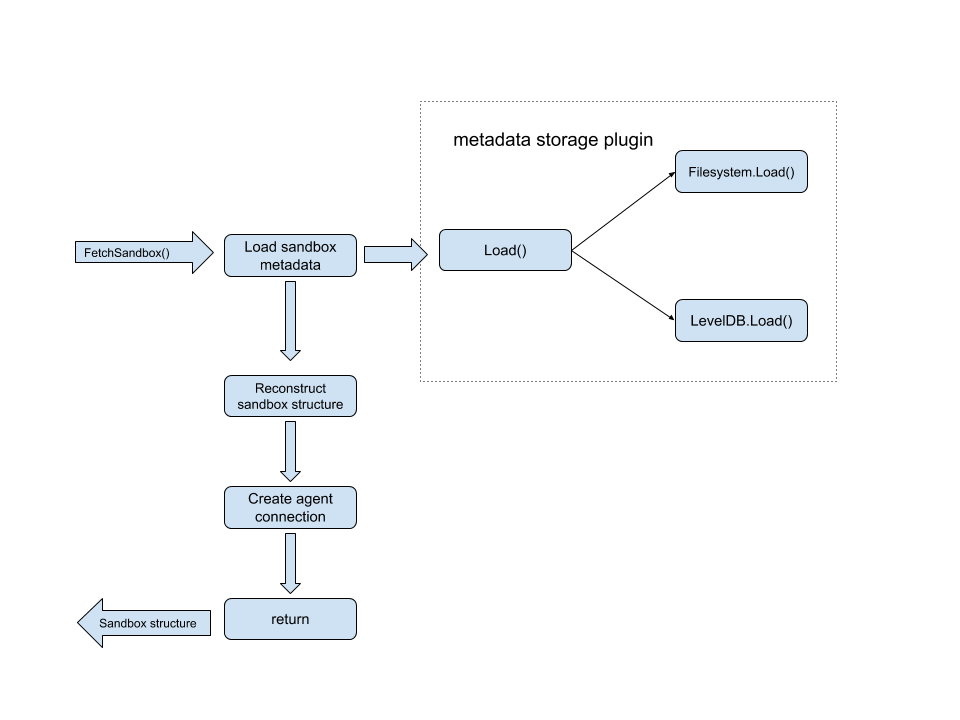
|
||||
|
||||
## Built-in Shim and Proxy Types and Capabilities
|
||||
### Built-in shim/proxy sandbox configurations
|
||||
- Supported shim configurations:
|
||||
|
||||
|Name|Description|
|
||||
|---|---|
|
||||
|`noopshim`|Do not start any shim process.|
|
||||
|`ccshim`| Start the cc-shim binary.|
|
||||
|`katashim`| Start the `kata-shim` binary.|
|
||||
|`katashimbuiltin`|No standalone shim process but shim functionality APIs are exported.|
|
||||
- Supported proxy configurations:
|
||||
|
||||
|Name|Description|
|
||||
|---|---|
|
||||
|`noopProxy`| a dummy proxy implementation of the proxy interface, only used for testing purpose.|
|
||||
|`noProxy`|generic implementation for any case where no actual proxy is needed.|
|
||||
|`ccProxy`|run `ccProxy` to proxy between runtime and agent.|
|
||||
|`kataProxy`|run `kata-proxy` to translate Yamux connections between runtime and Kata agent. |
|
||||
|`kataProxyBuiltin`| no standalone proxy process and connect to Kata agent with internal Yamux translation.|
|
||||
|
||||
### Built-in Shim Capability
|
||||
Built-in shim capability is implemented by removing standalone shim process, and
|
||||
supporting the shim related APIs.
|
||||
|
||||
### Built-in Proxy Capability
|
||||
Built-in proxy capability is achieved by removing standalone proxy process, and
|
||||
connecting to Kata agent with a custom gRPC dialer that is internal Yamux translation.
|
||||
The behavior is enabled when proxy is configured as `kataProxyBuiltin`.
|
||||
|
||||
@@ -30,7 +30,7 @@ The Kata Containers runtime **MUST** implement the following command line option
|
||||
The Kata Containers project **MUST** provide two interfaces for CRI shims to manage hardware
|
||||
virtualization based Kubernetes pods and containers:
|
||||
- An OCI and `runc` compatible command line interface, as described in the previous section.
|
||||
This interface is used by implementations such as [`CRI-O`](http://cri-o.io) and [`containerd`](https://github.com/containerd/containerd), for example.
|
||||
This interface is used by implementations such as [`CRI-O`](http://cri-o.io) and [`cri-containerd`](https://github.com/containerd/cri-containerd), for example.
|
||||
- A hardware virtualization runtime library API for CRI shims to consume and provide a more
|
||||
CRI native implementation. The [`frakti`](https://github.com/kubernetes/frakti) CRI shim is an example of such a consumer.
|
||||
|
||||
|
||||
@@ -1,5 +0,0 @@
|
||||
# Design proposals
|
||||
|
||||
Kata Containers design proposal documents:
|
||||
|
||||
- [Kata Containers tracing](tracing-proposals.md)
|
||||
@@ -1,213 +0,0 @@
|
||||
# Kata Tracing proposals
|
||||
|
||||
## Overview
|
||||
|
||||
This document summarises a set of proposals triggered by the
|
||||
[tracing documentation PR][tracing-doc-pr].
|
||||
|
||||
## Required context
|
||||
|
||||
This section explains some terminology required to understand the proposals.
|
||||
Further details can be found in the
|
||||
[tracing documentation PR][tracing-doc-pr].
|
||||
|
||||
### Agent trace mode terminology
|
||||
|
||||
| Trace mode | Description | Use-case |
|
||||
|-|-|-|
|
||||
| Static | Trace agent from startup to shutdown | Entire lifespan |
|
||||
| Dynamic | Toggle tracing on/off as desired | On-demand "snapshot" |
|
||||
|
||||
### Agent trace type terminology
|
||||
|
||||
| Trace type | Description | Use-case |
|
||||
|-|-|-|
|
||||
| isolated | traces all relate to single component | Observing lifespan |
|
||||
| collated | traces "grouped" (runtime+agent) | Understanding component interaction |
|
||||
|
||||
### Container lifespan
|
||||
|
||||
| Lifespan | trace mode | trace type |
|
||||
|-|-|-|
|
||||
| short-lived | static | collated if possible, else isolated? |
|
||||
| long-running | dynamic | collated? (to see interactions) |
|
||||
|
||||
## Original plan for agent
|
||||
|
||||
- Implement all trace types and trace modes for agent.
|
||||
|
||||
- Why?
|
||||
- Maximum flexibility.
|
||||
|
||||
> **Counterargument:**
|
||||
>
|
||||
> Due to the intrusive nature of adding tracing, we have
|
||||
> learnt that landing small incremental changes is simpler and quicker!
|
||||
|
||||
- Compatibility with [Kata 1.x tracing][kata-1x-tracing].
|
||||
|
||||
> **Counterargument:**
|
||||
>
|
||||
> Agent tracing in Kata 1.x was extremely awkward to setup (to the extent
|
||||
> that it's unclear how many users actually used it!)
|
||||
>
|
||||
> This point, coupled with the new architecture for Kata 2.x, suggests
|
||||
> that we may not need to supply the same set of tracing features (in fact
|
||||
> they may not make sense)).
|
||||
|
||||
## Agent tracing proposals
|
||||
|
||||
### Agent tracing proposal 1: Don't implement dynamic trace mode
|
||||
|
||||
- All tracing will be static.
|
||||
|
||||
- Why?
|
||||
- Because dynamic tracing will always be "partial"
|
||||
|
||||
> In fact, not only would it be only a "snapshot" of activity, it may not
|
||||
> even be possible to create a complete "trace transaction". If this is
|
||||
> true, the trace output would be partial and would appear "unstructured".
|
||||
|
||||
### Agent tracing proposal 2: Simplify handling of trace type
|
||||
|
||||
- Agent tracing will be "isolated" by default.
|
||||
- Agent tracing will be "collated" if runtime tracing is also enabled.
|
||||
|
||||
- Why?
|
||||
- Offers a graceful fallback for agent tracing if runtime tracing disabled.
|
||||
- Simpler code!
|
||||
|
||||
## Questions to ask yourself (part 1)
|
||||
|
||||
- Are your containers long-running or short-lived?
|
||||
|
||||
- Would you ever need to turn on tracing "briefly"?
|
||||
- If "yes", is a "partial trace" useful or useless?
|
||||
|
||||
> Likely to be considered useless as it is a partial snapshot.
|
||||
> Alternative tracing methods may be more appropriate to dynamic
|
||||
> OpenTelemetry tracing.
|
||||
|
||||
## Questions to ask yourself (part 2)
|
||||
|
||||
- Are you happy to stop a container to enable tracing?
|
||||
If "no", dynamic tracing may be required.
|
||||
|
||||
- Would you ever want to trace the agent and the runtime "in isolation" at the
|
||||
same time?
|
||||
- If "yes", we need to fully implement `trace_mode=isolated`
|
||||
|
||||
> This seems unlikely though.
|
||||
|
||||
## Trace collection
|
||||
|
||||
The second set of proposals affect the way traces are collected.
|
||||
|
||||
### Motivation
|
||||
|
||||
Currently:
|
||||
|
||||
- The runtime sends trace spans to Jaeger directly.
|
||||
- The agent will send trace spans to the [`trace-forwarder`][trace-forwarder] component.
|
||||
- The trace forwarder will send trace spans to Jaeger.
|
||||
|
||||
Kata agent tracing overview:
|
||||
|
||||
```
|
||||
+-------------------------------------------+
|
||||
| Host |
|
||||
| |
|
||||
| +-----------+ |
|
||||
| | Trace | |
|
||||
| | Collector | |
|
||||
| +-----+-----+ |
|
||||
| ^ +--------------+ |
|
||||
| | spans | Kata VM | |
|
||||
| +-----+-----+ | | |
|
||||
| | Kata | spans | +-----+ | |
|
||||
| | Trace |<-----------------|Kata | | |
|
||||
| | Forwarder | VSOCK | |Agent| | |
|
||||
| +-----------+ Channel | +-----+ | |
|
||||
| +--------------+ |
|
||||
+-------------------------------------------+
|
||||
```
|
||||
|
||||
Currently:
|
||||
|
||||
- If agent tracing is enabled but the trace forwarder is not running,
|
||||
the agent will error.
|
||||
|
||||
- If the trace forwarder is started but Jaeger is not running,
|
||||
the trace forwarder will error.
|
||||
|
||||
### Goals
|
||||
|
||||
- The runtime and agent should:
|
||||
- Use the same trace collection implementation.
|
||||
- Use the most the common configuration items.
|
||||
|
||||
- Kata should should support more trace collection software or `SaaS`
|
||||
(for example `Zipkin`, `datadog`).
|
||||
|
||||
- Trace collection should not block normal runtime/agent operations
|
||||
(for example if `vsock-exporter`/Jaeger is not running, Kata Containers should work normally).
|
||||
|
||||
### Trace collection proposals
|
||||
|
||||
#### Trace collection proposal 1: Send all spans to the trace forwarder as a span proxy
|
||||
|
||||
Kata runtime/agent all send spans to trace forwarder, and the trace forwarder,
|
||||
acting as a tracing proxy, sends all spans to a tracing back-end, such as Jaeger or `datadog`.
|
||||
|
||||
**Pros:**
|
||||
|
||||
- Runtime/agent will be simple.
|
||||
- Could update trace collection target while Kata Containers are running.
|
||||
|
||||
**Cons:**
|
||||
|
||||
- Requires the trace forwarder component to be running (that is a pressure to operation).
|
||||
|
||||
#### Trace collection proposal 2: Send spans to collector directly from runtime/agent
|
||||
|
||||
Send spans to collector directly from runtime/agent, this proposal need
|
||||
network accessible to the collector.
|
||||
|
||||
**Pros:**
|
||||
|
||||
- No additional trace forwarder component needed.
|
||||
|
||||
**Cons:**
|
||||
|
||||
- Need more code/configuration to support all trace collectors.
|
||||
|
||||
## Future work
|
||||
|
||||
- We could add dynamic and fully isolated tracing at a later stage,
|
||||
if required.
|
||||
|
||||
## Further details
|
||||
|
||||
- See the new [GitHub project](https://github.com/orgs/kata-containers/projects/28).
|
||||
- [kata-containers-tracing-status](https://gist.github.com/jodh-intel/0ee54d41d2a803ba761e166136b42277) gist.
|
||||
- [tracing documentation PR][tracing-doc-pr].
|
||||
|
||||
## Summary
|
||||
|
||||
### Time line
|
||||
|
||||
- 2021-07-01: A summary of the discussion was
|
||||
[posted to the mail list](http://lists.katacontainers.io/pipermail/kata-dev/2021-July/001996.html).
|
||||
- 2021-06-22: These proposals were
|
||||
[discussed in the Kata Architecture Committee meeting](https://etherpad.opendev.org/p/Kata_Containers_2021_Architecture_Committee_Mtgs).
|
||||
- 2021-06-18: These proposals where
|
||||
[announced on the mailing list](http://lists.katacontainers.io/pipermail/kata-dev/2021-June/001980.html).
|
||||
|
||||
### Outcome
|
||||
|
||||
- Nobody opposed the agent proposals, so they are being implemented.
|
||||
- The trace collection proposals are still being considered.
|
||||
|
||||
[kata-1x-tracing]: https://github.com/kata-containers/agent/blob/master/TRACING.md
|
||||
[trace-forwarder]: /src/trace-forwarder
|
||||
[tracing-doc-pr]: https://github.com/kata-containers/kata-containers/pull/1937
|
||||
@@ -1,3 +1,11 @@
|
||||
- [Virtual machine vCPU sizing in Kata Containers](#virtual-machine-vcpu-sizing-in-kata-containers)
|
||||
* [Default number of virtual CPUs](#default-number-of-virtual-cpus)
|
||||
* [Virtual CPUs and Kubernetes pods](#virtual-cpus-and-kubernetes-pods)
|
||||
* [Container lifecycle](#container-lifecycle)
|
||||
* [Container without CPU constraint](#container-without-cpu-constraint)
|
||||
* [Container with CPU constraint](#container-with-cpu-constraint)
|
||||
* [Do not waste resources](#do-not-waste-resources)
|
||||
|
||||
# Virtual machine vCPU sizing in Kata Containers
|
||||
|
||||
## Default number of virtual CPUs
|
||||
|
||||
@@ -1,5 +1,16 @@
|
||||
# Virtualization in Kata Containers
|
||||
|
||||
- [Virtualization in Kata Containers](#virtualization-in-kata-containers)
|
||||
- [Mapping container concepts to virtual machine technologies](#mapping-container-concepts-to-virtual-machine-technologies)
|
||||
- [Kata Containers Hypervisor and VMM support](#kata-containers-hypervisor-and-vmm-support)
|
||||
- [QEMU/KVM](#qemukvm)
|
||||
- [Machine accelerators](#machine-accelerators)
|
||||
- [Hotplug devices](#hotplug-devices)
|
||||
- [Firecracker/KVM](#firecrackerkvm)
|
||||
- [Cloud Hypervisor/KVM](#cloud-hypervisorkvm)
|
||||
- [Summary](#summary)
|
||||
|
||||
|
||||
Kata Containers, a second layer of isolation is created on top of those provided by traditional namespace-containers. The
|
||||
hardware virtualization interface is the basis of this additional layer. Kata will launch a lightweight virtual machine,
|
||||
and use the guest’s Linux kernel to create a container workload, or workloads in the case of multi-container pods. In Kubernetes
|
||||
@@ -11,10 +22,10 @@ the multiple hypervisors and virtual machine monitors that Kata supports.
|
||||
## Mapping container concepts to virtual machine technologies
|
||||
|
||||
A typical deployment of Kata Containers will be in Kubernetes by way of a Container Runtime Interface (CRI) implementation. On every node,
|
||||
Kubelet will interact with a CRI implementer (such as containerd or CRI-O), which will in turn interface with Kata Containers (an OCI based runtime).
|
||||
Kubelet will interact with a CRI implementor (such as containerd or CRI-O), which will in turn interface with Kata Containers (an OCI based runtime).
|
||||
|
||||
The CRI API, as defined at the [Kubernetes CRI-API repo](https://github.com/kubernetes/cri-api/), implies a few constructs being supported by the
|
||||
CRI implementation, and ultimately in Kata Containers. In order to support the full [API](https://github.com/kubernetes/cri-api/blob/a6f63f369f6d50e9d0886f2eda63d585fbd1ab6a/pkg/apis/runtime/v1alpha2/api.proto#L34-L110) with the CRI-implementer, Kata must provide the following constructs:
|
||||
CRI implementation, and ultimately in Kata Containers. In order to support the full [API](https://github.com/kubernetes/cri-api/blob/a6f63f369f6d50e9d0886f2eda63d585fbd1ab6a/pkg/apis/runtime/v1alpha2/api.proto#L34-L110) with the CRI-implementor, Kata must provide the following constructs:
|
||||
|
||||

|
||||
|
||||
@@ -30,9 +41,14 @@ Each hypervisor or VMM varies on how or if it handles each of these.
|
||||
|
||||
## Kata Containers Hypervisor and VMM support
|
||||
|
||||
Kata Containers [supports multiple hypervisors](../hypervisors.md).
|
||||
Kata Containers is designed to support multiple virtual machine monitors (VMMs) and hypervisors.
|
||||
Kata Containers supports:
|
||||
- [ACRN hypervisor](https://projectacrn.org/)
|
||||
- [Cloud Hypervisor](https://github.com/cloud-hypervisor/cloud-hypervisor)/[KVM](https://www.linux-kvm.org/page/Main_Page)
|
||||
- [Firecracker](https://github.com/firecracker-microvm/firecracker)/KVM
|
||||
- [QEMU](http://www.qemu-project.org/)/KVM
|
||||
|
||||
Details of each solution and a summary are provided below.
|
||||
Which configuration to use will depend on the end user's requirements. Details of each solution and a summary are provided below.
|
||||
|
||||
### QEMU/KVM
|
||||
|
||||
@@ -46,7 +62,7 @@ be changed by editing the runtime [`configuration`](./architecture.md/#configura
|
||||
Devices and features used:
|
||||
- virtio VSOCK or virtio serial
|
||||
- virtio block or virtio SCSI
|
||||
- [virtio net](https://www.redhat.com/en/virtio-networking-series)
|
||||
- virtio net
|
||||
- virtio fs or virtio 9p (recommend: virtio fs)
|
||||
- VFIO
|
||||
- hotplug
|
||||
@@ -89,34 +105,25 @@ Devices used:
|
||||
|
||||
### Cloud Hypervisor/KVM
|
||||
|
||||
[Cloud Hypervisor](https://github.com/cloud-hypervisor/cloud-hypervisor), based
|
||||
on [rust-vmm](https://github.com/rust-vmm), is designed to have a
|
||||
lighter footprint and smaller attack surface for running modern cloud
|
||||
workloads. Kata Containers with Cloud
|
||||
Hypervisor provides mostly complete compatibility with Kubernetes
|
||||
comparable to the QEMU configuration. As of the 1.12 and 2.0.0 release
|
||||
of Kata Containers, the Cloud Hypervisor configuration supports both CPU
|
||||
and memory resize, device hotplug (disk and VFIO), file-system sharing through virtio-fs,
|
||||
block-based volumes, booting from VM images backed by pmem device, and
|
||||
fine-grained seccomp filters for each VMM threads (e.g. all virtio
|
||||
device worker threads). Please check [this GitHub Project](https://github.com/orgs/kata-containers/projects/21)
|
||||
for details of ongoing integration efforts.
|
||||
Cloud Hypervisor, based on [rust-VMM](https://github.com/rust-vmm), is designed to have a lighter footprint and attack surface. For Kata Containers,
|
||||
relative to Firecracker, the Cloud Hypervisor configuration provides better compatibility at the expense of exposing additional devices: file system
|
||||
sharing and direct device assignment. As of the 1.10 release of Kata Containers, Cloud Hypervisor does not support device hotplug, and as a result
|
||||
does not support updating container resources after boot, or utilizing block based volumes. While Cloud Hypervisor does support VFIO, Kata is still adding
|
||||
this support. As of 1.10, Kata does not support block based volumes or direct device assignment. See [Cloud Hypervisor device support documentation](https://github.com/cloud-hypervisor/cloud-hypervisor/blob/master/docs/device_model.md)
|
||||
for more details on Cloud Hypervisor.
|
||||
|
||||
Devices and features used:
|
||||
- virtio VSOCK or virtio serial
|
||||
Devices used:
|
||||
- virtio VSOCK
|
||||
- virtio block
|
||||
- virtio net
|
||||
- virtio fs
|
||||
- virtio pmem
|
||||
- VFIO
|
||||
- hotplug
|
||||
- seccomp filters
|
||||
- [HTTP OpenAPI](https://github.com/cloud-hypervisor/cloud-hypervisor/blob/master/vmm/src/api/openapi/cloud-hypervisor.yaml)
|
||||
|
||||
### Summary
|
||||
|
||||
| Solution | release introduced | brief summary |
|
||||
|-|-|-|
|
||||
| Cloud Hypervisor | 1.10 | upstream Cloud Hypervisor with rich feature support, e.g. hotplug, VFIO and FS sharing|
|
||||
| Firecracker | 1.5 | upstream Firecracker, rust-VMM based, no VFIO, no FS sharing, no memory/CPU hotplug |
|
||||
| QEMU | 1.0 | upstream QEMU, with support for hotplug and filesystem sharing |
|
||||
| NEMU | 1.4 | Deprecated, removed as of 1.10 release. Slimmed down fork of QEMU, with experimental support of virtio-fs |
|
||||
| Firecracker | 1.5 | upstream Firecracker, rust-VMM based, no VFIO, no FS sharing, no memory/CPU hotplug |
|
||||
| QEMU-virtio-fs | 1.7 | upstream QEMU with support for virtio-fs. Will be removed once virtio-fs lands in upstream QEMU |
|
||||
| Cloud Hypervisor | 1.10 | rust-VMM based, includes VFIO and FS sharing through virtio-fs, no hotplug |
|
||||
|
||||
@@ -1,29 +1,24 @@
|
||||
# Howto Guides
|
||||
|
||||
## Kubernetes Integration
|
||||
* [Howto Guides](#howto-guides)
|
||||
* [Kubernetes Integration](#kubernetes-integration)
|
||||
* [Hypervisors Integration](#hypervisors-integration)
|
||||
* [Advanced Topics](#advanced-topics)
|
||||
|
||||
## Kubernetes Integration
|
||||
- [Run Kata containers with `crictl`](run-kata-with-crictl.md)
|
||||
- [Run Kata Containers with Kubernetes](run-kata-with-k8s.md)
|
||||
- [How to use Kata Containers and Containerd](containerd-kata.md)
|
||||
- [How to use Kata Containers and CRI (containerd) with Kubernetes](how-to-use-k8s-with-cri-containerd-and-kata.md)
|
||||
- [How to use Kata Containers and CRI (containerd plugin) with Kubernetes](how-to-use-k8s-with-cri-containerd-and-kata.md)
|
||||
- [Kata Containers and service mesh for Kubernetes](service-mesh.md)
|
||||
- [How to import Kata Containers logs into Fluentd](how-to-import-kata-logs-with-fluentd.md)
|
||||
|
||||
## Hypervisors Integration
|
||||
|
||||
Currently supported hypervisors with Kata Containers include:
|
||||
- `qemu`
|
||||
- `cloud-hypervisor`
|
||||
- `firecracker`
|
||||
- `ACRN`
|
||||
|
||||
While `qemu` , `cloud-hypervisor` and `firecracker` work out of the box with installation of Kata,
|
||||
some additional configuration is needed in case of `ACRN`.
|
||||
Refer to the following guides for additional configuration steps:
|
||||
- [Kata Containers with Firecracker](https://github.com/kata-containers/documentation/wiki/Initial-release-of-Kata-Containers-with-Firecracker-support)
|
||||
- [Kata Containers with NEMU](how-to-use-kata-containers-with-nemu.md)
|
||||
- [Kata Containers with ACRN Hypervisor](how-to-use-kata-containers-with-acrn.md)
|
||||
|
||||
## Advanced Topics
|
||||
|
||||
- [How to use Kata Containers with virtio-fs](how-to-use-virtio-fs-with-kata.md)
|
||||
- [Setting Sysctls with Kata](how-to-use-sysctls-with-kata.md)
|
||||
- [What Is VMCache and How To Enable It](what-is-vm-cache-and-how-do-I-use-it.md)
|
||||
@@ -33,6 +28,3 @@
|
||||
- [How to use Kata Containers with `virtio-mem`](how-to-use-virtio-mem-with-kata.md)
|
||||
- [How to set sandbox Kata Containers configurations with pod annotations](how-to-set-sandbox-config-kata.md)
|
||||
- [How to monitor Kata Containers in K8s](how-to-set-prometheus-in-k8s.md)
|
||||
- [How to use hotplug memory on arm64 in Kata Containers](how-to-hotplug-memory-arm64.md)
|
||||
- [How to setup swap devices in guest kernel](how-to-setup-swap-devices-in-guest-kernel.md)
|
||||
- [How to run rootless vmm](how-to-run-rootless-vmm.md)
|
||||
|
||||
@@ -1,5 +1,23 @@
|
||||
# How to use Kata Containers and Containerd
|
||||
|
||||
- [Concepts](#concepts)
|
||||
- [Kubernetes `RuntimeClass`](#kubernetes-runtimeclass)
|
||||
- [Containerd Runtime V2 API: Shim V2 API](#containerd-runtime-v2-api-shim-v2-api)
|
||||
- [Install](#install)
|
||||
- [Install Kata Containers](#install-kata-containers)
|
||||
- [Install containerd with CRI plugin](#install-containerd-with-cri-plugin)
|
||||
- [Install CNI plugins](#install-cni-plugins)
|
||||
- [Install `cri-tools`](#install-cri-tools)
|
||||
- [Configuration](#configuration)
|
||||
- [Configure containerd to use Kata Containers](#configure-containerd-to-use-kata-containers)
|
||||
- [Kata Containers as a `RuntimeClass`](#kata-containers-as-a-runtimeclass)
|
||||
- [Kata Containers as the runtime for untrusted workload](#kata-containers-as-the-runtime-for-untrusted-workload)
|
||||
- [Kata Containers as the default runtime](#kata-containers-as-the-default-runtime)
|
||||
- [Configuration for `cri-tools`](#configuration-for-cri-tools)
|
||||
- [Run](#run)
|
||||
- [Launch containers with `ctr` command line](#launch-containers-with-ctr-command-line)
|
||||
- [Launch Pods with `crictl` command line](#launch-pods-with-crictl-command-line)
|
||||
|
||||
This document covers the installation and configuration of [containerd](https://containerd.io/)
|
||||
and [Kata Containers](https://katacontainers.io). The containerd provides not only the `ctr`
|
||||
command line tool, but also the [CRI](https://kubernetes.io/blog/2016/12/container-runtime-interface-cri-in-kubernetes/)
|
||||
@@ -39,7 +57,7 @@ use `RuntimeClass` instead of the deprecated annotations.
|
||||
|
||||
### Containerd Runtime V2 API: Shim V2 API
|
||||
|
||||
The [`containerd-shim-kata-v2` (short as `shimv2` in this documentation)](../../src/runtime/cmd/containerd-shim-kata-v2/)
|
||||
The [`containerd-shim-kata-v2` (short as `shimv2` in this documentation)](../../src/runtime/containerd-shim-v2)
|
||||
implements the [Containerd Runtime V2 (Shim API)](https://github.com/containerd/containerd/tree/master/runtime/v2) for Kata.
|
||||
With `shimv2`, Kubernetes can launch Pod and OCI-compatible containers with one shim per Pod. Prior to `shimv2`, `2N+1`
|
||||
shims (i.e. a `containerd-shim` and a `kata-shim` for each container and the Pod sandbox itself) and no standalone `kata-proxy`
|
||||
|
||||
@@ -26,7 +26,7 @@ spec:
|
||||
hostNetwork: true
|
||||
containers:
|
||||
- name: kata-monitor
|
||||
image: quay.io/kata-containers/kata-monitor:2.0.0
|
||||
image: docker.io/katadocker/kata-monitor:2.0.0
|
||||
args:
|
||||
- -log-level=debug
|
||||
ports:
|
||||
|
||||
@@ -1,28 +0,0 @@
|
||||
# How to use memory hotplug feature in Kata Containers on arm64
|
||||
|
||||
## Introduction
|
||||
|
||||
Memory hotplug is a key feature for containers to allocate memory dynamically in deployment.
|
||||
As Kata Container bases on VM, this feature needs support both from VMM and guest kernel. Luckily, it has been fully supported for the current default version of QEMU and guest kernel used by Kata on arm64. For other VMMs, e.g, Cloud Hypervisor, the enablement work is on the road. Apart from VMM and guest kernel, memory hotplug also depends on ACPI which depends on firmware either. On x86, you can boot a VM using QEMU with ACPI enabled directly, because it boots up with firmware implicitly. For arm64, however, you need specify firmware explicitly. That is to say, if you are ready to run a normal Kata Container on arm64, what you need extra to do is to install the UEFI ROM before use the memory hotplug feature.
|
||||
|
||||
## Install UEFI ROM
|
||||
|
||||
We have offered a helper script for you to install the UEFI ROM. If you have installed Kata normally on your host, you just need to run the script as fellows:
|
||||
|
||||
```bash
|
||||
$ pushd $GOPATH/src/github.com/kata-containers/tests
|
||||
$ sudo .ci/aarch64/install_rom_aarch64.sh
|
||||
$ popd
|
||||
```
|
||||
|
||||
## Run for test
|
||||
|
||||
Let's test if the memory hotplug is ready for Kata after install the UEFI ROM. Make sure containerd is ready to run Kata before test.
|
||||
|
||||
```bash
|
||||
$ sudo ctr image pull docker.io/library/ubuntu:latest
|
||||
$ sudo ctr run --runtime io.containerd.run.kata.v2 -t --rm docker.io/library/ubuntu:latest hello sh -c "free -h"
|
||||
$ sudo ctr run --runtime io.containerd.run.kata.v2 -t --memory-limit 536870912 --rm docker.io/library/ubuntu:latest hello sh -c "free -h"
|
||||
```
|
||||
|
||||
Compare the results between the two tests. If the latter is 0.5G larger than the former, you have done what you want, and congratulation!
|
||||
@@ -1,5 +1,20 @@
|
||||
# Importing Kata Containers logs with Fluentd
|
||||
|
||||
* [Introduction](#introduction)
|
||||
* [Overview](#overview)
|
||||
* [Test stack](#test-stack)
|
||||
* [Importing the logs](#importing-the-logs)
|
||||
* [Direct import `logfmt` from `systemd`](#direct-import-logfmt-from-systemd)
|
||||
* [Configuring `minikube`](#configuring-minikube)
|
||||
* [Pull from `systemd`](#pull-from-systemd)
|
||||
* [Systemd Summary](#systemd-summary)
|
||||
* [Directly importing JSON](#directly-importing-json)
|
||||
* [JSON in files](#json-in-files)
|
||||
* [Prefixing all keys](#prefixing-all-keys)
|
||||
* [Kata `shimv2`](#kata-shimv2)
|
||||
* [Caveats](#caveats)
|
||||
* [Summary](#summary)
|
||||
|
||||
# Introduction
|
||||
|
||||
This document describes how to import Kata Containers logs into [Fluentd](https://www.fluentd.org/),
|
||||
@@ -128,7 +143,7 @@ YAML can be found
|
||||
tag kata-containers
|
||||
path /run/log/journal
|
||||
pos_file /run/log/journal/kata-journald.pos
|
||||
filters [{"SYSLOG_IDENTIFIER": "kata-runtime"}, {"SYSLOG_IDENTIFIER": "kata-shim"}]
|
||||
filters [{"SYSLOG_IDENTIFIER": "kata-runtime"}, {"SYSLOG_IDENTIFIER": "kata-proxy"}, {"SYSLOG_IDENTIFIER": "kata-shim"}]
|
||||
read_from_head true
|
||||
</source>
|
||||
```
|
||||
@@ -146,7 +161,7 @@ generate some Kata specific log entries:
|
||||
|
||||
```bash
|
||||
$ minikube addons open efk
|
||||
$ cd $GOPATH/src/github.com/kata-containers/kata-containers/tools/packaging/kata-deploy
|
||||
$ cd $GOPATH/src/github.com/kata-containers/packaging/kata-deploy
|
||||
$ kubectl apply -f examples/nginx-deployment-qemu.yaml
|
||||
```
|
||||
|
||||
@@ -163,14 +178,14 @@ sub-filter on, for instance, the `SYSLOG_IDENTIFIER` to differentiate the Kata c
|
||||
on the `PRIORITY` to filter out critical issues etc.
|
||||
|
||||
Kata generates a significant amount of Kata specific information, which can be seen as
|
||||
[`logfmt`](https://github.com/kata-containers/tests/tree/main/cmd/log-parser#logfile-requirements).
|
||||
[`logfmt`](https://github.com/kata-containers/tests/tree/master/cmd/log-parser#logfile-requirements).
|
||||
data contained in the `MESSAGE` field. Imported as-is, there is no easy way to filter on that data
|
||||
in Kibana:
|
||||
|
||||
.
|
||||
|
||||
We can however further sub-parse the Kata entries using the
|
||||
[Fluentd plugins](https://docs.fluentbit.io/manual/pipeline/parsers/logfmt) that will parse
|
||||
[Fluentd plugins](https://docs.fluentbit.io/manual/parser/logfmt) that will parse
|
||||
`logfmt` formatted data. We can utilise these to parse the sub-fields using a Fluentd filter
|
||||
section. At the same time, we will prefix the new fields with `kata_` to make it clear where
|
||||
they have come from:
|
||||
@@ -207,7 +222,7 @@ test to check the parsing works. The resulting output from Fluentd is:
|
||||
"_COMM":"kata-runtime",
|
||||
"_EXE":"/opt/kata/bin/kata-runtime",
|
||||
"SYSLOG_TIMESTAMP":"Feb 21 10:31:27 ",
|
||||
"_CMDLINE":"/opt/kata/bin/kata-runtime --config /opt/kata/share/defaults/kata-containers/configuration-qemu.toml --root /run/runc state 7cdd31660d8705facdadeb8598d2c0bd008e8142c54e3b3069abd392c8d58997",
|
||||
"_CMDLINE":"/opt/kata/bin/kata-runtime --kata-config /opt/kata/share/defaults/kata-containers/configuration-qemu.toml --root /run/runc state 7cdd31660d8705facdadeb8598d2c0bd008e8142c54e3b3069abd392c8d58997",
|
||||
"SYSLOG_PID":"14314",
|
||||
"_PID":"14314",
|
||||
"MESSAGE":"time=\"2020-02-21T10:31:27.810781647Z\" level=info msg=\"release sandbox\" arch=amd64 command=state container=7cdd31660d8705facdadeb8598d2c0bd008e8142c54e3b3069abd392c8d58997 name=kata-runtime pid=14314 sandbox=1c3e77cad66aa2b6d8cc846f818370f79cb0104c0b840f67d0f502fd6562b68c source=virtcontainers subsystem=sandbox",
|
||||
@@ -257,15 +272,16 @@ go directly to a full Kata specific JSON format logfile test.
|
||||
|
||||
Kata runtime has the ability to generate JSON logs directly, rather than its default `logfmt` format. Passing
|
||||
the `--log-format=json` argument to the Kata runtime enables this. The easiest way to pass in this extra
|
||||
parameter from a [Kata deploy](https://github.com/kata-containers/kata-containers/tree/main/tools/packaging/kata-deploy) installation
|
||||
is to edit the `/opt/kata/bin/kata-qemu` shell script.
|
||||
parameter from a [Kata deploy](https://github.com/kata-containers/packaging/tree/master/kata-deploy) installation
|
||||
is to edit the `/opt/kata/bin/kata-qemu` shell script (generated by the
|
||||
[Kata packaging release scripts](https://github.com/kata-containers/packaging/blob/master/release/kata-deploy-binaries.sh)).
|
||||
|
||||
At the same time, we will add the `--log=/var/log/kata-runtime.log` argument to store the Kata logs in their
|
||||
own file (rather than into the system journal).
|
||||
|
||||
```bash
|
||||
#!/bin/bash
|
||||
/opt/kata/bin/kata-runtime --config "/opt/kata/share/defaults/kata-containers/configuration-qemu.toml" --log-format=json --log=/var/log/kata-runtime.log $@
|
||||
/opt/kata/bin/kata-runtime --kata-config "/opt/kata/share/defaults/kata-containers/configuration-qemu.toml" --log-format=json --log=/var/log/kata-runtime.log $@
|
||||
```
|
||||
|
||||
And then we'll add the Fluentd config section to parse that file. Note, we inform the parser that Kata is
|
||||
|
||||
@@ -56,9 +56,8 @@ There are some limitations with this approach:
|
||||
|
||||
As was mentioned above, not all containers need the same modules, therefore using
|
||||
the configuration file for specifying the list of kernel modules per [POD][3] can
|
||||
be a pain.
|
||||
Unlike the configuration file, [annotations](how-to-set-sandbox-config-kata.md)
|
||||
provide a way to specify custom configurations per POD.
|
||||
be a pain. Unlike the configuration file, annotations provide a way to specify
|
||||
custom configurations per POD.
|
||||
|
||||
The list of kernel modules and parameters can be set using the annotation
|
||||
`io.katacontainers.config.agent.kernel_modules` as a semicolon separated
|
||||
@@ -102,7 +101,7 @@ spec:
|
||||
tty: true
|
||||
```
|
||||
|
||||
> **Note**: To pass annotations to Kata containers, [CRI-O must be configured correctly](how-to-set-sandbox-config-kata.md#cri-o-configuration)
|
||||
> **Note**: To pass annotations to Kata containers, [cri must to be configurated correctly](how-to-set-sandbox-config-kata.md#cri-configuration)
|
||||
|
||||
[1]: ../../src/runtime
|
||||
[2]: ../../src/agent
|
||||
|
||||
@@ -1,33 +0,0 @@
|
||||
## Introduction
|
||||
To improve security, Kata Container supports running the VMM process (currently only QEMU) as a non-`root` user.
|
||||
This document describes how to enable the rootless VMM mode and its limitations.
|
||||
|
||||
## Pre-requisites
|
||||
The permission and ownership of the `kvm` device node (`/dev/kvm`) need to be configured to:
|
||||
```
|
||||
$ crw-rw---- 1 root kvm
|
||||
```
|
||||
use the following commands:
|
||||
```
|
||||
$ sudo groupadd kvm -r
|
||||
$ sudo chown root:kvm /dev/kvm
|
||||
$ sudo chmod 660 /dev/kvm
|
||||
```
|
||||
|
||||
## Configure rootless VMM
|
||||
By default, the VMM process still runs as the root user. There are two ways to enable rootless VMM:
|
||||
1. Set the `rootless` flag to `true` in the hypervisor section of `configuration.toml`.
|
||||
2. Set the Kubernetes annotation `io.katacontainers.hypervisor.rootless` to `true`.
|
||||
|
||||
## Implementation details
|
||||
When `rootless` flag is enabled, upon a request to create a Pod, Kata Containers runtime creates a random user and group (e.g. `kata-123`), and uses them to start the hypervisor process.
|
||||
The `kvm` group is also given to the hypervisor process as a supplemental group to give the hypervisor process access to the `/dev/kvm` device.
|
||||
Another necessary change is to move the hypervisor runtime files (e.g. `vhost-fs.sock`, `qmp.sock`) to a directory (under `/run/user/[uid]/`) where only the non-root hypervisor has access to.
|
||||
|
||||
## Limitations
|
||||
|
||||
1. Only the VMM process is running as a non-root user. Other processes such as Kata Container shimv2 and `virtiofsd` still run as the root user.
|
||||
2. Currently, this feature is only supported in QEMU. Still need to bring it to Firecracker and Cloud Hypervisor (see https://github.com/kata-containers/kata-containers/issues/2567).
|
||||
3. Certain features will not work when rootless VMM is enabled, including:
|
||||
1. Passing devices to the guest (`virtio-blk`, `virtio-scsi`) will not work if the non-privileged user does not have permission to access it (leading to a permission denied error). A more permissive permission (e.g. 666) may overcome this issue. However, you need to be aware of the potential security implications of reducing the security on such devices.
|
||||
2. `vfio` device will also not work because of permission denied error.
|
||||
@@ -2,6 +2,14 @@
|
||||
|
||||
This document describes how to run `kata-monitor` in a Kubernetes cluster using Prometheus's service discovery to scrape metrics from `kata-agent`.
|
||||
|
||||
- [Introduction](#introduction)
|
||||
- [Pre-requisites](#pre-requisites)
|
||||
- [Configure Prometheus](#configure-prometheus)
|
||||
- [Configure `kata-monitor`](#configure-kata-monitor)
|
||||
- [Setup Grafana](#setup-grafana)
|
||||
* [Create `datasource`](#create-datasource)
|
||||
* [Import dashboard](#import-dashboard)
|
||||
|
||||
> **Warning**: This how-to is only for evaluation purpose, you **SHOULD NOT** running it in production using this configurations.
|
||||
|
||||
## Introduction
|
||||
@@ -26,7 +34,7 @@ Also you should ensure that `kubectl` working correctly.
|
||||
Start Prometheus by utilizing our sample manifest:
|
||||
|
||||
```
|
||||
$ kubectl apply -f https://raw.githubusercontent.com/kata-containers/kata-containers/main/docs/how-to/data/prometheus.yml
|
||||
$ kubectl apply -f https://raw.githubusercontent.com/kata-containers/kata-containers/2.0-dev/docs/how-to/data/prometheus.yml
|
||||
```
|
||||
|
||||
This will create a new namespace, `prometheus`, and create the following resources:
|
||||
@@ -52,7 +60,7 @@ go_gc_duration_seconds{quantile="0.75"} 0.000229911
|
||||
`kata-monitor` can be started on the cluster as follows:
|
||||
|
||||
```
|
||||
$ kubectl apply -f https://raw.githubusercontent.com/kata-containers/kata-containers/main/docs/how-to/data/kata-monitor-daemonset.yml
|
||||
$ kubectl apply -f https://raw.githubusercontent.com/kata-containers/kata-containers/2.0-dev/docs/how-to/data/kata-monitor-daemonset.yml
|
||||
```
|
||||
|
||||
This will create a new namespace `kata-system` and a `daemonset` in it.
|
||||
@@ -65,7 +73,7 @@ Once the `daemonset` is running, Prometheus should discover `kata-monitor` as a
|
||||
Run this command to run Grafana in Kubernetes:
|
||||
|
||||
```
|
||||
$ kubectl apply -f https://raw.githubusercontent.com/kata-containers/kata-containers/main/docs/how-to/data/grafana.yml
|
||||
$ kubectl apply -f https://raw.githubusercontent.com/kata-containers/kata-containers/2.0-dev/docs/how-to/data/grafana.yml
|
||||
```
|
||||
|
||||
This will create deployment and service for Grafana under namespace `prometheus`.
|
||||
@@ -91,7 +99,7 @@ You can import this dashboard using Grafana UI, or using `curl` command in conso
|
||||
$ curl -XPOST -i localhost:3000/api/dashboards/import \
|
||||
-u admin:admin \
|
||||
-H "Content-Type: application/json" \
|
||||
-d "{\"dashboard\":$(curl -sL https://raw.githubusercontent.com/kata-containers/kata-containers/main/docs/how-to/data/dashboard.json )}"
|
||||
-d "{\"dashboard\":$(curl -sL https://raw.githubusercontent.com/kata-containers/kata-containers/2.0-dev/docs/how-to/data/dashboard.json )}"
|
||||
```
|
||||
|
||||
## References
|
||||
|
||||
@@ -3,11 +3,6 @@
|
||||
Kata Containers gives users freedom to customize at per-pod level, by setting
|
||||
a wide range of Kata specific annotations in the pod specification.
|
||||
|
||||
Some annotations may be [restricted](#restricted-annotations) by the
|
||||
configuration file for security reasons, notably annotations that could lead the
|
||||
runtime to execute programs on the host. Such annotations are marked with _(R)_ in
|
||||
the tables below.
|
||||
|
||||
# Kata Configuration Annotations
|
||||
There are several kinds of Kata configurations and they are listed below.
|
||||
|
||||
@@ -26,14 +21,14 @@ There are several kinds of Kata configurations and they are listed below.
|
||||
| `io.katacontainers.config.runtime.disable_new_netns` | `boolean` | determines if a new netns is created for the hypervisor process |
|
||||
| `io.katacontainers.config.runtime.internetworking_model` | string| determines how the VM should be connected to the container network interface. Valid values are `macvtap`, `tcfilter` and `none` |
|
||||
| `io.katacontainers.config.runtime.sandbox_cgroup_only`| `boolean` | determines if Kata processes are managed only in sandbox cgroup |
|
||||
| `io.katacontainers.config.runtime.enable_pprof` | `boolean` | enables Golang `pprof` for `containerd-shim-kata-v2` process |
|
||||
|
||||
## Agent Options
|
||||
| Key | Value Type | Comments |
|
||||
|-------| ----- | ----- |
|
||||
| `io.katacontainers.config.agent.enable_tracing` | `boolean` | enable tracing for the agent |
|
||||
| `io.katacontainers.config.agent.container_pipe_size` | uint32 | specify the size of the std(in/out) pipes created for containers |
|
||||
| `io.katacontainers.config.agent.kernel_modules` | string | the list of kernel modules and their parameters that will be loaded in the guest kernel. Semicolon separated list of kernel modules and their parameters. These modules will be loaded in the guest kernel using `modprobe`(8). E.g., `e1000e InterruptThrottleRate=3000,3000,3000 EEE=1; i915 enable_ppgtt=0` |
|
||||
| `io.katacontainers.config.agent.trace_mode` | string | the trace mode for the agent |
|
||||
| `io.katacontainers.config.agent.trace_type` | string | the trace type for the agent |
|
||||
|
||||
## Hypervisor Options
|
||||
| Key | Value Type | Comments |
|
||||
@@ -43,24 +38,17 @@ There are several kinds of Kata configurations and they are listed below.
|
||||
| `io.katacontainers.config.hypervisor.block_device_cache_noflush` | `boolean` | Denotes whether flush requests for the device are ignored |
|
||||
| `io.katacontainers.config.hypervisor.block_device_cache_set` | `boolean` | cache-related options will be set to block devices or not |
|
||||
| `io.katacontainers.config.hypervisor.block_device_driver` | string | the driver to be used for block device, valid values are `virtio-blk`, `virtio-scsi`, `nvdimm`|
|
||||
| `io.katacontainers.config.hypervisor.cpu_features` | `string` | Comma-separated list of CPU features to pass to the CPU (QEMU) |
|
||||
| `io.katacontainers.config.hypervisor.ctlpath` (R) | `string` | Path to the `acrnctl` binary for the ACRN hypervisor |
|
||||
| `io.katacontainers.config.hypervisor.default_max_vcpus` | uint32| the maximum number of vCPUs allocated for the VM by the hypervisor |
|
||||
| `io.katacontainers.config.hypervisor.default_memory` | uint32| the memory assigned for a VM by the hypervisor in `MiB` |
|
||||
| `io.katacontainers.config.hypervisor.default_vcpus` | uint32| the default vCPUs assigned for a VM by the hypervisor |
|
||||
| `io.katacontainers.config.hypervisor.disable_block_device_use` | `boolean` | disallow a block device from being used |
|
||||
| `io.katacontainers.config.hypervisor.disable_image_nvdimm` | `boolean` | specify if a `nvdimm` device should be used as rootfs for the guest (QEMU) |
|
||||
| `io.katacontainers.config.hypervisor.disable_vhost_net` | `boolean` | specify if `vhost-net` is not available on the host |
|
||||
| `io.katacontainers.config.hypervisor.enable_hugepages` | `boolean` | if the memory should be `pre-allocated` from huge pages |
|
||||
| `io.katacontainers.config.hypervisor.enable_iommu_platform` | `boolean` | enable `iommu` on CCW devices (QEMU s390x) |
|
||||
| `io.katacontainers.config.hypervisor.enable_iommu` | `boolean` | enable `iommu` on Q35 (QEMU x86_64) |
|
||||
| `io.katacontainers.config.hypervisor.enable_iothreads` | `boolean`| enable IO to be processed in a separate thread. Supported currently for virtio-`scsi` driver |
|
||||
| `io.katacontainers.config.hypervisor.enable_mem_prealloc` | `boolean` | the memory space used for `nvdimm` device by the hypervisor |
|
||||
| `io.katacontainers.config.hypervisor.enable_swap` | `boolean` | enable swap of VM memory |
|
||||
| `io.katacontainers.config.hypervisor.enable_vhost_user_store` | `boolean` | enable vhost-user storage device (QEMU) |
|
||||
| `io.katacontainers.config.hypervisor.enable_virtio_mem` | `boolean` | enable virtio-mem (QEMU) |
|
||||
| `io.katacontainers.config.hypervisor.entropy_source` (R) | string| the path to a host source of entropy (`/dev/random`, `/dev/urandom` or real hardware RNG device) |
|
||||
| `io.katacontainers.config.hypervisor.file_mem_backend` (R) | string | file based memory backend root directory |
|
||||
| `io.katacontainers.config.hypervisor.entropy_source` | string| the path to a host source of entropy (`/dev/random`, `/dev/urandom` or real hardware RNG device) |
|
||||
| `io.katacontainers.config.hypervisor.file_mem_backend` | string | file based memory backend root directory |
|
||||
| `io.katacontainers.config.hypervisor.firmware_hash` | string | container firmware SHA-512 hash value |
|
||||
| `io.katacontainers.config.hypervisor.firmware` | string | the guest firmware that will run the container VM |
|
||||
| `io.katacontainers.config.hypervisor.guest_hook_path` | string | the path within the VM that will be used for drop in hooks |
|
||||
@@ -71,60 +59,49 @@ There are several kinds of Kata configurations and they are listed below.
|
||||
| `io.katacontainers.config.hypervisor.initrd_hash` | string | container guest initrd SHA-512 hash value |
|
||||
| `io.katacontainers.config.hypervisor.initrd` | string | the guest initrd image that will run in the container VM |
|
||||
| `io.katacontainers.config.hypervisor.jailer_hash` | string | container jailer SHA-512 hash value |
|
||||
| `io.katacontainers.config.hypervisor.jailer_path` (R) | string | the jailer that will constrain the container VM |
|
||||
| `io.katacontainers.config.hypervisor.jailer_path` | string | the jailer that will constrain the container VM |
|
||||
| `io.katacontainers.config.hypervisor.kernel_hash` | string | container kernel image SHA-512 hash value |
|
||||
| `io.katacontainers.config.hypervisor.kernel_params` | string | additional guest kernel parameters |
|
||||
| `io.katacontainers.config.hypervisor.kernel` | string | the kernel used to boot the container VM |
|
||||
| `io.katacontainers.config.hypervisor.machine_accelerators` | string | machine specific accelerators for the hypervisor |
|
||||
| `io.katacontainers.config.hypervisor.machine_type` | string | the type of machine being emulated by the hypervisor |
|
||||
| `io.katacontainers.config.hypervisor.memory_offset` | uint64| the memory space used for `nvdimm` device by the hypervisor |
|
||||
| `io.katacontainers.config.hypervisor.memory_offset` | uint32| the memory space used for `nvdimm` device by the hypervisor |
|
||||
| `io.katacontainers.config.hypervisor.memory_slots` | uint32| the memory slots assigned to the VM by the hypervisor |
|
||||
| `io.katacontainers.config.hypervisor.msize_9p` | uint32 | the `msize` for 9p shares |
|
||||
| `io.katacontainers.config.hypervisor.path` | string | the hypervisor that will run the container VM |
|
||||
| `io.katacontainers.config.hypervisor.pcie_root_port` | specify the number of PCIe Root Port devices. The PCIe Root Port device is used to hot-plug a PCIe device (QEMU) |
|
||||
| `io.katacontainers.config.hypervisor.shared_fs` | string | the shared file system type, either `virtio-9p` or `virtio-fs` |
|
||||
| `io.katacontainers.config.hypervisor.use_vsock` | `boolean` | specify use of `vsock` for agent communication |
|
||||
| `io.katacontainers.config.hypervisor.vhost_user_store_path` (R) | `string` | specify the directory path where vhost-user devices related folders, sockets and device nodes should be (QEMU) |
|
||||
| `io.katacontainers.config.hypervisor.virtio_fs_cache_size` | uint32 | virtio-fs DAX cache size in `MiB` |
|
||||
| `io.katacontainers.config.hypervisor.virtio_fs_cache` | string | the cache mode for virtio-fs, valid values are `always`, `auto` and `none` |
|
||||
| `io.katacontainers.config.hypervisor.virtio_fs_daemon` | string | virtio-fs `vhost-user` daemon path |
|
||||
| `io.katacontainers.config.hypervisor.virtio_fs_extra_args` | string | extra options passed to `virtiofs` daemon |
|
||||
| `io.katacontainers.config.hypervisor.enable_guest_swap` | `boolean` | enable swap in the guest |
|
||||
|
||||
## Container Options
|
||||
| Key | Value Type | Comments |
|
||||
|-------| ----- | ----- |
|
||||
| `io.katacontainers.container.resource.swappiness"` | `uint64` | specify the `Resources.Memory.Swappiness` |
|
||||
| `io.katacontainers.container.resource.swap_in_bytes"` | `uint64` | specify the `Resources.Memory.Swap` |
|
||||
|
||||
# CRI-O Configuration
|
||||
# CRI Configuration
|
||||
|
||||
In case of CRI-O, all annotations specified in the pod spec are passed down to Kata.
|
||||
|
||||
# containerd Configuration
|
||||
|
||||
For containerd, annotations specified in the pod spec are passed down to Kata
|
||||
starting with version `1.3.0` of containerd. Additionally, extra configuration is
|
||||
needed for containerd, by providing `pod_annotations` field and
|
||||
`container_annotations` field in the containerd config
|
||||
file. The `pod_annotations` field and `container_annotations` field are two lists of
|
||||
annotations that can be passed down to Kata as OCI annotations. They support golang match
|
||||
patterns. Since annotations supported by Kata follow the pattern `io.katacontainers.*`,
|
||||
the following configuration would work for passing annotations to Kata from containerd:
|
||||
needed for containerd, by providing a `pod_annotations` field in the containerd config
|
||||
file. The `pod_annotations` field is a list of annotations that can be passed down to
|
||||
Kata as OCI annotations. It supports golang match patterns. Since annotations supported
|
||||
by Kata follow the pattern `io.katacontainers.*`, the following configuration would work
|
||||
for passing annotations to Kata from containerd:
|
||||
|
||||
```
|
||||
$ cat /etc/containerd/config
|
||||
....
|
||||
|
||||
[plugins."io.containerd.grpc.v1.cri".containerd.runtimes.kata]
|
||||
runtime_type = "io.containerd.kata.v2"
|
||||
[plugins.cri.containerd.runtimes.kata]
|
||||
runtime_type = "io.containerd.runc.v1"
|
||||
pod_annotations = ["io.katacontainers.*"]
|
||||
container_annotations = ["io.katacontainers.*"]
|
||||
[plugins.cri.containerd.runtimes.kata.options]
|
||||
BinaryName = "/usr/bin/kata-runtime"
|
||||
....
|
||||
|
||||
```
|
||||
|
||||
Additional documentation on the above configuration can be found in the
|
||||
Additional documentation on the above configuration can be found in the
|
||||
[containerd docs](https://github.com/containerd/cri/blob/8d5a8355d07783ba2f8f451209f6bdcc7c412346/docs/config.md).
|
||||
|
||||
# Example - Using annotations
|
||||
@@ -182,32 +159,3 @@ spec:
|
||||
stdin: true
|
||||
tty: true
|
||||
```
|
||||
|
||||
# Restricted annotations
|
||||
|
||||
Some annotations are _restricted_, meaning that the configuration file specifies
|
||||
the acceptable values. Currently, only hypervisor annotations are restricted,
|
||||
for security reason, with the intent to control which binaries the Kata
|
||||
Containers runtime will launch on your behalf.
|
||||
|
||||
The configuration file validates the annotation _name_ as well as the annotation
|
||||
_value_.
|
||||
|
||||
The acceptable annotation names are defined by the `enable_annotations` entry in
|
||||
the configuration file.
|
||||
|
||||
For restricted annotations, an additional configuration entry provides a list of
|
||||
acceptable values. Since most restricted annotations are intended to control
|
||||
which binaries the runtime can execute, the valid value is generally provided by
|
||||
a shell pattern, as defined by `glob(3)`. The table below provides the name of
|
||||
the configuration entry:
|
||||
|
||||
| Key | Config file entry | Comments |
|
||||
|-------| ----- | ----- |
|
||||
| `ctlpath` | `valid_ctlpaths` | Valid paths for `acrnctl` binary |
|
||||
| `entropy_source` | `valid_entropy_sources` | Valid entropy sources, e.g. `/dev/random` |
|
||||
| `file_mem_backend` | `valid_file_mem_backends` | Valid locations for the file-based memory backend root directory |
|
||||
| `jailer_path` | `valid_jailer_paths`| Valid paths for the jailer constraining the container VM (Firecracker) |
|
||||
| `path` | `valid_hypervisor_paths` | Valid hypervisors to run the container VM |
|
||||
| `vhost_user_store_path` | `valid_vhost_user_store_paths` | Valid paths for vhost-user related files|
|
||||
| `virtio_fs_daemon` | `valid_virtio_fs_daemon_paths` | Valid paths for the `virtiofsd` daemon |
|
||||
|
||||
@@ -1,59 +0,0 @@
|
||||
# Setup swap device in guest kernel
|
||||
|
||||
## Introduction
|
||||
|
||||
Setup swap device in guest kernel can help to increase memory capacity, handle some memory issues and increase file access speed sometimes.
|
||||
Kata Containers can insert a raw file to the guest as the swap device.
|
||||
|
||||
## Requisites
|
||||
|
||||
The swap config of the containers should be set by [annotations](how-to-set-sandbox-config-kata.md#container-options). So [extra configuration is needed for containerd](how-to-set-sandbox-config-kata.md#containerd-configuration).
|
||||
|
||||
Kata Containers just supports setup swap device in guest kernel with QEMU.
|
||||
Install and setup Kata Containers as shown [here](../install/README.md).
|
||||
|
||||
Enable setup swap device in guest kernel as follows:
|
||||
```
|
||||
$ sudo sed -i -e 's/^#enable_guest_swap.*$/enable_guest_swap = true/g' /etc/kata-containers/configuration.toml
|
||||
```
|
||||
|
||||
## Run a Kata Container utilizing swap device
|
||||
|
||||
Use following command to start a Kata Container with swappiness 60 and 1GB swap device (swap_in_bytes - memory_limit_in_bytes).
|
||||
```
|
||||
$ pod_yaml=pod.yaml
|
||||
$ container_yaml=container.yaml
|
||||
$ image="quay.io/prometheus/busybox:latest"
|
||||
$ cat << EOF > "${pod_yaml}"
|
||||
metadata:
|
||||
name: busybox-sandbox1
|
||||
EOF
|
||||
$ cat << EOF > "${container_yaml}"
|
||||
metadata:
|
||||
name: busybox-test-swap
|
||||
annotations:
|
||||
io.katacontainers.container.resource.swappiness: "60"
|
||||
io.katacontainers.container.resource.swap_in_bytes: "2147483648"
|
||||
linux:
|
||||
resources:
|
||||
memory_limit_in_bytes: 1073741824
|
||||
image:
|
||||
image: "$image"
|
||||
command:
|
||||
- top
|
||||
EOF
|
||||
$ sudo crictl pull $image
|
||||
$ podid=$(sudo crictl runp $pod_yaml)
|
||||
$ cid=$(sudo crictl create $podid $container_yaml $pod_yaml)
|
||||
$ sudo crictl start $cid
|
||||
```
|
||||
|
||||
Kata Container setups swap device for this container only when `io.katacontainers.container.resource.swappiness` is set.
|
||||
|
||||
The following table shows the swap size how to decide if `io.katacontainers.container.resource.swappiness` is set.
|
||||
|`io.katacontainers.container.resource.swap_in_bytes`|`memory_limit_in_bytes`|swap size|
|
||||
|---|---|---|
|
||||
|set|set| `io.katacontainers.container.resource.swap_in_bytes` - `memory_limit_in_bytes`|
|
||||
|not set|set| `memory_limit_in_bytes`|
|
||||
|not set|not set| `io.katacontainers.config.hypervisor.default_memory`|
|
||||
|set|not set|cgroup doesn't support this usage|
|
||||
@@ -1,11 +1,26 @@
|
||||
# How to use Kata Containers and CRI (containerd plugin) with Kubernetes
|
||||
|
||||
* [Requirements](#requirements)
|
||||
* [Install and configure containerd](#install-and-configure-containerd)
|
||||
* [Install and configure Kubernetes](#install-and-configure-kubernetes)
|
||||
* [Install Kubernetes](#install-kubernetes)
|
||||
* [Configure Kubelet to use containerd](#configure-kubelet-to-use-containerd)
|
||||
* [Configure HTTP proxy - OPTIONAL](#configure-http-proxy---optional)
|
||||
* [Start Kubernetes](#start-kubernetes)
|
||||
* [Install a Pod Network](#install-a-pod-network)
|
||||
* [Allow pods to run in the master node](#allow-pods-to-run-in-the-master-node)
|
||||
* [Create an untrusted pod using Kata Containers](#create-an-untrusted-pod-using-kata-containers)
|
||||
* [Delete created pod](#delete-created-pod)
|
||||
|
||||
This document describes how to set up a single-machine Kubernetes (k8s) cluster.
|
||||
|
||||
The Kubernetes cluster will use the
|
||||
[CRI containerd](https://github.com/containerd/containerd/) and
|
||||
[CRI containerd plugin](https://github.com/containerd/cri) and
|
||||
[Kata Containers](https://katacontainers.io) to launch untrusted workloads.
|
||||
|
||||
For Kata Containers 1.5.0-rc2 and above, we will use `containerd-shim-kata-v2` (short as `shimv2` in this documentation)
|
||||
to launch Kata Containers. For the previous version of Kata Containers, the Pods are launched with `kata-runtime`.
|
||||
|
||||
## Requirements
|
||||
|
||||
- Kubernetes, Kubelet, `kubeadm`
|
||||
@@ -71,12 +86,12 @@ $ for service in ${services}; do
|
||||
service_dir="/etc/systemd/system/${service}.service.d/"
|
||||
sudo mkdir -p ${service_dir}
|
||||
|
||||
cat << EOF | sudo tee "${service_dir}/proxy.conf"
|
||||
cat << EOT | sudo tee "${service_dir}/proxy.conf"
|
||||
[Service]
|
||||
Environment="HTTP_PROXY=${http_proxy}"
|
||||
Environment="HTTPS_PROXY=${https_proxy}"
|
||||
Environment="NO_PROXY=${no_proxy}"
|
||||
EOF
|
||||
EOT
|
||||
done
|
||||
|
||||
$ sudo systemctl daemon-reload
|
||||
@@ -110,33 +125,43 @@ $ sudo systemctl daemon-reload
|
||||
$ sudo -E kubectl get pods
|
||||
```
|
||||
|
||||
## Configure Pod Network
|
||||
## Install a Pod Network
|
||||
|
||||
A pod network plugin is needed to allow pods to communicate with each other.
|
||||
You can find more about CNI plugins from the [Creating a cluster with `kubeadm`](https://kubernetes.io/docs/setup/independent/create-cluster-kubeadm/#instructions) guide.
|
||||
|
||||
By default the CNI plugin binaries is installed under `/opt/cni/bin` (in package `kubernetes-cni`), you only need to create a configuration file for CNI plugin.
|
||||
- Install the `flannel` plugin by following the
|
||||
[Using `kubeadm` to Create a Cluster](https://kubernetes.io/docs/setup/independent/create-cluster-kubeadm/#instructions)
|
||||
guide, starting from the **Installing a pod network** section.
|
||||
|
||||
- Create a pod network using flannel
|
||||
|
||||
> **Note:** There is no known way to determine programmatically the best version (commit) to use.
|
||||
> See https://github.com/coreos/flannel/issues/995.
|
||||
|
||||
```bash
|
||||
$ sudo -E mkdir -p /etc/cni/net.d
|
||||
$ sudo -E kubectl apply -f https://raw.githubusercontent.com/coreos/flannel/master/Documentation/kube-flannel.yml
|
||||
```
|
||||
|
||||
$ sudo -E cat > /etc/cni/net.d/10-mynet.conf <<EOF
|
||||
{
|
||||
"cniVersion": "0.2.0",
|
||||
"name": "mynet",
|
||||
"type": "bridge",
|
||||
"bridge": "cni0",
|
||||
"isGateway": true,
|
||||
"ipMasq": true,
|
||||
"ipam": {
|
||||
"type": "host-local",
|
||||
"subnet": "172.19.0.0/24",
|
||||
"routes": [
|
||||
{ "dst": "0.0.0.0/0" }
|
||||
]
|
||||
}
|
||||
}
|
||||
EOF
|
||||
- Wait for the pod network to become available
|
||||
|
||||
```bash
|
||||
# number of seconds to wait for pod network to become available
|
||||
$ timeout_dns=420
|
||||
|
||||
$ while [ "$timeout_dns" -gt 0 ]; do
|
||||
if sudo -E kubectl get pods --all-namespaces | grep dns | grep Running; then
|
||||
break
|
||||
fi
|
||||
|
||||
sleep 1s
|
||||
((timeout_dns--))
|
||||
done
|
||||
```
|
||||
|
||||
- Check the pod network is running
|
||||
|
||||
```bash
|
||||
$ sudo -E kubectl get pods --all-namespaces | grep dns | grep Running && echo "OK" || ( echo "FAIL" && false )
|
||||
```
|
||||
|
||||
## Allow pods to run in the master node
|
||||
@@ -147,48 +172,34 @@ By default, the cluster will not schedule pods in the master node. To enable mas
|
||||
$ sudo -E kubectl taint nodes --all node-role.kubernetes.io/master-
|
||||
```
|
||||
|
||||
## Create runtime class for Kata Containers
|
||||
## Create an untrusted pod using Kata Containers
|
||||
|
||||
By default, all pods are created with the default runtime configured in CRI containerd plugin.
|
||||
From Kubernetes v1.12, users can use [`RuntimeClass`](https://kubernetes.io/docs/concepts/containers/runtime-class/#runtime-class) to specify a different runtime for Pods.
|
||||
|
||||
```bash
|
||||
$ cat > runtime.yaml <<EOF
|
||||
apiVersion: node.k8s.io/v1beta1
|
||||
kind: RuntimeClass
|
||||
metadata:
|
||||
name: kata
|
||||
handler: kata
|
||||
EOF
|
||||
|
||||
$ sudo -E kubectl apply -f runtime.yaml
|
||||
```
|
||||
|
||||
## Run pod in Kata Containers
|
||||
|
||||
If a pod has the `runtimeClassName` set to `kata`, the CRI plugin runs the pod with the
|
||||
If a pod has the `io.kubernetes.cri.untrusted-workload` annotation set to `"true"`, the CRI plugin runs the pod with the
|
||||
[Kata Containers runtime](../../src/runtime/README.md).
|
||||
|
||||
- Create an pod configuration that using Kata Containers runtime
|
||||
- Create an untrusted pod configuration
|
||||
|
||||
```bash
|
||||
$ cat << EOF | tee nginx-kata.yaml
|
||||
$ cat << EOT | tee nginx-untrusted.yaml
|
||||
apiVersion: v1
|
||||
kind: Pod
|
||||
metadata:
|
||||
name: nginx-kata
|
||||
name: nginx-untrusted
|
||||
annotations:
|
||||
io.kubernetes.cri.untrusted-workload: "true"
|
||||
spec:
|
||||
runtimeClassName: kata
|
||||
containers:
|
||||
- name: nginx
|
||||
image: nginx
|
||||
|
||||
EOF
|
||||
EOT
|
||||
```
|
||||
|
||||
- Create the pod
|
||||
- Create an untrusted pod
|
||||
```bash
|
||||
$ sudo -E kubectl apply -f nginx-kata.yaml
|
||||
$ sudo -E kubectl apply -f nginx-untrusted.yaml
|
||||
```
|
||||
|
||||
- Check pod is running
|
||||
@@ -205,5 +216,5 @@ If a pod has the `runtimeClassName` set to `kata`, the CRI plugin runs the pod w
|
||||
## Delete created pod
|
||||
|
||||
```bash
|
||||
$ sudo -E kubectl delete -f nginx-kata.yaml
|
||||
$ sudo -E kubectl delete -f nginx-untrusted.yaml
|
||||
```
|
||||
|
||||
@@ -2,6 +2,11 @@
|
||||
|
||||
This document provides an overview on how to run Kata containers with ACRN hypervisor and device model.
|
||||
|
||||
- [Introduction](#introduction)
|
||||
- [Pre-requisites](#pre-requisites)
|
||||
- [Configure Docker](#configure-docker)
|
||||
- [Configure Kata Containers with ACRN](#configure-kata-containers-with-acrn)
|
||||
|
||||
## Introduction
|
||||
|
||||
ACRN is a flexible, lightweight Type-1 reference hypervisor built with real-time and safety-criticality in mind. ACRN uses an open source platform making it optimized to streamline embedded development.
|
||||
@@ -22,7 +27,7 @@ This document requires the presence of the ACRN hypervisor and Kata Containers o
|
||||
|
||||
- ACRN supported [Hardware](https://projectacrn.github.io/latest/hardware.html#supported-hardware).
|
||||
> **Note:** Please make sure to have a minimum of 4 logical processors (HT) or cores.
|
||||
- ACRN [software](https://projectacrn.github.io/latest/tutorials/run_kata_containers.html) setup.
|
||||
- ACRN [software](https://projectacrn.github.io/latest/tutorials/kbl-nuc-sdc.html#use-the-script-to-set-up-acrn-automatically) setup.
|
||||
- For networking, ACRN supports either MACVTAP or TAP. If MACVTAP is not enabled in the Service OS, please follow the below steps to update the kernel:
|
||||
|
||||
```sh
|
||||
@@ -86,7 +91,7 @@ To configure Kata Containers with ACRN, copy the generated `configuration-acrn.t
|
||||
The following command shows full paths to the `configuration.toml` files that the runtime loads. It will use the first path that exists. (Please make sure the kernel and image paths are set correctly in the `configuration.toml` file)
|
||||
|
||||
```bash
|
||||
$ sudo kata-runtime --show-default-config-paths
|
||||
$ sudo kata-runtime --kata-show-default-config-paths
|
||||
```
|
||||
|
||||
>**Warning:** Please offline CPUs using [this](offline_cpu.sh) script, else VM launches will fail.
|
||||
|
||||
115
docs/how-to/how-to-use-kata-containers-with-nemu.md
Normal file
115
docs/how-to/how-to-use-kata-containers-with-nemu.md
Normal file
@@ -0,0 +1,115 @@
|
||||
|
||||
# Kata Containers with NEMU
|
||||
|
||||
* [Introduction](#introduction)
|
||||
* [Pre-requisites](#pre-requisites)
|
||||
* [NEMU](#nemu)
|
||||
* [Download and build](#download-and-build)
|
||||
* [x86_64](#x86_64)
|
||||
* [aarch64](#aarch64)
|
||||
* [Configure Kata Containers](#configure-kata-containers)
|
||||
|
||||
Kata Containers relies by default on the QEMU hypervisor in order to spawn the virtual machines running containers. [NEMU](https://github.com/intel/nemu) is a fork of QEMU that:
|
||||
- Reduces the number of lines of code.
|
||||
- Removes all legacy devices.
|
||||
- Reduces the emulation as far as possible.
|
||||
|
||||
## Introduction
|
||||
|
||||
This document describes how to run Kata Containers with NEMU, first by explaining how to download, build and install it. Then it walks through the steps needed to update your Kata Containers configuration in order to run with NEMU.
|
||||
|
||||
## Pre-requisites
|
||||
This document requires Kata Containers to be [installed](../install/README.md) on your system.
|
||||
|
||||
Also, it's worth noting that NEMU only supports `x86_64` and `aarch64` architecture.
|
||||
|
||||
## NEMU
|
||||
|
||||
### Download and build
|
||||
|
||||
```bash
|
||||
$ git clone https://github.com/intel/nemu.git
|
||||
$ cd nemu
|
||||
$ git fetch origin
|
||||
$ git checkout origin/experiment/automatic-removal
|
||||
```
|
||||
#### x86_64
|
||||
```
|
||||
$ SRCDIR=$PWD ./tools/build_x86_64_virt.sh
|
||||
```
|
||||
#### aarch64
|
||||
```
|
||||
$ SRCDIR=$PWD ./tools/build_aarch64.sh
|
||||
```
|
||||
|
||||
> **Note:** The branch `experiment/automatic-removal` is a branch published by Jenkins after it has applied the automatic removal script to the `topic/virt-x86` branch. The purpose of this code removal being to reduce the source tree by removing files not being used by NEMU.
|
||||
|
||||
After those commands have successfully returned, you will find the NEMU binary at `$HOME/build-x86_64_virt/x86_64_virt-softmmu/qemu-system-x86_64_virt` (__x86__), or `$HOME/build-aarch64/aarch64-softmmu/qemu-system-aarch64` (__ARM__).
|
||||
|
||||
You also need the `OVMF` firmware in order to boot the virtual machine's kernel. It can currently be found at this [location](https://github.com/intel/ovmf-virt/releases).
|
||||
```bash
|
||||
$ sudo mkdir -p /usr/share/nemu
|
||||
$ OVMF_URL=$(curl -sL https://api.github.com/repos/intel/ovmf-virt/releases/latest | jq -S '.assets[0].browser_download_url')
|
||||
$ curl -o OVMF.fd -L $(sed -e 's/^"//' -e 's/"$//' <<<"$OVMF_URL")
|
||||
$ sudo install -o root -g root -m 0640 OVMF.fd /usr/share/nemu/
|
||||
```
|
||||
> **Note:** The OVMF firmware will be located at this temporary location until the changes can be pushed upstream.
|
||||
|
||||
|
||||
## Configure Kata Containers
|
||||
All you need from this section is to modify the configuration file `/usr/share/defaults/kata-containers/configuration.toml` to specify the options related to the hypervisor.
|
||||
|
||||
|
||||
```diff
|
||||
[hypervisor.qemu]
|
||||
-path = "/usr/bin/qemu-lite-system-x86_64"
|
||||
+path = "/home/foo/build-x86_64_virt/x86_64_virt-softmmu/qemu-system-x86_64_virt"
|
||||
kernel = "/usr/share/kata-containers/vmlinuz.container"
|
||||
initrd = "/usr/share/kata-containers/kata-containers-initrd.img"
|
||||
image = "/usr/share/kata-containers/kata-containers.img"
|
||||
-machine_type = "pc"
|
||||
+machine_type = "virt"
|
||||
|
||||
# Optional space-separated list of options to pass to the guest kernel.
|
||||
# For example, use `kernel_params = "vsyscall=emulate"` if you are having
|
||||
@@ -31,7 +31,7 @@
|
||||
|
||||
# Path to the firmware.
|
||||
# If you want that qemu uses the default firmware leave this option empty
|
||||
-firmware = ""
|
||||
+firmware = "/usr/share/nemu/OVMF.fd"
|
||||
|
||||
# Machine accelerators
|
||||
# comma-separated list of machine accelerators to pass to the hypervisor.
|
||||
```
|
||||
|
||||
As you can see from this snippet above, all you need to change is:
|
||||
- The path to the hypervisor binary, `/home/foo/build-x86_64_virt/x86_64_virt-softmmu/qemu-system-x86_64_virt` in this example.
|
||||
- The machine type from `pc` to `virt`.
|
||||
- The path to the firmware binary, `/usr/share/nemu/OVMF.fd` in this example.
|
||||
|
||||
Once you have saved those modifications, you can start a new container:
|
||||
```bash
|
||||
$ docker run --runtime=kata-runtime -it busybox
|
||||
```
|
||||
And you will be able to verify this new container is running with the NEMU hypervisor by looking for the hypervisor path and the machine type from the `qemu` process running on your system:
|
||||
```bash
|
||||
$ ps -aux | grep qemu
|
||||
root ... /home/foo/build-x86_64_virt/x86_64_virt-softmmu/qemu-system-x86_64_virt
|
||||
... -machine virt,accel=kvm,kernel_irqchip,nvdimm ...
|
||||
```
|
||||
|
||||
Also relying on `kata-runtime kata-env` is a reliable way to validate you are using the expected hypervisor:
|
||||
```bash
|
||||
$ kata-runtime kata-env | awk -v RS= '/\[Hypervisor\]/'
|
||||
[Hypervisor]
|
||||
MachineType = "virt"
|
||||
Version = "NEMU (like QEMU) version 3.0.0 (v3.0.0-179-gaf9a791)\nCopyright (c) 2003-2017 Fabrice Bellard and the QEMU Project developers"
|
||||
Path = "/home/foo/build-x86_64_virt/x86_64_virt-softmmu/qemu-system-x86_64_virt"
|
||||
BlockDeviceDriver = "virtio-scsi"
|
||||
EntropySource = "/dev/urandom"
|
||||
Msize9p = 8192
|
||||
MemorySlots = 10
|
||||
Debug = true
|
||||
UseVSock = false
|
||||
```
|
||||
@@ -1,7 +1,6 @@
|
||||
# Setting Sysctls with Kata
|
||||
|
||||
## Sysctls
|
||||
|
||||
In Linux, the sysctl interface allows an administrator to modify kernel
|
||||
parameters at runtime. Parameters are available via the `/proc/sys/` virtual
|
||||
process file system.
|
||||
@@ -17,10 +16,11 @@ To get a complete list of kernel parameters, run:
|
||||
$ sudo sysctl -a
|
||||
```
|
||||
|
||||
Kubernetes provide mechanisms for setting namespaced sysctls.
|
||||
Namespaced sysctls can be set per pod in the case of Kubernetes.
|
||||
Both Docker and Kubernetes provide mechanisms for setting namespaced sysctls.
|
||||
Namespaced sysctls can be set per pod in the case of Kubernetes or per container
|
||||
in case of Docker.
|
||||
The following sysctls are known to be namespaced and can be set with
|
||||
Kubernetes:
|
||||
Docker and Kubernetes:
|
||||
|
||||
- `kernel.shm*`
|
||||
- `kernel.msg*`
|
||||
@@ -30,10 +30,31 @@ Kubernetes:
|
||||
|
||||
### Namespaced Sysctls:
|
||||
|
||||
Kata Containers supports setting namespaced sysctls with Kubernetes.
|
||||
Kata Containers supports setting namespaced sysctls with Docker and Kubernetes.
|
||||
All namespaced sysctls can be set in the same way as regular Linux based
|
||||
containers, the difference being, in the case of Kata they are set inside the guest.
|
||||
|
||||
#### Setting Namespaced Sysctls with Docker:
|
||||
|
||||
```
|
||||
$ sudo docker run --runtime=kata-runtime -it alpine cat /proc/sys/fs/mqueue/queues_max
|
||||
256
|
||||
$ sudo docker run --runtime=kata-runtime --sysctl fs.mqueue.queues_max=512 -it alpine cat /proc/sys/fs/mqueue/queues_max
|
||||
512
|
||||
```
|
||||
|
||||
... and:
|
||||
|
||||
```
|
||||
$ sudo docker run --runtime=kata-runtime -it alpine cat /proc/sys/kernel/shmmax
|
||||
18446744073692774399
|
||||
$ sudo docker run --runtime=kata-runtime --sysctl kernel.shmmax=1024 -it alpine cat /proc/sys/kernel/shmmax
|
||||
1024
|
||||
```
|
||||
|
||||
For additional documentation on setting sysctls with Docker please refer to [Docker-sysctl-doc](https://docs.docker.com/engine/reference/commandline/run/#configure-namespaced-kernel-parameters-sysctls-at-runtime).
|
||||
|
||||
|
||||
#### Setting Namespaced Sysctls with Kubernetes:
|
||||
|
||||
Kubernetes considers certain sysctls as safe and others as unsafe. For detailed
|
||||
@@ -79,7 +100,7 @@ spec:
|
||||
|
||||
### Non-Namespaced Sysctls:
|
||||
|
||||
Kubernetes disallow sysctls without a namespace.
|
||||
Docker and Kubernetes disallow sysctls without a namespace.
|
||||
The recommendation is to set them directly on the host or use a privileged
|
||||
container in the case of Kubernetes.
|
||||
|
||||
|
||||
@@ -1,9 +1,61 @@
|
||||
# Kata Containers with virtio-fs
|
||||
|
||||
- [Introduction](#introduction)
|
||||
- [Pre-requisites](#pre-requisites)
|
||||
- [Install Kata Containers with virtio-fs support](#install-kata-containers-with-virtio-fs-support)
|
||||
- [Run a Kata Container utilizing virtio-fs](#run-a-kata-container-utilizing-virtio-fs)
|
||||
|
||||
## Introduction
|
||||
|
||||
Container deployments utilize explicit or implicit file sharing between host filesystem and containers. From a trust perspective, avoiding a shared file-system between the trusted host and untrusted container is recommended. This is not always feasible. In Kata Containers, block-based volumes are preferred as they allow usage of either device pass through or `virtio-blk` for access within the virtual machine.
|
||||
|
||||
As of the 2.0 release of Kata Containers, [virtio-fs](https://virtio-fs.gitlab.io/) is the default filesystem sharing mechanism.
|
||||
As of the 1.7 release of Kata Containers, [9pfs](https://www.kernel.org/doc/Documentation/filesystems/9p.txt) is the default filesystem sharing mechanism. While this does allow for workload compatibility, it does so with degraded performance and potential for POSIX compliance limitations.
|
||||
|
||||
virtio-fs support works out of the box for `cloud-hypervisor` and `qemu`, when Kata Containers is deployed using `kata-deploy`. Learn more about `kata-deploy` and how to use `kata-deploy` in Kubernetes [here](https://github.com/kata-containers/kata-containers/tree/main/tools/packaging/kata-deploy#kubernetes-quick-start).
|
||||
To help address these limitations, [virtio-fs](https://virtio-fs.gitlab.io/) has been developed. virtio-fs is a shared file system that lets virtual machines access a directory tree on the host. In Kata Containers, virtio-fs can be used to share container volumes, secrets, config-maps, configuration files (hostname, hosts, `resolv.conf`) and the container rootfs on the host with the guest. virtio-fs provides significant performance and POSIX compliance improvements compared to 9pfs.
|
||||
|
||||
Enabling of virtio-fs requires changes in the guest kernel as well as the VMM. For Kata Containers, experimental virtio-fs support is enabled through `qemu` and `cloud-hypervisor` VMMs.
|
||||
|
||||
**Note: virtio-fs support is experimental in the 1.7 release of Kata Containers. Work is underway to improve stability, performance and upstream integration. This is available for early preview - use at your own risk**
|
||||
|
||||
This document describes how to get Kata Containers to work with virtio-fs.
|
||||
|
||||
## Pre-requisites
|
||||
|
||||
Before Kata 1.8 this feature required the host to have hugepages support enabled. Enable this with the `sysctl vm.nr_hugepages=1024` command on the host.In later versions of Kata, virtio-fs leverages `/dev/shm` as the shared memory backend. The default size of `/dev/shm` on a system is typically half of the total system memory. This can pose a physical limit to the maximum number of pods that can be launched with virtio-fs. This can be overcome by increasing the size of `/dev/shm` as shown below:
|
||||
|
||||
```bash
|
||||
$ mount -o remount,size=${desired_shm_size} /dev/shm
|
||||
```
|
||||
|
||||
## Install Kata Containers with virtio-fs support
|
||||
|
||||
The Kata Containers `qemu` configuration with virtio-fs and the `virtiofs` daemon are available in the [Kata Container release](https://github.com/kata-containers/runtime/releases) artifacts starting with the 1.9 release. Installation is available through [distribution packages](https://github.com/kata-containers/documentation/blob/master/install/README.md#supported-distributions) as well through [`kata-deploy`](https://github.com/kata-containers/packaging/tree/master/kata-deploy).
|
||||
|
||||
**Note: Support for virtio-fs was first introduced in `NEMU` hypervisor in Kata 1.8 release. This hypervisor has been deprecated.**
|
||||
|
||||
Install the latest release of Kata with `kata-deploy` as follows:
|
||||
```
|
||||
docker run --runtime=runc -v /opt/kata:/opt/kata -v /var/run/dbus:/var/run/dbus -v /run/systemd:/run/systemd -v /etc/docker:/etc/docker -it katadocker/kata-deploy kata-deploy-docker install
|
||||
```
|
||||
|
||||
This will place the Kata release artifacts in `/opt/kata`, and update Docker's configuration to include a runtime target, `kata-qemu-virtiofs`. Learn more about `kata-deploy` and how to use `kata-deploy` in Kubernetes [here](https://github.com/kata-containers/packaging/tree/master/kata-deploy#kubernetes-quick-start).
|
||||
|
||||
## Run a Kata Container utilizing virtio-fs
|
||||
|
||||
Once installed, start a new container, utilizing `qemu` + `virtiofs`:
|
||||
```bash
|
||||
$ docker run --runtime=kata-qemu-virtiofs -it busybox
|
||||
```
|
||||
|
||||
Verify the new container is running with the `qemu` hypervisor as well as using `virtiofsd`. To do this look for the hypervisor path and the `virtiofs` daemon process on the host:
|
||||
```bash
|
||||
$ ps -aux | grep virtiofs
|
||||
root ... /home/foo/build-x86_64_virt/x86_64_virt-softmmu/qemu-system-x86_64_virt
|
||||
... -machine virt,accel=kvm,kernel_irqchip,nvdimm ...
|
||||
root ... /home/foo/build-x86_64_virt/virtiofsd-x86_64 ...
|
||||
```
|
||||
|
||||
You can also try out virtio-fs using `cloud-hypervisor` VMM:
|
||||
```bash
|
||||
$ docker run --runtime=kata-clh -it busybox
|
||||
```
|
||||
|
||||
@@ -1,5 +1,9 @@
|
||||
# Kata Containers with `virtio-mem`
|
||||
|
||||
- [Introduction](#introduction)
|
||||
- [Requisites](#requisites)
|
||||
- [Run a Kata Container utilizing `virtio-mem`](#run-a-kata-container-utilizing-virtio-mem)
|
||||
|
||||
## Introduction
|
||||
|
||||
The basic idea of `virtio-mem` is to provide a flexible, cross-architecture memory hot plug and hot unplug solution that avoids many limitations imposed by existing technologies, architectures, and interfaces.
|
||||
@@ -9,23 +13,26 @@ Kata Containers with `virtio-mem` supports memory resize.
|
||||
|
||||
## Requisites
|
||||
|
||||
Kata Containers just supports `virtio-mem` with QEMU.
|
||||
Install and setup Kata Containers as shown [here](../install/README.md).
|
||||
Kata Containers with `virtio-mem` requires Linux and the QEMU that support `virtio-mem`.
|
||||
The Linux kernel and QEMU upstream version still not support `virtio-mem`. @davidhildenbrand is working on them.
|
||||
Please use following unofficial version of the Linux kernel and QEMU that support `virtio-mem` with Kata Containers.
|
||||
|
||||
### With x86_64
|
||||
The `virtio-mem` config of the x86_64 Kata Linux kernel is open.
|
||||
Enable `virtio-mem` as follows:
|
||||
```
|
||||
$ sudo sed -i -e 's/^#enable_virtio_mem.*$/enable_virtio_mem = true/g' /etc/kata-containers/configuration.toml
|
||||
The Linux kernel is at https://github.com/davidhildenbrand/linux/tree/virtio-mem-rfc-v4.
|
||||
The Linux kernel config that can work with Kata Containers is at https://gist.github.com/teawater/016194ee84748c768745a163d08b0fb9.
|
||||
|
||||
The QEMU is at https://github.com/teawater/qemu/tree/kata-virtio-mem. (The original source is at https://github.com/davidhildenbrand/qemu/tree/virtio-mem. Its base version of QEMU cannot work with Kata Containers. So merge the commit of `virtio-mem` to upstream QEMU.)
|
||||
|
||||
Set Linux and the QEMU that support `virtio-mem` with following line in the Kata Containers QEMU configuration `configuration-qemu.toml`:
|
||||
```toml
|
||||
[hypervisor.qemu]
|
||||
path = "qemu-dir"
|
||||
kernel = "vmlinux-dir"
|
||||
```
|
||||
|
||||
### With other architectures
|
||||
The `virtio-mem` config of the others Kata Linux kernel is not open.
|
||||
You can open `virtio-mem` config as follows:
|
||||
Enable `virtio-mem` with following line in the Kata Containers configuration:
|
||||
```toml
|
||||
enable_virtio_mem = true
|
||||
```
|
||||
CONFIG_VIRTIO_MEM=y
|
||||
```
|
||||
Then you can build and install the guest kernel image as shown [here](../../tools/packaging/kernel/README.md#build-kata-containers-kernel).
|
||||
|
||||
## Run a Kata Container utilizing `virtio-mem`
|
||||
|
||||
@@ -34,35 +41,13 @@ Use following command to enable memory overcommitment of a Linux kernel. Becaus
|
||||
$ echo 1 | sudo tee /proc/sys/vm/overcommit_memory
|
||||
```
|
||||
|
||||
Use following command to start a Kata Container.
|
||||
Use following command start a Kata Container.
|
||||
```
|
||||
$ pod_yaml=pod.yaml
|
||||
$ container_yaml=container.yaml
|
||||
$ image="quay.io/prometheus/busybox:latest"
|
||||
$ cat << EOF > "${pod_yaml}"
|
||||
metadata:
|
||||
name: busybox-sandbox1
|
||||
EOF
|
||||
$ cat << EOF > "${container_yaml}"
|
||||
metadata:
|
||||
name: busybox-killed-vmm
|
||||
image:
|
||||
image: "$image"
|
||||
command:
|
||||
- top
|
||||
EOF
|
||||
$ sudo crictl pull $image
|
||||
$ podid=$(sudo crictl runp $pod_yaml)
|
||||
$ cid=$(sudo crictl create $podid $container_yaml $pod_yaml)
|
||||
$ sudo crictl start $cid
|
||||
$ docker run --rm -it --runtime=kata --name test busybox
|
||||
```
|
||||
|
||||
Use the following command to set the container memory limit to 2g and the memory size of the VM to its default_memory + 2g.
|
||||
Use following command set the memory size of test to default_memory + 512m.
|
||||
```
|
||||
$ sudo crictl update --memory $((2*1024*1024*1024)) $cid
|
||||
$ docker update -m 512m --memory-swap -1 test
|
||||
```
|
||||
|
||||
Use the following command to set the container memory limit to 1g and the memory size of the VM to its default_memory + 1g.
|
||||
```
|
||||
$ sudo crictl update --memory $((1*1024*1024*1024)) $cid
|
||||
```
|
||||
|
||||
@@ -3,6 +3,11 @@
|
||||
Kata Containers supports creation of containers that are "privileged" (i.e. have additional capabilities and access
|
||||
that is not normally granted).
|
||||
|
||||
* [Warnings](#warnings)
|
||||
* [Host Devices](#host-devices)
|
||||
* [Containerd and CRI](#containerd-and-cri)
|
||||
* [CRI-O](#cri-o)
|
||||
|
||||
## Warnings
|
||||
|
||||
**Warning:** Whilst this functionality is supported, it can decrease the security of Kata Containers if not configured
|
||||
@@ -16,9 +21,9 @@ from the host, a potentially undesirable side-effect that decreases the security
|
||||
|
||||
The following sections document how to configure this behavior in different container runtimes.
|
||||
|
||||
#### Containerd
|
||||
#### Containerd and CRI
|
||||
|
||||
The Containerd allows configuring the privileged host devices behavior for each runtime in the containerd config. This is
|
||||
The Containerd CRI allows configuring the privileged host devices behavior for each runtime in the CRI config. This is
|
||||
done with the `privileged_without_host_devices` option. Setting this to `true` will disable hot plugging of the host
|
||||
devices into the guest, even when privileged is enabled.
|
||||
|
||||
@@ -41,7 +46,7 @@ See below example config:
|
||||
```
|
||||
|
||||
- [Kata Containers with Containerd and CRI documentation](how-to-use-k8s-with-cri-containerd-and-kata.md)
|
||||
- [Containerd CRI config documentation](https://github.com/containerd/containerd/blob/main/docs/cri/config.md)
|
||||
- [Containerd CRI config documentation](https://github.com/containerd/cri/blob/master/docs/config.md)
|
||||
|
||||
#### CRI-O
|
||||
|
||||
|
||||
@@ -1,5 +1,16 @@
|
||||
# Working with `crictl`
|
||||
|
||||
* [What's `cri-tools`](#whats-cri-tools)
|
||||
* [Use `crictl` run Pods in Kata containers](#use-crictl-run-pods-in-kata-containers)
|
||||
* [Run `busybox` Pod](#run-busybox-pod)
|
||||
* [Run pod sandbox with config file](#run-pod-sandbox-with-config-file)
|
||||
* [Create container in the pod sandbox with config file](#create-container-in-the-pod-sandbox-with-config-file)
|
||||
* [Start container](#start-container)
|
||||
* [Run `redis` Pod](#run-redis-pod)
|
||||
* [Create `redis-server` Pod](#create-redis-server-pod)
|
||||
* [Create `redis-client` Pod](#create-redis-client-pod)
|
||||
* [Check `redis` server is working](#check-redis-server-is-working)
|
||||
|
||||
## What's `cri-tools`
|
||||
|
||||
[`cri-tools`](https://github.com/kubernetes-sigs/cri-tools) provides debugging and validation tools for Kubelet Container Runtime Interface (CRI).
|
||||
|
||||
@@ -1,5 +1,18 @@
|
||||
# Run Kata Containers with Kubernetes
|
||||
|
||||
* [Run Kata Containers with Kubernetes](#run-kata-containers-with-kubernetes)
|
||||
* [Prerequisites](#prerequisites)
|
||||
* [Install a CRI implementation](#install-a-cri-implementation)
|
||||
* [CRI-O](#cri-o)
|
||||
* [Kubernetes Runtime Class (CRI-O v1.12 )](#kubernetes-runtime-class-cri-o-v112)
|
||||
* [Untrusted annotation (until CRI-O v1.12)](#untrusted-annotation-until-cri-o-v112)
|
||||
* [Network namespace management](#network-namespace-management)
|
||||
* [containerd with CRI plugin](#containerd-with-cri-plugin)
|
||||
* [Install Kubernetes](#install-kubernetes)
|
||||
* [Configure for CRI-O](#configure-for-cri-o)
|
||||
* [Configure for containerd](#configure-for-containerd)
|
||||
* [Run a Kubernetes pod with Kata Containers](#run-a-kubernetes-pod-with-kata-containers)
|
||||
|
||||
## Prerequisites
|
||||
This guide requires Kata Containers available on your system, install-able by following [this guide](../install/README.md).
|
||||
|
||||
@@ -9,7 +22,7 @@ Kubernetes CRI (Container Runtime Interface) implementations allow using any
|
||||
OCI-compatible runtime with Kubernetes, such as the Kata Containers runtime.
|
||||
|
||||
Kata Containers support both the [CRI-O](https://github.com/kubernetes-incubator/cri-o) and
|
||||
[containerd](https://github.com/containerd/containerd) CRI implementations.
|
||||
[CRI-containerd](https://github.com/containerd/cri) CRI implementations.
|
||||
|
||||
After choosing one CRI implementation, you must make the appropriate configuration
|
||||
to ensure it integrates with Kata Containers.
|
||||
@@ -111,7 +124,11 @@ manage_ns_lifecycle = true
|
||||
```
|
||||
|
||||
|
||||
### containerd
|
||||
### containerd with CRI plugin
|
||||
|
||||
If you select containerd with `cri` plugin, follow the "Getting Started for Developers"
|
||||
instructions [here](https://github.com/containerd/cri#getting-started-for-developers)
|
||||
to properly install it.
|
||||
|
||||
To customize containerd to select Kata Containers runtime, follow our
|
||||
"Configure containerd to use Kata Containers" internal documentation
|
||||
@@ -154,10 +171,10 @@ $ sudo systemctl daemon-reload
|
||||
$ sudo systemctl restart kubelet
|
||||
|
||||
# If using CRI-O
|
||||
$ sudo kubeadm init --ignore-preflight-errors=all --cri-socket /var/run/crio/crio.sock --pod-network-cidr=10.244.0.0/16
|
||||
$ sudo kubeadm init --skip-preflight-checks --cri-socket /var/run/crio/crio.sock --pod-network-cidr=10.244.0.0/16
|
||||
|
||||
# If using containerd
|
||||
$ sudo kubeadm init --ignore-preflight-errors=all --cri-socket /run/containerd/containerd.sock --pod-network-cidr=10.244.0.0/16
|
||||
# If using CRI-containerd
|
||||
$ sudo kubeadm init --skip-preflight-checks --cri-socket /run/containerd/containerd.sock --pod-network-cidr=10.244.0.0/16
|
||||
|
||||
$ export KUBECONFIG=/etc/kubernetes/admin.conf
|
||||
```
|
||||
|
||||
@@ -1,5 +1,21 @@
|
||||
# Kata Containers and service mesh for Kubernetes
|
||||
|
||||
* [Assumptions](#assumptions)
|
||||
* [How they work](#how-they-work)
|
||||
* [Prerequisites](#prerequisites)
|
||||
* [Kata and Kubernetes](#kata-and-kubernetes)
|
||||
* [Restrictions](#restrictions)
|
||||
* [Install and deploy your service mesh](#install-and-deploy-your-service-mesh)
|
||||
* [Service Mesh Istio](#service-mesh-istio)
|
||||
* [Service Mesh Linkerd](#service-mesh-linkerd)
|
||||
* [Inject your services with sidecars](#inject-your-services-with-sidecars)
|
||||
* [Sidecar Istio](#sidecar-istio)
|
||||
* [Sidecar Linkerd](#sidecar-linkerd)
|
||||
* [Run your services with Kata](#run-your-services-with-kata)
|
||||
* [Lower privileges](#lower-privileges)
|
||||
* [Add annotations](#add-annotations)
|
||||
* [Deploy](#deploy)
|
||||
|
||||
A service mesh is a way to monitor and control the traffic between
|
||||
micro-services running in your Kubernetes cluster. It is a powerful
|
||||
tool that you might want to use in combination with the security
|
||||
@@ -34,7 +50,7 @@ as the proxy starts.
|
||||
|
||||
Follow the [instructions](../install/README.md)
|
||||
to get Kata Containers properly installed and configured with Kubernetes.
|
||||
You can choose between CRI-O and containerd, both are supported
|
||||
You can choose between CRI-O and CRI-containerd, both are supported
|
||||
through this document.
|
||||
|
||||
For both cases, select the workloads as _trusted_ by default. This way,
|
||||
@@ -60,16 +76,15 @@ is not able to perform a proper setup of the rules.
|
||||
|
||||
### Service Mesh Istio
|
||||
|
||||
The following is a summary of what you need to install Istio on your system:
|
||||
As a reference, you can follow Istio [instructions](https://istio.io/docs/setup/kubernetes/quick-start/#download-and-prepare-for-the-installation).
|
||||
|
||||
The following is a summary of what you need to install Istio on your system:
|
||||
```
|
||||
$ curl -L https://git.io/getLatestIstio | sh -
|
||||
$ cd istio-*
|
||||
$ export PATH=$PWD/bin:$PATH
|
||||
```
|
||||
|
||||
See the [Istio documentation](https://istio.io/docs) for further details.
|
||||
|
||||
Now deploy Istio in the control plane of your cluster with the following:
|
||||
```
|
||||
$ kubectl apply -f install/kubernetes/istio-demo.yaml
|
||||
@@ -159,7 +174,7 @@ containers with `privileged: true` to `privileged: false`.
|
||||
There is no difference between Istio and Linkerd in this section. It is
|
||||
about which CRI implementation you use.
|
||||
|
||||
For both CRI-O and containerd, you have to add an annotation indicating
|
||||
For both CRI-O and CRI-containerd, you have to add an annotation indicating
|
||||
the workload for this deployment is not _trusted_, which will trigger
|
||||
`kata-runtime` to be called instead of `runc`.
|
||||
|
||||
@@ -193,9 +208,9 @@ spec:
|
||||
...
|
||||
```
|
||||
|
||||
__containerd:__
|
||||
__CRI-containerd:__
|
||||
|
||||
Add the following annotation for containerd
|
||||
Add the following annotation for CRI-containerd
|
||||
```yaml
|
||||
io.kubernetes.cri.untrusted-workload: "true"
|
||||
```
|
||||
|
||||
@@ -1,5 +1,10 @@
|
||||
# What Is VMCache and How To Enable It
|
||||
|
||||
* [What is VMCache](#what-is-vmcache)
|
||||
* [How is this different to VM templating](#how-is-this-different-to-vm-templating)
|
||||
* [How to enable VMCache](#how-to-enable-vmcache)
|
||||
* [Limitations](#limitations)
|
||||
|
||||
### What is VMCache
|
||||
|
||||
VMCache is a new function that creates VMs as caches before using it.
|
||||
|
||||
@@ -1,7 +1,6 @@
|
||||
# What Is VM Templating and How To Enable It
|
||||
|
||||
### What is VM templating
|
||||
|
||||
VM templating is a Kata Containers feature that enables new VM
|
||||
creation using a cloning technique. When enabled, new VMs are created
|
||||
by cloning from a pre-created template VM, and they will share the
|
||||
@@ -9,13 +8,11 @@ same initramfs, kernel and agent memory in readonly mode. It is very
|
||||
much like a process fork done by the kernel but here we *fork* VMs.
|
||||
|
||||
### How is this different from VMCache
|
||||
|
||||
Both [VMCache](../how-to/what-is-vm-cache-and-how-do-I-use-it.md) and VM templating help speed up new container creation.
|
||||
When VMCache enabled, new VMs are created by the VMCache server. So it is not vulnerable to share memory CVE because each VM doesn't share the memory.
|
||||
VM templating saves a lot of memory if there are many Kata Containers running on the same host.
|
||||
|
||||
### What are the Pros
|
||||
|
||||
VM templating helps speed up new container creation and saves a lot
|
||||
of memory if there are many Kata Containers running on the same host.
|
||||
If you are running a density workload, or care a lot about container
|
||||
@@ -32,7 +29,6 @@ showed that VM templating speeds up Kata Containers creation by as much as
|
||||
38.68%. See [full results here](https://gist.github.com/bergwolf/06974a3c5981494a40e2c408681c085d).
|
||||
|
||||
### What are the Cons
|
||||
|
||||
One drawback of VM templating is that it cannot avoid cross-VM side-channel
|
||||
attack such as [CVE-2015-2877](https://cve.mitre.org/cgi-bin/cvename.cgi?name=CVE-2015-2877)
|
||||
that originally targeted at the Linux KSM feature.
|
||||
@@ -43,15 +39,13 @@ and can be classified as potentially misunderstood behaviors rather than vulnera
|
||||
**Warning**: If you care about such attack vector, do not use VM templating or KSM.
|
||||
|
||||
### How to enable VM templating
|
||||
|
||||
VM templating can be enabled by changing your Kata Containers config file (`/usr/share/defaults/kata-containers/configuration.toml`,
|
||||
overridden by `/etc/kata-containers/configuration.toml` if provided) such that:
|
||||
|
||||
- `qemu` version `v4.1.0` or above is specified in `hypervisor.qemu`->`path` section
|
||||
- `qemu-lite` is specified in `hypervisor.qemu`->`path` section
|
||||
- `enable_template = true`
|
||||
- `initrd =` is set
|
||||
- `image =` option is commented out or removed
|
||||
- `shared_fs` should not be `virtio-fs`
|
||||
|
||||
Then you can create a VM templating for later usage by calling
|
||||
```
|
||||
|
||||
@@ -1,62 +0,0 @@
|
||||
# Hypervisors
|
||||
|
||||
## Introduction
|
||||
|
||||
Kata Containers supports multiple hypervisors. This document provides a very
|
||||
high level overview of the available hypervisors, giving suggestions as to
|
||||
which hypervisors you may wish to investigate further.
|
||||
|
||||
> **Note:**
|
||||
>
|
||||
> This document is not prescriptive or authoritative:
|
||||
>
|
||||
> - It is up to you to decide which hypervisors may be most appropriate for
|
||||
> your use-case.
|
||||
> - Refer to the official documentation for each hypervisor for further details.
|
||||
|
||||
## Types
|
||||
|
||||
Since each hypervisor offers different features and options, Kata Containers
|
||||
provides a separate
|
||||
[configuration file](/src/runtime/README.md#configuration)
|
||||
for each. The configuration files contain comments explaining which options
|
||||
are available, their default values and how each setting can be used.
|
||||
|
||||
> **Note:**
|
||||
>
|
||||
> The simplest way to switch between hypervisors is to create a symbolic link
|
||||
> to the appropriate hypervisor-specific configuration file.
|
||||
|
||||
| Hypervisor | Written in | Architectures | Type | Configuration file |
|
||||
|-|-|-|-|-|
|
||||
[ACRN] | C | `x86_64` | Type 1 (bare metal) | `configuration-acrn.toml` |
|
||||
[Cloud Hypervisor] | rust | `aarch64`, `x86_64` | Type 2 ([KVM]) | `configuration-clh.toml` |
|
||||
[Firecracker] | rust | `aarch64`, `x86_64` | Type 2 ([KVM]) | `configuration-fc.toml` |
|
||||
[QEMU] | C | all | Type 2 ([KVM]) | `configuration-qemu.toml` |
|
||||
|
||||
## Determine currently configured hypervisor
|
||||
|
||||
```bash
|
||||
$ kata-runtime kata-env | awk -v RS= '/\[Hypervisor\]/' | grep Path
|
||||
```
|
||||
|
||||
## Choose a Hypervisor
|
||||
|
||||
The table below provides a brief summary of some of the differences between
|
||||
the hypervisors:
|
||||
|
||||
|
||||
| Hypervisor | Summary | Features | Limitations | Container Creation speed | Memory density | Use cases | Comment |
|
||||
|-|-|-|-|-|-|-|-|
|
||||
[ACRN] | Safety critical and real-time workloads | | | excellent | excellent | Embedded and IOT systems | For advanced users |
|
||||
[Cloud Hypervisor] | Low latency, small memory footprint, small attack surface | Minimal | | excellent | excellent | High performance modern cloud workloads | |
|
||||
[Firecracker] | Very slimline | Extremely minimal | Doesn't support all device types | excellent | excellent | Serverless / FaaS | |
|
||||
[QEMU] | Lots of features | Lots | | good | good | Good option for most users | | All users |
|
||||
|
||||
For further details, see the [Virtualization in Kata Containers](design/virtualization.md) document and the official documentation for each hypervisor.
|
||||
|
||||
[ACRN]: https://projectacrn.org
|
||||
[Cloud Hypervisor]: https://github.com/cloud-hypervisor/cloud-hypervisor
|
||||
[Firecracker]: https://github.com/firecracker-microvm/firecracker
|
||||
[KVM]: https://en.wikipedia.org/wiki/Kernel-based_Virtual_Machine
|
||||
[QEMU]: http://www.qemu-project.org
|
||||
@@ -1,19 +1,39 @@
|
||||
# Kata Containers installation guides
|
||||
# Kata Containers installation user guides
|
||||
|
||||
The following is an overview of the different installation methods available.
|
||||
* [Kata Containers installation user guides](#kata-containers-installation-user-guides)
|
||||
* [Prerequisites](#prerequisites)
|
||||
* [Legacy installation](#legacy-installation)
|
||||
* [Packaged installation methods](#packaged-installation-methods)
|
||||
* [Official packages](#official-packages)
|
||||
* [Snap Installation](#snap-installation)
|
||||
* [Automatic Installation](#automatic-installation)
|
||||
* [Manual Installation](#manual-installation)
|
||||
* [Build from source installation](#build-from-source-installation)
|
||||
* [Installing on a Cloud Service Platform](#installing-on-a-cloud-service-platform)
|
||||
* [Further information](#further-information)
|
||||
|
||||
The following is an overview of the different installation methods available. All of these methods equally result
|
||||
in a system configured to run Kata Containers.
|
||||
|
||||
## Prerequisites
|
||||
|
||||
Kata Containers requires nested virtualization or bare metal. Check
|
||||
[hardware requirements](/src/runtime/README.md#hardware-requirements) to see if your system is capable of running Kata
|
||||
Containers.
|
||||
Kata Containers requires nested virtualization or bare metal.
|
||||
See the
|
||||
[hardware requirements](/src/runtime/README.md#hardware-requirements)
|
||||
to see if your system is capable of running Kata Containers.
|
||||
|
||||
## Legacy installation
|
||||
|
||||
If you wish to install a legacy 1.x version of Kata Containers, see
|
||||
[the Kata Containers 1.x installation documentation](https://github.com/kata-containers/documentation/tree/master/install/).
|
||||
|
||||
## Packaged installation methods
|
||||
|
||||
Packaged installation methods uses your distribution's native package format (such as RPM or DEB).
|
||||
|
||||
*Note:* We encourage installation methods that provides automatic updates, it ensures security updates and bug fixes are
|
||||
easily applied.
|
||||
> **Notes:**
|
||||
>
|
||||
> - Packaged installation methods uses your distribution's native package format (such as RPM or DEB).
|
||||
> - You are strongly encouraged to choose an installation method that provides
|
||||
> automatic updates, to ensure you benefit from security updates and bug fixes.
|
||||
|
||||
| Installation method | Description | Automatic updates | Use case |
|
||||
|------------------------------------------------------|---------------------------------------------------------------------|-------------------|----------------------------------------------------------|
|
||||
@@ -30,11 +50,20 @@ Kata packages are provided by official distribution repositories for:
|
||||
| Distribution (link to installation guide) | Minimum versions |
|
||||
|----------------------------------------------------------|--------------------------------------------------------------------------------|
|
||||
| [CentOS](centos-installation-guide.md) | 8 |
|
||||
| [Fedora](fedora-installation-guide.md) | 34 |
|
||||
| [Fedora](fedora-installation-guide.md) | 32, Rawhide |
|
||||
| [openSUSE](opensuse-installation-guide.md) | [Leap 15.1](opensuse-leap-15.1-installation-guide.md)<br>Leap 15.2, Tumbleweed |
|
||||
| [SUSE Linux Enterprise (SLE)](sle-installation-guide.md) | SLE 15 SP1, 15 SP2 |
|
||||
|
||||
> **Note::**
|
||||
>
|
||||
> All users are encouraged to uses the official distribution versions of Kata
|
||||
> Containers unless they understand the implications of alternative methods.
|
||||
|
||||
### Snap Installation
|
||||
|
||||
The snap installation is available for all distributions which support `snapd`.
|
||||
> **Note:** The snap installation is available for all distributions which support `snapd`.
|
||||
|
||||
[](https://snapcraft.io/kata-containers)
|
||||
|
||||
[Use snap](snap-installation-guide.md) to install Kata Containers from https://snapcraft.io.
|
||||
|
||||
@@ -48,9 +77,11 @@ Follow the [containerd installation guide](container-manager/containerd/containe
|
||||
|
||||
## Build from source installation
|
||||
|
||||
*Note:* Power users who decide to build from sources should be aware of the
|
||||
implications of using an unpackaged system which will not be automatically
|
||||
updated as new [releases](../Stable-Branch-Strategy.md) are made available.
|
||||
> **Notes:**
|
||||
>
|
||||
> - Power users who decide to build from sources should be aware of the
|
||||
> implications of using an unpackaged system which will not be automatically
|
||||
> updated as new [releases](../Stable-Branch-Strategy.md) are made available.
|
||||
|
||||
[Building from sources](../Developer-Guide.md#initial-setup) allows power users
|
||||
who are comfortable building software from source to use the latest component
|
||||
@@ -66,6 +97,6 @@ versions. This is not recommended for normal users.
|
||||
|
||||
## Further information
|
||||
|
||||
* [upgrading document](../Upgrading.md)
|
||||
* [developer guide](../Developer-Guide.md)
|
||||
* [runtime documentation](../../src/runtime/README.md)
|
||||
* The [upgrading document](../Upgrading.md).
|
||||
* The [developer guide](../Developer-Guide.md).
|
||||
* The [runtime documentation](../../src/runtime/README.md).
|
||||
|
||||
@@ -1,5 +1,10 @@
|
||||
# Install Kata Containers on Amazon Web Services
|
||||
|
||||
* [Install and Configure AWS CLI](#install-and-configure-aws-cli)
|
||||
* [Create or Import an EC2 SSH key pair](#create-or-import-an-ec2-ssh-key-pair)
|
||||
* [Launch i3.metal instance](#launch-i3metal-instance)
|
||||
* [Install Kata](#install-kata)
|
||||
|
||||
Kata Containers on Amazon Web Services (AWS) makes use of [i3.metal](https://aws.amazon.com/ec2/instance-types/i3/) instances. Most of the installation procedure is identical to that for Kata on your preferred distribution, except that you have to run it on bare metal instances since AWS doesn't support nested virtualization yet. This guide walks you through creating an i3.metal instance.
|
||||
|
||||
## Install and Configure AWS CLI
|
||||
|
||||
@@ -3,9 +3,15 @@
|
||||
1. Install the Kata Containers components with the following commands:
|
||||
|
||||
```bash
|
||||
$ sudo -E dnf install -y centos-release-advanced-virtualization
|
||||
$ sudo -E dnf module disable -y virt:rhel
|
||||
$ source /etc/os-release
|
||||
$ cat <<EOF | sudo -E tee /etc/yum.repos.d/advanced-virt.repo
|
||||
[advanced-virt]
|
||||
name=Advanced Virtualization
|
||||
baseurl=http://mirror.centos.org/\$contentdir/\$releasever/virt/\$basearch/advanced-virtualization
|
||||
enabled=1
|
||||
gpgcheck=1
|
||||
skip_if_unavailable=1
|
||||
EOF
|
||||
$ cat <<EOF | sudo -E tee /etc/yum.repos.d/kata-containers.repo
|
||||
[kata-containers]
|
||||
name=Kata Containers
|
||||
@@ -14,7 +20,8 @@
|
||||
gpgcheck=1
|
||||
skip_if_unavailable=1
|
||||
EOF
|
||||
$ sudo -E dnf install -y kata-containers
|
||||
$ sudo -E dnf module disable -y virt:rhel
|
||||
$ sudo -E dnf install -y kata-runtime
|
||||
```
|
||||
|
||||
2. Decide which container manager to use and select the corresponding link that follows:
|
||||
|
||||
@@ -18,7 +18,7 @@
|
||||
>
|
||||
> - If you decide to proceed and install a Kata Containers release, you can
|
||||
> still check for the latest version of Kata Containers by running
|
||||
> `kata-runtime check --only-list-releases`.
|
||||
> `kata-runtime kata-check --only-list-releases`.
|
||||
>
|
||||
> - These instructions will not work for Fedora 31 and higher since those
|
||||
> distribution versions only support cgroups version 2 by default. However,
|
||||
@@ -98,12 +98,12 @@
|
||||
|
||||
```toml
|
||||
[plugins]
|
||||
[plugins."io.containerd.grpc.v1.cri"]
|
||||
[plugins."io.containerd.grpc.v1.cri".containerd]
|
||||
default_runtime_name = "kata"
|
||||
[plugins."io.containerd.grpc.v1.cri".containerd.runtimes]
|
||||
[plugins."io.containerd.grpc.v1.cri".containerd.runtimes.kata]
|
||||
runtime_type = "io.containerd.kata.v2"
|
||||
[plugins.cri]
|
||||
[plugins.cri.containerd]
|
||||
default_runtime_name = "kata"
|
||||
|
||||
[plugins.cri.containerd.runtimes.kata]
|
||||
runtime_type = "io.containerd.kata.v2"
|
||||
```
|
||||
|
||||
> **Note:**
|
||||
|
||||
@@ -3,7 +3,7 @@
|
||||
1. Install the Kata Containers components with the following commands:
|
||||
|
||||
```bash
|
||||
$ sudo -E dnf -y install kata-containers
|
||||
$ sudo -E dnf -y install kata-runtime
|
||||
```
|
||||
|
||||
2. Decide which container manager to use and select the corresponding link that follows:
|
||||
|
||||
@@ -1,6 +1,12 @@
|
||||
# Install Kata Containers on Google Compute Engine
|
||||
|
||||
Kata Containers on Google Compute Engine (GCE) makes use of [nested virtualization](https://cloud.google.com/compute/docs/instances/enable-nested-virtualization-vm-instances). Most of the installation procedure is identical to that for Kata on your preferred distribution, but enabling nested virtualization currently requires extra steps on GCE. This guide walks you through creating an image and instance with nested virtualization enabled. Note that `kata-runtime check` checks for nested virtualization, but does not fail if support is not found.
|
||||
* [Create an Image with Nested Virtualization Enabled](#create-an-image-with-nested-virtualization-enabled)
|
||||
* [Create the Image](#create-the-image)
|
||||
* [Verify VMX is Available](#verify-vmx-is-available)
|
||||
* [Install Kata](#install-kata)
|
||||
* [Create a Kata-enabled Image](#create-a-kata-enabled-image)
|
||||
|
||||
Kata Containers on Google Compute Engine (GCE) makes use of [nested virtualization](https://cloud.google.com/compute/docs/instances/enable-nested-virtualization-vm-instances). Most of the installation procedure is identical to that for Kata on your preferred distribution, but enabling nested virtualization currently requires extra steps on GCE. This guide walks you through creating an image and instance with nested virtualization enabled. Note that `kata-runtime kata-check` checks for nested virtualization, but does not fail if support is not found.
|
||||
|
||||
As a pre-requisite this guide assumes an installed and configured instance of the [Google Cloud SDK](https://cloud.google.com/sdk/downloads). For a zero-configuration option, all of the commands below were been tested under [Google Cloud Shell](https://cloud.google.com/shell/) (as of Jun 2018). Verify your `gcloud` installation and configuration:
|
||||
|
||||
|
||||
@@ -1,12 +1,24 @@
|
||||
# Installing Kata Containers in Minikube
|
||||
|
||||
* [Installing Kata Containers in Minikube](#installing-kata-containers-in-minikube)
|
||||
* [Introduction](#introduction)
|
||||
* [Prerequisites](#prerequisites)
|
||||
* [Setting up Minikube](#setting-up-minikube)
|
||||
* [Checking for nested virtualization](#checking-for-nested-virtualization)
|
||||
* [Check Minikube is running](#check-minikube-is-running)
|
||||
* [Installing Kata Containers](#installing-kata-containers)
|
||||
* [Enabling Kata Containers](#enabling-kata-containers)
|
||||
* [Register the runtime](#register-the-runtime)
|
||||
* [Testing Kata Containers](#testing-kata-containers)
|
||||
* [Wrapping up](#wrapping-up)
|
||||
|
||||
## Introduction
|
||||
|
||||
[Minikube](https://kubernetes.io/docs/setup/minikube/) is an easy way to try out a Kubernetes (k8s)
|
||||
cluster locally. It creates a single node Kubernetes stack in a local VM.
|
||||
|
||||
[Kata Containers](https://github.com/kata-containers) can be installed into a Minikube cluster using
|
||||
[`kata-deploy`](https://github.com/kata-containers/kata-containers/tree/main/tools/packaging/kata-deploy).
|
||||
[`kata-deploy`](https://github.com/kata-containers/packaging/tree/master/kata-deploy).
|
||||
|
||||
This document details the pre-requisites, installation steps, and how to check
|
||||
the installation has been successful.
|
||||
@@ -42,7 +54,7 @@ to enable nested virtualization can be found on the
|
||||
[KVM Nested Guests page](https://www.linux-kvm.org/page/Nested_Guests)
|
||||
|
||||
Alternatively, and for other architectures, the Kata Containers built in
|
||||
[`check`](../../src/runtime/README.md#hardware-requirements)
|
||||
[`kata-check`](../../src/runtime/README.md#hardware-requirements)
|
||||
command can be used *inside Minikube* once Kata has been installed, to check for compatibility.
|
||||
|
||||
## Setting up Minikube
|
||||
@@ -123,7 +135,7 @@ $ kubectl apply -f kata-deploy/base/kata-deploy.yaml
|
||||
This installs the Kata Containers components into `/opt/kata` inside the Minikube node. It can take
|
||||
a few minutes for the operation to complete. You can check the installation has worked by checking
|
||||
the status of the `kata-deploy` pod, which will be executing
|
||||
[this script](https://github.com/kata-containers/kata-containers/tree/main/tools/packaging/kata-deploy/scripts/kata-deploy.sh),
|
||||
[this script](https://github.com/kata-containers/packaging/blob/master/kata-deploy/scripts/kata-deploy.sh),
|
||||
and will be executing a `sleep infinity` once it has successfully completed its work.
|
||||
You can accomplish this by running the following:
|
||||
|
||||
@@ -154,8 +166,8 @@ $ kubectl apply -f https://raw.githubusercontent.com/kubernetes/node-api/master/
|
||||
Now register the `kata qemu` runtime with that class. This should result in no errors:
|
||||
|
||||
```sh
|
||||
$ cd kata-containers/tools/packaging/kata-deploy/runtimeclasses
|
||||
$ kubectl apply -f kata-runtimeClasses.yaml
|
||||
$ cd kata-containers/tools/packaging/kata-deploy/k8s-1.14
|
||||
$ kubectl apply -f kata-qemu-runtimeClass.yaml
|
||||
```
|
||||
|
||||
The Kata Containers installation process should be complete and enabled in the Minikube cluster.
|
||||
|
||||
10
docs/install/opensuse-installation-guide.md
Normal file
10
docs/install/opensuse-installation-guide.md
Normal file
@@ -0,0 +1,10 @@
|
||||
# Install Kata Containers on openSUSE
|
||||
|
||||
1. Install the Kata Containers components with the following commands:
|
||||
|
||||
```bash
|
||||
$ sudo -E zypper -n install katacontainers
|
||||
```
|
||||
|
||||
2. Decide which container manager to use and select the corresponding link that follows:
|
||||
- [Kubernetes](../Developer-Guide.md#run-kata-containers-with-kubernetes)
|
||||
11
docs/install/opensuse-leap-15.1-installation-guide.md
Normal file
11
docs/install/opensuse-leap-15.1-installation-guide.md
Normal file
@@ -0,0 +1,11 @@
|
||||
# Install Kata Containers on openSUSE Leap 15.1
|
||||
|
||||
1. Install the Kata Containers components with the following commands:
|
||||
|
||||
```bash
|
||||
$ sudo -E zypper addrepo --refresh "https://download.opensuse.org/repositories/devel:/kubic/openSUSE_Leap_15.1/devel:kubic.repo"
|
||||
$ sudo -E zypper -n --gpg-auto-import-keys install katacontainers
|
||||
```
|
||||
|
||||
2. Decide which container manager to use and select the corresponding link that follows:
|
||||
- [Kubernetes](../Developer-Guide.md#run-kata-containers-with-kubernetes)
|
||||
13
docs/install/sle-installation-guide.md
Normal file
13
docs/install/sle-installation-guide.md
Normal file
@@ -0,0 +1,13 @@
|
||||
# Install Kata Containers on SLE
|
||||
|
||||
1. Install the Kata Containers components with the following commands:
|
||||
|
||||
```bash
|
||||
$ source /etc/os-release
|
||||
$ DISTRO_VERSION=$(sed "s/-/_/g" <<< "$VERSION")
|
||||
$ sudo -E zypper addrepo --refresh "https://download.opensuse.org/repositories/devel:/kubic/SLE_${DISTRO_VERSION}_Backports/devel:kubic.repo"
|
||||
$ sudo -E zypper -n --gpg-auto-import-keys install katacontainers
|
||||
```
|
||||
|
||||
2. Decide which container manager to use and select the corresponding link that follows:
|
||||
- [Kubernetes](../Developer-Guide.md#run-kata-containers-with-kubernetes)
|
||||
@@ -1,52 +1,13 @@
|
||||
# Kata Containers snap package
|
||||
|
||||
## Install Kata Containers
|
||||
# Install Kata Containers from `snapcraft.io`
|
||||
|
||||
Kata Containers can be installed in any Linux distribution that supports
|
||||
[snapd](https://docs.snapcraft.io/installing-snapd).
|
||||
|
||||
Run the following command to install **Kata Containers**:
|
||||
Run the following command to install Kata Containers:
|
||||
|
||||
```sh
|
||||
$ sudo snap install kata-containers --stable --classic
|
||||
```
|
||||
```bash
|
||||
$ sudo snap install kata-containers --classic
|
||||
```
|
||||
|
||||
## Configure Kata Containers
|
||||
|
||||
By default Kata Containers snap image is mounted at `/snap/kata-containers` as a
|
||||
read-only file system, therefore default configuration file can not be edited.
|
||||
Fortunately Kata Containers supports loading a configuration file from another
|
||||
path than the default.
|
||||
|
||||
```sh
|
||||
$ sudo mkdir -p /etc/kata-containers
|
||||
$ sudo cp /snap/kata-containers/current/usr/share/defaults/kata-containers/configuration.toml /etc/kata-containers/
|
||||
$ $EDITOR /etc/kata-containers/configuration.toml
|
||||
```
|
||||
|
||||
## Integration with shim v2 Container Engines
|
||||
|
||||
The Container engine daemon (`cri-o`, `containerd`, etc) needs to be able to find the
|
||||
`containerd-shim-kata-v2` binary to allow Kata Containers to be created.
|
||||
Run the following command to create a symbolic link to the shim v2 binary.
|
||||
|
||||
```sh
|
||||
$ sudo ln -sf /snap/kata-containers/current/usr/bin/containerd-shim-kata-v2 /usr/local/bin/containerd-shim-kata-v2
|
||||
```
|
||||
|
||||
Once the symbolic link has been created and the engine daemon configured, `io.containerd.kata.v2`
|
||||
can be used as runtime.
|
||||
|
||||
Read the following documents to know how to run Kata Containers 2.x with `containerd`.
|
||||
|
||||
* [How to use Kata Containers and Containerd](https://github.com/kata-containers/kata-containers/blob/main/docs/how-to/containerd-kata.md)
|
||||
* [Install Kata Containers with containerd](https://github.com/kata-containers/kata-containers/blob/main/docs/install/container-manager/containerd/containerd-install.md)
|
||||
|
||||
|
||||
## Remove Kata Containers snap package
|
||||
|
||||
Run the following command to remove the Kata Containers snap:
|
||||
|
||||
```sh
|
||||
$ sudo snap remove kata-containers
|
||||
```
|
||||
For further information on integrating and configuring the `snap` Kata Containers install,
|
||||
refer to the [Kata Containers packaging `snap` documentation](https://github.com/kata-containers/packaging/blob/master/snap/README.md#configure-kata-containers).
|
||||
|
||||
15
docs/install/ubuntu-installation-guide.md
Normal file
15
docs/install/ubuntu-installation-guide.md
Normal file
@@ -0,0 +1,15 @@
|
||||
# Install Kata Containers on Ubuntu
|
||||
|
||||
1. Install the Kata Containers components with the following commands:
|
||||
|
||||
```bash
|
||||
$ ARCH=$(arch)
|
||||
$ BRANCH="${BRANCH:-master}"
|
||||
$ sudo sh -c "echo 'deb http://download.opensuse.org/repositories/home:/katacontainers:/releases:/${ARCH}:/${BRANCH}/xUbuntu_$(lsb_release -rs)/ /' > /etc/apt/sources.list.d/kata-containers.list"
|
||||
$ curl -sL http://download.opensuse.org/repositories/home:/katacontainers:/releases:/${ARCH}:/${BRANCH}/xUbuntu_$(lsb_release -rs)/Release.key | sudo apt-key add -
|
||||
$ sudo -E apt-get update
|
||||
$ sudo -E apt-get -y install kata-runtime kata-proxy kata-shim
|
||||
```
|
||||
|
||||
2. Decide which container manager to use and select the corresponding link that follows:
|
||||
- [Kubernetes](../Developer-Guide.md#run-kata-containers-with-kubernetes)
|
||||

File diff suppressed because one or more lines are too long
|
Before Width: | Height: | Size: 150 KiB |
@@ -1,137 +0,0 @@
|
||||
# Kata Containers threat model
|
||||
|
||||
This document discusses threat models associated with the Kata Containers project.
|
||||
Kata was designed to provide additional isolation of container workloads, protecting
|
||||
the host infrastructure from potentially malicious container users or workloads. Since
|
||||
Kata Containers adds a level of isolation on top of traditional containers, the focus
|
||||
is on the additional layer provided, not on traditional container security.
|
||||
|
||||
This document provides a brief background on containers and layered security, describes
|
||||
the interface to Kata from CRI runtimes, a review of utilized virtual machine interfaces, and then
|
||||
a review of threats.
|
||||
|
||||
## Kata security objective
|
||||
|
||||
Kata seeks to prevent an untrusted container workload or user of that container workload to gain
|
||||
control of, obtain information from, or tamper with the host infrastructure.
|
||||
|
||||
In our scenario, an asset is anything on the host system, or elsewhere in the cluster
|
||||
infrastructure. The attacker is assumed to be either a malicious user or the workload itself
|
||||
running within the container. The goal of Kata is to prevent attacks which would allow
|
||||
any access to the defined assets.
|
||||
|
||||
## Background on containers, layered security
|
||||
|
||||
Traditional containers leverage several key Linux kernel features to provide isolation and
|
||||
a view that the container workload is the only entity running on the host. Key features include
|
||||
`Namespaces`, `cgroups`, `capablities`, `SELinux` and `seccomp`. The canonical runtime for creating such
|
||||
a container is `runc`. In the remainder of the document, the term `traditional-container` will be used
|
||||
to describe a container workload created by runc.
|
||||
|
||||
Kata Containers provides a second layer of isolation on top of those provided by traditional-containers.
|
||||
The hardware virtualization interface is the basis of this additional layer. Kata launches a lightweight
|
||||
virtual machine, and uses the guest’s Linux kernel to create a container workload, or workloads in the case
|
||||
of multi-container pods. In Kubernetes and in the Kata implementation, the sandbox is carried out at the
|
||||
pod level. In Kata, this sandbox is created using a virtual machine.
|
||||
|
||||
## Interface to Kata Containers: CRI, v2-shim, OCI
|
||||
|
||||
A typical Kata Containers deployment uses Kubernetes with a CRI implementation.
|
||||
On every node, Kubelet will interact with a CRI implementor, which will in turn interface with
|
||||
an OCI based runtime, such as Kata Containers. Typical CRI implementors are `cri-o` and `containerd`.
|
||||
|
||||
The CRI API, as defined at the Kubernetes [CRI-API repo](https://github.com/kubernetes/cri-api/),
|
||||
results in a few constructs being supported by the CRI implementation, and ultimately in the OCI
|
||||
runtime creating the workloads.
|
||||
|
||||
In order to run a container inside of the Kata sandbox, several virtual machine devices and interfaces
|
||||
are required. Kata translates sandbox and container definitions to underlying virtualization technologies provided
|
||||
by a set of virtual machine monitors (VMMs) and hypervisors. These devices and their underlying
|
||||
implementations are discussed in detail in the following section.
|
||||
|
||||
## Interface to the Kata sandbox/virtual machine
|
||||
|
||||
In case of Kata, today the devices which we need in the guest are:
|
||||
- Storage: In the current design of Kata Containers, we are reliant on the CRI implementor to
|
||||
assist in image handling and volume management on the host. As a result, we need to support a way of passing to the sandbox the container rootfs, volumes requested
|
||||
by the workload, and any other volumes created to facilitate sharing of secrets and `configmaps` with the containers. Depending on how these are managed, a block based device or file-system
|
||||
sharing is required. Kata Containers does this by way of `virtio-blk` and/or `virtio-fs`.
|
||||
- Networking: A method for enabling network connectivity with the workload is required. Typically this will be done providing a `TAP` device
|
||||
to the VMM, and this will be exposed to the guest as a `virtio-net` device. It is feasible to pass in a NIC device directly, in which case `VFIO` is leveraged
|
||||
and the device itself will be exposed to the guest.
|
||||
- Control: In order to interact with the guest agent and retrieve `STDIO` from containers, a medium of communication is required.
|
||||
This is available via `virtio-vsock`.
|
||||
- Devices: `VFIO` is utilized when devices are passed directly to the virtual machine and exposed to the container.
|
||||
- Dynamic Resource Management: `ACPI` is utilized to allow for dynamic VM resource management (for example: CPU, memory, device hotplug). This is required when containers are resized,
|
||||
or more generally when containers are added to a pod.
|
||||
|
||||
How these devices are utilized varies depending on the VMM utilized. We clarify the default settings provided when integrating Kata
|
||||
with the QEMU, Firecracker and Cloud Hypervisor VMMs in the following sections.
|
||||
|
||||
### Devices
|
||||
|
||||
Each virtio device is implemented by a backend, which may execute within userspace on the host (vhost-user), the VMM itself, or within the host kernel (vhost). While it may provide enhanced performance,
|
||||
vhost devices are often seen as higher risk since an exploit would be already running within the kernel space. While VMM and vhost-user are both in userspace on the host, `vhost-user` generally allows for the back-end process to require less system calls and capabilities compared to a full VMM.
|
||||
|
||||
#### `virtio-blk` and `virtio-scsi`
|
||||
|
||||
The backend for `virtio-blk` and `virtio-scsi` are based in the VMM itself (ring3 in the context of x86) by default for Cloud Hypervisor, Firecracker and QEMU.
|
||||
While `vhost` based back-ends are available for QEMU, it is not recommended. `vhost-user` back-ends are being added for Cloud Hypervisor, they are not utilized in Kata today.
|
||||
|
||||
#### `virtio-fs`
|
||||
|
||||
`virtio-fs` is supported in Cloud Hypervisor and QEMU. `virtio-fs`'s interaction with the host filesystem is done through a vhost-user daemon, `virtiofsd`.
|
||||
The `virtio-fs` client, running in the guest, will generate requests to access files. `virtiofsd` will receive requests, open the file, and request the VMM
|
||||
to `mmap` it into the guest. When DAX is utilized, the guest will access the host's page cache, avoiding the need for copy and duplication. DAX is still an experimental feature,
|
||||
and is not enabled by default.
|
||||
|
||||
From the `virtiofsd` [documentation](https://qemu-project.gitlab.io/qemu/tools/virtiofsd.html):
|
||||
```This program must be run as the root user. Upon startup the program will switch into a new file system namespace with the shared directory tree as its root. This prevents “file system escapes” due to symlinks and other file system objects that might lead to files outside the shared directory. The program also sandboxes itself using seccomp(2) to prevent ptrace(2) and other vectors that could allow an attacker to compromise the system after gaining control of the virtiofsd process.```
|
||||
|
||||
DAX-less support for `virtio-fs` is available as of the 5.4 Linux kernel. QEMU VMM supports virtio-fs as of v4.2. Cloud Hypervisor
|
||||
supports `virtio-fs`.
|
||||
|
||||
#### `virtio-net`
|
||||
|
||||
`virtio-net` has many options, depending on the VMM and Kata configurations.
|
||||
|
||||
##### QEMU networking
|
||||
|
||||
While QEMU has options for `vhost`, `virtio-net` and `vhost-user`, the `virtio-net` backend
|
||||
for Kata defaults to `vhost-net` for performance reasons. The default configuration is being
|
||||
reevaluated.
|
||||
|
||||
##### Firecracker networking
|
||||
|
||||
For Firecracker, the `virtio-net` backend is within Firecracker's VMM.
|
||||
|
||||
##### Cloud Hypervisor networking
|
||||
|
||||
For Cloud Hypervisor, the current backend default is within the VMM. `vhost-user-net` support
|
||||
is being added (written in rust, Cloud Hypervisor specific).
|
||||
|
||||
#### virtio-vsock
|
||||
|
||||
##### QEMU vsock
|
||||
|
||||
In QEMU, vsock is backed by `vhost_vsock`, which runs within the kernel itself.
|
||||
|
||||
##### Firecracker and Cloud Hypervisor
|
||||
|
||||
In Firecracker and Cloud Hypervisor, vsock is backed by a unix-domain-socket in the hosts userspace.
|
||||
|
||||
#### VFIO
|
||||
|
||||
Utilizing VFIO, devices can be passed through to the virtual machine. We will assess this separately. Exposure to
|
||||
host is limited to gaps in device pass-through handling. This is supported in QEMU and Cloud Hypervisor, but not
|
||||
Firecracker.
|
||||
|
||||
#### ACPI
|
||||
|
||||
ACPI is necessary for hotplug of CPU, memory and devices. ACPI is available in QEMU and Cloud Hypervisor. Device, CPU and memory hotplug
|
||||
are not available in Firecracker.
|
||||
|
||||
## Devices and threat model
|
||||
|
||||

|
||||
|
||||
214
docs/tracing.md
214
docs/tracing.md
@@ -1,214 +0,0 @@
|
||||
# Overview
|
||||
|
||||
This document explains how to trace Kata Containers components.
|
||||
|
||||
# Introduction
|
||||
|
||||
The Kata Containers runtime and agent are able to generate
|
||||
[OpenTelemetry][opentelemetry] trace spans, which allow the administrator to
|
||||
observe what those components are doing and how much time they are spending on
|
||||
each operation.
|
||||
|
||||
# OpenTelemetry summary
|
||||
|
||||
An OpenTelemetry-enabled application creates a number of trace "spans". A span
|
||||
contains the following attributes:
|
||||
|
||||
- A name
|
||||
- A pair of timestamps (recording the start time and end time of some operation)
|
||||
- A reference to the span's parent span
|
||||
|
||||
All spans need to be *finished*, or *completed*, to allow the OpenTelemetry
|
||||
framework to generate the final trace information (by effectively closing the
|
||||
transaction encompassing the initial (root) span and all its children).
|
||||
|
||||
For Kata, the root span represents the total amount of time taken to run a
|
||||
particular component from startup to its shutdown (the "run time").
|
||||
|
||||
# Architecture
|
||||
|
||||
## Runtime tracing architecture
|
||||
|
||||
The runtime, which runs in the host environment, has been modified to
|
||||
optionally generate trace spans which are sent to a trace collector on the
|
||||
host.
|
||||
|
||||
## Agent tracing architecture
|
||||
|
||||
An OpenTelemetry system (such as [Jaeger][jaeger-tracing]) uses a collector to
|
||||
gather up trace spans from the application for viewing and processing. For an
|
||||
application to use the collector, it must run in the same context as
|
||||
the collector.
|
||||
|
||||
This poses a problem for tracing the Kata Containers agent since it does not
|
||||
run in the same context as the collector: it runs inside a virtual machine (VM).
|
||||
|
||||
To allow spans from the agent to be sent to the trace collector, Kata provides
|
||||
a [trace forwarder][trace-forwarder] component. This runs in the same context
|
||||
as the collector (generally on the host system) and listens on a
|
||||
[`VSOCK`][vsock] channel for traces generated by the agent, forwarding them on
|
||||
to the trace collector.
|
||||
|
||||
> **Note:**
|
||||
>
|
||||
> This design supports agent tracing without having to make changes to the
|
||||
> image, but also means that [custom images][osbuilder] can also benefit from
|
||||
> agent tracing.
|
||||
|
||||
The following diagram summarises the architecture used to trace the Kata
|
||||
Containers agent:
|
||||
|
||||
```
|
||||
+--------------------------------------------+
|
||||
| Host |
|
||||
| |
|
||||
| +---------------+ |
|
||||
| | OpenTelemetry | |
|
||||
| | Trace | |
|
||||
| | Collector | |
|
||||
| +---------------+ |
|
||||
| ^ +---------------+ |
|
||||
| | spans | Kata VM | |
|
||||
| +-----+-----+ | | |
|
||||
| | Kata | spans o +-------+ | |
|
||||
| | Trace |<-----------------| Kata | | |
|
||||
| | Forwarder | VSOCK o | Agent | | |
|
||||
| +-----------+ Channel | +-------+ | |
|
||||
| +---------------+ |
|
||||
+--------------------------------------------+
|
||||
```
|
||||
|
||||
# Agent tracing prerequisites
|
||||
|
||||
- You must have a trace collector running.
|
||||
|
||||
Although the collector normally runs on the host, it can also be run from
|
||||
inside a Docker image configured to expose the appropriate host ports to the
|
||||
collector.
|
||||
|
||||
The [Jaeger "all-in-one" Docker image][jaeger-all-in-one] method
|
||||
is the quickest and simplest way to run the collector for testing.
|
||||
|
||||
- If you wish to trace the agent, you must start the
|
||||
[trace forwarder][trace-forwarder].
|
||||
|
||||
> **Notes:**
|
||||
>
|
||||
> - If agent tracing is enabled but the forwarder is not running,
|
||||
> the agent will log an error (signalling that it cannot generate trace
|
||||
> spans), but continue to work as normal.
|
||||
>
|
||||
> - The trace forwarder requires a trace collector (such as Jaeger) to be
|
||||
> running before it is started. If a collector is not running, the trace
|
||||
> forwarder will exit with an error.
|
||||
|
||||
# Enable tracing
|
||||
|
||||
By default, tracing is disabled for all components. To enable _any_ form of
|
||||
tracing an `enable_tracing` option must be enabled for at least one component.
|
||||
|
||||
> **Note:**
|
||||
>
|
||||
> Enabling this option will only allow tracing for subsequently
|
||||
> started containers.
|
||||
|
||||
## Enable runtime tracing
|
||||
|
||||
To enable runtime tracing, set the tracing option as shown:
|
||||
|
||||
```toml
|
||||
[runtime]
|
||||
enable_tracing = true
|
||||
```
|
||||
|
||||
## Enable agent tracing
|
||||
|
||||
To enable agent tracing, set the tracing option as shown:
|
||||
|
||||
```toml
|
||||
[agent.kata]
|
||||
enable_tracing = true
|
||||
```
|
||||
|
||||
> **Note:**
|
||||
>
|
||||
> If both agent tracing and runtime tracing are enabled, the resulting trace
|
||||
> spans will be "collated": expanding individual runtime spans in the Jaeger
|
||||
> web UI will show the agent trace spans resulting from the runtime
|
||||
> operation.
|
||||
|
||||
# Appendices
|
||||
|
||||
## Agent tracing requirements
|
||||
|
||||
### Host environment
|
||||
|
||||
- The host kernel must support the VSOCK socket type.
|
||||
|
||||
This will be available if the kernel is built with the
|
||||
`CONFIG_VHOST_VSOCK` configuration option.
|
||||
|
||||
- The VSOCK kernel module must be loaded:
|
||||
|
||||
```
|
||||
$ sudo modprobe vhost_vsock
|
||||
```
|
||||
|
||||
### Guest environment
|
||||
|
||||
- The guest kernel must support the VSOCK socket type:
|
||||
|
||||
This will be available if the kernel is built with the
|
||||
`CONFIG_VIRTIO_VSOCKETS` configuration option.
|
||||
|
||||
> **Note:** The default Kata Containers guest kernel provides this feature.
|
||||
|
||||
## Agent tracing limitations
|
||||
|
||||
- Agent tracing is only "completed" when the workload and the Kata agent
|
||||
process have exited.
|
||||
|
||||
Although trace information *can* be inspected before the workload and agent
|
||||
have exited, it is incomplete. This is shown as `<trace-without-root-span>`
|
||||
in the Jaeger web UI.
|
||||
|
||||
If the workload is still running, the trace transaction -- which spans the entire
|
||||
runtime of the Kata agent -- will not have been completed. To view the complete
|
||||
trace details, wait for the workload to end, or stop the container.
|
||||
|
||||
## Performance impact
|
||||
|
||||
[OpenTelemetry][opentelemetry] is designed for high performance. It combines
|
||||
the best of two previous generation projects (OpenTracing and OpenCensus) and
|
||||
uses a very efficient mechanism to capture trace spans. Further, the trace
|
||||
points inserted into the agent are generated dynamically at compile time. This
|
||||
is advantageous since new versions of the agent will automatically benefit
|
||||
from improvements in the tracing infrastructure. Overall, the impact of
|
||||
enabling runtime and agent tracing should be extremely low.
|
||||
|
||||
## Agent shutdown behaviour
|
||||
|
||||
In normal operation, the Kata runtime manages the VM shutdown and performs
|
||||
certain optimisations to speed up this process. However, if agent tracing is
|
||||
enabled, the agent itself is responsible for shutting down the VM. This it to
|
||||
ensure all agent trace transactions are completed. This means there will be a
|
||||
small performance impact for container shutdown when agent tracing is enabled
|
||||
as the runtime must wait for the VM to shutdown fully.
|
||||
|
||||
## Set up a tracing development environment
|
||||
|
||||
If you want to debug, further develop, or test tracing,
|
||||
[enabling full debug][enable-full-debug]
|
||||
is highly recommended. For working with the agent, you may also wish to
|
||||
[enable a debug console][setup-debug-console]
|
||||
to allow you to access the VM environment.
|
||||
|
||||
[agent-ctl]: https://github.com/kata-containers/kata-containers/blob/main/tools/agent-ctl
|
||||
[enable-full-debug]: https://github.com/kata-containers/kata-containers/blob/main/docs/Developer-Guide.md#enable-full-debug
|
||||
[jaeger-all-in-one]: https://www.jaegertracing.io/docs/getting-started/
|
||||
[jaeger-tracing]: https://www.jaegertracing.io
|
||||
[opentelemetry]: https://opentelemetry.io
|
||||
[osbuilder]: https://github.com/kata-containers/kata-containers/blob/main/tools/osbuilder
|
||||
[setup-debug-console]: https://github.com/kata-containers/kata-containers/blob/main/docs/Developer-Guide.md#set-up-a-debug-console
|
||||
[trace-forwarder]: https://github.com/kata-containers/kata-containers/blob/main/src/trace-forwarder
|
||||
[vsock]: https://wiki.qemu.org/Features/VirtioVsock
|
||||
@@ -1,5 +1,13 @@
|
||||
# Using Intel GPU device with Kata Containers
|
||||
|
||||
- [Using Intel GPU device with Kata Containers](#using-intel-gpu-device-with-kata-containers)
|
||||
- [Hardware Requirements](#hardware-requirements)
|
||||
- [Host Kernel Requirements](#host-kernel-requirements)
|
||||
- [Install and configure Kata Containers](#install-and-configure-kata-containers)
|
||||
- [Build Kata Containers kernel with GPU support](#build-kata-containers-kernel-with-gpu-support)
|
||||
- [GVT-d with Kata Containers](#gvt-d-with-kata-containers)
|
||||
- [GVT-g with Kata Containers](#gvt-g-with-kata-containers)
|
||||
|
||||
An Intel Graphics device can be passed to a Kata Containers container using GPU
|
||||
passthrough (Intel GVT-d) as well as GPU mediated passthrough (Intel GVT-g).
|
||||
|
||||
@@ -57,8 +65,8 @@ configuration in the Kata `configuration.toml` file as shown below.
|
||||
$ sudo sed -i -e 's/^# *\(hotplug_vfio_on_root_bus\).*=.*$/\1 = true/g' /usr/share/defaults/kata-containers/configuration.toml
|
||||
```
|
||||
|
||||
Make sure you are using the `q35` machine type by verifying `machine_type = "q35"` is
|
||||
set in the `configuration.toml`. Make sure `pcie_root_port` is set to a positive value.
|
||||
Make sure you are using the `pc` machine type by verifying `machine_type = "pc"` is
|
||||
set in the `configuration.toml`.
|
||||
|
||||
## Build Kata Containers kernel with GPU support
|
||||
|
||||
|
||||
@@ -1,5 +1,17 @@
|
||||
# Using Nvidia GPU device with Kata Containers
|
||||
|
||||
- [Using Nvidia GPU device with Kata Containers](#using-nvidia-gpu-device-with-kata-containers)
|
||||
- [Hardware Requirements](#hardware-requirements)
|
||||
- [Host BIOS Requirements](#host-bios-requirements)
|
||||
- [Host Kernel Requirements](#host-kernel-requirements)
|
||||
- [Install and configure Kata Containers](#install-and-configure-kata-containers)
|
||||
- [Build Kata Containers kernel with GPU support](#build-kata-containers-kernel-with-gpu-support)
|
||||
- [Nvidia GPU pass-through mode with Kata Containers](#nvidia-gpu-pass-through-mode-with-kata-containers)
|
||||
- [Nvidia vGPU mode with Kata Containers](#nvidia-vgpu-mode-with-kata-containers)
|
||||
- [Install Nvidia Driver in Kata Containers](#install-nvidia-driver-in-kata-containers)
|
||||
- [References](#references)
|
||||
|
||||
|
||||
An Nvidia GPU device can be passed to a Kata Containers container using GPU passthrough
|
||||
(Nvidia GPU pass-through mode) as well as GPU mediated passthrough (Nvidia vGPU mode).
|
||||
|
||||
@@ -63,11 +75,18 @@ To use non-large BARs devices (for example, Nvidia Tesla T4), you need Kata vers
|
||||
Follow the [Kata Containers setup instructions](../install/README.md)
|
||||
to install the latest version of Kata.
|
||||
|
||||
The following configuration in the Kata `configuration.toml` file as shown below can work:
|
||||
```
|
||||
machine_type = "pc"
|
||||
|
||||
hotplug_vfio_on_root_bus = true
|
||||
```
|
||||
|
||||
To use large BARs devices (for example, Nvidia Tesla P100), you need Kata version 1.11.0 or above.
|
||||
|
||||
The following configuration in the Kata `configuration.toml` file as shown below can work:
|
||||
|
||||
Hotplug for PCI devices by `acpi_pcihp` (Linux's ACPI PCI Hotplug driver):
|
||||
Hotplug for PCI devices by `shpchp` (Linux's SHPC PCI Hotplug driver):
|
||||
```
|
||||
machine_type = "q35"
|
||||
|
||||
@@ -91,6 +110,7 @@ The following kernel config options need to be enabled:
|
||||
```
|
||||
# Support PCI/PCIe device hotplug (Required for large BARs device)
|
||||
CONFIG_HOTPLUG_PCI_PCIE=y
|
||||
CONFIG_HOTPLUG_PCI_SHPC=y
|
||||
|
||||
# Support for loading modules (Required for load Nvidia drivers)
|
||||
CONFIG_MODULES=y
|
||||
@@ -290,4 +310,4 @@ Tue Mar 3 00:03:49 2020
|
||||
|
||||
- [Configuring a VM for GPU Pass-Through by Using the QEMU Command Line](https://docs.nvidia.com/grid/latest/grid-vgpu-user-guide/index.html#using-gpu-pass-through-red-hat-el-qemu-cli)
|
||||
- https://gitlab.com/nvidia/container-images/driver/-/tree/master
|
||||
- https://github.com/NVIDIA/nvidia-docker/wiki/Driver-containers
|
||||
- https://github.com/NVIDIA/nvidia-docker/wiki/Driver-containers-(Beta)
|
||||
|
||||
@@ -1,34 +1,56 @@
|
||||
# Table of Contents
|
||||
|
||||
* [Table of Contents](#table-of-contents)
|
||||
* [Introduction](#introduction)
|
||||
* [Helpful Links before starting](#helpful-links-before-starting)
|
||||
* [Steps to enable Intel QAT in Kata Containers](#steps-to-enable-intel-qat-in-kata-containers)
|
||||
* [Script variables](#script-variables)
|
||||
* [Set environment variables (Every Reboot)](#set-environment-variables-every-reboot)
|
||||
* [Prepare the Clear Linux Host](#prepare-the-clear-linux-host)
|
||||
* [Identify which PCI Bus the Intel QAT card is on](#identify-which-pci-bus-the-intel-qat-card-is-on)
|
||||
* [Install necessary bundles for Clear Linux](#install-necessary-bundles-for-clear-linux)
|
||||
* [Download Intel QAT drivers](#download-intel-qat-drivers)
|
||||
* [Copy Intel QAT configuration files and enable Virtual Functions](#copy-intel-qat-configuration-files-and-enable-virtual-functions)
|
||||
* [Expose and Bind Intel QAT virtual functions to VFIO-PCI (Every reboot)](#expose-and-bind-intel-qat-virtual-functions-to-vfio-pci-every-reboot)
|
||||
* [Check Intel QAT virtual functions are enabled](#check-intel-qat-virtual-functions-are-enabled)
|
||||
* [Prepare Kata Containers](#prepare-kata-containers)
|
||||
* [Download Kata kernel Source](#download-kata-kernel-source)
|
||||
* [Build Kata kernel](#build-kata-kernel)
|
||||
* [Copy Kata kernel](#copy-kata-kernel)
|
||||
* [Prepare Kata root filesystem](#prepare-kata-root-filesystem)
|
||||
* [Compile Intel QAT drivers for Kata Containers kernel and add to Kata Containers rootfs](#compile-intel-qat-drivers-for-kata-containers-kernel-and-add-to-kata-containers-rootfs)
|
||||
* [Copy Kata rootfs](#copy-kata-rootfs)
|
||||
* [Update Kata configuration to point to custom kernel and rootfs](#update-kata-configuration-to-point-to-custom-kernel-and-rootfs)
|
||||
* [Verify Intel QAT works in a Docker Kata Containers container](#verify-intel-qat-works-in-a-docker-kata-containers-container)
|
||||
* [Build OpenSSL Intel QAT engine container](#build-openssl-intel-qat-engine-container)
|
||||
* [Test Intel QAT in Docker](#test-intel-qat-in-docker)
|
||||
* [Troubleshooting](#troubleshooting)
|
||||
* [Optional Scripts](#optional-scripts)
|
||||
* [Verify Intel QAT card counters are incremented](#verify-intel-qat-card-counters-are-incremented)
|
||||
|
||||
# Introduction
|
||||
|
||||
Intel® QuickAssist Technology (QAT) provides hardware acceleration
|
||||
Intel QuickAssist Technology (Intel QAT) provides hardware acceleration
|
||||
for security (cryptography) and compression. These instructions cover the
|
||||
steps for the latest [Ubuntu LTS release](https://ubuntu.com/download/desktop)
|
||||
which already include the QAT host driver. These instructions can be adapted to
|
||||
any Linux distribution. These instructions guide the user on how to download
|
||||
the kernel sources, compile kernel driver modules against those sources, and
|
||||
load them onto the host as well as preparing a specially built Kata Containers
|
||||
kernel and custom Kata Containers rootfs.
|
||||
|
||||
* Download kernel sources
|
||||
* Compile Kata kernel
|
||||
* Compile kernel driver modules against those sources
|
||||
* Download rootfs
|
||||
* Add driver modules to rootfs
|
||||
* Build rootfs image
|
||||
steps for [Clear Linux](https://clearlinux.org) but can be adapted to any
|
||||
Linux distribution. Your distribution may already have the Intel QAT
|
||||
drivers, but it is likely they do not contain the necessary user space
|
||||
components. These instructions guide the user on how to download the kernel
|
||||
sources, compile kernel driver modules against those sources, and load them
|
||||
onto the host as well as preparing a specially built Kata Containers kernel
|
||||
and custom Kata Containers rootfs.
|
||||
|
||||
## Helpful Links before starting
|
||||
|
||||
[Intel® QuickAssist Technology at `01.org`](https://01.org/intel-quickassist-technology)
|
||||
[Intel QAT Engine](https://github.com/intel/QAT_Engine)
|
||||
|
||||
[Intel® QuickAssist Technology Engine for OpenSSL](https://github.com/intel/QAT_Engine)
|
||||
[Intel QuickAssist Technology at `01.org`](https://01.org/intel-quickassist-technology)
|
||||
|
||||
[Intel Device Plugin for Kubernetes](https://github.com/intel/intel-device-plugins-for-kubernetes)
|
||||
|
||||
[Intel® QuickAssist Technology for Crypto Poll Mode Driver](https://dpdk-docs.readthedocs.io/en/latest/cryptodevs/qat.html)
|
||||
[Intel QuickAssist Crypto Poll Mode Driver](https://dpdk-docs.readthedocs.io/en/latest/cryptodevs/qat.html)
|
||||
|
||||
## Steps to enable Intel® QAT in Kata Containers
|
||||
## Steps to enable Intel QAT in Kata Containers
|
||||
|
||||
There are some steps to complete only once, some steps to complete with every
|
||||
reboot, and some steps to complete when the host kernel changes.
|
||||
@@ -45,95 +67,91 @@ needed to point to updated drivers or different install locations.
|
||||
Make sure to check [`01.org`](https://01.org/intel-quickassist-technology) for
|
||||
the latest driver.
|
||||
|
||||
```bash
|
||||
$ export QAT_DRIVER_VER=qat1.7.l.4.14.0-00031.tar.gz
|
||||
$ export QAT_DRIVER_URL=https://downloadmirror.intel.com/30178/eng/${QAT_DRIVER_VER}
|
||||
```sh
|
||||
$ export QAT_DRIVER_VER=qat1.7.l.4.8.0-00005.tar.gz
|
||||
$ export QAT_DRIVER_URL=https://01.org/sites/default/files/downloads/${QAT_DRIVER_VER}
|
||||
$ export QAT_CONF_LOCATION=~/QAT_conf
|
||||
$ export QAT_DOCKERFILE=https://raw.githubusercontent.com/intel/intel-device-plugins-for-kubernetes/master/demo/openssl-qat-engine/Dockerfile
|
||||
$ export QAT_SRC=~/src/QAT
|
||||
$ export GOPATH=~/src/go
|
||||
$ export OSBUILDER=~/src/osbuilder
|
||||
$ export KATA_KERNEL_LOCATION=~/kata
|
||||
$ export KATA_ROOTFS_LOCATION=~/kata
|
||||
```
|
||||
|
||||
## Prepare the Ubuntu Host
|
||||
## Prepare the Clear Linux Host
|
||||
|
||||
The host could be a bare metal instance or a virtual machine. If using a
|
||||
virtual machine, make sure that KVM nesting is enabled. The following
|
||||
instructions reference an Intel® C62X chipset. Some of the instructions must be
|
||||
modified if using a different Intel® QAT device. The Intel® QAT chipset can be
|
||||
identified by executing the following.
|
||||
instructions reference an Intel QAT. Some of the instructions must be
|
||||
modified if using a different Intel QAT device. You can identify the Intel QAT
|
||||
chipset by executing the following.
|
||||
|
||||
### Identify which PCI Bus the Intel® QAT card is on
|
||||
### Identify which PCI Bus the Intel QAT card is on
|
||||
|
||||
```bash
|
||||
```sh
|
||||
$ for i in 0434 0435 37c8 1f18 1f19; do lspci -d 8086:$i; done
|
||||
```
|
||||
|
||||
### Install necessary packages for Ubuntu
|
||||
### Install necessary bundles for Clear Linux
|
||||
|
||||
These packages are necessary to compile the Kata kernel, Intel® QAT driver, and to
|
||||
prepare the rootfs for Kata. [Docker](https://docs.docker.com/engine/install/ubuntu/)
|
||||
also needs to be installed to be able to build the rootfs. To test that
|
||||
everything works a Kubernetes pod is started requesting Intel® QAT resources. For the
|
||||
pass through of the virtual functions the kernel boot parameter needs to have
|
||||
`INTEL_IOMMU=on`.
|
||||
Clear Linux version 30780 (Released August 13, 2019) includes a
|
||||
`linux-firmware-qat` bundle that has the necessary QAT firmware along with a
|
||||
functional QAT host driver that works with Kata Containers.
|
||||
|
||||
```bash
|
||||
$ sudo apt update
|
||||
$ sudo apt install -y golang-go build-essential python pkg-config zlib1g-dev libudev-dev bison libelf-dev flex libtool automake autotools-dev autoconf bc libpixman-1-dev coreutils libssl-dev
|
||||
$ sudo sed -i 's/GRUB_CMDLINE_LINUX_DEFAULT=""/GRUB_CMDLINE_LINUX_DEFAULT="intel_iommu=on"/' /etc/default/grub
|
||||
$ sudo update-grub
|
||||
```sh
|
||||
$ sudo swupd bundle-add network-basic linux-firmware-qat make c-basic go-basic containers-virt dev-utils devpkg-elfutils devpkg-systemd devpkg-ssl
|
||||
$ sudo clr-boot-manager update
|
||||
$ sudo systemctl enable --now docker
|
||||
$ sudo reboot
|
||||
```
|
||||
|
||||
### Download Intel® QAT drivers
|
||||
### Download Intel QAT drivers
|
||||
|
||||
This will download the [Intel® QAT drivers](https://01.org/intel-quickassist-technology).
|
||||
This will download the Intel QAT drivers from [`01.org`](https://01.org/intel-quickassist-technology).
|
||||
Make sure to check the website for the latest version.
|
||||
|
||||
```bash
|
||||
```sh
|
||||
$ mkdir -p $QAT_SRC
|
||||
$ cd $QAT_SRC
|
||||
$ curl -L $QAT_DRIVER_URL | tar zx
|
||||
```
|
||||
|
||||
### Copy Intel® QAT configuration files and enable virtual functions
|
||||
### Copy Intel QAT configuration files and enable Virtual Functions
|
||||
|
||||
Modify the instructions below as necessary if using a different Intel® QAT hardware
|
||||
Modify the instructions below as necessary if using a different QAT hardware
|
||||
platform. You can learn more about customizing configuration files at the
|
||||
[Intel® QAT Engine repository](https://github.com/intel/QAT_Engine/#copy-the-correct-intel-quickassist-technology-driver-config-files)
|
||||
[Intel QAT Engine repository](https://github.com/intel/QAT_Engine/#copy-the-correct-intel-quickassist-technology-driver-config-files)
|
||||
This section starts from a base config file and changes the `SSL` section to
|
||||
`SHIM` to support the OpenSSL engine. There are more tweaks that you can make
|
||||
depending on the use case and how many Intel® QAT engines should be run. You
|
||||
depending on the use case and how many Intel QAT engines should be run. You
|
||||
can find more information about how to customize in the
|
||||
[Intel® QuickAssist Technology Software for Linux* - Programmer's Guide.](https://01.org/sites/default/files/downloads/336210qatswprogrammersguiderev006.pdf)
|
||||
|
||||
> **Note: This section assumes that a Intel® QAT `c6xx` platform is used.**
|
||||
> **Note: This section assumes that a QAT `c6xx` platform is used.**
|
||||
|
||||
```bash
|
||||
```sh
|
||||
$ mkdir -p $QAT_CONF_LOCATION
|
||||
$ cp $QAT_SRC/quickassist/utilities/adf_ctl/conf_files/c6xxvf_dev0.conf.vm $QAT_CONF_LOCATION/c6xxvf_dev0.conf
|
||||
$ sed -i 's/\[SSL\]/\[SHIM\]/g' $QAT_CONF_LOCATION/c6xxvf_dev0.conf
|
||||
```
|
||||
|
||||
### Expose and Bind Intel® QAT virtual functions to VFIO-PCI (Every reboot)
|
||||
### Expose and Bind Intel QAT virtual functions to VFIO-PCI (Every reboot)
|
||||
|
||||
To enable virtual functions, the host OS should have IOMMU groups enabled. In
|
||||
the UEFI Firmware Intel® Virtualization Technology for Directed I/O
|
||||
(Intel® VT-d) must be enabled. Also, the kernel boot parameter should be
|
||||
`intel_iommu=on` or `intel_iommu=ifgx_off`. This should have been set from
|
||||
the instructions above. Check the output of `/proc/cmdline` to confirm. The
|
||||
following commands assume you installed an Intel® QAT card, IOMMU is on, and
|
||||
the UEFI Firmware Intel Virtualization Technology for Directed I/O
|
||||
(Intel VT-d) must be enabled. Also, the kernel boot parameter should be
|
||||
`intel_iommu=on` or `intel_iommu=ifgx_off`. The default in Clear Linux currently
|
||||
is `intel_iommu=igfx_off` which should work with the Intel QAT device. The
|
||||
following commands assume you installed an Intel QAT card, IOMMU is on, and
|
||||
VT-d is enabled. The vendor and device ID add to the `VFIO-PCI` driver so that
|
||||
each exposed virtual function can be bound to the `VFIO-PCI` driver. Once
|
||||
complete, each virtual function passes into a Kata Containers container using
|
||||
the PCIe device passthrough feature. For Kubernetes, the
|
||||
[Intel device plugin](https://github.com/intel/intel-device-plugins-for-kubernetes)
|
||||
for Kubernetes handles the binding of the driver, but the VF’s still must be
|
||||
the PCIe device passthrough feature. For Kubernetes, the Intel device plugin
|
||||
for Kubernetes handles the binding of the driver but the VF’s still must be
|
||||
enabled.
|
||||
|
||||
```bash
|
||||
```sh
|
||||
$ sudo modprobe vfio-pci
|
||||
$ QAT_PCI_BUS_PF_NUMBERS=$((lspci -d :435 && lspci -d :37c8 && lspci -d :19e2 && lspci -d :6f54) | cut -d ' ' -f 1)
|
||||
$ QAT_PCI_BUS_PF_1=$(echo $QAT_PCI_BUS_PF_NUMBERS | cut -d ' ' -f 1)
|
||||
@@ -142,10 +160,8 @@ $ QAT_PCI_ID_VF=$(cat /sys/bus/pci/devices/0000:${QAT_PCI_BUS_PF_1}/virtfn0/ueve
|
||||
$ QAT_VENDOR_AND_ID_VF=$(echo ${QAT_PCI_ID_VF/PCI_ID=} | sed 's/:/ /')
|
||||
$ echo $QAT_VENDOR_AND_ID_VF | sudo tee --append /sys/bus/pci/drivers/vfio-pci/new_id
|
||||
```
|
||||
|
||||
Loop through all the virtual functions and bind to the VFIO driver
|
||||
|
||||
```bash
|
||||
```sh
|
||||
$ for f in /sys/bus/pci/devices/0000:$QAT_PCI_BUS_PF_1/virtfn*
|
||||
do QAT_PCI_BUS_VF=$(basename $(readlink $f))
|
||||
echo $QAT_PCI_BUS_VF | sudo tee --append /sys/bus/pci/drivers/c6xxvf/unbind
|
||||
@@ -153,23 +169,22 @@ $ for f in /sys/bus/pci/devices/0000:$QAT_PCI_BUS_PF_1/virtfn*
|
||||
done
|
||||
```
|
||||
|
||||
### Check Intel® QAT virtual functions are enabled
|
||||
### Check Intel QAT virtual functions are enabled
|
||||
|
||||
If the following command returns empty, then the virtual functions are not
|
||||
properly enabled. This command checks the enumerated device IDs for just the
|
||||
virtual functions. Using the Intel® QAT as an example, the physical device ID
|
||||
virtual functions. Using the Intel QAT as an example, the physical device ID
|
||||
is `37c8` and virtual function device ID is `37c9`. The following command checks
|
||||
if VF's are enabled for any of the currently known Intel® QAT device ID's. The
|
||||
if VF's are enabled for any of the currently known Intel QAT device ID's. The
|
||||
following `ls` command should show the 16 VF's bound to `VFIO-PCI`.
|
||||
|
||||
```bash
|
||||
```sh
|
||||
$ for i in 0442 0443 37c9 19e3; do lspci -d 8086:$i; done
|
||||
```
|
||||
|
||||
Another way to check is to see what PCI devices that `VFIO-PCI` is mapped to.
|
||||
It should match the device ID's of the VF's.
|
||||
|
||||
```bash
|
||||
```sh
|
||||
$ ls -la /sys/bus/pci/drivers/vfio-pci
|
||||
```
|
||||
|
||||
@@ -186,16 +201,16 @@ There are some patches that must be installed as well, which the
|
||||
`build-kernel.sh` script should automatically apply. If you are using a
|
||||
different kernel version, then you might need to manually apply them. Since
|
||||
the Kata Containers kernel has a minimal set of kernel flags set, you must
|
||||
create a Intel® QAT kernel fragment with the necessary `CONFIG_CRYPTO_*` options set.
|
||||
create a QAT kernel fragment with the necessary `CONFIG_CRYPTO_*` options set.
|
||||
Update the config to set some of the `CRYPTO` flags to enabled. This might
|
||||
change with different kernel versions. The following instructions were tested
|
||||
with kernel `v5.4.0-64-generic`.
|
||||
change with different kernel versions. We tested the following instructions
|
||||
with kernel `v4.19.28-41`.
|
||||
|
||||
```bash
|
||||
```sh
|
||||
$ mkdir -p $GOPATH
|
||||
$ cd $GOPATH
|
||||
$ go get -v github.com/kata-containers/kata-containers
|
||||
$ cat << EOF > $GOPATH/src/github.com/kata-containers/kata-containers/tools/packaging/kernel/configs/fragments/common/qat.conf
|
||||
$ go get -v github.com/kata-containers/packaging
|
||||
$ cat << EOF > $GOPATH/src/github.com/kata-containers/packaging/kernel/configs/fragments/common/qat.conf
|
||||
CONFIG_PCIEAER=y
|
||||
CONFIG_UIO=y
|
||||
CONFIG_CRYPTO_HW=y
|
||||
@@ -206,70 +221,61 @@ CONFIG_MODULE_SIG=y
|
||||
CONFIG_CRYPTO_AUTHENC=y
|
||||
CONFIG_CRYPTO_DH=y
|
||||
EOF
|
||||
$ $GOPATH/src/github.com/kata-containers/kata-containers/tools/packaging/kernel/build-kernel.sh setup
|
||||
$ $GOPATH/src/github.com/kata-containers/packaging/kernel/build-kernel.sh setup
|
||||
```
|
||||
|
||||
### Build Kata kernel
|
||||
|
||||
```bash
|
||||
$ cd $GOPATH
|
||||
$ export LINUX_VER=$(ls -d kata-linux-*)
|
||||
```sh
|
||||
$ export LINUX_VER=$(ls -d kata*)
|
||||
$ sed -i 's/EXTRAVERSION =/EXTRAVERSION = .qat.container/' $LINUX_VER/Makefile
|
||||
$ $GOPATH/src/github.com/kata-containers/kata-containers/tools/packaging/kernel/build-kernel.sh build
|
||||
$ $GOPATH/src/github.com/kata-containers/packaging/kernel/build-kernel.sh build
|
||||
```
|
||||
|
||||
|
||||
### Copy Kata kernel
|
||||
|
||||
```bash
|
||||
$ export KATA_KERNEL_NAME=vmlinux-${LINUX_VER}_qat
|
||||
```sh
|
||||
$ mkdir -p $KATA_KERNEL_LOCATION
|
||||
$ cp ${GOPATH}/${LINUX_VER}/vmlinux ${KATA_KERNEL_LOCATION}/${KATA_KERNEL_NAME}
|
||||
$ cp $LINUX_VER/arch/x86/boot/bzImage $KATA_KERNEL_LOCATION/vmlinuz-${LINUX_VER}_qat
|
||||
```
|
||||
|
||||
### Prepare Kata root filesystem
|
||||
|
||||
These instructions build upon the OS builder instructions located in the
|
||||
[Developer Guide](../Developer-Guide.md). At this point it is recommended that
|
||||
[Docker](https://docs.docker.com/engine/install/ubuntu/) is installed first, and
|
||||
then [Kata-deploy](https://github.com/kata-containers/kata-containers/tree/main/tools/packaging/kata-deploy)
|
||||
is use to install Kata. This will make sure that the correct `agent` version
|
||||
is installed into the rootfs in the steps below.
|
||||
[Developer Guide](../Developer-Guide.md). The following instructions use Clear
|
||||
Linux (Kata Containers default) as the root filesystem with systemd as the
|
||||
init and will add in the `kmod` binary, which is not a standard binary in a
|
||||
Kata rootfs image. The `kmod` binary is necessary to load the QAT kernel
|
||||
modules when the virtual machine rootfs boots. You should install Docker on
|
||||
your system before running the following commands. If you need to use a custom
|
||||
`kata-agent`, then refer to the previous link on how to add it in.
|
||||
|
||||
The following instructions use Debian as the root filesystem with systemd as
|
||||
the init and will add in the `kmod` binary, which is not a standard binary in
|
||||
a Kata rootfs image. The `kmod` binary is necessary to load the Intel® QAT
|
||||
kernel modules when the virtual machine rootfs boots.
|
||||
|
||||
```bash
|
||||
$ export OSBUILDER=$GOPATH/src/github.com/kata-containers/kata-containers/tools/osbuilder
|
||||
$ export ROOTFS_DIR=${OSBUILDER}/rootfs-builder/rootfs
|
||||
```sh
|
||||
$ mkdir -p $OSBUILDER
|
||||
$ cd $OSBUILDER
|
||||
$ git clone https://github.com/kata-containers/osbuilder.git
|
||||
$ export ROOTFS_DIR=${OSBUILDER}/osbuilder/rootfs-builder/rootfs
|
||||
$ export EXTRA_PKGS='kmod'
|
||||
```
|
||||
|
||||
Make sure that the `kata-agent` version matches the installed `kata-runtime`
|
||||
version. Also make sure the `kata-runtime` install location is in your `PATH`
|
||||
variable. The following `AGENT_VERSION` can be set manually to match
|
||||
the `kata-runtime` version if the following commands don't work.
|
||||
|
||||
```bash
|
||||
$ export PATH=$PATH:/opt/kata/bin
|
||||
$ cd $GOPATH
|
||||
version.
|
||||
```sh
|
||||
$ export AGENT_VERSION=$(kata-runtime version | head -n 1 | grep -o "[0-9.]\+")
|
||||
$ cd ${OSBUILDER}/rootfs-builder
|
||||
$ cd ${OSBUILDER}/osbuilder/rootfs-builder
|
||||
$ sudo rm -rf ${ROOTFS_DIR}
|
||||
$ script -fec 'sudo -E GOPATH=$GOPATH USE_DOCKER=true SECCOMP=no ./rootfs.sh debian'
|
||||
$ script -fec 'sudo -E GOPATH=$GOPATH USE_DOCKER=true SECCOMP=no ./rootfs.sh clearlinux'
|
||||
```
|
||||
|
||||
### Compile Intel® QAT drivers for Kata Containers kernel and add to Kata Containers rootfs
|
||||
### Compile Intel QAT drivers for Kata Containers kernel and add to Kata Containers rootfs
|
||||
|
||||
After the Kata Containers kernel builds with the proper configuration flags,
|
||||
you must build the Intel® QAT drivers against that Kata Containers kernel
|
||||
you must build the Intel QAT drivers against that Kata Containers kernel
|
||||
version in a similar way they were previously built for the host OS. You must
|
||||
set the `KERNEL_SOURCE_ROOT` variable to the Kata Containers kernel source
|
||||
directory and build the Intel® QAT drivers again. The `make` command will
|
||||
install the Intel® QAT modules into the Kata rootfs.
|
||||
directory and build the Intel QAT drivers again.
|
||||
|
||||
```bash
|
||||
```sh
|
||||
$ cd $GOPATH
|
||||
$ export LINUX_VER=$(ls -d kata*)
|
||||
$ export KERNEL_MAJOR_VERSION=$(awk '/^VERSION =/{print $NF}' $GOPATH/$LINUX_VER/Makefile)
|
||||
@@ -278,18 +284,16 @@ $ export KERNEL_SUBLEVEL=$(awk '/^SUBLEVEL =/{print $NF}' $GOPATH/$LINUX_VER/Mak
|
||||
$ export KERNEL_EXTRAVERSION=$(awk '/^EXTRAVERSION =/{print $NF}' $GOPATH/$LINUX_VER/Makefile)
|
||||
$ export KERNEL_ROOTFS_DIR=${KERNEL_MAJOR_VERSION}.${KERNEL_PATHLEVEL}.${KERNEL_SUBLEVEL}${KERNEL_EXTRAVERSION}
|
||||
$ cd $QAT_SRC
|
||||
$ KERNEL_SOURCE_ROOT=$GOPATH/$LINUX_VER ./configure --enable-icp-sriov=guest
|
||||
$ KERNEL_SOURCE_ROOT=$GOPATH/$LINUX_VER ./configure --disable-qat-lkcf --enable-icp-sriov=guest
|
||||
$ sudo -E make all -j$(nproc)
|
||||
$ sudo -E make INSTALL_MOD_PATH=$ROOTFS_DIR qat-driver-install -j$(nproc)
|
||||
```
|
||||
|
||||
The `usdm_drv` module also needs to be copied into the rootfs modules path and
|
||||
`depmod` should be run.
|
||||
|
||||
```bash
|
||||
$ sudo cp $QAT_SRC/build/usdm_drv.ko $ROOTFS_DIR/lib/modules/${KERNEL_ROOTFS_DIR}/updates/drivers
|
||||
```sh
|
||||
$ sudo cp $QAT_SRC/build/usdm_drv.ko $ROOTFS_DIR/usr/lib/modules/${KERNEL_ROOTFS_DIR}/updates/drivers
|
||||
$ sudo depmod -a -b ${ROOTFS_DIR} ${KERNEL_ROOTFS_DIR}
|
||||
$ cd ${OSBUILDER}/image-builder
|
||||
$ cd ${OSBUILDER}/osbuilder/image-builder
|
||||
$ script -fec 'sudo -E USE_DOCKER=true ./image_builder.sh ${ROOTFS_DIR}'
|
||||
```
|
||||
|
||||
@@ -298,225 +302,84 @@ $ script -fec 'sudo -E USE_DOCKER=true ./image_builder.sh ${ROOTFS_DIR}'
|
||||
|
||||
### Copy Kata rootfs
|
||||
|
||||
```bash
|
||||
```sh
|
||||
$ mkdir -p $KATA_ROOTFS_LOCATION
|
||||
$ cp ${OSBUILDER}/image-builder/kata-containers.img $KATA_ROOTFS_LOCATION
|
||||
$ cp ${OSBUILDER}/osbuilder/image-builder/kata-containers.img $KATA_ROOTFS_LOCATION
|
||||
```
|
||||
|
||||
## Verify Intel® QAT works in a container
|
||||
### Update Kata configuration to point to custom kernel and rootfs
|
||||
|
||||
The following instructions uses a OpenSSL Dockerfile that builds the
|
||||
Intel® QAT engine to allow OpenSSL to offload crypto functions. It is a
|
||||
convenient way to test that VFIO device passthrough for the Intel® QAT VF’s are
|
||||
You must update the `configuration.toml` for Kata Containers to point to the
|
||||
custom kernel, custom rootfs, and to specify which modules to load when the
|
||||
virtual machine is booted when a container is run. The following example
|
||||
assumes you installed an Intel QAT, and you need to load those modules.
|
||||
|
||||
```sh
|
||||
$ sudo mkdir -p /etc/kata-containers
|
||||
$ sudo cp /usr/share/defaults/kata-containers/configuration-qemu.toml /etc/kata-containers/configuration.toml
|
||||
$ sudo sed -i "s|kernel_params = \"\"|kernel_params = \"modules-load=usdm_drv,qat_c62xvf\"|g" /etc/kata-containers/configuration.toml
|
||||
$ sudo sed -i "s|\/usr\/share\/kata-containers\/kata-containers.img|${KATA_KERNEL_LOCATION}\/kata-containers.img|g" /etc/kata-containers/configuration.toml
|
||||
$ sudo sed -i "s|\/usr\/share\/kata-containers\/vmlinuz.container|${KATA_ROOTFS_LOCATION}\/vmlinuz-${LINUX_VER}_qat|g" /etc/kata-containers/configuration.toml
|
||||
```
|
||||
|
||||
## Verify Intel QAT works in a Docker Kata Containers container
|
||||
|
||||
The following instructions leverage an OpenSSL Dockerfile that builds the
|
||||
Intel QAT engine to allow OpenSSL to offload crypto functions. It is a
|
||||
convenient way to test that VFIO device passthrough for the Intel QAT VF’s are
|
||||
working properly with the Kata Containers VM.
|
||||
|
||||
### Build OpenSSL Intel® QAT engine container
|
||||
## Build OpenSSL Intel QAT engine container
|
||||
|
||||
Use the OpenSSL Intel® QAT [Dockerfile](https://github.com/intel/intel-device-plugins-for-kubernetes/tree/master/demo/openssl-qat-engine)
|
||||
Use the OpenSSL Intel QAT [Dockerfile](https://github.com/intel/intel-device-plugins-for-kubernetes/tree/master/demo/openssl-qat-engine)
|
||||
to build a container image with an optimized OpenSSL engine for
|
||||
Intel® QAT. Using `docker build` with the Kata Containers runtime can sometimes
|
||||
have issues. Therefore, make sure that `runc` is the default Docker container
|
||||
runtime.
|
||||
Intel QAT. Using `docker build` with the Kata Containers runtime can sometimes
|
||||
have issues. Therefore, we recommended you change the default runtime to
|
||||
`runc` before doing a build. Instructions for this are below.
|
||||
|
||||
```bash
|
||||
```sh
|
||||
$ cd $QAT_SRC
|
||||
$ curl -O $QAT_DOCKERFILE
|
||||
$ sudo sed -i 's/kata-runtime/runc/g' /etc/systemd/system/docker.service.d/50-runtime.conf
|
||||
$ sudo systemctl daemon-reload && sudo systemctl restart docker
|
||||
$ sudo docker build -t openssl-qat-engine .
|
||||
```
|
||||
|
||||
> **Note: The Intel® QAT driver version in this container might not match the
|
||||
> Intel® QAT driver compiled and loaded on the host when compiling.**
|
||||
> **Note: The Intel QAT driver version in this container might not match the
|
||||
> Intel QAT driver compiled and loaded on the host when compiling.**
|
||||
|
||||
### Test Intel® QAT with the ctr tool
|
||||
### Test Intel QAT in Docker
|
||||
|
||||
The `ctr` tool can be used to interact with the containerd daemon. It may be
|
||||
more convenient to use this tool to verify the kernel and image instead of
|
||||
setting up a Kubernetes cluster. The correct Kata runtimes need to be added
|
||||
to the containerd `config.toml`. Below is a sample snippet that can be added
|
||||
to allow QEMU and Cloud Hypervisor (CLH) to work with `ctr`.
|
||||
The host should already be setup with 16 virtual functions of the Intel QAT
|
||||
card bound to `VFIO-PCI`. Verify this by looking in `/dev/vfio` for a listing
|
||||
of devices. Replace the number 90 with one of the VF’s exposed in `/dev/vfio`.
|
||||
It might require you to add an `IPC_LOCK` capability to your Docker runtime
|
||||
depending on which rootfs you use.
|
||||
|
||||
```
|
||||
[plugins.cri.containerd.runtimes.kata-qemu]
|
||||
runtime_type = "io.containerd.kata-qemu.v2"
|
||||
privileged_without_host_devices = true
|
||||
pod_annotations = ["io.katacontainers.*"]
|
||||
[plugins.cri.containerd.runtimes.kata-qemu.options]
|
||||
ConfigPath = "/opt/kata/share/defaults/kata-containers/configuration-qemu.toml"
|
||||
[plugins.cri.containerd.runtimes.kata-clh]
|
||||
runtime_type = "io.containerd.kata-clh.v2"
|
||||
privileged_without_host_devices = true
|
||||
pod_annotations = ["io.katacontainers.*"]
|
||||
[plugins.cri.containerd.runtimes.kata-clh.options]
|
||||
ConfigPath = "/opt/kata/share/defaults/kata-containers/configuration-clh.toml"
|
||||
```sh
|
||||
$ sudo docker run -it --runtime=kata-runtime --cap-add=IPC_LOCK --cap-add=SYS_ADMIN --device=/dev/vfio/90 -v /dev:/dev -v ${QAT_CONF_LOCATION}:/etc openssl-qat-engine bash
|
||||
```
|
||||
|
||||
In addition, containerd expects the binary to be in `/usr/local/bin` so add
|
||||
this small script so that it redirects to be able to use either QEMU or
|
||||
Cloud Hypervisor with Kata.
|
||||
|
||||
```bash
|
||||
$ echo '#!/bin/bash' | sudo tee /usr/local/bin/containerd-shim-kata-qemu-v2
|
||||
$ echo 'KATA_CONF_FILE=/opt/kata/share/defaults/kata-containers/configuration-qemu.toml /opt/kata/bin/containerd-shim-kata-v2 $@' | sudo tee -a /usr/local/bin/containerd-shim-kata-qemu-v2
|
||||
$ sudo chmod +x /usr/local/bin/containerd-shim-kata-qemu-v2
|
||||
$ echo '#!/bin/bash' | sudo tee /usr/local/bin/containerd-shim-kata-clh-v2
|
||||
$ echo 'KATA_CONF_FILE=/opt/kata/share/defaults/kata-containers/configuration-clh.toml /opt/kata/bin/containerd-shim-kata-v2 $@' | sudo tee -a /usr/local/bin/containerd-shim-kata-clh-v2
|
||||
$ sudo chmod +x /usr/local/bin/containerd-shim-kata-clh-v2
|
||||
```
|
||||
|
||||
After the OpenSSL image is built and imported into containerd, a Intel® QAT
|
||||
virtual function exposed in the step above can be added to the `ctr` command.
|
||||
Make sure to change the `/dev/vfio` number to one that actually exists on the
|
||||
host system. When using the `ctr` tool, the`configuration.toml` for Kata needs
|
||||
to point to the custom Kata kernel and rootfs built above and the Intel® QAT
|
||||
modules in the Kata rootfs need to load at boot. The following steps assume that
|
||||
`kata-deploy` was used to install Kata and QEMU is being tested. If using a
|
||||
different hypervisor, different install method for Kata, or a different
|
||||
Intel® QAT chipset then the command will need to be modified.
|
||||
|
||||
> **Note: The following was tested with
|
||||
[containerd v1.4.6](https://github.com/containerd/containerd/releases/tag/v1.4.6).**
|
||||
|
||||
```bash
|
||||
$ config_file="/opt/kata/share/defaults/kata-containers/configuration-qemu.toml"
|
||||
$ sudo sed -i "/kernel =/c kernel = "\"${KATA_ROOTFS_LOCATION}/${KATA_KERNEL_NAME}\""" $config_file
|
||||
$ sudo sed -i "/image =/c image = "\"${KATA_KERNEL_LOCATION}/kata-containers.img\""" $config_file
|
||||
$ sudo sed -i -e 's/^kernel_params = "\(.*\)"/kernel_params = "\1 modules-load=usdm_drv,qat_c62xvf"/g' $config_file
|
||||
$ sudo docker save -o openssl-qat-engine.tar openssl-qat-engine:latest
|
||||
$ sudo ctr images import openssl-qat-engine.tar
|
||||
$ sudo ctr run --runtime io.containerd.run.kata-qemu.v2 --privileged -t --rm --device=/dev/vfio/180 --mount type=bind,src=/dev,dst=/dev,options=rbind:rw --mount type=bind,src=${QAT_CONF_LOCATION}/c6xxvf_dev0.conf,dst=/etc/c6xxvf_dev0.conf,options=rbind:rw docker.io/library/openssl-qat-engine:latest bash
|
||||
```
|
||||
|
||||
Below are some commands to run in the container image to verify Intel® QAT is
|
||||
Below are some commands to run in the container image to verify Intel QAT is
|
||||
working
|
||||
|
||||
```sh
|
||||
root@67561dc2757a/ # cat /proc/modules
|
||||
qat_c62xvf 16384 - - Live 0xffffffffc00d9000 (OE)
|
||||
usdm_drv 86016 - - Live 0xffffffffc00e8000 (OE)
|
||||
intel_qat 249856 - - Live 0xffffffffc009b000 (OE)
|
||||
|
||||
root@67561dc2757a/ # adf_ctl restart
|
||||
Restarting all devices.
|
||||
Processing /etc/c6xxvf_dev0.conf
|
||||
|
||||
root@67561dc2757a/ # adf_ctl status
|
||||
Checking status of all devices.
|
||||
There is 1 QAT acceleration device(s) in the system:
|
||||
qat_dev0 - type: c6xxvf, inst_id: 0, node_id: 0, bsf: 0000:01:01.0, #accel: 1 #engines: 1 state: up
|
||||
|
||||
root@67561dc2757a/ # openssl engine -c -t qat-hw
|
||||
(qat-hw) Reference implementation of QAT crypto engine v0.6.1
|
||||
[RSA, DSA, DH, AES-128-CBC-HMAC-SHA1, AES-128-CBC-HMAC-SHA256, AES-256-CBC-HMAC-SHA1, AES-256-CBC-HMAC-SHA256, TLS1-PRF, HKDF, X25519, X448]
|
||||
[ available ]
|
||||
bash-5.0# cat /proc/modules
|
||||
bash-5.0# adf_ctl restart
|
||||
bash-5.0# adf_ctl status
|
||||
bash-5.0# openssl engine -c -t qat
|
||||
```
|
||||
|
||||
### Test Intel® QAT in Kubernetes
|
||||
|
||||
Start a Kubernetes cluster with containerd as the CRI. The host should
|
||||
already be setup with 16 virtual functions of the Intel® QAT card bound to
|
||||
`VFIO-PCI`. Verify this by looking in `/dev/vfio` for a listing of devices.
|
||||
You might need to disable Docker before initializing Kubernetes. Be aware
|
||||
that the OpenSSL container image built above will need to be exported from
|
||||
Docker and imported into containerd.
|
||||
|
||||
If Kata is installed through [`kata-deploy`](https://github.com/kata-containers/kata-containers/blob/stable-2.0/tools/packaging/kata-deploy/README.md)
|
||||
there will be multiple `configuration.toml` files associated with different
|
||||
hypervisors. Rather than add in the custom Kata kernel, Kata rootfs, and
|
||||
kernel modules to each `configuration.toml` as the default, instead use
|
||||
[annotations](https://github.com/kata-containers/kata-containers/blob/stable-2.0/docs/how-to/how-to-load-kernel-modules-with-kata.md)
|
||||
in the Kubernetes YAML file to tell Kata which kernel and rootfs to use. The
|
||||
easy way to do this is to use `kata-deploy` which will install the Kata binaries
|
||||
to `/opt` and properly configure the `/etc/containerd/config.toml` with annotation
|
||||
support. However, the `configuration.toml` needs to enable support for
|
||||
annotations as well. The following configures both QEMU and Cloud Hypervisor
|
||||
`configuration.toml` files that are currently available with Kata Container
|
||||
versions 2.0 and higher.
|
||||
|
||||
```bash
|
||||
$ sudo sed -i 's/enable_annotations\s=\s\[\]/enable_annotations = [".*"]/' /opt/kata/share/defaults/kata-containers/configuration-qemu.toml
|
||||
$ sudo sed -i 's/enable_annotations\s=\s\[\]/enable_annotations = [".*"]/' /opt/kata/share/defaults/kata-containers/configuration-clh.toml
|
||||
```
|
||||
|
||||
Export the OpenSSL image from Docker and import into containerd.
|
||||
|
||||
```bash
|
||||
$ sudo docker save -o openssl-qat-engine.tar openssl-qat-engine:latest
|
||||
$ sudo ctr -n=k8s.io images import openssl-qat-engine.tar
|
||||
```
|
||||
|
||||
The [Intel® QAT Plugin](https://github.com/intel/intel-device-plugins-for-kubernetes/blob/master/cmd/qat_plugin/README.md)
|
||||
needs to be started so that the virtual functions can be discovered and
|
||||
used by Kubernetes.
|
||||
|
||||
The following YAML file can be used to start a Kata container with Intel® QAT
|
||||
support. If Kata is installed with `kata-deploy`, then the containerd
|
||||
`configuration.toml` should have all of the Kata runtime classes already
|
||||
populated and annotations supported. To use a Intel® QAT virtual function, the
|
||||
Intel® QAT plugin needs to be started after the VF's are bound to `VFIO-PCI` as
|
||||
described [above](#expose-and-bind-intel-qat-virtual-functions-to-vfio-pci-every-reboot).
|
||||
Edit the following to point to the correct Kata kernel and rootfs location
|
||||
built with Intel® QAT support.
|
||||
|
||||
```bash
|
||||
$ cat << EOF > kata-openssl-qat.yaml
|
||||
apiVersion: v1
|
||||
kind: Pod
|
||||
metadata:
|
||||
name: kata-openssl-qat
|
||||
labels:
|
||||
app: kata-openssl-qat
|
||||
annotations:
|
||||
io.katacontainers.config.hypervisor.kernel: "$KATA_KERNEL_LOCATION/$KATA_KERNEL_NAME"
|
||||
io.katacontainers.config.hypervisor.image: "$KATA_ROOTFS_LOCATION/kata-containers.img"
|
||||
io.katacontainers.config.hypervisor.kernel_params: "modules-load=usdm_drv,qat_c62xvf"
|
||||
spec:
|
||||
runtimeClassName: kata-qemu
|
||||
containers:
|
||||
- name: kata-openssl-qat
|
||||
image: docker.io/library/openssl-qat-engine:latest
|
||||
imagePullPolicy: IfNotPresent
|
||||
resources:
|
||||
limits:
|
||||
qat.intel.com/generic: 1
|
||||
cpu: 1
|
||||
securityContext:
|
||||
capabilities:
|
||||
add: ["IPC_LOCK", "SYS_ADMIN"]
|
||||
volumeMounts:
|
||||
- mountPath: /etc/c6xxvf_dev0.conf
|
||||
name: etc-mount
|
||||
- mountPath: /dev
|
||||
name: dev-mount
|
||||
volumes:
|
||||
- name: dev-mount
|
||||
hostPath:
|
||||
path: /dev
|
||||
- name: etc-mount
|
||||
hostPath:
|
||||
path: $QAT_CONF_LOCATION/c6xxvf_dev0.conf
|
||||
EOF
|
||||
```
|
||||
|
||||
Use `kubectl` to start the pod. Verify that Intel® QAT card acceleration is
|
||||
working with the Intel® QAT engine.
|
||||
```bash
|
||||
$ kubectl apply -f kata-openssl-qat.yaml
|
||||
```
|
||||
Test with Intel QAT card acceleration
|
||||
|
||||
```sh
|
||||
$ kubectl exec -it kata-openssl-qat -- adf_ctl restart
|
||||
Restarting all devices.
|
||||
Processing /etc/c6xxvf_dev0.conf
|
||||
bash-5.0# openssl speed -engine qat -elapsed -async_jobs 72 rsa2048
|
||||
```
|
||||
|
||||
$ kubectl exec -it kata-openssl-qat -- adf_ctl status
|
||||
Checking status of all devices.
|
||||
There is 1 QAT acceleration device(s) in the system:
|
||||
qat_dev0 - type: c6xxvf, inst_id: 0, node_id: 0, bsf: 0000:01:01.0, #accel: 1 #engines: 1 state: up
|
||||
Test with CPU acceleration
|
||||
|
||||
$ kubectl exec -it kata-openssl-qat -- openssl engine -c -t qat-hw
|
||||
(qat-hw) Reference implementation of QAT crypto engine v0.6.1
|
||||
[RSA, DSA, DH, AES-128-CBC-HMAC-SHA1, AES-128-CBC-HMAC-SHA256, AES-256-CBC-HMAC-SHA1, AES-256-CBC-HMAC-SHA256, TLS1-PRF, HKDF, X25519, X448]
|
||||
[ available ]
|
||||
```sh
|
||||
bash-5.0# openssl speed -elapsed rsa2048
|
||||
```
|
||||
|
||||
### Troubleshooting
|
||||
@@ -549,9 +412,9 @@ c6xxvf_dev10.conf c6xxvf_dev13.conf c6xxvf_dev2.conf c6xxvf_dev5.conf c6xxvf
|
||||
```
|
||||
|
||||
* Check `dmesg` inside the container to see if there are any issues with the
|
||||
Intel® QAT driver.
|
||||
Intel QAT driver.
|
||||
|
||||
* If there are issues building the OpenSSL Intel® QAT container image, then
|
||||
* If there are issues building the OpenSSL Intel QAT container image, then
|
||||
check to make sure that runc is the default runtime for building container.
|
||||
|
||||
```sh
|
||||
@@ -562,16 +425,15 @@ Environment="DOCKER_DEFAULT_RUNTIME=--default-runtime runc"
|
||||
|
||||
## Optional Scripts
|
||||
|
||||
### Verify Intel® QAT card counters are incremented
|
||||
### Verify Intel QAT card counters are incremented
|
||||
|
||||
To check the built in firmware counters, the Intel® QAT driver has to be compiled
|
||||
and installed to the host and can't rely on the built in host driver. The
|
||||
counters will increase when the accelerator is actively being used. To verify
|
||||
Intel® QAT is actively accelerating the containerized application, use the
|
||||
following instructions to check if any of the counters increment. Make
|
||||
sure to change the PCI Device ID to match whats in the system.
|
||||
Use the `lspci` command to figure out which PCI bus the Intel QAT accelerators
|
||||
are on. The counters will increase when the accelerator is actively being
|
||||
used. To verify QAT is actively accelerating the containerized application,
|
||||
use the following instructions to check if any of the counters are
|
||||
incrementing. You will have to change the PCI device ID to match your system.
|
||||
|
||||
```bash
|
||||
```sh
|
||||
$ for i in 0434 0435 37c8 1f18 1f19; do lspci -d 8086:$i; done
|
||||
$ sudo watch cat /sys/kernel/debug/qat_c6xx_0000\:b1\:00.0/fw_counters
|
||||
$ sudo watch cat /sys/kernel/debug/qat_c6xx_0000\:b3\:00.0/fw_counters
|
||||
|
||||
@@ -1,113 +0,0 @@
|
||||
# Kata Containers with SGX
|
||||
|
||||
Intel Software Guard Extensions (SGX) is a set of instructions that increases the security
|
||||
of applications code and data, giving them more protections from disclosure or modification.
|
||||
|
||||
This document guides you to run containers with SGX enclaves with Kata Containers in Kubernetes.
|
||||
|
||||
## Preconditions
|
||||
|
||||
* Intel SGX capable bare metal nodes
|
||||
* Host kernel Linux 5.13 or later with SGX and SGX KVM enabled:
|
||||
|
||||
```sh
|
||||
$ grep SGX /boot/config-`uname -r`
|
||||
CONFIG_X86_SGX=y
|
||||
CONFIG_X86_SGX_KVM=y
|
||||
```
|
||||
|
||||
* Kubernetes cluster configured with:
|
||||
* [`kata-deploy`](https://github.com/kata-containers/kata-containers/tree/main/tools/packaging/kata-deploy) based Kata Containers installation
|
||||
* [Intel SGX Kubernetes device plugin](https://github.com/intel/intel-device-plugins-for-kubernetes/tree/main/cmd/sgx_plugin#deploying-with-pre-built-images)
|
||||
|
||||
> Note: Kata Containers supports creating VM sandboxes with Intel® SGX enabled
|
||||
> using [cloud-hypervisor](https://github.com/cloud-hypervisor/cloud-hypervisor/) VMM only. QEMU support is waiting to get the
|
||||
> Intel SGX enabled QEMU upstream release.
|
||||
|
||||
## Installation
|
||||
|
||||
### Kata Containers Guest Kernel
|
||||
|
||||
Follow the instructions to [setup](../../tools/packaging/kernel/README.md#setup-kernel-source-code) and [build](../../tools/packaging/kernel/README.md#build-the-kernel) the experimental guest kernel. Then, install as:
|
||||
|
||||
```sh
|
||||
$ sudo cp kata-linux-experimental-*/vmlinux /opt/kata/share/kata-containers/vmlinux.sgx
|
||||
$ sudo sed -i 's|vmlinux.container|vmlinux.sgx|g' \
|
||||
/opt/kata/share/defaults/kata-containers/configuration-clh.toml
|
||||
```
|
||||
|
||||
### Kata Containers Configuration
|
||||
|
||||
Before running a Kata Container make sure that your version of `crio` or `containerd`
|
||||
supports annotations.
|
||||
|
||||
For `containerd` check in `/etc/containerd/config.toml` that the list of `pod_annotations` passed
|
||||
to the `sandbox` are: `["io.katacontainers.*", "sgx.intel.com/epc"]`.
|
||||
|
||||
## Usage
|
||||
|
||||
With the following sample job deployed using `kubectl apply -f`:
|
||||
|
||||
```yaml
|
||||
apiVersion: batch/v1
|
||||
kind: Job
|
||||
metadata:
|
||||
name: oesgx-demo-job
|
||||
labels:
|
||||
jobgroup: oesgx-demo
|
||||
spec:
|
||||
template:
|
||||
metadata:
|
||||
labels:
|
||||
jobgroup: oesgx-demo
|
||||
spec:
|
||||
runtimeClassName: kata-clh
|
||||
initContainers:
|
||||
- name: init-sgx
|
||||
image: busybox
|
||||
command: ['sh', '-c', 'mkdir /dev/sgx; ln -s /dev/sgx_enclave /dev/sgx/enclave; ln -s /dev/sgx_provision /dev/sgx/provision']
|
||||
volumeMounts:
|
||||
- mountPath: /dev
|
||||
name: dev-mount
|
||||
restartPolicy: Never
|
||||
containers:
|
||||
-
|
||||
name: eosgx-demo-job-1
|
||||
image: oeciteam/oe-helloworld:latest
|
||||
imagePullPolicy: IfNotPresent
|
||||
securityContext:
|
||||
readOnlyRootFilesystem: true
|
||||
capabilities:
|
||||
add: ["IPC_LOCK"]
|
||||
resources:
|
||||
limits:
|
||||
sgx.intel.com/epc: "512Ki"
|
||||
volumes:
|
||||
- name: dev-mount
|
||||
hostPath:
|
||||
path: /dev
|
||||
```
|
||||
|
||||
You'll see the enclave output:
|
||||
|
||||
```sh
|
||||
$ kubectl logs oesgx-demo-job-wh42g
|
||||
Hello world from the enclave
|
||||
Enclave called into host to print: Hello World!
|
||||
```
|
||||
|
||||
### Notes
|
||||
|
||||
* The Kata VM's SGX Encrypted Page Cache (EPC) memory size is based on the sum of `sgx.intel.com/epc`
|
||||
resource requests within the pod.
|
||||
* `init-sgx` can be removed from the YAML configuration file if the Kata rootfs is modified with the
|
||||
necessary udev rules.
|
||||
See the [note on SGX backwards compatibility](https://github.com/intel/intel-device-plugins-for-kubernetes/tree/main/cmd/sgx_plugin#backwards-compatibility-note).
|
||||
* Intel SGX DCAP attestation is known to work from Kata sandboxes but it comes with one limitation: If
|
||||
the Intel SGX `aesm` daemon runs on the bare metal node and DCAP `out-of-proc` attestation is used,
|
||||
containers within the Kata sandbox cannot get the access to the host's `/var/run/aesmd/aesm.sock`
|
||||
because socket passthrough is not supported. An alternative is to deploy the `aesm` daemon as a side-car
|
||||
container.
|
||||
* Projects like [Gramine Shielded Containers (GSC)](https://gramine-gsc.readthedocs.io/en/latest/) are
|
||||
also known to work. For GSC specifically, the Kata guest kernel needs to have the `CONFIG_NUMA=y`
|
||||
enabled and at least one CPU online when running the GSC container.
|
||||
@@ -1,6 +1,13 @@
|
||||
# Setup to run SPDK vhost-user devices with Kata Containers and Docker*
|
||||
|
||||
> **Note:** This guide only applies to QEMU, since the vhost-user storage
|
||||
- [SPDK vhost-user target overview](#spdk-vhost-user-target-overview)
|
||||
- [Install and setup SPDK vhost-user target](#install-and-setup-spdk-vhost-user-target)
|
||||
- [Get source code and build SPDK](#get-source-code-and-build-spdk)
|
||||
- [Run SPDK vhost-user target](#run-spdk-vhost-user-target)
|
||||
- [Host setup for vhost-user devices](#host-setup-for-vhost-user-devices)
|
||||
- [Launch a Kata container with SPDK vhost-user block device](#launch-a-kata-container-with-spdk-vhost-user-block-device)
|
||||
|
||||
> **NOTE:** This guide only applies to QEMU, since the vhost-user storage
|
||||
> device is only available for QEMU now. The enablement work on other
|
||||
> hypervisors is still ongoing.
|
||||
|
||||
|
||||
@@ -1,5 +1,13 @@
|
||||
# Setup to use SR-IOV with Kata Containers and Docker*
|
||||
|
||||
- [Install the SR-IOV Docker\* plugin](#install-the-sr-iov-docker-plugin)
|
||||
- [Host setup for SR-IOV](#host-setup-for-sr-iov)
|
||||
- [Checking your NIC for SR-IOV](#checking-your-nic-for-sr-iov)
|
||||
- [IOMMU Groups and PCIe Access Control Services](#iommu-groups-and-pcie-access-control-services)
|
||||
- [Update the host kernel](#update-the-host-kernel)
|
||||
- [Set up the SR-IOV Device](#set-up-the-sr-iov-device)
|
||||
- [Example: Launch a Kata Containers container using SR-IOV](#example-launch-a-kata-containers-container-using-sr-iov)
|
||||
|
||||
Single Root I/O Virtualization (SR-IOV) enables splitting a physical device into
|
||||
virtual functions (VFs). Virtual functions enable direct passthrough to virtual
|
||||
machines or containers. For Kata Containers, we enabled a Container Network
|
||||
|
||||
@@ -12,7 +12,7 @@ For more information about VPP visit their [wiki](https://wiki.fd.io/view/VPP).
|
||||
|
||||
## Install and configure Kata Containers
|
||||
|
||||
Follow the [Kata Containers setup instructions](../Developer-Guide.md).
|
||||
Follow the [Kata Containers setup instructions](https://github.com/kata-containers/documentation/wiki/Developer-Guide).
|
||||
|
||||
In order to make use of VHOST-USER based interfaces, the container needs to be backed
|
||||
by huge pages. `HugePages` support is required for the large memory pool allocation used for
|
||||
|
||||
@@ -1,5 +1,4 @@
|
||||
# OpenStack Zun DevStack working with Kata Containers
|
||||
|
||||
## Introduction
|
||||
|
||||
This guide describes how to get Kata Containers to work with OpenStack Zun
|
||||
@@ -11,6 +10,9 @@ Currently, the instructions are based on the following links:
|
||||
|
||||
- https://docs.openstack.org/zun/latest/admin/clear-containers.html
|
||||
|
||||
- ../install/ubuntu-installation-guide.md
|
||||
|
||||
|
||||
## Install Git to use with DevStack
|
||||
|
||||
```sh
|
||||
@@ -52,7 +54,7 @@ $ zun delete test
|
||||
|
||||
## Install Kata Containers
|
||||
|
||||
Follow [these instructions](../install/README.md)
|
||||
Follow [these instructions](../install/ubuntu-installation-guide.md)
|
||||
to install the Kata Containers components.
|
||||
|
||||
## Update Docker with new Kata Containers runtime
|
||||
|
||||
@@ -12,7 +12,7 @@ serde_json = "1.0.39"
|
||||
# - Dynamic keys required to allow HashMap keys to be slog::Serialized.
|
||||
# - The 'max_*' features allow changing the log level at runtime
|
||||
# (by stopping the compiler from removing log calls).
|
||||
slog = { version = "2.5.2", features = ["dynamic-keys", "max_level_trace", "release_max_level_debug"] }
|
||||
slog = { version = "2.5.2", features = ["dynamic-keys", "max_level_trace", "release_max_level_info"] }
|
||||
slog-json = "2.3.0"
|
||||
slog-async = "2.3.0"
|
||||
slog-scope = "4.1.2"
|
||||
|
||||
@@ -21,12 +21,7 @@ const LOG_LEVELS: &[(&str, slog::Level)] = &[
|
||||
];
|
||||
|
||||
// XXX: 'writer' param used to make testing possible.
|
||||
pub fn create_logger<W>(
|
||||
name: &str,
|
||||
source: &str,
|
||||
level: slog::Level,
|
||||
writer: W,
|
||||
) -> (slog::Logger, slog_async::AsyncGuard)
|
||||
pub fn create_logger<W>(name: &str, source: &str, level: slog::Level, writer: W) -> slog::Logger
|
||||
where
|
||||
W: Write + Send + Sync + 'static,
|
||||
{
|
||||
@@ -42,21 +37,17 @@ where
|
||||
let filter_drain = RuntimeLevelFilter::new(unique_drain, level).fuse();
|
||||
|
||||
// Ensure the logger is thread-safe
|
||||
let (async_drain, guard) = slog_async::Async::new(filter_drain)
|
||||
.thread_name("slog-async-logger".into())
|
||||
.build_with_guard();
|
||||
let async_drain = slog_async::Async::new(filter_drain).build().fuse();
|
||||
|
||||
// Add some "standard" fields
|
||||
let logger = slog::Logger::root(
|
||||
slog::Logger::root(
|
||||
async_drain.fuse(),
|
||||
o!("version" => env!("CARGO_PKG_VERSION"),
|
||||
"subsystem" => "root",
|
||||
"pid" => process::id().to_string(),
|
||||
"name" => name.to_string(),
|
||||
"source" => source.to_string()),
|
||||
);
|
||||
|
||||
(logger, guard)
|
||||
)
|
||||
}
|
||||
|
||||
pub fn get_log_levels() -> Vec<&'static str> {
|
||||
@@ -102,7 +93,9 @@ impl HashSerializer {
|
||||
// Take care to only add the first instance of a key. This matters for loggers (but not
|
||||
// Records) since a child loggers have parents and the loggers are serialised child first
|
||||
// meaning the *newest* fields are serialised first.
|
||||
self.fields.entry(key).or_insert(value);
|
||||
if !self.fields.contains_key(&key) {
|
||||
self.fields.insert(key, value);
|
||||
}
|
||||
}
|
||||
|
||||
fn remove_field(&mut self, key: &str) {
|
||||
|
||||
@@ -1,5 +1,13 @@
|
||||
# Kata Containers snap image
|
||||
|
||||
* [Initial setup](#initial-setup)
|
||||
* [Install snap](#install-snap)
|
||||
* [Build and install snap image](#build-and-install-snap-image)
|
||||
* [Configure Kata Containers](#configure-kata-containers)
|
||||
* [Integration with docker and Kubernetes](#integration-with-docker-and-kubernetes)
|
||||
* [Remove snap](#remove-snap)
|
||||
* [Limitations](#limitations)
|
||||
|
||||
This directory contains the resources needed to build the Kata Containers
|
||||
[snap][1] image.
|
||||
|
||||
|
||||
Some files were not shown because too many files have changed in this diff Show More
Reference in New Issue
Block a user