mirror of
https://github.com/hwchase17/langchain.git
synced 2026-02-06 09:10:27 +00:00
Compare commits
4 Commits
harrison/m
...
harrison/c
| Author | SHA1 | Date | |
|---|---|---|---|

|
620484f3ea | ||
|
|
3fcc803880 | ||
|
|
9ce01f4281 | ||
|
|
9ea66bd1f9 |
@@ -1,42 +0,0 @@
|
||||
# This is a Dockerfile for Developer Container
|
||||
|
||||
# Use the Python base image
|
||||
ARG VARIANT="3.11-bullseye"
|
||||
FROM mcr.microsoft.com/vscode/devcontainers/python:0-${VARIANT} AS langchain-dev-base
|
||||
|
||||
USER vscode
|
||||
|
||||
# Define the version of Poetry to install (default is 1.4.2)
|
||||
# Define the directory of python virtual environment
|
||||
ARG PYTHON_VIRTUALENV_HOME=/home/vscode/langchain-py-env \
|
||||
POETRY_VERSION=1.4.2
|
||||
|
||||
ENV POETRY_VIRTUALENVS_IN_PROJECT=false \
|
||||
POETRY_NO_INTERACTION=true
|
||||
|
||||
# Create a Python virtual environment for Poetry and install it
|
||||
RUN python3 -m venv ${PYTHON_VIRTUALENV_HOME} && \
|
||||
$PYTHON_VIRTUALENV_HOME/bin/pip install --upgrade pip && \
|
||||
$PYTHON_VIRTUALENV_HOME/bin/pip install poetry==${POETRY_VERSION}
|
||||
|
||||
ENV PATH="$PYTHON_VIRTUALENV_HOME/bin:$PATH" \
|
||||
VIRTUAL_ENV=$PYTHON_VIRTUALENV_HOME
|
||||
|
||||
# Setup for bash
|
||||
RUN poetry completions bash >> /home/vscode/.bash_completion && \
|
||||
echo "export PATH=$PYTHON_VIRTUALENV_HOME/bin:$PATH" >> ~/.bashrc
|
||||
|
||||
# Set the working directory for the app
|
||||
WORKDIR /workspaces/langchain
|
||||
|
||||
# Use a multi-stage build to install dependencies
|
||||
FROM langchain-dev-base AS langchain-dev-dependencies
|
||||
|
||||
ARG PYTHON_VIRTUALENV_HOME
|
||||
|
||||
# Copy only the dependency files for installation
|
||||
COPY pyproject.toml poetry.lock poetry.toml ./
|
||||
|
||||
# Install the Poetry dependencies (this layer will be cached as long as the dependencies don't change)
|
||||
RUN poetry install --no-interaction --no-ansi --with dev,test,docs
|
||||
|
||||
@@ -1,33 +0,0 @@
|
||||
// For format details, see https://aka.ms/devcontainer.json. For config options, see the
|
||||
// README at: https://github.com/devcontainers/templates/tree/main/src/docker-existing-dockerfile
|
||||
{
|
||||
"dockerComposeFile": "./docker-compose.yaml",
|
||||
"service": "langchain",
|
||||
"workspaceFolder": "/workspaces/langchain",
|
||||
"name": "langchain",
|
||||
"customizations": {
|
||||
"vscode": {
|
||||
"extensions": [
|
||||
"ms-python.python"
|
||||
],
|
||||
"settings": {
|
||||
"python.defaultInterpreterPath": "/home/vscode/langchain-py-env/bin/python3.11"
|
||||
}
|
||||
}
|
||||
|
||||
},
|
||||
|
||||
// Features to add to the dev container. More info: https://containers.dev/features.
|
||||
"features": {},
|
||||
|
||||
// Use 'forwardPorts' to make a list of ports inside the container available locally.
|
||||
// "forwardPorts": [],
|
||||
|
||||
// Uncomment the next line to run commands after the container is created.
|
||||
// "postCreateCommand": "cat /etc/os-release",
|
||||
|
||||
// Uncomment to connect as an existing user other than the container default. More info: https://aka.ms/dev-containers-non-root.
|
||||
// "remoteUser": "devcontainer"
|
||||
"remoteUser": "vscode",
|
||||
"overrideCommand": true
|
||||
}
|
||||
@@ -1,31 +0,0 @@
|
||||
version: '3'
|
||||
services:
|
||||
langchain:
|
||||
build:
|
||||
dockerfile: .devcontainer/Dockerfile
|
||||
context: ../
|
||||
volumes:
|
||||
- ../:/workspaces/langchain
|
||||
networks:
|
||||
- langchain-network
|
||||
# environment:
|
||||
# MONGO_ROOT_USERNAME: root
|
||||
# MONGO_ROOT_PASSWORD: example123
|
||||
# depends_on:
|
||||
# - mongo
|
||||
# mongo:
|
||||
# image: mongo
|
||||
# restart: unless-stopped
|
||||
# environment:
|
||||
# MONGO_INITDB_ROOT_USERNAME: root
|
||||
# MONGO_INITDB_ROOT_PASSWORD: example123
|
||||
# ports:
|
||||
# - "27017:27017"
|
||||
# networks:
|
||||
# - langchain-network
|
||||
|
||||
networks:
|
||||
langchain-network:
|
||||
driver: bridge
|
||||
|
||||
|
||||
@@ -1,6 +0,0 @@
|
||||
.venv
|
||||
.github
|
||||
.git
|
||||
.mypy_cache
|
||||
.pytest_cache
|
||||
Dockerfile
|
||||
247
.github/CONTRIBUTING.md
vendored
247
.github/CONTRIBUTING.md
vendored
@@ -1,247 +0,0 @@
|
||||
# Contributing to LangChain
|
||||
|
||||
Hi there! Thank you for even being interested in contributing to LangChain.
|
||||
As an open source project in a rapidly developing field, we are extremely open
|
||||
to contributions, whether they be in the form of new features, improved infra, better documentation, or bug fixes.
|
||||
|
||||
## 🗺️ Guidelines
|
||||
|
||||
### 👩💻 Contributing Code
|
||||
|
||||
To contribute to this project, please follow a ["fork and pull request"](https://docs.github.com/en/get-started/quickstart/contributing-to-projects) workflow.
|
||||
Please do not try to push directly to this repo unless you are maintainer.
|
||||
|
||||
Please follow the checked-in pull request template when opening pull requests. Note related issues and tag relevant
|
||||
maintainers.
|
||||
|
||||
Pull requests cannot land without passing the formatting, linting and testing checks first. See
|
||||
[Common Tasks](#-common-tasks) for how to run these checks locally.
|
||||
|
||||
It's essential that we maintain great documentation and testing. If you:
|
||||
- Fix a bug
|
||||
- Add a relevant unit or integration test when possible. These live in `tests/unit_tests` and `tests/integration_tests`.
|
||||
- Make an improvement
|
||||
- Update any affected example notebooks and documentation. These lives in `docs`.
|
||||
- Update unit and integration tests when relevant.
|
||||
- Add a feature
|
||||
- Add a demo notebook in `docs/modules`.
|
||||
- Add unit and integration tests.
|
||||
|
||||
We're a small, building-oriented team. If there's something you'd like to add or change, opening a pull request is the
|
||||
best way to get our attention.
|
||||
|
||||
### 🚩GitHub Issues
|
||||
|
||||
Our [issues](https://github.com/hwchase17/langchain/issues) page is kept up to date
|
||||
with bugs, improvements, and feature requests.
|
||||
|
||||
There is a taxonomy of labels to help with sorting and discovery of issues of interest. Please use these to help
|
||||
organize issues.
|
||||
|
||||
If you start working on an issue, please assign it to yourself.
|
||||
|
||||
If you are adding an issue, please try to keep it focused on a single, modular bug/improvement/feature.
|
||||
If two issues are related, or blocking, please link them rather than combining them.
|
||||
|
||||
We will try to keep these issues as up to date as possible, though
|
||||
with the rapid rate of develop in this field some may get out of date.
|
||||
If you notice this happening, please let us know.
|
||||
|
||||
### 🙋Getting Help
|
||||
|
||||
Our goal is to have the simplest developer setup possible. Should you experience any difficulty getting setup, please
|
||||
contact a maintainer! Not only do we want to help get you unblocked, but we also want to make sure that the process is
|
||||
smooth for future contributors.
|
||||
|
||||
In a similar vein, we do enforce certain linting, formatting, and documentation standards in the codebase.
|
||||
If you are finding these difficult (or even just annoying) to work with, feel free to contact a maintainer for help -
|
||||
we do not want these to get in the way of getting good code into the codebase.
|
||||
|
||||
## 🚀 Quick Start
|
||||
|
||||
This project uses [Poetry](https://python-poetry.org/) as a dependency manager. Check out Poetry's [documentation on how to install it](https://python-poetry.org/docs/#installation) on your system before proceeding.
|
||||
|
||||
❗Note: If you use `Conda` or `Pyenv` as your environment / package manager, avoid dependency conflicts by doing the following first:
|
||||
1. *Before installing Poetry*, create and activate a new Conda env (e.g. `conda create -n langchain python=3.9`)
|
||||
2. Install Poetry (see above)
|
||||
3. Tell Poetry to use the virtualenv python environment (`poetry config virtualenvs.prefer-active-python true`)
|
||||
4. Continue with the following steps.
|
||||
|
||||
To install requirements:
|
||||
|
||||
```bash
|
||||
poetry install -E all
|
||||
```
|
||||
|
||||
This will install all requirements for running the package, examples, linting, formatting, tests, and coverage. Note the `-E all` flag will install all optional dependencies necessary for integration testing.
|
||||
|
||||
❗Note: If you're running Poetry 1.4.1 and receive a `WheelFileValidationError` for `debugpy` during installation, you can try either downgrading to Poetry 1.4.0 or disabling "modern installation" (`poetry config installer.modern-installation false`) and re-install requirements. See [this `debugpy` issue](https://github.com/microsoft/debugpy/issues/1246) for more details.
|
||||
|
||||
Now, you should be able to run the common tasks in the following section. To double check, run `make test`, all tests should pass. If they don't you may need to pip install additional dependencies, such as `numexpr` and `openapi_schema_pydantic`.
|
||||
|
||||
## ✅ Common Tasks
|
||||
|
||||
Type `make` for a list of common tasks.
|
||||
|
||||
### Code Formatting
|
||||
|
||||
Formatting for this project is done via a combination of [Black](https://black.readthedocs.io/en/stable/) and [isort](https://pycqa.github.io/isort/).
|
||||
|
||||
To run formatting for this project:
|
||||
|
||||
```bash
|
||||
make format
|
||||
```
|
||||
|
||||
### Linting
|
||||
|
||||
Linting for this project is done via a combination of [Black](https://black.readthedocs.io/en/stable/), [isort](https://pycqa.github.io/isort/), [flake8](https://flake8.pycqa.org/en/latest/), and [mypy](http://mypy-lang.org/).
|
||||
|
||||
To run linting for this project:
|
||||
|
||||
```bash
|
||||
make lint
|
||||
```
|
||||
|
||||
We recognize linting can be annoying - if you do not want to do it, please contact a project maintainer, and they can help you with it. We do not want this to be a blocker for good code getting contributed.
|
||||
|
||||
### Coverage
|
||||
|
||||
Code coverage (i.e. the amount of code that is covered by unit tests) helps identify areas of the code that are potentially more or less brittle.
|
||||
|
||||
To get a report of current coverage, run the following:
|
||||
|
||||
```bash
|
||||
make coverage
|
||||
```
|
||||
|
||||
### Working with Optional Dependencies
|
||||
|
||||
Langchain relies heavily on optional dependencies to keep the Langchain package lightweight.
|
||||
|
||||
If you're adding a new dependency to Langchain, assume that it will be an optional dependency, and
|
||||
that most users won't have it installed.
|
||||
|
||||
Users that do not have the dependency installed should be able to **import** your code without
|
||||
any side effects (no warnings, no errors, no exceptions).
|
||||
|
||||
To introduce the dependency to the pyproject.toml file correctly, please do the following:
|
||||
|
||||
1. Add the dependency to the main group as an optional dependency
|
||||
```bash
|
||||
poetry add --optional [package_name]
|
||||
```
|
||||
2. Open pyproject.toml and add the dependency to the `extended_testing` extra
|
||||
3. Relock the poetry file to update the extra.
|
||||
```bash
|
||||
poetry lock --no-update
|
||||
```
|
||||
4. Add a unit test that the very least attempts to import the new code. Ideally the unit
|
||||
test makes use of lightweight fixtures to test the logic of the code.
|
||||
5. Please use the `@pytest.mark.requires(package_name)` decorator for any tests that require the dependency.
|
||||
|
||||
### Testing
|
||||
|
||||
See section about optional dependencies.
|
||||
|
||||
#### Unit Tests
|
||||
|
||||
Unit tests cover modular logic that does not require calls to outside APIs.
|
||||
|
||||
To run unit tests:
|
||||
|
||||
```bash
|
||||
make test
|
||||
```
|
||||
|
||||
To run unit tests in Docker:
|
||||
|
||||
```bash
|
||||
make docker_tests
|
||||
```
|
||||
|
||||
If you add new logic, please add a unit test.
|
||||
|
||||
|
||||
|
||||
#### Integration Tests
|
||||
|
||||
Integration tests cover logic that requires making calls to outside APIs (often integration with other services).
|
||||
|
||||
**warning** Almost no tests should be integration tests.
|
||||
|
||||
Tests that require making network connections make it difficult for other
|
||||
developers to test the code.
|
||||
|
||||
Instead favor relying on `responses` library and/or mock.patch to mock
|
||||
requests using small fixtures.
|
||||
|
||||
To run integration tests:
|
||||
|
||||
```bash
|
||||
make integration_tests
|
||||
```
|
||||
|
||||
If you add support for a new external API, please add a new integration test.
|
||||
|
||||
### Adding a Jupyter Notebook
|
||||
|
||||
If you are adding a Jupyter notebook example, you'll want to install the optional `dev` dependencies.
|
||||
|
||||
To install dev dependencies:
|
||||
|
||||
```bash
|
||||
poetry install --with dev
|
||||
```
|
||||
|
||||
Launch a notebook:
|
||||
|
||||
```bash
|
||||
poetry run jupyter notebook
|
||||
```
|
||||
|
||||
When you run `poetry install`, the `langchain` package is installed as editable in the virtualenv, so your new logic can be imported into the notebook.
|
||||
|
||||
## Documentation
|
||||
|
||||
### Contribute Documentation
|
||||
|
||||
Docs are largely autogenerated by [sphinx](https://www.sphinx-doc.org/en/master/) from the code.
|
||||
|
||||
For that reason, we ask that you add good documentation to all classes and methods.
|
||||
|
||||
Similar to linting, we recognize documentation can be annoying. If you do not want to do it, please contact a project maintainer, and they can help you with it. We do not want this to be a blocker for good code getting contributed.
|
||||
|
||||
### Build Documentation Locally
|
||||
|
||||
Before building the documentation, it is always a good idea to clean the build directory:
|
||||
|
||||
```bash
|
||||
make docs_clean
|
||||
```
|
||||
|
||||
Next, you can run the linkchecker to make sure all links are valid:
|
||||
|
||||
```bash
|
||||
make docs_linkcheck
|
||||
```
|
||||
|
||||
Finally, you can build the documentation as outlined below:
|
||||
|
||||
```bash
|
||||
make docs_build
|
||||
```
|
||||
|
||||
## 🏭 Release Process
|
||||
|
||||
As of now, LangChain has an ad hoc release process: releases are cut with high frequency by
|
||||
a developer and published to [PyPI](https://pypi.org/project/langchain/).
|
||||
|
||||
LangChain follows the [semver](https://semver.org/) versioning standard. However, as pre-1.0 software,
|
||||
even patch releases may contain [non-backwards-compatible changes](https://semver.org/#spec-item-4).
|
||||
|
||||
### 🌟 Recognition
|
||||
|
||||
If your contribution has made its way into a release, we will want to give you credit on Twitter (only if you want though)!
|
||||
If you have a Twitter account you would like us to mention, please let us know in the PR or in another manner.
|
||||
|
||||
106
.github/ISSUE_TEMPLATE/bug-report.yml
vendored
106
.github/ISSUE_TEMPLATE/bug-report.yml
vendored
@@ -1,106 +0,0 @@
|
||||
name: "\U0001F41B Bug Report"
|
||||
description: Submit a bug report to help us improve LangChain
|
||||
labels: ["02 Bug Report"]
|
||||
body:
|
||||
- type: markdown
|
||||
attributes:
|
||||
value: >
|
||||
Thank you for taking the time to file a bug report. Before creating a new
|
||||
issue, please make sure to take a few moments to check the issue tracker
|
||||
for existing issues about the bug.
|
||||
|
||||
- type: textarea
|
||||
id: system-info
|
||||
attributes:
|
||||
label: System Info
|
||||
description: Please share your system info with us.
|
||||
placeholder: LangChain version, platform, python version, ...
|
||||
validations:
|
||||
required: true
|
||||
|
||||
- type: textarea
|
||||
id: who-can-help
|
||||
attributes:
|
||||
label: Who can help?
|
||||
description: |
|
||||
Your issue will be replied to more quickly if you can figure out the right person to tag with @
|
||||
If you know how to use git blame, that is the easiest way, otherwise, here is a rough guide of **who to tag**.
|
||||
|
||||
The core maintainers strive to read all issues, but tagging them will help them prioritize.
|
||||
|
||||
Please tag fewer than 3 people.
|
||||
|
||||
@hwchase17 - project lead
|
||||
|
||||
Tracing / Callbacks
|
||||
- @agola11
|
||||
|
||||
Async
|
||||
- @agola11
|
||||
|
||||
DataLoader Abstractions
|
||||
- @eyurtsev
|
||||
|
||||
LLM/Chat Wrappers
|
||||
- @hwchase17
|
||||
- @agola11
|
||||
|
||||
Tools / Toolkits
|
||||
- ...
|
||||
|
||||
placeholder: "@Username ..."
|
||||
|
||||
- type: checkboxes
|
||||
id: information-scripts-examples
|
||||
attributes:
|
||||
label: Information
|
||||
description: "The problem arises when using:"
|
||||
options:
|
||||
- label: "The official example notebooks/scripts"
|
||||
- label: "My own modified scripts"
|
||||
|
||||
- type: checkboxes
|
||||
id: related-components
|
||||
attributes:
|
||||
label: Related Components
|
||||
description: "Select the components related to the issue (if applicable):"
|
||||
options:
|
||||
- label: "LLMs/Chat Models"
|
||||
- label: "Embedding Models"
|
||||
- label: "Prompts / Prompt Templates / Prompt Selectors"
|
||||
- label: "Output Parsers"
|
||||
- label: "Document Loaders"
|
||||
- label: "Vector Stores / Retrievers"
|
||||
- label: "Memory"
|
||||
- label: "Agents / Agent Executors"
|
||||
- label: "Tools / Toolkits"
|
||||
- label: "Chains"
|
||||
- label: "Callbacks/Tracing"
|
||||
- label: "Async"
|
||||
|
||||
- type: textarea
|
||||
id: reproduction
|
||||
validations:
|
||||
required: true
|
||||
attributes:
|
||||
label: Reproduction
|
||||
description: |
|
||||
Please provide a [code sample](https://stackoverflow.com/help/minimal-reproducible-example) that reproduces the problem you ran into. It can be a Colab link or just a code snippet.
|
||||
If you have code snippets, error messages, stack traces please provide them here as well.
|
||||
Important! Use code tags to correctly format your code. See https://help.github.com/en/github/writing-on-github/creating-and-highlighting-code-blocks#syntax-highlighting
|
||||
Avoid screenshots when possible, as they are hard to read and (more importantly) don't allow others to copy-and-paste your code.
|
||||
|
||||
placeholder: |
|
||||
Steps to reproduce the behavior:
|
||||
|
||||
1.
|
||||
2.
|
||||
3.
|
||||
|
||||
- type: textarea
|
||||
id: expected-behavior
|
||||
validations:
|
||||
required: true
|
||||
attributes:
|
||||
label: Expected behavior
|
||||
description: "A clear and concise description of what you would expect to happen."
|
||||
6
.github/ISSUE_TEMPLATE/config.yml
vendored
6
.github/ISSUE_TEMPLATE/config.yml
vendored
@@ -1,6 +0,0 @@
|
||||
blank_issues_enabled: true
|
||||
version: 2.1
|
||||
contact_links:
|
||||
- name: Discord
|
||||
url: https://discord.gg/6adMQxSpJS
|
||||
about: General community discussions
|
||||
19
.github/ISSUE_TEMPLATE/documentation.yml
vendored
19
.github/ISSUE_TEMPLATE/documentation.yml
vendored
@@ -1,19 +0,0 @@
|
||||
name: Documentation
|
||||
description: Report an issue related to the LangChain documentation.
|
||||
title: "DOC: <Please write a comprehensive title after the 'DOC: ' prefix>"
|
||||
labels: [03 - Documentation]
|
||||
|
||||
body:
|
||||
- type: textarea
|
||||
attributes:
|
||||
label: "Issue with current documentation:"
|
||||
description: >
|
||||
Please make sure to leave a reference to the document/code you're
|
||||
referring to.
|
||||
|
||||
- type: textarea
|
||||
attributes:
|
||||
label: "Idea or request for content:"
|
||||
description: >
|
||||
Please describe as clearly as possible what topics you think are missing
|
||||
from the current documentation.
|
||||
30
.github/ISSUE_TEMPLATE/feature-request.yml
vendored
30
.github/ISSUE_TEMPLATE/feature-request.yml
vendored
@@ -1,30 +0,0 @@
|
||||
name: "\U0001F680 Feature request"
|
||||
description: Submit a proposal/request for a new LangChain feature
|
||||
labels: ["02 Feature Request"]
|
||||
body:
|
||||
- type: textarea
|
||||
id: feature-request
|
||||
validations:
|
||||
required: true
|
||||
attributes:
|
||||
label: Feature request
|
||||
description: |
|
||||
A clear and concise description of the feature proposal. Please provide links to any relevant GitHub repos, papers, or other resources if relevant.
|
||||
|
||||
- type: textarea
|
||||
id: motivation
|
||||
validations:
|
||||
required: true
|
||||
attributes:
|
||||
label: Motivation
|
||||
description: |
|
||||
Please outline the motivation for the proposal. Is your feature request related to a problem? e.g., I'm always frustrated when [...]. If this is related to another GitHub issue, please link here too.
|
||||
|
||||
- type: textarea
|
||||
id: contribution
|
||||
validations:
|
||||
required: true
|
||||
attributes:
|
||||
label: Your contribution
|
||||
description: |
|
||||
Is there any way that you could help, e.g. by submitting a PR? Make sure to read the CONTRIBUTING.MD [readme](https://github.com/hwchase17/langchain/blob/master/.github/CONTRIBUTING.md)
|
||||
18
.github/ISSUE_TEMPLATE/other.yml
vendored
18
.github/ISSUE_TEMPLATE/other.yml
vendored
@@ -1,18 +0,0 @@
|
||||
name: Other Issue
|
||||
description: Raise an issue that wouldn't be covered by the other templates.
|
||||
title: "Issue: <Please write a comprehensive title after the 'Issue: ' prefix>"
|
||||
labels: [04 - Other]
|
||||
|
||||
body:
|
||||
- type: textarea
|
||||
attributes:
|
||||
label: "Issue you'd like to raise."
|
||||
description: >
|
||||
Please describe the issue you'd like to raise as clearly as possible.
|
||||
Make sure to include any relevant links or references.
|
||||
|
||||
- type: textarea
|
||||
attributes:
|
||||
label: "Suggestion:"
|
||||
description: >
|
||||
Please outline a suggestion to improve the issue here.
|
||||
56
.github/PULL_REQUEST_TEMPLATE.md
vendored
56
.github/PULL_REQUEST_TEMPLATE.md
vendored
@@ -1,56 +0,0 @@
|
||||
<!--
|
||||
Thank you for contributing to LangChain! Your PR will appear in our release under the title you set. Please make sure it highlights your valuable contribution.
|
||||
|
||||
Replace this with a description of the change, the issue it fixes (if applicable), and relevant context. List any dependencies required for this change.
|
||||
|
||||
After you're done, someone will review your PR. They may suggest improvements. If no one reviews your PR within a few days, feel free to @-mention the same people again, as notifications can get lost.
|
||||
|
||||
Finally, we'd love to show appreciation for your contribution - if you'd like us to shout you out on Twitter, please also include your handle!
|
||||
-->
|
||||
|
||||
<!-- Remove if not applicable -->
|
||||
|
||||
Fixes # (issue)
|
||||
|
||||
#### Before submitting
|
||||
|
||||
<!-- If you're adding a new integration, please include:
|
||||
|
||||
1. a test for the integration - favor unit tests that does not rely on network access.
|
||||
2. an example notebook showing its use
|
||||
|
||||
|
||||
See contribution guidelines for more information on how to write tests, lint
|
||||
etc:
|
||||
|
||||
https://github.com/hwchase17/langchain/blob/master/.github/CONTRIBUTING.md
|
||||
-->
|
||||
|
||||
#### Who can review?
|
||||
|
||||
Tag maintainers/contributors who might be interested:
|
||||
|
||||
<!-- For a quicker response, figure out the right person to tag with @
|
||||
|
||||
@hwchase17 - project lead
|
||||
|
||||
Tracing / Callbacks
|
||||
- @agola11
|
||||
|
||||
Async
|
||||
- @agola11
|
||||
|
||||
DataLoaders
|
||||
- @eyurtsev
|
||||
|
||||
Models
|
||||
- @hwchase17
|
||||
- @agola11
|
||||
|
||||
Agents / Tools / Toolkits
|
||||
- @hwchase17
|
||||
|
||||
VectorStores / Retrievers / Memory
|
||||
- @dev2049
|
||||
|
||||
-->
|
||||
76
.github/actions/poetry_setup/action.yml
vendored
76
.github/actions/poetry_setup/action.yml
vendored
@@ -1,76 +0,0 @@
|
||||
# An action for setting up poetry install with caching.
|
||||
# Using a custom action since the default action does not
|
||||
# take poetry install groups into account.
|
||||
# Action code from:
|
||||
# https://github.com/actions/setup-python/issues/505#issuecomment-1273013236
|
||||
name: poetry-install-with-caching
|
||||
description: Poetry install with support for caching of dependency groups.
|
||||
|
||||
inputs:
|
||||
python-version:
|
||||
description: Python version, supporting MAJOR.MINOR only
|
||||
required: true
|
||||
|
||||
poetry-version:
|
||||
description: Poetry version
|
||||
required: true
|
||||
|
||||
install-command:
|
||||
description: Command run for installing dependencies
|
||||
required: false
|
||||
default: poetry install
|
||||
|
||||
cache-key:
|
||||
description: Cache key to use for manual handling of caching
|
||||
required: true
|
||||
|
||||
working-directory:
|
||||
description: Directory to run install-command in
|
||||
required: false
|
||||
default: ""
|
||||
|
||||
runs:
|
||||
using: composite
|
||||
steps:
|
||||
- uses: actions/setup-python@v4
|
||||
name: Setup python $${ inputs.python-version }}
|
||||
with:
|
||||
python-version: ${{ inputs.python-version }}
|
||||
|
||||
- uses: actions/cache@v3
|
||||
id: cache-pip
|
||||
name: Cache Pip ${{ inputs.python-version }}
|
||||
env:
|
||||
SEGMENT_DOWNLOAD_TIMEOUT_MIN: "15"
|
||||
with:
|
||||
path: |
|
||||
~/.cache/pip
|
||||
key: pip-${{ runner.os }}-${{ runner.arch }}-py-${{ inputs.python-version }}
|
||||
|
||||
- run: pipx install poetry==${{ inputs.poetry-version }} --python python${{ inputs.python-version }}
|
||||
shell: bash
|
||||
|
||||
- name: Check Poetry File
|
||||
shell: bash
|
||||
run: |
|
||||
poetry check
|
||||
|
||||
- name: Check lock file
|
||||
shell: bash
|
||||
run: |
|
||||
poetry lock --check
|
||||
|
||||
- uses: actions/cache@v3
|
||||
id: cache-poetry
|
||||
env:
|
||||
SEGMENT_DOWNLOAD_TIMEOUT_MIN: "15"
|
||||
with:
|
||||
path: |
|
||||
~/.cache/pypoetry/virtualenvs
|
||||
~/.cache/pypoetry/cache
|
||||
~/.cache/pypoetry/artifacts
|
||||
key: poetry-${{ runner.os }}-${{ runner.arch }}-py-${{ inputs.python-version }}-poetry-${{ inputs.poetry-version }}-${{ inputs.cache-key }}-${{ hashFiles('poetry.lock') }}
|
||||
|
||||
- run: ${{ inputs.install-command }}
|
||||
working-directory: ${{ inputs.working-directory }}
|
||||
shell: bash
|
||||
38
.github/workflows/linkcheck.yml
vendored
38
.github/workflows/linkcheck.yml
vendored
@@ -1,38 +0,0 @@
|
||||
name: linkcheck
|
||||
|
||||
on:
|
||||
push:
|
||||
branches: [master]
|
||||
pull_request:
|
||||
paths:
|
||||
- 'docs/**'
|
||||
|
||||
env:
|
||||
POETRY_VERSION: "1.4.2"
|
||||
|
||||
jobs:
|
||||
build:
|
||||
runs-on: ubuntu-latest
|
||||
strategy:
|
||||
matrix:
|
||||
python-version:
|
||||
- "3.11"
|
||||
steps:
|
||||
- uses: actions/checkout@v3
|
||||
- name: Install poetry
|
||||
run: |
|
||||
pipx install poetry==$POETRY_VERSION
|
||||
- name: Set up Python ${{ matrix.python-version }}
|
||||
uses: actions/setup-python@v4
|
||||
with:
|
||||
python-version: ${{ matrix.python-version }}
|
||||
cache: poetry
|
||||
- name: Install dependencies
|
||||
run: |
|
||||
poetry install --with docs
|
||||
- name: Build the docs
|
||||
run: |
|
||||
make docs_build
|
||||
- name: Analyzing the docs with linkcheck
|
||||
run: |
|
||||
make docs_linkcheck
|
||||
41
.github/workflows/lint.yml
vendored
41
.github/workflows/lint.yml
vendored
@@ -1,36 +1,23 @@
|
||||
name: lint
|
||||
|
||||
on:
|
||||
push:
|
||||
branches: [master]
|
||||
pull_request:
|
||||
|
||||
env:
|
||||
POETRY_VERSION: "1.4.2"
|
||||
on: [push, pull_request]
|
||||
|
||||
jobs:
|
||||
build:
|
||||
runs-on: ubuntu-latest
|
||||
strategy:
|
||||
matrix:
|
||||
python-version:
|
||||
- "3.8"
|
||||
- "3.9"
|
||||
- "3.10"
|
||||
- "3.11"
|
||||
python-version: ["3.7"]
|
||||
steps:
|
||||
- uses: actions/checkout@v3
|
||||
- name: Install poetry
|
||||
run: |
|
||||
pipx install poetry==$POETRY_VERSION
|
||||
- name: Set up Python ${{ matrix.python-version }}
|
||||
uses: actions/setup-python@v4
|
||||
with:
|
||||
python-version: ${{ matrix.python-version }}
|
||||
cache: poetry
|
||||
- name: Install dependencies
|
||||
run: |
|
||||
poetry install
|
||||
- name: Analysing the code with our lint
|
||||
run: |
|
||||
make lint
|
||||
- uses: actions/checkout@v3
|
||||
- name: Set up Python ${{ matrix.python-version }}
|
||||
uses: actions/setup-python@v3
|
||||
with:
|
||||
python-version: ${{ matrix.python-version }}
|
||||
- name: Install dependencies
|
||||
run: |
|
||||
python -m pip install --upgrade pip
|
||||
pip install -r test_requirements.txt
|
||||
- name: Analysing the code with our lint
|
||||
run: |
|
||||
make lint
|
||||
|
||||
49
.github/workflows/release.yml
vendored
49
.github/workflows/release.yml
vendored
@@ -1,49 +0,0 @@
|
||||
name: release
|
||||
|
||||
on:
|
||||
pull_request:
|
||||
types:
|
||||
- closed
|
||||
branches:
|
||||
- master
|
||||
paths:
|
||||
- 'pyproject.toml'
|
||||
|
||||
env:
|
||||
POETRY_VERSION: "1.4.2"
|
||||
|
||||
jobs:
|
||||
if_release:
|
||||
if: |
|
||||
${{ github.event.pull_request.merged == true }}
|
||||
&& ${{ contains(github.event.pull_request.labels.*.name, 'release') }}
|
||||
runs-on: ubuntu-latest
|
||||
steps:
|
||||
- uses: actions/checkout@v3
|
||||
- name: Install poetry
|
||||
run: pipx install poetry==$POETRY_VERSION
|
||||
- name: Set up Python 3.10
|
||||
uses: actions/setup-python@v4
|
||||
with:
|
||||
python-version: "3.10"
|
||||
cache: "poetry"
|
||||
- name: Build project for distribution
|
||||
run: poetry build
|
||||
- name: Check Version
|
||||
id: check-version
|
||||
run: |
|
||||
echo version=$(poetry version --short) >> $GITHUB_OUTPUT
|
||||
- name: Create Release
|
||||
uses: ncipollo/release-action@v1
|
||||
with:
|
||||
artifacts: "dist/*"
|
||||
token: ${{ secrets.GITHUB_TOKEN }}
|
||||
draft: false
|
||||
generateReleaseNotes: true
|
||||
tag: v${{ steps.check-version.outputs.version }}
|
||||
commit: master
|
||||
- name: Publish to PyPI
|
||||
env:
|
||||
POETRY_PYPI_TOKEN_PYPI: ${{ secrets.PYPI_API_TOKEN }}
|
||||
run: |
|
||||
poetry publish
|
||||
54
.github/workflows/test.yml
vendored
54
.github/workflows/test.yml
vendored
@@ -1,49 +1,23 @@
|
||||
name: test
|
||||
|
||||
on:
|
||||
push:
|
||||
branches: [master]
|
||||
pull_request:
|
||||
workflow_dispatch:
|
||||
|
||||
env:
|
||||
POETRY_VERSION: "1.4.2"
|
||||
on: [push, pull_request]
|
||||
|
||||
jobs:
|
||||
build:
|
||||
runs-on: ubuntu-latest
|
||||
strategy:
|
||||
matrix:
|
||||
python-version:
|
||||
- "3.8"
|
||||
- "3.9"
|
||||
- "3.10"
|
||||
- "3.11"
|
||||
test_type:
|
||||
- "core"
|
||||
- "extended"
|
||||
name: Python ${{ matrix.python-version }} ${{ matrix.test_type }}
|
||||
python-version: ["3.7"]
|
||||
steps:
|
||||
- uses: actions/checkout@v3
|
||||
- name: Set up Python ${{ matrix.python-version }}
|
||||
uses: "./.github/actions/poetry_setup"
|
||||
with:
|
||||
python-version: ${{ matrix.python-version }}
|
||||
poetry-version: "1.4.2"
|
||||
cache-key: ${{ matrix.test_type }}
|
||||
install-command: |
|
||||
if [ "${{ matrix.test_type }}" == "core" ]; then
|
||||
echo "Running core tests, installing dependencies with poetry..."
|
||||
poetry install
|
||||
else
|
||||
echo "Running extended tests, installing dependencies with poetry..."
|
||||
poetry install -E extended_testing
|
||||
fi
|
||||
- name: Run ${{matrix.test_type}} tests
|
||||
run: |
|
||||
if [ "${{ matrix.test_type }}" == "core" ]; then
|
||||
make test
|
||||
else
|
||||
make extended_tests
|
||||
fi
|
||||
shell: bash
|
||||
- uses: actions/checkout@v3
|
||||
- name: Set up Python ${{ matrix.python-version }}
|
||||
uses: actions/setup-python@v3
|
||||
with:
|
||||
python-version: ${{ matrix.python-version }}
|
||||
- name: Install dependencies
|
||||
run: |
|
||||
python -m pip install --upgrade pip
|
||||
pip install -r test_requirements.txt
|
||||
- name: Run unit tests
|
||||
run: |
|
||||
make tests
|
||||
|
||||
24
.gitignore
vendored
24
.gitignore
vendored
@@ -1,6 +1,4 @@
|
||||
.vs/
|
||||
.vscode/
|
||||
.idea/
|
||||
# Byte-compiled / optimized / DLL files
|
||||
__pycache__/
|
||||
*.py[cod]
|
||||
@@ -107,9 +105,7 @@ celerybeat.pid
|
||||
|
||||
# Environments
|
||||
.env
|
||||
.envrc
|
||||
.venv
|
||||
.venvs
|
||||
env/
|
||||
venv/
|
||||
ENV/
|
||||
@@ -133,23 +129,3 @@ dmypy.json
|
||||
|
||||
# Pyre type checker
|
||||
.pyre/
|
||||
|
||||
# macOS display setting files
|
||||
.DS_Store
|
||||
|
||||
# Wandb directory
|
||||
wandb/
|
||||
|
||||
# asdf tool versions
|
||||
.tool-versions
|
||||
/.ruff_cache/
|
||||
|
||||
*.pkl
|
||||
*.bin
|
||||
|
||||
# integration test artifacts
|
||||
data_map*
|
||||
\[('_type', 'fake'), ('stop', None)]
|
||||
|
||||
# Replit files
|
||||
*replit*
|
||||
@@ -1,26 +0,0 @@
|
||||
# Read the Docs configuration file
|
||||
# See https://docs.readthedocs.io/en/stable/config-file/v2.html for details
|
||||
|
||||
# Required
|
||||
version: 2
|
||||
|
||||
# Set the version of Python and other tools you might need
|
||||
build:
|
||||
os: ubuntu-22.04
|
||||
tools:
|
||||
python: "3.11"
|
||||
|
||||
# Build documentation in the docs/ directory with Sphinx
|
||||
sphinx:
|
||||
configuration: docs/conf.py
|
||||
|
||||
# If using Sphinx, optionally build your docs in additional formats such as PDF
|
||||
# formats:
|
||||
# - pdf
|
||||
|
||||
# Optionally declare the Python requirements required to build your docs
|
||||
python:
|
||||
install:
|
||||
- requirements: docs/requirements.txt
|
||||
- method: pip
|
||||
path: .
|
||||
@@ -1,8 +0,0 @@
|
||||
cff-version: 1.2.0
|
||||
message: "If you use this software, please cite it as below."
|
||||
authors:
|
||||
- family-names: "Chase"
|
||||
given-names: "Harrison"
|
||||
title: "LangChain"
|
||||
date-released: 2022-10-17
|
||||
url: "https://github.com/hwchase17/langchain"
|
||||
48
Dockerfile
48
Dockerfile
@@ -1,48 +0,0 @@
|
||||
# This is a Dockerfile for running unit tests
|
||||
|
||||
ARG POETRY_HOME=/opt/poetry
|
||||
|
||||
# Use the Python base image
|
||||
FROM python:3.11.2-bullseye AS builder
|
||||
|
||||
# Define the version of Poetry to install (default is 1.4.2)
|
||||
ARG POETRY_VERSION=1.4.2
|
||||
|
||||
# Define the directory to install Poetry to (default is /opt/poetry)
|
||||
ARG POETRY_HOME
|
||||
|
||||
# Create a Python virtual environment for Poetry and install it
|
||||
RUN python3 -m venv ${POETRY_HOME} && \
|
||||
$POETRY_HOME/bin/pip install --upgrade pip && \
|
||||
$POETRY_HOME/bin/pip install poetry==${POETRY_VERSION}
|
||||
|
||||
# Test if Poetry is installed in the expected path
|
||||
RUN echo "Poetry version:" && $POETRY_HOME/bin/poetry --version
|
||||
|
||||
# Set the working directory for the app
|
||||
WORKDIR /app
|
||||
|
||||
# Use a multi-stage build to install dependencies
|
||||
FROM builder AS dependencies
|
||||
|
||||
ARG POETRY_HOME
|
||||
|
||||
# Copy only the dependency files for installation
|
||||
COPY pyproject.toml poetry.lock poetry.toml ./
|
||||
|
||||
# Install the Poetry dependencies (this layer will be cached as long as the dependencies don't change)
|
||||
RUN $POETRY_HOME/bin/poetry install --no-interaction --no-ansi --with test
|
||||
|
||||
# Use a multi-stage build to run tests
|
||||
FROM dependencies AS tests
|
||||
|
||||
# Copy the rest of the app source code (this layer will be invalidated and rebuilt whenever the source code changes)
|
||||
COPY . .
|
||||
|
||||
RUN /opt/poetry/bin/poetry install --no-interaction --no-ansi --with test
|
||||
|
||||
# Set the entrypoint to run tests using Poetry
|
||||
ENTRYPOINT ["/opt/poetry/bin/poetry", "run", "pytest"]
|
||||
|
||||
# Set the default command to run all unit tests
|
||||
CMD ["tests/unit_tests"]
|
||||
3
MANIFEST.in
Normal file
3
MANIFEST.in
Normal file
@@ -0,0 +1,3 @@
|
||||
include langchain/py.typed
|
||||
include langchain/VERSION
|
||||
include LICENSE
|
||||
75
Makefile
75
Makefile
@@ -1,70 +1,17 @@
|
||||
.PHONY: all clean format lint test tests test_watch integration_tests docker_tests help extended_tests
|
||||
|
||||
all: help
|
||||
|
||||
coverage:
|
||||
poetry run pytest --cov \
|
||||
--cov-config=.coveragerc \
|
||||
--cov-report xml \
|
||||
--cov-report term-missing:skip-covered
|
||||
|
||||
clean: docs_clean
|
||||
|
||||
docs_build:
|
||||
cd docs && poetry run make html
|
||||
|
||||
docs_clean:
|
||||
cd docs && poetry run make clean
|
||||
|
||||
docs_linkcheck:
|
||||
poetry run linkchecker docs/_build/html/index.html
|
||||
.PHONY: format lint tests integration_tests
|
||||
|
||||
format:
|
||||
poetry run black .
|
||||
poetry run ruff --select I --fix .
|
||||
black .
|
||||
isort .
|
||||
|
||||
PYTHON_FILES=.
|
||||
lint: PYTHON_FILES=.
|
||||
lint_diff: PYTHON_FILES=$(shell git diff --name-only --diff-filter=d master | grep -E '\.py$$')
|
||||
lint:
|
||||
mypy .
|
||||
black . --check
|
||||
isort . --check
|
||||
flake8 .
|
||||
|
||||
lint lint_diff:
|
||||
poetry run mypy $(PYTHON_FILES)
|
||||
poetry run black $(PYTHON_FILES) --check
|
||||
poetry run ruff .
|
||||
|
||||
TEST_FILE ?= tests/unit_tests/
|
||||
|
||||
test:
|
||||
poetry run pytest --disable-socket --allow-unix-socket $(TEST_FILE)
|
||||
|
||||
tests:
|
||||
poetry run pytest --disable-socket --allow-unix-socket $(TEST_FILE)
|
||||
|
||||
extended_tests:
|
||||
poetry run pytest --disable-socket --allow-unix-socket --only-extended tests/unit_tests
|
||||
|
||||
test_watch:
|
||||
poetry run ptw --now . -- tests/unit_tests
|
||||
tests:
|
||||
pytest tests/unit_tests
|
||||
|
||||
integration_tests:
|
||||
poetry run pytest tests/integration_tests
|
||||
|
||||
docker_tests:
|
||||
docker build -t my-langchain-image:test .
|
||||
docker run --rm my-langchain-image:test
|
||||
|
||||
help:
|
||||
@echo '----'
|
||||
@echo 'coverage - run unit tests and generate coverage report'
|
||||
@echo 'docs_build - build the documentation'
|
||||
@echo 'docs_clean - clean the documentation build artifacts'
|
||||
@echo 'docs_linkcheck - run linkchecker on the documentation'
|
||||
@echo 'format - run code formatters'
|
||||
@echo 'lint - run linters'
|
||||
@echo 'test - run unit tests'
|
||||
@echo 'tests - run unit tests'
|
||||
@echo 'test TEST_FILE=<test_file> - run all tests in file'
|
||||
@echo 'extended_tests - run only extended unit tests'
|
||||
@echo 'test_watch - run unit tests in watch mode'
|
||||
@echo 'integration_tests - run integration tests'
|
||||
@echo 'docker_tests - run unit tests in docker'
|
||||
pytest tests/integration_tests
|
||||
|
||||
154
README.md
154
README.md
@@ -2,95 +2,131 @@
|
||||
|
||||
⚡ Building applications with LLMs through composability ⚡
|
||||
|
||||
[](https://github.com/hwchase17/langchain/releases)
|
||||
[](https://github.com/hwchase17/langchain/actions/workflows/lint.yml)
|
||||
[](https://github.com/hwchase17/langchain/actions/workflows/test.yml)
|
||||
[](https://github.com/hwchase17/langchain/actions/workflows/linkcheck.yml)
|
||||
[](https://pepy.tech/project/langchain)
|
||||
[](https://opensource.org/licenses/MIT)
|
||||
[](https://twitter.com/langchainai)
|
||||
[](https://discord.gg/6adMQxSpJS)
|
||||
[](https://vscode.dev/redirect?url=vscode://ms-vscode-remote.remote-containers/cloneInVolume?url=https://github.com/hwchase17/langchain)
|
||||
[](https://codespaces.new/hwchase17/langchain)
|
||||
[](https://star-history.com/#hwchase17/langchain)
|
||||
[](https://libraries.io/github/hwchase17/langchain)
|
||||
[](https://github.com/hwchase17/langchain/issues)
|
||||
|
||||
|
||||
Looking for the JS/TS version? Check out [LangChain.js](https://github.com/hwchase17/langchainjs).
|
||||
|
||||
**Production Support:** As you move your LangChains into production, we'd love to offer more comprehensive support.
|
||||
Please fill out [this form](https://forms.gle/57d8AmXBYp8PP8tZA) and we'll set up a dedicated support Slack channel.
|
||||
[](https://github.com/hwchase17/langchain/actions/workflows/lint.yml) [](https://github.com/hwchase17/langchain/actions/workflows/test.yml) [](https://opensource.org/licenses/MIT) [](https://twitter.com/langchainai) [](https://discord.gg/6adMQxSpJS)
|
||||
|
||||
## Quick Install
|
||||
|
||||
`pip install langchain`
|
||||
or
|
||||
`conda install langchain -c conda-forge`
|
||||
|
||||
## 🤔 What is this?
|
||||
|
||||
Large language models (LLMs) are emerging as a transformative technology, enabling developers to build applications that they previously could not. However, using these LLMs in isolation is often insufficient for creating a truly powerful app - the real power comes when you can combine them with other sources of computation or knowledge.
|
||||
Large language models (LLMs) are emerging as a transformative technology, enabling
|
||||
developers to build applications that they previously could not.
|
||||
But using these LLMs in isolation is often not enough to
|
||||
create a truly powerful app - the real power comes when you are able to
|
||||
combine them with other sources of computation or knowledge.
|
||||
|
||||
This library aims to assist in the development of those types of applications. Common examples of these applications include:
|
||||
This library is aimed at assisting in the development of those types of applications.
|
||||
It aims to create:
|
||||
|
||||
**❓ Question Answering over specific documents**
|
||||
|
||||
- [Documentation](https://langchain.readthedocs.io/en/latest/use_cases/question_answering.html)
|
||||
- End-to-end Example: [Question Answering over Notion Database](https://github.com/hwchase17/notion-qa)
|
||||
|
||||
**💬 Chatbots**
|
||||
|
||||
- [Documentation](https://langchain.readthedocs.io/en/latest/use_cases/chatbots.html)
|
||||
- End-to-end Example: [Chat-LangChain](https://github.com/hwchase17/chat-langchain)
|
||||
|
||||
**🤖 Agents**
|
||||
|
||||
- [Documentation](https://langchain.readthedocs.io/en/latest/modules/agents.html)
|
||||
- End-to-end Example: [GPT+WolframAlpha](https://huggingface.co/spaces/JavaFXpert/Chat-GPT-LangChain)
|
||||
1. a comprehensive collection of pieces you would ever want to combine
|
||||
2. a flexible interface for combining pieces into a single comprehensive "chain"
|
||||
3. a schema for easily saving and sharing those chains
|
||||
|
||||
## 📖 Documentation
|
||||
|
||||
Please see [here](https://langchain.readthedocs.io/en/latest/?) for full documentation on:
|
||||
|
||||
- Getting started (installation, setting up the environment, simple examples)
|
||||
- Getting started (installation, setting up environment, simple examples)
|
||||
- How-To examples (demos, integrations, helper functions)
|
||||
- Reference (full API docs)
|
||||
- Resources (high-level explanation of core concepts)
|
||||
- Resources (high level explanation of core concepts)
|
||||
|
||||
## 🚀 What can this help with?
|
||||
## 🚀 What can I do with this
|
||||
|
||||
There are six main areas that LangChain is designed to help with.
|
||||
These are, in increasing order of complexity:
|
||||
This project was largely inspired by a few projects seen on Twitter for which we thought it would make sense to have more explicit tooling. A lot of the initial functionality was done in an attempt to recreate those. Those are:
|
||||
|
||||
**📃 LLMs and Prompts:**
|
||||
**[Self-ask-with-search](https://ofir.io/self-ask.pdf)**
|
||||
|
||||
This includes prompt management, prompt optimization, a generic interface for all LLMs, and common utilities for working with LLMs.
|
||||
To recreate this paper, use the following code snippet or checkout the [example notebook](https://github.com/hwchase17/langchain/blob/master/docs/examples/demos/self_ask_with_search.ipynb).
|
||||
|
||||
**🔗 Chains:**
|
||||
```python
|
||||
from langchain import SelfAskWithSearchChain, OpenAI, SerpAPIChain
|
||||
|
||||
Chains go beyond a single LLM call and involve sequences of calls (whether to an LLM or a different utility). LangChain provides a standard interface for chains, lots of integrations with other tools, and end-to-end chains for common applications.
|
||||
llm = OpenAI(temperature=0)
|
||||
search = SerpAPIChain()
|
||||
|
||||
**📚 Data Augmented Generation:**
|
||||
self_ask_with_search = SelfAskWithSearchChain(llm=llm, search_chain=search)
|
||||
|
||||
Data Augmented Generation involves specific types of chains that first interact with an external data source to fetch data for use in the generation step. Examples include summarization of long pieces of text and question/answering over specific data sources.
|
||||
self_ask_with_search.run("What is the hometown of the reigning men's U.S. Open champion?")
|
||||
```
|
||||
|
||||
**🤖 Agents:**
|
||||
**[LLM Math](https://twitter.com/amasad/status/1568824744367259648?s=20&t=-7wxpXBJinPgDuyHLouP1w)**
|
||||
|
||||
Agents involve an LLM making decisions about which Actions to take, taking that Action, seeing an Observation, and repeating that until done. LangChain provides a standard interface for agents, a selection of agents to choose from, and examples of end-to-end agents.
|
||||
To recreate this example, use the following code snippet or check out the [example notebook](https://github.com/hwchase17/langchain/blob/master/docs/examples/demos/llm_math.ipynb).
|
||||
|
||||
**🧠 Memory:**
|
||||
```python
|
||||
from langchain import OpenAI, LLMMathChain
|
||||
|
||||
Memory refers to persisting state between calls of a chain/agent. LangChain provides a standard interface for memory, a collection of memory implementations, and examples of chains/agents that use memory.
|
||||
llm = OpenAI(temperature=0)
|
||||
llm_math = LLMMathChain(llm=llm)
|
||||
|
||||
**🧐 Evaluation:**
|
||||
llm_math.run("How many of the integers between 0 and 99 inclusive are divisible by 8?")
|
||||
```
|
||||
|
||||
[BETA] Generative models are notoriously hard to evaluate with traditional metrics. One new way of evaluating them is using language models themselves to do the evaluation. LangChain provides some prompts/chains for assisting in this.
|
||||
**Generic Prompting**
|
||||
|
||||
For more information on these concepts, please see our [full documentation](https://langchain.readthedocs.io/en/latest/).
|
||||
You can also use this for simple prompting pipelines, as in the below example and this [example notebook](https://github.com/hwchase17/langchain/blob/master/docs/examples/demos/simple_prompts.ipynb).
|
||||
|
||||
## 💁 Contributing
|
||||
```python
|
||||
from langchain import Prompt, OpenAI, LLMChain
|
||||
|
||||
As an open-source project in a rapidly developing field, we are extremely open to contributions, whether it be in the form of a new feature, improved infrastructure, or better documentation.
|
||||
template = """Question: {question}
|
||||
|
||||
For detailed information on how to contribute, see [here](.github/CONTRIBUTING.md).
|
||||
Answer: Let's think step by step."""
|
||||
prompt = Prompt(template=template, input_variables=["question"])
|
||||
llm = OpenAI(temperature=0)
|
||||
llm_chain = LLMChain(prompt=prompt, llm=llm)
|
||||
|
||||
question = "What NFL team won the Super Bowl in the year Justin Bieber was born?"
|
||||
|
||||
llm_chain.predict(question=question)
|
||||
```
|
||||
|
||||
**Embed & Search Documents**
|
||||
|
||||
We support two vector databases to store and search embeddings -- FAISS and Elasticsearch. Here's a code snippet showing how to use FAISS to store embeddings and search for text similar to a query. Both database backends are featured in this [example notebook](https://github.com/hwchase17/langchain/blob/master/docs/examples/integrations/embeddings.ipynb).
|
||||
|
||||
```python
|
||||
from langchain.embeddings.openai import OpenAIEmbeddings
|
||||
from langchain.faiss import FAISS
|
||||
from langchain.text_splitter import CharacterTextSplitter
|
||||
|
||||
with open('state_of_the_union.txt') as f:
|
||||
state_of_the_union = f.read()
|
||||
text_splitter = CharacterTextSplitter(chunk_size=1000, chunk_overlap=0)
|
||||
texts = text_splitter.split_text(state_of_the_union)
|
||||
|
||||
embeddings = OpenAIEmbeddings()
|
||||
|
||||
docsearch = FAISS.from_texts(texts, embeddings)
|
||||
|
||||
query = "What did the president say about Ketanji Brown Jackson"
|
||||
docs = docsearch.similarity_search(query)
|
||||
```
|
||||
|
||||
## 🤖 Developer Guide
|
||||
|
||||
To begin developing on this project, first clone to the repo locally.
|
||||
To install requirements, run `pip install -r requirements.txt`.
|
||||
This will install all requirements for running the package, examples, linting, formatting, and tests.
|
||||
|
||||
Formatting for this project is a combination of [Black](https://black.readthedocs.io/en/stable/) and [isort](https://pycqa.github.io/isort/).
|
||||
To run formatting for this project, run `make format`.
|
||||
|
||||
Linting for this project is a combination of [Black](https://black.readthedocs.io/en/stable/), [isort](https://pycqa.github.io/isort/), [flake8](https://flake8.pycqa.org/en/latest/), and [mypy](http://mypy-lang.org/).
|
||||
To run linting for this project, run `make lint`.
|
||||
We recognize linting can be annoying - if you do not want to do it, please contact a project maintainer and they can help you with it. We do not want this to be a blocker for good code getting contributed.
|
||||
|
||||
Unit tests cover modular logic that does not require calls to outside apis.
|
||||
To run unit tests, run `make tests`.
|
||||
If you add new logic, please add a unit test.
|
||||
|
||||
Integration tests cover logic that requires making calls to outside APIs (often integration with other services).
|
||||
To run integration tests, run `make integration_tests`.
|
||||
If you add support for a new external API, please add a new integration test.
|
||||
|
||||
If you are adding a Jupyter notebook example, you can run `pip install -e .` to build the langchain package from your local changes, so your new logic can be imported into the notebook.
|
||||
|
||||
Docs are largely autogenerated by [sphinx](https://www.sphinx-doc.org/en/master/) from the code.
|
||||
For that reason, we ask that you add good documentation to all classes and methods.
|
||||
Similar to linting, we recognize documentation can be annoying - if you do not want to do it, please contact a project maintainer and they can help you with it. We do not want this to be a blocker for good code getting contributed.
|
||||
|
||||
@@ -3,7 +3,7 @@
|
||||
|
||||
# You can set these variables from the command line, and also
|
||||
# from the environment for the first two.
|
||||
SPHINXOPTS ?=
|
||||
SPHINXOPTS ?=
|
||||
SPHINXBUILD ?= sphinx-build
|
||||
SPHINXAUTOBUILD ?= sphinx-autobuild
|
||||
SOURCEDIR = .
|
||||
|
||||
BIN
docs/_static/ApifyActors.png
vendored
BIN
docs/_static/ApifyActors.png
vendored

Binary file not shown.
|
Before Width: | Height: | Size: 559 KiB |
BIN
docs/_static/DataberryDashboard.png
vendored
BIN
docs/_static/DataberryDashboard.png
vendored

Binary file not shown.
|
Before Width: | Height: | Size: 157 KiB |
BIN
docs/_static/HeliconeDashboard.png
vendored
BIN
docs/_static/HeliconeDashboard.png
vendored

Binary file not shown.
|
Before Width: | Height: | Size: 235 KiB |
BIN
docs/_static/HeliconeKeys.png
vendored
BIN
docs/_static/HeliconeKeys.png
vendored

Binary file not shown.
|
Before Width: | Height: | Size: 148 KiB |
BIN
docs/_static/MetalDash.png
vendored
BIN
docs/_static/MetalDash.png
vendored

Binary file not shown.
|
Before Width: | Height: | Size: 3.5 MiB |
17
docs/_static/css/custom.css
vendored
17
docs/_static/css/custom.css
vendored
@@ -1,17 +0,0 @@
|
||||
pre {
|
||||
white-space: break-spaces;
|
||||
}
|
||||
|
||||
@media (min-width: 1200px) {
|
||||
.container,
|
||||
.container-lg,
|
||||
.container-md,
|
||||
.container-sm,
|
||||
.container-xl {
|
||||
max-width: 2560px !important;
|
||||
}
|
||||
}
|
||||
|
||||
#my-component-root *, #headlessui-portal-root * {
|
||||
z-index: 10000;
|
||||
}
|
||||
57
docs/_static/js/mendablesearch.js
vendored
57
docs/_static/js/mendablesearch.js
vendored
@@ -1,57 +0,0 @@
|
||||
document.addEventListener('DOMContentLoaded', () => {
|
||||
// Load the external dependencies
|
||||
function loadScript(src, onLoadCallback) {
|
||||
const script = document.createElement('script');
|
||||
script.src = src;
|
||||
script.onload = onLoadCallback;
|
||||
document.head.appendChild(script);
|
||||
}
|
||||
|
||||
function createRootElement() {
|
||||
const rootElement = document.createElement('div');
|
||||
rootElement.id = 'my-component-root';
|
||||
document.body.appendChild(rootElement);
|
||||
return rootElement;
|
||||
}
|
||||
|
||||
|
||||
|
||||
function initializeMendable() {
|
||||
const rootElement = createRootElement();
|
||||
const { MendableFloatingButton } = Mendable;
|
||||
|
||||
|
||||
const iconSpan1 = React.createElement('span', {
|
||||
}, '🦜');
|
||||
|
||||
const iconSpan2 = React.createElement('span', {
|
||||
}, '🔗');
|
||||
|
||||
const icon = React.createElement('p', {
|
||||
style: { color: '#ffffff', fontSize: '22px',width: '48px', height: '48px', margin: '0px', padding: '0px', display: 'flex', alignItems: 'center', justifyContent: 'center', textAlign: 'center' },
|
||||
}, [iconSpan1, iconSpan2]);
|
||||
|
||||
const mendableFloatingButton = React.createElement(
|
||||
MendableFloatingButton,
|
||||
{
|
||||
style: { darkMode: false, accentColor: '#010810' },
|
||||
floatingButtonStyle: { color: '#ffffff', backgroundColor: '#010810' },
|
||||
anon_key: '82842b36-3ea6-49b2-9fb8-52cfc4bde6bf', // Mendable Search Public ANON key, ok to be public
|
||||
cmdShortcutKey:'j',
|
||||
messageSettings: {
|
||||
openSourcesInNewTab: false,
|
||||
prettySources: true // Prettify the sources displayed now
|
||||
},
|
||||
icon: icon,
|
||||
}
|
||||
);
|
||||
|
||||
ReactDOM.render(mendableFloatingButton, rootElement);
|
||||
}
|
||||
|
||||
loadScript('https://unpkg.com/react@17/umd/react.production.min.js', () => {
|
||||
loadScript('https://unpkg.com/react-dom@17/umd/react-dom.production.min.js', () => {
|
||||
loadScript('https://unpkg.com/@mendable/search@0.0.102/dist/umd/mendable.min.js', initializeMendable);
|
||||
});
|
||||
});
|
||||
});
|
||||
@@ -1,137 +0,0 @@
|
||||
|
||||
===========================
|
||||
Deploying LLMs in Production
|
||||
===========================
|
||||
|
||||
In today's fast-paced technological landscape, the use of Large Language Models (LLMs) is rapidly expanding. As a result, it's crucial for developers to understand how to effectively deploy these models in production environments. LLM interfaces typically fall into two categories:
|
||||
|
||||
- **Case 1: Utilizing External LLM Providers (OpenAI, Anthropic, etc.)**
|
||||
In this scenario, most of the computational burden is handled by the LLM providers, while LangChain simplifies the implementation of business logic around these services. This approach includes features such as prompt templating, chat message generation, caching, vector embedding database creation, preprocessing, etc.
|
||||
|
||||
- **Case 2: Self-hosted Open-Source Models**
|
||||
Alternatively, developers can opt to use smaller, yet comparably capable, self-hosted open-source LLM models. This approach can significantly decrease costs, latency, and privacy concerns associated with transferring data to external LLM providers.
|
||||
|
||||
Regardless of the framework that forms the backbone of your product, deploying LLM applications comes with its own set of challenges. It's vital to understand the trade-offs and key considerations when evaluating serving frameworks.
|
||||
|
||||
Outline
|
||||
=======
|
||||
|
||||
This guide aims to provide a comprehensive overview of the requirements for deploying LLMs in a production setting, focusing on:
|
||||
|
||||
- `Designing a Robust LLM Application Service <#robust>`_
|
||||
- `Maintaining Cost-Efficiency <#cost>`_
|
||||
- `Ensuring Rapid Iteration <#iteration>`_
|
||||
|
||||
Understanding these components is crucial when assessing serving systems. LangChain integrates with several open-source projects designed to tackle these issues, providing a robust framework for productionizing your LLM applications. Some notable frameworks include:
|
||||
|
||||
- `Ray Serve <../integrations/ray_serve.html>`_
|
||||
- `BentoML <https://github.com/ssheng/BentoChain>`_
|
||||
- `Modal <../integrations/modal.html>`_
|
||||
|
||||
These links will provide further information on each ecosystem, assisting you in finding the best fit for your LLM deployment needs.
|
||||
|
||||
Designing a Robust LLM Application Service
|
||||
===========================================
|
||||
.. _robust:
|
||||
|
||||
When deploying an LLM service in production, it's imperative to provide a seamless user experience free from outages. Achieving 24/7 service availability involves creating and maintaining several sub-systems surrounding your application.
|
||||
|
||||
Monitoring
|
||||
----------
|
||||
|
||||
Monitoring forms an integral part of any system running in a production environment. In the context of LLMs, it is essential to monitor both performance and quality metrics.
|
||||
|
||||
**Performance Metrics:** These metrics provide insights into the efficiency and capacity of your model. Here are some key examples:
|
||||
|
||||
- Query per second (QPS): This measures the number of queries your model processes in a second, offering insights into its utilization.
|
||||
- Latency: This metric quantifies the delay from when your client sends a request to when they receive a response.
|
||||
- Tokens Per Second (TPS): This represents the number of tokens your model can generate in a second.
|
||||
|
||||
**Quality Metrics:** These metrics are typically customized according to the business use-case. For instance, how does the output of your system compare to a baseline, such as a previous version? Although these metrics can be calculated offline, you need to log the necessary data to use them later.
|
||||
|
||||
Fault tolerance
|
||||
---------------
|
||||
|
||||
Your application may encounter errors such as exceptions in your model inference or business logic code, causing failures and disrupting traffic. Other potential issues could arise from the machine running your application, such as unexpected hardware breakdowns or loss of spot-instances during high-demand periods. One way to mitigate these risks is by increasing redundancy through replica scaling and implementing recovery mechanisms for failed replicas. However, model replicas aren't the only potential points of failure. It's essential to build resilience against various failures that could occur at any point in your stack.
|
||||
|
||||
|
||||
Zero down time upgrade
|
||||
----------------------
|
||||
|
||||
System upgrades are often necessary but can result in service disruptions if not handled correctly. One way to prevent downtime during upgrades is by implementing a smooth transition process from the old version to the new one. Ideally, the new version of your LLM service is deployed, and traffic gradually shifts from the old to the new version, maintaining a constant QPS throughout the process.
|
||||
|
||||
|
||||
Load balancing
|
||||
--------------
|
||||
|
||||
Load balancing, in simple terms, is a technique to distribute work evenly across multiple computers, servers, or other resources to optimize the utilization of the system, maximize throughput, minimize response time, and avoid overload of any single resource. Think of it as a traffic officer directing cars (requests) to different roads (servers) so that no single road becomes too congested.
|
||||
|
||||
There are several strategies for load balancing. For example, one common method is the *Round Robin* strategy, where each request is sent to the next server in line, cycling back to the first when all servers have received a request. This works well when all servers are equally capable. However, if some servers are more powerful than others, you might use a *Weighted Round Robin* or *Least Connections* strategy, where more requests are sent to the more powerful servers, or to those currently handling the fewest active requests. Let's imagine you're running a LLM chain. If your application becomes popular, you could have hundreds or even thousands of users asking questions at the same time. If one server gets too busy (high load), the load balancer would direct new requests to another server that is less busy. This way, all your users get a timely response and the system remains stable.
|
||||
|
||||
|
||||
|
||||
Maintaining Cost-Efficiency and Scalability
|
||||
============================================
|
||||
.. _cost:
|
||||
|
||||
Deploying LLM services can be costly, especially when you're handling a large volume of user interactions. Charges by LLM providers are usually based on tokens used, making a chat system inference on these models potentially expensive. However, several strategies can help manage these costs without compromising the quality of the service.
|
||||
|
||||
|
||||
Self-hosting models
|
||||
-------------------
|
||||
|
||||
Several smaller and open-source LLMs are emerging to tackle the issue of reliance on LLM providers. Self-hosting allows you to maintain similar quality to LLM provider models while managing costs. The challenge lies in building a reliable, high-performing LLM serving system on your own machines.
|
||||
|
||||
Resource Management and Auto-Scaling
|
||||
------------------------------------
|
||||
|
||||
Computational logic within your application requires precise resource allocation. For instance, if part of your traffic is served by an OpenAI endpoint and another part by a self-hosted model, it's crucial to allocate suitable resources for each. Auto-scaling—adjusting resource allocation based on traffic—can significantly impact the cost of running your application. This strategy requires a balance between cost and responsiveness, ensuring neither resource over-provisioning nor compromised application responsiveness.
|
||||
|
||||
Utilizing Spot Instances
|
||||
------------------------
|
||||
|
||||
On platforms like AWS, spot instances offer substantial cost savings, typically priced at about a third of on-demand instances. The trade-off is a higher crash rate, necessitating a robust fault-tolerance mechanism for effective use.
|
||||
|
||||
Independent Scaling
|
||||
-------------------
|
||||
|
||||
When self-hosting your models, you should consider independent scaling. For example, if you have two translation models, one fine-tuned for French and another for Spanish, incoming requests might necessitate different scaling requirements for each.
|
||||
|
||||
Batching requests
|
||||
-----------------
|
||||
|
||||
In the context of Large Language Models, batching requests can enhance efficiency by better utilizing your GPU resources. GPUs are inherently parallel processors, designed to handle multiple tasks simultaneously. If you send individual requests to the model, the GPU might not be fully utilized as it's only working on a single task at a time. On the other hand, by batching requests together, you're allowing the GPU to work on multiple tasks at once, maximizing its utilization and improving inference speed. This not only leads to cost savings but can also improve the overall latency of your LLM service.
|
||||
|
||||
|
||||
In summary, managing costs while scaling your LLM services requires a strategic approach. Utilizing self-hosting models, managing resources effectively, employing auto-scaling, using spot instances, independently scaling models, and batching requests are key strategies to consider. Open-source libraries such as Ray Serve and BentoML are designed to deal with these complexities.
|
||||
|
||||
|
||||
|
||||
Ensuring Rapid Iteration
|
||||
========================
|
||||
|
||||
.. _iteration:
|
||||
|
||||
The LLM landscape is evolving at an unprecedented pace, with new libraries and model architectures being introduced constantly. Consequently, it's crucial to avoid tying yourself to a solution specific to one particular framework. This is especially relevant in serving, where changes to your infrastructure can be time-consuming, expensive, and risky. Strive for infrastructure that is not locked into any specific machine learning library or framework, but instead offers a general-purpose, scalable serving layer. Here are some aspects where flexibility plays a key role:
|
||||
|
||||
Model composition
|
||||
-----------------
|
||||
|
||||
Deploying systems like LangChain demands the ability to piece together different models and connect them via logic. Take the example of building a natural language input SQL query engine. Querying an LLM and obtaining the SQL command is only part of the system. You need to extract metadata from the connected database, construct a prompt for the LLM, run the SQL query on an engine, collect and feed back the response to the LLM as the query runs, and present the results to the user. This demonstrates the need to seamlessly integrate various complex components built in Python into a dynamic chain of logical blocks that can be served together.
|
||||
|
||||
Cloud providers
|
||||
---------------
|
||||
|
||||
Many hosted solutions are restricted to a single cloud provider, which can limit your options in today's multi-cloud world. Depending on where your other infrastructure components are built, you might prefer to stick with your chosen cloud provider.
|
||||
|
||||
|
||||
Infrastructure as Code (IaC)
|
||||
---------------------------
|
||||
|
||||
Rapid iteration also involves the ability to recreate your infrastructure quickly and reliably. This is where Infrastructure as Code (IaC) tools like Terraform, CloudFormation, or Kubernetes YAML files come into play. They allow you to define your infrastructure in code files, which can be version controlled and quickly deployed, enabling faster and more reliable iterations.
|
||||
|
||||
|
||||
CI/CD
|
||||
-----
|
||||
|
||||
In a fast-paced environment, implementing CI/CD pipelines can significantly speed up the iteration process. They help automate the testing and deployment of your LLM applications, reducing the risk of errors and enabling faster feedback and iteration.
|
||||
@@ -1,57 +0,0 @@
|
||||
# Tracing
|
||||
|
||||
By enabling tracing in your LangChain runs, you’ll be able to more effectively visualize, step through, and debug your chains and agents.
|
||||
|
||||
First, you should install tracing and set up your environment properly.
|
||||
You can use either a locally hosted version of this (uses Docker) or a cloud hosted version (in closed alpha).
|
||||
If you're interested in using the hosted platform, please fill out the form [here](https://forms.gle/tRCEMSeopZf6TE3b6).
|
||||
|
||||
- [Locally Hosted Setup](../tracing/local_installation.md)
|
||||
- [Cloud Hosted Setup](../tracing/hosted_installation.md)
|
||||
|
||||
## Tracing Walkthrough
|
||||
|
||||
When you first access the UI, you should see a page with your tracing sessions.
|
||||
An initial one "default" should already be created for you.
|
||||
A session is just a way to group traces together.
|
||||
If you click on a session, it will take you to a page with no recorded traces that says "No Runs."
|
||||
You can create a new session with the new session form.
|
||||
|
||||

|
||||
|
||||
If we click on the `default` session, we can see that to start we have no traces stored.
|
||||
|
||||

|
||||
|
||||
If we now start running chains and agents with tracing enabled, we will see data show up here.
|
||||
To do so, we can run [this notebook](../tracing/agent_with_tracing.ipynb) as an example.
|
||||
After running it, we will see an initial trace show up.
|
||||
|
||||

|
||||
|
||||
From here we can explore the trace at a high level by clicking on the arrow to show nested runs.
|
||||
We can keep on clicking further and further down to explore deeper and deeper.
|
||||
|
||||

|
||||
|
||||
We can also click on the "Explore" button of the top level run to dive even deeper.
|
||||
Here, we can see the inputs and outputs in full, as well as all the nested traces.
|
||||
|
||||

|
||||
|
||||
We can keep on exploring each of these nested traces in more detail.
|
||||
For example, here is the lowest level trace with the exact inputs/outputs to the LLM.
|
||||
|
||||

|
||||
|
||||
## Changing Sessions
|
||||
|
||||
1. To initially record traces to a session other than `"default"`, you can set the `LANGCHAIN_SESSION` environment variable to the name of the session you want to record to:
|
||||
|
||||
```python
|
||||
import os
|
||||
os.environ["LANGCHAIN_TRACING"] = "true"
|
||||
os.environ["LANGCHAIN_SESSION"] = "my_session" # Make sure this session actually exists. You can create a new session in the UI.
|
||||
```
|
||||
|
||||
2. To switch sessions mid-script or mid-notebook, do NOT set the `LANGCHAIN_SESSION` environment variable. Instead: `langchain.set_tracing_callback_manager(session_name="my_session")`
|
||||
@@ -1,90 +0,0 @@
|
||||
# YouTube
|
||||
|
||||
This is a collection of `LangChain` videos on `YouTube`.
|
||||
|
||||
### ⛓️[Official LangChain YouTube channel](https://www.youtube.com/@LangChain)⛓️
|
||||
|
||||
### Introduction to LangChain with Harrison Chase, creator of LangChain
|
||||
- [Building the Future with LLMs, `LangChain`, & `Pinecone`](https://youtu.be/nMniwlGyX-c) by [Pinecone](https://www.youtube.com/@pinecone-io)
|
||||
- [LangChain and Weaviate with Harrison Chase and Bob van Luijt - Weaviate Podcast #36](https://youtu.be/lhby7Ql7hbk) by [Weaviate • Vector Database](https://www.youtube.com/@Weaviate)
|
||||
- [LangChain Demo + Q&A with Harrison Chase](https://youtu.be/zaYTXQFR0_s?t=788) by [Full Stack Deep Learning](https://www.youtube.com/@FullStackDeepLearning)
|
||||
- [LangChain Agents: Build Personal Assistants For Your Data (Q&A with Harrison Chase and Mayo Oshin)](https://youtu.be/gVkF8cwfBLI) by [Chat with data](https://www.youtube.com/@chatwithdata)
|
||||
- ⛓️ [LangChain "Agents in Production" Webinar](https://youtu.be/k8GNCCs16F4) by [LangChain](https://www.youtube.com/@LangChain)
|
||||
|
||||
## Videos (sorted by views)
|
||||
|
||||
- [Building AI LLM Apps with LangChain (and more?) - LIVE STREAM](https://www.youtube.com/live/M-2Cj_2fzWI?feature=share) by [Nicholas Renotte](https://www.youtube.com/@NicholasRenotte)
|
||||
- [First look - `ChatGPT` + `WolframAlpha` (`GPT-3.5` and Wolfram|Alpha via LangChain by James Weaver)](https://youtu.be/wYGbY811oMo) by [Dr Alan D. Thompson](https://www.youtube.com/@DrAlanDThompson)
|
||||
- [LangChain explained - The hottest new Python framework](https://youtu.be/RoR4XJw8wIc) by [AssemblyAI](https://www.youtube.com/@AssemblyAI)
|
||||
- [Chatbot with INFINITE MEMORY using `OpenAI` & `Pinecone` - `GPT-3`, `Embeddings`, `ADA`, `Vector DB`, `Semantic`](https://youtu.be/2xNzB7xq8nk) by [David Shapiro ~ AI](https://www.youtube.com/@DavidShapiroAutomator)
|
||||
- [LangChain for LLMs is... basically just an Ansible playbook](https://youtu.be/X51N9C-OhlE) by [David Shapiro ~ AI](https://www.youtube.com/@DavidShapiroAutomator)
|
||||
- [Build your own LLM Apps with LangChain & `GPT-Index`](https://youtu.be/-75p09zFUJY) by [1littlecoder](https://www.youtube.com/@1littlecoder)
|
||||
- [`BabyAGI` - New System of Autonomous AI Agents with LangChain](https://youtu.be/lg3kJvf1kXo) by [1littlecoder](https://www.youtube.com/@1littlecoder)
|
||||
- [Run `BabyAGI` with Langchain Agents (with Python Code)](https://youtu.be/WosPGHPObx8) by [1littlecoder](https://www.youtube.com/@1littlecoder)
|
||||
- [How to Use Langchain With `Zapier` | Write and Send Email with GPT-3 | OpenAI API Tutorial](https://youtu.be/p9v2-xEa9A0) by [StarMorph AI](https://www.youtube.com/@starmorph)
|
||||
- [Use Your Locally Stored Files To Get Response From GPT - `OpenAI` | Langchain | Python](https://youtu.be/NC1Ni9KS-rk) by [Shweta Lodha](https://www.youtube.com/@shweta-lodha)
|
||||
- [`Langchain JS` | How to Use GPT-3, GPT-4 to Reference your own Data | `OpenAI Embeddings` Intro](https://youtu.be/veV2I-NEjaM) by [StarMorph AI](https://www.youtube.com/@starmorph)
|
||||
- [The easiest way to work with large language models | Learn LangChain in 10min](https://youtu.be/kmbS6FDQh7c) by [Sophia Yang](https://www.youtube.com/@SophiaYangDS)
|
||||
- [4 Autonomous AI Agents: “Westworld” simulation `BabyAGI`, `AutoGPT`, `Camel`, `LangChain`](https://youtu.be/yWbnH6inT_U) by [Sophia Yang](https://www.youtube.com/@SophiaYangDS)
|
||||
- [AI CAN SEARCH THE INTERNET? Langchain Agents + OpenAI ChatGPT](https://youtu.be/J-GL0htqda8) by [tylerwhatsgood](https://www.youtube.com/@tylerwhatsgood)
|
||||
- [Query Your Data with GPT-4 | Embeddings, Vector Databases | Langchain JS Knowledgebase](https://youtu.be/jRnUPUTkZmU) by [StarMorph AI](https://www.youtube.com/@starmorph)
|
||||
- [`Weaviate` + LangChain for LLM apps presented by Erika Cardenas](https://youtu.be/7AGj4Td5Lgw) by [`Weaviate` • Vector Database](https://www.youtube.com/@Weaviate)
|
||||
- [Langchain Overview — How to Use Langchain & `ChatGPT`](https://youtu.be/oYVYIq0lOtI) by [Python In Office](https://www.youtube.com/@pythoninoffice6568)
|
||||
- [Langchain Overview - How to Use Langchain & `ChatGPT`](https://youtu.be/oYVYIq0lOtI) by [Python In Office](https://www.youtube.com/@pythoninoffice6568)
|
||||
- [Custom langchain Agent & Tools with memory. Turn any `Python function` into langchain tool with Gpt 3](https://youtu.be/NIG8lXk0ULg) by [echohive](https://www.youtube.com/@echohive)
|
||||
- [LangChain: Run Language Models Locally - `Hugging Face Models`](https://youtu.be/Xxxuw4_iCzw) by [Prompt Engineering](https://www.youtube.com/@engineerprompt)
|
||||
- [`ChatGPT` with any `YouTube` video using langchain and `chromadb`](https://youtu.be/TQZfB2bzVwU) by [echohive](https://www.youtube.com/@echohive)
|
||||
- [How to Talk to a `PDF` using LangChain and `ChatGPT`](https://youtu.be/v2i1YDtrIwk) by [Automata Learning Lab](https://www.youtube.com/@automatalearninglab)
|
||||
- [Langchain Document Loaders Part 1: Unstructured Files](https://youtu.be/O5C0wfsen98) by [Merk](https://www.youtube.com/@merksworld)
|
||||
- [LangChain - Prompt Templates (what all the best prompt engineers use)](https://youtu.be/1aRu8b0XNOQ) by [Nick Daigler](https://www.youtube.com/@nick_daigs)
|
||||
- [LangChain. Crear aplicaciones Python impulsadas por GPT](https://youtu.be/DkW_rDndts8) by [Jesús Conde](https://www.youtube.com/@0utKast)
|
||||
- [Easiest Way to Use GPT In Your Products | LangChain Basics Tutorial](https://youtu.be/fLy0VenZyGc) by [Rachel Woods](https://www.youtube.com/@therachelwoods)
|
||||
- [`BabyAGI` + `GPT-4` Langchain Agent with Internet Access](https://youtu.be/wx1z_hs5P6E) by [tylerwhatsgood](https://www.youtube.com/@tylerwhatsgood)
|
||||
- [Learning LLM Agents. How does it actually work? LangChain, AutoGPT & OpenAI](https://youtu.be/mb_YAABSplk) by [Arnoldas Kemeklis](https://www.youtube.com/@processusAI)
|
||||
- [Get Started with LangChain in `Node.js`](https://youtu.be/Wxx1KUWJFv4) by [Developers Digest](https://www.youtube.com/@DevelopersDigest)
|
||||
- [LangChain + `OpenAI` tutorial: Building a Q&A system w/ own text data](https://youtu.be/DYOU_Z0hAwo) by [Samuel Chan](https://www.youtube.com/@SamuelChan)
|
||||
- [Langchain + `Zapier` Agent](https://youtu.be/yribLAb-pxA) by [Merk](https://www.youtube.com/@merksworld)
|
||||
- [Connecting the Internet with `ChatGPT` (LLMs) using Langchain And Answers Your Questions](https://youtu.be/9Y0TBC63yZg) by [Kamalraj M M](https://www.youtube.com/@insightbuilder)
|
||||
- [Build More Powerful LLM Applications for Business’s with LangChain (Beginners Guide)](https://youtu.be/sp3-WLKEcBg) by[ No Code Blackbox](https://www.youtube.com/@nocodeblackbox)
|
||||
- ⛓️ [LangFlow LLM Agent Demo for 🦜🔗LangChain](https://youtu.be/zJxDHaWt-6o) by [Cobus Greyling](https://www.youtube.com/@CobusGreylingZA)
|
||||
- ⛓️ [Chatbot Factory: Streamline Python Chatbot Creation with LLMs and Langchain](https://youtu.be/eYer3uzrcuM) by [Finxter](https://www.youtube.com/@CobusGreylingZA)
|
||||
- ⛓️ [LangChain Tutorial - ChatGPT mit eigenen Daten](https://youtu.be/0XDLyY90E2c) by [Coding Crashkurse](https://www.youtube.com/@codingcrashkurse6429)
|
||||
- ⛓️ [Chat with a `CSV` | LangChain Agents Tutorial (Beginners)](https://youtu.be/tjeti5vXWOU) by [GoDataProf](https://www.youtube.com/@godataprof)
|
||||
- ⛓️ [Introdução ao Langchain - #Cortes - Live DataHackers](https://youtu.be/fw8y5VRei5Y) by [Prof. João Gabriel Lima](https://www.youtube.com/@profjoaogabriellima)
|
||||
- ⛓️ [LangChain: Level up `ChatGPT` !? | LangChain Tutorial Part 1](https://youtu.be/vxUGx8aZpDE) by [Code Affinity](https://www.youtube.com/@codeaffinitydev)
|
||||
- ⛓️ [KI schreibt krasses Youtube Skript 😲😳 | LangChain Tutorial Deutsch](https://youtu.be/QpTiXyK1jus) by [SimpleKI](https://www.youtube.com/@simpleki)
|
||||
- ⛓️ [Chat with Audio: Langchain, `Chroma DB`, OpenAI, and `Assembly AI`](https://youtu.be/Kjy7cx1r75g) by [AI Anytime](https://www.youtube.com/@AIAnytime)
|
||||
- ⛓️ [QA over documents with Auto vector index selection with Langchain router chains](https://youtu.be/9G05qybShv8) by [echohive](https://www.youtube.com/@echohive)
|
||||
- ⛓️ [Build your own custom LLM application with `Bubble.io` & Langchain (No Code & Beginner friendly)](https://youtu.be/O7NhQGu1m6c) by [No Code Blackbox](https://www.youtube.com/@nocodeblackbox)
|
||||
- ⛓️ [Simple App to Question Your Docs: Leveraging `Streamlit`, `Hugging Face Spaces`, LangChain, and `Claude`!](https://youtu.be/X4YbNECRr7o) by [Chris Alexiuk](https://www.youtube.com/@chrisalexiuk)
|
||||
- ⛓️ [LANGCHAIN AI- `ConstitutionalChainAI` + Databutton AI ASSISTANT Web App](https://youtu.be/5zIU6_rdJCU) by [Avra](https://www.youtube.com/@Avra_b)
|
||||
- ⛓️ [LANGCHAIN AI AUTONOMOUS AGENT WEB APP - 👶 `BABY AGI` 🤖 with EMAIL AUTOMATION using `DATABUTTON`](https://youtu.be/cvAwOGfeHgw) by [Avra](https://www.youtube.com/@Avra_b)
|
||||
- ⛓️ [The Future of Data Analysis: Using A.I. Models in Data Analysis (LangChain)](https://youtu.be/v_LIcVyg5dk) by [Absent Data](https://www.youtube.com/@absentdata)
|
||||
- ⛓️ [Memory in LangChain | Deep dive (python)](https://youtu.be/70lqvTFh_Yg) by [Eden Marco](https://www.youtube.com/@EdenMarco)
|
||||
- ⛓️ [9 LangChain UseCases | Beginner's Guide | 2023](https://youtu.be/zS8_qosHNMw) by [Data Science Basics](https://www.youtube.com/@datasciencebasics)
|
||||
- ⛓️ [Use Large Language Models in Jupyter Notebook | LangChain | Agents & Indexes](https://youtu.be/JSe11L1a_QQ) by [Abhinaw Tiwari](https://www.youtube.com/@AbhinawTiwariAT)
|
||||
- ⛓️ [How to Talk to Your Langchain Agent | `11 Labs` + `Whisper`](https://youtu.be/N4k459Zw2PU) by [VRSEN](https://www.youtube.com/@vrsen)
|
||||
- ⛓️ [LangChain Deep Dive: 5 FUN AI App Ideas To Build Quickly and Easily](https://youtu.be/mPYEPzLkeks) by [James NoCode](https://www.youtube.com/@jamesnocode)
|
||||
- ⛓️ [BEST OPEN Alternative to OPENAI's EMBEDDINGs for Retrieval QA: LangChain](https://youtu.be/ogEalPMUCSY) by [Prompt Engineering](https://www.youtube.com/@engineerprompt)
|
||||
- ⛓️ [LangChain 101: Models](https://youtu.be/T6c_XsyaNSQ) by [Mckay Wrigley](https://www.youtube.com/@realmckaywrigley)
|
||||
- ⛓️ [LangChain with JavaScript Tutorial #1 | Setup & Using LLMs](https://youtu.be/W3AoeMrg27o) by [Leon van Zyl](https://www.youtube.com/@leonvanzyl)
|
||||
- ⛓️ [LangChain Overview & Tutorial for Beginners: Build Powerful AI Apps Quickly & Easily (ZERO CODE)](https://youtu.be/iI84yym473Q) by [James NoCode](https://www.youtube.com/@jamesnocode)
|
||||
- ⛓️ [LangChain In Action: Real-World Use Case With Step-by-Step Tutorial](https://youtu.be/UO699Szp82M) by [Rabbitmetrics](https://www.youtube.com/@rabbitmetrics)
|
||||
- ⛓️ [Summarizing and Querying Multiple Papers with LangChain](https://youtu.be/p_MQRWH5Y6k) by [Automata Learning Lab](https://www.youtube.com/@automatalearninglab)
|
||||
- ⛓️ [Using Langchain (and `Replit`) through `Tana`, ask `Google`/`Wikipedia`/`Wolfram Alpha` to fill out a table](https://youtu.be/Webau9lEzoI) by [Stian Håklev](https://www.youtube.com/@StianHaklev)
|
||||
- ⛓️ [Langchain PDF App (GUI) | Create a ChatGPT For Your `PDF` in Python](https://youtu.be/wUAUdEw5oxM) by [Alejandro AO - Software & Ai](https://www.youtube.com/@alejandro_ao)
|
||||
- ⛓️ [Auto-GPT with LangChain 🔥 | Create Your Own Personal AI Assistant](https://youtu.be/imDfPmMKEjM) by [Data Science Basics](https://www.youtube.com/@datasciencebasics)
|
||||
- ⛓️ [Create Your OWN Slack AI Assistant with Python & LangChain](https://youtu.be/3jFXRNn2Bu8) by [Dave Ebbelaar](https://www.youtube.com/@daveebbelaar)
|
||||
- ⛓️ [How to Create LOCAL Chatbots with GPT4All and LangChain [Full Guide]](https://youtu.be/4p1Fojur8Zw) by [Liam Ottley](https://www.youtube.com/@LiamOttley)
|
||||
- ⛓️ [Build a `Multilingual PDF` Search App with LangChain, `Cohere` and `Bubble`](https://youtu.be/hOrtuumOrv8) by [Menlo Park Lab](https://www.youtube.com/@menloparklab)
|
||||
- ⛓️ [Building a LangChain Agent (code-free!) Using `Bubble` and `Flowise`](https://youtu.be/jDJIIVWTZDE) by [Menlo Park Lab](https://www.youtube.com/@menloparklab)
|
||||
- ⛓️ [Build a LangChain-based Semantic PDF Search App with No-Code Tools Bubble and Flowise](https://youtu.be/s33v5cIeqA4) by [Menlo Park Lab](https://www.youtube.com/@menloparklab)
|
||||
- ⛓️ [LangChain Memory Tutorial | Building a ChatGPT Clone in Python](https://youtu.be/Cwq91cj2Pnc) by [Alejandro AO - Software & Ai](https://www.youtube.com/@alejandro_ao)
|
||||
- ⛓️ [ChatGPT For Your DATA | Chat with Multiple Documents Using LangChain](https://youtu.be/TeDgIDqQmzs) by [Data Science Basics](https://www.youtube.com/@datasciencebasics)
|
||||
- ⛓️ [`Llama Index`: Chat with Documentation using URL Loader](https://youtu.be/XJRoDEctAwA) by [Merk](https://www.youtube.com/@merksworld)
|
||||
- ⛓️ [Using OpenAI, LangChain, and `Gradio` to Build Custom GenAI Applications](https://youtu.be/1MsmqMg3yUc) by [David Hundley](https://www.youtube.com/@dkhundley)
|
||||
|
||||
|
||||
|
||||
---------------------
|
||||
⛓ icon marks a new video [last update 2023-05-15]
|
||||
47
docs/conf.py
47
docs/conf.py
@@ -15,22 +15,16 @@
|
||||
# import sys
|
||||
# sys.path.insert(0, os.path.abspath('.'))
|
||||
|
||||
import toml
|
||||
|
||||
with open("../pyproject.toml") as f:
|
||||
data = toml.load(f)
|
||||
import langchain
|
||||
|
||||
# -- Project information -----------------------------------------------------
|
||||
|
||||
project = "🦜🔗 LangChain"
|
||||
copyright = "2023, Harrison Chase"
|
||||
project = "LangChain"
|
||||
copyright = "2022, Harrison Chase"
|
||||
author = "Harrison Chase"
|
||||
|
||||
version = data["tool"]["poetry"]["version"]
|
||||
release = version
|
||||
|
||||
html_title = project + " " + version
|
||||
html_last_updated_fmt = "%b %d, %Y"
|
||||
version = langchain.__version__
|
||||
release = langchain.__version__
|
||||
|
||||
|
||||
# -- General configuration ---------------------------------------------------
|
||||
@@ -45,12 +39,11 @@ extensions = [
|
||||
"sphinx.ext.napoleon",
|
||||
"sphinx.ext.viewcode",
|
||||
"sphinxcontrib.autodoc_pydantic",
|
||||
"myst_nb",
|
||||
"sphinx_copybutton",
|
||||
"myst_parser",
|
||||
"nbsphinx",
|
||||
"sphinx_panels",
|
||||
"IPython.sphinxext.ipython_console_highlighting",
|
||||
]
|
||||
source_suffix = [".ipynb", ".html", ".md", ".rst"]
|
||||
|
||||
|
||||
autodoc_pydantic_model_show_json = False
|
||||
autodoc_pydantic_field_list_validators = False
|
||||
@@ -77,13 +70,8 @@ exclude_patterns = ["_build", "Thumbs.db", ".DS_Store"]
|
||||
# The theme to use for HTML and HTML Help pages. See the documentation for
|
||||
# a list of builtin themes.
|
||||
#
|
||||
html_theme = "sphinx_book_theme"
|
||||
|
||||
html_theme_options = {
|
||||
"path_to_docs": "docs",
|
||||
"repository_url": "https://github.com/hwchase17/langchain",
|
||||
"use_repository_button": True,
|
||||
}
|
||||
html_theme = "sphinx_rtd_theme"
|
||||
# html_theme = "sphinx_typlog_theme"
|
||||
|
||||
html_context = {
|
||||
"display_github": True, # Integrate GitHub
|
||||
@@ -96,17 +84,4 @@ html_context = {
|
||||
# Add any paths that contain custom static files (such as style sheets) here,
|
||||
# relative to this directory. They are copied after the builtin static files,
|
||||
# so a file named "default.css" will overwrite the builtin "default.css".
|
||||
html_static_path = ["_static"]
|
||||
|
||||
# These paths are either relative to html_static_path
|
||||
# or fully qualified paths (eg. https://...)
|
||||
html_css_files = [
|
||||
"css/custom.css",
|
||||
]
|
||||
|
||||
html_js_files = [
|
||||
"js/mendablesearch.js",
|
||||
]
|
||||
|
||||
nb_execution_mode = "off"
|
||||
myst_enable_extensions = ["colon_fence"]
|
||||
html_static_path: list = []
|
||||
|
||||
25
docs/core_concepts.md
Normal file
25
docs/core_concepts.md
Normal file
@@ -0,0 +1,25 @@
|
||||
# Core Concepts
|
||||
|
||||
This section goes over the core concepts of LangChain.
|
||||
Understanding these will go a long way in helping you understand the codebase and how to construct chains.
|
||||
|
||||
## Prompts
|
||||
Prompts generically have a `format` method that takes in variables and returns a formatted string.
|
||||
The most simple implementation of this is to have a template string with some variables in it, and then format it with the incoming variables.
|
||||
More complex iterations dynamically construct the template string from few shot examples, etc.
|
||||
|
||||
## LLMs
|
||||
Wrappers around Large Language Models (in particular, the `generate` ability of large language models) are some of the core functionality of LangChain.
|
||||
These wrappers are classes that are callable: they take in an input string, and return the generated output string.
|
||||
|
||||
## Embeddings
|
||||
These classes are very similar to the LLM classes in that they are wrappers around models,
|
||||
but rather than return a string they return an embedding (list of floats). This are particularly useful when
|
||||
implementing semantic search functionality. They expose separate methods for embedding queries versus embedding documents.
|
||||
|
||||
## Vectorstores
|
||||
These are datastores that store documents. They expose a method for passing in a string and finding similar documents.
|
||||
|
||||
## Chains
|
||||
These are pipelines that combine multiple of the above ideas.
|
||||
They vary greatly in complexity and are combination of generic, highly configurable pipelines and more narrow (but usually more complex) pipelines.
|
||||
@@ -1,231 +0,0 @@
|
||||
# Dependents
|
||||
|
||||
Dependents stats for `hwchase17/langchain`
|
||||
|
||||
[](https://github.com/hwchase17/langchain/network/dependents)
|
||||
[&message=212&color=informational&logo=slickpic)](https://github.com/hwchase17/langchain/network/dependents)
|
||||
[&message=7272&color=informational&logo=slickpic)](https://github.com/hwchase17/langchain/network/dependents)
|
||||
[&message=19095&color=informational&logo=slickpic)](https://github.com/hwchase17/langchain/network/dependents)
|
||||
|
||||
[update: 2023-06-05; only dependent repositories with Stars > 100]
|
||||
|
||||
|
||||
| Repository | Stars |
|
||||
| :-------- | -----: |
|
||||
|[openai/openai-cookbook](https://github.com/openai/openai-cookbook) | 38024 |
|
||||
|[LAION-AI/Open-Assistant](https://github.com/LAION-AI/Open-Assistant) | 33609 |
|
||||
|[microsoft/TaskMatrix](https://github.com/microsoft/TaskMatrix) | 33136 |
|
||||
|[hpcaitech/ColossalAI](https://github.com/hpcaitech/ColossalAI) | 30032 |
|
||||
|[imartinez/privateGPT](https://github.com/imartinez/privateGPT) | 28094 |
|
||||
|[reworkd/AgentGPT](https://github.com/reworkd/AgentGPT) | 23430 |
|
||||
|[openai/chatgpt-retrieval-plugin](https://github.com/openai/chatgpt-retrieval-plugin) | 17942 |
|
||||
|[jerryjliu/llama_index](https://github.com/jerryjliu/llama_index) | 16697 |
|
||||
|[mindsdb/mindsdb](https://github.com/mindsdb/mindsdb) | 16410 |
|
||||
|[mlflow/mlflow](https://github.com/mlflow/mlflow) | 14517 |
|
||||
|[GaiZhenbiao/ChuanhuChatGPT](https://github.com/GaiZhenbiao/ChuanhuChatGPT) | 10793 |
|
||||
|[databrickslabs/dolly](https://github.com/databrickslabs/dolly) | 10155 |
|
||||
|[openai/evals](https://github.com/openai/evals) | 10076 |
|
||||
|[AIGC-Audio/AudioGPT](https://github.com/AIGC-Audio/AudioGPT) | 8619 |
|
||||
|[logspace-ai/langflow](https://github.com/logspace-ai/langflow) | 8211 |
|
||||
|[imClumsyPanda/langchain-ChatGLM](https://github.com/imClumsyPanda/langchain-ChatGLM) | 8154 |
|
||||
|[PromtEngineer/localGPT](https://github.com/PromtEngineer/localGPT) | 6853 |
|
||||
|[StanGirard/quivr](https://github.com/StanGirard/quivr) | 6830 |
|
||||
|[PipedreamHQ/pipedream](https://github.com/PipedreamHQ/pipedream) | 6520 |
|
||||
|[go-skynet/LocalAI](https://github.com/go-skynet/LocalAI) | 6018 |
|
||||
|[arc53/DocsGPT](https://github.com/arc53/DocsGPT) | 5643 |
|
||||
|[e2b-dev/e2b](https://github.com/e2b-dev/e2b) | 5075 |
|
||||
|[langgenius/dify](https://github.com/langgenius/dify) | 4281 |
|
||||
|[nsarrazin/serge](https://github.com/nsarrazin/serge) | 4228 |
|
||||
|[zauberzeug/nicegui](https://github.com/zauberzeug/nicegui) | 4084 |
|
||||
|[madawei2699/myGPTReader](https://github.com/madawei2699/myGPTReader) | 4039 |
|
||||
|[wenda-LLM/wenda](https://github.com/wenda-LLM/wenda) | 3871 |
|
||||
|[GreyDGL/PentestGPT](https://github.com/GreyDGL/PentestGPT) | 3837 |
|
||||
|[zilliztech/GPTCache](https://github.com/zilliztech/GPTCache) | 3625 |
|
||||
|[csunny/DB-GPT](https://github.com/csunny/DB-GPT) | 3545 |
|
||||
|[gkamradt/langchain-tutorials](https://github.com/gkamradt/langchain-tutorials) | 3404 |
|
||||
|[mmabrouk/chatgpt-wrapper](https://github.com/mmabrouk/chatgpt-wrapper) | 3303 |
|
||||
|[postgresml/postgresml](https://github.com/postgresml/postgresml) | 3052 |
|
||||
|[marqo-ai/marqo](https://github.com/marqo-ai/marqo) | 3014 |
|
||||
|[MineDojo/Voyager](https://github.com/MineDojo/Voyager) | 2945 |
|
||||
|[PrefectHQ/marvin](https://github.com/PrefectHQ/marvin) | 2761 |
|
||||
|[project-baize/baize-chatbot](https://github.com/project-baize/baize-chatbot) | 2673 |
|
||||
|[hwchase17/chat-langchain](https://github.com/hwchase17/chat-langchain) | 2589 |
|
||||
|[whitead/paper-qa](https://github.com/whitead/paper-qa) | 2572 |
|
||||
|[Azure-Samples/azure-search-openai-demo](https://github.com/Azure-Samples/azure-search-openai-demo) | 2366 |
|
||||
|[GerevAI/gerev](https://github.com/GerevAI/gerev) | 2330 |
|
||||
|[OpenGVLab/InternGPT](https://github.com/OpenGVLab/InternGPT) | 2289 |
|
||||
|[ParisNeo/gpt4all-ui](https://github.com/ParisNeo/gpt4all-ui) | 2159 |
|
||||
|[OpenBMB/BMTools](https://github.com/OpenBMB/BMTools) | 2158 |
|
||||
|[guangzhengli/ChatFiles](https://github.com/guangzhengli/ChatFiles) | 2005 |
|
||||
|[h2oai/h2ogpt](https://github.com/h2oai/h2ogpt) | 1939 |
|
||||
|[Farama-Foundation/PettingZoo](https://github.com/Farama-Foundation/PettingZoo) | 1845 |
|
||||
|[OpenGVLab/Ask-Anything](https://github.com/OpenGVLab/Ask-Anything) | 1749 |
|
||||
|[IntelligenzaArtificiale/Free-Auto-GPT](https://github.com/IntelligenzaArtificiale/Free-Auto-GPT) | 1740 |
|
||||
|[Unstructured-IO/unstructured](https://github.com/Unstructured-IO/unstructured) | 1628 |
|
||||
|[hwchase17/notion-qa](https://github.com/hwchase17/notion-qa) | 1607 |
|
||||
|[NVIDIA/NeMo-Guardrails](https://github.com/NVIDIA/NeMo-Guardrails) | 1544 |
|
||||
|[SamurAIGPT/privateGPT](https://github.com/SamurAIGPT/privateGPT) | 1543 |
|
||||
|[paulpierre/RasaGPT](https://github.com/paulpierre/RasaGPT) | 1526 |
|
||||
|[yanqiangmiffy/Chinese-LangChain](https://github.com/yanqiangmiffy/Chinese-LangChain) | 1485 |
|
||||
|[Kav-K/GPTDiscord](https://github.com/Kav-K/GPTDiscord) | 1402 |
|
||||
|[vocodedev/vocode-python](https://github.com/vocodedev/vocode-python) | 1387 |
|
||||
|[Chainlit/chainlit](https://github.com/Chainlit/chainlit) | 1336 |
|
||||
|[lunasec-io/lunasec](https://github.com/lunasec-io/lunasec) | 1323 |
|
||||
|[psychic-api/psychic](https://github.com/psychic-api/psychic) | 1248 |
|
||||
|[agiresearch/OpenAGI](https://github.com/agiresearch/OpenAGI) | 1208 |
|
||||
|[jina-ai/thinkgpt](https://github.com/jina-ai/thinkgpt) | 1193 |
|
||||
|[thomas-yanxin/LangChain-ChatGLM-Webui](https://github.com/thomas-yanxin/LangChain-ChatGLM-Webui) | 1182 |
|
||||
|[ttengwang/Caption-Anything](https://github.com/ttengwang/Caption-Anything) | 1137 |
|
||||
|[jina-ai/dev-gpt](https://github.com/jina-ai/dev-gpt) | 1135 |
|
||||
|[greshake/llm-security](https://github.com/greshake/llm-security) | 1086 |
|
||||
|[keephq/keep](https://github.com/keephq/keep) | 1063 |
|
||||
|[juncongmoo/chatllama](https://github.com/juncongmoo/chatllama) | 1037 |
|
||||
|[richardyc/Chrome-GPT](https://github.com/richardyc/Chrome-GPT) | 1035 |
|
||||
|[visual-openllm/visual-openllm](https://github.com/visual-openllm/visual-openllm) | 997 |
|
||||
|[mmz-001/knowledge_gpt](https://github.com/mmz-001/knowledge_gpt) | 995 |
|
||||
|[jina-ai/langchain-serve](https://github.com/jina-ai/langchain-serve) | 949 |
|
||||
|[irgolic/AutoPR](https://github.com/irgolic/AutoPR) | 936 |
|
||||
|[microsoft/X-Decoder](https://github.com/microsoft/X-Decoder) | 908 |
|
||||
|[poe-platform/api-bot-tutorial](https://github.com/poe-platform/api-bot-tutorial) | 902 |
|
||||
|[peterw/Chat-with-Github-Repo](https://github.com/peterw/Chat-with-Github-Repo) | 875 |
|
||||
|[cirediatpl/FigmaChain](https://github.com/cirediatpl/FigmaChain) | 822 |
|
||||
|[homanp/superagent](https://github.com/homanp/superagent) | 806 |
|
||||
|[seanpixel/Teenage-AGI](https://github.com/seanpixel/Teenage-AGI) | 800 |
|
||||
|[chatarena/chatarena](https://github.com/chatarena/chatarena) | 796 |
|
||||
|[hashintel/hash](https://github.com/hashintel/hash) | 795 |
|
||||
|[SamurAIGPT/Camel-AutoGPT](https://github.com/SamurAIGPT/Camel-AutoGPT) | 786 |
|
||||
|[rlancemartin/auto-evaluator](https://github.com/rlancemartin/auto-evaluator) | 770 |
|
||||
|[corca-ai/EVAL](https://github.com/corca-ai/EVAL) | 769 |
|
||||
|[101dotxyz/GPTeam](https://github.com/101dotxyz/GPTeam) | 755 |
|
||||
|[noahshinn024/reflexion](https://github.com/noahshinn024/reflexion) | 706 |
|
||||
|[eyurtsev/kor](https://github.com/eyurtsev/kor) | 695 |
|
||||
|[cheshire-cat-ai/core](https://github.com/cheshire-cat-ai/core) | 681 |
|
||||
|[e-johnstonn/BriefGPT](https://github.com/e-johnstonn/BriefGPT) | 656 |
|
||||
|[run-llama/llama-lab](https://github.com/run-llama/llama-lab) | 635 |
|
||||
|[griptape-ai/griptape](https://github.com/griptape-ai/griptape) | 583 |
|
||||
|[namuan/dr-doc-search](https://github.com/namuan/dr-doc-search) | 555 |
|
||||
|[getmetal/motorhead](https://github.com/getmetal/motorhead) | 550 |
|
||||
|[kreneskyp/ix](https://github.com/kreneskyp/ix) | 543 |
|
||||
|[hwchase17/chat-your-data](https://github.com/hwchase17/chat-your-data) | 510 |
|
||||
|[Anil-matcha/ChatPDF](https://github.com/Anil-matcha/ChatPDF) | 501 |
|
||||
|[whyiyhw/chatgpt-wechat](https://github.com/whyiyhw/chatgpt-wechat) | 497 |
|
||||
|[SamurAIGPT/ChatGPT-Developer-Plugins](https://github.com/SamurAIGPT/ChatGPT-Developer-Plugins) | 496 |
|
||||
|[microsoft/PodcastCopilot](https://github.com/microsoft/PodcastCopilot) | 492 |
|
||||
|[debanjum/khoj](https://github.com/debanjum/khoj) | 485 |
|
||||
|[akshata29/chatpdf](https://github.com/akshata29/chatpdf) | 485 |
|
||||
|[langchain-ai/langchain-aiplugin](https://github.com/langchain-ai/langchain-aiplugin) | 462 |
|
||||
|[jina-ai/agentchain](https://github.com/jina-ai/agentchain) | 460 |
|
||||
|[alexanderatallah/window.ai](https://github.com/alexanderatallah/window.ai) | 457 |
|
||||
|[yeagerai/yeagerai-agent](https://github.com/yeagerai/yeagerai-agent) | 451 |
|
||||
|[mckaywrigley/repo-chat](https://github.com/mckaywrigley/repo-chat) | 446 |
|
||||
|[michaelthwan/searchGPT](https://github.com/michaelthwan/searchGPT) | 446 |
|
||||
|[mpaepper/content-chatbot](https://github.com/mpaepper/content-chatbot) | 441 |
|
||||
|[freddyaboulton/gradio-tools](https://github.com/freddyaboulton/gradio-tools) | 439 |
|
||||
|[ruoccofabrizio/azure-open-ai-embeddings-qna](https://github.com/ruoccofabrizio/azure-open-ai-embeddings-qna) | 429 |
|
||||
|[StevenGrove/GPT4Tools](https://github.com/StevenGrove/GPT4Tools) | 422 |
|
||||
|[jonra1993/fastapi-alembic-sqlmodel-async](https://github.com/jonra1993/fastapi-alembic-sqlmodel-async) | 407 |
|
||||
|[msoedov/langcorn](https://github.com/msoedov/langcorn) | 405 |
|
||||
|[amosjyng/langchain-visualizer](https://github.com/amosjyng/langchain-visualizer) | 395 |
|
||||
|[ajndkr/lanarky](https://github.com/ajndkr/lanarky) | 384 |
|
||||
|[mtenenholtz/chat-twitter](https://github.com/mtenenholtz/chat-twitter) | 376 |
|
||||
|[steamship-core/steamship-langchain](https://github.com/steamship-core/steamship-langchain) | 371 |
|
||||
|[langchain-ai/auto-evaluator](https://github.com/langchain-ai/auto-evaluator) | 365 |
|
||||
|[xuwenhao/geektime-ai-course](https://github.com/xuwenhao/geektime-ai-course) | 358 |
|
||||
|[continuum-llms/chatgpt-memory](https://github.com/continuum-llms/chatgpt-memory) | 357 |
|
||||
|[opentensor/bittensor](https://github.com/opentensor/bittensor) | 347 |
|
||||
|[showlab/VLog](https://github.com/showlab/VLog) | 345 |
|
||||
|[daodao97/chatdoc](https://github.com/daodao97/chatdoc) | 345 |
|
||||
|[logan-markewich/llama_index_starter_pack](https://github.com/logan-markewich/llama_index_starter_pack) | 332 |
|
||||
|[poe-platform/poe-protocol](https://github.com/poe-platform/poe-protocol) | 320 |
|
||||
|[explosion/spacy-llm](https://github.com/explosion/spacy-llm) | 312 |
|
||||
|[andylokandy/gpt-4-search](https://github.com/andylokandy/gpt-4-search) | 311 |
|
||||
|[alejandro-ao/langchain-ask-pdf](https://github.com/alejandro-ao/langchain-ask-pdf) | 310 |
|
||||
|[jupyterlab/jupyter-ai](https://github.com/jupyterlab/jupyter-ai) | 294 |
|
||||
|[BlackHC/llm-strategy](https://github.com/BlackHC/llm-strategy) | 283 |
|
||||
|[itamargol/openai](https://github.com/itamargol/openai) | 281 |
|
||||
|[momegas/megabots](https://github.com/momegas/megabots) | 279 |
|
||||
|[personoids/personoids-lite](https://github.com/personoids/personoids-lite) | 277 |
|
||||
|[yvann-hub/Robby-chatbot](https://github.com/yvann-hub/Robby-chatbot) | 267 |
|
||||
|[Anil-matcha/Website-to-Chatbot](https://github.com/Anil-matcha/Website-to-Chatbot) | 266 |
|
||||
|[Cheems-Seminar/grounded-segment-any-parts](https://github.com/Cheems-Seminar/grounded-segment-any-parts) | 260 |
|
||||
|[sullivan-sean/chat-langchainjs](https://github.com/sullivan-sean/chat-langchainjs) | 248 |
|
||||
|[bborn/howdoi.ai](https://github.com/bborn/howdoi.ai) | 245 |
|
||||
|[daveebbelaar/langchain-experiments](https://github.com/daveebbelaar/langchain-experiments) | 240 |
|
||||
|[MagnivOrg/prompt-layer-library](https://github.com/MagnivOrg/prompt-layer-library) | 237 |
|
||||
|[ur-whitelab/exmol](https://github.com/ur-whitelab/exmol) | 234 |
|
||||
|[conceptofmind/toolformer](https://github.com/conceptofmind/toolformer) | 234 |
|
||||
|[recalign/RecAlign](https://github.com/recalign/RecAlign) | 226 |
|
||||
|[OpenBMB/AgentVerse](https://github.com/OpenBMB/AgentVerse) | 220 |
|
||||
|[alvarosevilla95/autolang](https://github.com/alvarosevilla95/autolang) | 219 |
|
||||
|[JohnSnowLabs/nlptest](https://github.com/JohnSnowLabs/nlptest) | 216 |
|
||||
|[kaleido-lab/dolphin](https://github.com/kaleido-lab/dolphin) | 215 |
|
||||
|[truera/trulens](https://github.com/truera/trulens) | 208 |
|
||||
|[NimbleBoxAI/ChainFury](https://github.com/NimbleBoxAI/ChainFury) | 208 |
|
||||
|[airobotlab/KoChatGPT](https://github.com/airobotlab/KoChatGPT) | 207 |
|
||||
|[monarch-initiative/ontogpt](https://github.com/monarch-initiative/ontogpt) | 200 |
|
||||
|[paolorechia/learn-langchain](https://github.com/paolorechia/learn-langchain) | 195 |
|
||||
|[shaman-ai/agent-actors](https://github.com/shaman-ai/agent-actors) | 185 |
|
||||
|[Haste171/langchain-chatbot](https://github.com/Haste171/langchain-chatbot) | 184 |
|
||||
|[plchld/InsightFlow](https://github.com/plchld/InsightFlow) | 182 |
|
||||
|[su77ungr/CASALIOY](https://github.com/su77ungr/CASALIOY) | 180 |
|
||||
|[jbrukh/gpt-jargon](https://github.com/jbrukh/gpt-jargon) | 177 |
|
||||
|[benthecoder/ClassGPT](https://github.com/benthecoder/ClassGPT) | 174 |
|
||||
|[billxbf/ReWOO](https://github.com/billxbf/ReWOO) | 170 |
|
||||
|[filip-michalsky/SalesGPT](https://github.com/filip-michalsky/SalesGPT) | 168 |
|
||||
|[hwchase17/langchain-streamlit-template](https://github.com/hwchase17/langchain-streamlit-template) | 168 |
|
||||
|[radi-cho/datasetGPT](https://github.com/radi-cho/datasetGPT) | 164 |
|
||||
|[hardbyte/qabot](https://github.com/hardbyte/qabot) | 164 |
|
||||
|[gia-guar/JARVIS-ChatGPT](https://github.com/gia-guar/JARVIS-ChatGPT) | 158 |
|
||||
|[plastic-labs/tutor-gpt](https://github.com/plastic-labs/tutor-gpt) | 154 |
|
||||
|[yasyf/compress-gpt](https://github.com/yasyf/compress-gpt) | 154 |
|
||||
|[fengyuli-dev/multimedia-gpt](https://github.com/fengyuli-dev/multimedia-gpt) | 154 |
|
||||
|[ethanyanjiali/minChatGPT](https://github.com/ethanyanjiali/minChatGPT) | 153 |
|
||||
|[hwchase17/chroma-langchain](https://github.com/hwchase17/chroma-langchain) | 153 |
|
||||
|[edreisMD/plugnplai](https://github.com/edreisMD/plugnplai) | 148 |
|
||||
|[chakkaradeep/pyCodeAGI](https://github.com/chakkaradeep/pyCodeAGI) | 145 |
|
||||
|[ccurme/yolopandas](https://github.com/ccurme/yolopandas) | 145 |
|
||||
|[shamspias/customizable-gpt-chatbot](https://github.com/shamspias/customizable-gpt-chatbot) | 144 |
|
||||
|[realminchoi/babyagi-ui](https://github.com/realminchoi/babyagi-ui) | 143 |
|
||||
|[PradipNichite/Youtube-Tutorials](https://github.com/PradipNichite/Youtube-Tutorials) | 140 |
|
||||
|[gustavz/DataChad](https://github.com/gustavz/DataChad) | 140 |
|
||||
|[Klingefjord/chatgpt-telegram](https://github.com/Klingefjord/chatgpt-telegram) | 140 |
|
||||
|[Jaseci-Labs/jaseci](https://github.com/Jaseci-Labs/jaseci) | 139 |
|
||||
|[handrew/browserpilot](https://github.com/handrew/browserpilot) | 137 |
|
||||
|[jmpaz/promptlib](https://github.com/jmpaz/promptlib) | 137 |
|
||||
|[SamPink/dev-gpt](https://github.com/SamPink/dev-gpt) | 135 |
|
||||
|[menloparklab/langchain-cohere-qdrant-doc-retrieval](https://github.com/menloparklab/langchain-cohere-qdrant-doc-retrieval) | 135 |
|
||||
|[hirokidaichi/wanna](https://github.com/hirokidaichi/wanna) | 135 |
|
||||
|[steamship-core/vercel-examples](https://github.com/steamship-core/vercel-examples) | 134 |
|
||||
|[pablomarin/GPT-Azure-Search-Engine](https://github.com/pablomarin/GPT-Azure-Search-Engine) | 133 |
|
||||
|[ibiscp/LLM-IMDB](https://github.com/ibiscp/LLM-IMDB) | 133 |
|
||||
|[shauryr/S2QA](https://github.com/shauryr/S2QA) | 133 |
|
||||
|[jerlendds/osintbuddy](https://github.com/jerlendds/osintbuddy) | 132 |
|
||||
|[yuanjie-ai/ChatLLM](https://github.com/yuanjie-ai/ChatLLM) | 132 |
|
||||
|[yasyf/summ](https://github.com/yasyf/summ) | 132 |
|
||||
|[WongSaang/chatgpt-ui-server](https://github.com/WongSaang/chatgpt-ui-server) | 130 |
|
||||
|[peterw/StoryStorm](https://github.com/peterw/StoryStorm) | 127 |
|
||||
|[Teahouse-Studios/akari-bot](https://github.com/Teahouse-Studios/akari-bot) | 126 |
|
||||
|[vaibkumr/prompt-optimizer](https://github.com/vaibkumr/prompt-optimizer) | 125 |
|
||||
|[preset-io/promptimize](https://github.com/preset-io/promptimize) | 124 |
|
||||
|[homanp/vercel-langchain](https://github.com/homanp/vercel-langchain) | 124 |
|
||||
|[petehunt/langchain-github-bot](https://github.com/petehunt/langchain-github-bot) | 123 |
|
||||
|[eunomia-bpf/GPTtrace](https://github.com/eunomia-bpf/GPTtrace) | 118 |
|
||||
|[nicknochnack/LangchainDocuments](https://github.com/nicknochnack/LangchainDocuments) | 116 |
|
||||
|[jiran214/GPT-vup](https://github.com/jiran214/GPT-vup) | 112 |
|
||||
|[rsaryev/talk-codebase](https://github.com/rsaryev/talk-codebase) | 112 |
|
||||
|[zenml-io/zenml-projects](https://github.com/zenml-io/zenml-projects) | 112 |
|
||||
|[microsoft/azure-openai-in-a-day-workshop](https://github.com/microsoft/azure-openai-in-a-day-workshop) | 112 |
|
||||
|[davila7/file-gpt](https://github.com/davila7/file-gpt) | 112 |
|
||||
|[prof-frink-lab/slangchain](https://github.com/prof-frink-lab/slangchain) | 111 |
|
||||
|[aurelio-labs/arxiv-bot](https://github.com/aurelio-labs/arxiv-bot) | 110 |
|
||||
|[fixie-ai/fixie-examples](https://github.com/fixie-ai/fixie-examples) | 108 |
|
||||
|[miaoshouai/miaoshouai-assistant](https://github.com/miaoshouai/miaoshouai-assistant) | 105 |
|
||||
|[flurb18/AgentOoba](https://github.com/flurb18/AgentOoba) | 103 |
|
||||
|[solana-labs/chatgpt-plugin](https://github.com/solana-labs/chatgpt-plugin) | 102 |
|
||||
|[Significant-Gravitas/Auto-GPT-Benchmarks](https://github.com/Significant-Gravitas/Auto-GPT-Benchmarks) | 102 |
|
||||
|[kaarthik108/snowChat](https://github.com/kaarthik108/snowChat) | 100 |
|
||||
|
||||
|
||||
_Generated by [github-dependents-info](https://github.com/nvuillam/github-dependents-info)_
|
||||
|
||||
`github-dependents-info --repo hwchase17/langchain --markdownfile dependents.md --minstars 100 --sort stars`
|
||||
@@ -1,25 +0,0 @@
|
||||
# Baseten
|
||||
|
||||
Learn how to use LangChain with models deployed on Baseten.
|
||||
|
||||
## Installation and setup
|
||||
|
||||
- Create a [Baseten](https://baseten.co) account and [API key](https://docs.baseten.co/settings/api-keys).
|
||||
- Install the Baseten Python client with `pip install baseten`
|
||||
- Use your API key to authenticate with `baseten login`
|
||||
|
||||
## Invoking a model
|
||||
|
||||
Baseten integrates with LangChain through the LLM module, which provides a standardized and interoperable interface for models that are deployed on your Baseten workspace.
|
||||
|
||||
You can deploy foundation models like WizardLM and Alpaca with one click from the [Baseten model library](https://app.baseten.co/explore/) or if you have your own model, [deploy it with this tutorial](https://docs.baseten.co/deploying-models/deploy).
|
||||
|
||||
In this example, we'll work with WizardLM. [Deploy WizardLM here](https://app.baseten.co/explore/wizardlm) and follow along with the deployed [model's version ID](https://docs.baseten.co/managing-models/manage).
|
||||
|
||||
```python
|
||||
from langchain.llms import Baseten
|
||||
|
||||
wizardlm = Baseten(model="MODEL_VERSION_ID", verbose=True)
|
||||
|
||||
wizardlm("What is the difference between a Wizard and a Sorcerer?")
|
||||
```
|
||||
@@ -1,77 +0,0 @@
|
||||
# Deployments
|
||||
|
||||
So, you've created a really cool chain - now what? How do you deploy it and make it easily shareable with the world?
|
||||
|
||||
This section covers several options for that. Note that these options are meant for quick deployment of prototypes and demos, not for production systems. If you need help with the deployment of a production system, please contact us directly.
|
||||
|
||||
What follows is a list of template GitHub repositories designed to be easily forked and modified to use your chain. This list is far from exhaustive, and we are EXTREMELY open to contributions here.
|
||||
|
||||
## [Anyscale](https://www.anyscale.com/model-serving)
|
||||
|
||||
Anyscale is a unified compute platform that makes it easy to develop, deploy, and manage scalable LLM applications in production using Ray.
|
||||
With Anyscale you can scale the most challenging LLM-based workloads and both develop and deploy LLM-based apps on a single compute platform.
|
||||
|
||||
## [Streamlit](https://github.com/hwchase17/langchain-streamlit-template)
|
||||
|
||||
This repo serves as a template for how to deploy a LangChain with Streamlit.
|
||||
It implements a chatbot interface.
|
||||
It also contains instructions for how to deploy this app on the Streamlit platform.
|
||||
|
||||
## [Gradio (on Hugging Face)](https://github.com/hwchase17/langchain-gradio-template)
|
||||
|
||||
This repo serves as a template for how deploy a LangChain with Gradio.
|
||||
It implements a chatbot interface, with a "Bring-Your-Own-Token" approach (nice for not wracking up big bills).
|
||||
It also contains instructions for how to deploy this app on the Hugging Face platform.
|
||||
This is heavily influenced by James Weaver's [excellent examples](https://huggingface.co/JavaFXpert).
|
||||
|
||||
## [Chainlit](https://github.com/Chainlit/cookbook)
|
||||
|
||||
This repo is a cookbook explaining how to visualize and deploy LangChain agents with Chainlit.
|
||||
You create ChatGPT-like UIs with Chainlit. Some of the key features include intermediary steps visualisation, element management & display (images, text, carousel, etc.) as well as cloud deployment.
|
||||
Chainlit [doc](https://docs.chainlit.io/langchain) on the integration with LangChain
|
||||
|
||||
## [Beam](https://github.com/slai-labs/get-beam/tree/main/examples/langchain-question-answering)
|
||||
|
||||
This repo serves as a template for how deploy a LangChain with [Beam](https://beam.cloud).
|
||||
|
||||
It implements a Question Answering app and contains instructions for deploying the app as a serverless REST API.
|
||||
|
||||
## [Vercel](https://github.com/homanp/vercel-langchain)
|
||||
|
||||
A minimal example on how to run LangChain on Vercel using Flask.
|
||||
|
||||
## [FastAPI + Vercel](https://github.com/msoedov/langcorn)
|
||||
|
||||
A minimal example on how to run LangChain on Vercel using FastAPI and LangCorn/Uvicorn.
|
||||
|
||||
## [Kinsta](https://github.com/kinsta/hello-world-langchain)
|
||||
|
||||
A minimal example on how to deploy LangChain to [Kinsta](https://kinsta.com) using Flask.
|
||||
|
||||
## [Fly.io](https://github.com/fly-apps/hello-fly-langchain)
|
||||
|
||||
A minimal example of how to deploy LangChain to [Fly.io](https://fly.io/) using Flask.
|
||||
|
||||
## [Digitalocean App Platform](https://github.com/homanp/digitalocean-langchain)
|
||||
|
||||
A minimal example on how to deploy LangChain to DigitalOcean App Platform.
|
||||
|
||||
## [Google Cloud Run](https://github.com/homanp/gcp-langchain)
|
||||
|
||||
A minimal example on how to deploy LangChain to Google Cloud Run.
|
||||
|
||||
## [SteamShip](https://github.com/steamship-core/steamship-langchain/)
|
||||
|
||||
This repository contains LangChain adapters for Steamship, enabling LangChain developers to rapidly deploy their apps on Steamship. This includes: production-ready endpoints, horizontal scaling across dependencies, persistent storage of app state, multi-tenancy support, etc.
|
||||
|
||||
## [Langchain-serve](https://github.com/jina-ai/langchain-serve)
|
||||
|
||||
This repository allows users to serve local chains and agents as RESTful, gRPC, or WebSocket APIs, thanks to [Jina](https://docs.jina.ai/). Deploy your chains & agents with ease and enjoy independent scaling, serverless and autoscaling APIs, as well as a Streamlit playground on Jina AI Cloud.
|
||||
|
||||
## [BentoML](https://github.com/ssheng/BentoChain)
|
||||
|
||||
This repository provides an example of how to deploy a LangChain application with [BentoML](https://github.com/bentoml/BentoML). BentoML is a framework that enables the containerization of machine learning applications as standard OCI images. BentoML also allows for the automatic generation of OpenAPI and gRPC endpoints. With BentoML, you can integrate models from all popular ML frameworks and deploy them as microservices running on the most optimal hardware and scaling independently.
|
||||
|
||||
## [Databutton](https://databutton.com/home?new-data-app=true)
|
||||
|
||||
These templates serve as examples of how to build, deploy, and share LangChain applications using Databutton. You can create user interfaces with Streamlit, automate tasks by scheduling Python code, and store files and data in the built-in store. Examples include a Chatbot interface with conversational memory, a Personal search engine, and a starter template for LangChain apps. Deploying and sharing is just one click away.
|
||||
@@ -1,20 +0,0 @@
|
||||
# ModelScope
|
||||
|
||||
This page covers how to use the modelscope ecosystem within LangChain.
|
||||
It is broken into two parts: installation and setup, and then references to specific modelscope wrappers.
|
||||
|
||||
## Installation and Setup
|
||||
|
||||
* Install the Python SDK with `pip install modelscope`
|
||||
|
||||
## Wrappers
|
||||
|
||||
### Embeddings
|
||||
|
||||
There exists a modelscope Embeddings wrapper, which you can access with
|
||||
|
||||
```python
|
||||
from langchain.embeddings import ModelScopeEmbeddings
|
||||
```
|
||||
|
||||
For a more detailed walkthrough of this, see [this notebook](../modules/models/text_embedding/examples/modelscope_hub.ipynb)
|
||||
10
docs/examples/demos.rst
Normal file
10
docs/examples/demos.rst
Normal file
@@ -0,0 +1,10 @@
|
||||
Demos
|
||||
=====
|
||||
|
||||
The examples here are all end-to-end chains of specific applications.
|
||||
|
||||
.. toctree::
|
||||
:maxdepth: 1
|
||||
:glob:
|
||||
|
||||
demos/*
|
||||
@@ -12,7 +12,7 @@
|
||||
},
|
||||
{
|
||||
"cell_type": "code",
|
||||
"execution_count": 4,
|
||||
"execution_count": 1,
|
||||
"id": "44e9ba31",
|
||||
"metadata": {},
|
||||
"outputs": [
|
||||
@@ -22,24 +22,29 @@
|
||||
"text": [
|
||||
"\n",
|
||||
"\n",
|
||||
"\u001b[1m> Entering new LLMMathChain chain...\u001b[0m\n",
|
||||
"What is 13 raised to the .3432 power?\u001b[32;1m\u001b[1;3m\n",
|
||||
"```text\n",
|
||||
"13 ** .3432\n",
|
||||
"\u001b[1m> Entering new chain...\u001b[0m\n",
|
||||
"How many of the integers between 0 and 99 inclusive are divisible by 8?\u001b[102m\n",
|
||||
"\n",
|
||||
"```python\n",
|
||||
"count = 0\n",
|
||||
"for i in range(100):\n",
|
||||
" if i % 8 == 0:\n",
|
||||
" count += 1\n",
|
||||
"print(count)\n",
|
||||
"```\n",
|
||||
"...numexpr.evaluate(\"13 ** .3432\")...\n",
|
||||
"\u001b[0m\n",
|
||||
"Answer: \u001b[33;1m\u001b[1;3m2.4116004626599237\u001b[0m\n",
|
||||
"Answer: \u001b[103m13\n",
|
||||
"\u001b[0m\n",
|
||||
"\u001b[1m> Finished chain.\u001b[0m\n"
|
||||
]
|
||||
},
|
||||
{
|
||||
"data": {
|
||||
"text/plain": [
|
||||
"'Answer: 2.4116004626599237'"
|
||||
"'Answer: 13\\n'"
|
||||
]
|
||||
},
|
||||
"execution_count": 4,
|
||||
"execution_count": 1,
|
||||
"metadata": {},
|
||||
"output_type": "execute_result"
|
||||
}
|
||||
@@ -48,15 +53,15 @@
|
||||
"from langchain import OpenAI, LLMMathChain\n",
|
||||
"\n",
|
||||
"llm = OpenAI(temperature=0)\n",
|
||||
"llm_math = LLMMathChain.from_llm(llm, verbose=True)\n",
|
||||
"llm_math = LLMMathChain(llm=llm, verbose=True)\n",
|
||||
"\n",
|
||||
"llm_math.run(\"What is 13 raised to the .3432 power?\")"
|
||||
"llm_math.run(\"How many of the integers between 0 and 99 inclusive are divisible by 8?\")"
|
||||
]
|
||||
},
|
||||
{
|
||||
"cell_type": "code",
|
||||
"execution_count": null,
|
||||
"id": "e978bb8e",
|
||||
"id": "f62f0c75",
|
||||
"metadata": {},
|
||||
"outputs": [],
|
||||
"source": []
|
||||
@@ -78,7 +83,7 @@
|
||||
"name": "python",
|
||||
"nbconvert_exporter": "python",
|
||||
"pygments_lexer": "ipython3",
|
||||
"version": "3.9.1"
|
||||
"version": "3.7.6"
|
||||
}
|
||||
},
|
||||
"nbformat": 4,
|
||||
93
docs/examples/demos/map reduce.ipynb
Normal file
93
docs/examples/demos/map reduce.ipynb
Normal file
@@ -0,0 +1,93 @@
|
||||
{
|
||||
"cells": [
|
||||
{
|
||||
"cell_type": "markdown",
|
||||
"id": "d9a0131f",
|
||||
"metadata": {},
|
||||
"source": [
|
||||
"# Map Reduce\n",
|
||||
"\n",
|
||||
"This notebok showcases an example of map-reduce chains: recursive summarization."
|
||||
]
|
||||
},
|
||||
{
|
||||
"cell_type": "code",
|
||||
"execution_count": 1,
|
||||
"id": "e9db25f3",
|
||||
"metadata": {},
|
||||
"outputs": [],
|
||||
"source": [
|
||||
"from langchain import OpenAI, Prompt, LLMChain\n",
|
||||
"from langchain.text_splitter import CharacterTextSplitter\n",
|
||||
"from langchain.chains.mapreduce import MapReduceChain\n",
|
||||
"\n",
|
||||
"llm = OpenAI(temperature=0)\n",
|
||||
"\n",
|
||||
"_prompt = \"\"\"Write a concise summary of the following:\n",
|
||||
"\n",
|
||||
"\n",
|
||||
"{text}\n",
|
||||
"\n",
|
||||
"\n",
|
||||
"CONCISE SUMMARY:\"\"\"\n",
|
||||
"prompt = Prompt(template=_prompt, input_variables=[\"text\"])\n",
|
||||
"\n",
|
||||
"text_splitter = CharacterTextSplitter()\n",
|
||||
"\n",
|
||||
"mp_chain = MapReduceChain.from_params(llm, prompt, text_splitter)"
|
||||
]
|
||||
},
|
||||
{
|
||||
"cell_type": "code",
|
||||
"execution_count": 3,
|
||||
"id": "99bbe19b",
|
||||
"metadata": {},
|
||||
"outputs": [
|
||||
{
|
||||
"data": {
|
||||
"text/plain": [
|
||||
"\"\\n\\nThe President discusses the recent aggression by Russia, and the response by the United States and its allies. He announces new sanctions against Russia, and says that the free world is united in holding Putin accountable. The President also discusses the American Rescue Plan, the Bipartisan Infrastructure Law, and the Bipartisan Innovation Act. Finally, the President addresses the need for women's rights and equality for LGBTQ+ Americans.\""
|
||||
]
|
||||
},
|
||||
"execution_count": 3,
|
||||
"metadata": {},
|
||||
"output_type": "execute_result"
|
||||
}
|
||||
],
|
||||
"source": [
|
||||
"with open('../state_of_the_union.txt') as f:\n",
|
||||
" state_of_the_union = f.read()\n",
|
||||
"mp_chain.run(state_of_the_union)"
|
||||
]
|
||||
},
|
||||
{
|
||||
"cell_type": "code",
|
||||
"execution_count": null,
|
||||
"id": "b581501e",
|
||||
"metadata": {},
|
||||
"outputs": [],
|
||||
"source": []
|
||||
}
|
||||
],
|
||||
"metadata": {
|
||||
"kernelspec": {
|
||||
"display_name": "Python 3 (ipykernel)",
|
||||
"language": "python",
|
||||
"name": "python3"
|
||||
},
|
||||
"language_info": {
|
||||
"codemirror_mode": {
|
||||
"name": "ipython",
|
||||
"version": 3
|
||||
},
|
||||
"file_extension": ".py",
|
||||
"mimetype": "text/x-python",
|
||||
"name": "python",
|
||||
"nbconvert_exporter": "python",
|
||||
"pygments_lexer": "ipython3",
|
||||
"version": "3.7.6"
|
||||
}
|
||||
},
|
||||
"nbformat": 4,
|
||||
"nbformat_minor": 5
|
||||
}
|
||||
226
docs/examples/demos/mrkl.ipynb
Normal file
226
docs/examples/demos/mrkl.ipynb
Normal file
@@ -0,0 +1,226 @@
|
||||
{
|
||||
"cells": [
|
||||
{
|
||||
"cell_type": "markdown",
|
||||
"id": "f1390152",
|
||||
"metadata": {},
|
||||
"source": [
|
||||
"# MRKL\n",
|
||||
"\n",
|
||||
"This notebook showcases using the MRKL chain to route between tasks"
|
||||
]
|
||||
},
|
||||
{
|
||||
"cell_type": "markdown",
|
||||
"id": "39ea3638",
|
||||
"metadata": {},
|
||||
"source": [
|
||||
"This uses the example Chinook database.\n",
|
||||
"To set it up follow the instructions on https://database.guide/2-sample-databases-sqlite/, placing the `.db` file in a notebooks folder at the root of this repository."
|
||||
]
|
||||
},
|
||||
{
|
||||
"cell_type": "code",
|
||||
"execution_count": 1,
|
||||
"id": "ac561cc4",
|
||||
"metadata": {},
|
||||
"outputs": [],
|
||||
"source": [
|
||||
"from langchain import LLMMathChain, OpenAI, SerpAPIChain, MRKLChain, SQLDatabase, SQLDatabaseChain\n",
|
||||
"from langchain.chains.mrkl.base import ChainConfig"
|
||||
]
|
||||
},
|
||||
{
|
||||
"cell_type": "code",
|
||||
"execution_count": 8,
|
||||
"id": "07e96d99",
|
||||
"metadata": {},
|
||||
"outputs": [],
|
||||
"source": [
|
||||
"llm = OpenAI(temperature=0)\n",
|
||||
"search = SerpAPIChain()\n",
|
||||
"llm_math_chain = LLMMathChain(llm=llm, verbose=True)\n",
|
||||
"db = SQLDatabase.from_uri(\"sqlite:///../../../notebooks/Chinook.db\")\n",
|
||||
"db_chain = SQLDatabaseChain(llm=llm, database=db, verbose=True)\n",
|
||||
"chains = [\n",
|
||||
" ChainConfig(\n",
|
||||
" action_name = \"Search\",\n",
|
||||
" action=search.run,\n",
|
||||
" action_description=\"useful for when you need to answer questions about current events\"\n",
|
||||
" ),\n",
|
||||
" ChainConfig(\n",
|
||||
" action_name=\"Calculator\",\n",
|
||||
" action=llm_math_chain.run,\n",
|
||||
" action_description=\"useful for when you need to answer questions about math\"\n",
|
||||
" ),\n",
|
||||
" \n",
|
||||
" ChainConfig(\n",
|
||||
" action_name=\"FooBar DB\",\n",
|
||||
" action=db_chain.run,\n",
|
||||
" action_description=\"useful for when you need to answer questions about FooBar. Input should be in the form of a question\"\n",
|
||||
" )\n",
|
||||
"]"
|
||||
]
|
||||
},
|
||||
{
|
||||
"cell_type": "code",
|
||||
"execution_count": 9,
|
||||
"id": "a069c4b6",
|
||||
"metadata": {},
|
||||
"outputs": [],
|
||||
"source": [
|
||||
"mrkl = MRKLChain.from_chains(llm, chains, verbose=True)"
|
||||
]
|
||||
},
|
||||
{
|
||||
"cell_type": "code",
|
||||
"execution_count": 6,
|
||||
"id": "e603cd7d",
|
||||
"metadata": {},
|
||||
"outputs": [
|
||||
{
|
||||
"name": "stdout",
|
||||
"output_type": "stream",
|
||||
"text": [
|
||||
"\n",
|
||||
"\n",
|
||||
"\u001b[1m> Entering new chain...\u001b[0m\n",
|
||||
"What is the age of Olivia Wilde's boyfriend raised to the 0.23 power?\n",
|
||||
"Thought:\u001b[102m I need to find the age of Olivia Wilde's boyfriend\n",
|
||||
"Action: Search\n",
|
||||
"Action Input: \"Olivia Wilde's boyfriend\"\u001b[0m\n",
|
||||
"Observation: \u001b[104mOlivia Wilde started dating Harry Styles after ending her years-long engagement to Jason Sudeikis — see their relationship timeline.\u001b[0m\n",
|
||||
"Thought:\u001b[102m I need to find the age of Harry Styles\n",
|
||||
"Action: Search\n",
|
||||
"Action Input: \"Harry Styles age\"\u001b[0m\n",
|
||||
"Observation: \u001b[104m28 years\u001b[0m\n",
|
||||
"Thought:\u001b[102m I need to calculate 28 to the 0.23 power\n",
|
||||
"Action: Calculator\n",
|
||||
"Action Input: 28^0.23\u001b[0m\n",
|
||||
"\n",
|
||||
"\u001b[1m> Entering new chain...\u001b[0m\n",
|
||||
"28^0.23\u001b[102m\n",
|
||||
"\n",
|
||||
"```python\n",
|
||||
"print(28**0.23)\n",
|
||||
"```\n",
|
||||
"\u001b[0m\n",
|
||||
"Answer: \u001b[103m2.1520202182226886\n",
|
||||
"\u001b[0m\n",
|
||||
"\u001b[1m> Finished chain.\u001b[0m\n",
|
||||
"\n",
|
||||
"Observation: \u001b[103mAnswer: 2.1520202182226886\n",
|
||||
"\u001b[0m\n",
|
||||
"Thought:\u001b[102m I now know the final answer\n",
|
||||
"Final Answer: 2.1520202182226886\u001b[0m\n",
|
||||
"\u001b[1m> Finished chain.\u001b[0m\n"
|
||||
]
|
||||
},
|
||||
{
|
||||
"data": {
|
||||
"text/plain": [
|
||||
"'2.1520202182226886'"
|
||||
]
|
||||
},
|
||||
"execution_count": 6,
|
||||
"metadata": {},
|
||||
"output_type": "execute_result"
|
||||
}
|
||||
],
|
||||
"source": [
|
||||
"mrkl.run(\"What is the age of Olivia Wilde's boyfriend raised to the 0.23 power?\")"
|
||||
]
|
||||
},
|
||||
{
|
||||
"cell_type": "code",
|
||||
"execution_count": 10,
|
||||
"id": "a5c07010",
|
||||
"metadata": {},
|
||||
"outputs": [
|
||||
{
|
||||
"name": "stdout",
|
||||
"output_type": "stream",
|
||||
"text": [
|
||||
"\n",
|
||||
"\n",
|
||||
"\u001b[1m> Entering new chain...\u001b[0m\n",
|
||||
"Who recently released an album called 'The Storm Before the Calm' and are they in the FooBar database? If so, what albums of theirs are in the FooBar database?\n",
|
||||
"Thought:\u001b[102m I need to find an album called 'The Storm Before the Calm'\n",
|
||||
"Action: Search\n",
|
||||
"Action Input: \"The Storm Before the Calm album\"\u001b[0m\n",
|
||||
"Observation: \u001b[104mThe Storm Before the Calm (stylized in all lowercase) is the tenth (and eighth international) studio album by Canadian-American singer-songwriter Alanis ...\u001b[0m\n",
|
||||
"Thought:\u001b[102m I need to check if Alanis is in the FooBar database\n",
|
||||
"Action: FooBar DB\n",
|
||||
"Action Input: \"Does Alanis Morissette exist in the FooBar database?\"\u001b[0m\n",
|
||||
"\n",
|
||||
"\u001b[1m> Entering new chain...\u001b[0m\n",
|
||||
"Does Alanis Morissette exist in the FooBar database?\n",
|
||||
"SQLQuery:\u001b[102m SELECT * FROM Artist WHERE Name = 'Alanis Morissette'\u001b[0m\n",
|
||||
"SQLResult: \u001b[103m[(4, 'Alanis Morissette')]\u001b[0m\n",
|
||||
"Answer:\u001b[102m Yes\u001b[0m\n",
|
||||
"\u001b[1m> Finished chain.\u001b[0m\n",
|
||||
"\n",
|
||||
"Observation: \u001b[101m Yes\u001b[0m\n",
|
||||
"Thought:\u001b[102m I need to find out what albums of Alanis's are in the FooBar database\n",
|
||||
"Action: FooBar DB\n",
|
||||
"Action Input: \"What albums by Alanis Morissette are in the FooBar database?\"\u001b[0m\n",
|
||||
"\n",
|
||||
"\u001b[1m> Entering new chain...\u001b[0m\n",
|
||||
"What albums by Alanis Morissette are in the FooBar database?\n",
|
||||
"SQLQuery:\u001b[102m SELECT Title FROM Album WHERE ArtistId = (SELECT ArtistId FROM Artist WHERE Name = 'Alanis Morissette')\u001b[0m\n",
|
||||
"SQLResult: \u001b[103m[('Jagged Little Pill',)]\u001b[0m\n",
|
||||
"Answer:\u001b[102m Jagged Little Pill\u001b[0m\n",
|
||||
"\u001b[1m> Finished chain.\u001b[0m\n",
|
||||
"\n",
|
||||
"Observation: \u001b[101m Jagged Little Pill\u001b[0m\n",
|
||||
"Thought:\u001b[102m I now know the final answer\n",
|
||||
"Final Answer: The album is by Alanis Morissette and the albums in the FooBar database by her are Jagged Little Pill\u001b[0m\n",
|
||||
"\u001b[1m> Finished chain.\u001b[0m\n"
|
||||
]
|
||||
},
|
||||
{
|
||||
"data": {
|
||||
"text/plain": [
|
||||
"'The album is by Alanis Morissette and the albums in the FooBar database by her are Jagged Little Pill'"
|
||||
]
|
||||
},
|
||||
"execution_count": 10,
|
||||
"metadata": {},
|
||||
"output_type": "execute_result"
|
||||
}
|
||||
],
|
||||
"source": [
|
||||
"mrkl.run(\"Who recently released an album called 'The Storm Before the Calm' and are they in the FooBar database? If so, what albums of theirs are in the FooBar database?\")"
|
||||
]
|
||||
},
|
||||
{
|
||||
"cell_type": "code",
|
||||
"execution_count": null,
|
||||
"id": "d7c2e6ac",
|
||||
"metadata": {},
|
||||
"outputs": [],
|
||||
"source": []
|
||||
}
|
||||
],
|
||||
"metadata": {
|
||||
"kernelspec": {
|
||||
"display_name": "Python 3 (ipykernel)",
|
||||
"language": "python",
|
||||
"name": "python3"
|
||||
},
|
||||
"language_info": {
|
||||
"codemirror_mode": {
|
||||
"name": "ipython",
|
||||
"version": 3
|
||||
},
|
||||
"file_extension": ".py",
|
||||
"mimetype": "text/x-python",
|
||||
"name": "python",
|
||||
"nbconvert_exporter": "python",
|
||||
"pygments_lexer": "ipython3",
|
||||
"version": "3.7.6"
|
||||
}
|
||||
},
|
||||
"nbformat": 4,
|
||||
"nbformat_minor": 5
|
||||
}
|
||||
88
docs/examples/demos/natbot.py
Normal file
88
docs/examples/demos/natbot.py
Normal file
@@ -0,0 +1,88 @@
|
||||
"""Run NatBot."""
|
||||
import time
|
||||
|
||||
from langchain.chains.natbot.base import NatBotChain
|
||||
from langchain.chains.natbot.crawler import Crawler # type: ignore
|
||||
|
||||
|
||||
def run_cmd(cmd: str, _crawler: Crawler) -> None:
|
||||
"""Run command."""
|
||||
cmd = cmd.split("\n")[0]
|
||||
|
||||
if cmd.startswith("SCROLL UP"):
|
||||
_crawler.scroll("up")
|
||||
elif cmd.startswith("SCROLL DOWN"):
|
||||
_crawler.scroll("down")
|
||||
elif cmd.startswith("CLICK"):
|
||||
commasplit = cmd.split(",")
|
||||
id = commasplit[0].split(" ")[1]
|
||||
_crawler.click(id)
|
||||
elif cmd.startswith("TYPE"):
|
||||
spacesplit = cmd.split(" ")
|
||||
id = spacesplit[1]
|
||||
text_pieces = spacesplit[2:]
|
||||
text = " ".join(text_pieces)
|
||||
# Strip leading and trailing double quotes
|
||||
text = text[1:-1]
|
||||
|
||||
if cmd.startswith("TYPESUBMIT"):
|
||||
text += "\n"
|
||||
_crawler.type(id, text)
|
||||
|
||||
time.sleep(2)
|
||||
|
||||
|
||||
if __name__ == "__main__":
|
||||
|
||||
objective = "Make a reservation for 2 at 7pm at bistro vida in menlo park"
|
||||
print("\nWelcome to natbot! What is your objective?")
|
||||
i = input()
|
||||
if len(i) > 0:
|
||||
objective = i
|
||||
quiet = False
|
||||
nat_bot_chain = NatBotChain.from_default(objective)
|
||||
_crawler = Crawler()
|
||||
_crawler.go_to_page("google.com")
|
||||
try:
|
||||
while True:
|
||||
browser_content = "\n".join(_crawler.crawl())
|
||||
llm_command = nat_bot_chain.execute(_crawler.page.url, browser_content)
|
||||
if not quiet:
|
||||
print("URL: " + _crawler.page.url)
|
||||
print("Objective: " + objective)
|
||||
print("----------------\n" + browser_content + "\n----------------\n")
|
||||
if len(llm_command) > 0:
|
||||
print("Suggested command: " + llm_command)
|
||||
|
||||
command = input()
|
||||
if command == "r" or command == "":
|
||||
run_cmd(llm_command, _crawler)
|
||||
elif command == "g":
|
||||
url = input("URL:")
|
||||
_crawler.go_to_page(url)
|
||||
elif command == "u":
|
||||
_crawler.scroll("up")
|
||||
time.sleep(1)
|
||||
elif command == "d":
|
||||
_crawler.scroll("down")
|
||||
time.sleep(1)
|
||||
elif command == "c":
|
||||
id = input("id:")
|
||||
_crawler.click(id)
|
||||
time.sleep(1)
|
||||
elif command == "t":
|
||||
id = input("id:")
|
||||
text = input("text:")
|
||||
_crawler.type(id, text)
|
||||
time.sleep(1)
|
||||
elif command == "o":
|
||||
objective = input("Objective:")
|
||||
else:
|
||||
print(
|
||||
"(g) to visit url\n(u) scroll up\n(d) scroll down\n(c) to click"
|
||||
"\n(t) to type\n(h) to view commands again"
|
||||
"\n(r/enter) to run suggested command\n(o) change objective"
|
||||
)
|
||||
except KeyboardInterrupt:
|
||||
print("\n[!] Ctrl+C detected, exiting gracefully.")
|
||||
exit(0)
|
||||
98
docs/examples/demos/react.ipynb
Normal file
98
docs/examples/demos/react.ipynb
Normal file
@@ -0,0 +1,98 @@
|
||||
{
|
||||
"cells": [
|
||||
{
|
||||
"cell_type": "markdown",
|
||||
"id": "82140df0",
|
||||
"metadata": {},
|
||||
"source": [
|
||||
"# ReAct\n",
|
||||
"\n",
|
||||
"This notebook showcases the implementation of the ReAct chain logic."
|
||||
]
|
||||
},
|
||||
{
|
||||
"cell_type": "code",
|
||||
"execution_count": 1,
|
||||
"id": "4e272b47",
|
||||
"metadata": {},
|
||||
"outputs": [],
|
||||
"source": [
|
||||
"from langchain import OpenAI, ReActChain, Wikipedia\n",
|
||||
"\n",
|
||||
"llm = OpenAI(temperature=0)\n",
|
||||
"react = ReActChain(llm=llm, docstore=Wikipedia(), verbose=True)"
|
||||
]
|
||||
},
|
||||
{
|
||||
"cell_type": "code",
|
||||
"execution_count": 2,
|
||||
"id": "8078c8f1",
|
||||
"metadata": {},
|
||||
"outputs": [
|
||||
{
|
||||
"name": "stdout",
|
||||
"output_type": "stream",
|
||||
"text": [
|
||||
"\n",
|
||||
"\n",
|
||||
"\u001b[1m> Entering new chain...\u001b[0m\n",
|
||||
"Author David Chanoff has collaborated with a U.S. Navy admiral who served as the ambassador to the United Kingdom under which President?\n",
|
||||
"Thought 1:\u001b[102m I need to search David Chanoff and find the U.S. Navy admiral he\n",
|
||||
"collaborated with.\n",
|
||||
"Action 1: Search[David Chanoff]\u001b[0m\n",
|
||||
"Observation 1: \u001b[103mDavid Chanoff is a noted author of non-fiction work. His work has typically involved collaborations with the principal protagonist of the work concerned. His collaborators have included; Augustus A. White, Joycelyn Elders, Đoàn Văn Toại, William J. Crowe, Ariel Sharon, Kenneth Good and Felix Zandman. He has also written about a wide range of subjects including literary history, education and foreign for The Washington Post, The New Republic and The New York Times Magazine. He has published more than twelve books.\u001b[0m\n",
|
||||
"Thought 2:\u001b[102m The U.S. Navy admiral David Chanoff collaborated with is William J. Crowe.\n",
|
||||
"Action 2: Search[William J. Crowe]\u001b[0m\n",
|
||||
"Observation 2: \u001b[103mWilliam James Crowe Jr. (January 2, 1925 – October 18, 2007) was a United States Navy admiral and diplomat who served as the 11th chairman of the Joint Chiefs of Staff under Presidents Ronald Reagan and George H. W. Bush, and as the ambassador to the United Kingdom and Chair of the Intelligence Oversight Board under President Bill Clinton.\u001b[0m\n",
|
||||
"Thought 3:\u001b[102m William J. Crowe served as the ambassador to the United Kingdom under President Bill Clinton. So the answer is Bill Clinton.\n",
|
||||
"Action 3: Finish[Bill Clinton]\u001b[0m\n",
|
||||
"\u001b[1m> Finished chain.\u001b[0m\n"
|
||||
]
|
||||
},
|
||||
{
|
||||
"data": {
|
||||
"text/plain": [
|
||||
"'Bill Clinton'"
|
||||
]
|
||||
},
|
||||
"execution_count": 2,
|
||||
"metadata": {},
|
||||
"output_type": "execute_result"
|
||||
}
|
||||
],
|
||||
"source": [
|
||||
"question = \"Author David Chanoff has collaborated with a U.S. Navy admiral who served as the ambassador to the United Kingdom under which President?\"\n",
|
||||
"react.run(question)"
|
||||
]
|
||||
},
|
||||
{
|
||||
"cell_type": "code",
|
||||
"execution_count": null,
|
||||
"id": "0a6bd3b4",
|
||||
"metadata": {},
|
||||
"outputs": [],
|
||||
"source": []
|
||||
}
|
||||
],
|
||||
"metadata": {
|
||||
"kernelspec": {
|
||||
"display_name": "Python 3 (ipykernel)",
|
||||
"language": "python",
|
||||
"name": "python3"
|
||||
},
|
||||
"language_info": {
|
||||
"codemirror_mode": {
|
||||
"name": "ipython",
|
||||
"version": 3
|
||||
},
|
||||
"file_extension": ".py",
|
||||
"mimetype": "text/x-python",
|
||||
"name": "python",
|
||||
"nbconvert_exporter": "python",
|
||||
"pygments_lexer": "ipython3",
|
||||
"version": "3.7.6"
|
||||
}
|
||||
},
|
||||
"nbformat": 4,
|
||||
"nbformat_minor": 5
|
||||
}
|
||||
@@ -22,21 +22,21 @@
|
||||
"text": [
|
||||
"\n",
|
||||
"\n",
|
||||
"\u001b[1m> Entering new AgentExecutor chain...\u001b[0m\n",
|
||||
"\u001b[32;1m\u001b[1;3m Yes.\n",
|
||||
"\u001b[1m> Entering new chain...\u001b[0m\n",
|
||||
"What is the hometown of the reigning men's U.S. Open champion?\n",
|
||||
"Are follow up questions needed here:\u001b[102m Yes.\n",
|
||||
"Follow up: Who is the reigning men's U.S. Open champion?\u001b[0m\n",
|
||||
"Intermediate answer: \u001b[36;1m\u001b[1;3mCarlos Alcaraz Garfia\u001b[0m\n",
|
||||
"\u001b[32;1m\u001b[1;3mFollow up: Where is Carlos Alcaraz Garfia from?\u001b[0m\n",
|
||||
"Intermediate answer: \u001b[36;1m\u001b[1;3mEl Palmar, Spain\u001b[0m\n",
|
||||
"\u001b[32;1m\u001b[1;3mSo the final answer is: El Palmar, Spain\u001b[0m\n",
|
||||
"\n",
|
||||
"Intermediate answer: \u001b[103mCarlos Alcaraz won the 2022 Men's single title while Poland's Iga Swiatek won the Women's single title defeating Tunisian's Ons Jabeur..\u001b[0m\u001b[102m\n",
|
||||
"Follow up: Where is Carlos Alcaraz from?\u001b[0m\n",
|
||||
"Intermediate answer: \u001b[103mEl Palmar, Murcia, Spain.\u001b[0m\u001b[102m\n",
|
||||
"So the final answer is: El Palmar, Murcia, Spain\u001b[0m\n",
|
||||
"\u001b[1m> Finished chain.\u001b[0m\n"
|
||||
]
|
||||
},
|
||||
{
|
||||
"data": {
|
||||
"text/plain": [
|
||||
"'El Palmar, Spain'"
|
||||
"'\\nSo the final answer is: El Palmar, Murcia, Spain'"
|
||||
]
|
||||
},
|
||||
"execution_count": 1,
|
||||
@@ -45,28 +45,20 @@
|
||||
}
|
||||
],
|
||||
"source": [
|
||||
"from langchain import OpenAI, SerpAPIWrapper\n",
|
||||
"from langchain.agents import initialize_agent, Tool\n",
|
||||
"from langchain.agents import AgentType\n",
|
||||
"from langchain import SelfAskWithSearchChain, OpenAI, SerpAPIChain\n",
|
||||
"\n",
|
||||
"llm = OpenAI(temperature=0)\n",
|
||||
"search = SerpAPIWrapper()\n",
|
||||
"tools = [\n",
|
||||
" Tool(\n",
|
||||
" name=\"Intermediate Answer\",\n",
|
||||
" func=search.run,\n",
|
||||
" description=\"useful for when you need to ask with search\"\n",
|
||||
" )\n",
|
||||
"]\n",
|
||||
"search = SerpAPIChain()\n",
|
||||
"\n",
|
||||
"self_ask_with_search = SelfAskWithSearchChain(llm=llm, search_chain=search, verbose=True)\n",
|
||||
"\n",
|
||||
"self_ask_with_search = initialize_agent(tools, llm, agent=AgentType.SELF_ASK_WITH_SEARCH, verbose=True)\n",
|
||||
"self_ask_with_search.run(\"What is the hometown of the reigning men's U.S. Open champion?\")"
|
||||
]
|
||||
},
|
||||
{
|
||||
"cell_type": "code",
|
||||
"execution_count": null,
|
||||
"id": "b2e4d6bc",
|
||||
"id": "683d69e7",
|
||||
"metadata": {},
|
||||
"outputs": [],
|
||||
"source": []
|
||||
@@ -88,12 +80,7 @@
|
||||
"name": "python",
|
||||
"nbconvert_exporter": "python",
|
||||
"pygments_lexer": "ipython3",
|
||||
"version": "3.9.1"
|
||||
},
|
||||
"vscode": {
|
||||
"interpreter": {
|
||||
"hash": "b1677b440931f40d89ef8be7bf03acb108ce003de0ac9b18e8d43753ea2e7103"
|
||||
}
|
||||
"version": "3.7.6"
|
||||
}
|
||||
},
|
||||
"nbformat": 4,
|
||||
@@ -2,56 +2,49 @@
|
||||
"cells": [
|
||||
{
|
||||
"cell_type": "markdown",
|
||||
"id": "91c6a7ef",
|
||||
"id": "d8a5c5d4",
|
||||
"metadata": {},
|
||||
"source": [
|
||||
"# Redis Chat Message History\n",
|
||||
"# Simple Example\n",
|
||||
"\n",
|
||||
"This notebook goes over how to use Redis to store chat message history."
|
||||
"This notebook showcases a simple chain."
|
||||
]
|
||||
},
|
||||
{
|
||||
"cell_type": "code",
|
||||
"execution_count": 9,
|
||||
"id": "d15e3302",
|
||||
"metadata": {},
|
||||
"outputs": [],
|
||||
"source": [
|
||||
"from langchain.memory import RedisChatMessageHistory\n",
|
||||
"\n",
|
||||
"history = RedisChatMessageHistory(\"foo\")\n",
|
||||
"\n",
|
||||
"history.add_user_message(\"hi!\")\n",
|
||||
"\n",
|
||||
"history.add_ai_message(\"whats up?\")"
|
||||
]
|
||||
},
|
||||
{
|
||||
"cell_type": "code",
|
||||
"execution_count": 10,
|
||||
"id": "64fc465e",
|
||||
"execution_count": 2,
|
||||
"id": "51a54c4d",
|
||||
"metadata": {},
|
||||
"outputs": [
|
||||
{
|
||||
"data": {
|
||||
"text/plain": [
|
||||
"[AIMessage(content='whats up?', additional_kwargs={}),\n",
|
||||
" HumanMessage(content='hi!', additional_kwargs={})]"
|
||||
"' The year Justin Beiber was born was 1994. In 1994, the Dallas Cowboys won the Super Bowl.'"
|
||||
]
|
||||
},
|
||||
"execution_count": 10,
|
||||
"execution_count": 2,
|
||||
"metadata": {},
|
||||
"output_type": "execute_result"
|
||||
}
|
||||
],
|
||||
"source": [
|
||||
"history.messages"
|
||||
"from langchain import Prompt, OpenAI, LLMChain\n",
|
||||
"\n",
|
||||
"template = \"\"\"Question: {question}\n",
|
||||
"\n",
|
||||
"Answer: Let's think step by step.\"\"\"\n",
|
||||
"prompt = Prompt(template=template, input_variables=[\"question\"])\n",
|
||||
"llm_chain = LLMChain(prompt=prompt, llm=OpenAI(temperature=0))\n",
|
||||
"\n",
|
||||
"question = \"What NFL team won the Super Bowl in the year Justin Beiber was born?\"\n",
|
||||
"\n",
|
||||
"llm_chain.run(question)"
|
||||
]
|
||||
},
|
||||
{
|
||||
"cell_type": "code",
|
||||
"execution_count": null,
|
||||
"id": "8af285f8",
|
||||
"id": "03dd6918",
|
||||
"metadata": {},
|
||||
"outputs": [],
|
||||
"source": []
|
||||
@@ -73,7 +66,7 @@
|
||||
"name": "python",
|
||||
"nbconvert_exporter": "python",
|
||||
"pygments_lexer": "ipython3",
|
||||
"version": "3.9.1"
|
||||
"version": "3.7.6"
|
||||
}
|
||||
},
|
||||
"nbformat": 4,
|
||||
129
docs/examples/demos/sqlite.ipynb
Normal file
129
docs/examples/demos/sqlite.ipynb
Normal file
@@ -0,0 +1,129 @@
|
||||
{
|
||||
"cells": [
|
||||
{
|
||||
"cell_type": "markdown",
|
||||
"id": "0ed6aab1",
|
||||
"metadata": {
|
||||
"pycharm": {
|
||||
"name": "#%% md\n"
|
||||
}
|
||||
},
|
||||
"source": [
|
||||
"# SQLite example\n",
|
||||
"\n",
|
||||
"This example showcases hooking up an LLM to answer questions over a database."
|
||||
]
|
||||
},
|
||||
{
|
||||
"cell_type": "markdown",
|
||||
"id": "b2f66479",
|
||||
"metadata": {
|
||||
"pycharm": {
|
||||
"name": "#%% md\n"
|
||||
}
|
||||
},
|
||||
"source": [
|
||||
"This uses the example Chinook database.\n",
|
||||
"To set it up follow the instructions on https://database.guide/2-sample-databases-sqlite/, placing the `.db` file in a notebooks folder at the root of this repository."
|
||||
]
|
||||
},
|
||||
{
|
||||
"cell_type": "code",
|
||||
"execution_count": 1,
|
||||
"id": "d0e27d88",
|
||||
"metadata": {
|
||||
"pycharm": {
|
||||
"name": "#%%\n"
|
||||
}
|
||||
},
|
||||
"outputs": [],
|
||||
"source": [
|
||||
"from langchain import OpenAI, SQLDatabase, SQLDatabaseChain"
|
||||
]
|
||||
},
|
||||
{
|
||||
"cell_type": "code",
|
||||
"execution_count": 2,
|
||||
"id": "72ede462",
|
||||
"metadata": {
|
||||
"pycharm": {
|
||||
"name": "#%%\n"
|
||||
}
|
||||
},
|
||||
"outputs": [],
|
||||
"source": [
|
||||
"db = SQLDatabase.from_uri(\"sqlite:///../../../notebooks/Chinook.db\")\n",
|
||||
"llm = OpenAI(temperature=0)\n",
|
||||
"db_chain = SQLDatabaseChain(llm=llm, database=db, verbose=True)"
|
||||
]
|
||||
},
|
||||
{
|
||||
"cell_type": "code",
|
||||
"execution_count": 3,
|
||||
"id": "15ff81df",
|
||||
"metadata": {
|
||||
"pycharm": {
|
||||
"name": "#%%\n"
|
||||
}
|
||||
},
|
||||
"outputs": [
|
||||
{
|
||||
"name": "stdout",
|
||||
"output_type": "stream",
|
||||
"text": [
|
||||
"\n",
|
||||
"\n",
|
||||
"\u001b[1m> Entering new chain...\u001b[0m\n",
|
||||
"How many employees are there?\n",
|
||||
"SQLQuery:\u001b[102m SELECT COUNT(*) FROM Employee\u001b[0m\n",
|
||||
"SQLResult: \u001b[103m[(8,)]\u001b[0m\n",
|
||||
"Answer:\u001b[102m 8\u001b[0m\n",
|
||||
"\u001b[1m> Finished chain.\u001b[0m\n"
|
||||
]
|
||||
},
|
||||
{
|
||||
"data": {
|
||||
"text/plain": [
|
||||
"' 8'"
|
||||
]
|
||||
},
|
||||
"execution_count": 3,
|
||||
"metadata": {},
|
||||
"output_type": "execute_result"
|
||||
}
|
||||
],
|
||||
"source": [
|
||||
"db_chain.run(\"How many employees are there?\")"
|
||||
]
|
||||
},
|
||||
{
|
||||
"cell_type": "code",
|
||||
"execution_count": null,
|
||||
"id": "61d91b85",
|
||||
"metadata": {},
|
||||
"outputs": [],
|
||||
"source": []
|
||||
}
|
||||
],
|
||||
"metadata": {
|
||||
"kernelspec": {
|
||||
"display_name": "Python 3 (ipykernel)",
|
||||
"language": "python",
|
||||
"name": "python3"
|
||||
},
|
||||
"language_info": {
|
||||
"codemirror_mode": {
|
||||
"name": "ipython",
|
||||
"version": 3
|
||||
},
|
||||
"file_extension": ".py",
|
||||
"mimetype": "text/x-python",
|
||||
"name": "python",
|
||||
"nbconvert_exporter": "python",
|
||||
"pygments_lexer": "ipython3",
|
||||
"version": "3.7.6"
|
||||
}
|
||||
},
|
||||
"nbformat": 4,
|
||||
"nbformat_minor": 5
|
||||
}
|
||||
104
docs/examples/demos/vector_db_qa.ipynb
Normal file
104
docs/examples/demos/vector_db_qa.ipynb
Normal file
@@ -0,0 +1,104 @@
|
||||
{
|
||||
"cells": [
|
||||
{
|
||||
"cell_type": "markdown",
|
||||
"id": "07c1e3b9",
|
||||
"metadata": {},
|
||||
"source": [
|
||||
"# Vector DB Question/Answering\n",
|
||||
"\n",
|
||||
"This example showcases question answering over a vector database."
|
||||
]
|
||||
},
|
||||
{
|
||||
"cell_type": "code",
|
||||
"execution_count": 1,
|
||||
"id": "82525493",
|
||||
"metadata": {},
|
||||
"outputs": [],
|
||||
"source": [
|
||||
"from langchain.embeddings.openai import OpenAIEmbeddings\n",
|
||||
"from langchain.vectorstores.faiss import FAISS\n",
|
||||
"from langchain.text_splitter import CharacterTextSplitter\n",
|
||||
"from langchain import OpenAI, VectorDBQA"
|
||||
]
|
||||
},
|
||||
{
|
||||
"cell_type": "code",
|
||||
"execution_count": 3,
|
||||
"id": "5c7049db",
|
||||
"metadata": {},
|
||||
"outputs": [],
|
||||
"source": [
|
||||
"with open('../state_of_the_union.txt') as f:\n",
|
||||
" state_of_the_union = f.read()\n",
|
||||
"text_splitter = CharacterTextSplitter(chunk_size=1000, chunk_overlap=0)\n",
|
||||
"texts = text_splitter.split_text(state_of_the_union)\n",
|
||||
"\n",
|
||||
"embeddings = OpenAIEmbeddings()\n",
|
||||
"docsearch = FAISS.from_texts(texts, embeddings)"
|
||||
]
|
||||
},
|
||||
{
|
||||
"cell_type": "code",
|
||||
"execution_count": 4,
|
||||
"id": "3018f865",
|
||||
"metadata": {},
|
||||
"outputs": [],
|
||||
"source": [
|
||||
"qa = VectorDBQA(llm=OpenAI(), vectorstore=docsearch)"
|
||||
]
|
||||
},
|
||||
{
|
||||
"cell_type": "code",
|
||||
"execution_count": 5,
|
||||
"id": "032a47f8",
|
||||
"metadata": {},
|
||||
"outputs": [
|
||||
{
|
||||
"data": {
|
||||
"text/plain": [
|
||||
"' The President said that Ketanji Brown Jackson is a consensus builder and has received a broad range of support since she was nominated.'"
|
||||
]
|
||||
},
|
||||
"execution_count": 5,
|
||||
"metadata": {},
|
||||
"output_type": "execute_result"
|
||||
}
|
||||
],
|
||||
"source": [
|
||||
"query = \"What did the president say about Ketanji Brown Jackson\"\n",
|
||||
"qa.run(query)"
|
||||
]
|
||||
},
|
||||
{
|
||||
"cell_type": "code",
|
||||
"execution_count": null,
|
||||
"id": "f0f20b92",
|
||||
"metadata": {},
|
||||
"outputs": [],
|
||||
"source": []
|
||||
}
|
||||
],
|
||||
"metadata": {
|
||||
"kernelspec": {
|
||||
"display_name": "Python 3 (ipykernel)",
|
||||
"language": "python",
|
||||
"name": "python3"
|
||||
},
|
||||
"language_info": {
|
||||
"codemirror_mode": {
|
||||
"name": "ipython",
|
||||
"version": 3
|
||||
},
|
||||
"file_extension": ".py",
|
||||
"mimetype": "text/x-python",
|
||||
"name": "python",
|
||||
"nbconvert_exporter": "python",
|
||||
"pygments_lexer": "ipython3",
|
||||
"version": "3.7.6"
|
||||
}
|
||||
},
|
||||
"nbformat": 4,
|
||||
"nbformat_minor": 5
|
||||
}
|
||||
10
docs/examples/integrations.rst
Normal file
10
docs/examples/integrations.rst
Normal file
@@ -0,0 +1,10 @@
|
||||
Integrations
|
||||
============
|
||||
|
||||
The examples here all highlight a specific type of integration.
|
||||
|
||||
.. toctree::
|
||||
:maxdepth: 1
|
||||
:glob:
|
||||
|
||||
integrations/*
|
||||
177
docs/examples/integrations/embeddings.ipynb
Normal file
177
docs/examples/integrations/embeddings.ipynb
Normal file
@@ -0,0 +1,177 @@
|
||||
{
|
||||
"cells": [
|
||||
{
|
||||
"cell_type": "markdown",
|
||||
"id": "7ef4d402-6662-4a26-b612-35b542066487",
|
||||
"metadata": {
|
||||
"pycharm": {
|
||||
"name": "#%% md\n"
|
||||
}
|
||||
},
|
||||
"source": [
|
||||
"# Embeddings & VectorStores\n",
|
||||
"\n",
|
||||
"This notebook show cases how to use embeddings to create a VectorStore"
|
||||
]
|
||||
},
|
||||
{
|
||||
"cell_type": "code",
|
||||
"execution_count": 1,
|
||||
"id": "965eecee",
|
||||
"metadata": {
|
||||
"pycharm": {
|
||||
"name": "#%%\n"
|
||||
}
|
||||
},
|
||||
"outputs": [],
|
||||
"source": [
|
||||
"from langchain.embeddings.openai import OpenAIEmbeddings\n",
|
||||
"from langchain.text_splitter import CharacterTextSplitter\n",
|
||||
"from langchain.vectorstores.elastic_vector_search import ElasticVectorSearch\n",
|
||||
"from langchain.vectorstores.faiss import FAISS"
|
||||
]
|
||||
},
|
||||
{
|
||||
"cell_type": "code",
|
||||
"execution_count": 2,
|
||||
"id": "68481687",
|
||||
"metadata": {
|
||||
"pycharm": {
|
||||
"name": "#%%\n"
|
||||
}
|
||||
},
|
||||
"outputs": [],
|
||||
"source": [
|
||||
"with open('../state_of_the_union.txt') as f:\n",
|
||||
" state_of_the_union = f.read()\n",
|
||||
"text_splitter = CharacterTextSplitter(chunk_size=1000, chunk_overlap=0)\n",
|
||||
"texts = text_splitter.split_text(state_of_the_union)\n",
|
||||
"\n",
|
||||
"embeddings = OpenAIEmbeddings()"
|
||||
]
|
||||
},
|
||||
{
|
||||
"cell_type": "code",
|
||||
"execution_count": 3,
|
||||
"id": "015f4ff5",
|
||||
"metadata": {
|
||||
"pycharm": {
|
||||
"name": "#%%\n"
|
||||
}
|
||||
},
|
||||
"outputs": [],
|
||||
"source": [
|
||||
"docsearch = FAISS.from_texts(texts, embeddings)\n",
|
||||
"\n",
|
||||
"query = \"What did the president say about Ketanji Brown Jackson\"\n",
|
||||
"docs = docsearch.similarity_search(query)"
|
||||
]
|
||||
},
|
||||
{
|
||||
"cell_type": "code",
|
||||
"execution_count": 4,
|
||||
"id": "67baf32e",
|
||||
"metadata": {
|
||||
"pycharm": {
|
||||
"name": "#%%\n"
|
||||
}
|
||||
},
|
||||
"outputs": [
|
||||
{
|
||||
"name": "stdout",
|
||||
"output_type": "stream",
|
||||
"text": [
|
||||
"Tonight, I’d like to honor someone who has dedicated his life to serve this country: Justice Stephen Breyer—an Army veteran, Constitutional scholar, and retiring Justice of the United States Supreme Court. Justice Breyer, thank you for your service. \n",
|
||||
"\n",
|
||||
"One of the most serious constitutional responsibilities a President has is nominating someone to serve on the United States Supreme Court. \n",
|
||||
"\n",
|
||||
"And I did that 4 days ago, when I nominated Circuit Court of Appeals Judge Ketanji Brown Jackson. One of our nation’s top legal minds, who will continue Justice Breyer’s legacy of excellence. \n",
|
||||
"\n",
|
||||
"A former top litigator in private practice. A former federal public defender. And from a family of public school educators and police officers. A consensus builder. Since she’s been nominated, she’s received a broad range of support—from the Fraternal Order of Police to former judges appointed by Democrats and Republicans. \n",
|
||||
"\n",
|
||||
"And if we are to advance liberty and justice, we need to secure the Border and fix the immigration system. \n"
|
||||
]
|
||||
}
|
||||
],
|
||||
"source": [
|
||||
"print(docs[0].page_content)"
|
||||
]
|
||||
},
|
||||
{
|
||||
"cell_type": "markdown",
|
||||
"id": "eea6e627",
|
||||
"metadata": {},
|
||||
"source": [
|
||||
"## Requires having ElasticSearch setup"
|
||||
]
|
||||
},
|
||||
{
|
||||
"cell_type": "code",
|
||||
"execution_count": 6,
|
||||
"id": "4906b8a3",
|
||||
"metadata": {
|
||||
"pycharm": {
|
||||
"name": "#%%\n"
|
||||
}
|
||||
},
|
||||
"outputs": [],
|
||||
"source": [
|
||||
"docsearch = ElasticVectorSearch.from_texts(texts, embeddings, elasticsearch_url=\"http://localhost:9200\")\n",
|
||||
"\n",
|
||||
"query = \"What did the president say about Ketanji Brown Jackson\"\n",
|
||||
"docs = docsearch.similarity_search(query)"
|
||||
]
|
||||
},
|
||||
{
|
||||
"cell_type": "code",
|
||||
"execution_count": 7,
|
||||
"id": "95f9eee9",
|
||||
"metadata": {
|
||||
"pycharm": {
|
||||
"name": "#%%\n"
|
||||
}
|
||||
},
|
||||
"outputs": [
|
||||
{
|
||||
"name": "stdout",
|
||||
"output_type": "stream",
|
||||
"text": [
|
||||
"Tonight, I’d like to honor someone who has dedicated his life to serve this country: Justice Stephen Breyer—an Army veteran, Constitutional scholar, and retiring Justice of the United States Supreme Court. Justice Breyer, thank you for your service. \n",
|
||||
"\n",
|
||||
"One of the most serious constitutional responsibilities a President has is nominating someone to serve on the United States Supreme Court. \n",
|
||||
"\n",
|
||||
"And I did that 4 days ago, when I nominated Circuit Court of Appeals Judge Ketanji Brown Jackson. One of our nation’s top legal minds, who will continue Justice Breyer’s legacy of excellence. \n",
|
||||
"\n",
|
||||
"A former top litigator in private practice. A former federal public defender. And from a family of public school educators and police officers. A consensus builder. Since she’s been nominated, she’s received a broad range of support—from the Fraternal Order of Police to former judges appointed by Democrats and Republicans. \n",
|
||||
"\n",
|
||||
"And if we are to advance liberty and justice, we need to secure the Border and fix the immigration system. \n"
|
||||
]
|
||||
}
|
||||
],
|
||||
"source": [
|
||||
"print(docs[0].page_content)"
|
||||
]
|
||||
}
|
||||
],
|
||||
"metadata": {
|
||||
"kernelspec": {
|
||||
"display_name": "Python 3 (ipykernel)",
|
||||
"language": "python",
|
||||
"name": "python3"
|
||||
},
|
||||
"language_info": {
|
||||
"codemirror_mode": {
|
||||
"name": "ipython",
|
||||
"version": 3
|
||||
},
|
||||
"file_extension": ".py",
|
||||
"mimetype": "text/x-python",
|
||||
"name": "python",
|
||||
"nbconvert_exporter": "python",
|
||||
"pygments_lexer": "ipython3",
|
||||
"version": "3.7.6"
|
||||
}
|
||||
},
|
||||
"nbformat": 4,
|
||||
"nbformat_minor": 5
|
||||
}
|
||||
71
docs/examples/integrations/huggingface_hub.ipynb
Normal file
71
docs/examples/integrations/huggingface_hub.ipynb
Normal file
@@ -0,0 +1,71 @@
|
||||
{
|
||||
"cells": [
|
||||
{
|
||||
"cell_type": "markdown",
|
||||
"id": "959300d4",
|
||||
"metadata": {},
|
||||
"source": [
|
||||
"# HuggingFace Hub\n",
|
||||
"\n",
|
||||
"This example showcases how to connect to the HuggingFace Hub."
|
||||
]
|
||||
},
|
||||
{
|
||||
"cell_type": "code",
|
||||
"execution_count": 1,
|
||||
"id": "3acf0069",
|
||||
"metadata": {},
|
||||
"outputs": [
|
||||
{
|
||||
"name": "stdout",
|
||||
"output_type": "stream",
|
||||
"text": [
|
||||
"The Seattle Seahawks won the Super Bowl in 2010. Justin Beiber was born in 2010. The\n"
|
||||
]
|
||||
}
|
||||
],
|
||||
"source": [
|
||||
"from langchain import Prompt, HuggingFaceHub, LLMChain\n",
|
||||
"\n",
|
||||
"template = \"\"\"Question: {question}\n",
|
||||
"\n",
|
||||
"Answer: Let's think step by step.\"\"\"\n",
|
||||
"prompt = Prompt(template=template, input_variables=[\"question\"])\n",
|
||||
"llm_chain = LLMChain(prompt=prompt, llm=HuggingFaceHub(repo_id=\"google/flan-t5-xl\", model_kwargs={\"temperature\":1e-10}))\n",
|
||||
"\n",
|
||||
"question = \"What NFL team won the Super Bowl in the year Justin Beiber was born?\"\n",
|
||||
"\n",
|
||||
"print(llm_chain.run(question))"
|
||||
]
|
||||
},
|
||||
{
|
||||
"cell_type": "code",
|
||||
"execution_count": null,
|
||||
"id": "ae4559c7",
|
||||
"metadata": {},
|
||||
"outputs": [],
|
||||
"source": []
|
||||
}
|
||||
],
|
||||
"metadata": {
|
||||
"kernelspec": {
|
||||
"display_name": "Python 3 (ipykernel)",
|
||||
"language": "python",
|
||||
"name": "python3"
|
||||
},
|
||||
"language_info": {
|
||||
"codemirror_mode": {
|
||||
"name": "ipython",
|
||||
"version": 3
|
||||
},
|
||||
"file_extension": ".py",
|
||||
"mimetype": "text/x-python",
|
||||
"name": "python",
|
||||
"nbconvert_exporter": "python",
|
||||
"pygments_lexer": "ipython3",
|
||||
"version": "3.7.6"
|
||||
}
|
||||
},
|
||||
"nbformat": 4,
|
||||
"nbformat_minor": 5
|
||||
}
|
||||
@@ -0,0 +1,180 @@
|
||||
{
|
||||
"cells": [
|
||||
{
|
||||
"cell_type": "markdown",
|
||||
"id": "b118c9dc",
|
||||
"metadata": {},
|
||||
"source": [
|
||||
"# HuggingFace Tokenizers\n",
|
||||
"\n",
|
||||
"This notebook show cases how to use HuggingFace tokenizers to split text."
|
||||
]
|
||||
},
|
||||
{
|
||||
"cell_type": "code",
|
||||
"execution_count": 1,
|
||||
"id": "e82c4685",
|
||||
"metadata": {},
|
||||
"outputs": [],
|
||||
"source": [
|
||||
"from langchain.text_splitter import CharacterTextSplitter"
|
||||
]
|
||||
},
|
||||
{
|
||||
"cell_type": "code",
|
||||
"execution_count": 2,
|
||||
"id": "a8ce51d5",
|
||||
"metadata": {},
|
||||
"outputs": [],
|
||||
"source": [
|
||||
"from transformers import GPT2TokenizerFast\n",
|
||||
"\n",
|
||||
"tokenizer = GPT2TokenizerFast.from_pretrained(\"gpt2\")"
|
||||
]
|
||||
},
|
||||
{
|
||||
"cell_type": "code",
|
||||
"execution_count": 3,
|
||||
"id": "ca5e72c0",
|
||||
"metadata": {},
|
||||
"outputs": [],
|
||||
"source": [
|
||||
"with open('../state_of_the_union.txt') as f:\n",
|
||||
" state_of_the_union = f.read()\n",
|
||||
"text_splitter = CharacterTextSplitter.from_huggingface_tokenizer(tokenizer, chunk_size=1000, chunk_overlap=0)\n",
|
||||
"texts = text_splitter.split_text(state_of_the_union)"
|
||||
]
|
||||
},
|
||||
{
|
||||
"cell_type": "code",
|
||||
"execution_count": 4,
|
||||
"id": "37cdfbeb",
|
||||
"metadata": {},
|
||||
"outputs": [
|
||||
{
|
||||
"name": "stdout",
|
||||
"output_type": "stream",
|
||||
"text": [
|
||||
"Madam Speaker, Madam Vice President, our First Lady and Second Gentleman. Members of Congress and the Cabinet. Justices of the Supreme Court. My fellow Americans. \n",
|
||||
"\n",
|
||||
"Last year COVID-19 kept us apart. This year we are finally together again. \n",
|
||||
"\n",
|
||||
"Tonight, we meet as Democrats Republicans and Independents. But most importantly as Americans. \n",
|
||||
"\n",
|
||||
"With a duty to one another to the American people to the Constitution. \n",
|
||||
"\n",
|
||||
"And with an unwavering resolve that freedom will always triumph over tyranny. \n",
|
||||
"\n",
|
||||
"Six days ago, Russia’s Vladimir Putin sought to shake the foundations of the free world thinking he could make it bend to his menacing ways. But he badly miscalculated. \n",
|
||||
"\n",
|
||||
"He thought he could roll into Ukraine and the world would roll over. Instead he met a wall of strength he never imagined. \n",
|
||||
"\n",
|
||||
"He met the Ukrainian people. \n",
|
||||
"\n",
|
||||
"From President Zelenskyy to every Ukrainian, their fearlessness, their courage, their determination, inspires the world. \n",
|
||||
"\n",
|
||||
"Groups of citizens blocking tanks with their bodies. Everyone from students to retirees teachers turned soldiers defending their homeland. \n",
|
||||
"\n",
|
||||
"In this struggle as President Zelenskyy said in his speech to the European Parliament “Light will win over darkness.” The Ukrainian Ambassador to the United States is here tonight. \n",
|
||||
"\n",
|
||||
"Let each of us here tonight in this Chamber send an unmistakable signal to Ukraine and to the world. \n",
|
||||
"\n",
|
||||
"Please rise if you are able and show that, Yes, we the United States of America stand with the Ukrainian people. \n",
|
||||
"\n",
|
||||
"Throughout our history we’ve learned this lesson when dictators do not pay a price for their aggression they cause more chaos. \n",
|
||||
"\n",
|
||||
"They keep moving. \n",
|
||||
"\n",
|
||||
"And the costs and the threats to America and the world keep rising. \n",
|
||||
"\n",
|
||||
"That’s why the NATO Alliance was created to secure peace and stability in Europe after World War 2. \n",
|
||||
"\n",
|
||||
"The United States is a member along with 29 other nations. \n",
|
||||
"\n",
|
||||
"It matters. American diplomacy matters. American resolve matters. \n",
|
||||
"\n",
|
||||
"Putin’s latest attack on Ukraine was premeditated and unprovoked. \n",
|
||||
"\n",
|
||||
"He rejected repeated efforts at diplomacy. \n",
|
||||
"\n",
|
||||
"He thought the West and NATO wouldn’t respond. And he thought he could divide us at home. Putin was wrong. We were ready. Here is what we did. \n",
|
||||
"\n",
|
||||
"We prepared extensively and carefully. \n",
|
||||
"\n",
|
||||
"We spent months building a coalition of other freedom-loving nations from Europe and the Americas to Asia and Africa to confront Putin. \n",
|
||||
"\n",
|
||||
"I spent countless hours unifying our European allies. We shared with the world in advance what we knew Putin was planning and precisely how he would try to falsely justify his aggression. \n",
|
||||
"\n",
|
||||
"We countered Russia’s lies with truth. \n",
|
||||
"\n",
|
||||
"And now that he has acted the free world is holding him accountable. \n",
|
||||
"\n",
|
||||
"Along with twenty-seven members of the European Union including France, Germany, Italy, as well as countries like the United Kingdom, Canada, Japan, Korea, Australia, New Zealand, and many others, even Switzerland. \n",
|
||||
"\n",
|
||||
"We are inflicting pain on Russia and supporting the people of Ukraine. Putin is now isolated from the world more than ever. \n",
|
||||
"\n",
|
||||
"Together with our allies –we are right now enforcing powerful economic sanctions. \n",
|
||||
"\n",
|
||||
"We are cutting off Russia’s largest banks from the international financial system. \n",
|
||||
"\n",
|
||||
"Preventing Russia’s central bank from defending the Russian Ruble making Putin’s $630 Billion “war fund” worthless. \n",
|
||||
"\n",
|
||||
"We are choking off Russia’s access to technology that will sap its economic strength and weaken its military for years to come. \n",
|
||||
"\n",
|
||||
"Tonight I say to the Russian oligarchs and corrupt leaders who have bilked billions of dollars off this violent regime no more. \n",
|
||||
"\n",
|
||||
"The U.S. Department of Justice is assembling a dedicated task force to go after the crimes of Russian oligarchs. \n",
|
||||
"\n",
|
||||
"We are joining with our European allies to find and seize your yachts your luxury apartments your private jets. We are coming for your ill-begotten gains. \n",
|
||||
"\n",
|
||||
"And tonight I am announcing that we will join our allies in closing off American air space to all Russian flights – further isolating Russia – and adding an additional squeeze –on their economy. The Ruble has lost 30% of its value. \n",
|
||||
"\n",
|
||||
"The Russian stock market has lost 40% of its value and trading remains suspended. Russia’s economy is reeling and Putin alone is to blame. \n",
|
||||
"\n",
|
||||
"Together with our allies we are providing support to the Ukrainians in their fight for freedom. Military assistance. Economic assistance. Humanitarian assistance. \n",
|
||||
"\n",
|
||||
"We are giving more than $1 Billion in direct assistance to Ukraine. \n",
|
||||
"\n",
|
||||
"And we will continue to aid the Ukrainian people as they defend their country and to help ease their suffering. \n",
|
||||
"\n",
|
||||
"Let me be clear, our forces are not engaged and will not engage in conflict with Russian forces in Ukraine. \n",
|
||||
"\n",
|
||||
"Our forces are not going to Europe to fight in Ukraine, but to defend our NATO Allies – in the event that Putin decides to keep moving west. \n"
|
||||
]
|
||||
}
|
||||
],
|
||||
"source": [
|
||||
"print(texts[0])"
|
||||
]
|
||||
},
|
||||
{
|
||||
"cell_type": "code",
|
||||
"execution_count": null,
|
||||
"id": "d214aec2",
|
||||
"metadata": {},
|
||||
"outputs": [],
|
||||
"source": []
|
||||
}
|
||||
],
|
||||
"metadata": {
|
||||
"kernelspec": {
|
||||
"display_name": "Python 3 (ipykernel)",
|
||||
"language": "python",
|
||||
"name": "python3"
|
||||
},
|
||||
"language_info": {
|
||||
"codemirror_mode": {
|
||||
"name": "ipython",
|
||||
"version": 3
|
||||
},
|
||||
"file_extension": ".py",
|
||||
"mimetype": "text/x-python",
|
||||
"name": "python",
|
||||
"nbconvert_exporter": "python",
|
||||
"pygments_lexer": "ipython3",
|
||||
"version": "3.7.6"
|
||||
}
|
||||
},
|
||||
"nbformat": 4,
|
||||
"nbformat_minor": 5
|
||||
}
|
||||
@@ -15,30 +15,14 @@
|
||||
"id": "59fcaebc",
|
||||
"metadata": {},
|
||||
"source": [
|
||||
"For more detailed information on `manifest`, and how to use it with local hugginface models like in this example, see https://github.com/HazyResearch/manifest\n",
|
||||
"\n",
|
||||
"Another example of [using Manifest with Langchain](https://github.com/HazyResearch/manifest/blob/main/examples/langchain_chatgpt.ipynb)."
|
||||
"For more detailed information on `manifest`, and how to use it with local hugginface models like in this example, see https://github.com/HazyResearch/manifest"
|
||||
]
|
||||
},
|
||||
{
|
||||
"cell_type": "code",
|
||||
"execution_count": null,
|
||||
"id": "1205d1e4-e6da-4d67-a0c7-b7e8fd1e98d5",
|
||||
"metadata": {
|
||||
"tags": []
|
||||
},
|
||||
"outputs": [],
|
||||
"source": [
|
||||
"!pip install manifest-ml"
|
||||
]
|
||||
},
|
||||
{
|
||||
"cell_type": "code",
|
||||
"execution_count": 2,
|
||||
"execution_count": 3,
|
||||
"id": "04a0170a",
|
||||
"metadata": {
|
||||
"tags": []
|
||||
},
|
||||
"metadata": {},
|
||||
"outputs": [],
|
||||
"source": [
|
||||
"from manifest import Manifest\n",
|
||||
@@ -47,12 +31,18 @@
|
||||
},
|
||||
{
|
||||
"cell_type": "code",
|
||||
"execution_count": null,
|
||||
"execution_count": 4,
|
||||
"id": "de250a6a",
|
||||
"metadata": {
|
||||
"tags": []
|
||||
},
|
||||
"outputs": [],
|
||||
"metadata": {},
|
||||
"outputs": [
|
||||
{
|
||||
"name": "stdout",
|
||||
"output_type": "stream",
|
||||
"text": [
|
||||
"{'model_name': 'bigscience/T0_3B', 'model_path': 'bigscience/T0_3B'}\n"
|
||||
]
|
||||
}
|
||||
],
|
||||
"source": [
|
||||
"manifest = Manifest(\n",
|
||||
" client_name = \"huggingface\",\n",
|
||||
@@ -79,7 +69,7 @@
|
||||
"outputs": [],
|
||||
"source": [
|
||||
"# Map reduce example\n",
|
||||
"from langchain import PromptTemplate\n",
|
||||
"from langchain import Prompt\n",
|
||||
"from langchain.text_splitter import CharacterTextSplitter\n",
|
||||
"from langchain.chains.mapreduce import MapReduceChain\n",
|
||||
"\n",
|
||||
@@ -91,7 +81,7 @@
|
||||
"\n",
|
||||
"\n",
|
||||
"CONCISE SUMMARY:\"\"\"\n",
|
||||
"prompt = PromptTemplate(template=_prompt, input_variables=[\"text\"])\n",
|
||||
"prompt = Prompt(template=_prompt, input_variables=[\"text\"])\n",
|
||||
"\n",
|
||||
"text_splitter = CharacterTextSplitter()\n",
|
||||
"\n",
|
||||
@@ -116,7 +106,7 @@
|
||||
}
|
||||
],
|
||||
"source": [
|
||||
"with open('../../../state_of_the_union.txt') as f:\n",
|
||||
"with open('../state_of_the_union.txt') as f:\n",
|
||||
" state_of_the_union = f.read()\n",
|
||||
"mp_chain.run(state_of_the_union)"
|
||||
]
|
||||
@@ -212,7 +202,7 @@
|
||||
"name": "python",
|
||||
"nbconvert_exporter": "python",
|
||||
"pygments_lexer": "ipython3",
|
||||
"version": "3.10.6"
|
||||
"version": "3.7.6"
|
||||
},
|
||||
"vscode": {
|
||||
"interpreter": {
|
||||
@@ -5,11 +5,9 @@
|
||||
"id": "920a3c1a",
|
||||
"metadata": {},
|
||||
"source": [
|
||||
"# Model Comparison\n",
|
||||
"# Model Laboratory\n",
|
||||
"\n",
|
||||
"Constructing your language model application will likely involved choosing between many different options of prompts, models, and even chains to use. When doing so, you will want to compare these different options on different inputs in an easy, flexible, and intuitive way. \n",
|
||||
"\n",
|
||||
"LangChain provides the concept of a ModelLaboratory to test out and try different models."
|
||||
"This example goes over basic functionality of how to use the ModelLaboratory to test out and try different models."
|
||||
]
|
||||
},
|
||||
{
|
||||
@@ -19,7 +17,7 @@
|
||||
"metadata": {},
|
||||
"outputs": [],
|
||||
"source": [
|
||||
"from langchain import LLMChain, OpenAI, Cohere, HuggingFaceHub, PromptTemplate\n",
|
||||
"from langchain import LLMChain, OpenAI, Cohere, HuggingFaceHub, Prompt\n",
|
||||
"from langchain.model_laboratory import ModelLaboratory"
|
||||
]
|
||||
},
|
||||
@@ -90,7 +88,7 @@
|
||||
"metadata": {},
|
||||
"outputs": [],
|
||||
"source": [
|
||||
"prompt = PromptTemplate(template=\"What is the capital of {state}?\", input_variables=[\"state\"])\n",
|
||||
"prompt = Prompt(template=\"What is the capital of {state}?\", input_variables=[\"state\"])\n",
|
||||
"model_lab_with_prompt = ModelLaboratory.from_llms(llms, prompt=prompt)"
|
||||
]
|
||||
},
|
||||
@@ -137,14 +135,14 @@
|
||||
"metadata": {},
|
||||
"outputs": [],
|
||||
"source": [
|
||||
"from langchain import SelfAskWithSearchChain, SerpAPIWrapper\n",
|
||||
"from langchain import SelfAskWithSearchChain, SerpAPIChain\n",
|
||||
"\n",
|
||||
"open_ai_llm = OpenAI(temperature=0)\n",
|
||||
"search = SerpAPIWrapper()\n",
|
||||
"search = SerpAPIChain()\n",
|
||||
"self_ask_with_search_openai = SelfAskWithSearchChain(llm=open_ai_llm, search_chain=search, verbose=True)\n",
|
||||
"\n",
|
||||
"cohere_llm = Cohere(temperature=0, model=\"command-xlarge-20221108\")\n",
|
||||
"search = SerpAPIWrapper()\n",
|
||||
"search = SerpAPIChain()\n",
|
||||
"self_ask_with_search_cohere = SelfAskWithSearchChain(llm=cohere_llm, search_chain=search, verbose=True)"
|
||||
]
|
||||
},
|
||||
@@ -248,7 +246,7 @@
|
||||
"name": "python",
|
||||
"nbconvert_exporter": "python",
|
||||
"pygments_lexer": "ipython3",
|
||||
"version": "3.10.9"
|
||||
"version": "3.7.6"
|
||||
}
|
||||
},
|
||||
"nbformat": 4,
|
||||
10
docs/examples/prompts.rst
Normal file
10
docs/examples/prompts.rst
Normal file
@@ -0,0 +1,10 @@
|
||||
Prompts
|
||||
=======
|
||||
|
||||
The examples here all highlight how to work with prompts.
|
||||
|
||||
.. toctree::
|
||||
:maxdepth: 1
|
||||
:glob:
|
||||
|
||||
prompts/*
|
||||
142
docs/examples/prompts/generate_examples.ipynb
Normal file
142
docs/examples/prompts/generate_examples.ipynb
Normal file
@@ -0,0 +1,142 @@
|
||||
{
|
||||
"cells": [
|
||||
{
|
||||
"cell_type": "markdown",
|
||||
"id": "f5d249ee",
|
||||
"metadata": {
|
||||
"pycharm": {
|
||||
"name": "#%% md\n"
|
||||
}
|
||||
},
|
||||
"source": [
|
||||
"# Generate Examples\n",
|
||||
"\n",
|
||||
"This notebook shows how to use LangChain to generate more examples similar to the ones you already have."
|
||||
]
|
||||
},
|
||||
{
|
||||
"cell_type": "code",
|
||||
"execution_count": 1,
|
||||
"id": "1685fa2f",
|
||||
"metadata": {
|
||||
"pycharm": {
|
||||
"name": "#%%\n"
|
||||
}
|
||||
},
|
||||
"outputs": [],
|
||||
"source": [
|
||||
"from langchain.chains.react.prompt import EXAMPLES\n",
|
||||
"from langchain.llms.openai import OpenAI\n",
|
||||
"from langchain.example_generator import generate_example, generate_example_from_dynamic_prompt"
|
||||
]
|
||||
},
|
||||
{
|
||||
"cell_type": "code",
|
||||
"execution_count": 2,
|
||||
"id": "334ef4f7",
|
||||
"metadata": {
|
||||
"pycharm": {
|
||||
"name": "#%%\n"
|
||||
}
|
||||
},
|
||||
"outputs": [
|
||||
{
|
||||
"data": {
|
||||
"text/plain": [
|
||||
"'Question: What is the elevation range for the area that the eastern sector of the\\nColorado orogeny extends into?\\nThought 1: I need to search Colorado orogeny, find the area that the eastern sector\\nof the Colorado orogeny extends into, then find the elevation range of the\\narea.\\nAction 1: Search[Colorado orogeny]\\nObservation 1: The Colorado orogeny was an episode of mountain building (an orogeny) in\\nColorado and surrounding areas.\\nThought 2: It does not mention the eastern sector. So I need to look up eastern\\nsector.\\nAction 2: Lookup[eastern sector]\\nObservation 2: (Result 1 / 1) The eastern sector extends into the High Plains and is called\\nthe Central Plains orogeny.\\nThought 3: The eastern sector of Colorado orogeny extends into the High Plains. So I\\nneed to search High Plains and find its elevation range.\\nAction 3: Search[High Plains]\\nObservation 3: High Plains refers to one of two distinct land regions\\nThought 4: I need to instead search High Plains (United States).\\nAction 4: Search[High Plains (United States)]\\nObservation 4: The High Plains are a subregion of the Great Plains. From east to west, the\\nHigh Plains rise in elevation from around 1,800 to 7,000 ft (550 to 2,130\\nm).[3]\\nThought 5: High Plains rise in elevation from around 1,800 to 7,000 ft, so the answer\\nis 1,800 to 7,000 ft.\\nAction 5: Finish[1,800 to 7,000 ft]'"
|
||||
]
|
||||
},
|
||||
"execution_count": 2,
|
||||
"metadata": {},
|
||||
"output_type": "execute_result"
|
||||
}
|
||||
],
|
||||
"source": [
|
||||
"# print initial example for visibility\n",
|
||||
"EXAMPLES[0]"
|
||||
]
|
||||
},
|
||||
{
|
||||
"cell_type": "code",
|
||||
"execution_count": 3,
|
||||
"id": "a7bd36bc",
|
||||
"metadata": {
|
||||
"pycharm": {
|
||||
"name": "#%%\n"
|
||||
}
|
||||
},
|
||||
"outputs": [],
|
||||
"source": [
|
||||
"new_example = generate_example(EXAMPLES, OpenAI())"
|
||||
]
|
||||
},
|
||||
{
|
||||
"cell_type": "code",
|
||||
"execution_count": 4,
|
||||
"id": "e1efb008",
|
||||
"metadata": {
|
||||
"pycharm": {
|
||||
"name": "#%%\n"
|
||||
}
|
||||
},
|
||||
"outputs": [
|
||||
{
|
||||
"data": {
|
||||
"text/plain": [
|
||||
"['',\n",
|
||||
" '',\n",
|
||||
" 'Question: Which ocean is the world’s smallest?',\n",
|
||||
" '',\n",
|
||||
" 'Thought 1: I need to search for oceans and find which one is the world’s smallest.',\n",
|
||||
" '',\n",
|
||||
" 'Action 1: Search[oceans]',\n",
|
||||
" '',\n",
|
||||
" 'Observation 1: There are five oceans: the Pacific, Atlantic, Indian, Southern, and Arctic.',\n",
|
||||
" '',\n",
|
||||
" 'Thought 2: I need to compare the sizes of the oceans and find which one is the smallest.',\n",
|
||||
" '',\n",
|
||||
" 'Action 2: Compare[Pacific, Atlantic, Indian, Southern, Arctic]',\n",
|
||||
" '',\n",
|
||||
" 'Observation 2: The Arctic is the smallest ocean.']"
|
||||
]
|
||||
},
|
||||
"execution_count": 4,
|
||||
"metadata": {},
|
||||
"output_type": "execute_result"
|
||||
}
|
||||
],
|
||||
"source": [
|
||||
"new_example.split('\\n')"
|
||||
]
|
||||
},
|
||||
{
|
||||
"cell_type": "code",
|
||||
"execution_count": null,
|
||||
"id": "1ed01ba2",
|
||||
"metadata": {},
|
||||
"outputs": [],
|
||||
"source": []
|
||||
}
|
||||
],
|
||||
"metadata": {
|
||||
"kernelspec": {
|
||||
"display_name": "Python 3 (ipykernel)",
|
||||
"language": "python",
|
||||
"name": "python3"
|
||||
},
|
||||
"language_info": {
|
||||
"codemirror_mode": {
|
||||
"name": "ipython",
|
||||
"version": 3
|
||||
},
|
||||
"file_extension": ".py",
|
||||
"mimetype": "text/x-python",
|
||||
"name": "python",
|
||||
"nbconvert_exporter": "python",
|
||||
"pygments_lexer": "ipython3",
|
||||
"version": "3.7.6"
|
||||
}
|
||||
},
|
||||
"nbformat": 4,
|
||||
"nbformat_minor": 5
|
||||
}
|
||||
179
docs/examples/prompts/prompt_optimization.ipynb
Normal file
179
docs/examples/prompts/prompt_optimization.ipynb
Normal file
@@ -0,0 +1,179 @@
|
||||
{
|
||||
"cells": [
|
||||
{
|
||||
"cell_type": "markdown",
|
||||
"id": "d7467b67",
|
||||
"metadata": {},
|
||||
"source": [
|
||||
"# Optimized Prompts\n",
|
||||
"\n",
|
||||
"This example showcases how using the OptimizedPrompt class enables selection of the most relevant examples to include as few-shot examples in the prompt."
|
||||
]
|
||||
},
|
||||
{
|
||||
"cell_type": "code",
|
||||
"execution_count": 1,
|
||||
"id": "e9e2b50b",
|
||||
"metadata": {},
|
||||
"outputs": [],
|
||||
"source": [
|
||||
"from langchain.chains.react.prompt import EXAMPLES, SUFFIX\n",
|
||||
"from langchain.embeddings.openai import OpenAIEmbeddings\n",
|
||||
"from langchain.example_generator import generate_example, generate_example_from_dynamic_prompt\n",
|
||||
"from langchain.llms.openai import OpenAI\n",
|
||||
"from langchain.prompts.optimized import OptimizedPrompt\n",
|
||||
"from langchain.vectorstores.elastic_vector_search import ElasticVectorSearch\n",
|
||||
"from langchain.vectorstores.faiss_search import FAISS"
|
||||
]
|
||||
},
|
||||
{
|
||||
"cell_type": "code",
|
||||
"execution_count": 2,
|
||||
"id": "cb069606",
|
||||
"metadata": {},
|
||||
"outputs": [
|
||||
{
|
||||
"data": {
|
||||
"text/plain": [
|
||||
"'Question: What is the elevation range for the area that the eastern sector of the\\nColorado orogeny extends into?\\nThought 1: I need to search Colorado orogeny, find the area that the eastern sector\\nof the Colorado orogeny extends into, then find the elevation range of the\\narea.\\nAction 1: Search[Colorado orogeny]\\nObservation 1: The Colorado orogeny was an episode of mountain building (an orogeny) in\\nColorado and surrounding areas.\\nThought 2: It does not mention the eastern sector. So I need to look up eastern\\nsector.\\nAction 2: Lookup[eastern sector]\\nObservation 2: (Result 1 / 1) The eastern sector extends into the High Plains and is called\\nthe Central Plains orogeny.\\nThought 3: The eastern sector of Colorado orogeny extends into the High Plains. So I\\nneed to search High Plains and find its elevation range.\\nAction 3: Search[High Plains]\\nObservation 3: High Plains refers to one of two distinct land regions\\nThought 4: I need to instead search High Plains (United States).\\nAction 4: Search[High Plains (United States)]\\nObservation 4: The High Plains are a subregion of the Great Plains. From east to west, the\\nHigh Plains rise in elevation from around 1,800 to 7,000 ft (550 to 2,130\\nm).[3]\\nThought 5: High Plains rise in elevation from around 1,800 to 7,000 ft, so the answer\\nis 1,800 to 7,000 ft.\\nAction 5: Finish[1,800 to 7,000 ft]'"
|
||||
]
|
||||
},
|
||||
"execution_count": 2,
|
||||
"metadata": {},
|
||||
"output_type": "execute_result"
|
||||
}
|
||||
],
|
||||
"source": [
|
||||
"EXAMPLES[0]"
|
||||
]
|
||||
},
|
||||
{
|
||||
"cell_type": "code",
|
||||
"execution_count": 3,
|
||||
"id": "5fda75a4",
|
||||
"metadata": {},
|
||||
"outputs": [],
|
||||
"source": [
|
||||
"prompt = OptimizedPrompt.from_examples(\n",
|
||||
" examples=EXAMPLES, \n",
|
||||
" suffix=SUFFIX, \n",
|
||||
" input_variables=[\"input\"],\n",
|
||||
" embeddings=OpenAIEmbeddings(),\n",
|
||||
" vectorstore_cls=FAISS\n",
|
||||
")"
|
||||
]
|
||||
},
|
||||
{
|
||||
"cell_type": "code",
|
||||
"execution_count": 4,
|
||||
"id": "7a601df8",
|
||||
"metadata": {},
|
||||
"outputs": [
|
||||
{
|
||||
"name": "stdout",
|
||||
"output_type": "stream",
|
||||
"text": [
|
||||
"\n",
|
||||
"\n",
|
||||
"Question: What is the elevation range for the area that the eastern sector of the\n",
|
||||
"Colorado orogeny extends into?\n",
|
||||
"Thought 1: I need to search Colorado orogeny, find the area that the eastern sector\n",
|
||||
"of the Colorado orogeny extends into, then find the elevation range of the\n",
|
||||
"area.\n",
|
||||
"Action 1: Search[Colorado orogeny]\n",
|
||||
"Observation 1: The Colorado orogeny was an episode of mountain building (an orogeny) in\n",
|
||||
"Colorado and surrounding areas.\n",
|
||||
"Thought 2: It does not mention the eastern sector. So I need to look up eastern\n",
|
||||
"sector.\n",
|
||||
"Action 2: Lookup[eastern sector]\n",
|
||||
"Observation 2: (Result 1 / 1) The eastern sector extends into the High Plains and is called\n",
|
||||
"the Central Plains orogeny.\n",
|
||||
"Thought 3: The eastern sector of Colorado orogeny extends into the High Plains. So I\n",
|
||||
"need to search High Plains and find its elevation range.\n",
|
||||
"Action 3: Search[High Plains]\n",
|
||||
"Observation 3: High Plains refers to one of two distinct land regions\n",
|
||||
"Thought 4: I need to instead search High Plains (United States).\n",
|
||||
"Action 4: Search[High Plains (United States)]\n",
|
||||
"Observation 4: The High Plains are a subregion of the Great Plains. From east to west, the\n",
|
||||
"High Plains rise in elevation from around 1,800 to 7,000 ft (550 to 2,130\n",
|
||||
"m).[3]\n",
|
||||
"Thought 5: High Plains rise in elevation from around 1,800 to 7,000 ft, so the answer\n",
|
||||
"is 1,800 to 7,000 ft.\n",
|
||||
"Action 5: Finish[1,800 to 7,000 ft]\n",
|
||||
"\n",
|
||||
"\n",
|
||||
"\n",
|
||||
"Question: What is the highest mountain peak in Asia?\n"
|
||||
]
|
||||
}
|
||||
],
|
||||
"source": [
|
||||
"print(prompt.format(k=1, input=\"What is the highest mountain peak in Asia?\"))"
|
||||
]
|
||||
},
|
||||
{
|
||||
"cell_type": "markdown",
|
||||
"id": "a5dc3525",
|
||||
"metadata": {},
|
||||
"source": [
|
||||
"## Requires having ElasticSearch setup"
|
||||
]
|
||||
},
|
||||
{
|
||||
"cell_type": "code",
|
||||
"execution_count": null,
|
||||
"id": "bbd92d08",
|
||||
"metadata": {},
|
||||
"outputs": [],
|
||||
"source": [
|
||||
"prompt = OptimizedPrompt.from_examples(\n",
|
||||
" examples=EXAMPLES, \n",
|
||||
" suffix=SUFFIX, \n",
|
||||
" input_variables=[\"input\"],\n",
|
||||
" embeddings=OpenAIEmbeddings(),\n",
|
||||
" vectorstore_cls=ElasticVectorSearch,\n",
|
||||
" elasticsearch_url=\"http://localhost:9200\"\n",
|
||||
")"
|
||||
]
|
||||
},
|
||||
{
|
||||
"cell_type": "code",
|
||||
"execution_count": null,
|
||||
"id": "bd91f408",
|
||||
"metadata": {},
|
||||
"outputs": [],
|
||||
"source": [
|
||||
"print(prompt.format(k=1, input=\"What is the highest mountain peak in Asia?\"))"
|
||||
]
|
||||
},
|
||||
{
|
||||
"cell_type": "code",
|
||||
"execution_count": null,
|
||||
"id": "716165c2",
|
||||
"metadata": {},
|
||||
"outputs": [],
|
||||
"source": []
|
||||
}
|
||||
],
|
||||
"metadata": {
|
||||
"kernelspec": {
|
||||
"display_name": "Python 3 (ipykernel)",
|
||||
"language": "python",
|
||||
"name": "python3"
|
||||
},
|
||||
"language_info": {
|
||||
"codemirror_mode": {
|
||||
"name": "ipython",
|
||||
"version": 3
|
||||
},
|
||||
"file_extension": ".py",
|
||||
"mimetype": "text/x-python",
|
||||
"name": "python",
|
||||
"nbconvert_exporter": "python",
|
||||
"pygments_lexer": "ipython3",
|
||||
"version": "3.7.6"
|
||||
}
|
||||
},
|
||||
"nbformat": 4,
|
||||
"nbformat_minor": 5
|
||||
}
|
||||
38
docs/getting_started/chains.md
Normal file
38
docs/getting_started/chains.md
Normal file
@@ -0,0 +1,38 @@
|
||||
# Using Chains
|
||||
|
||||
Calling an LLM is a great first step, but it's just the beginning.
|
||||
Normally when you use an LLM in an application, you are not sending user input directly to the LLM.
|
||||
Instead, you are probably taking user input and constructing a prompt, and then sending that to the LLM.
|
||||
|
||||
For example, in the previous example, the text we passed in was hardcoded to ask for a name for a company that made colorful socks.
|
||||
In this imaginary service, what we would want to do is take only the user input describing what the company does, and then format the prompt with that information.
|
||||
|
||||
This is easy to do with LangChain!
|
||||
|
||||
First lets define the prompt:
|
||||
|
||||
```python
|
||||
from langchain.prompts import Prompt
|
||||
prompt = Prompt(
|
||||
input_variables=["product"],
|
||||
template="What is a good name for a company that makes {product}?",
|
||||
)
|
||||
```
|
||||
|
||||
We can now create a very simple chain that will take user input, format the prompt with it, and then send it to the LLM:
|
||||
|
||||
```python
|
||||
from langchain.chains import LLMChain
|
||||
chain = LLMChain(llm=llm, prompt=prompt)
|
||||
```
|
||||
|
||||
Now we can run that can only specifying the product!
|
||||
|
||||
```python
|
||||
chain.run("colorful socks")
|
||||
```
|
||||
|
||||
There we go! There's the first chain.
|
||||
|
||||
That is it for the Getting Started example.
|
||||
As a next step, we would suggest checking out the more complex chains in the [Demos section](/examples/demos.rst)
|
||||
@@ -1,75 +0,0 @@
|
||||
# Concepts
|
||||
|
||||
These are concepts and terminology commonly used when developing LLM applications.
|
||||
It contains reference to external papers or sources where the concept was first introduced,
|
||||
as well as to places in LangChain where the concept is used.
|
||||
|
||||
## Chain of Thought
|
||||
|
||||
`Chain of Thought (CoT)` is a prompting technique used to encourage the model to generate a series of intermediate reasoning steps.
|
||||
A less formal way to induce this behavior is to include “Let’s think step-by-step” in the prompt.
|
||||
|
||||
- [Chain-of-Thought Paper](https://arxiv.org/pdf/2201.11903.pdf)
|
||||
- [Step-by-Step Paper](https://arxiv.org/abs/2112.00114)
|
||||
|
||||
## Action Plan Generation
|
||||
|
||||
`Action Plan Generation` is a prompting technique that uses a language model to generate actions to take.
|
||||
The results of these actions can then be fed back into the language model to generate a subsequent action.
|
||||
|
||||
- [WebGPT Paper](https://arxiv.org/pdf/2112.09332.pdf)
|
||||
- [SayCan Paper](https://say-can.github.io/assets/palm_saycan.pdf)
|
||||
|
||||
## ReAct
|
||||
|
||||
`ReAct` is a prompting technique that combines Chain-of-Thought prompting with action plan generation.
|
||||
This induces the model to think about what action to take, then take it.
|
||||
|
||||
- [Paper](https://arxiv.org/pdf/2210.03629.pdf)
|
||||
- [LangChain Example](../modules/agents/agents/examples/react.ipynb)
|
||||
|
||||
## Self-ask
|
||||
|
||||
`Self-ask` is a prompting method that builds on top of chain-of-thought prompting.
|
||||
In this method, the model explicitly asks itself follow-up questions, which are then answered by an external search engine.
|
||||
|
||||
- [Paper](https://ofir.io/self-ask.pdf)
|
||||
- [LangChain Example](../modules/agents/agents/examples/self_ask_with_search.ipynb)
|
||||
|
||||
## Prompt Chaining
|
||||
|
||||
`Prompt Chaining` is combining multiple LLM calls, with the output of one-step being the input to the next.
|
||||
|
||||
- [PromptChainer Paper](https://arxiv.org/pdf/2203.06566.pdf)
|
||||
- [Language Model Cascades](https://arxiv.org/abs/2207.10342)
|
||||
- [ICE Primer Book](https://primer.ought.org/)
|
||||
- [Socratic Models](https://socraticmodels.github.io/)
|
||||
|
||||
## Memetic Proxy
|
||||
|
||||
`Memetic Proxy` is encouraging the LLM
|
||||
to respond in a certain way framing the discussion in a context that the model knows of and that
|
||||
will result in that type of response.
|
||||
For example, as a conversation between a student and a teacher.
|
||||
|
||||
- [Paper](https://arxiv.org/pdf/2102.07350.pdf)
|
||||
|
||||
## Self Consistency
|
||||
|
||||
`Self Consistency` is a decoding strategy that samples a diverse set of reasoning paths and then selects the most consistent answer.
|
||||
Is most effective when combined with Chain-of-thought prompting.
|
||||
|
||||
- [Paper](https://arxiv.org/pdf/2203.11171.pdf)
|
||||
|
||||
## Inception
|
||||
|
||||
`Inception` is also called `First Person Instruction`.
|
||||
It is encouraging the model to think a certain way by including the start of the model’s response in the prompt.
|
||||
|
||||
- [Example](https://twitter.com/goodside/status/1583262455207460865?s=20&t=8Hz7XBnK1OF8siQrxxCIGQ)
|
||||
|
||||
## MemPrompt
|
||||
|
||||
`MemPrompt` maintains a memory of errors and user feedback, and uses them to prevent repetition of mistakes.
|
||||
|
||||
- [Paper](https://memprompt.com/)
|
||||
37
docs/getting_started/environment.md
Normal file
37
docs/getting_started/environment.md
Normal file
@@ -0,0 +1,37 @@
|
||||
# Setting up your environment
|
||||
|
||||
Using LangChain will usually require integrations with one or more model providers, data stores, apis, etc.
|
||||
There are two components to setting this up, installing the correct python packages and setting the right environment variables.
|
||||
|
||||
## Python packages
|
||||
The python package needed varies based on the integration. See the list of integrations for details.
|
||||
There should also be helpful error messages raised if you try to run an integration and are missing any required python packages.
|
||||
|
||||
## Environment Variables
|
||||
The environment variable needed varies based on the integration. See the list of integrations for details.
|
||||
There should also be helpful error messages raised if you try to run an integration and are missing any required environment variables.
|
||||
|
||||
You can set the environment variable in a few ways.
|
||||
If you are trying to set the environment variable `FOO` to value `bar`, here are the ways you could do so:
|
||||
- From the command line:
|
||||
```
|
||||
export FOO=bar
|
||||
```
|
||||
- From the python notebook/script:
|
||||
```python
|
||||
import os
|
||||
os.environ["FOO"] = "bar"
|
||||
```
|
||||
|
||||
For the Getting Started example, we will be using OpenAI's APIs, so we will first need to install their SDK:
|
||||
|
||||
```
|
||||
pip install openai
|
||||
```
|
||||
|
||||
We will then need to set the environment variable. Let's do this from inside the Jupyter notebook (or Python script).
|
||||
|
||||
```python
|
||||
import os
|
||||
os.environ["OPENAI_API_KEY"] = "..."
|
||||
```
|
||||
@@ -1,500 +0,0 @@
|
||||
# Quickstart Guide
|
||||
|
||||
|
||||
This tutorial gives you a quick walkthrough about building an end-to-end language model application with LangChain.
|
||||
|
||||
## Installation
|
||||
|
||||
To get started, install LangChain with the following command:
|
||||
|
||||
```bash
|
||||
pip install langchain
|
||||
# or
|
||||
conda install langchain -c conda-forge
|
||||
```
|
||||
|
||||
|
||||
## Environment Setup
|
||||
|
||||
Using LangChain will usually require integrations with one or more model providers, data stores, apis, etc.
|
||||
|
||||
For this example, we will be using OpenAI's APIs, so we will first need to install their SDK:
|
||||
|
||||
```bash
|
||||
pip install openai
|
||||
```
|
||||
|
||||
We will then need to set the environment variable in the terminal.
|
||||
|
||||
```bash
|
||||
export OPENAI_API_KEY="..."
|
||||
```
|
||||
|
||||
Alternatively, you could do this from inside the Jupyter notebook (or Python script):
|
||||
|
||||
```python
|
||||
import os
|
||||
os.environ["OPENAI_API_KEY"] = "..."
|
||||
```
|
||||
|
||||
If you want to set the API key dynamically, you can use the openai_api_key parameter when initiating OpenAI class—for instance, each user's API key.
|
||||
|
||||
```python
|
||||
from langchain.llms import OpenAI
|
||||
llm = OpenAI(openai_api_key="OPENAI_API_KEY")
|
||||
```
|
||||
|
||||
## Building a Language Model Application: LLMs
|
||||
|
||||
Now that we have installed LangChain and set up our environment, we can start building our language model application.
|
||||
|
||||
LangChain provides many modules that can be used to build language model applications. Modules can be combined to create more complex applications, or be used individually for simple applications.
|
||||
|
||||
|
||||
|
||||
## LLMs: Get predictions from a language model
|
||||
|
||||
The most basic building block of LangChain is calling an LLM on some input.
|
||||
Let's walk through a simple example of how to do this.
|
||||
For this purpose, let's pretend we are building a service that generates a company name based on what the company makes.
|
||||
|
||||
In order to do this, we first need to import the LLM wrapper.
|
||||
|
||||
```python
|
||||
from langchain.llms import OpenAI
|
||||
```
|
||||
|
||||
We can then initialize the wrapper with any arguments.
|
||||
In this example, we probably want the outputs to be MORE random, so we'll initialize it with a HIGH temperature.
|
||||
|
||||
```python
|
||||
llm = OpenAI(temperature=0.9)
|
||||
```
|
||||
|
||||
We can now call it on some input!
|
||||
|
||||
```python
|
||||
text = "What would be a good company name for a company that makes colorful socks?"
|
||||
print(llm(text))
|
||||
```
|
||||
|
||||
```pycon
|
||||
Feetful of Fun
|
||||
```
|
||||
|
||||
For more details on how to use LLMs within LangChain, see the [LLM getting started guide](../modules/models/llms/getting_started.ipynb).
|
||||
|
||||
|
||||
## Prompt Templates: Manage prompts for LLMs
|
||||
|
||||
Calling an LLM is a great first step, but it's just the beginning.
|
||||
Normally when you use an LLM in an application, you are not sending user input directly to the LLM.
|
||||
Instead, you are probably taking user input and constructing a prompt, and then sending that to the LLM.
|
||||
|
||||
For example, in the previous example, the text we passed in was hardcoded to ask for a name for a company that made colorful socks.
|
||||
In this imaginary service, what we would want to do is take only the user input describing what the company does, and then format the prompt with that information.
|
||||
|
||||
This is easy to do with LangChain!
|
||||
|
||||
First lets define the prompt template:
|
||||
|
||||
```python
|
||||
from langchain.prompts import PromptTemplate
|
||||
|
||||
prompt = PromptTemplate(
|
||||
input_variables=["product"],
|
||||
template="What is a good name for a company that makes {product}?",
|
||||
)
|
||||
```
|
||||
|
||||
Let's now see how this works! We can call the `.format` method to format it.
|
||||
|
||||
```python
|
||||
print(prompt.format(product="colorful socks"))
|
||||
```
|
||||
|
||||
```pycon
|
||||
What is a good name for a company that makes colorful socks?
|
||||
```
|
||||
|
||||
|
||||
[For more details, check out the getting started guide for prompts.](../modules/prompts/chat_prompt_template.ipynb)
|
||||
|
||||
|
||||
|
||||
|
||||
## Chains: Combine LLMs and prompts in multi-step workflows
|
||||
|
||||
Up until now, we've worked with the PromptTemplate and LLM primitives by themselves. But of course, a real application is not just one primitive, but rather a combination of them.
|
||||
|
||||
A chain in LangChain is made up of links, which can be either primitives like LLMs or other chains.
|
||||
|
||||
The most core type of chain is an LLMChain, which consists of a PromptTemplate and an LLM.
|
||||
|
||||
Extending the previous example, we can construct an LLMChain which takes user input, formats it with a PromptTemplate, and then passes the formatted response to an LLM.
|
||||
|
||||
```python
|
||||
from langchain.prompts import PromptTemplate
|
||||
from langchain.llms import OpenAI
|
||||
|
||||
llm = OpenAI(temperature=0.9)
|
||||
prompt = PromptTemplate(
|
||||
input_variables=["product"],
|
||||
template="What is a good name for a company that makes {product}?",
|
||||
)
|
||||
```
|
||||
|
||||
We can now create a very simple chain that will take user input, format the prompt with it, and then send it to the LLM:
|
||||
|
||||
```python
|
||||
from langchain.chains import LLMChain
|
||||
chain = LLMChain(llm=llm, prompt=prompt)
|
||||
```
|
||||
|
||||
Now we can run that chain only specifying the product!
|
||||
|
||||
```python
|
||||
chain.run("colorful socks")
|
||||
# -> '\n\nSocktastic!'
|
||||
```
|
||||
|
||||
There we go! There's the first chain - an LLM Chain.
|
||||
This is one of the simpler types of chains, but understanding how it works will set you up well for working with more complex chains.
|
||||
|
||||
[For more details, check out the getting started guide for chains.](../modules/chains/getting_started.ipynb)
|
||||
|
||||
## Agents: Dynamically Call Chains Based on User Input
|
||||
|
||||
So far the chains we've looked at run in a predetermined order.
|
||||
|
||||
Agents no longer do: they use an LLM to determine which actions to take and in what order. An action can either be using a tool and observing its output, or returning to the user.
|
||||
|
||||
When used correctly agents can be extremely powerful. In this tutorial, we show you how to easily use agents through the simplest, highest level API.
|
||||
|
||||
|
||||
In order to load agents, you should understand the following concepts:
|
||||
|
||||
- Tool: A function that performs a specific duty. This can be things like: Google Search, Database lookup, Python REPL, other chains. The interface for a tool is currently a function that is expected to have a string as an input, with a string as an output.
|
||||
- LLM: The language model powering the agent.
|
||||
- Agent: The agent to use. This should be a string that references a support agent class. Because this notebook focuses on the simplest, highest level API, this only covers using the standard supported agents. If you want to implement a custom agent, see the documentation for custom agents (coming soon).
|
||||
|
||||
**Agents**: For a list of supported agents and their specifications, see [here](../modules/agents/getting_started.ipynb).
|
||||
|
||||
**Tools**: For a list of predefined tools and their specifications, see [here](../modules/agents/tools/getting_started.md).
|
||||
|
||||
For this example, you will also need to install the SerpAPI Python package.
|
||||
|
||||
```bash
|
||||
pip install google-search-results
|
||||
```
|
||||
|
||||
And set the appropriate environment variables.
|
||||
|
||||
```python
|
||||
import os
|
||||
os.environ["SERPAPI_API_KEY"] = "..."
|
||||
```
|
||||
|
||||
Now we can get started!
|
||||
|
||||
```python
|
||||
from langchain.agents import load_tools
|
||||
from langchain.agents import initialize_agent
|
||||
from langchain.agents import AgentType
|
||||
from langchain.llms import OpenAI
|
||||
|
||||
# First, let's load the language model we're going to use to control the agent.
|
||||
llm = OpenAI(temperature=0)
|
||||
|
||||
# Next, let's load some tools to use. Note that the `llm-math` tool uses an LLM, so we need to pass that in.
|
||||
tools = load_tools(["serpapi", "llm-math"], llm=llm)
|
||||
|
||||
|
||||
# Finally, let's initialize an agent with the tools, the language model, and the type of agent we want to use.
|
||||
agent = initialize_agent(tools, llm, agent=AgentType.ZERO_SHOT_REACT_DESCRIPTION, verbose=True)
|
||||
|
||||
# Now let's test it out!
|
||||
agent.run("What was the high temperature in SF yesterday in Fahrenheit? What is that number raised to the .023 power?")
|
||||
```
|
||||
|
||||
```pycon
|
||||
> Entering new AgentExecutor chain...
|
||||
I need to find the temperature first, then use the calculator to raise it to the .023 power.
|
||||
Action: Search
|
||||
Action Input: "High temperature in SF yesterday"
|
||||
Observation: San Francisco Temperature Yesterday. Maximum temperature yesterday: 57 °F (at 1:56 pm) Minimum temperature yesterday: 49 °F (at 1:56 am) Average temperature ...
|
||||
Thought: I now have the temperature, so I can use the calculator to raise it to the .023 power.
|
||||
Action: Calculator
|
||||
Action Input: 57^.023
|
||||
Observation: Answer: 1.0974509573251117
|
||||
|
||||
Thought: I now know the final answer
|
||||
Final Answer: The high temperature in SF yesterday in Fahrenheit raised to the .023 power is 1.0974509573251117.
|
||||
|
||||
> Finished chain.
|
||||
```
|
||||
|
||||
|
||||
|
||||
## Memory: Add State to Chains and Agents
|
||||
|
||||
So far, all the chains and agents we've gone through have been stateless. But often, you may want a chain or agent to have some concept of "memory" so that it may remember information about its previous interactions. The clearest and simple example of this is when designing a chatbot - you want it to remember previous messages so it can use context from that to have a better conversation. This would be a type of "short-term memory". On the more complex side, you could imagine a chain/agent remembering key pieces of information over time - this would be a form of "long-term memory". For more concrete ideas on the latter, see this [awesome paper](https://memprompt.com/).
|
||||
|
||||
LangChain provides several specially created chains just for this purpose. This notebook walks through using one of those chains (the `ConversationChain`) with two different types of memory.
|
||||
|
||||
By default, the `ConversationChain` has a simple type of memory that remembers all previous inputs/outputs and adds them to the context that is passed. Let's take a look at using this chain (setting `verbose=True` so we can see the prompt).
|
||||
|
||||
```python
|
||||
from langchain import OpenAI, ConversationChain
|
||||
|
||||
llm = OpenAI(temperature=0)
|
||||
conversation = ConversationChain(llm=llm, verbose=True)
|
||||
|
||||
output = conversation.predict(input="Hi there!")
|
||||
print(output)
|
||||
```
|
||||
|
||||
```pycon
|
||||
> Entering new chain...
|
||||
Prompt after formatting:
|
||||
The following is a friendly conversation between a human and an AI. The AI is talkative and provides lots of specific details from its context. If the AI does not know the answer to a question, it truthfully says it does not know.
|
||||
|
||||
Current conversation:
|
||||
|
||||
Human: Hi there!
|
||||
AI:
|
||||
|
||||
> Finished chain.
|
||||
' Hello! How are you today?'
|
||||
```
|
||||
|
||||
```python
|
||||
output = conversation.predict(input="I'm doing well! Just having a conversation with an AI.")
|
||||
print(output)
|
||||
```
|
||||
|
||||
```pycon
|
||||
> Entering new chain...
|
||||
Prompt after formatting:
|
||||
The following is a friendly conversation between a human and an AI. The AI is talkative and provides lots of specific details from its context. If the AI does not know the answer to a question, it truthfully says it does not know.
|
||||
|
||||
Current conversation:
|
||||
|
||||
Human: Hi there!
|
||||
AI: Hello! How are you today?
|
||||
Human: I'm doing well! Just having a conversation with an AI.
|
||||
AI:
|
||||
|
||||
> Finished chain.
|
||||
" That's great! What would you like to talk about?"
|
||||
```
|
||||
|
||||
## Building a Language Model Application: Chat Models
|
||||
|
||||
Similarly, you can use chat models instead of LLMs. Chat models are a variation on language models. While chat models use language models under the hood, the interface they expose is a bit different: rather than expose a "text in, text out" API, they expose an interface where "chat messages" are the inputs and outputs.
|
||||
|
||||
Chat model APIs are fairly new, so we are still figuring out the correct abstractions.
|
||||
|
||||
## Get Message Completions from a Chat Model
|
||||
|
||||
You can get chat completions by passing one or more messages to the chat model. The response will be a message. The types of messages currently supported in LangChain are `AIMessage`, `HumanMessage`, `SystemMessage`, and `ChatMessage` -- `ChatMessage` takes in an arbitrary role parameter. Most of the time, you'll just be dealing with `HumanMessage`, `AIMessage`, and `SystemMessage`.
|
||||
|
||||
```python
|
||||
from langchain.chat_models import ChatOpenAI
|
||||
from langchain.schema import (
|
||||
AIMessage,
|
||||
HumanMessage,
|
||||
SystemMessage
|
||||
)
|
||||
|
||||
chat = ChatOpenAI(temperature=0)
|
||||
```
|
||||
|
||||
You can get completions by passing in a single message.
|
||||
|
||||
```python
|
||||
chat([HumanMessage(content="Translate this sentence from English to French. I love programming.")])
|
||||
# -> AIMessage(content="J'aime programmer.", additional_kwargs={})
|
||||
```
|
||||
|
||||
You can also pass in multiple messages for OpenAI's gpt-3.5-turbo and gpt-4 models.
|
||||
|
||||
```python
|
||||
messages = [
|
||||
SystemMessage(content="You are a helpful assistant that translates English to French."),
|
||||
HumanMessage(content="I love programming.")
|
||||
]
|
||||
chat(messages)
|
||||
# -> AIMessage(content="J'aime programmer.", additional_kwargs={})
|
||||
```
|
||||
|
||||
You can go one step further and generate completions for multiple sets of messages using `generate`. This returns an `LLMResult` with an additional `message` parameter:
|
||||
```python
|
||||
batch_messages = [
|
||||
[
|
||||
SystemMessage(content="You are a helpful assistant that translates English to French."),
|
||||
HumanMessage(content="I love programming.")
|
||||
],
|
||||
[
|
||||
SystemMessage(content="You are a helpful assistant that translates English to French."),
|
||||
HumanMessage(content="I love artificial intelligence.")
|
||||
],
|
||||
]
|
||||
result = chat.generate(batch_messages)
|
||||
result
|
||||
# -> LLMResult(generations=[[ChatGeneration(text="J'aime programmer.", generation_info=None, message=AIMessage(content="J'aime programmer.", additional_kwargs={}))], [ChatGeneration(text="J'aime l'intelligence artificielle.", generation_info=None, message=AIMessage(content="J'aime l'intelligence artificielle.", additional_kwargs={}))]], llm_output={'token_usage': {'prompt_tokens': 57, 'completion_tokens': 20, 'total_tokens': 77}})
|
||||
```
|
||||
|
||||
You can recover things like token usage from this LLMResult:
|
||||
```
|
||||
result.llm_output['token_usage']
|
||||
# -> {'prompt_tokens': 57, 'completion_tokens': 20, 'total_tokens': 77}
|
||||
```
|
||||
|
||||
|
||||
## Chat Prompt Templates
|
||||
Similar to LLMs, you can make use of templating by using a `MessagePromptTemplate`. You can build a `ChatPromptTemplate` from one or more `MessagePromptTemplate`s. You can use `ChatPromptTemplate`'s `format_prompt` -- this returns a `PromptValue`, which you can convert to a string or `Message` object, depending on whether you want to use the formatted value as input to an llm or chat model.
|
||||
|
||||
For convenience, there is a `from_template` method exposed on the template. If you were to use this template, this is what it would look like:
|
||||
|
||||
```python
|
||||
from langchain.chat_models import ChatOpenAI
|
||||
from langchain.prompts.chat import (
|
||||
ChatPromptTemplate,
|
||||
SystemMessagePromptTemplate,
|
||||
HumanMessagePromptTemplate,
|
||||
)
|
||||
|
||||
chat = ChatOpenAI(temperature=0)
|
||||
|
||||
template = "You are a helpful assistant that translates {input_language} to {output_language}."
|
||||
system_message_prompt = SystemMessagePromptTemplate.from_template(template)
|
||||
human_template = "{text}"
|
||||
human_message_prompt = HumanMessagePromptTemplate.from_template(human_template)
|
||||
|
||||
chat_prompt = ChatPromptTemplate.from_messages([system_message_prompt, human_message_prompt])
|
||||
|
||||
# get a chat completion from the formatted messages
|
||||
chat(chat_prompt.format_prompt(input_language="English", output_language="French", text="I love programming.").to_messages())
|
||||
# -> AIMessage(content="J'aime programmer.", additional_kwargs={})
|
||||
```
|
||||
|
||||
## Chains with Chat Models
|
||||
The `LLMChain` discussed in the above section can be used with chat models as well:
|
||||
|
||||
```python
|
||||
from langchain.chat_models import ChatOpenAI
|
||||
from langchain import LLMChain
|
||||
from langchain.prompts.chat import (
|
||||
ChatPromptTemplate,
|
||||
SystemMessagePromptTemplate,
|
||||
HumanMessagePromptTemplate,
|
||||
)
|
||||
|
||||
chat = ChatOpenAI(temperature=0)
|
||||
|
||||
template = "You are a helpful assistant that translates {input_language} to {output_language}."
|
||||
system_message_prompt = SystemMessagePromptTemplate.from_template(template)
|
||||
human_template = "{text}"
|
||||
human_message_prompt = HumanMessagePromptTemplate.from_template(human_template)
|
||||
chat_prompt = ChatPromptTemplate.from_messages([system_message_prompt, human_message_prompt])
|
||||
|
||||
chain = LLMChain(llm=chat, prompt=chat_prompt)
|
||||
chain.run(input_language="English", output_language="French", text="I love programming.")
|
||||
# -> "J'aime programmer."
|
||||
```
|
||||
|
||||
## Agents with Chat Models
|
||||
Agents can also be used with chat models, you can initialize one using `AgentType.CHAT_ZERO_SHOT_REACT_DESCRIPTION` as the agent type.
|
||||
|
||||
```python
|
||||
from langchain.agents import load_tools
|
||||
from langchain.agents import initialize_agent
|
||||
from langchain.agents import AgentType
|
||||
from langchain.chat_models import ChatOpenAI
|
||||
from langchain.llms import OpenAI
|
||||
|
||||
# First, let's load the language model we're going to use to control the agent.
|
||||
chat = ChatOpenAI(temperature=0)
|
||||
|
||||
# Next, let's load some tools to use. Note that the `llm-math` tool uses an LLM, so we need to pass that in.
|
||||
llm = OpenAI(temperature=0)
|
||||
tools = load_tools(["serpapi", "llm-math"], llm=llm)
|
||||
|
||||
|
||||
# Finally, let's initialize an agent with the tools, the language model, and the type of agent we want to use.
|
||||
agent = initialize_agent(tools, chat, agent=AgentType.CHAT_ZERO_SHOT_REACT_DESCRIPTION, verbose=True)
|
||||
|
||||
# Now let's test it out!
|
||||
agent.run("Who is Olivia Wilde's boyfriend? What is his current age raised to the 0.23 power?")
|
||||
```
|
||||
|
||||
```pycon
|
||||
|
||||
> Entering new AgentExecutor chain...
|
||||
Thought: I need to use a search engine to find Olivia Wilde's boyfriend and a calculator to raise his age to the 0.23 power.
|
||||
Action:
|
||||
{
|
||||
"action": "Search",
|
||||
"action_input": "Olivia Wilde boyfriend"
|
||||
}
|
||||
|
||||
Observation: Sudeikis and Wilde's relationship ended in November 2020. Wilde was publicly served with court documents regarding child custody while she was presenting Don't Worry Darling at CinemaCon 2022. In January 2021, Wilde began dating singer Harry Styles after meeting during the filming of Don't Worry Darling.
|
||||
Thought:I need to use a search engine to find Harry Styles' current age.
|
||||
Action:
|
||||
{
|
||||
"action": "Search",
|
||||
"action_input": "Harry Styles age"
|
||||
}
|
||||
|
||||
Observation: 29 years
|
||||
Thought:Now I need to calculate 29 raised to the 0.23 power.
|
||||
Action:
|
||||
{
|
||||
"action": "Calculator",
|
||||
"action_input": "29^0.23"
|
||||
}
|
||||
|
||||
Observation: Answer: 2.169459462491557
|
||||
|
||||
Thought:I now know the final answer.
|
||||
Final Answer: 2.169459462491557
|
||||
|
||||
> Finished chain.
|
||||
'2.169459462491557'
|
||||
```
|
||||
## Memory: Add State to Chains and Agents
|
||||
You can use Memory with chains and agents initialized with chat models. The main difference between this and Memory for LLMs is that rather than trying to condense all previous messages into a string, we can keep them as their own unique memory object.
|
||||
|
||||
```python
|
||||
from langchain.prompts import (
|
||||
ChatPromptTemplate,
|
||||
MessagesPlaceholder,
|
||||
SystemMessagePromptTemplate,
|
||||
HumanMessagePromptTemplate
|
||||
)
|
||||
from langchain.chains import ConversationChain
|
||||
from langchain.chat_models import ChatOpenAI
|
||||
from langchain.memory import ConversationBufferMemory
|
||||
|
||||
prompt = ChatPromptTemplate.from_messages([
|
||||
SystemMessagePromptTemplate.from_template("The following is a friendly conversation between a human and an AI. The AI is talkative and provides lots of specific details from its context. If the AI does not know the answer to a question, it truthfully says it does not know."),
|
||||
MessagesPlaceholder(variable_name="history"),
|
||||
HumanMessagePromptTemplate.from_template("{input}")
|
||||
])
|
||||
|
||||
llm = ChatOpenAI(temperature=0)
|
||||
memory = ConversationBufferMemory(return_messages=True)
|
||||
conversation = ConversationChain(memory=memory, prompt=prompt, llm=llm)
|
||||
|
||||
conversation.predict(input="Hi there!")
|
||||
# -> 'Hello! How can I assist you today?'
|
||||
|
||||
|
||||
conversation.predict(input="I'm doing well! Just having a conversation with an AI.")
|
||||
# -> "That sounds like fun! I'm happy to chat with you. Is there anything specific you'd like to talk about?"
|
||||
|
||||
conversation.predict(input="Tell me about yourself.")
|
||||
# -> "Sure! I am an AI language model created by OpenAI. I was trained on a large dataset of text from the internet, which allows me to understand and generate human-like language. I can answer questions, provide information, and even have conversations like this one. Is there anything else you'd like to know about me?"
|
||||
```
|
||||
|
||||
11
docs/getting_started/installation.md
Normal file
11
docs/getting_started/installation.md
Normal file
@@ -0,0 +1,11 @@
|
||||
# Installation
|
||||
|
||||
LangChain is available on PyPi, so to it is easily installable with:
|
||||
|
||||
```
|
||||
pip install langchain
|
||||
```
|
||||
|
||||
For more involved installation options, see the [Installation Reference](/installation.md) section.
|
||||
|
||||
That's it! LangChain is now installed. You can now use LangChain from a python script or Jupyter notebook.
|
||||
25
docs/getting_started/llm.md
Normal file
25
docs/getting_started/llm.md
Normal file
@@ -0,0 +1,25 @@
|
||||
# Calling a LLM
|
||||
|
||||
The most basic building block of LangChain is calling an LLM on some input.
|
||||
Let's walk through a simple example of how to do this.
|
||||
For this purpose, let's pretend we are building a service that generates a company name based on what the company makes.
|
||||
|
||||
In order to do this, we first need to import the LLM wrapper.
|
||||
|
||||
```python
|
||||
from langchain.llms import OpenAI
|
||||
```
|
||||
|
||||
We can then initialize the wrapper with any arguments.
|
||||
In this example, we probably want the outputs to be MORE random, so we'll initialize it with a HIGH temperature.
|
||||
|
||||
```python
|
||||
llm = OpenAI(temperature=0.9)
|
||||
```
|
||||
|
||||
We can now call it on some input!
|
||||
|
||||
```python
|
||||
text = "What would be a good company name a company that makes colorful socks?"
|
||||
llm(text)
|
||||
```
|
||||
@@ -1,113 +0,0 @@
|
||||
# Tutorials
|
||||
|
||||
⛓ icon marks a new addition [last update 2023-05-15]
|
||||
|
||||
### DeepLearning.AI course
|
||||
⛓[LangChain for LLM Application Development](https://learn.deeplearning.ai/langchain) by Harrison Chase presented by [Andrew Ng](https://en.wikipedia.org/wiki/Andrew_Ng)
|
||||
|
||||
### Handbook
|
||||
[LangChain AI Handbook](https://www.pinecone.io/learn/langchain/) By **James Briggs** and **Francisco Ingham**
|
||||
|
||||
### Tutorials
|
||||
[LangChain Tutorials](https://www.youtube.com/watch?v=FuqdVNB_8c0&list=PL9V0lbeJ69brU-ojMpU1Y7Ic58Tap0Cw6) by [Edrick](https://www.youtube.com/@edrickdch):
|
||||
- ⛓ [LangChain, Chroma DB, OpenAI Beginner Guide | ChatGPT with your PDF](https://youtu.be/FuqdVNB_8c0)
|
||||
- ⛓ [LangChain 101: The Complete Beginner's Guide](https://youtu.be/P3MAbZ2eMUI)
|
||||
|
||||
[LangChain Crash Course: Build an AutoGPT app in 25 minutes](https://youtu.be/MlK6SIjcjE8) by [Nicholas Renotte](https://www.youtube.com/@NicholasRenotte)
|
||||
|
||||
|
||||
[LangChain Crash Course - Build apps with language models](https://youtu.be/LbT1yp6quS8) by [Patrick Loeber](https://www.youtube.com/@patloeber)
|
||||
|
||||
|
||||
[LangChain Explained in 13 Minutes | QuickStart Tutorial for Beginners](https://youtu.be/aywZrzNaKjs) by [Rabbitmetrics](https://www.youtube.com/@rabbitmetrics)
|
||||
|
||||
|
||||
###
|
||||
[LangChain for Gen AI and LLMs](https://www.youtube.com/playlist?list=PLIUOU7oqGTLieV9uTIFMm6_4PXg-hlN6F) by [James Briggs](https://www.youtube.com/@jamesbriggs):
|
||||
- #1 [Getting Started with `GPT-3` vs. Open Source LLMs](https://youtu.be/nE2skSRWTTs)
|
||||
- #2 [Prompt Templates for `GPT 3.5` and other LLMs](https://youtu.be/RflBcK0oDH0)
|
||||
- #3 [LLM Chains using `GPT 3.5` and other LLMs](https://youtu.be/S8j9Tk0lZHU)
|
||||
- #4 [Chatbot Memory for `Chat-GPT`, `Davinci` + other LLMs](https://youtu.be/X05uK0TZozM)
|
||||
- #5 [Chat with OpenAI in LangChain](https://youtu.be/CnAgB3A5OlU)
|
||||
- ⛓ #6 [Fixing LLM Hallucinations with Retrieval Augmentation in LangChain](https://youtu.be/kvdVduIJsc8)
|
||||
- ⛓ #7 [LangChain Agents Deep Dive with GPT 3.5](https://youtu.be/jSP-gSEyVeI)
|
||||
- ⛓ #8 [Create Custom Tools for Chatbots in LangChain](https://youtu.be/q-HNphrWsDE)
|
||||
- ⛓ #9 [Build Conversational Agents with Vector DBs](https://youtu.be/H6bCqqw9xyI)
|
||||
|
||||
|
||||
###
|
||||
[LangChain 101](https://www.youtube.com/playlist?list=PLqZXAkvF1bPNQER9mLmDbntNfSpzdDIU5) by [Data Independent](https://www.youtube.com/@DataIndependent):
|
||||
- [What Is LangChain? - LangChain + `ChatGPT` Overview](https://youtu.be/_v_fgW2SkkQ)
|
||||
- [Quickstart Guide](https://youtu.be/kYRB-vJFy38)
|
||||
- [Beginner Guide To 7 Essential Concepts](https://youtu.be/2xxziIWmaSA)
|
||||
- [`OpenAI` + `Wolfram Alpha`](https://youtu.be/UijbzCIJ99g)
|
||||
- [Ask Questions On Your Custom (or Private) Files](https://youtu.be/EnT-ZTrcPrg)
|
||||
- [Connect `Google Drive Files` To `OpenAI`](https://youtu.be/IqqHqDcXLww)
|
||||
- [`YouTube Transcripts` + `OpenAI`](https://youtu.be/pNcQ5XXMgH4)
|
||||
- [Question A 300 Page Book (w/ `OpenAI` + `Pinecone`)](https://youtu.be/h0DHDp1FbmQ)
|
||||
- [Workaround `OpenAI's` Token Limit With Chain Types](https://youtu.be/f9_BWhCI4Zo)
|
||||
- [Build Your Own OpenAI + LangChain Web App in 23 Minutes](https://youtu.be/U_eV8wfMkXU)
|
||||
- [Working With The New `ChatGPT API`](https://youtu.be/e9P7FLi5Zy8)
|
||||
- [OpenAI + LangChain Wrote Me 100 Custom Sales Emails](https://youtu.be/y1pyAQM-3Bo)
|
||||
- [Structured Output From `OpenAI` (Clean Dirty Data)](https://youtu.be/KwAXfey-xQk)
|
||||
- [Connect `OpenAI` To +5,000 Tools (LangChain + `Zapier`)](https://youtu.be/7tNm0yiDigU)
|
||||
- [Use LLMs To Extract Data From Text (Expert Mode)](https://youtu.be/xZzvwR9jdPA)
|
||||
- ⛓ [Extract Insights From Interview Transcripts Using LLMs](https://youtu.be/shkMOHwJ4SM)
|
||||
- ⛓ [5 Levels Of LLM Summarizing: Novice to Expert](https://youtu.be/qaPMdcCqtWk)
|
||||
|
||||
|
||||
###
|
||||
[LangChain How to and guides](https://www.youtube.com/playlist?list=PL8motc6AQftk1Bs42EW45kwYbyJ4jOdiZ) by [Sam Witteveen](https://www.youtube.com/@samwitteveenai):
|
||||
- [LangChain Basics - LLMs & PromptTemplates with Colab](https://youtu.be/J_0qvRt4LNk)
|
||||
- [LangChain Basics - Tools and Chains](https://youtu.be/hI2BY7yl_Ac)
|
||||
- [`ChatGPT API` Announcement & Code Walkthrough with LangChain](https://youtu.be/phHqvLHCwH4)
|
||||
- [Conversations with Memory (explanation & code walkthrough)](https://youtu.be/X550Zbz_ROE)
|
||||
- [Chat with `Flan20B`](https://youtu.be/VW5LBavIfY4)
|
||||
- [Using `Hugging Face Models` locally (code walkthrough)](https://youtu.be/Kn7SX2Mx_Jk)
|
||||
- [`PAL` : Program-aided Language Models with LangChain code](https://youtu.be/dy7-LvDu-3s)
|
||||
- [Building a Summarization System with LangChain and `GPT-3` - Part 1](https://youtu.be/LNq_2s_H01Y)
|
||||
- [Building a Summarization System with LangChain and `GPT-3` - Part 2](https://youtu.be/d-yeHDLgKHw)
|
||||
- [Microsoft's `Visual ChatGPT` using LangChain](https://youtu.be/7YEiEyfPF5U)
|
||||
- [LangChain Agents - Joining Tools and Chains with Decisions](https://youtu.be/ziu87EXZVUE)
|
||||
- [Comparing LLMs with LangChain](https://youtu.be/rFNG0MIEuW0)
|
||||
- [Using `Constitutional AI` in LangChain](https://youtu.be/uoVqNFDwpX4)
|
||||
- [Talking to `Alpaca` with LangChain - Creating an Alpaca Chatbot](https://youtu.be/v6sF8Ed3nTE)
|
||||
- [Talk to your `CSV` & `Excel` with LangChain](https://youtu.be/xQ3mZhw69bc)
|
||||
- [`BabyAGI`: Discover the Power of Task-Driven Autonomous Agents!](https://youtu.be/QBcDLSE2ERA)
|
||||
- [Improve your `BabyAGI` with LangChain](https://youtu.be/DRgPyOXZ-oE)
|
||||
- ⛓ [Master `PDF` Chat with LangChain - Your essential guide to queries on documents](https://youtu.be/ZzgUqFtxgXI)
|
||||
- ⛓ [Using LangChain with `DuckDuckGO` `Wikipedia` & `PythonREPL` Tools](https://youtu.be/KerHlb8nuVc)
|
||||
- ⛓ [Building Custom Tools and Agents with LangChain (gpt-3.5-turbo)](https://youtu.be/biS8G8x8DdA)
|
||||
- ⛓ [LangChain Retrieval QA Over Multiple Files with `ChromaDB`](https://youtu.be/3yPBVii7Ct0)
|
||||
- ⛓ [LangChain Retrieval QA with Instructor Embeddings & `ChromaDB` for PDFs](https://youtu.be/cFCGUjc33aU)
|
||||
- ⛓ [LangChain + Retrieval Local LLMs for Retrieval QA - No OpenAI!!!](https://youtu.be/9ISVjh8mdlA)
|
||||
|
||||
|
||||
###
|
||||
[LangChain](https://www.youtube.com/playlist?list=PLVEEucA9MYhOu89CX8H3MBZqayTbcCTMr) by [Prompt Engineering](https://www.youtube.com/@engineerprompt):
|
||||
- [LangChain Crash Course — All You Need to Know to Build Powerful Apps with LLMs](https://youtu.be/5-fc4Tlgmro)
|
||||
- [Working with MULTIPLE `PDF` Files in LangChain: `ChatGPT` for your Data](https://youtu.be/s5LhRdh5fu4)
|
||||
- [`ChatGPT` for YOUR OWN `PDF` files with LangChain](https://youtu.be/TLf90ipMzfE)
|
||||
- [Talk to YOUR DATA without OpenAI APIs: LangChain](https://youtu.be/wrD-fZvT6UI)
|
||||
- ⛓️ [CHATGPT For WEBSITES: Custom ChatBOT](https://youtu.be/RBnuhhmD21U)
|
||||
|
||||
|
||||
###
|
||||
LangChain by [Chat with data](https://www.youtube.com/@chatwithdata)
|
||||
- [LangChain Beginner's Tutorial for `Typescript`/`Javascript`](https://youtu.be/bH722QgRlhQ)
|
||||
- [`GPT-4` Tutorial: How to Chat With Multiple `PDF` Files (~1000 pages of Tesla's 10-K Annual Reports)](https://youtu.be/Ix9WIZpArm0)
|
||||
- [`GPT-4` & LangChain Tutorial: How to Chat With A 56-Page `PDF` Document (w/`Pinecone`)](https://youtu.be/ih9PBGVVOO4)
|
||||
- ⛓ [LangChain & Supabase Tutorial: How to Build a ChatGPT Chatbot For Your Website](https://youtu.be/R2FMzcsmQY8)
|
||||
|
||||
|
||||
###
|
||||
[Get SH\*T Done with Prompt Engineering and LangChain](https://www.youtube.com/watch?v=muXbPpG_ys4&list=PLEJK-H61Xlwzm5FYLDdKt_6yibO33zoMW) by [Venelin Valkov](https://www.youtube.com/@venelin_valkov)
|
||||
- [Getting Started with LangChain: Load Custom Data, Run OpenAI Models, Embeddings and `ChatGPT`](https://www.youtube.com/watch?v=muXbPpG_ys4)
|
||||
- [Loaders, Indexes & Vectorstores in LangChain: Question Answering on `PDF` files with `ChatGPT`](https://www.youtube.com/watch?v=FQnvfR8Dmr0)
|
||||
- [LangChain Models: `ChatGPT`, `Flan Alpaca`, `OpenAI Embeddings`, Prompt Templates & Streaming](https://www.youtube.com/watch?v=zy6LiK5F5-s)
|
||||
- [LangChain Chains: Use `ChatGPT` to Build Conversational Agents, Summaries and Q&A on Text With LLMs](https://www.youtube.com/watch?v=h1tJZQPcimM)
|
||||
- [Analyze Custom CSV Data with `GPT-4` using Langchain](https://www.youtube.com/watch?v=Ew3sGdX8at4)
|
||||
- ⛓ [Build ChatGPT Chatbots with LangChain Memory: Understanding and Implementing Memory in Conversations](https://youtu.be/CyuUlf54wTs)
|
||||
|
||||
---------------------
|
||||
⛓ icon marks a new addition [last update 2023-05-15]
|
||||
74
docs/glossary.md
Normal file
74
docs/glossary.md
Normal file
@@ -0,0 +1,74 @@
|
||||
# Glossary
|
||||
|
||||
This is a collection of terminology commonly used when developing LLM applications.
|
||||
It contains reference to external papers or sources where the concept was first introduced,
|
||||
as well as to places in LangChain where the concept is used.
|
||||
|
||||
### Chain of Thought Prompting
|
||||
|
||||
A prompting technique used to encourage the model to generate a series of intermediate reasoning steps.
|
||||
A less formal way to induce this behavior is to include “Let’s think step-by-step” in the prompt.
|
||||
|
||||
Resources:
|
||||
- [Chain-of-Thought Paper](https://arxiv.org/pdf/2201.11903.pdf)
|
||||
- [Step-by-Step Paper](https://arxiv.org/abs/2112.00114)
|
||||
|
||||
### Action Plan Generation
|
||||
|
||||
A prompt usage that uses a language model to generate actions to take.
|
||||
The results of these actions can then be fed back into the language model to generate a subsequent action.
|
||||
|
||||
Resources:
|
||||
- [WebGPT Paper](https://arxiv.org/pdf/2112.09332.pdf)
|
||||
- [SayCan Paper](https://say-can.github.io/assets/palm_saycan.pdf)
|
||||
|
||||
### ReAct Prompting
|
||||
|
||||
A prompting technique that combines Chain-of-Thought prompting with action plan generation.
|
||||
This induces the to model to think about what action to take, then take it.
|
||||
|
||||
Resources:
|
||||
- [Paper](https://arxiv.org/pdf/2210.03629.pdf)
|
||||
- [LangChain Example](https://github.com/hwchase17/langchain/blob/master/examples/react.ipynb)
|
||||
|
||||
### Self-ask
|
||||
|
||||
A prompting method that builds on top of chain-of-thought prompting.
|
||||
In this method, the model explicitly asks itself follow-up questions, which are then answered by an external search engine.
|
||||
|
||||
Resources:
|
||||
- [Paper](https://ofir.io/self-ask.pdf)
|
||||
- [LangChain Example](https://github.com/hwchase17/langchain/blob/master/examples/self_ask_with_search.ipynb)
|
||||
|
||||
### Prompt Chaining
|
||||
|
||||
Combining multiple LLM calls together, with the output of one step being the input to the next.
|
||||
|
||||
Resources:
|
||||
- [PromptChainer Paper](https://arxiv.org/pdf/2203.06566.pdf)
|
||||
- [Language Model Cascades](https://arxiv.org/abs/2207.10342)
|
||||
- [ICE Primer Book](https://primer.ought.org/)
|
||||
- [Socratic Models](https://socraticmodels.github.io/)
|
||||
|
||||
### Memetic Proxy
|
||||
|
||||
Encouraging the LLM to respond in a certain way framing the discussion in a context that the model knows of and that will result in that type of response. For example, as a conversation between a student and a teacher.
|
||||
|
||||
Resources:
|
||||
- [Paper](https://arxiv.org/pdf/2102.07350.pdf)
|
||||
|
||||
### Self Consistency
|
||||
|
||||
A decoding strategy that samples a diverse set of reasoning paths and then selects the most consistent answer.
|
||||
Is most effective when combined with Chain-of-thought prompting.
|
||||
|
||||
Resources:
|
||||
- [Paper](https://arxiv.org/pdf/2203.11171.pdf)
|
||||
|
||||
### Inception
|
||||
|
||||
Also called “First Person Instruction”.
|
||||
Encouraging the model to think a certain way by including the start of the model’s response in the prompt.
|
||||
|
||||
Resources:
|
||||
- [Example](https://twitter.com/goodside/status/1583262455207460865?s=20&t=8Hz7XBnK1OF8siQrxxCIGQ)
|
||||
218
docs/index.rst
218
docs/index.rst
@@ -1,206 +1,82 @@
|
||||
Welcome to LangChain
|
||||
==========================
|
||||
|
||||
| **LangChain** is a framework for developing applications powered by language models. We believe that the most powerful and differentiated applications will not only call out to a language model, but will also be:
|
||||
1. *Data-aware*: connect a language model to other sources of data
|
||||
2. *Agentic*: allow a language model to interact with its environment
|
||||
Large language models (LLMs) are emerging as a transformative technology, enabling
|
||||
developers to build applications that they previously could not.
|
||||
But using these LLMs in isolation is often not enough to
|
||||
create a truly powerful app - the real power comes when you are able to
|
||||
combine them with other sources of computation or knowledge.
|
||||
|
||||
| The LangChain framework is designed around these principles.
|
||||
This library is aimed at assisting in the development of those types of applications.
|
||||
It aims to create:
|
||||
|
||||
| This is the Python specific portion of the documentation. For a purely conceptual guide to LangChain, see `here <https://docs.langchain.com/docs/>`_. For the JavaScript documentation, see `here <https://js.langchain.com/docs/>`_.
|
||||
1. a comprehensive collection of pieces you would ever want to combine
|
||||
2. a flexible interface for combining pieces into a single comprehensive "chain"
|
||||
3. a schema for easily saving and sharing those chains
|
||||
|
||||
Getting Started
|
||||
----------------
|
||||
The documentation is structured into the following sections:
|
||||
|
||||
| How to get started using LangChain to create an Language Model application.
|
||||
|
||||
- `Quickstart Guide <./getting_started/getting_started.html>`_
|
||||
|
||||
| Concepts and terminology.
|
||||
|
||||
- `Concepts and terminology <./getting_started/concepts.html>`_
|
||||
|
||||
| Tutorials created by community experts and presented on YouTube.
|
||||
|
||||
- `Tutorials <./getting_started/tutorials.html>`_
|
||||
|
||||
.. toctree::
|
||||
:maxdepth: 2
|
||||
:maxdepth: 1
|
||||
:caption: Getting Started
|
||||
:name: getting_started
|
||||
:hidden:
|
||||
|
||||
getting_started/getting_started.md
|
||||
getting_started/concepts.md
|
||||
getting_started/tutorials.md
|
||||
getting_started/installation.md
|
||||
getting_started/environment.md
|
||||
getting_started/llm.md
|
||||
getting_started/chains.md
|
||||
|
||||
|
||||
Modules
|
||||
-----------
|
||||
|
||||
| These modules are the core abstractions which we view as the building blocks of any LLM-powered application.
|
||||
For each module LangChain provides standard, extendable interfaces. LangChain also provides external integrations and even end-to-end implementations for off-the-shelf use.
|
||||
|
||||
| The docs for each module contain quickstart examples, how-to guides, reference docs, and conceptual guides.
|
||||
|
||||
| The modules are (from least to most complex):
|
||||
|
||||
- `Models <./modules/models.html>`_: Supported model types and integrations.
|
||||
|
||||
- `Prompts <./modules/prompts.html>`_: Prompt management, optimization, and serialization.
|
||||
|
||||
- `Memory <./modules/memory.html>`_: Memory refers to state that is persisted between calls of a chain/agent.
|
||||
|
||||
- `Indexes <./modules/indexes.html>`_: Language models become much more powerful when combined with application-specific data - this module contains interfaces and integrations for loading, querying and updating external data.
|
||||
|
||||
- `Chains <./modules/chains.html>`_: Chains are structured sequences of calls (to an LLM or to a different utility).
|
||||
|
||||
- `Agents <./modules/agents.html>`_: An agent is a Chain in which an LLM, given a high-level directive and a set of tools, repeatedly decides an action, executes the action and observes the outcome until the high-level directive is complete.
|
||||
|
||||
- `Callbacks <./modules/callbacks/getting_started.html>`_: Callbacks let you log and stream the intermediate steps of any chain, making it easy to observe, debug, and evaluate the internals of an application.
|
||||
|
||||
.. toctree::
|
||||
:maxdepth: 1
|
||||
:caption: Modules
|
||||
:name: modules
|
||||
:hidden:
|
||||
|
||||
./modules/models.rst
|
||||
./modules/prompts.rst
|
||||
./modules/memory.md
|
||||
./modules/indexes.md
|
||||
./modules/chains.md
|
||||
./modules/agents.md
|
||||
./modules/callbacks/getting_started.ipynb
|
||||
|
||||
Use Cases
|
||||
----------
|
||||
|
||||
| Best practices and built-in implementations for common LangChain use cases:
|
||||
|
||||
- `Autonomous Agents <./use_cases/autonomous_agents.html>`_: Autonomous agents are long-running agents that take many steps in an attempt to accomplish an objective. Examples include AutoGPT and BabyAGI.
|
||||
|
||||
- `Agent Simulations <./use_cases/agent_simulations.html>`_: Putting agents in a sandbox and observing how they interact with each other and react to events can be an effective way to evaluate their long-range reasoning and planning abilities.
|
||||
|
||||
- `Personal Assistants <./use_cases/personal_assistants.html>`_: One of the primary LangChain use cases. Personal assistants need to take actions, remember interactions, and have knowledge about your data.
|
||||
|
||||
- `Question Answering <./use_cases/question_answering.html>`_: Another common LangChain use case. Answering questions over specific documents, only utilizing the information in those documents to construct an answer.
|
||||
|
||||
- `Chatbots <./use_cases/chatbots.html>`_: Language models love to chat, making this a very natural use of them.
|
||||
|
||||
- `Querying Tabular Data <./use_cases/tabular.html>`_: Recommended reading if you want to use language models to query structured data (CSVs, SQL, dataframes, etc).
|
||||
|
||||
- `Code Understanding <./use_cases/code.html>`_: Recommended reading if you want to use language models to analyze code.
|
||||
|
||||
- `Interacting with APIs <./use_cases/apis.html>`_: Enabling language models to interact with APIs is extremely powerful. It gives them access to up-to-date information and allows them to take actions.
|
||||
|
||||
- `Extraction <./use_cases/extraction.html>`_: Extract structured information from text.
|
||||
|
||||
- `Summarization <./use_cases/summarization.html>`_: Compressing longer documents. A type of Data-Augmented Generation.
|
||||
|
||||
- `Evaluation <./use_cases/evaluation.html>`_: Generative models are hard to evaluate with traditional metrics. One promising approach is to use language models themselves to do the evaluation.
|
||||
Goes over a simple walk through and tutorial for getting started setting up a simple chain that generates a company name based on what the company makes.
|
||||
Covers installation, environment set up, calling LLMs, and using prompts.
|
||||
Start here if you haven't used LangChain before.
|
||||
|
||||
|
||||
.. toctree::
|
||||
:maxdepth: 1
|
||||
:caption: Use Cases
|
||||
:name: use_cases
|
||||
:hidden:
|
||||
:caption: How-To Examples
|
||||
:name: examples
|
||||
|
||||
./use_cases/autonomous_agents.md
|
||||
./use_cases/agent_simulations.md
|
||||
./use_cases/personal_assistants.md
|
||||
./use_cases/question_answering.md
|
||||
./use_cases/chatbots.md
|
||||
./use_cases/tabular.rst
|
||||
./use_cases/code.md
|
||||
./use_cases/apis.md
|
||||
./use_cases/extraction.md
|
||||
./use_cases/summarization.md
|
||||
./use_cases/evaluation.rst
|
||||
examples/demos.rst
|
||||
examples/integrations.rst
|
||||
examples/prompts.rst
|
||||
examples/model_laboratory.ipynb
|
||||
|
||||
More elaborate examples and walk-throughs of particular
|
||||
integrations and use cases. This is the place to look if you have questions
|
||||
about how to integrate certain pieces, or if you want to find examples of
|
||||
common tasks or cool demos.
|
||||
|
||||
Reference Docs
|
||||
---------------
|
||||
|
||||
| Full documentation on all methods, classes, installation methods, and integration setups for LangChain.
|
||||
|
||||
|
||||
- `LangChain Installation <./reference/installation.html>`_
|
||||
|
||||
- `Reference Documentation <./reference.html>`_
|
||||
|
||||
.. toctree::
|
||||
:maxdepth: 1
|
||||
:caption: Reference
|
||||
:name: reference
|
||||
:hidden:
|
||||
|
||||
./reference/installation.md
|
||||
./reference.rst
|
||||
installation.md
|
||||
integrations.md
|
||||
modules/prompt
|
||||
modules/llms
|
||||
modules/embeddings
|
||||
modules/text_splitter
|
||||
modules/vectorstore
|
||||
modules/chains
|
||||
|
||||
|
||||
Ecosystem
|
||||
------------
|
||||
|
||||
| LangChain integrates a lot of different LLMs, systems, and products.
|
||||
| From the other side, many systems and products depend on LangChain.
|
||||
| It creates a vibrant and thriving ecosystem.
|
||||
|
||||
|
||||
- `Integrations <./integrations.html>`_: Guides for how other products can be used with LangChain.
|
||||
|
||||
- `Dependents <./dependents.html>`_: List of repositories that use LangChain.
|
||||
|
||||
- `Deployments <./ecosystem/deployments.html>`_: A collection of instructions, code snippets, and template repositories for deploying LangChain apps.
|
||||
|
||||
|
||||
.. toctree::
|
||||
:maxdepth: 2
|
||||
:glob:
|
||||
:caption: Ecosystem
|
||||
:name: ecosystem
|
||||
:hidden:
|
||||
|
||||
./integrations.rst
|
||||
./dependents.md
|
||||
./ecosystem/deployments.md
|
||||
|
||||
|
||||
Additional Resources
|
||||
---------------------
|
||||
|
||||
| Additional resources we think may be useful as you develop your application!
|
||||
|
||||
- `LangChainHub <https://github.com/hwchase17/langchain-hub>`_: The LangChainHub is a place to share and explore other prompts, chains, and agents.
|
||||
|
||||
- `Gallery <https://github.com/kyrolabs/awesome-langchain>`_: A collection of great projects that use Langchain, compiled by the folks at `Kyrolabs <https://kyrolabs.com>`_. Useful for finding inspiration and example implementations.
|
||||
|
||||
- `Deploying LLMs in Production <./additional_resources/deploy_llms.html>`_: A collection of best practices and tutorials for deploying LLMs in production.
|
||||
|
||||
- `Tracing <./additional_resources/tracing.html>`_: A guide on using tracing in LangChain to visualize the execution of chains and agents.
|
||||
|
||||
- `Model Laboratory <./additional_resources/model_laboratory.html>`_: Experimenting with different prompts, models, and chains is a big part of developing the best possible application. The ModelLaboratory makes it easy to do so.
|
||||
|
||||
- `Discord <https://discord.gg/6adMQxSpJS>`_: Join us on our Discord to discuss all things LangChain!
|
||||
|
||||
- `YouTube <./additional_resources/youtube.html>`_: A collection of the LangChain tutorials and videos.
|
||||
|
||||
- `Production Support <https://forms.gle/57d8AmXBYp8PP8tZA>`_: As you move your LangChains into production, we'd love to offer more comprehensive support. Please fill out this form and we'll set up a dedicated support Slack channel.
|
||||
Full API documentation. This is the place to look if you want to
|
||||
see detailed information about the various classes, methods, and APIs.
|
||||
|
||||
|
||||
.. toctree::
|
||||
:maxdepth: 1
|
||||
:caption: Additional Resources
|
||||
:caption: Resources
|
||||
:name: resources
|
||||
:hidden:
|
||||
|
||||
LangChainHub <https://github.com/hwchase17/langchain-hub>
|
||||
./additional_resources/deployments.md
|
||||
./additional_resources/deploy_llms.rst
|
||||
Gallery <https://github.com/kyrolabs/awesome-langchain>
|
||||
./additional_resources/tracing.md
|
||||
./additional_resources/model_laboratory.ipynb
|
||||
core_concepts.md
|
||||
glossary.md
|
||||
Discord <https://discord.gg/6adMQxSpJS>
|
||||
./additional_resources/youtube.md
|
||||
Production Support <https://forms.gle/57d8AmXBYp8PP8tZA>
|
||||
|
||||
Higher level, conceptual explanations of the LangChain components.
|
||||
This is the place to go if you want to increase your high level understanding
|
||||
of the problems LangChain is solving, and how we decided to go about do so.
|
||||
|
||||
|
||||
@@ -1,6 +1,4 @@
|
||||
# Installation
|
||||
|
||||
## Official Releases
|
||||
# Installation Options
|
||||
|
||||
LangChain is available on PyPi, so to it is easily installable with:
|
||||
|
||||
@@ -23,18 +21,4 @@ To install all modules needed for all integrations, run:
|
||||
|
||||
```
|
||||
pip install langchain[all]
|
||||
```
|
||||
|
||||
Note that if you are using `zsh`, you'll need to quote square brackets when passing them as an argument to a command, for example:
|
||||
|
||||
```
|
||||
pip install 'langchain[all]'
|
||||
```
|
||||
|
||||
## Installing from source
|
||||
|
||||
If you want to install from source, you can do so by cloning the repo and running:
|
||||
|
||||
```
|
||||
pip install -e .
|
||||
```
|
||||
```
|
||||
33
docs/integrations.md
Normal file
33
docs/integrations.md
Normal file
@@ -0,0 +1,33 @@
|
||||
# Integration Reference
|
||||
|
||||
Besides the installation of this python package, you will also need to install packages and set environment variables depending on which chains you want to use.
|
||||
|
||||
Note: the reason these packages are not included in the dependencies by default is that as we imagine scaling this package, we do not want to force dependencies that are not needed.
|
||||
|
||||
The following use cases require specific installs and api keys:
|
||||
|
||||
- _OpenAI_:
|
||||
- Install requirements with `pip install openai`
|
||||
- Get an OpenAI api key and either set it as an environment variable (`OPENAI_API_KEY`) or pass it to the LLM constructor as `openai_api_key`.
|
||||
- _Cohere_:
|
||||
- Install requirements with `pip install cohere`
|
||||
- Get a Cohere api key and either set it as an environment variable (`COHERE_API_KEY`) or pass it to the LLM constructor as `cohere_api_key`.
|
||||
- _HuggingFace Hub_
|
||||
- Install requirements with `pip install huggingface_hub`
|
||||
- Get a HuggingFace Hub api token and either set it as an environment variable (`HUGGINGFACEHUB_API_TOKEN`) or pass it to the LLM constructor as `huggingfacehub_api_token`.
|
||||
- _SerpAPI_:
|
||||
- Install requirements with `pip install google-search-results`
|
||||
- Get a SerpAPI api key and either set it as an environment variable (`SERPAPI_API_KEY`) or pass it to the LLM constructor as `serpapi_api_key`.
|
||||
- _NatBot_:
|
||||
- Install requirements with `pip install playwright`
|
||||
- _Wikipedia_:
|
||||
- Install requirements with `pip install wikipedia`
|
||||
- _Elasticsearch_:
|
||||
- Install requirements with `pip install elasticsearch`
|
||||
- Set up Elasticsearch backend. If you want to do locally, [this](https://www.elastic.co/guide/en/elasticsearch/reference/7.17/getting-started.html) is a good guide.
|
||||
- _FAISS_:
|
||||
- Install requirements with `pip install faiss` for Python 3.7 and `pip install faiss-cpu` for Python 3.10+.
|
||||
- _Manifest_:
|
||||
- Install requirements with `pip install manifest-ml` (Note: this is only available in Python 3.8+ currently).
|
||||
|
||||
If you are using the `NLTKTextSplitter` or the `SpacyTextSplitter`, you will also need to install the appropriate models. For example, if you want to use the `SpacyTextSplitter`, you will need to install the `en_core_web_sm` model with `python -m spacy download en_core_web_sm`. Similarly, if you want to use the `NLTKTextSplitter`, you will need to install the `punkt` model with `python -m nltk.downloader punkt`.
|
||||
@@ -1,39 +0,0 @@
|
||||
Integrations
|
||||
===================
|
||||
|
||||
LangChain integrates with many LLMs, systems, and products.
|
||||
|
||||
Integrations by Module
|
||||
--------------------------------
|
||||
|
||||
| Integrations grouped by the core LangChain module they map to:
|
||||
|
||||
|
||||
- `LLM Providers <./modules/models/llms/integrations.html>`_
|
||||
- `Chat Model Providers <./modules/models/chat/integrations.html>`_
|
||||
- `Text Embedding Model Providers <./modules/models/text_embedding.html>`_
|
||||
- `Document Loader Integrations <./modules/indexes/document_loaders.html>`_
|
||||
- `Text Splitter Integrations <./modules/indexes/text_splitters.html>`_
|
||||
- `Vectorstore Providers <./modules/indexes/vectorstores.html>`_
|
||||
- `Retriever Providers <./modules/indexes/retrievers.html>`_
|
||||
- `Tool Providers <./modules/agents/tools.html>`_
|
||||
- `Toolkit Integrations <./modules/agents/toolkits.html>`_
|
||||
|
||||
|
||||
Dependencies
|
||||
----------------
|
||||
|
||||
| LangChain depends on `several hungered Python packages <https://github.com/hwchase17/langchain/network/dependencies>`_.
|
||||
|
||||
|
||||
All Integrations
|
||||
-------------------------------------------
|
||||
|
||||
| A comprehensive list of LLMs, systems, and products integrated with LangChain:
|
||||
|
||||
|
||||
.. toctree::
|
||||
:maxdepth: 1
|
||||
:glob:
|
||||
|
||||
integrations/*
|
||||
File diff suppressed because one or more lines are too long
@@ -1,16 +0,0 @@
|
||||
# AI21 Labs
|
||||
|
||||
This page covers how to use the AI21 ecosystem within LangChain.
|
||||
It is broken into two parts: installation and setup, and then references to specific AI21 wrappers.
|
||||
|
||||
## Installation and Setup
|
||||
- Get an AI21 api key and set it as an environment variable (`AI21_API_KEY`)
|
||||
|
||||
## Wrappers
|
||||
|
||||
### LLM
|
||||
|
||||
There exists an AI21 LLM wrapper, which you can access with
|
||||
```python
|
||||
from langchain.llms import AI21
|
||||
```
|
||||
@@ -1,291 +0,0 @@
|
||||
{
|
||||
"cells": [
|
||||
{
|
||||
"cell_type": "markdown",
|
||||
"metadata": {},
|
||||
"source": [
|
||||
"# Aim\n",
|
||||
"\n",
|
||||
"Aim makes it super easy to visualize and debug LangChain executions. Aim tracks inputs and outputs of LLMs and tools, as well as actions of agents. \n",
|
||||
"\n",
|
||||
"With Aim, you can easily debug and examine an individual execution:\n",
|
||||
"\n",
|
||||
"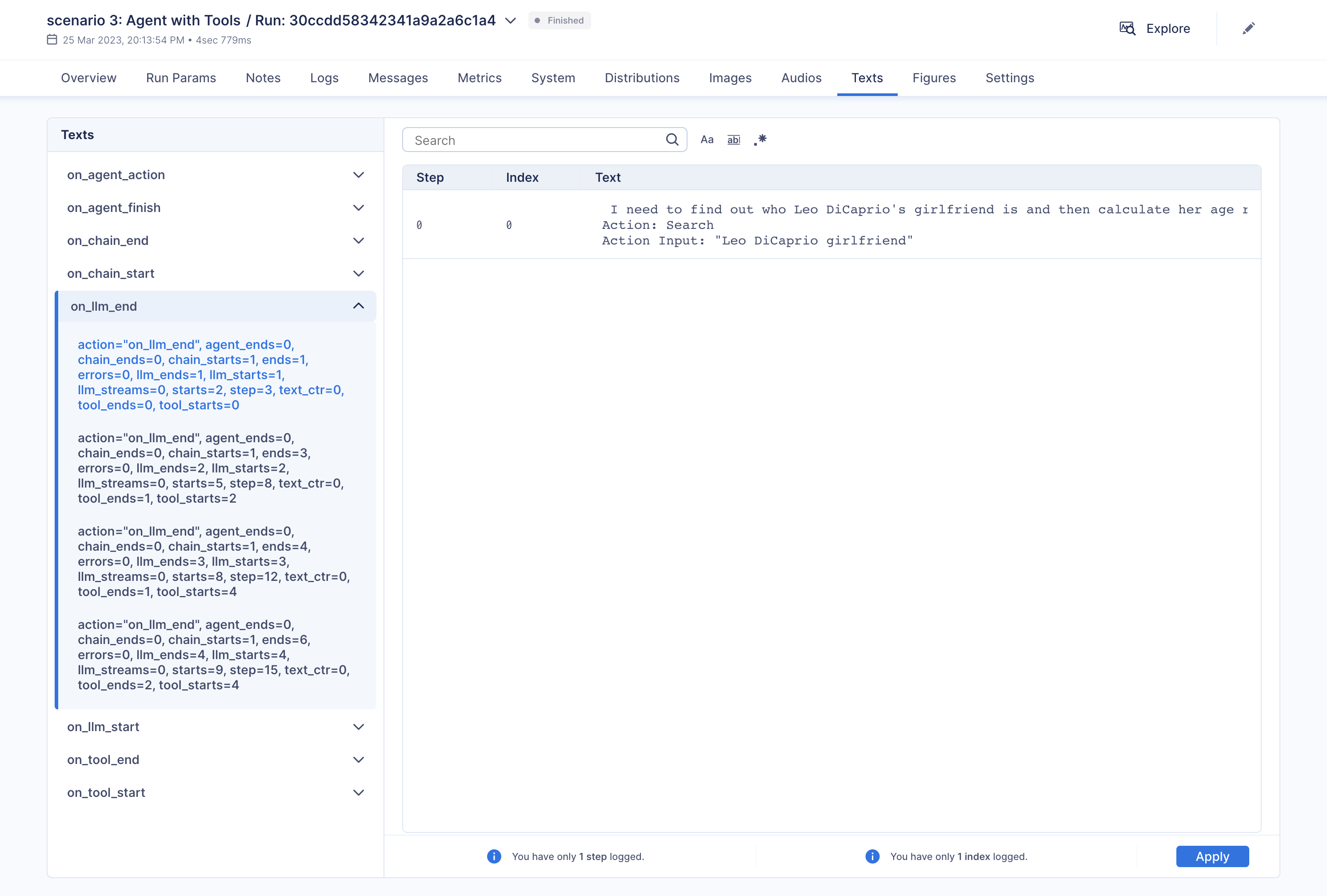\n",
|
||||
"\n",
|
||||
"Additionally, you have the option to compare multiple executions side by side:\n",
|
||||
"\n",
|
||||
"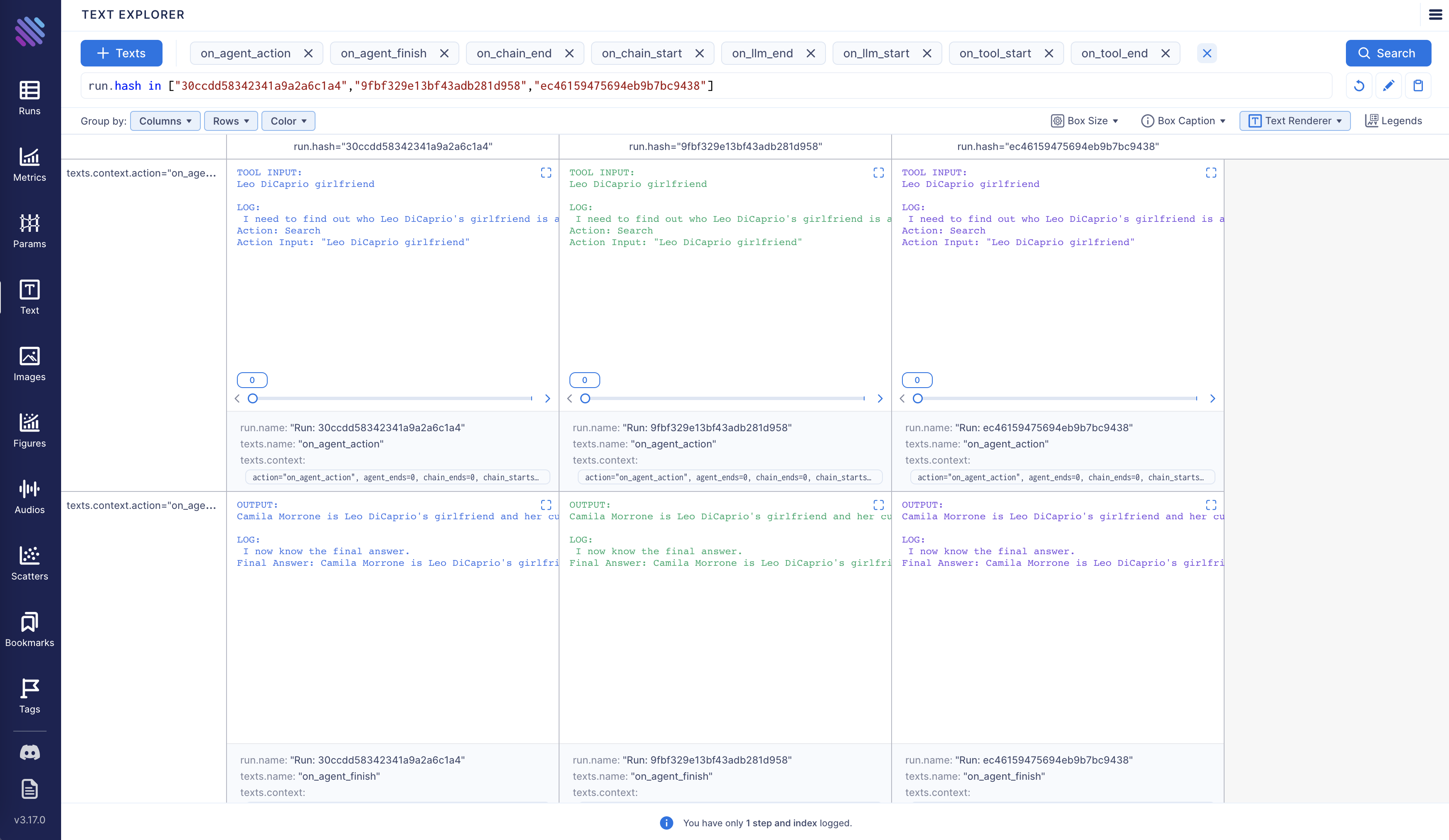\n",
|
||||
"\n",
|
||||
"Aim is fully open source, [learn more](https://github.com/aimhubio/aim) about Aim on GitHub.\n",
|
||||
"\n",
|
||||
"Let's move forward and see how to enable and configure Aim callback."
|
||||
]
|
||||
},
|
||||
{
|
||||
"cell_type": "markdown",
|
||||
"metadata": {},
|
||||
"source": [
|
||||
"<h3>Tracking LangChain Executions with Aim</h3>"
|
||||
]
|
||||
},
|
||||
{
|
||||
"cell_type": "markdown",
|
||||
"metadata": {},
|
||||
"source": [
|
||||
"In this notebook we will explore three usage scenarios. To start off, we will install the necessary packages and import certain modules. Subsequently, we will configure two environment variables that can be established either within the Python script or through the terminal."
|
||||
]
|
||||
},
|
||||
{
|
||||
"cell_type": "code",
|
||||
"execution_count": null,
|
||||
"metadata": {
|
||||
"id": "mf88kuCJhbVu"
|
||||
},
|
||||
"outputs": [],
|
||||
"source": [
|
||||
"!pip install aim\n",
|
||||
"!pip install langchain\n",
|
||||
"!pip install openai\n",
|
||||
"!pip install google-search-results"
|
||||
]
|
||||
},
|
||||
{
|
||||
"cell_type": "code",
|
||||
"execution_count": null,
|
||||
"metadata": {
|
||||
"id": "g4eTuajwfl6L"
|
||||
},
|
||||
"outputs": [],
|
||||
"source": [
|
||||
"import os\n",
|
||||
"from datetime import datetime\n",
|
||||
"\n",
|
||||
"from langchain.llms import OpenAI\n",
|
||||
"from langchain.callbacks import AimCallbackHandler, StdOutCallbackHandler"
|
||||
]
|
||||
},
|
||||
{
|
||||
"cell_type": "markdown",
|
||||
"metadata": {},
|
||||
"source": [
|
||||
"Our examples use a GPT model as the LLM, and OpenAI offers an API for this purpose. You can obtain the key from the following link: https://platform.openai.com/account/api-keys .\n",
|
||||
"\n",
|
||||
"We will use the SerpApi to retrieve search results from Google. To acquire the SerpApi key, please go to https://serpapi.com/manage-api-key ."
|
||||
]
|
||||
},
|
||||
{
|
||||
"cell_type": "code",
|
||||
"execution_count": null,
|
||||
"metadata": {
|
||||
"id": "T1bSmKd6V2If"
|
||||
},
|
||||
"outputs": [],
|
||||
"source": [
|
||||
"os.environ[\"OPENAI_API_KEY\"] = \"...\"\n",
|
||||
"os.environ[\"SERPAPI_API_KEY\"] = \"...\""
|
||||
]
|
||||
},
|
||||
{
|
||||
"cell_type": "markdown",
|
||||
"metadata": {
|
||||
"id": "QenUYuBZjIzc"
|
||||
},
|
||||
"source": [
|
||||
"The event methods of `AimCallbackHandler` accept the LangChain module or agent as input and log at least the prompts and generated results, as well as the serialized version of the LangChain module, to the designated Aim run."
|
||||
]
|
||||
},
|
||||
{
|
||||
"cell_type": "code",
|
||||
"execution_count": null,
|
||||
"metadata": {
|
||||
"id": "KAz8weWuUeXF"
|
||||
},
|
||||
"outputs": [],
|
||||
"source": [
|
||||
"session_group = datetime.now().strftime(\"%m.%d.%Y_%H.%M.%S\")\n",
|
||||
"aim_callback = AimCallbackHandler(\n",
|
||||
" repo=\".\",\n",
|
||||
" experiment_name=\"scenario 1: OpenAI LLM\",\n",
|
||||
")\n",
|
||||
"\n",
|
||||
"callbacks = [StdOutCallbackHandler(), aim_callback]\n",
|
||||
"llm = OpenAI(temperature=0, callbacks=callbacks)"
|
||||
]
|
||||
},
|
||||
{
|
||||
"cell_type": "markdown",
|
||||
"metadata": {
|
||||
"id": "b8WfByB4fl6N"
|
||||
},
|
||||
"source": [
|
||||
"The `flush_tracker` function is used to record LangChain assets on Aim. By default, the session is reset rather than being terminated outright."
|
||||
]
|
||||
},
|
||||
{
|
||||
"cell_type": "markdown",
|
||||
"metadata": {},
|
||||
"source": [
|
||||
"<h3>Scenario 1</h3> In the first scenario, we will use OpenAI LLM."
|
||||
]
|
||||
},
|
||||
{
|
||||
"cell_type": "code",
|
||||
"execution_count": null,
|
||||
"metadata": {
|
||||
"id": "o_VmneyIUyx8"
|
||||
},
|
||||
"outputs": [],
|
||||
"source": [
|
||||
"# scenario 1 - LLM\n",
|
||||
"llm_result = llm.generate([\"Tell me a joke\", \"Tell me a poem\"] * 3)\n",
|
||||
"aim_callback.flush_tracker(\n",
|
||||
" langchain_asset=llm,\n",
|
||||
" experiment_name=\"scenario 2: Chain with multiple SubChains on multiple generations\",\n",
|
||||
")\n"
|
||||
]
|
||||
},
|
||||
{
|
||||
"cell_type": "markdown",
|
||||
"metadata": {},
|
||||
"source": [
|
||||
"<h3>Scenario 2</h3> Scenario two involves chaining with multiple SubChains across multiple generations."
|
||||
]
|
||||
},
|
||||
{
|
||||
"cell_type": "code",
|
||||
"execution_count": null,
|
||||
"metadata": {
|
||||
"id": "trxslyb1U28Y"
|
||||
},
|
||||
"outputs": [],
|
||||
"source": [
|
||||
"from langchain.prompts import PromptTemplate\n",
|
||||
"from langchain.chains import LLMChain"
|
||||
]
|
||||
},
|
||||
{
|
||||
"cell_type": "code",
|
||||
"execution_count": null,
|
||||
"metadata": {
|
||||
"id": "uauQk10SUzF6"
|
||||
},
|
||||
"outputs": [],
|
||||
"source": [
|
||||
"# scenario 2 - Chain\n",
|
||||
"template = \"\"\"You are a playwright. Given the title of play, it is your job to write a synopsis for that title.\n",
|
||||
"Title: {title}\n",
|
||||
"Playwright: This is a synopsis for the above play:\"\"\"\n",
|
||||
"prompt_template = PromptTemplate(input_variables=[\"title\"], template=template)\n",
|
||||
"synopsis_chain = LLMChain(llm=llm, prompt=prompt_template, callbacks=callbacks)\n",
|
||||
"\n",
|
||||
"test_prompts = [\n",
|
||||
" {\"title\": \"documentary about good video games that push the boundary of game design\"},\n",
|
||||
" {\"title\": \"the phenomenon behind the remarkable speed of cheetahs\"},\n",
|
||||
" {\"title\": \"the best in class mlops tooling\"},\n",
|
||||
"]\n",
|
||||
"synopsis_chain.apply(test_prompts)\n",
|
||||
"aim_callback.flush_tracker(\n",
|
||||
" langchain_asset=synopsis_chain, experiment_name=\"scenario 3: Agent with Tools\"\n",
|
||||
")"
|
||||
]
|
||||
},
|
||||
{
|
||||
"cell_type": "markdown",
|
||||
"metadata": {},
|
||||
"source": [
|
||||
"<h3>Scenario 3</h3> The third scenario involves an agent with tools."
|
||||
]
|
||||
},
|
||||
{
|
||||
"cell_type": "code",
|
||||
"execution_count": null,
|
||||
"metadata": {
|
||||
"id": "_jN73xcPVEpI"
|
||||
},
|
||||
"outputs": [],
|
||||
"source": [
|
||||
"from langchain.agents import initialize_agent, load_tools\n",
|
||||
"from langchain.agents import AgentType"
|
||||
]
|
||||
},
|
||||
{
|
||||
"cell_type": "code",
|
||||
"execution_count": null,
|
||||
"metadata": {
|
||||
"colab": {
|
||||
"base_uri": "https://localhost:8080/"
|
||||
},
|
||||
"id": "Gpq4rk6VT9cu",
|
||||
"outputId": "68ae261e-d0a2-4229-83c4-762562263b66"
|
||||
},
|
||||
"outputs": [
|
||||
{
|
||||
"name": "stdout",
|
||||
"output_type": "stream",
|
||||
"text": [
|
||||
"\n",
|
||||
"\n",
|
||||
"\u001b[1m> Entering new AgentExecutor chain...\u001b[0m\n",
|
||||
"\u001b[32;1m\u001b[1;3m I need to find out who Leo DiCaprio's girlfriend is and then calculate her age raised to the 0.43 power.\n",
|
||||
"Action: Search\n",
|
||||
"Action Input: \"Leo DiCaprio girlfriend\"\u001b[0m\n",
|
||||
"Observation: \u001b[36;1m\u001b[1;3mLeonardo DiCaprio seemed to prove a long-held theory about his love life right after splitting from girlfriend Camila Morrone just months ...\u001b[0m\n",
|
||||
"Thought:\u001b[32;1m\u001b[1;3m I need to find out Camila Morrone's age\n",
|
||||
"Action: Search\n",
|
||||
"Action Input: \"Camila Morrone age\"\u001b[0m\n",
|
||||
"Observation: \u001b[36;1m\u001b[1;3m25 years\u001b[0m\n",
|
||||
"Thought:\u001b[32;1m\u001b[1;3m I need to calculate 25 raised to the 0.43 power\n",
|
||||
"Action: Calculator\n",
|
||||
"Action Input: 25^0.43\u001b[0m\n",
|
||||
"Observation: \u001b[33;1m\u001b[1;3mAnswer: 3.991298452658078\n",
|
||||
"\u001b[0m\n",
|
||||
"Thought:\u001b[32;1m\u001b[1;3m I now know the final answer\n",
|
||||
"Final Answer: Camila Morrone is Leo DiCaprio's girlfriend and her current age raised to the 0.43 power is 3.991298452658078.\u001b[0m\n",
|
||||
"\n",
|
||||
"\u001b[1m> Finished chain.\u001b[0m\n"
|
||||
]
|
||||
}
|
||||
],
|
||||
"source": [
|
||||
"# scenario 3 - Agent with Tools\n",
|
||||
"tools = load_tools([\"serpapi\", \"llm-math\"], llm=llm, callbacks=callbacks)\n",
|
||||
"agent = initialize_agent(\n",
|
||||
" tools,\n",
|
||||
" llm,\n",
|
||||
" agent=AgentType.ZERO_SHOT_REACT_DESCRIPTION,\n",
|
||||
" callbacks=callbacks,\n",
|
||||
")\n",
|
||||
"agent.run(\n",
|
||||
" \"Who is Leo DiCaprio's girlfriend? What is her current age raised to the 0.43 power?\"\n",
|
||||
")\n",
|
||||
"aim_callback.flush_tracker(langchain_asset=agent, reset=False, finish=True)"
|
||||
]
|
||||
}
|
||||
],
|
||||
"metadata": {
|
||||
"accelerator": "GPU",
|
||||
"colab": {
|
||||
"provenance": []
|
||||
},
|
||||
"gpuClass": "standard",
|
||||
"kernelspec": {
|
||||
"display_name": "Python 3 (ipykernel)",
|
||||
"language": "python",
|
||||
"name": "python3"
|
||||
},
|
||||
"language_info": {
|
||||
"codemirror_mode": {
|
||||
"name": "ipython",
|
||||
"version": 3
|
||||
},
|
||||
"file_extension": ".py",
|
||||
"mimetype": "text/x-python",
|
||||
"name": "python",
|
||||
"nbconvert_exporter": "python",
|
||||
"pygments_lexer": "ipython3",
|
||||
"version": "3.9.1"
|
||||
}
|
||||
},
|
||||
"nbformat": 4,
|
||||
"nbformat_minor": 1
|
||||
}
|
||||
@@ -1,29 +0,0 @@
|
||||
# Airbyte
|
||||
|
||||
>[Airbyte](https://github.com/airbytehq/airbyte) is a data integration platform for ELT pipelines from APIs,
|
||||
> databases & files to warehouses & lakes. It has the largest catalog of ELT connectors to data warehouses and databases.
|
||||
|
||||
## Installation and Setup
|
||||
|
||||
This instruction shows how to load any source from `Airbyte` into a local `JSON` file that can be read in as a document.
|
||||
|
||||
**Prerequisites:**
|
||||
Have `docker desktop` installed.
|
||||
|
||||
**Steps:**
|
||||
1. Clone Airbyte from GitHub - `git clone https://github.com/airbytehq/airbyte.git`.
|
||||
2. Switch into Airbyte directory - `cd airbyte`.
|
||||
3. Start Airbyte - `docker compose up`.
|
||||
4. In your browser, just visit http://localhost:8000. You will be asked for a username and password. By default, that's username `airbyte` and password `password`.
|
||||
5. Setup any source you wish.
|
||||
6. Set destination as Local JSON, with specified destination path - lets say `/json_data`. Set up a manual sync.
|
||||
7. Run the connection.
|
||||
8. To see what files are created, navigate to: `file:///tmp/airbyte_local/`.
|
||||
|
||||
## Document Loader
|
||||
|
||||
See a [usage example](../modules/indexes/document_loaders/examples/airbyte_json.ipynb).
|
||||
|
||||
```python
|
||||
from langchain.document_loaders import AirbyteJSONLoader
|
||||
```
|
||||
@@ -1,36 +0,0 @@
|
||||
# Aleph Alpha
|
||||
|
||||
>[Aleph Alpha](https://docs.aleph-alpha.com/) was founded in 2019 with the mission to research and build the foundational technology for an era of strong AI. The team of international scientists, engineers, and innovators researches, develops, and deploys transformative AI like large language and multimodal models and runs the fastest European commercial AI cluster.
|
||||
|
||||
>[The Luminous series](https://docs.aleph-alpha.com/docs/introduction/luminous/) is a family of large language models.
|
||||
|
||||
## Installation and Setup
|
||||
|
||||
```bash
|
||||
pip install aleph-alpha-client
|
||||
```
|
||||
|
||||
You have to create a new token. Please, see [instructions](https://docs.aleph-alpha.com/docs/account/#create-a-new-token).
|
||||
|
||||
```python
|
||||
from getpass import getpass
|
||||
|
||||
ALEPH_ALPHA_API_KEY = getpass()
|
||||
```
|
||||
|
||||
|
||||
## LLM
|
||||
|
||||
See a [usage example](../modules/models/llms/integrations/aleph_alpha.ipynb).
|
||||
|
||||
```python
|
||||
from langchain.llms import AlephAlpha
|
||||
```
|
||||
|
||||
## Text Embedding Models
|
||||
|
||||
See a [usage example](../modules/models/text_embedding/examples/aleph_alpha.ipynb).
|
||||
|
||||
```python
|
||||
from langchain.embeddings import AlephAlphaSymmetricSemanticEmbedding, AlephAlphaAsymmetricSemanticEmbedding
|
||||
```
|
||||
@@ -1,24 +0,0 @@
|
||||
# Amazon Bedrock
|
||||
|
||||
>[Amazon Bedrock](https://aws.amazon.com/bedrock/) is a fully managed service that makes FMs from leading AI startups and Amazon available via an API, so you can choose from a wide range of FMs to find the model that is best suited for your use case.
|
||||
|
||||
## Installation and Setup
|
||||
|
||||
```bash
|
||||
pip install boto3
|
||||
```
|
||||
|
||||
## LLM
|
||||
|
||||
See a [usage example](../modules/models/llms/integrations/bedrock.ipynb).
|
||||
|
||||
```python
|
||||
from langchain import Bedrock
|
||||
```
|
||||
|
||||
## Text Embedding Models
|
||||
|
||||
See a [usage example](../modules/models/text_embedding/examples/amazon_bedrock.ipynb).
|
||||
```python
|
||||
from langchain.embeddings import BedrockEmbeddings
|
||||
```
|
||||
@@ -1,15 +0,0 @@
|
||||
# AnalyticDB
|
||||
|
||||
This page covers how to use the AnalyticDB ecosystem within LangChain.
|
||||
|
||||
### VectorStore
|
||||
|
||||
There exists a wrapper around AnalyticDB, allowing you to use it as a vectorstore,
|
||||
whether for semantic search or example selection.
|
||||
|
||||
To import this vectorstore:
|
||||
```python
|
||||
from langchain.vectorstores import AnalyticDB
|
||||
```
|
||||
|
||||
For a more detailed walkthrough of the AnalyticDB wrapper, see [this notebook](../modules/indexes/vectorstores/examples/analyticdb.ipynb)
|
||||
@@ -1,18 +0,0 @@
|
||||
# Annoy
|
||||
|
||||
> [Annoy](https://github.com/spotify/annoy) (`Approximate Nearest Neighbors Oh Yeah`) is a C++ library with Python bindings to search for points in space that are close to a given query point. It also creates large read-only file-based data structures that are mmapped into memory so that many processes may share the same data.
|
||||
## Installation and Setup
|
||||
|
||||
|
||||
```bash
|
||||
pip install annoy
|
||||
```
|
||||
|
||||
|
||||
## Vectorstore
|
||||
|
||||
See a [usage example](../modules/indexes/vectorstores/examples/annoy.ipynb).
|
||||
|
||||
```python
|
||||
from langchain.vectorstores import Annoy
|
||||
```
|
||||
@@ -1,26 +0,0 @@
|
||||
# Anthropic
|
||||
|
||||
>[Anthropic](https://en.wikipedia.org/wiki/Anthropic) is an American artificial intelligence (AI) startup and
|
||||
> public-benefit corporation, founded by former members of OpenAI. `Anthropic` specializes in developing general AI
|
||||
> systems and language models, with a company ethos of responsible AI usage.
|
||||
> `Anthropic` develops a chatbot, named `Claude`. Similar to `ChatGPT`, `Claude` uses a messaging
|
||||
> interface where users can submit questions or requests and receive highly detailed and relevant responses.
|
||||
|
||||
## Installation and Setup
|
||||
|
||||
|
||||
```bash
|
||||
pip install anthropic
|
||||
```
|
||||
|
||||
See the [setup documentation](https://console.anthropic.com/docs/access).
|
||||
|
||||
|
||||
|
||||
## Chat Models
|
||||
|
||||
See a [usage example](../modules/models/chat/integrations/anthropic.ipynb)
|
||||
|
||||
```python
|
||||
from langchain.chat_models import ChatAnthropic
|
||||
```
|
||||
@@ -1,17 +0,0 @@
|
||||
# Anyscale
|
||||
|
||||
This page covers how to use the Anyscale ecosystem within LangChain.
|
||||
It is broken into two parts: installation and setup, and then references to specific Anyscale wrappers.
|
||||
|
||||
## Installation and Setup
|
||||
- Get an Anyscale Service URL, route and API key and set them as environment variables (`ANYSCALE_SERVICE_URL`,`ANYSCALE_SERVICE_ROUTE`, `ANYSCALE_SERVICE_TOKEN`).
|
||||
- Please see [the Anyscale docs](https://docs.anyscale.com/productionize/services-v2/get-started) for more details.
|
||||
|
||||
## Wrappers
|
||||
|
||||
### LLM
|
||||
|
||||
There exists an Anyscale LLM wrapper, which you can access with
|
||||
```python
|
||||
from langchain.llms import Anyscale
|
||||
```
|
||||
@@ -1,46 +0,0 @@
|
||||
# Apify
|
||||
|
||||
This page covers how to use [Apify](https://apify.com) within LangChain.
|
||||
|
||||
## Overview
|
||||
|
||||
Apify is a cloud platform for web scraping and data extraction,
|
||||
which provides an [ecosystem](https://apify.com/store) of more than a thousand
|
||||
ready-made apps called *Actors* for various scraping, crawling, and extraction use cases.
|
||||
|
||||
[](https://apify.com/store)
|
||||
|
||||
This integration enables you run Actors on the Apify platform and load their results into LangChain to feed your vector
|
||||
indexes with documents and data from the web, e.g. to generate answers from websites with documentation,
|
||||
blogs, or knowledge bases.
|
||||
|
||||
|
||||
## Installation and Setup
|
||||
|
||||
- Install the Apify API client for Python with `pip install apify-client`
|
||||
- Get your [Apify API token](https://console.apify.com/account/integrations) and either set it as
|
||||
an environment variable (`APIFY_API_TOKEN`) or pass it to the `ApifyWrapper` as `apify_api_token` in the constructor.
|
||||
|
||||
|
||||
## Wrappers
|
||||
|
||||
### Utility
|
||||
|
||||
You can use the `ApifyWrapper` to run Actors on the Apify platform.
|
||||
|
||||
```python
|
||||
from langchain.utilities import ApifyWrapper
|
||||
```
|
||||
|
||||
For a more detailed walkthrough of this wrapper, see [this notebook](../modules/agents/tools/examples/apify.ipynb).
|
||||
|
||||
|
||||
### Loader
|
||||
|
||||
You can also use our `ApifyDatasetLoader` to get data from Apify dataset.
|
||||
|
||||
```python
|
||||
from langchain.document_loaders import ApifyDatasetLoader
|
||||
```
|
||||
|
||||
For a more detailed walkthrough of this loader, see [this notebook](../modules/indexes/document_loaders/examples/apify_dataset.ipynb).
|
||||
@@ -1,29 +0,0 @@
|
||||
# Argilla
|
||||
|
||||
|
||||
|
||||
>[Argilla](https://argilla.io/) is an open-source data curation platform for LLMs.
|
||||
> Using Argilla, everyone can build robust language models through faster data curation
|
||||
> using both human and machine feedback. We provide support for each step in the MLOps cycle,
|
||||
> from data labeling to model monitoring.
|
||||
|
||||
## Installation and Setup
|
||||
|
||||
First, you'll need to install the `argilla` Python package as follows:
|
||||
|
||||
```bash
|
||||
pip install argilla --upgrade
|
||||
```
|
||||
|
||||
If you already have an Argilla Server running, then you're good to go; but if
|
||||
you don't, follow the next steps to install it.
|
||||
|
||||
If you don't you can refer to [Argilla - 🚀 Quickstart](https://docs.argilla.io/en/latest/getting_started/quickstart.html#Running-Argilla-Quickstart) to deploy Argilla either on HuggingFace Spaces, locally, or on a server.
|
||||
|
||||
## Tracking
|
||||
|
||||
See a [usage example of `ArgillaCallbackHandler`](../modules/callbacks/examples/examples/argilla.ipynb).
|
||||
|
||||
```python
|
||||
from langchain.callbacks import ArgillaCallbackHandler
|
||||
```
|
||||
@@ -1,36 +0,0 @@
|
||||
# Arxiv
|
||||
|
||||
>[arXiv](https://arxiv.org/) is an open-access archive for 2 million scholarly articles in the fields of physics,
|
||||
> mathematics, computer science, quantitative biology, quantitative finance, statistics, electrical engineering and
|
||||
> systems science, and economics.
|
||||
|
||||
|
||||
## Installation and Setup
|
||||
|
||||
First, you need to install `arxiv` python package.
|
||||
|
||||
```bash
|
||||
pip install arxiv
|
||||
```
|
||||
|
||||
Second, you need to install `PyMuPDF` python package which transforms PDF files downloaded from the `arxiv.org` site into the text format.
|
||||
|
||||
```bash
|
||||
pip install pymupdf
|
||||
```
|
||||
|
||||
## Document Loader
|
||||
|
||||
See a [usage example](../modules/indexes/document_loaders/examples/arxiv.ipynb).
|
||||
|
||||
```python
|
||||
from langchain.document_loaders import ArxivLoader
|
||||
```
|
||||
|
||||
## Retriever
|
||||
|
||||
See a [usage example](../modules/indexes/retrievers/examples/arxiv.ipynb).
|
||||
|
||||
```python
|
||||
from langchain.retrievers import ArxivRetriever
|
||||
```
|
||||
@@ -1,27 +0,0 @@
|
||||
# AtlasDB
|
||||
|
||||
This page covers how to use Nomic's Atlas ecosystem within LangChain.
|
||||
It is broken into two parts: installation and setup, and then references to specific Atlas wrappers.
|
||||
|
||||
## Installation and Setup
|
||||
- Install the Python package with `pip install nomic`
|
||||
- Nomic is also included in langchains poetry extras `poetry install -E all`
|
||||
|
||||
## Wrappers
|
||||
|
||||
### VectorStore
|
||||
|
||||
There exists a wrapper around the Atlas neural database, allowing you to use it as a vectorstore.
|
||||
This vectorstore also gives you full access to the underlying AtlasProject object, which will allow you to use the full range of Atlas map interactions, such as bulk tagging and automatic topic modeling.
|
||||
Please see [the Atlas docs](https://docs.nomic.ai/atlas_api.html) for more detailed information.
|
||||
|
||||
|
||||
|
||||
|
||||
|
||||
To import this vectorstore:
|
||||
```python
|
||||
from langchain.vectorstores import AtlasDB
|
||||
```
|
||||
|
||||
For a more detailed walkthrough of the AtlasDB wrapper, see [this notebook](../modules/indexes/vectorstores/examples/atlas.ipynb)
|
||||
@@ -1,21 +0,0 @@
|
||||
# AwaDB
|
||||
|
||||
>[AwaDB](https://github.com/awa-ai/awadb) is an AI Native database for the search and storage of embedding vectors used by LLM Applications.
|
||||
|
||||
## Installation and Setup
|
||||
|
||||
```bash
|
||||
pip install awadb
|
||||
```
|
||||
|
||||
|
||||
## VectorStore
|
||||
|
||||
There exists a wrapper around AwaDB vector databases, allowing you to use it as a vectorstore,
|
||||
whether for semantic search or example selection.
|
||||
|
||||
```python
|
||||
from langchain.vectorstores import AwaDB
|
||||
```
|
||||
|
||||
For a more detailed walkthrough of the AwaDB wrapper, see [this notebook](../modules/indexes/vectorstores/examples/awadb.ipynb)
|
||||
@@ -1,25 +0,0 @@
|
||||
# AWS S3 Directory
|
||||
|
||||
>[Amazon Simple Storage Service (Amazon S3)](https://docs.aws.amazon.com/AmazonS3/latest/userguide/using-folders.html) is an object storage service.
|
||||
|
||||
>[AWS S3 Directory](https://docs.aws.amazon.com/AmazonS3/latest/userguide/using-folders.html)
|
||||
|
||||
>[AWS S3 Buckets](https://docs.aws.amazon.com/AmazonS3/latest/userguide/UsingBucket.html)
|
||||
|
||||
|
||||
## Installation and Setup
|
||||
|
||||
```bash
|
||||
pip install boto3
|
||||
```
|
||||
|
||||
|
||||
## Document Loader
|
||||
|
||||
See a [usage example for S3DirectoryLoader](../modules/indexes/document_loaders/examples/aws_s3_directory.ipynb).
|
||||
|
||||
See a [usage example for S3FileLoader](../modules/indexes/document_loaders/examples/aws_s3_file.ipynb).
|
||||
|
||||
```python
|
||||
from langchain.document_loaders import S3DirectoryLoader, S3FileLoader
|
||||
```
|
||||
@@ -1,16 +0,0 @@
|
||||
# AZLyrics
|
||||
|
||||
>[AZLyrics](https://www.azlyrics.com/) is a large, legal, every day growing collection of lyrics.
|
||||
|
||||
## Installation and Setup
|
||||
|
||||
There isn't any special setup for it.
|
||||
|
||||
|
||||
## Document Loader
|
||||
|
||||
See a [usage example](../modules/indexes/document_loaders/examples/azlyrics.ipynb).
|
||||
|
||||
```python
|
||||
from langchain.document_loaders import AZLyricsLoader
|
||||
```
|
||||
@@ -1,36 +0,0 @@
|
||||
# Azure Blob Storage
|
||||
|
||||
>[Azure Blob Storage](https://learn.microsoft.com/en-us/azure/storage/blobs/storage-blobs-introduction) is Microsoft's object storage solution for the cloud. Blob Storage is optimized for storing massive amounts of unstructured data. Unstructured data is data that doesn't adhere to a particular data model or definition, such as text or binary data.
|
||||
|
||||
>[Azure Files](https://learn.microsoft.com/en-us/azure/storage/files/storage-files-introduction) offers fully managed
|
||||
> file shares in the cloud that are accessible via the industry standard Server Message Block (`SMB`) protocol,
|
||||
> Network File System (`NFS`) protocol, and `Azure Files REST API`. `Azure Files` are based on the `Azure Blob Storage`.
|
||||
|
||||
`Azure Blob Storage` is designed for:
|
||||
- Serving images or documents directly to a browser.
|
||||
- Storing files for distributed access.
|
||||
- Streaming video and audio.
|
||||
- Writing to log files.
|
||||
- Storing data for backup and restore, disaster recovery, and archiving.
|
||||
- Storing data for analysis by an on-premises or Azure-hosted service.
|
||||
|
||||
## Installation and Setup
|
||||
|
||||
```bash
|
||||
pip install azure-storage-blob
|
||||
```
|
||||
|
||||
|
||||
## Document Loader
|
||||
|
||||
See a [usage example for the Azure Blob Storage](../modules/indexes/document_loaders/examples/azure_blob_storage_container.ipynb).
|
||||
|
||||
```python
|
||||
from langchain.document_loaders import AzureBlobStorageContainerLoader
|
||||
```
|
||||
|
||||
See a [usage example for the Azure Files](../modules/indexes/document_loaders/examples/azure_blob_storage_file.ipynb).
|
||||
|
||||
```python
|
||||
from langchain.document_loaders import AzureBlobStorageFileLoader
|
||||
```
|
||||
@@ -1,24 +0,0 @@
|
||||
# Azure Cognitive Search
|
||||
|
||||
>[Azure Cognitive Search](https://learn.microsoft.com/en-us/azure/search/search-what-is-azure-search) (formerly known as `Azure Search`) is a cloud search service that gives developers infrastructure, APIs, and tools for building a rich search experience over private, heterogeneous content in web, mobile, and enterprise applications.
|
||||
|
||||
>Search is foundational to any app that surfaces text to users, where common scenarios include catalog or document search, online retail apps, or data exploration over proprietary content. When you create a search service, you'll work with the following capabilities:
|
||||
>- A search engine for full text search over a search index containing user-owned content
|
||||
>- Rich indexing, with lexical analysis and optional AI enrichment for content extraction and transformation
|
||||
>- Rich query syntax for text search, fuzzy search, autocomplete, geo-search and more
|
||||
>- Programmability through REST APIs and client libraries in Azure SDKs
|
||||
>- Azure integration at the data layer, machine learning layer, and AI (Cognitive Services)
|
||||
|
||||
|
||||
## Installation and Setup
|
||||
|
||||
See [set up instructions](https://learn.microsoft.com/en-us/azure/search/search-create-service-portal).
|
||||
|
||||
|
||||
## Retriever
|
||||
|
||||
See a [usage example](../modules/indexes/retrievers/examples/azure_cognitive_search.ipynb).
|
||||
|
||||
```python
|
||||
from langchain.retrievers import AzureCognitiveSearchRetriever
|
||||
```
|
||||
@@ -1,50 +0,0 @@
|
||||
# Azure OpenAI
|
||||
|
||||
>[Microsoft Azure](https://en.wikipedia.org/wiki/Microsoft_Azure), often referred to as `Azure` is a cloud computing platform run by `Microsoft`, which offers access, management, and development of applications and services through global data centers. It provides a range of capabilities, including software as a service (SaaS), platform as a service (PaaS), and infrastructure as a service (IaaS). `Microsoft Azure` supports many programming languages, tools, and frameworks, including Microsoft-specific and third-party software and systems.
|
||||
|
||||
|
||||
>[Azure OpenAI](https://learn.microsoft.com/en-us/azure/cognitive-services/openai/) is an `Azure` service with powerful language models from `OpenAI` including the `GPT-3`, `Codex` and `Embeddings model` series for content generation, summarization, semantic search, and natural language to code translation.
|
||||
|
||||
|
||||
## Installation and Setup
|
||||
|
||||
```bash
|
||||
pip install openai
|
||||
pip install tiktoken
|
||||
```
|
||||
|
||||
|
||||
Set the environment variables to get access to the `Azure OpenAI` service.
|
||||
|
||||
```python
|
||||
import os
|
||||
|
||||
os.environ["OPENAI_API_TYPE"] = "azure"
|
||||
os.environ["OPENAI_API_BASE"] = "https://<your-endpoint.openai.azure.com/"
|
||||
os.environ["OPENAI_API_KEY"] = "your AzureOpenAI key"
|
||||
os.environ["OPENAI_API_VERSION"] = "2023-03-15-preview"
|
||||
```
|
||||
|
||||
## LLM
|
||||
|
||||
See a [usage example](../modules/models/llms/integrations/azure_openai_example.ipynb).
|
||||
|
||||
```python
|
||||
from langchain.llms import AzureOpenAI
|
||||
```
|
||||
|
||||
## Text Embedding Models
|
||||
|
||||
See a [usage example](../modules/models/text_embedding/examples/azureopenai.ipynb)
|
||||
|
||||
```python
|
||||
from langchain.embeddings import OpenAIEmbeddings
|
||||
```
|
||||
|
||||
## Chat Models
|
||||
|
||||
See a [usage example](../modules/models/chat/integrations/azure_chat_openai.ipynb)
|
||||
|
||||
```python
|
||||
from langchain.chat_models import AzureChatOpenAI
|
||||
```
|
||||
@@ -1,79 +0,0 @@
|
||||
# Banana
|
||||
|
||||
This page covers how to use the Banana ecosystem within LangChain.
|
||||
It is broken into two parts: installation and setup, and then references to specific Banana wrappers.
|
||||
|
||||
## Installation and Setup
|
||||
|
||||
- Install with `pip install banana-dev`
|
||||
- Get an Banana api key and set it as an environment variable (`BANANA_API_KEY`)
|
||||
|
||||
## Define your Banana Template
|
||||
|
||||
If you want to use an available language model template you can find one [here](https://app.banana.dev/templates/conceptofmind/serverless-template-palmyra-base).
|
||||
This template uses the Palmyra-Base model by [Writer](https://writer.com/product/api/).
|
||||
You can check out an example Banana repository [here](https://github.com/conceptofmind/serverless-template-palmyra-base).
|
||||
|
||||
## Build the Banana app
|
||||
|
||||
Banana Apps must include the "output" key in the return json.
|
||||
There is a rigid response structure.
|
||||
|
||||
```python
|
||||
# Return the results as a dictionary
|
||||
result = {'output': result}
|
||||
```
|
||||
|
||||
An example inference function would be:
|
||||
|
||||
```python
|
||||
def inference(model_inputs:dict) -> dict:
|
||||
global model
|
||||
global tokenizer
|
||||
|
||||
# Parse out your arguments
|
||||
prompt = model_inputs.get('prompt', None)
|
||||
if prompt == None:
|
||||
return {'message': "No prompt provided"}
|
||||
|
||||
# Run the model
|
||||
input_ids = tokenizer.encode(prompt, return_tensors='pt').cuda()
|
||||
output = model.generate(
|
||||
input_ids,
|
||||
max_length=100,
|
||||
do_sample=True,
|
||||
top_k=50,
|
||||
top_p=0.95,
|
||||
num_return_sequences=1,
|
||||
temperature=0.9,
|
||||
early_stopping=True,
|
||||
no_repeat_ngram_size=3,
|
||||
num_beams=5,
|
||||
length_penalty=1.5,
|
||||
repetition_penalty=1.5,
|
||||
bad_words_ids=[[tokenizer.encode(' ', add_prefix_space=True)[0]]]
|
||||
)
|
||||
|
||||
result = tokenizer.decode(output[0], skip_special_tokens=True)
|
||||
# Return the results as a dictionary
|
||||
result = {'output': result}
|
||||
return result
|
||||
```
|
||||
|
||||
You can find a full example of a Banana app [here](https://github.com/conceptofmind/serverless-template-palmyra-base/blob/main/app.py).
|
||||
|
||||
## Wrappers
|
||||
|
||||
### LLM
|
||||
|
||||
There exists an Banana LLM wrapper, which you can access with
|
||||
|
||||
```python
|
||||
from langchain.llms import Banana
|
||||
```
|
||||
|
||||
You need to provide a model key located in the dashboard:
|
||||
|
||||
```python
|
||||
llm = Banana(model_key="YOUR_MODEL_KEY")
|
||||
```
|
||||
@@ -1,93 +0,0 @@
|
||||
# Beam
|
||||
|
||||
>[Beam](https://docs.beam.cloud/introduction) makes it easy to run code on GPUs, deploy scalable web APIs,
|
||||
> schedule cron jobs, and run massively parallel workloads — without managing any infrastructure.
|
||||
|
||||
|
||||
## Installation and Setup
|
||||
|
||||
- [Create an account](https://www.beam.cloud/)
|
||||
- Install the Beam CLI with `curl https://raw.githubusercontent.com/slai-labs/get-beam/main/get-beam.sh -sSfL | sh`
|
||||
- Register API keys with `beam configure`
|
||||
- Set environment variables (`BEAM_CLIENT_ID`) and (`BEAM_CLIENT_SECRET`)
|
||||
- Install the Beam SDK:
|
||||
```bash
|
||||
pip install beam-sdk
|
||||
```
|
||||
|
||||
## LLM
|
||||
|
||||
|
||||
```python
|
||||
from langchain.llms.beam import Beam
|
||||
```
|
||||
|
||||
### Example of the Beam app
|
||||
|
||||
This is the environment you’ll be developing against once you start the app.
|
||||
It's also used to define the maximum response length from the model.
|
||||
```python
|
||||
llm = Beam(model_name="gpt2",
|
||||
name="langchain-gpt2-test",
|
||||
cpu=8,
|
||||
memory="32Gi",
|
||||
gpu="A10G",
|
||||
python_version="python3.8",
|
||||
python_packages=[
|
||||
"diffusers[torch]>=0.10",
|
||||
"transformers",
|
||||
"torch",
|
||||
"pillow",
|
||||
"accelerate",
|
||||
"safetensors",
|
||||
"xformers",],
|
||||
max_length="50",
|
||||
verbose=False)
|
||||
```
|
||||
|
||||
### Deploy the Beam app
|
||||
|
||||
Once defined, you can deploy your Beam app by calling your model's `_deploy()` method.
|
||||
|
||||
```python
|
||||
llm._deploy()
|
||||
```
|
||||
|
||||
### Call the Beam app
|
||||
|
||||
Once a beam model is deployed, it can be called by calling your model's `_call()` method.
|
||||
This returns the GPT2 text response to your prompt.
|
||||
|
||||
```python
|
||||
response = llm._call("Running machine learning on a remote GPU")
|
||||
```
|
||||
|
||||
An example script which deploys the model and calls it would be:
|
||||
|
||||
```python
|
||||
from langchain.llms.beam import Beam
|
||||
import time
|
||||
|
||||
llm = Beam(model_name="gpt2",
|
||||
name="langchain-gpt2-test",
|
||||
cpu=8,
|
||||
memory="32Gi",
|
||||
gpu="A10G",
|
||||
python_version="python3.8",
|
||||
python_packages=[
|
||||
"diffusers[torch]>=0.10",
|
||||
"transformers",
|
||||
"torch",
|
||||
"pillow",
|
||||
"accelerate",
|
||||
"safetensors",
|
||||
"xformers",],
|
||||
max_length="50",
|
||||
verbose=False)
|
||||
|
||||
llm._deploy()
|
||||
|
||||
response = llm._call("Running machine learning on a remote GPU")
|
||||
|
||||
print(response)
|
||||
```
|
||||
@@ -1,17 +0,0 @@
|
||||
# BiliBili
|
||||
|
||||
>[Bilibili](https://www.bilibili.tv/) is one of the most beloved long-form video sites in China.
|
||||
|
||||
## Installation and Setup
|
||||
|
||||
```bash
|
||||
pip install bilibili-api-python
|
||||
```
|
||||
|
||||
## Document Loader
|
||||
|
||||
See a [usage example](../modules/indexes/document_loaders/examples/bilibili.ipynb).
|
||||
|
||||
```python
|
||||
from langchain.document_loaders import BiliBiliLoader
|
||||
```
|
||||
@@ -1,22 +0,0 @@
|
||||
# Blackboard
|
||||
|
||||
>[Blackboard Learn](https://en.wikipedia.org/wiki/Blackboard_Learn) (previously the `Blackboard Learning Management System`)
|
||||
> is a web-based virtual learning environment and learning management system developed by Blackboard Inc.
|
||||
> The software features course management, customizable open architecture, and scalable design that allows
|
||||
> integration with student information systems and authentication protocols. It may be installed on local servers,
|
||||
> hosted by `Blackboard ASP Solutions`, or provided as Software as a Service hosted on Amazon Web Services.
|
||||
> Its main purposes are stated to include the addition of online elements to courses traditionally delivered
|
||||
> face-to-face and development of completely online courses with few or no face-to-face meetings.
|
||||
|
||||
## Installation and Setup
|
||||
|
||||
There isn't any special setup for it.
|
||||
|
||||
## Document Loader
|
||||
|
||||
See a [usage example](../modules/indexes/document_loaders/examples/blackboard.ipynb).
|
||||
|
||||
```python
|
||||
from langchain.document_loaders import BlackboardLoader
|
||||
|
||||
```
|
||||
@@ -1,23 +0,0 @@
|
||||
# Cassandra
|
||||
|
||||
>[Cassandra](https://en.wikipedia.org/wiki/Apache_Cassandra) is a free and open-source, distributed, wide-column
|
||||
> store, NoSQL database management system designed to handle large amounts of data across many commodity servers,
|
||||
> providing high availability with no single point of failure. `Cassandra` offers support for clusters spanning
|
||||
> multiple datacenters, with asynchronous masterless replication allowing low latency operations for all clients.
|
||||
> `Cassandra` was designed to implement a combination of `Amazon's Dynamo` distributed storage and replication
|
||||
> techniques combined with `Google's Bigtable` data and storage engine model.
|
||||
|
||||
## Installation and Setup
|
||||
|
||||
```bash
|
||||
pip install cassandra-drive
|
||||
```
|
||||
|
||||
|
||||
## Memory
|
||||
|
||||
See a [usage example](../modules/memory/examples/cassandra_chat_message_history.ipynb).
|
||||
|
||||
```python
|
||||
from langchain.memory import CassandraChatMessageHistory
|
||||
```
|
||||
@@ -1,17 +0,0 @@
|
||||
# CerebriumAI
|
||||
|
||||
This page covers how to use the CerebriumAI ecosystem within LangChain.
|
||||
It is broken into two parts: installation and setup, and then references to specific CerebriumAI wrappers.
|
||||
|
||||
## Installation and Setup
|
||||
- Install with `pip install cerebrium`
|
||||
- Get an CerebriumAI api key and set it as an environment variable (`CEREBRIUMAI_API_KEY`)
|
||||
|
||||
## Wrappers
|
||||
|
||||
### LLM
|
||||
|
||||
There exists an CerebriumAI LLM wrapper, which you can access with
|
||||
```python
|
||||
from langchain.llms import CerebriumAI
|
||||
```
|
||||
@@ -1,29 +0,0 @@
|
||||
# Chroma
|
||||
|
||||
>[Chroma](https://docs.trychroma.com/getting-started) is a database for building AI applications with embeddings.
|
||||
|
||||
## Installation and Setup
|
||||
|
||||
```bash
|
||||
pip install chromadb
|
||||
```
|
||||
|
||||
|
||||
## VectorStore
|
||||
|
||||
There exists a wrapper around Chroma vector databases, allowing you to use it as a vectorstore,
|
||||
whether for semantic search or example selection.
|
||||
|
||||
```python
|
||||
from langchain.vectorstores import Chroma
|
||||
```
|
||||
|
||||
For a more detailed walkthrough of the Chroma wrapper, see [this notebook](../modules/indexes/vectorstores/getting_started.ipynb)
|
||||
|
||||
## Retriever
|
||||
|
||||
See a [usage example](../modules/indexes/retrievers/examples/chroma_self_query.ipynb).
|
||||
|
||||
```python
|
||||
from langchain.retrievers import SelfQueryRetriever
|
||||
```
|
||||
Some files were not shown because too many files have changed in this diff Show More
Reference in New Issue
Block a user