mirror of
https://github.com/hwchase17/langchain.git
synced 2026-02-18 04:25:22 +00:00
Compare commits
98 Commits
harrison/a
...
mako-templ
| Author | SHA1 | Date | |
|---|---|---|---|

|
5b48ab8db3 | ||

|
a19ad935b3 | ||
|
|
c02eb199b6 | ||
|
|
8869b0ab0e | ||
|
|
b15c84e19d | ||
|
|
0ac08bbca6 | ||

|
0c3ae78ec1 | ||
|
|
ca4b10bb74 | ||
|
|
d2f9288be6 | ||
|
|
d775ddd749 | ||

|
47e35d7d0e | ||
|
|
4f1bf159f4 | ||
|
|
b504cd739f | ||
|
|
a4b502d92f | ||
|
|
1835e8a681 | ||
|
|
bbb405a492 | ||

|
1a95252f00 | ||
|
|
9f223e6ccc | ||

|
76cecf8165 | ||
|
|
ced29b816b | ||
|
|
11d37d556e | ||
|
|
b1b6b27c5f | ||
|
|
f23b3ceb49 | ||
|
|
1fe3a4f724 | ||

|
2910f50a3c | ||
|
|
8a5ec894e7 | ||
|
|
d87e73ddb1 | ||
|
|
b542941234 | ||
|
|
6df08eec52 | ||
|
|
f5a588a165 | ||
|
|
47af2bcee4 | ||
|
|
4c0b684f79 | ||
|
|
7467243a42 | ||
|
|
e43534d41c | ||
|
|
5e76c12455 | ||
|
|
9f878e43d8 | ||

|
d8734ce5ad | ||
|
|
2179ea3103 | ||
|
|
da445e474d | ||
|
|
b92e9abdf1 | ||

|
a0780cc930 | ||
|
|
3ee6e332dd | ||

|
28282ad099 | ||
|
|
95dd2f140e | ||
|
|
abe4fc04fa | ||
|
|
bd462e9df0 | ||
|
|
386a14a19f | ||
|
|
5b7aed34a3 | ||
|
|
db37bd089f | ||
|
|
2ddab88c06 | ||
|
|
61f12229df | ||
|
|
b9f61390e9 | ||
|
|
e48e562ea5 | ||
|
|
efbc03bda8 | ||
|
|
6d8a657676 | ||
|
|
6cff2837bb | ||

|
54e325be2f | ||
|
|
9679bdc34c | ||
|
|
95d0e5f368 | ||
|
|
990cd821cc | ||
|
|
84e164e44b | ||
|
|
a00f659555 | ||
|
|
eb36317f9a | ||
|
|
a5b61d59e1 | ||
|
|
dce26dfcec | ||
|
|
a7d14cad00 | ||
|
|
f772934108 | ||
|
|
818b06ebbc | ||
|
|
2456a547de | ||
|
|
c636488fe5 | ||
|
|
618611f4dd | ||
|
|
4bbaa9b2d0 | ||
|
|
8f907161e3 | ||
|
|
8764ac2b55 | ||
|
|
4cc18d6c2a | ||
|
|
dfb81c969f | ||
|
|
76aff023d7 | ||
|
|
798deaec2b | ||
|
|
d3c1872902 | ||
|
|
e982cf4b2e | ||
|
|
b45b126d9b | ||
|
|
160af4ba6b | ||
|
|
4ac5345012 | ||
|
|
fba30e07d1 | ||
|
|
7b0d02ac51 | ||
|
|
52383a485d | ||
|
|
af81e9ca9c | ||
|
|
90a6e578bc | ||

|
6a3dca888b | ||
|
|
c7f9c62532 | ||
|
|
ab731f1f8c | ||
|
|
ce7b14b843 | ||
|
|
61a51b7a76 | ||
|
|
e40ec861f5 | ||
|
|
020c42dcae | ||
|
|
316aae8223 | ||
|
|
d2fdcba29d | ||
|
|
21b10ffb13 |


4
.github/workflows/lint.yml
vendored
4
.github/workflows/lint.yml
vendored
@@ -1,6 +1,6 @@
|
||||
name: lint
|
||||
|
||||
on: [push]
|
||||
on: [push, pull_request]
|
||||
|
||||
jobs:
|
||||
build:
|
||||
@@ -17,7 +17,7 @@ jobs:
|
||||
- name: Install dependencies
|
||||
run: |
|
||||
python -m pip install --upgrade pip
|
||||
pip install -r requirements.txt
|
||||
pip install -r test_requirements.txt
|
||||
- name: Analysing the code with our lint
|
||||
run: |
|
||||
make lint
|
||||
|
||||
2
.github/workflows/test.yml
vendored
2
.github/workflows/test.yml
vendored
@@ -1,6 +1,6 @@
|
||||
name: test
|
||||
|
||||
on: [push]
|
||||
on: [push, pull_request]
|
||||
|
||||
jobs:
|
||||
build:
|
||||
|
||||
1
.gitignore
vendored
1
.gitignore
vendored
@@ -1,3 +1,4 @@
|
||||
.vscode/
|
||||
# Byte-compiled / optimized / DLL files
|
||||
__pycache__/
|
||||
*.py[cod]
|
||||
|
||||
21
LICENSE
Normal file
21
LICENSE
Normal file
@@ -0,0 +1,21 @@
|
||||
The MIT License
|
||||
|
||||
Copyright (c) Harrison Chase
|
||||
|
||||
Permission is hereby granted, free of charge, to any person obtaining a copy
|
||||
of this software and associated documentation files (the "Software"), to deal
|
||||
in the Software without restriction, including without limitation the rights
|
||||
to use, copy, modify, merge, publish, distribute, sublicense, and/or sell
|
||||
copies of the Software, and to permit persons to whom the Software is
|
||||
furnished to do so, subject to the following conditions:
|
||||
|
||||
The above copyright notice and this permission notice shall be included in
|
||||
all copies or substantial portions of the Software.
|
||||
|
||||
THE SOFTWARE IS PROVIDED "AS IS", WITHOUT WARRANTY OF ANY KIND, EXPRESS OR
|
||||
IMPLIED, INCLUDING BUT NOT LIMITED TO THE WARRANTIES OF MERCHANTABILITY,
|
||||
FITNESS FOR A PARTICULAR PURPOSE AND NONINFRINGEMENT. IN NO EVENT SHALL THE
|
||||
AUTHORS OR COPYRIGHT HOLDERS BE LIABLE FOR ANY CLAIM, DAMAGES OR OTHER
|
||||
LIABILITY, WHETHER IN AN ACTION OF CONTRACT, TORT OR OTHERWISE, ARISING FROM,
|
||||
OUT OF OR IN CONNECTION WITH THE SOFTWARE OR THE USE OR OTHER DEALINGS IN
|
||||
THE SOFTWARE.
|
||||
@@ -1,2 +1,3 @@
|
||||
include langchain/py.typed
|
||||
include langchain/VERSION
|
||||
include LICENSE
|
||||
|
||||
87
README.md
87
README.md
@@ -2,9 +2,7 @@
|
||||
|
||||
⚡ Building applications with LLMs through composability ⚡
|
||||
|
||||
[](https://github.com/hwchase17/langchain/actions/workflows/lint.yml) [](https://github.com/hwchase17/langchain/actions/workflows/test.yml) [](https://opensource.org/licenses/MIT)
|
||||
|
||||
|
||||
[](https://github.com/hwchase17/langchain/actions/workflows/lint.yml) [](https://github.com/hwchase17/langchain/actions/workflows/test.yml) [](https://opensource.org/licenses/MIT) [](https://twitter.com/langchainai) [](https://discord.gg/6adMQxSpJS)
|
||||
|
||||
## Quick Install
|
||||
|
||||
@@ -20,16 +18,18 @@ combine them with other sources of computation or knowledge.
|
||||
|
||||
This library is aimed at assisting in the development of those types of applications.
|
||||
It aims to create:
|
||||
|
||||
1. a comprehensive collection of pieces you would ever want to combine
|
||||
2. a flexible interface for combining pieces into a single comprehensive "chain"
|
||||
3. a schema for easily saving and sharing those chains
|
||||
|
||||
## 🔧 Setting up your environment
|
||||
## 📖 Documentation
|
||||
|
||||
Besides the installation of this python package, you will also need to set environment variables for the services that call out to authenticated APIs. You do not need to set an environment variable unless you plan on using that API. Please see below for a comprehensive list of the APIs that require an API key, and the associated environment variable that you should set.
|
||||
- OpenAI: `OPENAI_API_KEY`
|
||||
- Cohere: `COHERE_API_KEY`
|
||||
- SerpAPI (Google Search): `SERPAPI_API_KEY`
|
||||
Please see [here](https://langchain.readthedocs.io/en/latest/?) for full documentation on:
|
||||
- Getting started (installation, setting up environment, simple examples)
|
||||
- How-To examples (demos, integrations, helper functions)
|
||||
- Reference (full API docs)
|
||||
- Resources (high level explanation of core concepts)
|
||||
|
||||
## 🚀 What can I do with this
|
||||
|
||||
@@ -37,9 +37,9 @@ This project was largely inspired by a few projects seen on Twitter for which we
|
||||
|
||||
**[Self-ask-with-search](https://ofir.io/self-ask.pdf)**
|
||||
|
||||
To recreate this paper, use the following code snippet or checkout the [example notebook](https://github.com/hwchase17/langchain/blob/master/examples/self_ask_with_search.ipynb).
|
||||
To recreate this paper, use the following code snippet or checkout the [example notebook](https://github.com/hwchase17/langchain/blob/master/docs/examples/demos/self_ask_with_search.ipynb).
|
||||
|
||||
```
|
||||
```python
|
||||
from langchain import SelfAskWithSearchChain, OpenAI, SerpAPIChain
|
||||
|
||||
llm = OpenAI(temperature=0)
|
||||
@@ -52,9 +52,9 @@ self_ask_with_search.run("What is the hometown of the reigning men's U.S. Open c
|
||||
|
||||
**[LLM Math](https://twitter.com/amasad/status/1568824744367259648?s=20&t=-7wxpXBJinPgDuyHLouP1w)**
|
||||
|
||||
To recreate this example, use the following code snippet or check out the [example notebook](https://github.com/hwchase17/langchain/blob/master/examples/llm_math.ipynb).
|
||||
To recreate this example, use the following code snippet or check out the [example notebook](https://github.com/hwchase17/langchain/blob/master/docs/examples/demos/llm_math.ipynb).
|
||||
|
||||
```
|
||||
```python
|
||||
from langchain import OpenAI, LLMMathChain
|
||||
|
||||
llm = OpenAI(temperature=0)
|
||||
@@ -65,23 +65,68 @@ llm_math.run("How many of the integers between 0 and 99 inclusive are divisible
|
||||
|
||||
**Generic Prompting**
|
||||
|
||||
You can also use this for simple prompting pipelines, as in the below example and this [example notebook](https://github.com/hwchase17/langchain/blob/master/examples/simple_prompts.ipynb).
|
||||
You can also use this for simple prompting pipelines, as in the below example and this [example notebook](https://github.com/hwchase17/langchain/blob/master/docs/examples/demos/simple_prompts.ipynb).
|
||||
|
||||
```
|
||||
from langchain import Prompt, OpenAI, LLMChain
|
||||
```python
|
||||
from langchain import PromptTemplate, OpenAI, LLMChain
|
||||
|
||||
template = """Question: {question}
|
||||
|
||||
Answer: Let's think step by step."""
|
||||
prompt = Prompt(template=template, input_variables=["question"])
|
||||
llm_chain = LLMChain(prompt=prompt, llm=OpenAI(temperature=0))
|
||||
prompt = PromptTemplate(template=template, input_variables=["question"])
|
||||
llm = OpenAI(temperature=0)
|
||||
llm_chain = LLMChain(prompt=prompt, llm=llm)
|
||||
|
||||
question = "What NFL team won the Super Bowl in the year Justin Beiber was born?"
|
||||
question = "What NFL team won the Super Bowl in the year Justin Bieber was born?"
|
||||
|
||||
llm_chain.predict(question=question)
|
||||
```
|
||||
|
||||
## 📖 Documentation
|
||||
**Embed & Search Documents**
|
||||
|
||||
The above examples are probably the most user friendly documentation that exists,
|
||||
but full API docs can be found [here](https://langchain.readthedocs.io/en/latest/?).
|
||||
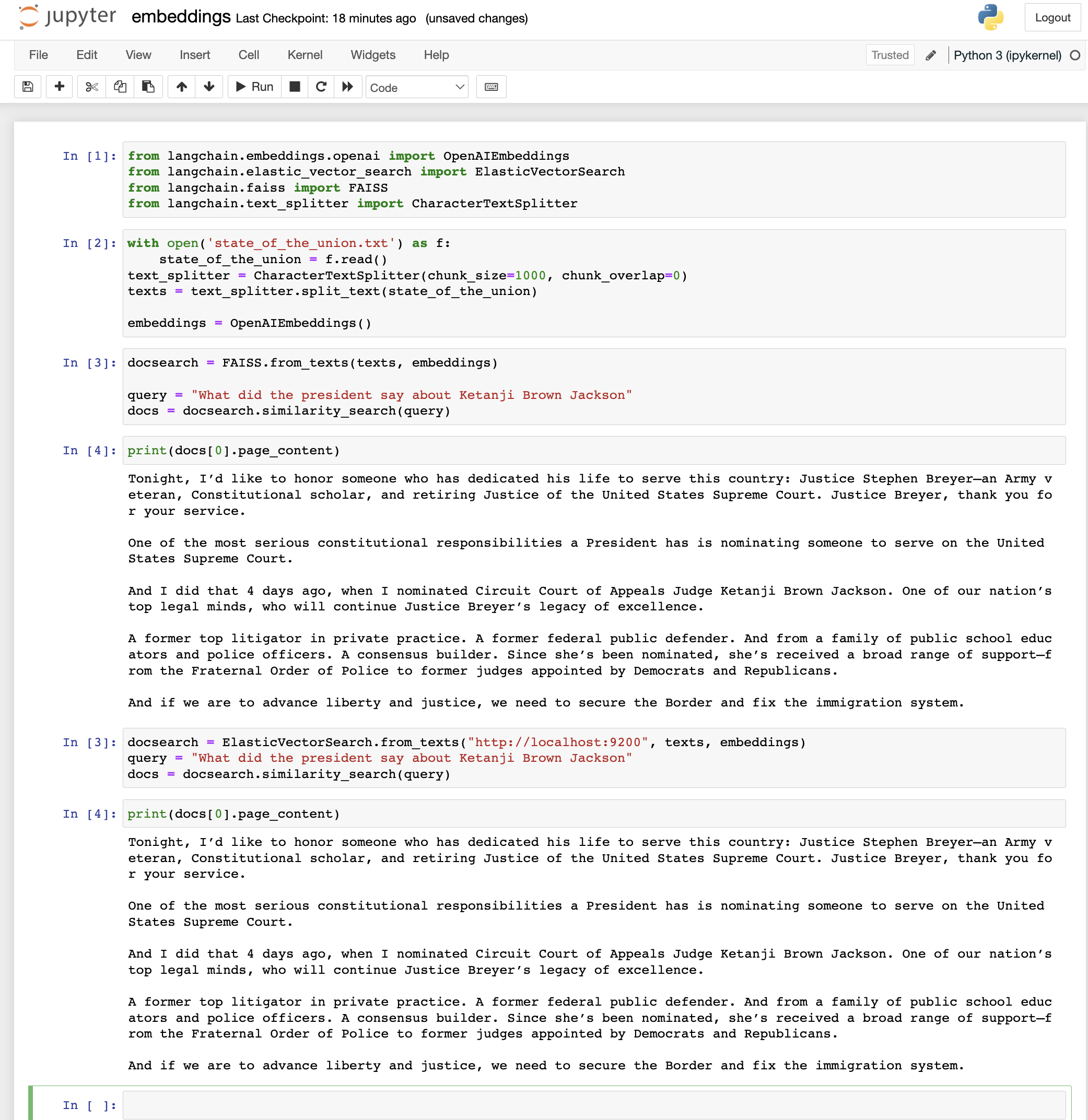
We support two vector databases to store and search embeddings -- FAISS and Elasticsearch. Here's a code snippet showing how to use FAISS to store embeddings and search for text similar to a query. Both database backends are featured in this [example notebook](https://github.com/hwchase17/langchain/blob/master/docs/examples/integrations/embeddings.ipynb).
|
||||
|
||||
```python
|
||||
from langchain.embeddings.openai import OpenAIEmbeddings
|
||||
from langchain.faiss import FAISS
|
||||
from langchain.text_splitter import CharacterTextSplitter
|
||||
|
||||
with open('state_of_the_union.txt') as f:
|
||||
state_of_the_union = f.read()
|
||||
text_splitter = CharacterTextSplitter(chunk_size=1000, chunk_overlap=0)
|
||||
texts = text_splitter.split_text(state_of_the_union)
|
||||
|
||||
embeddings = OpenAIEmbeddings()
|
||||
|
||||
docsearch = FAISS.from_texts(texts, embeddings)
|
||||
|
||||
query = "What did the president say about Ketanji Brown Jackson"
|
||||
docs = docsearch.similarity_search(query)
|
||||
```
|
||||
|
||||
## 🤖 Developer Guide
|
||||
|
||||
To begin developing on this project, first clone to the repo locally.
|
||||
To install requirements, run `pip install -r requirements.txt`.
|
||||
This will install all requirements for running the package, examples, linting, formatting, and tests.
|
||||
|
||||
Formatting for this project is a combination of [Black](https://black.readthedocs.io/en/stable/) and [isort](https://pycqa.github.io/isort/).
|
||||
To run formatting for this project, run `make format`.
|
||||
|
||||
Linting for this project is a combination of [Black](https://black.readthedocs.io/en/stable/), [isort](https://pycqa.github.io/isort/), [flake8](https://flake8.pycqa.org/en/latest/), and [mypy](http://mypy-lang.org/).
|
||||
To run linting for this project, run `make lint`.
|
||||
We recognize linting can be annoying - if you do not want to do it, please contact a project maintainer and they can help you with it. We do not want this to be a blocker for good code getting contributed.
|
||||
|
||||
Unit tests cover modular logic that does not require calls to outside apis.
|
||||
To run unit tests, run `make tests`.
|
||||
If you add new logic, please add a unit test.
|
||||
|
||||
Integration tests cover logic that requires making calls to outside APIs (often integration with other services).
|
||||
To run integration tests, run `make integration_tests`.
|
||||
If you add support for a new external API, please add a new integration test.
|
||||
|
||||
If you are adding a Jupyter notebook example, you can run `pip install -e .` to build the langchain package from your local changes, so your new logic can be imported into the notebook.
|
||||
|
||||
Docs are largely autogenerated by [sphinx](https://www.sphinx-doc.org/en/master/) from the code.
|
||||
For that reason, we ask that you add good documentation to all classes and methods.
|
||||
Similar to linting, we recognize documentation can be annoying - if you do not want to do it, please contact a project maintainer and they can help you with it. We do not want this to be a blocker for good code getting contributed.
|
||||
|
||||
13
docs/conf.py
13
docs/conf.py
@@ -37,9 +37,14 @@ extensions = [
|
||||
"sphinx.ext.autodoc.typehints",
|
||||
"sphinx.ext.autosummary",
|
||||
"sphinx.ext.napoleon",
|
||||
"sphinx.ext.viewcode",
|
||||
"sphinxcontrib.autodoc_pydantic",
|
||||
"myst_parser",
|
||||
"nbsphinx",
|
||||
"sphinx_panels",
|
||||
]
|
||||
|
||||
|
||||
autodoc_pydantic_model_show_json = False
|
||||
autodoc_pydantic_field_list_validators = False
|
||||
autodoc_pydantic_config_members = False
|
||||
@@ -68,6 +73,14 @@ exclude_patterns = ["_build", "Thumbs.db", ".DS_Store"]
|
||||
html_theme = "sphinx_rtd_theme"
|
||||
# html_theme = "sphinx_typlog_theme"
|
||||
|
||||
html_context = {
|
||||
"display_github": True, # Integrate GitHub
|
||||
"github_user": "hwchase17", # Username
|
||||
"github_repo": "langchain", # Repo name
|
||||
"github_version": "master", # Version
|
||||
"conf_py_path": "/docs/", # Path in the checkout to the docs root
|
||||
}
|
||||
|
||||
# Add any paths that contain custom static files (such as style sheets) here,
|
||||
# relative to this directory. They are copied after the builtin static files,
|
||||
# so a file named "default.css" will overwrite the builtin "default.css".
|
||||
|
||||
10
docs/examples/demos.rst
Normal file
10
docs/examples/demos.rst
Normal file
@@ -0,0 +1,10 @@
|
||||
Demos
|
||||
=====
|
||||
|
||||
The examples here are all end-to-end chains of specific applications.
|
||||
|
||||
.. toctree::
|
||||
:maxdepth: 1
|
||||
:glob:
|
||||
|
||||
demos/*
|
||||
@@ -1,11 +1,43 @@
|
||||
{
|
||||
"cells": [
|
||||
{
|
||||
"cell_type": "markdown",
|
||||
"id": "e71e720f",
|
||||
"metadata": {},
|
||||
"source": [
|
||||
"# LLM Math\n",
|
||||
"\n",
|
||||
"This notebook showcases using LLMs and Python REPLs to do complex word math problems."
|
||||
]
|
||||
},
|
||||
{
|
||||
"cell_type": "code",
|
||||
"execution_count": 1,
|
||||
"id": "44e9ba31",
|
||||
"metadata": {},
|
||||
"outputs": [
|
||||
{
|
||||
"name": "stdout",
|
||||
"output_type": "stream",
|
||||
"text": [
|
||||
"\n",
|
||||
"\n",
|
||||
"\u001b[1m> Entering new chain...\u001b[0m\n",
|
||||
"How many of the integers between 0 and 99 inclusive are divisible by 8?\u001b[102m\n",
|
||||
"\n",
|
||||
"```python\n",
|
||||
"count = 0\n",
|
||||
"for i in range(100):\n",
|
||||
" if i % 8 == 0:\n",
|
||||
" count += 1\n",
|
||||
"print(count)\n",
|
||||
"```\n",
|
||||
"\u001b[0m\n",
|
||||
"Answer: \u001b[103m13\n",
|
||||
"\u001b[0m\n",
|
||||
"\u001b[1m> Finished chain.\u001b[0m\n"
|
||||
]
|
||||
},
|
||||
{
|
||||
"data": {
|
||||
"text/plain": [
|
||||
@@ -21,7 +53,7 @@
|
||||
"from langchain import OpenAI, LLMMathChain\n",
|
||||
"\n",
|
||||
"llm = OpenAI(temperature=0)\n",
|
||||
"llm_math = LLMMathChain(llm=llm)\n",
|
||||
"llm_math = LLMMathChain(llm=llm, verbose=True)\n",
|
||||
"\n",
|
||||
"llm_math.run(\"How many of the integers between 0 and 99 inclusive are divisible by 8?\")"
|
||||
]
|
||||
93
docs/examples/demos/map reduce.ipynb
Normal file
93
docs/examples/demos/map reduce.ipynb
Normal file
@@ -0,0 +1,93 @@
|
||||
{
|
||||
"cells": [
|
||||
{
|
||||
"cell_type": "markdown",
|
||||
"id": "d9a0131f",
|
||||
"metadata": {},
|
||||
"source": [
|
||||
"# Map Reduce\n",
|
||||
"\n",
|
||||
"This notebok showcases an example of map-reduce chains: recursive summarization."
|
||||
]
|
||||
},
|
||||
{
|
||||
"cell_type": "code",
|
||||
"execution_count": 1,
|
||||
"id": "e9db25f3",
|
||||
"metadata": {},
|
||||
"outputs": [],
|
||||
"source": [
|
||||
"from langchain import OpenAI, PromptTemplate, LLMChain\n",
|
||||
"from langchain.text_splitter import CharacterTextSplitter\n",
|
||||
"from langchain.chains.mapreduce import MapReduceChain\n",
|
||||
"\n",
|
||||
"llm = OpenAI(temperature=0)\n",
|
||||
"\n",
|
||||
"_prompt = \"\"\"Write a concise summary of the following:\n",
|
||||
"\n",
|
||||
"\n",
|
||||
"{text}\n",
|
||||
"\n",
|
||||
"\n",
|
||||
"CONCISE SUMMARY:\"\"\"\n",
|
||||
"prompt = PromptTemplate(template=_prompt, input_variables=[\"text\"])\n",
|
||||
"\n",
|
||||
"text_splitter = CharacterTextSplitter()\n",
|
||||
"\n",
|
||||
"mp_chain = MapReduceChain.from_params(llm, prompt, text_splitter)"
|
||||
]
|
||||
},
|
||||
{
|
||||
"cell_type": "code",
|
||||
"execution_count": 3,
|
||||
"id": "99bbe19b",
|
||||
"metadata": {},
|
||||
"outputs": [
|
||||
{
|
||||
"data": {
|
||||
"text/plain": [
|
||||
"\"\\n\\nThe President discusses the recent aggression by Russia, and the response by the United States and its allies. He announces new sanctions against Russia, and says that the free world is united in holding Putin accountable. The President also discusses the American Rescue Plan, the Bipartisan Infrastructure Law, and the Bipartisan Innovation Act. Finally, the President addresses the need for women's rights and equality for LGBTQ+ Americans.\""
|
||||
]
|
||||
},
|
||||
"execution_count": 3,
|
||||
"metadata": {},
|
||||
"output_type": "execute_result"
|
||||
}
|
||||
],
|
||||
"source": [
|
||||
"with open('../state_of_the_union.txt') as f:\n",
|
||||
" state_of_the_union = f.read()\n",
|
||||
"mp_chain.run(state_of_the_union)"
|
||||
]
|
||||
},
|
||||
{
|
||||
"cell_type": "code",
|
||||
"execution_count": null,
|
||||
"id": "b581501e",
|
||||
"metadata": {},
|
||||
"outputs": [],
|
||||
"source": []
|
||||
}
|
||||
],
|
||||
"metadata": {
|
||||
"kernelspec": {
|
||||
"display_name": "Python 3 (ipykernel)",
|
||||
"language": "python",
|
||||
"name": "python3"
|
||||
},
|
||||
"language_info": {
|
||||
"codemirror_mode": {
|
||||
"name": "ipython",
|
||||
"version": 3
|
||||
},
|
||||
"file_extension": ".py",
|
||||
"mimetype": "text/x-python",
|
||||
"name": "python",
|
||||
"nbconvert_exporter": "python",
|
||||
"pygments_lexer": "ipython3",
|
||||
"version": "3.8.7"
|
||||
}
|
||||
},
|
||||
"nbformat": 4,
|
||||
"nbformat_minor": 5
|
||||
}
|
||||
226
docs/examples/demos/mrkl.ipynb
Normal file
226
docs/examples/demos/mrkl.ipynb
Normal file
@@ -0,0 +1,226 @@
|
||||
{
|
||||
"cells": [
|
||||
{
|
||||
"cell_type": "markdown",
|
||||
"id": "f1390152",
|
||||
"metadata": {},
|
||||
"source": [
|
||||
"# MRKL\n",
|
||||
"\n",
|
||||
"This notebook showcases using the MRKL chain to route between tasks"
|
||||
]
|
||||
},
|
||||
{
|
||||
"cell_type": "markdown",
|
||||
"id": "39ea3638",
|
||||
"metadata": {},
|
||||
"source": [
|
||||
"This uses the example Chinook database.\n",
|
||||
"To set it up follow the instructions on https://database.guide/2-sample-databases-sqlite/, placing the `.db` file in a notebooks folder at the root of this repository."
|
||||
]
|
||||
},
|
||||
{
|
||||
"cell_type": "code",
|
||||
"execution_count": 1,
|
||||
"id": "ac561cc4",
|
||||
"metadata": {},
|
||||
"outputs": [],
|
||||
"source": [
|
||||
"from langchain import LLMMathChain, OpenAI, SerpAPIChain, MRKLChain, SQLDatabase, SQLDatabaseChain\n",
|
||||
"from langchain.chains.mrkl.base import ChainConfig"
|
||||
]
|
||||
},
|
||||
{
|
||||
"cell_type": "code",
|
||||
"execution_count": 8,
|
||||
"id": "07e96d99",
|
||||
"metadata": {},
|
||||
"outputs": [],
|
||||
"source": [
|
||||
"llm = OpenAI(temperature=0)\n",
|
||||
"search = SerpAPIChain()\n",
|
||||
"llm_math_chain = LLMMathChain(llm=llm, verbose=True)\n",
|
||||
"db = SQLDatabase.from_uri(\"sqlite:///../../../notebooks/Chinook.db\")\n",
|
||||
"db_chain = SQLDatabaseChain(llm=llm, database=db, verbose=True)\n",
|
||||
"chains = [\n",
|
||||
" ChainConfig(\n",
|
||||
" action_name = \"Search\",\n",
|
||||
" action=search.run,\n",
|
||||
" action_description=\"useful for when you need to answer questions about current events\"\n",
|
||||
" ),\n",
|
||||
" ChainConfig(\n",
|
||||
" action_name=\"Calculator\",\n",
|
||||
" action=llm_math_chain.run,\n",
|
||||
" action_description=\"useful for when you need to answer questions about math\"\n",
|
||||
" ),\n",
|
||||
" \n",
|
||||
" ChainConfig(\n",
|
||||
" action_name=\"FooBar DB\",\n",
|
||||
" action=db_chain.run,\n",
|
||||
" action_description=\"useful for when you need to answer questions about FooBar. Input should be in the form of a question\"\n",
|
||||
" )\n",
|
||||
"]"
|
||||
]
|
||||
},
|
||||
{
|
||||
"cell_type": "code",
|
||||
"execution_count": 9,
|
||||
"id": "a069c4b6",
|
||||
"metadata": {},
|
||||
"outputs": [],
|
||||
"source": [
|
||||
"mrkl = MRKLChain.from_chains(llm, chains, verbose=True)"
|
||||
]
|
||||
},
|
||||
{
|
||||
"cell_type": "code",
|
||||
"execution_count": 6,
|
||||
"id": "e603cd7d",
|
||||
"metadata": {},
|
||||
"outputs": [
|
||||
{
|
||||
"name": "stdout",
|
||||
"output_type": "stream",
|
||||
"text": [
|
||||
"\n",
|
||||
"\n",
|
||||
"\u001b[1m> Entering new chain...\u001b[0m\n",
|
||||
"What is the age of Olivia Wilde's boyfriend raised to the 0.23 power?\n",
|
||||
"Thought:\u001b[102m I need to find the age of Olivia Wilde's boyfriend\n",
|
||||
"Action: Search\n",
|
||||
"Action Input: \"Olivia Wilde's boyfriend\"\u001b[0m\n",
|
||||
"Observation: \u001b[104mOlivia Wilde started dating Harry Styles after ending her years-long engagement to Jason Sudeikis — see their relationship timeline.\u001b[0m\n",
|
||||
"Thought:\u001b[102m I need to find the age of Harry Styles\n",
|
||||
"Action: Search\n",
|
||||
"Action Input: \"Harry Styles age\"\u001b[0m\n",
|
||||
"Observation: \u001b[104m28 years\u001b[0m\n",
|
||||
"Thought:\u001b[102m I need to calculate 28 to the 0.23 power\n",
|
||||
"Action: Calculator\n",
|
||||
"Action Input: 28^0.23\u001b[0m\n",
|
||||
"\n",
|
||||
"\u001b[1m> Entering new chain...\u001b[0m\n",
|
||||
"28^0.23\u001b[102m\n",
|
||||
"\n",
|
||||
"```python\n",
|
||||
"print(28**0.23)\n",
|
||||
"```\n",
|
||||
"\u001b[0m\n",
|
||||
"Answer: \u001b[103m2.1520202182226886\n",
|
||||
"\u001b[0m\n",
|
||||
"\u001b[1m> Finished chain.\u001b[0m\n",
|
||||
"\n",
|
||||
"Observation: \u001b[103mAnswer: 2.1520202182226886\n",
|
||||
"\u001b[0m\n",
|
||||
"Thought:\u001b[102m I now know the final answer\n",
|
||||
"Final Answer: 2.1520202182226886\u001b[0m\n",
|
||||
"\u001b[1m> Finished chain.\u001b[0m\n"
|
||||
]
|
||||
},
|
||||
{
|
||||
"data": {
|
||||
"text/plain": [
|
||||
"'2.1520202182226886'"
|
||||
]
|
||||
},
|
||||
"execution_count": 6,
|
||||
"metadata": {},
|
||||
"output_type": "execute_result"
|
||||
}
|
||||
],
|
||||
"source": [
|
||||
"mrkl.run(\"What is the age of Olivia Wilde's boyfriend raised to the 0.23 power?\")"
|
||||
]
|
||||
},
|
||||
{
|
||||
"cell_type": "code",
|
||||
"execution_count": 10,
|
||||
"id": "a5c07010",
|
||||
"metadata": {},
|
||||
"outputs": [
|
||||
{
|
||||
"name": "stdout",
|
||||
"output_type": "stream",
|
||||
"text": [
|
||||
"\n",
|
||||
"\n",
|
||||
"\u001b[1m> Entering new chain...\u001b[0m\n",
|
||||
"Who recently released an album called 'The Storm Before the Calm' and are they in the FooBar database? If so, what albums of theirs are in the FooBar database?\n",
|
||||
"Thought:\u001b[102m I need to find an album called 'The Storm Before the Calm'\n",
|
||||
"Action: Search\n",
|
||||
"Action Input: \"The Storm Before the Calm album\"\u001b[0m\n",
|
||||
"Observation: \u001b[104mThe Storm Before the Calm (stylized in all lowercase) is the tenth (and eighth international) studio album by Canadian-American singer-songwriter Alanis ...\u001b[0m\n",
|
||||
"Thought:\u001b[102m I need to check if Alanis is in the FooBar database\n",
|
||||
"Action: FooBar DB\n",
|
||||
"Action Input: \"Does Alanis Morissette exist in the FooBar database?\"\u001b[0m\n",
|
||||
"\n",
|
||||
"\u001b[1m> Entering new chain...\u001b[0m\n",
|
||||
"Does Alanis Morissette exist in the FooBar database?\n",
|
||||
"SQLQuery:\u001b[102m SELECT * FROM Artist WHERE Name = 'Alanis Morissette'\u001b[0m\n",
|
||||
"SQLResult: \u001b[103m[(4, 'Alanis Morissette')]\u001b[0m\n",
|
||||
"Answer:\u001b[102m Yes\u001b[0m\n",
|
||||
"\u001b[1m> Finished chain.\u001b[0m\n",
|
||||
"\n",
|
||||
"Observation: \u001b[101m Yes\u001b[0m\n",
|
||||
"Thought:\u001b[102m I need to find out what albums of Alanis's are in the FooBar database\n",
|
||||
"Action: FooBar DB\n",
|
||||
"Action Input: \"What albums by Alanis Morissette are in the FooBar database?\"\u001b[0m\n",
|
||||
"\n",
|
||||
"\u001b[1m> Entering new chain...\u001b[0m\n",
|
||||
"What albums by Alanis Morissette are in the FooBar database?\n",
|
||||
"SQLQuery:\u001b[102m SELECT Title FROM Album WHERE ArtistId = (SELECT ArtistId FROM Artist WHERE Name = 'Alanis Morissette')\u001b[0m\n",
|
||||
"SQLResult: \u001b[103m[('Jagged Little Pill',)]\u001b[0m\n",
|
||||
"Answer:\u001b[102m Jagged Little Pill\u001b[0m\n",
|
||||
"\u001b[1m> Finished chain.\u001b[0m\n",
|
||||
"\n",
|
||||
"Observation: \u001b[101m Jagged Little Pill\u001b[0m\n",
|
||||
"Thought:\u001b[102m I now know the final answer\n",
|
||||
"Final Answer: The album is by Alanis Morissette and the albums in the FooBar database by her are Jagged Little Pill\u001b[0m\n",
|
||||
"\u001b[1m> Finished chain.\u001b[0m\n"
|
||||
]
|
||||
},
|
||||
{
|
||||
"data": {
|
||||
"text/plain": [
|
||||
"'The album is by Alanis Morissette and the albums in the FooBar database by her are Jagged Little Pill'"
|
||||
]
|
||||
},
|
||||
"execution_count": 10,
|
||||
"metadata": {},
|
||||
"output_type": "execute_result"
|
||||
}
|
||||
],
|
||||
"source": [
|
||||
"mrkl.run(\"Who recently released an album called 'The Storm Before the Calm' and are they in the FooBar database? If so, what albums of theirs are in the FooBar database?\")"
|
||||
]
|
||||
},
|
||||
{
|
||||
"cell_type": "code",
|
||||
"execution_count": null,
|
||||
"id": "d7c2e6ac",
|
||||
"metadata": {},
|
||||
"outputs": [],
|
||||
"source": []
|
||||
}
|
||||
],
|
||||
"metadata": {
|
||||
"kernelspec": {
|
||||
"display_name": "Python 3 (ipykernel)",
|
||||
"language": "python",
|
||||
"name": "python3"
|
||||
},
|
||||
"language_info": {
|
||||
"codemirror_mode": {
|
||||
"name": "ipython",
|
||||
"version": 3
|
||||
},
|
||||
"file_extension": ".py",
|
||||
"mimetype": "text/x-python",
|
||||
"name": "python",
|
||||
"nbconvert_exporter": "python",
|
||||
"pygments_lexer": "ipython3",
|
||||
"version": "3.7.6"
|
||||
}
|
||||
},
|
||||
"nbformat": 4,
|
||||
"nbformat_minor": 5
|
||||
}
|
||||
@@ -46,7 +46,7 @@ if __name__ == "__main__":
|
||||
try:
|
||||
while True:
|
||||
browser_content = "\n".join(_crawler.crawl())
|
||||
llm_command = nat_bot_chain.run(_crawler.page.url, browser_content)
|
||||
llm_command = nat_bot_chain.execute(_crawler.page.url, browser_content)
|
||||
if not quiet:
|
||||
print("URL: " + _crawler.page.url)
|
||||
print("Objective: " + objective)
|
||||
98
docs/examples/demos/react.ipynb
Normal file
98
docs/examples/demos/react.ipynb
Normal file
@@ -0,0 +1,98 @@
|
||||
{
|
||||
"cells": [
|
||||
{
|
||||
"cell_type": "markdown",
|
||||
"id": "82140df0",
|
||||
"metadata": {},
|
||||
"source": [
|
||||
"# ReAct\n",
|
||||
"\n",
|
||||
"This notebook showcases the implementation of the ReAct chain logic."
|
||||
]
|
||||
},
|
||||
{
|
||||
"cell_type": "code",
|
||||
"execution_count": 1,
|
||||
"id": "4e272b47",
|
||||
"metadata": {},
|
||||
"outputs": [],
|
||||
"source": [
|
||||
"from langchain import OpenAI, ReActChain, Wikipedia\n",
|
||||
"\n",
|
||||
"llm = OpenAI(temperature=0)\n",
|
||||
"react = ReActChain(llm=llm, docstore=Wikipedia(), verbose=True)"
|
||||
]
|
||||
},
|
||||
{
|
||||
"cell_type": "code",
|
||||
"execution_count": 2,
|
||||
"id": "8078c8f1",
|
||||
"metadata": {},
|
||||
"outputs": [
|
||||
{
|
||||
"name": "stdout",
|
||||
"output_type": "stream",
|
||||
"text": [
|
||||
"\n",
|
||||
"\n",
|
||||
"\u001b[1m> Entering new chain...\u001b[0m\n",
|
||||
"Author David Chanoff has collaborated with a U.S. Navy admiral who served as the ambassador to the United Kingdom under which President?\n",
|
||||
"Thought 1:\u001b[102m I need to search David Chanoff and find the U.S. Navy admiral he\n",
|
||||
"collaborated with.\n",
|
||||
"Action 1: Search[David Chanoff]\u001b[0m\n",
|
||||
"Observation 1: \u001b[103mDavid Chanoff is a noted author of non-fiction work. His work has typically involved collaborations with the principal protagonist of the work concerned. His collaborators have included; Augustus A. White, Joycelyn Elders, Đoàn Văn Toại, William J. Crowe, Ariel Sharon, Kenneth Good and Felix Zandman. He has also written about a wide range of subjects including literary history, education and foreign for The Washington Post, The New Republic and The New York Times Magazine. He has published more than twelve books.\u001b[0m\n",
|
||||
"Thought 2:\u001b[102m The U.S. Navy admiral David Chanoff collaborated with is William J. Crowe.\n",
|
||||
"Action 2: Search[William J. Crowe]\u001b[0m\n",
|
||||
"Observation 2: \u001b[103mWilliam James Crowe Jr. (January 2, 1925 – October 18, 2007) was a United States Navy admiral and diplomat who served as the 11th chairman of the Joint Chiefs of Staff under Presidents Ronald Reagan and George H. W. Bush, and as the ambassador to the United Kingdom and Chair of the Intelligence Oversight Board under President Bill Clinton.\u001b[0m\n",
|
||||
"Thought 3:\u001b[102m William J. Crowe served as the ambassador to the United Kingdom under President Bill Clinton. So the answer is Bill Clinton.\n",
|
||||
"Action 3: Finish[Bill Clinton]\u001b[0m\n",
|
||||
"\u001b[1m> Finished chain.\u001b[0m\n"
|
||||
]
|
||||
},
|
||||
{
|
||||
"data": {
|
||||
"text/plain": [
|
||||
"'Bill Clinton'"
|
||||
]
|
||||
},
|
||||
"execution_count": 2,
|
||||
"metadata": {},
|
||||
"output_type": "execute_result"
|
||||
}
|
||||
],
|
||||
"source": [
|
||||
"question = \"Author David Chanoff has collaborated with a U.S. Navy admiral who served as the ambassador to the United Kingdom under which President?\"\n",
|
||||
"react.run(question)"
|
||||
]
|
||||
},
|
||||
{
|
||||
"cell_type": "code",
|
||||
"execution_count": null,
|
||||
"id": "0a6bd3b4",
|
||||
"metadata": {},
|
||||
"outputs": [],
|
||||
"source": []
|
||||
}
|
||||
],
|
||||
"metadata": {
|
||||
"kernelspec": {
|
||||
"display_name": "Python 3 (ipykernel)",
|
||||
"language": "python",
|
||||
"name": "python3"
|
||||
},
|
||||
"language_info": {
|
||||
"codemirror_mode": {
|
||||
"name": "ipython",
|
||||
"version": 3
|
||||
},
|
||||
"file_extension": ".py",
|
||||
"mimetype": "text/x-python",
|
||||
"name": "python",
|
||||
"nbconvert_exporter": "python",
|
||||
"pygments_lexer": "ipython3",
|
||||
"version": "3.7.6"
|
||||
}
|
||||
},
|
||||
"nbformat": 4,
|
||||
"nbformat_minor": 5
|
||||
}
|
||||
@@ -1,5 +1,15 @@
|
||||
{
|
||||
"cells": [
|
||||
{
|
||||
"cell_type": "markdown",
|
||||
"id": "0c3f1df8",
|
||||
"metadata": {},
|
||||
"source": [
|
||||
"# Self Ask With Search\n",
|
||||
"\n",
|
||||
"This notebook showcases the Self Ask With Search chain."
|
||||
]
|
||||
},
|
||||
{
|
||||
"cell_type": "code",
|
||||
"execution_count": 1,
|
||||
@@ -10,19 +20,23 @@
|
||||
"name": "stdout",
|
||||
"output_type": "stream",
|
||||
"text": [
|
||||
"\n",
|
||||
"\n",
|
||||
"\u001b[1m> Entering new chain...\u001b[0m\n",
|
||||
"What is the hometown of the reigning men's U.S. Open champion?\n",
|
||||
"Are follow up questions needed here:\u001b[102m Yes.\n",
|
||||
"Follow up: Who is the reigning men's U.S. Open champion?\u001b[0m\n",
|
||||
"Intermediate answer: \u001b[106mCarlos Alcaraz\u001b[0m.\u001b[102m\n",
|
||||
"Intermediate answer: \u001b[103mCarlos Alcaraz won the 2022 Men's single title while Poland's Iga Swiatek won the Women's single title defeating Tunisian's Ons Jabeur..\u001b[0m\u001b[102m\n",
|
||||
"Follow up: Where is Carlos Alcaraz from?\u001b[0m\n",
|
||||
"Intermediate answer: \u001b[106mEl Palmar, Murcia, Spain\u001b[0m.\u001b[102m\n",
|
||||
"So the final answer is: El Palmar, Murcia, Spain\u001b[0m"
|
||||
"Intermediate answer: \u001b[103mEl Palmar, Murcia, Spain.\u001b[0m\u001b[102m\n",
|
||||
"So the final answer is: El Palmar, Murcia, Spain\u001b[0m\n",
|
||||
"\u001b[1m> Finished chain.\u001b[0m\n"
|
||||
]
|
||||
},
|
||||
{
|
||||
"data": {
|
||||
"text/plain": [
|
||||
"\"What is the hometown of the reigning men's U.S. Open champion?\\nAre follow up questions needed here: Yes.\\nFollow up: Who is the reigning men's U.S. Open champion?\\nIntermediate answer: Carlos Alcaraz.\\nFollow up: Where is Carlos Alcaraz from?\\nIntermediate answer: El Palmar, Murcia, Spain.\\nSo the final answer is: El Palmar, Murcia, Spain\""
|
||||
"'\\nSo the final answer is: El Palmar, Murcia, Spain'"
|
||||
]
|
||||
},
|
||||
"execution_count": 1,
|
||||
@@ -36,7 +50,7 @@
|
||||
"llm = OpenAI(temperature=0)\n",
|
||||
"search = SerpAPIChain()\n",
|
||||
"\n",
|
||||
"self_ask_with_search = SelfAskWithSearchChain(llm=llm, search_chain=search)\n",
|
||||
"self_ask_with_search = SelfAskWithSearchChain(llm=llm, search_chain=search, verbose=True)\n",
|
||||
"\n",
|
||||
"self_ask_with_search.run(\"What is the hometown of the reigning men's U.S. Open champion?\")"
|
||||
]
|
||||
@@ -44,7 +58,7 @@
|
||||
{
|
||||
"cell_type": "code",
|
||||
"execution_count": null,
|
||||
"id": "6195fc82",
|
||||
"id": "683d69e7",
|
||||
"metadata": {},
|
||||
"outputs": [],
|
||||
"source": []
|
||||
@@ -1,34 +1,59 @@
|
||||
{
|
||||
"cells": [
|
||||
{
|
||||
"cell_type": "markdown",
|
||||
"id": "d8a5c5d4",
|
||||
"metadata": {},
|
||||
"source": [
|
||||
"# Simple Example\n",
|
||||
"\n",
|
||||
"This notebook showcases a simple chain."
|
||||
]
|
||||
},
|
||||
{
|
||||
"cell_type": "code",
|
||||
"execution_count": 7,
|
||||
"execution_count": 1,
|
||||
"id": "51a54c4d",
|
||||
"metadata": {},
|
||||
"outputs": [
|
||||
{
|
||||
"name": "stdout",
|
||||
"output_type": "stream",
|
||||
"text": [
|
||||
"\n",
|
||||
"\n",
|
||||
"\u001b[1m> Entering new chain...\u001b[0m\n",
|
||||
"Prompt after formatting:\n",
|
||||
"\u001b[32;1m\u001b[1;3mQuestion: What NFL team won the Super Bowl in the year Justin Beiber was born?\n",
|
||||
"\n",
|
||||
"Answer: Let's think step by step.\u001b[0m\n",
|
||||
"\n",
|
||||
"\u001b[1m> Finished chain.\u001b[0m\n"
|
||||
]
|
||||
},
|
||||
{
|
||||
"data": {
|
||||
"text/plain": [
|
||||
"' The year Justin Beiber was born was 1994. In 1994, the Dallas Cowboys won the Super Bowl.'"
|
||||
]
|
||||
},
|
||||
"execution_count": 7,
|
||||
"execution_count": 1,
|
||||
"metadata": {},
|
||||
"output_type": "execute_result"
|
||||
}
|
||||
],
|
||||
"source": [
|
||||
"from langchain import Prompt, OpenAI, LLMChain\n",
|
||||
"from langchain import PromptTemplate, OpenAI, LLMChain\n",
|
||||
"\n",
|
||||
"template = \"\"\"Question: {question}\n",
|
||||
"\n",
|
||||
"Answer: Let's think step by step.\"\"\"\n",
|
||||
"prompt = Prompt(template=template, input_variables=[\"question\"])\n",
|
||||
"llm_chain = LLMChain(prompt=prompt, llm=OpenAI(temperature=0))\n",
|
||||
"prompt = PromptTemplate(template=template, input_variables=[\"question\"])\n",
|
||||
"llm_chain = LLMChain(prompt=prompt, llm=OpenAI(temperature=0), verbose=True)\n",
|
||||
"\n",
|
||||
"question = \"What NFL team won the Super Bowl in the year Justin Beiber was born?\"\n",
|
||||
"\n",
|
||||
"llm_chain.predict(question=question)"
|
||||
"llm_chain.run(question)"
|
||||
]
|
||||
},
|
||||
{
|
||||
@@ -56,7 +81,7 @@
|
||||
"name": "python",
|
||||
"nbconvert_exporter": "python",
|
||||
"pygments_lexer": "ipython3",
|
||||
"version": "3.7.6"
|
||||
"version": "3.8.7"
|
||||
}
|
||||
},
|
||||
"nbformat": 4,
|
||||
129
docs/examples/demos/sqlite.ipynb
Normal file
129
docs/examples/demos/sqlite.ipynb
Normal file
@@ -0,0 +1,129 @@
|
||||
{
|
||||
"cells": [
|
||||
{
|
||||
"cell_type": "markdown",
|
||||
"id": "0ed6aab1",
|
||||
"metadata": {
|
||||
"pycharm": {
|
||||
"name": "#%% md\n"
|
||||
}
|
||||
},
|
||||
"source": [
|
||||
"# SQLite example\n",
|
||||
"\n",
|
||||
"This example showcases hooking up an LLM to answer questions over a database."
|
||||
]
|
||||
},
|
||||
{
|
||||
"cell_type": "markdown",
|
||||
"id": "b2f66479",
|
||||
"metadata": {
|
||||
"pycharm": {
|
||||
"name": "#%% md\n"
|
||||
}
|
||||
},
|
||||
"source": [
|
||||
"This uses the example Chinook database.\n",
|
||||
"To set it up follow the instructions on https://database.guide/2-sample-databases-sqlite/, placing the `.db` file in a notebooks folder at the root of this repository."
|
||||
]
|
||||
},
|
||||
{
|
||||
"cell_type": "code",
|
||||
"execution_count": 1,
|
||||
"id": "d0e27d88",
|
||||
"metadata": {
|
||||
"pycharm": {
|
||||
"name": "#%%\n"
|
||||
}
|
||||
},
|
||||
"outputs": [],
|
||||
"source": [
|
||||
"from langchain import OpenAI, SQLDatabase, SQLDatabaseChain"
|
||||
]
|
||||
},
|
||||
{
|
||||
"cell_type": "code",
|
||||
"execution_count": 2,
|
||||
"id": "72ede462",
|
||||
"metadata": {
|
||||
"pycharm": {
|
||||
"name": "#%%\n"
|
||||
}
|
||||
},
|
||||
"outputs": [],
|
||||
"source": [
|
||||
"db = SQLDatabase.from_uri(\"sqlite:///../../../notebooks/Chinook.db\")\n",
|
||||
"llm = OpenAI(temperature=0)\n",
|
||||
"db_chain = SQLDatabaseChain(llm=llm, database=db, verbose=True)"
|
||||
]
|
||||
},
|
||||
{
|
||||
"cell_type": "code",
|
||||
"execution_count": 3,
|
||||
"id": "15ff81df",
|
||||
"metadata": {
|
||||
"pycharm": {
|
||||
"name": "#%%\n"
|
||||
}
|
||||
},
|
||||
"outputs": [
|
||||
{
|
||||
"name": "stdout",
|
||||
"output_type": "stream",
|
||||
"text": [
|
||||
"\n",
|
||||
"\n",
|
||||
"\u001b[1m> Entering new chain...\u001b[0m\n",
|
||||
"How many employees are there?\n",
|
||||
"SQLQuery:\u001b[102m SELECT COUNT(*) FROM Employee\u001b[0m\n",
|
||||
"SQLResult: \u001b[103m[(8,)]\u001b[0m\n",
|
||||
"Answer:\u001b[102m 8\u001b[0m\n",
|
||||
"\u001b[1m> Finished chain.\u001b[0m\n"
|
||||
]
|
||||
},
|
||||
{
|
||||
"data": {
|
||||
"text/plain": [
|
||||
"' 8'"
|
||||
]
|
||||
},
|
||||
"execution_count": 3,
|
||||
"metadata": {},
|
||||
"output_type": "execute_result"
|
||||
}
|
||||
],
|
||||
"source": [
|
||||
"db_chain.run(\"How many employees are there?\")"
|
||||
]
|
||||
},
|
||||
{
|
||||
"cell_type": "code",
|
||||
"execution_count": null,
|
||||
"id": "61d91b85",
|
||||
"metadata": {},
|
||||
"outputs": [],
|
||||
"source": []
|
||||
}
|
||||
],
|
||||
"metadata": {
|
||||
"kernelspec": {
|
||||
"display_name": "Python 3 (ipykernel)",
|
||||
"language": "python",
|
||||
"name": "python3"
|
||||
},
|
||||
"language_info": {
|
||||
"codemirror_mode": {
|
||||
"name": "ipython",
|
||||
"version": 3
|
||||
},
|
||||
"file_extension": ".py",
|
||||
"mimetype": "text/x-python",
|
||||
"name": "python",
|
||||
"nbconvert_exporter": "python",
|
||||
"pygments_lexer": "ipython3",
|
||||
"version": "3.7.6"
|
||||
}
|
||||
},
|
||||
"nbformat": 4,
|
||||
"nbformat_minor": 5
|
||||
}
|
||||
104
docs/examples/demos/vector_db_qa.ipynb
Normal file
104
docs/examples/demos/vector_db_qa.ipynb
Normal file
@@ -0,0 +1,104 @@
|
||||
{
|
||||
"cells": [
|
||||
{
|
||||
"cell_type": "markdown",
|
||||
"id": "07c1e3b9",
|
||||
"metadata": {},
|
||||
"source": [
|
||||
"# Vector DB Question/Answering\n",
|
||||
"\n",
|
||||
"This example showcases question answering over a vector database."
|
||||
]
|
||||
},
|
||||
{
|
||||
"cell_type": "code",
|
||||
"execution_count": 1,
|
||||
"id": "82525493",
|
||||
"metadata": {},
|
||||
"outputs": [],
|
||||
"source": [
|
||||
"from langchain.embeddings.openai import OpenAIEmbeddings\n",
|
||||
"from langchain.vectorstores.faiss import FAISS\n",
|
||||
"from langchain.text_splitter import CharacterTextSplitter\n",
|
||||
"from langchain import OpenAI, VectorDBQA"
|
||||
]
|
||||
},
|
||||
{
|
||||
"cell_type": "code",
|
||||
"execution_count": 3,
|
||||
"id": "5c7049db",
|
||||
"metadata": {},
|
||||
"outputs": [],
|
||||
"source": [
|
||||
"with open('../state_of_the_union.txt') as f:\n",
|
||||
" state_of_the_union = f.read()\n",
|
||||
"text_splitter = CharacterTextSplitter(chunk_size=1000, chunk_overlap=0)\n",
|
||||
"texts = text_splitter.split_text(state_of_the_union)\n",
|
||||
"\n",
|
||||
"embeddings = OpenAIEmbeddings()\n",
|
||||
"docsearch = FAISS.from_texts(texts, embeddings)"
|
||||
]
|
||||
},
|
||||
{
|
||||
"cell_type": "code",
|
||||
"execution_count": 4,
|
||||
"id": "3018f865",
|
||||
"metadata": {},
|
||||
"outputs": [],
|
||||
"source": [
|
||||
"qa = VectorDBQA(llm=OpenAI(), vectorstore=docsearch)"
|
||||
]
|
||||
},
|
||||
{
|
||||
"cell_type": "code",
|
||||
"execution_count": 5,
|
||||
"id": "032a47f8",
|
||||
"metadata": {},
|
||||
"outputs": [
|
||||
{
|
||||
"data": {
|
||||
"text/plain": [
|
||||
"' The President said that Ketanji Brown Jackson is a consensus builder and has received a broad range of support since she was nominated.'"
|
||||
]
|
||||
},
|
||||
"execution_count": 5,
|
||||
"metadata": {},
|
||||
"output_type": "execute_result"
|
||||
}
|
||||
],
|
||||
"source": [
|
||||
"query = \"What did the president say about Ketanji Brown Jackson\"\n",
|
||||
"qa.run(query)"
|
||||
]
|
||||
},
|
||||
{
|
||||
"cell_type": "code",
|
||||
"execution_count": null,
|
||||
"id": "f0f20b92",
|
||||
"metadata": {},
|
||||
"outputs": [],
|
||||
"source": []
|
||||
}
|
||||
],
|
||||
"metadata": {
|
||||
"kernelspec": {
|
||||
"display_name": "Python 3 (ipykernel)",
|
||||
"language": "python",
|
||||
"name": "python3"
|
||||
},
|
||||
"language_info": {
|
||||
"codemirror_mode": {
|
||||
"name": "ipython",
|
||||
"version": 3
|
||||
},
|
||||
"file_extension": ".py",
|
||||
"mimetype": "text/x-python",
|
||||
"name": "python",
|
||||
"nbconvert_exporter": "python",
|
||||
"pygments_lexer": "ipython3",
|
||||
"version": "3.7.6"
|
||||
}
|
||||
},
|
||||
"nbformat": 4,
|
||||
"nbformat_minor": 5
|
||||
}
|
||||
10
docs/examples/integrations.rst
Normal file
10
docs/examples/integrations.rst
Normal file
@@ -0,0 +1,10 @@
|
||||
Integrations
|
||||
============
|
||||
|
||||
The examples here all highlight a specific type of integration.
|
||||
|
||||
.. toctree::
|
||||
:maxdepth: 1
|
||||
:glob:
|
||||
|
||||
integrations/*
|
||||
177
docs/examples/integrations/embeddings.ipynb
Normal file
177
docs/examples/integrations/embeddings.ipynb
Normal file
@@ -0,0 +1,177 @@
|
||||
{
|
||||
"cells": [
|
||||
{
|
||||
"cell_type": "markdown",
|
||||
"id": "7ef4d402-6662-4a26-b612-35b542066487",
|
||||
"metadata": {
|
||||
"pycharm": {
|
||||
"name": "#%% md\n"
|
||||
}
|
||||
},
|
||||
"source": [
|
||||
"# Embeddings & VectorStores\n",
|
||||
"\n",
|
||||
"This notebook show cases how to use embeddings to create a VectorStore"
|
||||
]
|
||||
},
|
||||
{
|
||||
"cell_type": "code",
|
||||
"execution_count": 1,
|
||||
"id": "965eecee",
|
||||
"metadata": {
|
||||
"pycharm": {
|
||||
"name": "#%%\n"
|
||||
}
|
||||
},
|
||||
"outputs": [],
|
||||
"source": [
|
||||
"from langchain.embeddings.openai import OpenAIEmbeddings\n",
|
||||
"from langchain.text_splitter import CharacterTextSplitter\n",
|
||||
"from langchain.vectorstores.elastic_vector_search import ElasticVectorSearch\n",
|
||||
"from langchain.vectorstores.faiss import FAISS"
|
||||
]
|
||||
},
|
||||
{
|
||||
"cell_type": "code",
|
||||
"execution_count": 2,
|
||||
"id": "68481687",
|
||||
"metadata": {
|
||||
"pycharm": {
|
||||
"name": "#%%\n"
|
||||
}
|
||||
},
|
||||
"outputs": [],
|
||||
"source": [
|
||||
"with open('../state_of_the_union.txt') as f:\n",
|
||||
" state_of_the_union = f.read()\n",
|
||||
"text_splitter = CharacterTextSplitter(chunk_size=1000, chunk_overlap=0)\n",
|
||||
"texts = text_splitter.split_text(state_of_the_union)\n",
|
||||
"\n",
|
||||
"embeddings = OpenAIEmbeddings()"
|
||||
]
|
||||
},
|
||||
{
|
||||
"cell_type": "code",
|
||||
"execution_count": 3,
|
||||
"id": "015f4ff5",
|
||||
"metadata": {
|
||||
"pycharm": {
|
||||
"name": "#%%\n"
|
||||
}
|
||||
},
|
||||
"outputs": [],
|
||||
"source": [
|
||||
"docsearch = FAISS.from_texts(texts, embeddings)\n",
|
||||
"\n",
|
||||
"query = \"What did the president say about Ketanji Brown Jackson\"\n",
|
||||
"docs = docsearch.similarity_search(query)"
|
||||
]
|
||||
},
|
||||
{
|
||||
"cell_type": "code",
|
||||
"execution_count": 4,
|
||||
"id": "67baf32e",
|
||||
"metadata": {
|
||||
"pycharm": {
|
||||
"name": "#%%\n"
|
||||
}
|
||||
},
|
||||
"outputs": [
|
||||
{
|
||||
"name": "stdout",
|
||||
"output_type": "stream",
|
||||
"text": [
|
||||
"Tonight, I’d like to honor someone who has dedicated his life to serve this country: Justice Stephen Breyer—an Army veteran, Constitutional scholar, and retiring Justice of the United States Supreme Court. Justice Breyer, thank you for your service. \n",
|
||||
"\n",
|
||||
"One of the most serious constitutional responsibilities a President has is nominating someone to serve on the United States Supreme Court. \n",
|
||||
"\n",
|
||||
"And I did that 4 days ago, when I nominated Circuit Court of Appeals Judge Ketanji Brown Jackson. One of our nation’s top legal minds, who will continue Justice Breyer’s legacy of excellence. \n",
|
||||
"\n",
|
||||
"A former top litigator in private practice. A former federal public defender. And from a family of public school educators and police officers. A consensus builder. Since she’s been nominated, she’s received a broad range of support—from the Fraternal Order of Police to former judges appointed by Democrats and Republicans. \n",
|
||||
"\n",
|
||||
"And if we are to advance liberty and justice, we need to secure the Border and fix the immigration system. \n"
|
||||
]
|
||||
}
|
||||
],
|
||||
"source": [
|
||||
"print(docs[0].page_content)"
|
||||
]
|
||||
},
|
||||
{
|
||||
"cell_type": "markdown",
|
||||
"id": "eea6e627",
|
||||
"metadata": {},
|
||||
"source": [
|
||||
"## Requires having ElasticSearch setup"
|
||||
]
|
||||
},
|
||||
{
|
||||
"cell_type": "code",
|
||||
"execution_count": 6,
|
||||
"id": "4906b8a3",
|
||||
"metadata": {
|
||||
"pycharm": {
|
||||
"name": "#%%\n"
|
||||
}
|
||||
},
|
||||
"outputs": [],
|
||||
"source": [
|
||||
"docsearch = ElasticVectorSearch.from_texts(texts, embeddings, elasticsearch_url=\"http://localhost:9200\")\n",
|
||||
"\n",
|
||||
"query = \"What did the president say about Ketanji Brown Jackson\"\n",
|
||||
"docs = docsearch.similarity_search(query)"
|
||||
]
|
||||
},
|
||||
{
|
||||
"cell_type": "code",
|
||||
"execution_count": 7,
|
||||
"id": "95f9eee9",
|
||||
"metadata": {
|
||||
"pycharm": {
|
||||
"name": "#%%\n"
|
||||
}
|
||||
},
|
||||
"outputs": [
|
||||
{
|
||||
"name": "stdout",
|
||||
"output_type": "stream",
|
||||
"text": [
|
||||
"Tonight, I’d like to honor someone who has dedicated his life to serve this country: Justice Stephen Breyer—an Army veteran, Constitutional scholar, and retiring Justice of the United States Supreme Court. Justice Breyer, thank you for your service. \n",
|
||||
"\n",
|
||||
"One of the most serious constitutional responsibilities a President has is nominating someone to serve on the United States Supreme Court. \n",
|
||||
"\n",
|
||||
"And I did that 4 days ago, when I nominated Circuit Court of Appeals Judge Ketanji Brown Jackson. One of our nation’s top legal minds, who will continue Justice Breyer’s legacy of excellence. \n",
|
||||
"\n",
|
||||
"A former top litigator in private practice. A former federal public defender. And from a family of public school educators and police officers. A consensus builder. Since she’s been nominated, she’s received a broad range of support—from the Fraternal Order of Police to former judges appointed by Democrats and Republicans. \n",
|
||||
"\n",
|
||||
"And if we are to advance liberty and justice, we need to secure the Border and fix the immigration system. \n"
|
||||
]
|
||||
}
|
||||
],
|
||||
"source": [
|
||||
"print(docs[0].page_content)"
|
||||
]
|
||||
}
|
||||
],
|
||||
"metadata": {
|
||||
"kernelspec": {
|
||||
"display_name": "Python 3 (ipykernel)",
|
||||
"language": "python",
|
||||
"name": "python3"
|
||||
},
|
||||
"language_info": {
|
||||
"codemirror_mode": {
|
||||
"name": "ipython",
|
||||
"version": 3
|
||||
},
|
||||
"file_extension": ".py",
|
||||
"mimetype": "text/x-python",
|
||||
"name": "python",
|
||||
"nbconvert_exporter": "python",
|
||||
"pygments_lexer": "ipython3",
|
||||
"version": "3.8.7"
|
||||
}
|
||||
},
|
||||
"nbformat": 4,
|
||||
"nbformat_minor": 5
|
||||
}
|
||||
71
docs/examples/integrations/huggingface_hub.ipynb
Normal file
71
docs/examples/integrations/huggingface_hub.ipynb
Normal file
@@ -0,0 +1,71 @@
|
||||
{
|
||||
"cells": [
|
||||
{
|
||||
"cell_type": "markdown",
|
||||
"id": "959300d4",
|
||||
"metadata": {},
|
||||
"source": [
|
||||
"# HuggingFace Hub\n",
|
||||
"\n",
|
||||
"This example showcases how to connect to the HuggingFace Hub."
|
||||
]
|
||||
},
|
||||
{
|
||||
"cell_type": "code",
|
||||
"execution_count": 1,
|
||||
"id": "3acf0069",
|
||||
"metadata": {},
|
||||
"outputs": [
|
||||
{
|
||||
"name": "stdout",
|
||||
"output_type": "stream",
|
||||
"text": [
|
||||
"The Seattle Seahawks won the Super Bowl in 2010. Justin Beiber was born in 2010. The\n"
|
||||
]
|
||||
}
|
||||
],
|
||||
"source": [
|
||||
"from langchain import PromptTemplate, HuggingFaceHub, LLMChain\n",
|
||||
"\n",
|
||||
"template = \"\"\"Question: {question}\n",
|
||||
"\n",
|
||||
"Answer: Let's think step by step.\"\"\"\n",
|
||||
"prompt = PromptTemplate(template=template, input_variables=[\"question\"])\n",
|
||||
"llm_chain = LLMChain(prompt=prompt, llm=HuggingFaceHub(repo_id=\"google/flan-t5-xl\", model_kwargs={\"temperature\":1e-10}))\n",
|
||||
"\n",
|
||||
"question = \"What NFL team won the Super Bowl in the year Justin Beiber was born?\"\n",
|
||||
"\n",
|
||||
"print(llm_chain.run(question))"
|
||||
]
|
||||
},
|
||||
{
|
||||
"cell_type": "code",
|
||||
"execution_count": null,
|
||||
"id": "ae4559c7",
|
||||
"metadata": {},
|
||||
"outputs": [],
|
||||
"source": []
|
||||
}
|
||||
],
|
||||
"metadata": {
|
||||
"kernelspec": {
|
||||
"display_name": "Python 3 (ipykernel)",
|
||||
"language": "python",
|
||||
"name": "python3"
|
||||
},
|
||||
"language_info": {
|
||||
"codemirror_mode": {
|
||||
"name": "ipython",
|
||||
"version": 3
|
||||
},
|
||||
"file_extension": ".py",
|
||||
"mimetype": "text/x-python",
|
||||
"name": "python",
|
||||
"nbconvert_exporter": "python",
|
||||
"pygments_lexer": "ipython3",
|
||||
"version": "3.8.7"
|
||||
}
|
||||
},
|
||||
"nbformat": 4,
|
||||
"nbformat_minor": 5
|
||||
}
|
||||
@@ -0,0 +1,180 @@
|
||||
{
|
||||
"cells": [
|
||||
{
|
||||
"cell_type": "markdown",
|
||||
"id": "b118c9dc",
|
||||
"metadata": {},
|
||||
"source": [
|
||||
"# HuggingFace Tokenizers\n",
|
||||
"\n",
|
||||
"This notebook show cases how to use HuggingFace tokenizers to split text."
|
||||
]
|
||||
},
|
||||
{
|
||||
"cell_type": "code",
|
||||
"execution_count": 1,
|
||||
"id": "e82c4685",
|
||||
"metadata": {},
|
||||
"outputs": [],
|
||||
"source": [
|
||||
"from langchain.text_splitter import CharacterTextSplitter"
|
||||
]
|
||||
},
|
||||
{
|
||||
"cell_type": "code",
|
||||
"execution_count": 2,
|
||||
"id": "a8ce51d5",
|
||||
"metadata": {},
|
||||
"outputs": [],
|
||||
"source": [
|
||||
"from transformers import GPT2TokenizerFast\n",
|
||||
"\n",
|
||||
"tokenizer = GPT2TokenizerFast.from_pretrained(\"gpt2\")"
|
||||
]
|
||||
},
|
||||
{
|
||||
"cell_type": "code",
|
||||
"execution_count": 3,
|
||||
"id": "ca5e72c0",
|
||||
"metadata": {},
|
||||
"outputs": [],
|
||||
"source": [
|
||||
"with open('../state_of_the_union.txt') as f:\n",
|
||||
" state_of_the_union = f.read()\n",
|
||||
"text_splitter = CharacterTextSplitter.from_huggingface_tokenizer(tokenizer, chunk_size=1000, chunk_overlap=0)\n",
|
||||
"texts = text_splitter.split_text(state_of_the_union)"
|
||||
]
|
||||
},
|
||||
{
|
||||
"cell_type": "code",
|
||||
"execution_count": 4,
|
||||
"id": "37cdfbeb",
|
||||
"metadata": {},
|
||||
"outputs": [
|
||||
{
|
||||
"name": "stdout",
|
||||
"output_type": "stream",
|
||||
"text": [
|
||||
"Madam Speaker, Madam Vice President, our First Lady and Second Gentleman. Members of Congress and the Cabinet. Justices of the Supreme Court. My fellow Americans. \n",
|
||||
"\n",
|
||||
"Last year COVID-19 kept us apart. This year we are finally together again. \n",
|
||||
"\n",
|
||||
"Tonight, we meet as Democrats Republicans and Independents. But most importantly as Americans. \n",
|
||||
"\n",
|
||||
"With a duty to one another to the American people to the Constitution. \n",
|
||||
"\n",
|
||||
"And with an unwavering resolve that freedom will always triumph over tyranny. \n",
|
||||
"\n",
|
||||
"Six days ago, Russia’s Vladimir Putin sought to shake the foundations of the free world thinking he could make it bend to his menacing ways. But he badly miscalculated. \n",
|
||||
"\n",
|
||||
"He thought he could roll into Ukraine and the world would roll over. Instead he met a wall of strength he never imagined. \n",
|
||||
"\n",
|
||||
"He met the Ukrainian people. \n",
|
||||
"\n",
|
||||
"From President Zelenskyy to every Ukrainian, their fearlessness, their courage, their determination, inspires the world. \n",
|
||||
"\n",
|
||||
"Groups of citizens blocking tanks with their bodies. Everyone from students to retirees teachers turned soldiers defending their homeland. \n",
|
||||
"\n",
|
||||
"In this struggle as President Zelenskyy said in his speech to the European Parliament “Light will win over darkness.” The Ukrainian Ambassador to the United States is here tonight. \n",
|
||||
"\n",
|
||||
"Let each of us here tonight in this Chamber send an unmistakable signal to Ukraine and to the world. \n",
|
||||
"\n",
|
||||
"Please rise if you are able and show that, Yes, we the United States of America stand with the Ukrainian people. \n",
|
||||
"\n",
|
||||
"Throughout our history we’ve learned this lesson when dictators do not pay a price for their aggression they cause more chaos. \n",
|
||||
"\n",
|
||||
"They keep moving. \n",
|
||||
"\n",
|
||||
"And the costs and the threats to America and the world keep rising. \n",
|
||||
"\n",
|
||||
"That’s why the NATO Alliance was created to secure peace and stability in Europe after World War 2. \n",
|
||||
"\n",
|
||||
"The United States is a member along with 29 other nations. \n",
|
||||
"\n",
|
||||
"It matters. American diplomacy matters. American resolve matters. \n",
|
||||
"\n",
|
||||
"Putin’s latest attack on Ukraine was premeditated and unprovoked. \n",
|
||||
"\n",
|
||||
"He rejected repeated efforts at diplomacy. \n",
|
||||
"\n",
|
||||
"He thought the West and NATO wouldn’t respond. And he thought he could divide us at home. Putin was wrong. We were ready. Here is what we did. \n",
|
||||
"\n",
|
||||
"We prepared extensively and carefully. \n",
|
||||
"\n",
|
||||
"We spent months building a coalition of other freedom-loving nations from Europe and the Americas to Asia and Africa to confront Putin. \n",
|
||||
"\n",
|
||||
"I spent countless hours unifying our European allies. We shared with the world in advance what we knew Putin was planning and precisely how he would try to falsely justify his aggression. \n",
|
||||
"\n",
|
||||
"We countered Russia’s lies with truth. \n",
|
||||
"\n",
|
||||
"And now that he has acted the free world is holding him accountable. \n",
|
||||
"\n",
|
||||
"Along with twenty-seven members of the European Union including France, Germany, Italy, as well as countries like the United Kingdom, Canada, Japan, Korea, Australia, New Zealand, and many others, even Switzerland. \n",
|
||||
"\n",
|
||||
"We are inflicting pain on Russia and supporting the people of Ukraine. Putin is now isolated from the world more than ever. \n",
|
||||
"\n",
|
||||
"Together with our allies –we are right now enforcing powerful economic sanctions. \n",
|
||||
"\n",
|
||||
"We are cutting off Russia’s largest banks from the international financial system. \n",
|
||||
"\n",
|
||||
"Preventing Russia’s central bank from defending the Russian Ruble making Putin’s $630 Billion “war fund” worthless. \n",
|
||||
"\n",
|
||||
"We are choking off Russia’s access to technology that will sap its economic strength and weaken its military for years to come. \n",
|
||||
"\n",
|
||||
"Tonight I say to the Russian oligarchs and corrupt leaders who have bilked billions of dollars off this violent regime no more. \n",
|
||||
"\n",
|
||||
"The U.S. Department of Justice is assembling a dedicated task force to go after the crimes of Russian oligarchs. \n",
|
||||
"\n",
|
||||
"We are joining with our European allies to find and seize your yachts your luxury apartments your private jets. We are coming for your ill-begotten gains. \n",
|
||||
"\n",
|
||||
"And tonight I am announcing that we will join our allies in closing off American air space to all Russian flights – further isolating Russia – and adding an additional squeeze –on their economy. The Ruble has lost 30% of its value. \n",
|
||||
"\n",
|
||||
"The Russian stock market has lost 40% of its value and trading remains suspended. Russia’s economy is reeling and Putin alone is to blame. \n",
|
||||
"\n",
|
||||
"Together with our allies we are providing support to the Ukrainians in their fight for freedom. Military assistance. Economic assistance. Humanitarian assistance. \n",
|
||||
"\n",
|
||||
"We are giving more than $1 Billion in direct assistance to Ukraine. \n",
|
||||
"\n",
|
||||
"And we will continue to aid the Ukrainian people as they defend their country and to help ease their suffering. \n",
|
||||
"\n",
|
||||
"Let me be clear, our forces are not engaged and will not engage in conflict with Russian forces in Ukraine. \n",
|
||||
"\n",
|
||||
"Our forces are not going to Europe to fight in Ukraine, but to defend our NATO Allies – in the event that Putin decides to keep moving west. \n"
|
||||
]
|
||||
}
|
||||
],
|
||||
"source": [
|
||||
"print(texts[0])"
|
||||
]
|
||||
},
|
||||
{
|
||||
"cell_type": "code",
|
||||
"execution_count": null,
|
||||
"id": "d214aec2",
|
||||
"metadata": {},
|
||||
"outputs": [],
|
||||
"source": []
|
||||
}
|
||||
],
|
||||
"metadata": {
|
||||
"kernelspec": {
|
||||
"display_name": "Python 3 (ipykernel)",
|
||||
"language": "python",
|
||||
"name": "python3"
|
||||
},
|
||||
"language_info": {
|
||||
"codemirror_mode": {
|
||||
"name": "ipython",
|
||||
"version": 3
|
||||
},
|
||||
"file_extension": ".py",
|
||||
"mimetype": "text/x-python",
|
||||
"name": "python",
|
||||
"nbconvert_exporter": "python",
|
||||
"pygments_lexer": "ipython3",
|
||||
"version": "3.7.6"
|
||||
}
|
||||
},
|
||||
"nbformat": 4,
|
||||
"nbformat_minor": 5
|
||||
}
|
||||
215
docs/examples/integrations/manifest.ipynb
Normal file
215
docs/examples/integrations/manifest.ipynb
Normal file
@@ -0,0 +1,215 @@
|
||||
{
|
||||
"cells": [
|
||||
{
|
||||
"cell_type": "markdown",
|
||||
"id": "b4462a94",
|
||||
"metadata": {},
|
||||
"source": [
|
||||
"# Manifest\n",
|
||||
"\n",
|
||||
"This notebook goes over how to use Manifest and LangChain."
|
||||
]
|
||||
},
|
||||
{
|
||||
"cell_type": "markdown",
|
||||
"id": "59fcaebc",
|
||||
"metadata": {},
|
||||
"source": [
|
||||
"For more detailed information on `manifest`, and how to use it with local hugginface models like in this example, see https://github.com/HazyResearch/manifest"
|
||||
]
|
||||
},
|
||||
{
|
||||
"cell_type": "code",
|
||||
"execution_count": 3,
|
||||
"id": "04a0170a",
|
||||
"metadata": {},
|
||||
"outputs": [],
|
||||
"source": [
|
||||
"from manifest import Manifest\n",
|
||||
"from langchain.llms.manifest import ManifestWrapper"
|
||||
]
|
||||
},
|
||||
{
|
||||
"cell_type": "code",
|
||||
"execution_count": 4,
|
||||
"id": "de250a6a",
|
||||
"metadata": {},
|
||||
"outputs": [
|
||||
{
|
||||
"name": "stdout",
|
||||
"output_type": "stream",
|
||||
"text": [
|
||||
"{'model_name': 'bigscience/T0_3B', 'model_path': 'bigscience/T0_3B'}\n"
|
||||
]
|
||||
}
|
||||
],
|
||||
"source": [
|
||||
"manifest = Manifest(\n",
|
||||
" client_name = \"huggingface\",\n",
|
||||
" client_connection = \"http://127.0.0.1:5000\"\n",
|
||||
")\n",
|
||||
"print(manifest.client.get_model_params())"
|
||||
]
|
||||
},
|
||||
{
|
||||
"cell_type": "code",
|
||||
"execution_count": 5,
|
||||
"id": "67b719d6",
|
||||
"metadata": {},
|
||||
"outputs": [],
|
||||
"source": [
|
||||
"llm = ManifestWrapper(client=manifest, llm_kwargs={\"temperature\": 0.001, \"max_tokens\": 256})"
|
||||
]
|
||||
},
|
||||
{
|
||||
"cell_type": "code",
|
||||
"execution_count": 6,
|
||||
"id": "5af505a8",
|
||||
"metadata": {},
|
||||
"outputs": [],
|
||||
"source": [
|
||||
"# Map reduce example\n",
|
||||
"from langchain import PromptTemplate\n",
|
||||
"from langchain.text_splitter import CharacterTextSplitter\n",
|
||||
"from langchain.chains.mapreduce import MapReduceChain\n",
|
||||
"\n",
|
||||
"\n",
|
||||
"_prompt = \"\"\"Write a concise summary of the following:\n",
|
||||
"\n",
|
||||
"\n",
|
||||
"{text}\n",
|
||||
"\n",
|
||||
"\n",
|
||||
"CONCISE SUMMARY:\"\"\"\n",
|
||||
"prompt = PromptTemplate(template=_prompt, input_variables=[\"text\"])\n",
|
||||
"\n",
|
||||
"text_splitter = CharacterTextSplitter()\n",
|
||||
"\n",
|
||||
"mp_chain = MapReduceChain.from_params(llm, prompt, text_splitter)"
|
||||
]
|
||||
},
|
||||
{
|
||||
"cell_type": "code",
|
||||
"execution_count": 7,
|
||||
"id": "485b3ec3",
|
||||
"metadata": {},
|
||||
"outputs": [
|
||||
{
|
||||
"data": {
|
||||
"text/plain": [
|
||||
"'President Obama delivered his annual State of the Union address on Tuesday night, laying out his priorities for the coming year. Obama said the government will provide free flu vaccines to all Americans, ending the government shutdown and allowing businesses to reopen. The president also said that the government will continue to send vaccines to 112 countries, more than any other nation. \"We have lost so much to COVID-19,\" Trump said. \"Time with one another. And worst of all, so much loss of life.\" He said the CDC is working on a vaccine for kids under 5, and that the government will be ready with plenty of vaccines when they are available. Obama says the new guidelines are a \"great step forward\" and that the virus is no longer a threat. He says the government is launching a \"Test to Treat\" initiative that will allow people to get tested at a pharmacy and get antiviral pills on the spot at no cost. Obama says the new guidelines are a \"great step forward\" and that the virus is no longer a threat. He says the government will continue to send vaccines to 112 countries, more than any other nation. \"We are coming for your'"
|
||||
]
|
||||
},
|
||||
"execution_count": 7,
|
||||
"metadata": {},
|
||||
"output_type": "execute_result"
|
||||
}
|
||||
],
|
||||
"source": [
|
||||
"with open('../state_of_the_union.txt') as f:\n",
|
||||
" state_of_the_union = f.read()\n",
|
||||
"mp_chain.run(state_of_the_union)"
|
||||
]
|
||||
},
|
||||
{
|
||||
"cell_type": "markdown",
|
||||
"id": "6e9d45a8",
|
||||
"metadata": {},
|
||||
"source": [
|
||||
"## Compare HF Models"
|
||||
]
|
||||
},
|
||||
{
|
||||
"cell_type": "code",
|
||||
"execution_count": 8,
|
||||
"id": "33407ab3",
|
||||
"metadata": {},
|
||||
"outputs": [],
|
||||
"source": [
|
||||
"from langchain.model_laboratory import ModelLaboratory\n",
|
||||
"\n",
|
||||
"manifest1 = ManifestWrapper(\n",
|
||||
" client=Manifest(\n",
|
||||
" client_name=\"huggingface\",\n",
|
||||
" client_connection=\"http://127.0.0.1:5000\"\n",
|
||||
" ),\n",
|
||||
" llm_kwargs={\"temperature\": 0.01}\n",
|
||||
")\n",
|
||||
"manifest2 = ManifestWrapper(\n",
|
||||
" client=Manifest(\n",
|
||||
" client_name=\"huggingface\",\n",
|
||||
" client_connection=\"http://127.0.0.1:5001\"\n",
|
||||
" ),\n",
|
||||
" llm_kwargs={\"temperature\": 0.01}\n",
|
||||
")\n",
|
||||
"manifest3 = ManifestWrapper(\n",
|
||||
" client=Manifest(\n",
|
||||
" client_name=\"huggingface\",\n",
|
||||
" client_connection=\"http://127.0.0.1:5002\"\n",
|
||||
" ),\n",
|
||||
" llm_kwargs={\"temperature\": 0.01}\n",
|
||||
")\n",
|
||||
"llms = [manifest1, manifest2, manifest3]\n",
|
||||
"model_lab = ModelLaboratory(llms)"
|
||||
]
|
||||
},
|
||||
{
|
||||
"cell_type": "code",
|
||||
"execution_count": 9,
|
||||
"id": "448935c3",
|
||||
"metadata": {},
|
||||
"outputs": [
|
||||
{
|
||||
"name": "stdout",
|
||||
"output_type": "stream",
|
||||
"text": [
|
||||
"\u001b[1mInput:\u001b[0m\n",
|
||||
"What color is a flamingo?\n",
|
||||
"\n",
|
||||
"\u001b[1mManifestWrapper\u001b[0m\n",
|
||||
"Params: {'model_name': 'bigscience/T0_3B', 'model_path': 'bigscience/T0_3B', 'temperature': 0.01}\n",
|
||||
"\u001b[104mpink\u001b[0m\n",
|
||||
"\n",
|
||||
"\u001b[1mManifestWrapper\u001b[0m\n",
|
||||
"Params: {'model_name': 'EleutherAI/gpt-neo-125M', 'model_path': 'EleutherAI/gpt-neo-125M', 'temperature': 0.01}\n",
|
||||
"\u001b[103mA flamingo is a small, round\u001b[0m\n",
|
||||
"\n",
|
||||
"\u001b[1mManifestWrapper\u001b[0m\n",
|
||||
"Params: {'model_name': 'google/flan-t5-xl', 'model_path': 'google/flan-t5-xl', 'temperature': 0.01}\n",
|
||||
"\u001b[101mpink\u001b[0m\n",
|
||||
"\n"
|
||||
]
|
||||
}
|
||||
],
|
||||
"source": [
|
||||
"model_lab.compare(\"What color is a flamingo?\")"
|
||||
]
|
||||
}
|
||||
],
|
||||
"metadata": {
|
||||
"kernelspec": {
|
||||
"display_name": "Python 3 (ipykernel)",
|
||||
"language": "python",
|
||||
"name": "python3"
|
||||
},
|
||||
"language_info": {
|
||||
"codemirror_mode": {
|
||||
"name": "ipython",
|
||||
"version": 3
|
||||
},
|
||||
"file_extension": ".py",
|
||||
"mimetype": "text/x-python",
|
||||
"name": "python",
|
||||
"nbconvert_exporter": "python",
|
||||
"pygments_lexer": "ipython3",
|
||||
"version": "3.8.7"
|
||||
},
|
||||
"vscode": {
|
||||
"interpreter": {
|
||||
"hash": "51b9b5b89a4976ad21c8b4273a6c78d700e2954ce7d7452948b7774eb33bbce4"
|
||||
}
|
||||
}
|
||||
},
|
||||
"nbformat": 4,
|
||||
"nbformat_minor": 5
|
||||
}
|
||||
254
docs/examples/model_laboratory.ipynb
Normal file
254
docs/examples/model_laboratory.ipynb
Normal file
@@ -0,0 +1,254 @@
|
||||
{
|
||||
"cells": [
|
||||
{
|
||||
"cell_type": "markdown",
|
||||
"id": "920a3c1a",
|
||||
"metadata": {},
|
||||
"source": [
|
||||
"# Model Laboratory\n",
|
||||
"\n",
|
||||
"This example goes over basic functionality of how to use the ModelLaboratory to test out and try different models."
|
||||
]
|
||||
},
|
||||
{
|
||||
"cell_type": "code",
|
||||
"execution_count": 1,
|
||||
"id": "ab9e95ad",
|
||||
"metadata": {},
|
||||
"outputs": [],
|
||||
"source": [
|
||||
"from langchain import LLMChain, OpenAI, Cohere, HuggingFaceHub, PromptTemplate\n",
|
||||
"from langchain.model_laboratory import ModelLaboratory"
|
||||
]
|
||||
},
|
||||
{
|
||||
"cell_type": "code",
|
||||
"execution_count": 2,
|
||||
"id": "32cb94e6",
|
||||
"metadata": {},
|
||||
"outputs": [],
|
||||
"source": [
|
||||
"llms = [\n",
|
||||
" OpenAI(temperature=0), \n",
|
||||
" Cohere(model=\"command-xlarge-20221108\", max_tokens=20, temperature=0), \n",
|
||||
" HuggingFaceHub(repo_id=\"google/flan-t5-xl\", model_kwargs={\"temperature\":1})\n",
|
||||
"]"
|
||||
]
|
||||
},
|
||||
{
|
||||
"cell_type": "code",
|
||||
"execution_count": 3,
|
||||
"id": "14cde09d",
|
||||
"metadata": {},
|
||||
"outputs": [],
|
||||
"source": [
|
||||
"model_lab = ModelLaboratory.from_llms(llms)"
|
||||
]
|
||||
},
|
||||
{
|
||||
"cell_type": "code",
|
||||
"execution_count": 4,
|
||||
"id": "f186c741",
|
||||
"metadata": {},
|
||||
"outputs": [
|
||||
{
|
||||
"name": "stdout",
|
||||
"output_type": "stream",
|
||||
"text": [
|
||||
"\u001b[1mInput:\u001b[0m\n",
|
||||
"What color is a flamingo?\n",
|
||||
"\n",
|
||||
"\u001b[1mOpenAI\u001b[0m\n",
|
||||
"Params: {'model': 'text-davinci-002', 'temperature': 0.0, 'max_tokens': 256, 'top_p': 1, 'frequency_penalty': 0, 'presence_penalty': 0, 'n': 1, 'best_of': 1}\n",
|
||||
"\u001b[36;1m\u001b[1;3m\n",
|
||||
"\n",
|
||||
"Flamingos are pink.\u001b[0m\n",
|
||||
"\n",
|
||||
"\u001b[1mCohere\u001b[0m\n",
|
||||
"Params: {'model': 'command-xlarge-20221108', 'max_tokens': 20, 'temperature': 0.0, 'k': 0, 'p': 1, 'frequency_penalty': 0, 'presence_penalty': 0}\n",
|
||||
"\u001b[33;1m\u001b[1;3m\n",
|
||||
"\n",
|
||||
"Pink\u001b[0m\n",
|
||||
"\n",
|
||||
"\u001b[1mHuggingFaceHub\u001b[0m\n",
|
||||
"Params: {'repo_id': 'google/flan-t5-xl', 'temperature': 1}\n",
|
||||
"\u001b[38;5;200m\u001b[1;3mpink\u001b[0m\n",
|
||||
"\n"
|
||||
]
|
||||
}
|
||||
],
|
||||
"source": [
|
||||
"model_lab.compare(\"What color is a flamingo?\")"
|
||||
]
|
||||
},
|
||||
{
|
||||
"cell_type": "code",
|
||||
"execution_count": 5,
|
||||
"id": "248b652a",
|
||||
"metadata": {},
|
||||
"outputs": [],
|
||||
"source": [
|
||||
"prompt = PromptTemplate(template=\"What is the capital of {state}?\", input_variables=[\"state\"])\n",
|
||||
"model_lab_with_prompt = ModelLaboratory.from_llms(llms, prompt=prompt)"
|
||||
]
|
||||
},
|
||||
{
|
||||
"cell_type": "code",
|
||||
"execution_count": 6,
|
||||
"id": "f64377ac",
|
||||
"metadata": {},
|
||||
"outputs": [
|
||||
{
|
||||
"name": "stdout",
|
||||
"output_type": "stream",
|
||||
"text": [
|
||||
"\u001b[1mInput:\u001b[0m\n",
|
||||
"New York\n",
|
||||
"\n",
|
||||
"\u001b[1mOpenAI\u001b[0m\n",
|
||||
"Params: {'model': 'text-davinci-002', 'temperature': 0.0, 'max_tokens': 256, 'top_p': 1, 'frequency_penalty': 0, 'presence_penalty': 0, 'n': 1, 'best_of': 1}\n",
|
||||
"\u001b[36;1m\u001b[1;3m\n",
|
||||
"\n",
|
||||
"The capital of New York is Albany.\u001b[0m\n",
|
||||
"\n",
|
||||
"\u001b[1mCohere\u001b[0m\n",
|
||||
"Params: {'model': 'command-xlarge-20221108', 'max_tokens': 20, 'temperature': 0.0, 'k': 0, 'p': 1, 'frequency_penalty': 0, 'presence_penalty': 0}\n",
|
||||
"\u001b[33;1m\u001b[1;3m\n",
|
||||
"\n",
|
||||
"The capital of New York is Albany.\u001b[0m\n",
|
||||
"\n",
|
||||
"\u001b[1mHuggingFaceHub\u001b[0m\n",
|
||||
"Params: {'repo_id': 'google/flan-t5-xl', 'temperature': 1}\n",
|
||||
"\u001b[38;5;200m\u001b[1;3mst john s\u001b[0m\n",
|
||||
"\n"
|
||||
]
|
||||
}
|
||||
],
|
||||
"source": [
|
||||
"model_lab_with_prompt.compare(\"New York\")"
|
||||
]
|
||||
},
|
||||
{
|
||||
"cell_type": "code",
|
||||
"execution_count": 7,
|
||||
"id": "54336dbf",
|
||||
"metadata": {},
|
||||
"outputs": [],
|
||||
"source": [
|
||||
"from langchain import SelfAskWithSearchChain, SerpAPIChain\n",
|
||||
"\n",
|
||||
"open_ai_llm = OpenAI(temperature=0)\n",
|
||||
"search = SerpAPIChain()\n",
|
||||
"self_ask_with_search_openai = SelfAskWithSearchChain(llm=open_ai_llm, search_chain=search, verbose=True)\n",
|
||||
"\n",
|
||||
"cohere_llm = Cohere(temperature=0, model=\"command-xlarge-20221108\")\n",
|
||||
"search = SerpAPIChain()\n",
|
||||
"self_ask_with_search_cohere = SelfAskWithSearchChain(llm=cohere_llm, search_chain=search, verbose=True)"
|
||||
]
|
||||
},
|
||||
{
|
||||
"cell_type": "code",
|
||||
"execution_count": 8,
|
||||
"id": "6a50a9f1",
|
||||
"metadata": {},
|
||||
"outputs": [],
|
||||
"source": [
|
||||
"chains = [self_ask_with_search_openai, self_ask_with_search_cohere]\n",
|
||||
"names = [str(open_ai_llm), str(cohere_llm)]"
|
||||
]
|
||||
},
|
||||
{
|
||||
"cell_type": "code",
|
||||
"execution_count": 9,
|
||||
"id": "d3549e99",
|
||||
"metadata": {},
|
||||
"outputs": [],
|
||||
"source": [
|
||||
"model_lab = ModelLaboratory(chains, names=names)"
|
||||
]
|
||||
},
|
||||
{
|
||||
"cell_type": "code",
|
||||
"execution_count": 10,
|
||||
"id": "362f7f57",
|
||||
"metadata": {},
|
||||
"outputs": [
|
||||
{
|
||||
"name": "stdout",
|
||||
"output_type": "stream",
|
||||
"text": [
|
||||
"\u001b[1mInput:\u001b[0m\n",
|
||||
"What is the hometown of the reigning men's U.S. Open champion?\n",
|
||||
"\n",
|
||||
"\u001b[1mOpenAI\u001b[0m\n",
|
||||
"Params: {'model': 'text-davinci-002', 'temperature': 0.0, 'max_tokens': 256, 'top_p': 1, 'frequency_penalty': 0, 'presence_penalty': 0, 'n': 1, 'best_of': 1}\n",
|
||||
"\n",
|
||||
"\n",
|
||||
"\u001b[1m> Entering new chain...\u001b[0m\n",
|
||||
"What is the hometown of the reigning men's U.S. Open champion?\n",
|
||||
"Are follow up questions needed here:\u001b[32;1m\u001b[1;3m Yes.\n",
|
||||
"Follow up: Who is the reigning men's U.S. Open champion?\u001b[0m\n",
|
||||
"Intermediate answer: \u001b[33;1m\u001b[1;3mCarlos Alcaraz.\u001b[0m\u001b[32;1m\u001b[1;3m\n",
|
||||
"Follow up: Where is Carlos Alcaraz from?\u001b[0m\n",
|
||||
"Intermediate answer: \u001b[33;1m\u001b[1;3mEl Palmar, Spain.\u001b[0m\u001b[32;1m\u001b[1;3m\n",
|
||||
"So the final answer is: El Palmar, Spain\u001b[0m\n",
|
||||
"\u001b[1m> Finished chain.\u001b[0m\n",
|
||||
"\u001b[36;1m\u001b[1;3m\n",
|
||||
"So the final answer is: El Palmar, Spain\u001b[0m\n",
|
||||
"\n",
|
||||
"\u001b[1mCohere\u001b[0m\n",
|
||||
"Params: {'model': 'command-xlarge-20221108', 'max_tokens': 256, 'temperature': 0.0, 'k': 0, 'p': 1, 'frequency_penalty': 0, 'presence_penalty': 0}\n",
|
||||
"\n",
|
||||
"\n",
|
||||
"\u001b[1m> Entering new chain...\u001b[0m\n",
|
||||
"What is the hometown of the reigning men's U.S. Open champion?\n",
|
||||
"Are follow up questions needed here:\u001b[32;1m\u001b[1;3m Yes.\n",
|
||||
"Follow up: Who is the reigning men's U.S. Open champion?\u001b[0m\n",
|
||||
"Intermediate answer: \u001b[33;1m\u001b[1;3mCarlos Alcaraz.\u001b[0m\u001b[32;1m\u001b[1;3m\n",
|
||||
"So the final answer is:\n",
|
||||
"\n",
|
||||
"Carlos Alcaraz\u001b[0m\n",
|
||||
"\u001b[1m> Finished chain.\u001b[0m\n",
|
||||
"\u001b[33;1m\u001b[1;3m\n",
|
||||
"So the final answer is:\n",
|
||||
"\n",
|
||||
"Carlos Alcaraz\u001b[0m\n",
|
||||
"\n"
|
||||
]
|
||||
}
|
||||
],
|
||||
"source": [
|
||||
"model_lab.compare(\"What is the hometown of the reigning men's U.S. Open champion?\")"
|
||||
]
|
||||
},
|
||||
{
|
||||
"cell_type": "code",
|
||||
"execution_count": null,
|
||||
"id": "94159131",
|
||||
"metadata": {},
|
||||
"outputs": [],
|
||||
"source": []
|
||||
}
|
||||
],
|
||||
"metadata": {
|
||||
"kernelspec": {
|
||||
"display_name": "Python 3 (ipykernel)",
|
||||
"language": "python",
|
||||
"name": "python3"
|
||||
},
|
||||
"language_info": {
|
||||
"codemirror_mode": {
|
||||
"name": "ipython",
|
||||
"version": 3
|
||||
},
|
||||
"file_extension": ".py",
|
||||
"mimetype": "text/x-python",
|
||||
"name": "python",
|
||||
"nbconvert_exporter": "python",
|
||||
"pygments_lexer": "ipython3",
|
||||
"version": "3.8.7"
|
||||
}
|
||||
},
|
||||
"nbformat": 4,
|
||||
"nbformat_minor": 5
|
||||
}
|
||||
10
docs/examples/prompts.rst
Normal file
10
docs/examples/prompts.rst
Normal file
@@ -0,0 +1,10 @@
|
||||
Prompts
|
||||
=======
|
||||
|
||||
The examples here all highlight how to work with prompts.
|
||||
|
||||
.. toctree::
|
||||
:maxdepth: 1
|
||||
:glob:
|
||||
|
||||
prompts/*
|
||||
4
docs/examples/prompts/example_prompt.json
Normal file
4
docs/examples/prompts/example_prompt.json
Normal file
@@ -0,0 +1,4 @@
|
||||
{
|
||||
"input_variables": ["input", "output"],
|
||||
"template": "Input: {input}\nOutput: {output}"
|
||||
}
|
||||
4
docs/examples/prompts/examples.json
Normal file
4
docs/examples/prompts/examples.json
Normal file
@@ -0,0 +1,4 @@
|
||||
[
|
||||
{"input": "happy", "output": "sad"},
|
||||
{"input": "tall", "output": "short"}
|
||||
]
|
||||
306
docs/examples/prompts/few shot examples.ipynb
Normal file
306
docs/examples/prompts/few shot examples.ipynb
Normal file
@@ -0,0 +1,306 @@
|
||||
{
|
||||
"cells": [
|
||||
{
|
||||
"cell_type": "markdown",
|
||||
"id": "f8b01b97",
|
||||
"metadata": {},
|
||||
"source": [
|
||||
"# Few Shot Prompt examples\n",
|
||||
"Notebook showing off how canonical prompts in LangChain can be recreated as FewShotPrompts"
|
||||
]
|
||||
},
|
||||
{
|
||||
"cell_type": "code",
|
||||
"execution_count": 1,
|
||||
"id": "18c67cc9",
|
||||
"metadata": {},
|
||||
"outputs": [],
|
||||
"source": [
|
||||
"from langchain.prompts.few_shot import FewShotPromptTemplate\n",
|
||||
"from langchain.prompts.prompt import PromptTemplate"
|
||||
]
|
||||
},
|
||||
{
|
||||
"cell_type": "code",
|
||||
"execution_count": 2,
|
||||
"id": "2a729c9f",
|
||||
"metadata": {},
|
||||
"outputs": [],
|
||||
"source": [
|
||||
"# Self Ask with Search\n",
|
||||
"\n",
|
||||
"examples = [\n",
|
||||
" {\n",
|
||||
" \"question\": \"Who lived longer, Muhammad Ali or Alan Turing?\",\n",
|
||||
" \"answer\": \"Are follow up questions needed here: Yes.\\nFollow up: How old was Muhammad Ali when he died?\\nIntermediate answer: Muhammad Ali was 74 years old when he died.\\nFollow up: How old was Alan Turing when he died?\\nIntermediate answer: Alan Turing was 41 years old when he died.\\nSo the final answer is: Muhammad Ali\"\n",
|
||||
" },\n",
|
||||
" {\n",
|
||||
" \"question\": \"When was the founder of craigslist born?\",\n",
|
||||
" \"answer\": \"Are follow up questions needed here: Yes.\\nFollow up: Who was the founder of craigslist?\\nIntermediate answer: Craigslist was founded by Craig Newmark.\\nFollow up: When was Craig Newmark born?\\nIntermediate answer: Craig Newmark was born on December 6, 1952.\\nSo the final answer is: December 6, 1952\"\n",
|
||||
" },\n",
|
||||
" {\n",
|
||||
" \"question\": \"Who was the maternal grandfather of George Washington?\",\n",
|
||||
" \"answer\": \"Are follow up questions needed here: Yes.\\nFollow up: Who was the mother of George Washington?\\nIntermediate answer: The mother of George Washington was Mary Ball Washington.\\nFollow up: Who was the father of Mary Ball Washington?\\nIntermediate answer: The father of Mary Ball Washington was Joseph Ball.\\nSo the final answer is: Joseph Ball\"\n",
|
||||
" },\n",
|
||||
" {\n",
|
||||
" \"question\": \"Are both the directors of Jaws and Casino Royale from the same country?\",\n",
|
||||
" \"answer\": \"Are follow up questions needed here: Yes.\\nFollow up: Who is the director of Jaws?\\nIntermediate Answer: The director of Jaws is Steven Spielberg.\\nFollow up: Where is Steven Spielberg from?\\nIntermediate Answer: The United States.\\nFollow up: Who is the director of Casino Royale?\\nIntermediate Answer: The director of Casino Royale is Martin Campbell.\\nFollow up: Where is Martin Campbell from?\\nIntermediate Answer: New Zealand.\\nSo the final answer is: No\"\n",
|
||||
" }\n",
|
||||
"]\n",
|
||||
"example_prompt = PromptTemplate(input_variables=[\"question\", \"answer\"], template=\"Question: {question}\\n{answer}\")\n",
|
||||
"\n",
|
||||
"prompt = FewShotPromptTemplate(\n",
|
||||
" examples=examples, \n",
|
||||
" example_prompt=example_prompt, \n",
|
||||
" suffix=\"Question: {input}\", \n",
|
||||
" input_variables=[\"input\"]\n",
|
||||
")"
|
||||
]
|
||||
},
|
||||
{
|
||||
"cell_type": "code",
|
||||
"execution_count": 3,
|
||||
"id": "95fc0059",
|
||||
"metadata": {},
|
||||
"outputs": [],
|
||||
"source": [
|
||||
"# ReAct\n",
|
||||
"\n",
|
||||
"examples = [\n",
|
||||
" {\n",
|
||||
" \"question\": \"What is the elevation range for the area that the eastern sector of the Colorado orogeny extends into?\",\n",
|
||||
" \"answer\": \"Thought 1: I need to search Colorado orogeny, find the area that the eastern sector of the Colorado orogeny extends into, then find the elevation range of that area.\\nAction 1: Search[Colorado orogeny]\\nObservation 1: The Colorado orogeny was an episode of mountain building (an orogeny) in Colorado and surrounding areas.\\nThought 2: It does not mention the eastern sector. So I need to look up eastern sector.\\nAction 2: Lookup[eastern sector]\\nObservation 2: (Result 1 / 1) The eastern sector extends into the High Plains and is called the Central Plains orogeny.\\nThought 3: The eastern sector of Colorado orogeny extends into the High Plains. So I need to search High Plains and find its elevation range.\\nAction 3: Search[High Plains]\\nObservation 3: High Plains refers to one of two distinct land regions\\nThought 4: I need to instead search High Plains (United States).\\nAction 4: Search[High Plains (United States)]\\nObservation 4: The High Plains are a subregion of the Great Plains. From east to west, the High Plains rise in elevation from around 1,800 to 7,000 ft (550 to 2,130 m).[3]\\nThought 5: High Plains rise in elevation from around 1,800 to 7,000 ft, so the answer is 1,800 to 7,000 ft.\\nAction 5: Finish[1,800 to 7,000 ft]\"\n",
|
||||
" },\n",
|
||||
" {\n",
|
||||
" \"question\": \"Musician and satirist Allie Goertz wrote a song about the \\\"The Simpsons\\\" character Milhouse, who Matt Groening named after who?\",\n",
|
||||
" \"answer\": \"Thought 1: The question simplifies to \\\"The Simpsons\\\" character Milhouse is named after who. I only need to search Milhouse and find who it is named after.\\nAction 1: Search[Milhouse]\\nObservation 1: Milhouse Mussolini Van Houten is a recurring character in the Fox animated television series The Simpsons voiced by Pamela Hayden and created by Matt Groening.\\nThought 2: The paragraph does not tell who Milhouse is named after, maybe I can look up \\\"named after\\\".\\nAction 2: Lookup[named after]\\nObservation 2: (Result 1 / 1) Milhouse was named after U.S. president Richard Nixon, whose middle name was Milhous.\\nThought 3: Milhouse was named after U.S. president Richard Nixon, so the answer is Richard Nixon.\\nAction 3: Finish[Richard Nixon]\"\n",
|
||||
" },\n",
|
||||
" {\n",
|
||||
" \"question\": \"Which documentary is about Finnish rock groups, Adam Clayton Powell or The Saimaa Gesture?\",\n",
|
||||
" \"answer\": \"Thought 1: I need to search Adam Clayton Powell and The Saimaa Gesture, and find which documentary is about Finnish rock groups.\\nAction 1: Search[Adam Clayton Powell]\\nObservation 1 Could not find [Adam Clayton Powell]. Similar: [’Adam Clayton Powell III’, ’Seventh Avenue (Manhattan)’, ’Adam Clayton Powell Jr. State Office Building’, ’Isabel Washington Powell’, ’Adam Powell’, ’Adam Clayton Powell (film)’, ’Giancarlo Esposito’].\\nThought 2: To find the documentary, I can search Adam Clayton Powell (film).\\nAction 2: Search[Adam Clayton Powell (film)]\\nObservation 2: Adam Clayton Powell is a 1989 American documentary film directed by Richard Kilberg. The film is about the rise and fall of influential African-American politician Adam Clayton Powell Jr.[3][4] It was later aired as part of the PBS series The American Experience.\\nThought 3: Adam Clayton Powell (film) is a documentary about an African-American politician, not Finnish rock groups. So the documentary about Finnish rock groups must instead be The Saimaa Gesture.\\nAction 3: Finish[The Saimaa Gesture]\"\n",
|
||||
" },\n",
|
||||
" {\n",
|
||||
" \"question\": \"What profession does Nicholas Ray and Elia Kazan have in common?\",\n",
|
||||
" \"answer\": \"Thought 1: I need to search Nicholas Ray and Elia Kazan, find their professions, then find the profession they have in common.\\nAction 1: Search[Nicholas Ray]\\nObservation 1: Nicholas Ray (born Raymond Nicholas Kienzle Jr., August 7, 1911 - June 16, 1979) was an American film director, screenwriter, and actor best known for the 1955 film Rebel Without a Cause.\\nThought 2: Professions of Nicholas Ray are director, screenwriter, and actor. I need to search Elia Kazan next and find his professions.\\nAction 2: Search[Elia Kazan]\\nObservation 2: Elia Kazan was an American film and theatre director, producer, screenwriter and actor.\\nThought 3: Professions of Elia Kazan are director, producer, screenwriter, and actor. So profession Nicholas Ray and Elia Kazan have in common is director, screenwriter, and actor.\\nAction 3: Finish[director, screenwriter, actor]\"\n",
|
||||
" },\n",
|
||||
" {\n",
|
||||
" \"question\": \"Which magazine was started first Arthur’s Magazine or First for Women?\",\n",
|
||||
" \"answer\": \"Thought 1: I need to search Arthur’s Magazine and First for Women, and find which was started first.\\nAction 1: Search[Arthur’s Magazine]\\nObservation 1: Arthur’s Magazine (1844-1846) was an American literary periodical published in Philadelphia in the 19th century.\\nThought 2: Arthur’s Magazine was started in 1844. I need to search First for Women next.\\nAction 2: Search[First for Women]\\nObservation 2: First for Women is a woman’s magazine published by Bauer Media Group in the USA.[1] The magazine was started in 1989.\\nThought 3: First for Women was started in 1989. 1844 (Arthur’s Magazine) < 1989 (First for Women), so Arthur’s Magazine was started first.\\nAction 3: Finish[Arthur’s Magazine]\"\n",
|
||||
" },\n",
|
||||
" {\n",
|
||||
" \"question\": \"Were Pavel Urysohn and Leonid Levin known for the same type of work?\",\n",
|
||||
" \"answer\": \"Thought 1: I need to search Pavel Urysohn and Leonid Levin, find their types of work, then find if they are the same.\\nAction 1: Search[Pavel Urysohn]\\nObservation 1: Pavel Samuilovich Urysohn (February 3, 1898 - August 17, 1924) was a Soviet mathematician who is best known for his contributions in dimension theory.\\nThought 2: Pavel Urysohn is a mathematician. I need to search Leonid Levin next and find its type of work.\\nAction 2: Search[Leonid Levin]\\nObservation 2: Leonid Anatolievich Levin is a Soviet-American mathematician and computer scientist.\\nThought 3: Leonid Levin is a mathematician and computer scientist. So Pavel Urysohn and Leonid Levin have the same type of work.\\nAction 3: Finish[yes]\"\n",
|
||||
" }\n",
|
||||
"]\n",
|
||||
"example_prompt = PromptTemplate(input_variables=[\"question\", \"answer\"], template=\"Question: {question}\\n{answer}\")\n",
|
||||
"\n",
|
||||
"prompt = FewShotPrompt(\n",
|
||||
" examples=examples, \n",
|
||||
" example_prompt=example_prompt, \n",
|
||||
" suffix=\"Question: {input}\", \n",
|
||||
" input_variables=[\"input\"]\n",
|
||||
")"
|
||||
]
|
||||
},
|
||||
{
|
||||
"cell_type": "code",
|
||||
"execution_count": 3,
|
||||
"id": "897d4e08",
|
||||
"metadata": {},
|
||||
"outputs": [],
|
||||
"source": [
|
||||
"# LLM Math\n",
|
||||
"examples = [\n",
|
||||
" {\n",
|
||||
" \"question\": \"What is 37593 * 67?\",\n",
|
||||
" \"answer\": \"```python\\nprint(37593 * 67)\\n```\\n```output\\n2518731\\n```\\nAnswer: 2518731\"\n",
|
||||
" }\n",
|
||||
"]\n",
|
||||
"example_prompt = PromptTemplate(input_variables=[\"question\", \"answer\"], template=\"Question: {question}\\n\\n{answer}\")\n",
|
||||
"\n",
|
||||
"prompt = FewShotPromptTemplate(\n",
|
||||
" examples=examples, \n",
|
||||
" example_prompt=example_prompt, \n",
|
||||
" suffix=\"Question: {input}\", \n",
|
||||
" input_variables=[\"input\"]\n",
|
||||
")"
|
||||
]
|
||||
},
|
||||
{
|
||||
"cell_type": "code",
|
||||
"execution_count": 4,
|
||||
"id": "7ab7379f",
|
||||
"metadata": {},
|
||||
"outputs": [],
|
||||
"source": [
|
||||
"# NatBot\n",
|
||||
"example_seperator = \"==================================================\"\n",
|
||||
"content_1 = \"\"\"<link id=1>About</link>\n",
|
||||
"<link id=2>Store</link>\n",
|
||||
"<link id=3>Gmail</link>\n",
|
||||
"<link id=4>Images</link>\n",
|
||||
"<link id=5>(Google apps)</link>\n",
|
||||
"<link id=6>Sign in</link>\n",
|
||||
"<img id=7 alt=\"(Google)\"/>\n",
|
||||
"<input id=8 alt=\"Search\"></input>\n",
|
||||
"<button id=9>(Search by voice)</button>\n",
|
||||
"<button id=10>(Google Search)</button>\n",
|
||||
"<button id=11>(I'm Feeling Lucky)</button>\n",
|
||||
"<link id=12>Advertising</link>\n",
|
||||
"<link id=13>Business</link>\n",
|
||||
"<link id=14>How Search works</link>\n",
|
||||
"<link id=15>Carbon neutral since 2007</link>\n",
|
||||
"<link id=16>Privacy</link>\n",
|
||||
"<link id=17>Terms</link>\n",
|
||||
"<text id=18>Settings</text>\"\"\"\n",
|
||||
"content_2 = \"\"\"<link id=1>About</link>\n",
|
||||
"<link id=2>Store</link>\n",
|
||||
"<link id=3>Gmail</link>\n",
|
||||
"<link id=4>Images</link>\n",
|
||||
"<link id=5>(Google apps)</link>\n",
|
||||
"<link id=6>Sign in</link>\n",
|
||||
"<img id=7 alt=\"(Google)\"/>\n",
|
||||
"<input id=8 alt=\"Search\"></input>\n",
|
||||
"<button id=9>(Search by voice)</button>\n",
|
||||
"<button id=10>(Google Search)</button>\n",
|
||||
"<button id=11>(I'm Feeling Lucky)</button>\n",
|
||||
"<link id=12>Advertising</link>\n",
|
||||
"<link id=13>Business</link>\n",
|
||||
"<link id=14>How Search works</link>\n",
|
||||
"<link id=15>Carbon neutral since 2007</link>\n",
|
||||
"<link id=16>Privacy</link>\n",
|
||||
"<link id=17>Terms</link>\n",
|
||||
"<text id=18>Settings</text>\"\"\"\n",
|
||||
"content_3 = \"\"\"<button id=1>For Businesses</button>\n",
|
||||
"<button id=2>Mobile</button>\n",
|
||||
"<button id=3>Help</button>\n",
|
||||
"<button id=4 alt=\"Language Picker\">EN</button>\n",
|
||||
"<link id=5>OpenTable logo</link>\n",
|
||||
"<button id=6 alt =\"search\">Search</button>\n",
|
||||
"<text id=7>Find your table for any occasion</text>\n",
|
||||
"<button id=8>(Date selector)</button>\n",
|
||||
"<text id=9>Sep 28, 2022</text>\n",
|
||||
"<text id=10>7:00 PM</text>\n",
|
||||
"<text id=11>2 people</text>\n",
|
||||
"<input id=12 alt=\"Location, Restaurant, or Cuisine\"></input>\n",
|
||||
"<button id=13>Let’s go</button>\n",
|
||||
"<text id=14>It looks like you're in Peninsula. Not correct?</text>\n",
|
||||
"<button id=15>Get current location</button>\n",
|
||||
"<button id=16>Next</button>\"\"\"\n",
|
||||
"examples = [\n",
|
||||
" {\n",
|
||||
" \"i\": 1,\n",
|
||||
" \"content\": content_1,\n",
|
||||
" \"objective\": \"Find a 2 bedroom house for sale in Anchorage AK for under $750k\",\n",
|
||||
" \"current_url\": \"https://www.google.com/\",\n",
|
||||
" \"command\": 'TYPESUBMIT 8 \"anchorage redfin\"'\n",
|
||||
" },\n",
|
||||
" {\n",
|
||||
" \"i\": 2,\n",
|
||||
" \"content\": content_2,\n",
|
||||
" \"objective\": \"Make a reservation for 4 at Dorsia at 8pm\",\n",
|
||||
" \"current_url\": \"https://www.google.com/\",\n",
|
||||
" \"command\": 'TYPESUBMIT 8 \"dorsia nyc opentable\"'\n",
|
||||
" },\n",
|
||||
" {\n",
|
||||
" \"i\": 3,\n",
|
||||
" \"content\": content_3,\n",
|
||||
" \"objective\": \"Make a reservation for 4 for dinner at Dorsia in New York City at 8pm\",\n",
|
||||
" \"current_url\": \"https://www.opentable.com/\",\n",
|
||||
" \"command\": 'TYPESUBMIT 12 \"dorsia new york city\"'\n",
|
||||
" },\n",
|
||||
"]\n",
|
||||
"example_prompt_template=\"\"\"EXAMPLE {i}:\n",
|
||||
"==================================================\n",
|
||||
"CURRENT BROWSER CONTENT:\n",
|
||||
"------------------\n",
|
||||
"{content}\n",
|
||||
"------------------\n",
|
||||
"OBJECTIVE: {objective}\n",
|
||||
"CURRENT URL: {current_url}\n",
|
||||
"YOUR COMMAND:\n",
|
||||
"{command}\"\"\"\n",
|
||||
"example_prompt = PromptTemplate(input_variables=[\"i\", \"content\", \"objective\", \"current_url\", \"command\"], template=example_prompt_template)\n",
|
||||
"\n",
|
||||
"\n",
|
||||
"prefix = \"\"\"\n",
|
||||
"You are an agent controlling a browser. You are given:\n",
|
||||
"\t(1) an objective that you are trying to achieve\n",
|
||||
"\t(2) the URL of your current web page\n",
|
||||
"\t(3) a simplified text description of what's visible in the browser window (more on that below)\n",
|
||||
"You can issue these commands:\n",
|
||||
"\tSCROLL UP - scroll up one page\n",
|
||||
"\tSCROLL DOWN - scroll down one page\n",
|
||||
"\tCLICK X - click on a given element. You can only click on links, buttons, and inputs!\n",
|
||||
"\tTYPE X \"TEXT\" - type the specified text into the input with id X\n",
|
||||
"\tTYPESUBMIT X \"TEXT\" - same as TYPE above, except then it presses ENTER to submit the form\n",
|
||||
"The format of the browser content is highly simplified; all formatting elements are stripped.\n",
|
||||
"Interactive elements such as links, inputs, buttons are represented like this:\n",
|
||||
"\t\t<link id=1>text</link>\n",
|
||||
"\t\t<button id=2>text</button>\n",
|
||||
"\t\t<input id=3>text</input>\n",
|
||||
"Images are rendered as their alt text like this:\n",
|
||||
"\t\t<img id=4 alt=\"\"/>\n",
|
||||
"Based on your given objective, issue whatever command you believe will get you closest to achieving your goal.\n",
|
||||
"You always start on Google; you should submit a search query to Google that will take you to the best page for\n",
|
||||
"achieving your objective. And then interact with that page to achieve your objective.\n",
|
||||
"If you find yourself on Google and there are no search results displayed yet, you should probably issue a command\n",
|
||||
"like \"TYPESUBMIT 7 \"search query\"\" to get to a more useful page.\n",
|
||||
"Then, if you find yourself on a Google search results page, you might issue the command \"CLICK 24\" to click\n",
|
||||
"on the first link in the search results. (If your previous command was a TYPESUBMIT your next command should\n",
|
||||
"probably be a CLICK.)\n",
|
||||
"Don't try to interact with elements that you can't see.\n",
|
||||
"Here are some examples:\n",
|
||||
"\"\"\"\n",
|
||||
"suffix=\"\"\"\n",
|
||||
"The current browser content, objective, and current URL follow. Reply with your next command to the browser.\n",
|
||||
"CURRENT BROWSER CONTENT:\n",
|
||||
"------------------\n",
|
||||
"{browser_content}\n",
|
||||
"------------------\n",
|
||||
"OBJECTIVE: {objective}\n",
|
||||
"CURRENT URL: {url}\n",
|
||||
"PREVIOUS COMMAND: {previous_command}\n",
|
||||
"YOUR COMMAND:\n",
|
||||
"\"\"\"\n",
|
||||
"PROMPT = FewShotPromptTemplate(\n",
|
||||
" examples = examples,\n",
|
||||
" example_prompt=example_prompt,\n",
|
||||
" example_separator=example_seperator,\n",
|
||||
" input_variables=[\"browser_content\", \"url\", \"previous_command\", \"objective\"],\n",
|
||||
" prefix=prefix,\n",
|
||||
" suffix=suffix,\n",
|
||||
")"
|
||||
]
|
||||
},
|
||||
{
|
||||
"cell_type": "code",
|
||||
"execution_count": null,
|
||||
"id": "ce5927c6",
|
||||
"metadata": {},
|
||||
"outputs": [],
|
||||
"source": []
|
||||
}
|
||||
],
|
||||
"metadata": {
|
||||
"kernelspec": {
|
||||
"display_name": "Python 3 (ipykernel)",
|
||||
"language": "python",
|
||||
"name": "python3"
|
||||
},
|
||||
"language_info": {
|
||||
"codemirror_mode": {
|
||||
"name": "ipython",
|
||||
"version": 3
|
||||
},
|
||||
"file_extension": ".py",
|
||||
"mimetype": "text/x-python",
|
||||
"name": "python",
|
||||
"nbconvert_exporter": "python",
|
||||
"pygments_lexer": "ipython3",
|
||||
"version": "3.8.7"
|
||||
}
|
||||
},
|
||||
"nbformat": 4,
|
||||
"nbformat_minor": 5
|
||||
}
|
||||
11
docs/examples/prompts/few_shot_prompt.json
Normal file
11
docs/examples/prompts/few_shot_prompt.json
Normal file
@@ -0,0 +1,11 @@
|
||||
{
|
||||
"_type": "few_shot",
|
||||
"input_variables": ["adjective"],
|
||||
"prefix": "Write antonyms for the following words.",
|
||||
"example_prompt": {
|
||||
"input_variables": ["input", "output"],
|
||||
"template": "Input: {input}\nOutput: {output}"
|
||||
},
|
||||
"examples": "examples.json",
|
||||
"suffix": "Input: {adjective}\nOutput:"
|
||||
}
|
||||
14
docs/examples/prompts/few_shot_prompt.yaml
Normal file
14
docs/examples/prompts/few_shot_prompt.yaml
Normal file
@@ -0,0 +1,14 @@
|
||||
_type: few_shot
|
||||
input_variables:
|
||||
["adjective"]
|
||||
prefix:
|
||||
Write antonyms for the following words.
|
||||
example_prompt:
|
||||
input_variables:
|
||||
["input", "output"]
|
||||
template:
|
||||
"Input: {input}\nOutput: {output}"
|
||||
examples:
|
||||
examples.json
|
||||
suffix:
|
||||
"Input: {adjective}\nOutput:"
|
||||
@@ -0,0 +1,8 @@
|
||||
{
|
||||
"_type": "few_shot",
|
||||
"input_variables": ["adjective"],
|
||||
"prefix": "Write antonyms for the following words.",
|
||||
"example_prompt_path": "example_prompt.json",
|
||||
"examples": "examples.json",
|
||||
"suffix": "Input: {adjective}\nOutput:"
|
||||
}
|
||||
14
docs/examples/prompts/few_shot_prompt_examples_in.json
Normal file
14
docs/examples/prompts/few_shot_prompt_examples_in.json
Normal file
@@ -0,0 +1,14 @@
|
||||
{
|
||||
"_type": "few_shot",
|
||||
"input_variables": ["adjective"],
|
||||
"prefix": "Write antonyms for the following words.",
|
||||
"example_prompt": {
|
||||
"input_variables": ["input", "output"],
|
||||
"template": "Input: {input}\nOutput: {output}"
|
||||
},
|
||||
"examples": [
|
||||
{"input": "happy", "output": "sad"},
|
||||
{"input": "tall", "output": "short"}
|
||||
],
|
||||
"suffix": "Input: {adjective}\nOutput:"
|
||||
}
|
||||
150
docs/examples/prompts/generate_examples.ipynb
Normal file
150
docs/examples/prompts/generate_examples.ipynb
Normal file
@@ -0,0 +1,150 @@
|
||||
{
|
||||
"cells": [
|
||||
{
|
||||
"cell_type": "markdown",
|
||||
"id": "f5d249ee",
|
||||
"metadata": {
|
||||
"pycharm": {
|
||||
"name": "#%% md\n"
|
||||
}
|
||||
},
|
||||
"source": [
|
||||
"# Generate Examples\n",
|
||||
"\n",
|
||||
"This notebook shows how to use LangChain to generate more examples similar to the ones you already have."
|
||||
]
|
||||
},
|
||||
{
|
||||
"cell_type": "code",
|
||||
"execution_count": 1,
|
||||
"id": "1685fa2f",
|
||||
"metadata": {
|
||||
"pycharm": {
|
||||
"name": "#%%\n"
|
||||
}
|
||||
},
|
||||
"outputs": [],
|
||||
"source": [
|
||||
"from langchain.llms.openai import OpenAI\n",
|
||||
"from langchain.example_generator import generate_example\n",
|
||||
"from langchain.prompts import PromptTemplate"
|
||||
]
|
||||
},
|
||||
{
|
||||
"cell_type": "code",
|
||||
"execution_count": 2,
|
||||
"id": "334ef4f7",
|
||||
"metadata": {
|
||||
"pycharm": {
|
||||
"name": "#%%\n"
|
||||
}
|
||||
},
|
||||
"outputs": [],
|
||||
"source": [
|
||||
"# Use examples from ReAct\n",
|
||||
"examples = [\n",
|
||||
" {\n",
|
||||
" \"question\": \"What is the elevation range for the area that the eastern sector of the Colorado orogeny extends into?\",\n",
|
||||
" \"answer\": \"Thought 1: I need to search Colorado orogeny, find the area that the eastern sector of the Colorado orogeny extends into, then find the elevation range of that area.\\nAction 1: Search[Colorado orogeny]\\nObservation 1: The Colorado orogeny was an episode of mountain building (an orogeny) in Colorado and surrounding areas.\\nThought 2: It does not mention the eastern sector. So I need to look up eastern sector.\\nAction 2: Lookup[eastern sector]\\nObservation 2: (Result 1 / 1) The eastern sector extends into the High Plains and is called the Central Plains orogeny.\\nThought 3: The eastern sector of Colorado orogeny extends into the High Plains. So I need to search High Plains and find its elevation range.\\nAction 3: Search[High Plains]\\nObservation 3: High Plains refers to one of two distinct land regions\\nThought 4: I need to instead search High Plains (United States).\\nAction 4: Search[High Plains (United States)]\\nObservation 4: The High Plains are a subregion of the Great Plains. From east to west, the High Plains rise in elevation from around 1,800 to 7,000 ft (550 to 2,130 m).[3]\\nThought 5: High Plains rise in elevation from around 1,800 to 7,000 ft, so the answer is 1,800 to 7,000 ft.\\nAction 5: Finish[1,800 to 7,000 ft]\"\n",
|
||||
" },\n",
|
||||
" {\n",
|
||||
" \"question\": \"Musician and satirist Allie Goertz wrote a song about the \\\"The Simpsons\\\" character Milhouse, who Matt Groening named after who?\",\n",
|
||||
" \"answer\": \"Thought 1: The question simplifies to \\\"The Simpsons\\\" character Milhouse is named after who. I only need to search Milhouse and find who it is named after.\\nAction 1: Search[Milhouse]\\nObservation 1: Milhouse Mussolini Van Houten is a recurring character in the Fox animated television series The Simpsons voiced by Pamela Hayden and created by Matt Groening.\\nThought 2: The paragraph does not tell who Milhouse is named after, maybe I can look up \\\"named after\\\".\\nAction 2: Lookup[named after]\\nObservation 2: (Result 1 / 1) Milhouse was named after U.S. president Richard Nixon, whose middle name was Milhous.\\nThought 3: Milhouse was named after U.S. president Richard Nixon, so the answer is Richard Nixon.\\nAction 3: Finish[Richard Nixon]\"\n",
|
||||
" },\n",
|
||||
" {\n",
|
||||
" \"question\": \"Which documentary is about Finnish rock groups, Adam Clayton Powell or The Saimaa Gesture?\",\n",
|
||||
" \"answer\": \"Thought 1: I need to search Adam Clayton Powell and The Saimaa Gesture, and find which documentary is about Finnish rock groups.\\nAction 1: Search[Adam Clayton Powell]\\nObservation 1 Could not find [Adam Clayton Powell]. Similar: [’Adam Clayton Powell III’, ’Seventh Avenue (Manhattan)’, ’Adam Clayton Powell Jr. State Office Building’, ’Isabel Washington Powell’, ’Adam Powell’, ’Adam Clayton Powell (film)’, ’Giancarlo Esposito’].\\nThought 2: To find the documentary, I can search Adam Clayton Powell (film).\\nAction 2: Search[Adam Clayton Powell (film)]\\nObservation 2: Adam Clayton Powell is a 1989 American documentary film directed by Richard Kilberg. The film is about the rise and fall of influential African-American politician Adam Clayton Powell Jr.[3][4] It was later aired as part of the PBS series The American Experience.\\nThought 3: Adam Clayton Powell (film) is a documentary about an African-American politician, not Finnish rock groups. So the documentary about Finnish rock groups must instead be The Saimaa Gesture.\\nAction 3: Finish[The Saimaa Gesture]\"\n",
|
||||
" },\n",
|
||||
" {\n",
|
||||
" \"question\": \"What profession does Nicholas Ray and Elia Kazan have in common?\",\n",
|
||||
" \"answer\": \"Thought 1: I need to search Nicholas Ray and Elia Kazan, find their professions, then find the profession they have in common.\\nAction 1: Search[Nicholas Ray]\\nObservation 1: Nicholas Ray (born Raymond Nicholas Kienzle Jr., August 7, 1911 - June 16, 1979) was an American film director, screenwriter, and actor best known for the 1955 film Rebel Without a Cause.\\nThought 2: Professions of Nicholas Ray are director, screenwriter, and actor. I need to search Elia Kazan next and find his professions.\\nAction 2: Search[Elia Kazan]\\nObservation 2: Elia Kazan was an American film and theatre director, producer, screenwriter and actor.\\nThought 3: Professions of Elia Kazan are director, producer, screenwriter, and actor. So profession Nicholas Ray and Elia Kazan have in common is director, screenwriter, and actor.\\nAction 3: Finish[director, screenwriter, actor]\"\n",
|
||||
" },\n",
|
||||
" {\n",
|
||||
" \"question\": \"Which magazine was started first Arthur’s Magazine or First for Women?\",\n",
|
||||
" \"answer\": \"Thought 1: I need to search Arthur’s Magazine and First for Women, and find which was started first.\\nAction 1: Search[Arthur’s Magazine]\\nObservation 1: Arthur’s Magazine (1844-1846) was an American literary periodical published in Philadelphia in the 19th century.\\nThought 2: Arthur’s Magazine was started in 1844. I need to search First for Women next.\\nAction 2: Search[First for Women]\\nObservation 2: First for Women is a woman’s magazine published by Bauer Media Group in the USA.[1] The magazine was started in 1989.\\nThought 3: First for Women was started in 1989. 1844 (Arthur’s Magazine) < 1989 (First for Women), so Arthur’s Magazine was started first.\\nAction 3: Finish[Arthur’s Magazine]\"\n",
|
||||
" },\n",
|
||||
" {\n",
|
||||
" \"question\": \"Were Pavel Urysohn and Leonid Levin known for the same type of work?\",\n",
|
||||
" \"answer\": \"Thought 1: I need to search Pavel Urysohn and Leonid Levin, find their types of work, then find if they are the same.\\nAction 1: Search[Pavel Urysohn]\\nObservation 1: Pavel Samuilovich Urysohn (February 3, 1898 - August 17, 1924) was a Soviet mathematician who is best known for his contributions in dimension theory.\\nThought 2: Pavel Urysohn is a mathematician. I need to search Leonid Levin next and find its type of work.\\nAction 2: Search[Leonid Levin]\\nObservation 2: Leonid Anatolievich Levin is a Soviet-American mathematician and computer scientist.\\nThought 3: Leonid Levin is a mathematician and computer scientist. So Pavel Urysohn and Leonid Levin have the same type of work.\\nAction 3: Finish[yes]\"\n",
|
||||
" }\n",
|
||||
"]\n",
|
||||
"example_template = PromptTemplate(template=\"Question: {question}\\n{answer}\", input_variables=[\"question\", \"answer\"])"
|
||||
]
|
||||
},
|
||||
{
|
||||
"cell_type": "code",
|
||||
"execution_count": 5,
|
||||
"id": "a7bd36bc",
|
||||
"metadata": {
|
||||
"pycharm": {
|
||||
"name": "#%%\n"
|
||||
}
|
||||
},
|
||||
"outputs": [],
|
||||
"source": [
|
||||
"new_example = generate_example(examples, OpenAI(), example_template)"
|
||||
]
|
||||
},
|
||||
{
|
||||
"cell_type": "code",
|
||||
"execution_count": 6,
|
||||
"id": "e1efb008",
|
||||
"metadata": {
|
||||
"pycharm": {
|
||||
"name": "#%%\n"
|
||||
}
|
||||
},
|
||||
"outputs": [
|
||||
{
|
||||
"data": {
|
||||
"text/plain": [
|
||||
"['',\n",
|
||||
" '',\n",
|
||||
" '',\n",
|
||||
" 'Question: Is the film \"The Omen\" based on a book?',\n",
|
||||
" 'Thought 1: I need to search \"The Omen\" and find if it is based on a book.',\n",
|
||||
" 'Action 1: Search[\"The Omen\"]',\n",
|
||||
" 'Observation 1: The Omen is a 1976 American supernatural horror film directed by Richard Donner and written by David Seltzer.',\n",
|
||||
" 'Thought 2: The Omen is not based on a book.']"
|
||||
]
|
||||
},
|
||||
"execution_count": 6,
|
||||
"metadata": {},
|
||||
"output_type": "execute_result"
|
||||
}
|
||||
],
|
||||
"source": [
|
||||
"new_example.split('\\n')"
|
||||
]
|
||||
},
|
||||
{
|
||||
"cell_type": "code",
|
||||
"execution_count": null,
|
||||
"id": "1ed01ba2",
|
||||
"metadata": {},
|
||||
"outputs": [],
|
||||
"source": []
|
||||
}
|
||||
],
|
||||
"metadata": {
|
||||
"kernelspec": {
|
||||
"display_name": "Python 3 (ipykernel)",
|
||||
"language": "python",
|
||||
"name": "python3"
|
||||
},
|
||||
"language_info": {
|
||||
"codemirror_mode": {
|
||||
"name": "ipython",
|
||||
"version": 3
|
||||
},
|
||||
"file_extension": ".py",
|
||||
"mimetype": "text/x-python",
|
||||
"name": "python",
|
||||
"nbconvert_exporter": "python",
|
||||
"pygments_lexer": "ipython3",
|
||||
"version": "3.8.7"
|
||||
}
|
||||
},
|
||||
"nbformat": 4,
|
||||
"nbformat_minor": 5
|
||||
}
|
||||
540
docs/examples/prompts/prompt_management.ipynb
Normal file
540
docs/examples/prompts/prompt_management.ipynb
Normal file
@@ -0,0 +1,540 @@
|
||||
{
|
||||
"cells": [
|
||||
{
|
||||
"cell_type": "markdown",
|
||||
"id": "43fb16cb",
|
||||
"metadata": {},
|
||||
"source": [
|
||||
"# Prompt Management\n",
|
||||
"\n",
|
||||
"Managing your prompts is annoying and tedious, with everyone writing their own slightly different variants of the same ideas. But it shouldn't be this way. \n",
|
||||
"\n",
|
||||
"LangChain provides a standard and flexible way for specifying and managing all your prompts, as well as clear and specific terminology around them. This notebook goes through the core components of working with prompts, showing how to use them as well as explaining what they do.\n",
|
||||
"\n",
|
||||
"This notebook covers how to work with prompts in Python. If you are interested in how to work with serialized versions of prompts and load them from disk, see [this notebook](prompt_serialization.ipynb)."
|
||||
]
|
||||
},
|
||||
{
|
||||
"cell_type": "markdown",
|
||||
"id": "890aad4d",
|
||||
"metadata": {},
|
||||
"source": [
|
||||
"### The BasePromptTemplate Interface\n",
|
||||
"\n",
|
||||
"A prompt template is a mechanism for constructing a prompt to pass to the language model given some user input. Below is the interface that all different types of prompt templates should expose.\n",
|
||||
"\n",
|
||||
"```python\n",
|
||||
"class BasePromptTemplate(ABC):\n",
|
||||
"\n",
|
||||
" input_variables: List[str]\n",
|
||||
" \"\"\"A list of the names of the variables the prompt template expects.\"\"\"\n",
|
||||
"\n",
|
||||
" @abstractmethod\n",
|
||||
" def format(self, **kwargs: Any) -> str:\n",
|
||||
" \"\"\"Format the prompt with the inputs.\n",
|
||||
"\n",
|
||||
" Args:\n",
|
||||
" kwargs: Any arguments to be passed to the prompt template.\n",
|
||||
"\n",
|
||||
" Returns:\n",
|
||||
" A formatted string.\n",
|
||||
"\n",
|
||||
" Example:\n",
|
||||
"\n",
|
||||
" .. code-block:: python\n",
|
||||
"\n",
|
||||
" prompt.format(variable1=\"foo\")\n",
|
||||
" \"\"\"\n",
|
||||
"```\n",
|
||||
"\n",
|
||||
"The only two things that define a prompt are:\n",
|
||||
"\n",
|
||||
"1. `input_variables`: The user inputted variables that are needed to format the prompt.\n",
|
||||
"2. `format`: A method which takes in keyword arguments are returns a formatted prompt. The keys are expected to be the input variables\n",
|
||||
" \n",
|
||||
"The rest of the logic of how the prompt is constructed is left up to different implementations. Let's take a look at some below."
|
||||
]
|
||||
},
|
||||
{
|
||||
"cell_type": "markdown",
|
||||
"id": "cddb465e",
|
||||
"metadata": {},
|
||||
"source": [
|
||||
"### PromptTemplate\n",
|
||||
"\n",
|
||||
"This is the most simple type of prompt - a string template that takes any number of input variables. The template should be formatted as a Python f-string, although we will support other formats (Jinja, Mako, etc) in the future. \n",
|
||||
"\n",
|
||||
"If you just want to use a hardcoded prompt template, you should use this implementation.\n",
|
||||
"\n",
|
||||
"Let's walk through a few examples."
|
||||
]
|
||||
},
|
||||
{
|
||||
"cell_type": "code",
|
||||
"execution_count": 1,
|
||||
"id": "094229f4",
|
||||
"metadata": {},
|
||||
"outputs": [],
|
||||
"source": [
|
||||
"from langchain.prompts import PromptTemplate"
|
||||
]
|
||||
},
|
||||
{
|
||||
"cell_type": "code",
|
||||
"execution_count": 2,
|
||||
"id": "ab46bd2a",
|
||||
"metadata": {},
|
||||
"outputs": [
|
||||
{
|
||||
"data": {
|
||||
"text/plain": [
|
||||
"'Tell me a joke.'"
|
||||
]
|
||||
},
|
||||
"execution_count": 2,
|
||||
"metadata": {},
|
||||
"output_type": "execute_result"
|
||||
}
|
||||
],
|
||||
"source": [
|
||||
"# An example prompt with no input variables\n",
|
||||
"no_input_prompt = PromptTemplate(input_variables=[], template=\"Tell me a joke.\")\n",
|
||||
"no_input_prompt.format()"
|
||||
]
|
||||
},
|
||||
{
|
||||
"cell_type": "code",
|
||||
"execution_count": 3,
|
||||
"id": "c3ad0fa8",
|
||||
"metadata": {},
|
||||
"outputs": [
|
||||
{
|
||||
"data": {
|
||||
"text/plain": [
|
||||
"'Tell me a funny joke.'"
|
||||
]
|
||||
},
|
||||
"execution_count": 3,
|
||||
"metadata": {},
|
||||
"output_type": "execute_result"
|
||||
}
|
||||
],
|
||||
"source": [
|
||||
"# An example prompt with one input variable\n",
|
||||
"one_input_prompt = PromptTemplate(input_variables=[\"adjective\"], template=\"Tell me a {adjective} joke.\")\n",
|
||||
"one_input_prompt.format(adjective=\"funny\")"
|
||||
]
|
||||
},
|
||||
{
|
||||
"cell_type": "code",
|
||||
"execution_count": 4,
|
||||
"id": "ba577dcf",
|
||||
"metadata": {},
|
||||
"outputs": [
|
||||
{
|
||||
"data": {
|
||||
"text/plain": [
|
||||
"'Tell me a funny joke about chickens.'"
|
||||
]
|
||||
},
|
||||
"execution_count": 4,
|
||||
"metadata": {},
|
||||
"output_type": "execute_result"
|
||||
}
|
||||
],
|
||||
"source": [
|
||||
"# An example prompt with multiple input variables\n",
|
||||
"multiple_input_prompt = PromptTemplate(\n",
|
||||
" input_variables=[\"adjective\", \"content\"], \n",
|
||||
" template=\"Tell me a {adjective} joke about {content}.\"\n",
|
||||
")\n",
|
||||
"multiple_input_prompt.format(adjective=\"funny\", content=\"chickens\")"
|
||||
]
|
||||
},
|
||||
{
|
||||
"cell_type": "markdown",
|
||||
"id": "1492b49d",
|
||||
"metadata": {},
|
||||
"source": [
|
||||
"### Few Shot Prompts\n",
|
||||
"\n",
|
||||
"A FewShotPromptTemplate is a prompt template that includes some examples. If you have collected some examples of how the task should be done, you can insert them into prompt using this class.\n",
|
||||
"\n",
|
||||
"Examples are datapoints that can be included in the prompt in order to give the model more context what to do. Examples are represented as a dictionary of key-value pairs, with the key being the input (or label) name, and the value being the input (or label) value. \n",
|
||||
"\n",
|
||||
"In addition to the example, we also need to specify how the example should be formatted when it's inserted in the prompt. We can do this using the above `PromptTemplate`!"
|
||||
]
|
||||
},
|
||||
{
|
||||
"cell_type": "code",
|
||||
"execution_count": 5,
|
||||
"id": "3eb36972",
|
||||
"metadata": {},
|
||||
"outputs": [],
|
||||
"source": [
|
||||
"# These are some examples of a pretend task of creating antonyms.\n",
|
||||
"examples = [\n",
|
||||
" {\"input\": \"happy\", \"output\": \"sad\"},\n",
|
||||
" {\"input\": \"tall\", \"output\": \"short\"},\n",
|
||||
"]\n",
|
||||
"# This how we specify how the example should be formatted.\n",
|
||||
"example_prompt = PromptTemplate(\n",
|
||||
" input_variables=[\"input\",\"output\"],\n",
|
||||
" template=\"Input: {input}\\nOutput: {output}\",\n",
|
||||
")"
|
||||
]
|
||||
},
|
||||
{
|
||||
"cell_type": "code",
|
||||
"execution_count": 6,
|
||||
"id": "80a91d96",
|
||||
"metadata": {},
|
||||
"outputs": [],
|
||||
"source": [
|
||||
"from langchain.prompts.few_shot import FewShotPromptTemplate"
|
||||
]
|
||||
},
|
||||
{
|
||||
"cell_type": "code",
|
||||
"execution_count": 7,
|
||||
"id": "7931e5f2",
|
||||
"metadata": {},
|
||||
"outputs": [
|
||||
{
|
||||
"name": "stdout",
|
||||
"output_type": "stream",
|
||||
"text": [
|
||||
"Give the antonym of every input\n",
|
||||
"\n",
|
||||
"Input: happy\n",
|
||||
"Output: sad\n",
|
||||
"\n",
|
||||
"Input: tall\n",
|
||||
"Output: short\n",
|
||||
"\n",
|
||||
"Input: big\n",
|
||||
"Output:\n"
|
||||
]
|
||||
}
|
||||
],
|
||||
"source": [
|
||||
"prompt_from_string_examples = FewShotPromptTemplate(\n",
|
||||
" # These are the examples we want to insert into the prompt.\n",
|
||||
" examples=examples,\n",
|
||||
" # This is how we want to format the examples when we insert them into the prompt.\n",
|
||||
" example_prompt=example_prompt,\n",
|
||||
" # The prefix is some text that goes before the examples in the prompt.\n",
|
||||
" # Usually, this consists of intructions.\n",
|
||||
" prefix=\"Give the antonym of every input\",\n",
|
||||
" # The suffix is some text that goes after the examples in the prompt.\n",
|
||||
" # Usually, this is where the user input will go\n",
|
||||
" suffix=\"Input: {adjective}\\nOutput:\", \n",
|
||||
" # The input variables are the variables that the overall prompt expects.\n",
|
||||
" input_variables=[\"adjective\"],\n",
|
||||
" # The example_separator is the string we will use to join the prefix, examples, and suffix together with.\n",
|
||||
" example_separator=\"\\n\\n\"\n",
|
||||
" \n",
|
||||
")\n",
|
||||
"print(prompt_from_string_examples.format(adjective=\"big\"))"
|
||||
]
|
||||
},
|
||||
{
|
||||
"cell_type": "markdown",
|
||||
"id": "bf038596",
|
||||
"metadata": {},
|
||||
"source": [
|
||||
"### ExampleSelector\n",
|
||||
"If you have a large number of examples, you may need to select which ones to include in the prompt. The ExampleSelector is the class responsible for doing so. The base interface is defined as below.\n",
|
||||
"\n",
|
||||
"```python\n",
|
||||
"class BaseExampleSelector(ABC):\n",
|
||||
" \"\"\"Interface for selecting examples to include in prompts.\"\"\"\n",
|
||||
"\n",
|
||||
" @abstractmethod\n",
|
||||
" def select_examples(self, input_variables: Dict[str, str]) -> List[dict]:\n",
|
||||
" \"\"\"Select which examples to use based on the inputs.\"\"\"\n",
|
||||
"\n",
|
||||
"```\n",
|
||||
"\n",
|
||||
"The only method it needs to expose is a `select_examples` method. This takes in the input variables and then returns a list of examples. It is up to each specific implementation as to how those examples are selected. Let's take a look at some below."
|
||||
]
|
||||
},
|
||||
{
|
||||
"cell_type": "markdown",
|
||||
"id": "861a4d1f",
|
||||
"metadata": {},
|
||||
"source": [
|
||||
"### LengthBased ExampleSelector\n",
|
||||
"\n",
|
||||
"This ExampleSelector selects which examples to use based on length. This is useful when you are worried about constructing a prompt that will go over the length of the context window. For longer inputs, it will select fewer examples to include, while for shorter inputs it will select more.\n"
|
||||
]
|
||||
},
|
||||
{
|
||||
"cell_type": "code",
|
||||
"execution_count": 8,
|
||||
"id": "7c469c95",
|
||||
"metadata": {},
|
||||
"outputs": [],
|
||||
"source": [
|
||||
"from langchain.prompts.example_selector.length_based import LengthBasedExampleSelector"
|
||||
]
|
||||
},
|
||||
{
|
||||
"cell_type": "code",
|
||||
"execution_count": 9,
|
||||
"id": "0ec6d950",
|
||||
"metadata": {},
|
||||
"outputs": [],
|
||||
"source": [
|
||||
"# These are a lot of examples of a pretend task of creating antonyms.\n",
|
||||
"examples = [\n",
|
||||
" {\"input\": \"happy\", \"output\": \"sad\"},\n",
|
||||
" {\"input\": \"tall\", \"output\": \"short\"},\n",
|
||||
" {\"input\": \"energetic\", \"output\": \"lethargic\"},\n",
|
||||
" {\"input\": \"sunny\", \"output\": \"gloomy\"},\n",
|
||||
" {\"input\": \"windy\", \"output\": \"calm\"},\n",
|
||||
"]"
|
||||
]
|
||||
},
|
||||
{
|
||||
"cell_type": "code",
|
||||
"execution_count": 25,
|
||||
"id": "207e55f7",
|
||||
"metadata": {},
|
||||
"outputs": [],
|
||||
"source": [
|
||||
"example_selector = LengthBasedExampleSelector(\n",
|
||||
" # These are the examples is has available to choose from.\n",
|
||||
" examples=examples, \n",
|
||||
" # This is the PromptTemplate being used to format the examples.\n",
|
||||
" example_prompt=example_prompt, \n",
|
||||
" # This is the maximum length that the formatted examples should be.\n",
|
||||
" # Length is measured by the get_text_length function below.\n",
|
||||
" max_length=18,\n",
|
||||
" # This is the function used to get the length of a string, which is used\n",
|
||||
" # to determine which examples to include. It is commented out because\n",
|
||||
" # it is provided as a default value if none is specified.\n",
|
||||
" # get_text_length: Callable[[str], int] = lambda x: len(re.split(\"\\n| \", x))\n",
|
||||
")\n",
|
||||
"dynamic_prompt = FewShotPromptTemplate(\n",
|
||||
" # We provide an ExampleSelector instead of examples.\n",
|
||||
" example_selector=example_selector,\n",
|
||||
" example_prompt=example_prompt,\n",
|
||||
" prefix=\"Give the antonym of every input\",\n",
|
||||
" suffix=\"Input: {adjective}\\nOutput:\", \n",
|
||||
" input_variables=[\"adjective\"],\n",
|
||||
")"
|
||||
]
|
||||
},
|
||||
{
|
||||
"cell_type": "code",
|
||||
"execution_count": 26,
|
||||
"id": "d00b4385",
|
||||
"metadata": {},
|
||||
"outputs": [
|
||||
{
|
||||
"name": "stdout",
|
||||
"output_type": "stream",
|
||||
"text": [
|
||||
"Give the antonym of every input\n",
|
||||
"\n",
|
||||
"Input: happy\n",
|
||||
"Output: sad\n",
|
||||
"\n",
|
||||
"Input: tall\n",
|
||||
"Output: short\n",
|
||||
"\n",
|
||||
"Input: energetic\n",
|
||||
"Output: lethargic\n",
|
||||
"\n",
|
||||
"Input: sunny\n",
|
||||
"Output: gloomy\n",
|
||||
"\n",
|
||||
"Input: windy\n",
|
||||
"Output: calm\n",
|
||||
"\n",
|
||||
"Input: big\n",
|
||||
"Output:\n"
|
||||
]
|
||||
}
|
||||
],
|
||||
"source": [
|
||||
"# An example with small input, so it selects all examples.\n",
|
||||
"print(dynamic_prompt.format(adjective=\"big\"))"
|
||||
]
|
||||
},
|
||||
{
|
||||
"cell_type": "code",
|
||||
"execution_count": 30,
|
||||
"id": "878bcde9",
|
||||
"metadata": {},
|
||||
"outputs": [
|
||||
{
|
||||
"name": "stdout",
|
||||
"output_type": "stream",
|
||||
"text": [
|
||||
"Give the antonym of every input\n",
|
||||
"\n",
|
||||
"Input: happy\n",
|
||||
"Output: sad\n",
|
||||
"\n",
|
||||
"Input: big and huge and massive and large and gigantic and tall and bigger than everything else\n",
|
||||
"Output:\n"
|
||||
]
|
||||
}
|
||||
],
|
||||
"source": [
|
||||
"# An example with long input, so it selects only one example.\n",
|
||||
"long_string = \"big and huge and massive and large and gigantic and tall and bigger than everything else\"\n",
|
||||
"print(dynamic_prompt.format(adjective=long_string))"
|
||||
]
|
||||
},
|
||||
{
|
||||
"cell_type": "markdown",
|
||||
"id": "2d007b0a",
|
||||
"metadata": {},
|
||||
"source": [
|
||||
"### Similarity ExampleSelector\n",
|
||||
"\n",
|
||||
"The SemanticSimilarityExampleSelector selects examples based on which examples are most similar to the inputs. It does this by finding the examples with the embeddings that have the greatest cosine similarity with the inputs.\n"
|
||||
]
|
||||
},
|
||||
{
|
||||
"cell_type": "code",
|
||||
"execution_count": 13,
|
||||
"id": "241bfe80",
|
||||
"metadata": {},
|
||||
"outputs": [],
|
||||
"source": [
|
||||
"from langchain.prompts.example_selector.semantic_similarity import SemanticSimilarityExampleSelector\n",
|
||||
"from langchain.vectorstores import FAISS\n",
|
||||
"from langchain.embeddings import OpenAIEmbeddings"
|
||||
]
|
||||
},
|
||||
{
|
||||
"cell_type": "code",
|
||||
"execution_count": 14,
|
||||
"id": "50d0a701",
|
||||
"metadata": {},
|
||||
"outputs": [],
|
||||
"source": [
|
||||
"example_selector = SemanticSimilarityExampleSelector.from_examples(\n",
|
||||
" # This is the list of examples available to select from.\n",
|
||||
" examples, \n",
|
||||
" # This is the embedding class used to produce embeddings which are used to measure semantic similarity.\n",
|
||||
" OpenAIEmbeddings(), \n",
|
||||
" # This is the VectorStore class that is used to store the embeddings and do a similarity search over.\n",
|
||||
" FAISS, \n",
|
||||
" # This is the number of examples to produce.\n",
|
||||
" k=1\n",
|
||||
")\n",
|
||||
"similar_prompt = FewShotPromptTemplate(\n",
|
||||
" # We provide an ExampleSelector instead of examples.\n",
|
||||
" example_selector=example_selector,\n",
|
||||
" example_prompt=example_prompt,\n",
|
||||
" prefix=\"Give the antonym of every input\",\n",
|
||||
" suffix=\"Input: {adjective}\\nOutput:\", \n",
|
||||
" input_variables=[\"adjective\"],\n",
|
||||
")"
|
||||
]
|
||||
},
|
||||
{
|
||||
"cell_type": "code",
|
||||
"execution_count": 15,
|
||||
"id": "4c8fdf45",
|
||||
"metadata": {},
|
||||
"outputs": [
|
||||
{
|
||||
"name": "stdout",
|
||||
"output_type": "stream",
|
||||
"text": [
|
||||
"Give the antonym of every input\n",
|
||||
"\n",
|
||||
"Input: happy\n",
|
||||
"Output: sad\n",
|
||||
"\n",
|
||||
"Input: worried\n",
|
||||
"Output:\n"
|
||||
]
|
||||
}
|
||||
],
|
||||
"source": [
|
||||
"# Input is a feeling, so should select the happy/sad example\n",
|
||||
"print(similar_prompt.format(adjective=\"worried\"))"
|
||||
]
|
||||
},
|
||||
{
|
||||
"cell_type": "code",
|
||||
"execution_count": 16,
|
||||
"id": "829af21a",
|
||||
"metadata": {},
|
||||
"outputs": [
|
||||
{
|
||||
"name": "stdout",
|
||||
"output_type": "stream",
|
||||
"text": [
|
||||
"Give the antonym of every input\n",
|
||||
"\n",
|
||||
"Input: tall\n",
|
||||
"Output: short\n",
|
||||
"\n",
|
||||
"Input: fat\n",
|
||||
"Output:\n"
|
||||
]
|
||||
}
|
||||
],
|
||||
"source": [
|
||||
"# Input is a measurment, so should select the tall/short example\n",
|
||||
"print(similar_prompt.format(adjective=\"fat\"))"
|
||||
]
|
||||
},
|
||||
{
|
||||
"cell_type": "markdown",
|
||||
"id": "dbc32551",
|
||||
"metadata": {},
|
||||
"source": [
|
||||
"### Serialization\n",
|
||||
"\n",
|
||||
"PromptTemplates and examples can be serialized and loaded from disk, making it easy to share and store prompts. For a detailed walkthrough on how to do that, see [this notebook](prompt_serialization.ipynb)."
|
||||
]
|
||||
},
|
||||
{
|
||||
"cell_type": "markdown",
|
||||
"id": "1e1e13c6",
|
||||
"metadata": {},
|
||||
"source": [
|
||||
"### Customizability\n",
|
||||
"The above covers all the ways currently supported in LangChain to represent prompts and example selectors. However, due to the simple interface that the base classes (`BasePromptTemplate`, `BaseExampleSelector`) expose, it should be easy to subclass them and write your own implementation in your own codebase. And of course, if you'd like to contribute that back to LangChain, we'd love that :)"
|
||||
]
|
||||
},
|
||||
{
|
||||
"cell_type": "code",
|
||||
"execution_count": null,
|
||||
"id": "c746d6f4",
|
||||
"metadata": {},
|
||||
"outputs": [],
|
||||
"source": []
|
||||
}
|
||||
],
|
||||
"metadata": {
|
||||
"kernelspec": {
|
||||
"display_name": "Python 3 (ipykernel)",
|
||||
"language": "python",
|
||||
"name": "python3"
|
||||
},
|
||||
"language_info": {
|
||||
"codemirror_mode": {
|
||||
"name": "ipython",
|
||||
"version": 3
|
||||
},
|
||||
"file_extension": ".py",
|
||||
"mimetype": "text/x-python",
|
||||
"name": "python",
|
||||
"nbconvert_exporter": "python",
|
||||
"pygments_lexer": "ipython3",
|
||||
"version": "3.7.6"
|
||||
}
|
||||
},
|
||||
"nbformat": 4,
|
||||
"nbformat_minor": 5
|
||||
}
|
||||
538
docs/examples/prompts/prompt_serialization.ipynb
Normal file
538
docs/examples/prompts/prompt_serialization.ipynb
Normal file
@@ -0,0 +1,538 @@
|
||||
{
|
||||
"cells": [
|
||||
{
|
||||
"cell_type": "markdown",
|
||||
"id": "43fb16cb",
|
||||
"metadata": {},
|
||||
"source": [
|
||||
"# Prompt Serialization\n",
|
||||
"\n",
|
||||
"It is often preferrable to store prompts not as python code but as files. This can make it easy to share, store, and version prompts. This notebook covers how to do that in LangChain, walking through all the different types of prompts and the different serialization options.\n",
|
||||
"\n",
|
||||
"At a high level, the following design principles are applied to serialization:\n",
|
||||
"1. Both JSON and YAML are supported. We want to support serialization methods are human readable on disk, and YAML and JSON are two of the most popular methods for that. Note that this rule applies to prompts. For other assets, like Examples, different serialization methods may be supported.\n",
|
||||
"2. We support specifying everything in one file, or storing different components (templates, examples, etc) in different files and referencing them. For some cases, storing everything in file makes the most sense, but for others it is preferrable to split up some of the assets (long templates, large examples, reusable components). LangChain supports both."
|
||||
]
|
||||
},
|
||||
{
|
||||
"cell_type": "code",
|
||||
"execution_count": 13,
|
||||
"id": "2c8d7587",
|
||||
"metadata": {},
|
||||
"outputs": [],
|
||||
"source": [
|
||||
"# All prompts are loading through the `load_prompt` function.\n",
|
||||
"from langchain.prompts.loading import load_prompt"
|
||||
]
|
||||
},
|
||||
{
|
||||
"cell_type": "markdown",
|
||||
"id": "cddb465e",
|
||||
"metadata": {},
|
||||
"source": [
|
||||
"## PromptTemplate\n",
|
||||
"\n",
|
||||
"This section covers examples for loading a PromptTemplate."
|
||||
]
|
||||
},
|
||||
{
|
||||
"cell_type": "markdown",
|
||||
"id": "4d4b40f2",
|
||||
"metadata": {},
|
||||
"source": [
|
||||
"### Loading from YAML\n",
|
||||
"This shows an example of loading a PromptTemplate from YAML."
|
||||
]
|
||||
},
|
||||
{
|
||||
"cell_type": "code",
|
||||
"execution_count": 15,
|
||||
"id": "2d6e5117",
|
||||
"metadata": {},
|
||||
"outputs": [
|
||||
{
|
||||
"name": "stdout",
|
||||
"output_type": "stream",
|
||||
"text": [
|
||||
"input_variables:\r\n",
|
||||
" [\"adjective\", \"content\"]\r\n",
|
||||
"template: \r\n",
|
||||
" Tell me a {adjective} joke about {content}.\r\n"
|
||||
]
|
||||
}
|
||||
],
|
||||
"source": [
|
||||
"!cat simple_prompt.yaml"
|
||||
]
|
||||
},
|
||||
{
|
||||
"cell_type": "code",
|
||||
"execution_count": 28,
|
||||
"id": "4f4ca686",
|
||||
"metadata": {},
|
||||
"outputs": [
|
||||
{
|
||||
"name": "stdout",
|
||||
"output_type": "stream",
|
||||
"text": [
|
||||
"Tell me a funny joke about chickens.\n"
|
||||
]
|
||||
}
|
||||
],
|
||||
"source": [
|
||||
"prompt = load_prompt(\"simple_prompt.yaml\")\n",
|
||||
"print(prompt.format(adjective=\"funny\", content=\"chickens\"))"
|
||||
]
|
||||
},
|
||||
{
|
||||
"cell_type": "markdown",
|
||||
"id": "362eadb2",
|
||||
"metadata": {},
|
||||
"source": [
|
||||
"### Loading from JSON\n",
|
||||
"This shows an example of loading a PromptTemplate from JSON."
|
||||
]
|
||||
},
|
||||
{
|
||||
"cell_type": "code",
|
||||
"execution_count": 16,
|
||||
"id": "510def23",
|
||||
"metadata": {},
|
||||
"outputs": [
|
||||
{
|
||||
"name": "stdout",
|
||||
"output_type": "stream",
|
||||
"text": [
|
||||
"{\r\n",
|
||||
" \"input_variables\": [\"adjective\", \"content\"],\r\n",
|
||||
" \"template\": \"Tell me a {adjective} joke about {content}.\"\r\n",
|
||||
"}\r\n"
|
||||
]
|
||||
}
|
||||
],
|
||||
"source": [
|
||||
"!cat simple_prompt.json"
|
||||
]
|
||||
},
|
||||
{
|
||||
"cell_type": "markdown",
|
||||
"id": "d788a83c",
|
||||
"metadata": {},
|
||||
"source": [
|
||||
"### Loading Template from a File\n",
|
||||
"This shows an example of storing the template in a separate file and then referencing it in the config. Notice that the key changes from `template` to `template_path`."
|
||||
]
|
||||
},
|
||||
{
|
||||
"cell_type": "code",
|
||||
"execution_count": 17,
|
||||
"id": "5547760d",
|
||||
"metadata": {},
|
||||
"outputs": [
|
||||
{
|
||||
"name": "stdout",
|
||||
"output_type": "stream",
|
||||
"text": [
|
||||
"Tell me a {adjective} joke about {content}."
|
||||
]
|
||||
}
|
||||
],
|
||||
"source": [
|
||||
"!cat simple_template.txt"
|
||||
]
|
||||
},
|
||||
{
|
||||
"cell_type": "code",
|
||||
"execution_count": 18,
|
||||
"id": "9cb13ac5",
|
||||
"metadata": {},
|
||||
"outputs": [
|
||||
{
|
||||
"name": "stdout",
|
||||
"output_type": "stream",
|
||||
"text": [
|
||||
"{\r\n",
|
||||
" \"input_variables\": [\"adjective\", \"content\"],\r\n",
|
||||
" \"template_path\": \"simple_template.txt\"\r\n",
|
||||
"}\r\n"
|
||||
]
|
||||
}
|
||||
],
|
||||
"source": [
|
||||
"!cat simple_prompt_with_template_file.json"
|
||||
]
|
||||
},
|
||||
{
|
||||
"cell_type": "code",
|
||||
"execution_count": 36,
|
||||
"id": "762cb4bf",
|
||||
"metadata": {},
|
||||
"outputs": [
|
||||
{
|
||||
"name": "stdout",
|
||||
"output_type": "stream",
|
||||
"text": [
|
||||
"Tell me a funny joke about chickens.\n"
|
||||
]
|
||||
}
|
||||
],
|
||||
"source": [
|
||||
"prompt = load_prompt(\"simple_prompt_with_template_file.json\")\n",
|
||||
"print(prompt.format(adjective=\"funny\", content=\"chickens\"))"
|
||||
]
|
||||
},
|
||||
{
|
||||
"cell_type": "markdown",
|
||||
"id": "2ae191cc",
|
||||
"metadata": {},
|
||||
"source": [
|
||||
"## FewShotPromptTemplate\n",
|
||||
"\n",
|
||||
"This section covers examples for loading few shot prompt templates."
|
||||
]
|
||||
},
|
||||
{
|
||||
"cell_type": "markdown",
|
||||
"id": "9828f94c",
|
||||
"metadata": {},
|
||||
"source": [
|
||||
"### Examples\n",
|
||||
"This shows an example of what examples stored as json might look like."
|
||||
]
|
||||
},
|
||||
{
|
||||
"cell_type": "code",
|
||||
"execution_count": 24,
|
||||
"id": "b21f5b95",
|
||||
"metadata": {},
|
||||
"outputs": [
|
||||
{
|
||||
"name": "stdout",
|
||||
"output_type": "stream",
|
||||
"text": [
|
||||
"[\r\n",
|
||||
" {\"input\": \"happy\", \"output\": \"sad\"},\r\n",
|
||||
" {\"input\": \"tall\", \"output\": \"short\"}\r\n",
|
||||
"]\r\n"
|
||||
]
|
||||
}
|
||||
],
|
||||
"source": [
|
||||
"!cat examples.json"
|
||||
]
|
||||
},
|
||||
{
|
||||
"cell_type": "markdown",
|
||||
"id": "8e300335",
|
||||
"metadata": {},
|
||||
"source": [
|
||||
"### Loading from YAML\n",
|
||||
"This shows an example of loading a few shot example from YAML."
|
||||
]
|
||||
},
|
||||
{
|
||||
"cell_type": "code",
|
||||
"execution_count": 19,
|
||||
"id": "e2bec0fc",
|
||||
"metadata": {},
|
||||
"outputs": [
|
||||
{
|
||||
"name": "stdout",
|
||||
"output_type": "stream",
|
||||
"text": [
|
||||
"_type: few_shot\r\n",
|
||||
"input_variables:\r\n",
|
||||
" [\"adjective\"]\r\n",
|
||||
"prefix: \r\n",
|
||||
" Write antonyms for the following words.\r\n",
|
||||
"example_prompt:\r\n",
|
||||
" input_variables:\r\n",
|
||||
" [\"input\", \"output\"]\r\n",
|
||||
" template:\r\n",
|
||||
" \"Input: {input}\\nOutput: {output}\"\r\n",
|
||||
"examples:\r\n",
|
||||
" examples.json\r\n",
|
||||
"suffix:\r\n",
|
||||
" \"Input: {adjective}\\nOutput:\"\r\n"
|
||||
]
|
||||
}
|
||||
],
|
||||
"source": [
|
||||
"!cat few_shot_prompt.yaml"
|
||||
]
|
||||
},
|
||||
{
|
||||
"cell_type": "code",
|
||||
"execution_count": 6,
|
||||
"id": "98c8f356",
|
||||
"metadata": {},
|
||||
"outputs": [
|
||||
{
|
||||
"name": "stdout",
|
||||
"output_type": "stream",
|
||||
"text": [
|
||||
"Write antonyms for the following words.\n",
|
||||
"\n",
|
||||
"Input: happy\n",
|
||||
"Output: sad\n",
|
||||
"\n",
|
||||
"Input: tall\n",
|
||||
"Output: short\n",
|
||||
"\n",
|
||||
"Input: funny\n",
|
||||
"Output:\n"
|
||||
]
|
||||
}
|
||||
],
|
||||
"source": [
|
||||
"prompt = load_prompt(\"few_shot_prompt.yaml\")\n",
|
||||
"print(prompt.format(adjective=\"funny\"))"
|
||||
]
|
||||
},
|
||||
{
|
||||
"cell_type": "markdown",
|
||||
"id": "4870aa9d",
|
||||
"metadata": {},
|
||||
"source": [
|
||||
"### Loading from JSON\n",
|
||||
"This shows an example of loading a few shot example from JSON."
|
||||
]
|
||||
},
|
||||
{
|
||||
"cell_type": "code",
|
||||
"execution_count": 20,
|
||||
"id": "9d996a86",
|
||||
"metadata": {},
|
||||
"outputs": [
|
||||
{
|
||||
"name": "stdout",
|
||||
"output_type": "stream",
|
||||
"text": [
|
||||
"{\r\n",
|
||||
" \"_type\": \"few_shot\",\r\n",
|
||||
" \"input_variables\": [\"adjective\"],\r\n",
|
||||
" \"prefix\": \"Write antonyms for the following words.\",\r\n",
|
||||
" \"example_prompt\": {\r\n",
|
||||
" \"input_variables\": [\"input\", \"output\"],\r\n",
|
||||
" \"template\": \"Input: {input}\\nOutput: {output}\"\r\n",
|
||||
" },\r\n",
|
||||
" \"examples\": \"examples.json\",\r\n",
|
||||
" \"suffix\": \"Input: {adjective}\\nOutput:\"\r\n",
|
||||
"} \r\n"
|
||||
]
|
||||
}
|
||||
],
|
||||
"source": [
|
||||
"!cat few_shot_prompt.json"
|
||||
]
|
||||
},
|
||||
{
|
||||
"cell_type": "code",
|
||||
"execution_count": 2,
|
||||
"id": "dd2c10bb",
|
||||
"metadata": {},
|
||||
"outputs": [
|
||||
{
|
||||
"name": "stdout",
|
||||
"output_type": "stream",
|
||||
"text": [
|
||||
"Write antonyms for the following words.\n",
|
||||
"\n",
|
||||
"Input: happy\n",
|
||||
"Output: sad\n",
|
||||
"\n",
|
||||
"Input: tall\n",
|
||||
"Output: short\n",
|
||||
"\n",
|
||||
"Input: funny\n",
|
||||
"Output:\n"
|
||||
]
|
||||
}
|
||||
],
|
||||
"source": [
|
||||
"prompt = load_prompt(\"few_shot_prompt.json\")\n",
|
||||
"print(prompt.format(adjective=\"funny\"))"
|
||||
]
|
||||
},
|
||||
{
|
||||
"cell_type": "markdown",
|
||||
"id": "9d23faf4",
|
||||
"metadata": {},
|
||||
"source": [
|
||||
"### Examples in the Config\n",
|
||||
"This shows an example of referencing the examples directly in the config."
|
||||
]
|
||||
},
|
||||
{
|
||||
"cell_type": "code",
|
||||
"execution_count": 21,
|
||||
"id": "6cd781ef",
|
||||
"metadata": {},
|
||||
"outputs": [
|
||||
{
|
||||
"name": "stdout",
|
||||
"output_type": "stream",
|
||||
"text": [
|
||||
"{\r\n",
|
||||
" \"_type\": \"few_shot\",\r\n",
|
||||
" \"input_variables\": [\"adjective\"],\r\n",
|
||||
" \"prefix\": \"Write antonyms for the following words.\",\r\n",
|
||||
" \"example_prompt\": {\r\n",
|
||||
" \"input_variables\": [\"input\", \"output\"],\r\n",
|
||||
" \"template\": \"Input: {input}\\nOutput: {output}\"\r\n",
|
||||
" },\r\n",
|
||||
" \"examples\": [\r\n",
|
||||
" {\"input\": \"happy\", \"output\": \"sad\"},\r\n",
|
||||
" {\"input\": \"tall\", \"output\": \"short\"}\r\n",
|
||||
" ],\r\n",
|
||||
" \"suffix\": \"Input: {adjective}\\nOutput:\"\r\n",
|
||||
"} \r\n"
|
||||
]
|
||||
}
|
||||
],
|
||||
"source": [
|
||||
"!cat few_shot_prompt_examples_in.json"
|
||||
]
|
||||
},
|
||||
{
|
||||
"cell_type": "code",
|
||||
"execution_count": 4,
|
||||
"id": "533ab8a7",
|
||||
"metadata": {},
|
||||
"outputs": [
|
||||
{
|
||||
"name": "stdout",
|
||||
"output_type": "stream",
|
||||
"text": [
|
||||
"Write antonyms for the following words.\n",
|
||||
"\n",
|
||||
"Input: happy\n",
|
||||
"Output: sad\n",
|
||||
"\n",
|
||||
"Input: tall\n",
|
||||
"Output: short\n",
|
||||
"\n",
|
||||
"Input: funny\n",
|
||||
"Output:\n"
|
||||
]
|
||||
}
|
||||
],
|
||||
"source": [
|
||||
"prompt = load_prompt(\"few_shot_prompt_examples_in.json\")\n",
|
||||
"print(prompt.format(adjective=\"funny\"))"
|
||||
]
|
||||
},
|
||||
{
|
||||
"cell_type": "markdown",
|
||||
"id": "2e86139e",
|
||||
"metadata": {},
|
||||
"source": [
|
||||
"### Example Prompt from a File\n",
|
||||
"This shows an example of loading the PromptTemplate that is used to format the examples from a separate file. Note that the key changes from `example_prompt` to `example_prompt_path`."
|
||||
]
|
||||
},
|
||||
{
|
||||
"cell_type": "code",
|
||||
"execution_count": 22,
|
||||
"id": "0b6dd7b8",
|
||||
"metadata": {},
|
||||
"outputs": [
|
||||
{
|
||||
"name": "stdout",
|
||||
"output_type": "stream",
|
||||
"text": [
|
||||
"{\r\n",
|
||||
" \"input_variables\": [\"input\", \"output\"],\r\n",
|
||||
" \"template\": \"Input: {input}\\nOutput: {output}\" \r\n",
|
||||
"}\r\n"
|
||||
]
|
||||
}
|
||||
],
|
||||
"source": [
|
||||
"!cat example_prompt.json"
|
||||
]
|
||||
},
|
||||
{
|
||||
"cell_type": "code",
|
||||
"execution_count": 23,
|
||||
"id": "76a1065d",
|
||||
"metadata": {},
|
||||
"outputs": [
|
||||
{
|
||||
"name": "stdout",
|
||||
"output_type": "stream",
|
||||
"text": [
|
||||
"{\r\n",
|
||||
" \"_type\": \"few_shot\",\r\n",
|
||||
" \"input_variables\": [\"adjective\"],\r\n",
|
||||
" \"prefix\": \"Write antonyms for the following words.\",\r\n",
|
||||
" \"example_prompt_path\": \"example_prompt.json\",\r\n",
|
||||
" \"examples\": \"examples.json\",\r\n",
|
||||
" \"suffix\": \"Input: {adjective}\\nOutput:\"\r\n",
|
||||
"} \r\n"
|
||||
]
|
||||
}
|
||||
],
|
||||
"source": [
|
||||
"!cat few_shot_prompt_example_prompt.json "
|
||||
]
|
||||
},
|
||||
{
|
||||
"cell_type": "code",
|
||||
"execution_count": 2,
|
||||
"id": "744d275d",
|
||||
"metadata": {},
|
||||
"outputs": [
|
||||
{
|
||||
"name": "stdout",
|
||||
"output_type": "stream",
|
||||
"text": [
|
||||
"Write antonyms for the following words.\n",
|
||||
"\n",
|
||||
"Input: happy\n",
|
||||
"Output: sad\n",
|
||||
"\n",
|
||||
"Input: tall\n",
|
||||
"Output: short\n",
|
||||
"\n",
|
||||
"Input: funny\n",
|
||||
"Output:\n"
|
||||
]
|
||||
}
|
||||
],
|
||||
"source": [
|
||||
"prompt = load_prompt(\"few_shot_prompt_example_prompt.json\")\n",
|
||||
"print(prompt.format(adjective=\"funny\"))"
|
||||
]
|
||||
},
|
||||
{
|
||||
"cell_type": "code",
|
||||
"execution_count": null,
|
||||
"id": "dcfc7176",
|
||||
"metadata": {},
|
||||
"outputs": [],
|
||||
"source": []
|
||||
}
|
||||
],
|
||||
"metadata": {
|
||||
"kernelspec": {
|
||||
"display_name": "Python 3 (ipykernel)",
|
||||
"language": "python",
|
||||
"name": "python3"
|
||||
},
|
||||
"language_info": {
|
||||
"codemirror_mode": {
|
||||
"name": "ipython",
|
||||
"version": 3
|
||||
},
|
||||
"file_extension": ".py",
|
||||
"mimetype": "text/x-python",
|
||||
"name": "python",
|
||||
"nbconvert_exporter": "python",
|
||||
"pygments_lexer": "ipython3",
|
||||
"version": "3.7.6"
|
||||
}
|
||||
},
|
||||
"nbformat": 4,
|
||||
"nbformat_minor": 5
|
||||
}
|
||||
4
docs/examples/prompts/simple_prompt.json
Normal file
4
docs/examples/prompts/simple_prompt.json
Normal file
@@ -0,0 +1,4 @@
|
||||
{
|
||||
"input_variables": ["adjective", "content"],
|
||||
"template": "Tell me a {adjective} joke about {content}."
|
||||
}
|
||||
4
docs/examples/prompts/simple_prompt.yaml
Normal file
4
docs/examples/prompts/simple_prompt.yaml
Normal file
@@ -0,0 +1,4 @@
|
||||
input_variables:
|
||||
["adjective", "content"]
|
||||
template:
|
||||
Tell me a {adjective} joke about {content}.
|
||||
@@ -0,0 +1,4 @@
|
||||
{
|
||||
"input_variables": ["adjective", "content"],
|
||||
"template_path": "simple_template.txt"
|
||||
}
|
||||
1
docs/examples/prompts/simple_template.txt
Normal file
1
docs/examples/prompts/simple_template.txt
Normal file
@@ -0,0 +1 @@
|
||||
Tell me a {adjective} joke about {content}.
|
||||
723
docs/examples/state_of_the_union.txt
Normal file
723
docs/examples/state_of_the_union.txt
Normal file
@@ -0,0 +1,723 @@
|
||||
Madam Speaker, Madam Vice President, our First Lady and Second Gentleman. Members of Congress and the Cabinet. Justices of the Supreme Court. My fellow Americans.
|
||||
|
||||
Last year COVID-19 kept us apart. This year we are finally together again.
|
||||
|
||||
Tonight, we meet as Democrats Republicans and Independents. But most importantly as Americans.
|
||||
|
||||
With a duty to one another to the American people to the Constitution.
|
||||
|
||||
And with an unwavering resolve that freedom will always triumph over tyranny.
|
||||
|
||||
Six days ago, Russia’s Vladimir Putin sought to shake the foundations of the free world thinking he could make it bend to his menacing ways. But he badly miscalculated.
|
||||
|
||||
He thought he could roll into Ukraine and the world would roll over. Instead he met a wall of strength he never imagined.
|
||||
|
||||
He met the Ukrainian people.
|
||||
|
||||
From President Zelenskyy to every Ukrainian, their fearlessness, their courage, their determination, inspires the world.
|
||||
|
||||
Groups of citizens blocking tanks with their bodies. Everyone from students to retirees teachers turned soldiers defending their homeland.
|
||||
|
||||
In this struggle as President Zelenskyy said in his speech to the European Parliament “Light will win over darkness.” The Ukrainian Ambassador to the United States is here tonight.
|
||||
|
||||
Let each of us here tonight in this Chamber send an unmistakable signal to Ukraine and to the world.
|
||||
|
||||
Please rise if you are able and show that, Yes, we the United States of America stand with the Ukrainian people.
|
||||
|
||||
Throughout our history we’ve learned this lesson when dictators do not pay a price for their aggression they cause more chaos.
|
||||
|
||||
They keep moving.
|
||||
|
||||
And the costs and the threats to America and the world keep rising.
|
||||
|
||||
That’s why the NATO Alliance was created to secure peace and stability in Europe after World War 2.
|
||||
|
||||
The United States is a member along with 29 other nations.
|
||||
|
||||
It matters. American diplomacy matters. American resolve matters.
|
||||
|
||||
Putin’s latest attack on Ukraine was premeditated and unprovoked.
|
||||
|
||||
He rejected repeated efforts at diplomacy.
|
||||
|
||||
He thought the West and NATO wouldn’t respond. And he thought he could divide us at home. Putin was wrong. We were ready. Here is what we did.
|
||||
|
||||
We prepared extensively and carefully.
|
||||
|
||||
We spent months building a coalition of other freedom-loving nations from Europe and the Americas to Asia and Africa to confront Putin.
|
||||
|
||||
I spent countless hours unifying our European allies. We shared with the world in advance what we knew Putin was planning and precisely how he would try to falsely justify his aggression.
|
||||
|
||||
We countered Russia’s lies with truth.
|
||||
|
||||
And now that he has acted the free world is holding him accountable.
|
||||
|
||||
Along with twenty-seven members of the European Union including France, Germany, Italy, as well as countries like the United Kingdom, Canada, Japan, Korea, Australia, New Zealand, and many others, even Switzerland.
|
||||
|
||||
We are inflicting pain on Russia and supporting the people of Ukraine. Putin is now isolated from the world more than ever.
|
||||
|
||||
Together with our allies –we are right now enforcing powerful economic sanctions.
|
||||
|
||||
We are cutting off Russia’s largest banks from the international financial system.
|
||||
|
||||
Preventing Russia’s central bank from defending the Russian Ruble making Putin’s $630 Billion “war fund” worthless.
|
||||
|
||||
We are choking off Russia’s access to technology that will sap its economic strength and weaken its military for years to come.
|
||||
|
||||
Tonight I say to the Russian oligarchs and corrupt leaders who have bilked billions of dollars off this violent regime no more.
|
||||
|
||||
The U.S. Department of Justice is assembling a dedicated task force to go after the crimes of Russian oligarchs.
|
||||
|
||||
We are joining with our European allies to find and seize your yachts your luxury apartments your private jets. We are coming for your ill-begotten gains.
|
||||
|
||||
And tonight I am announcing that we will join our allies in closing off American air space to all Russian flights – further isolating Russia – and adding an additional squeeze –on their economy. The Ruble has lost 30% of its value.
|
||||
|
||||
The Russian stock market has lost 40% of its value and trading remains suspended. Russia’s economy is reeling and Putin alone is to blame.
|
||||
|
||||
Together with our allies we are providing support to the Ukrainians in their fight for freedom. Military assistance. Economic assistance. Humanitarian assistance.
|
||||
|
||||
We are giving more than $1 Billion in direct assistance to Ukraine.
|
||||
|
||||
And we will continue to aid the Ukrainian people as they defend their country and to help ease their suffering.
|
||||
|
||||
Let me be clear, our forces are not engaged and will not engage in conflict with Russian forces in Ukraine.
|
||||
|
||||
Our forces are not going to Europe to fight in Ukraine, but to defend our NATO Allies – in the event that Putin decides to keep moving west.
|
||||
|
||||
For that purpose we’ve mobilized American ground forces, air squadrons, and ship deployments to protect NATO countries including Poland, Romania, Latvia, Lithuania, and Estonia.
|
||||
|
||||
As I have made crystal clear the United States and our Allies will defend every inch of territory of NATO countries with the full force of our collective power.
|
||||
|
||||
And we remain clear-eyed. The Ukrainians are fighting back with pure courage. But the next few days weeks, months, will be hard on them.
|
||||
|
||||
Putin has unleashed violence and chaos. But while he may make gains on the battlefield – he will pay a continuing high price over the long run.
|
||||
|
||||
And a proud Ukrainian people, who have known 30 years of independence, have repeatedly shown that they will not tolerate anyone who tries to take their country backwards.
|
||||
|
||||
To all Americans, I will be honest with you, as I’ve always promised. A Russian dictator, invading a foreign country, has costs around the world.
|
||||
|
||||
And I’m taking robust action to make sure the pain of our sanctions is targeted at Russia’s economy. And I will use every tool at our disposal to protect American businesses and consumers.
|
||||
|
||||
Tonight, I can announce that the United States has worked with 30 other countries to release 60 Million barrels of oil from reserves around the world.
|
||||
|
||||
America will lead that effort, releasing 30 Million barrels from our own Strategic Petroleum Reserve. And we stand ready to do more if necessary, unified with our allies.
|
||||
|
||||
These steps will help blunt gas prices here at home. And I know the news about what’s happening can seem alarming.
|
||||
|
||||
But I want you to know that we are going to be okay.
|
||||
|
||||
When the history of this era is written Putin’s war on Ukraine will have left Russia weaker and the rest of the world stronger.
|
||||
|
||||
While it shouldn’t have taken something so terrible for people around the world to see what’s at stake now everyone sees it clearly.
|
||||
|
||||
We see the unity among leaders of nations and a more unified Europe a more unified West. And we see unity among the people who are gathering in cities in large crowds around the world even in Russia to demonstrate their support for Ukraine.
|
||||
|
||||
In the battle between democracy and autocracy, democracies are rising to the moment, and the world is clearly choosing the side of peace and security.
|
||||
|
||||
This is a real test. It’s going to take time. So let us continue to draw inspiration from the iron will of the Ukrainian people.
|
||||
|
||||
To our fellow Ukrainian Americans who forge a deep bond that connects our two nations we stand with you.
|
||||
|
||||
Putin may circle Kyiv with tanks, but he will never gain the hearts and souls of the Ukrainian people.
|
||||
|
||||
He will never extinguish their love of freedom. He will never weaken the resolve of the free world.
|
||||
|
||||
We meet tonight in an America that has lived through two of the hardest years this nation has ever faced.
|
||||
|
||||
The pandemic has been punishing.
|
||||
|
||||
And so many families are living paycheck to paycheck, struggling to keep up with the rising cost of food, gas, housing, and so much more.
|
||||
|
||||
I understand.
|
||||
|
||||
I remember when my Dad had to leave our home in Scranton, Pennsylvania to find work. I grew up in a family where if the price of food went up, you felt it.
|
||||
|
||||
That’s why one of the first things I did as President was fight to pass the American Rescue Plan.
|
||||
|
||||
Because people were hurting. We needed to act, and we did.
|
||||
|
||||
Few pieces of legislation have done more in a critical moment in our history to lift us out of crisis.
|
||||
|
||||
It fueled our efforts to vaccinate the nation and combat COVID-19. It delivered immediate economic relief for tens of millions of Americans.
|
||||
|
||||
Helped put food on their table, keep a roof over their heads, and cut the cost of health insurance.
|
||||
|
||||
And as my Dad used to say, it gave people a little breathing room.
|
||||
|
||||
And unlike the $2 Trillion tax cut passed in the previous administration that benefitted the top 1% of Americans, the American Rescue Plan helped working people—and left no one behind.
|
||||
|
||||
And it worked. It created jobs. Lots of jobs.
|
||||
|
||||
In fact—our economy created over 6.5 Million new jobs just last year, more jobs created in one year
|
||||
than ever before in the history of America.
|
||||
|
||||
Our economy grew at a rate of 5.7% last year, the strongest growth in nearly 40 years, the first step in bringing fundamental change to an economy that hasn’t worked for the working people of this nation for too long.
|
||||
|
||||
For the past 40 years we were told that if we gave tax breaks to those at the very top, the benefits would trickle down to everyone else.
|
||||
|
||||
But that trickle-down theory led to weaker economic growth, lower wages, bigger deficits, and the widest gap between those at the top and everyone else in nearly a century.
|
||||
|
||||
Vice President Harris and I ran for office with a new economic vision for America.
|
||||
|
||||
Invest in America. Educate Americans. Grow the workforce. Build the economy from the bottom up
|
||||
and the middle out, not from the top down.
|
||||
|
||||
Because we know that when the middle class grows, the poor have a ladder up and the wealthy do very well.
|
||||
|
||||
America used to have the best roads, bridges, and airports on Earth.
|
||||
|
||||
Now our infrastructure is ranked 13th in the world.
|
||||
|
||||
We won’t be able to compete for the jobs of the 21st Century if we don’t fix that.
|
||||
|
||||
That’s why it was so important to pass the Bipartisan Infrastructure Law—the most sweeping investment to rebuild America in history.
|
||||
|
||||
This was a bipartisan effort, and I want to thank the members of both parties who worked to make it happen.
|
||||
|
||||
We’re done talking about infrastructure weeks.
|
||||
|
||||
We’re going to have an infrastructure decade.
|
||||
|
||||
It is going to transform America and put us on a path to win the economic competition of the 21st Century that we face with the rest of the world—particularly with China.
|
||||
|
||||
As I’ve told Xi Jinping, it is never a good bet to bet against the American people.
|
||||
|
||||
We’ll create good jobs for millions of Americans, modernizing roads, airports, ports, and waterways all across America.
|
||||
|
||||
And we’ll do it all to withstand the devastating effects of the climate crisis and promote environmental justice.
|
||||
|
||||
We’ll build a national network of 500,000 electric vehicle charging stations, begin to replace poisonous lead pipes—so every child—and every American—has clean water to drink at home and at school, provide affordable high-speed internet for every American—urban, suburban, rural, and tribal communities.
|
||||
|
||||
4,000 projects have already been announced.
|
||||
|
||||
And tonight, I’m announcing that this year we will start fixing over 65,000 miles of highway and 1,500 bridges in disrepair.
|
||||
|
||||
When we use taxpayer dollars to rebuild America – we are going to Buy American: buy American products to support American jobs.
|
||||
|
||||
The federal government spends about $600 Billion a year to keep the country safe and secure.
|
||||
|
||||
There’s been a law on the books for almost a century
|
||||
to make sure taxpayers’ dollars support American jobs and businesses.
|
||||
|
||||
Every Administration says they’ll do it, but we are actually doing it.
|
||||
|
||||
We will buy American to make sure everything from the deck of an aircraft carrier to the steel on highway guardrails are made in America.
|
||||
|
||||
But to compete for the best jobs of the future, we also need to level the playing field with China and other competitors.
|
||||
|
||||
That’s why it is so important to pass the Bipartisan Innovation Act sitting in Congress that will make record investments in emerging technologies and American manufacturing.
|
||||
|
||||
Let me give you one example of why it’s so important to pass it.
|
||||
|
||||
If you travel 20 miles east of Columbus, Ohio, you’ll find 1,000 empty acres of land.
|
||||
|
||||
It won’t look like much, but if you stop and look closely, you’ll see a “Field of dreams,” the ground on which America’s future will be built.
|
||||
|
||||
This is where Intel, the American company that helped build Silicon Valley, is going to build its $20 billion semiconductor “mega site”.
|
||||
|
||||
Up to eight state-of-the-art factories in one place. 10,000 new good-paying jobs.
|
||||
|
||||
Some of the most sophisticated manufacturing in the world to make computer chips the size of a fingertip that power the world and our everyday lives.
|
||||
|
||||
Smartphones. The Internet. Technology we have yet to invent.
|
||||
|
||||
But that’s just the beginning.
|
||||
|
||||
Intel’s CEO, Pat Gelsinger, who is here tonight, told me they are ready to increase their investment from
|
||||
$20 billion to $100 billion.
|
||||
|
||||
That would be one of the biggest investments in manufacturing in American history.
|
||||
|
||||
And all they’re waiting for is for you to pass this bill.
|
||||
|
||||
So let’s not wait any longer. Send it to my desk. I’ll sign it.
|
||||
|
||||
And we will really take off.
|
||||
|
||||
And Intel is not alone.
|
||||
|
||||
There’s something happening in America.
|
||||
|
||||
Just look around and you’ll see an amazing story.
|
||||
|
||||
The rebirth of the pride that comes from stamping products “Made In America.” The revitalization of American manufacturing.
|
||||
|
||||
Companies are choosing to build new factories here, when just a few years ago, they would have built them overseas.
|
||||
|
||||
That’s what is happening. Ford is investing $11 billion to build electric vehicles, creating 11,000 jobs across the country.
|
||||
|
||||
GM is making the largest investment in its history—$7 billion to build electric vehicles, creating 4,000 jobs in Michigan.
|
||||
|
||||
All told, we created 369,000 new manufacturing jobs in America just last year.
|
||||
|
||||
Powered by people I’ve met like JoJo Burgess, from generations of union steelworkers from Pittsburgh, who’s here with us tonight.
|
||||
|
||||
As Ohio Senator Sherrod Brown says, “It’s time to bury the label “Rust Belt.”
|
||||
|
||||
It’s time.
|
||||
|
||||
But with all the bright spots in our economy, record job growth and higher wages, too many families are struggling to keep up with the bills.
|
||||
|
||||
Inflation is robbing them of the gains they might otherwise feel.
|
||||
|
||||
I get it. That’s why my top priority is getting prices under control.
|
||||
|
||||
Look, our economy roared back faster than most predicted, but the pandemic meant that businesses had a hard time hiring enough workers to keep up production in their factories.
|
||||
|
||||
The pandemic also disrupted global supply chains.
|
||||
|
||||
When factories close, it takes longer to make goods and get them from the warehouse to the store, and prices go up.
|
||||
|
||||
Look at cars.
|
||||
|
||||
Last year, there weren’t enough semiconductors to make all the cars that people wanted to buy.
|
||||
|
||||
And guess what, prices of automobiles went up.
|
||||
|
||||
So—we have a choice.
|
||||
|
||||
One way to fight inflation is to drive down wages and make Americans poorer.
|
||||
|
||||
I have a better plan to fight inflation.
|
||||
|
||||
Lower your costs, not your wages.
|
||||
|
||||
Make more cars and semiconductors in America.
|
||||
|
||||
More infrastructure and innovation in America.
|
||||
|
||||
More goods moving faster and cheaper in America.
|
||||
|
||||
More jobs where you can earn a good living in America.
|
||||
|
||||
And instead of relying on foreign supply chains, let’s make it in America.
|
||||
|
||||
Economists call it “increasing the productive capacity of our economy.”
|
||||
|
||||
I call it building a better America.
|
||||
|
||||
My plan to fight inflation will lower your costs and lower the deficit.
|
||||
|
||||
17 Nobel laureates in economics say my plan will ease long-term inflationary pressures. Top business leaders and most Americans support my plan. And here’s the plan:
|
||||
|
||||
First – cut the cost of prescription drugs. Just look at insulin. One in ten Americans has diabetes. In Virginia, I met a 13-year-old boy named Joshua Davis.
|
||||
|
||||
He and his Dad both have Type 1 diabetes, which means they need insulin every day. Insulin costs about $10 a vial to make.
|
||||
|
||||
But drug companies charge families like Joshua and his Dad up to 30 times more. I spoke with Joshua’s mom.
|
||||
|
||||
Imagine what it’s like to look at your child who needs insulin and have no idea how you’re going to pay for it.
|
||||
|
||||
What it does to your dignity, your ability to look your child in the eye, to be the parent you expect to be.
|
||||
|
||||
Joshua is here with us tonight. Yesterday was his birthday. Happy birthday, buddy.
|
||||
|
||||
For Joshua, and for the 200,000 other young people with Type 1 diabetes, let’s cap the cost of insulin at $35 a month so everyone can afford it.
|
||||
|
||||
Drug companies will still do very well. And while we’re at it let Medicare negotiate lower prices for prescription drugs, like the VA already does.
|
||||
|
||||
Look, the American Rescue Plan is helping millions of families on Affordable Care Act plans save $2,400 a year on their health care premiums. Let’s close the coverage gap and make those savings permanent.
|
||||
|
||||
Second – cut energy costs for families an average of $500 a year by combatting climate change.
|
||||
|
||||
Let’s provide investments and tax credits to weatherize your homes and businesses to be energy efficient and you get a tax credit; double America’s clean energy production in solar, wind, and so much more; lower the price of electric vehicles, saving you another $80 a month because you’ll never have to pay at the gas pump again.
|
||||
|
||||
Third – cut the cost of child care. Many families pay up to $14,000 a year for child care per child.
|
||||
|
||||
Middle-class and working families shouldn’t have to pay more than 7% of their income for care of young children.
|
||||
|
||||
My plan will cut the cost in half for most families and help parents, including millions of women, who left the workforce during the pandemic because they couldn’t afford child care, to be able to get back to work.
|
||||
|
||||
My plan doesn’t stop there. It also includes home and long-term care. More affordable housing. And Pre-K for every 3- and 4-year-old.
|
||||
|
||||
All of these will lower costs.
|
||||
|
||||
And under my plan, nobody earning less than $400,000 a year will pay an additional penny in new taxes. Nobody.
|
||||
|
||||
The one thing all Americans agree on is that the tax system is not fair. We have to fix it.
|
||||
|
||||
I’m not looking to punish anyone. But let’s make sure corporations and the wealthiest Americans start paying their fair share.
|
||||
|
||||
Just last year, 55 Fortune 500 corporations earned $40 billion in profits and paid zero dollars in federal income tax.
|
||||
|
||||
That’s simply not fair. That’s why I’ve proposed a 15% minimum tax rate for corporations.
|
||||
|
||||
We got more than 130 countries to agree on a global minimum tax rate so companies can’t get out of paying their taxes at home by shipping jobs and factories overseas.
|
||||
|
||||
That’s why I’ve proposed closing loopholes so the very wealthy don’t pay a lower tax rate than a teacher or a firefighter.
|
||||
|
||||
So that’s my plan. It will grow the economy and lower costs for families.
|
||||
|
||||
So what are we waiting for? Let’s get this done. And while you’re at it, confirm my nominees to the Federal Reserve, which plays a critical role in fighting inflation.
|
||||
|
||||
My plan will not only lower costs to give families a fair shot, it will lower the deficit.
|
||||
|
||||
The previous Administration not only ballooned the deficit with tax cuts for the very wealthy and corporations, it undermined the watchdogs whose job was to keep pandemic relief funds from being wasted.
|
||||
|
||||
But in my administration, the watchdogs have been welcomed back.
|
||||
|
||||
We’re going after the criminals who stole billions in relief money meant for small businesses and millions of Americans.
|
||||
|
||||
And tonight, I’m announcing that the Justice Department will name a chief prosecutor for pandemic fraud.
|
||||
|
||||
By the end of this year, the deficit will be down to less than half what it was before I took office.
|
||||
|
||||
The only president ever to cut the deficit by more than one trillion dollars in a single year.
|
||||
|
||||
Lowering your costs also means demanding more competition.
|
||||
|
||||
I’m a capitalist, but capitalism without competition isn’t capitalism.
|
||||
|
||||
It’s exploitation—and it drives up prices.
|
||||
|
||||
When corporations don’t have to compete, their profits go up, your prices go up, and small businesses and family farmers and ranchers go under.
|
||||
|
||||
We see it happening with ocean carriers moving goods in and out of America.
|
||||
|
||||
During the pandemic, these foreign-owned companies raised prices by as much as 1,000% and made record profits.
|
||||
|
||||
Tonight, I’m announcing a crackdown on these companies overcharging American businesses and consumers.
|
||||
|
||||
And as Wall Street firms take over more nursing homes, quality in those homes has gone down and costs have gone up.
|
||||
|
||||
That ends on my watch.
|
||||
|
||||
Medicare is going to set higher standards for nursing homes and make sure your loved ones get the care they deserve and expect.
|
||||
|
||||
We’ll also cut costs and keep the economy going strong by giving workers a fair shot, provide more training and apprenticeships, hire them based on their skills not degrees.
|
||||
|
||||
Let’s pass the Paycheck Fairness Act and paid leave.
|
||||
|
||||
Raise the minimum wage to $15 an hour and extend the Child Tax Credit, so no one has to raise a family in poverty.
|
||||
|
||||
Let’s increase Pell Grants and increase our historic support of HBCUs, and invest in what Jill—our First Lady who teaches full-time—calls America’s best-kept secret: community colleges.
|
||||
|
||||
And let’s pass the PRO Act when a majority of workers want to form a union—they shouldn’t be stopped.
|
||||
|
||||
When we invest in our workers, when we build the economy from the bottom up and the middle out together, we can do something we haven’t done in a long time: build a better America.
|
||||
|
||||
For more than two years, COVID-19 has impacted every decision in our lives and the life of the nation.
|
||||
|
||||
And I know you’re tired, frustrated, and exhausted.
|
||||
|
||||
But I also know this.
|
||||
|
||||
Because of the progress we’ve made, because of your resilience and the tools we have, tonight I can say
|
||||
we are moving forward safely, back to more normal routines.
|
||||
|
||||
We’ve reached a new moment in the fight against COVID-19, with severe cases down to a level not seen since last July.
|
||||
|
||||
Just a few days ago, the Centers for Disease Control and Prevention—the CDC—issued new mask guidelines.
|
||||
|
||||
Under these new guidelines, most Americans in most of the country can now be mask free.
|
||||
|
||||
And based on the projections, more of the country will reach that point across the next couple of weeks.
|
||||
|
||||
Thanks to the progress we have made this past year, COVID-19 need no longer control our lives.
|
||||
|
||||
I know some are talking about “living with COVID-19”. Tonight – I say that we will never just accept living with COVID-19.
|
||||
|
||||
We will continue to combat the virus as we do other diseases. And because this is a virus that mutates and spreads, we will stay on guard.
|
||||
|
||||
Here are four common sense steps as we move forward safely.
|
||||
|
||||
First, stay protected with vaccines and treatments. We know how incredibly effective vaccines are. If you’re vaccinated and boosted you have the highest degree of protection.
|
||||
|
||||
We will never give up on vaccinating more Americans. Now, I know parents with kids under 5 are eager to see a vaccine authorized for their children.
|
||||
|
||||
The scientists are working hard to get that done and we’ll be ready with plenty of vaccines when they do.
|
||||
|
||||
We’re also ready with anti-viral treatments. If you get COVID-19, the Pfizer pill reduces your chances of ending up in the hospital by 90%.
|
||||
|
||||
We’ve ordered more of these pills than anyone in the world. And Pfizer is working overtime to get us 1 Million pills this month and more than double that next month.
|
||||
|
||||
And we’re launching the “Test to Treat” initiative so people can get tested at a pharmacy, and if they’re positive, receive antiviral pills on the spot at no cost.
|
||||
|
||||
If you’re immunocompromised or have some other vulnerability, we have treatments and free high-quality masks.
|
||||
|
||||
We’re leaving no one behind or ignoring anyone’s needs as we move forward.
|
||||
|
||||
And on testing, we have made hundreds of millions of tests available for you to order for free.
|
||||
|
||||
Even if you already ordered free tests tonight, I am announcing that you can order more from covidtests.gov starting next week.
|
||||
|
||||
Second – we must prepare for new variants. Over the past year, we’ve gotten much better at detecting new variants.
|
||||
|
||||
If necessary, we’ll be able to deploy new vaccines within 100 days instead of many more months or years.
|
||||
|
||||
And, if Congress provides the funds we need, we’ll have new stockpiles of tests, masks, and pills ready if needed.
|
||||
|
||||
I cannot promise a new variant won’t come. But I can promise you we’ll do everything within our power to be ready if it does.
|
||||
|
||||
Third – we can end the shutdown of schools and businesses. We have the tools we need.
|
||||
|
||||
It’s time for Americans to get back to work and fill our great downtowns again. People working from home can feel safe to begin to return to the office.
|
||||
|
||||
We’re doing that here in the federal government. The vast majority of federal workers will once again work in person.
|
||||
|
||||
Our schools are open. Let’s keep it that way. Our kids need to be in school.
|
||||
|
||||
And with 75% of adult Americans fully vaccinated and hospitalizations down by 77%, most Americans can remove their masks, return to work, stay in the classroom, and move forward safely.
|
||||
|
||||
We achieved this because we provided free vaccines, treatments, tests, and masks.
|
||||
|
||||
Of course, continuing this costs money.
|
||||
|
||||
I will soon send Congress a request.
|
||||
|
||||
The vast majority of Americans have used these tools and may want to again, so I expect Congress to pass it quickly.
|
||||
|
||||
Fourth, we will continue vaccinating the world.
|
||||
|
||||
We’ve sent 475 Million vaccine doses to 112 countries, more than any other nation.
|
||||
|
||||
And we won’t stop.
|
||||
|
||||
We have lost so much to COVID-19. Time with one another. And worst of all, so much loss of life.
|
||||
|
||||
Let’s use this moment to reset. Let’s stop looking at COVID-19 as a partisan dividing line and see it for what it is: A God-awful disease.
|
||||
|
||||
Let’s stop seeing each other as enemies, and start seeing each other for who we really are: Fellow Americans.
|
||||
|
||||
We can’t change how divided we’ve been. But we can change how we move forward—on COVID-19 and other issues we must face together.
|
||||
|
||||
I recently visited the New York City Police Department days after the funerals of Officer Wilbert Mora and his partner, Officer Jason Rivera.
|
||||
|
||||
They were responding to a 9-1-1 call when a man shot and killed them with a stolen gun.
|
||||
|
||||
Officer Mora was 27 years old.
|
||||
|
||||
Officer Rivera was 22.
|
||||
|
||||
Both Dominican Americans who’d grown up on the same streets they later chose to patrol as police officers.
|
||||
|
||||
I spoke with their families and told them that we are forever in debt for their sacrifice, and we will carry on their mission to restore the trust and safety every community deserves.
|
||||
|
||||
I’ve worked on these issues a long time.
|
||||
|
||||
I know what works: Investing in crime preventionand community police officers who’ll walk the beat, who’ll know the neighborhood, and who can restore trust and safety.
|
||||
|
||||
So let’s not abandon our streets. Or choose between safety and equal justice.
|
||||
|
||||
Let’s come together to protect our communities, restore trust, and hold law enforcement accountable.
|
||||
|
||||
That’s why the Justice Department required body cameras, banned chokeholds, and restricted no-knock warrants for its officers.
|
||||
|
||||
That’s why the American Rescue Plan provided $350 Billion that cities, states, and counties can use to hire more police and invest in proven strategies like community violence interruption—trusted messengers breaking the cycle of violence and trauma and giving young people hope.
|
||||
|
||||
We should all agree: The answer is not to Defund the police. The answer is to FUND the police with the resources and training they need to protect our communities.
|
||||
|
||||
I ask Democrats and Republicans alike: Pass my budget and keep our neighborhoods safe.
|
||||
|
||||
And I will keep doing everything in my power to crack down on gun trafficking and ghost guns you can buy online and make at home—they have no serial numbers and can’t be traced.
|
||||
|
||||
And I ask Congress to pass proven measures to reduce gun violence. Pass universal background checks. Why should anyone on a terrorist list be able to purchase a weapon?
|
||||
|
||||
Ban assault weapons and high-capacity magazines.
|
||||
|
||||
Repeal the liability shield that makes gun manufacturers the only industry in America that can’t be sued.
|
||||
|
||||
These laws don’t infringe on the Second Amendment. They save lives.
|
||||
|
||||
The most fundamental right in America is the right to vote – and to have it counted. And it’s under assault.
|
||||
|
||||
In state after state, new laws have been passed, not only to suppress the vote, but to subvert entire elections.
|
||||
|
||||
We cannot let this happen.
|
||||
|
||||
Tonight. I call on the Senate to: Pass the Freedom to Vote Act. Pass the John Lewis Voting Rights Act. And while you’re at it, pass the Disclose Act so Americans can know who is funding our elections.
|
||||
|
||||
Tonight, I’d like to honor someone who has dedicated his life to serve this country: Justice Stephen Breyer—an Army veteran, Constitutional scholar, and retiring Justice of the United States Supreme Court. Justice Breyer, thank you for your service.
|
||||
|
||||
One of the most serious constitutional responsibilities a President has is nominating someone to serve on the United States Supreme Court.
|
||||
|
||||
And I did that 4 days ago, when I nominated Circuit Court of Appeals Judge Ketanji Brown Jackson. One of our nation’s top legal minds, who will continue Justice Breyer’s legacy of excellence.
|
||||
|
||||
A former top litigator in private practice. A former federal public defender. And from a family of public school educators and police officers. A consensus builder. Since she’s been nominated, she’s received a broad range of support—from the Fraternal Order of Police to former judges appointed by Democrats and Republicans.
|
||||
|
||||
And if we are to advance liberty and justice, we need to secure the Border and fix the immigration system.
|
||||
|
||||
We can do both. At our border, we’ve installed new technology like cutting-edge scanners to better detect drug smuggling.
|
||||
|
||||
We’ve set up joint patrols with Mexico and Guatemala to catch more human traffickers.
|
||||
|
||||
We’re putting in place dedicated immigration judges so families fleeing persecution and violence can have their cases heard faster.
|
||||
|
||||
We’re securing commitments and supporting partners in South and Central America to host more refugees and secure their own borders.
|
||||
|
||||
We can do all this while keeping lit the torch of liberty that has led generations of immigrants to this land—my forefathers and so many of yours.
|
||||
|
||||
Provide a pathway to citizenship for Dreamers, those on temporary status, farm workers, and essential workers.
|
||||
|
||||
Revise our laws so businesses have the workers they need and families don’t wait decades to reunite.
|
||||
|
||||
It’s not only the right thing to do—it’s the economically smart thing to do.
|
||||
|
||||
That’s why immigration reform is supported by everyone from labor unions to religious leaders to the U.S. Chamber of Commerce.
|
||||
|
||||
Let’s get it done once and for all.
|
||||
|
||||
Advancing liberty and justice also requires protecting the rights of women.
|
||||
|
||||
The constitutional right affirmed in Roe v. Wade—standing precedent for half a century—is under attack as never before.
|
||||
|
||||
If we want to go forward—not backward—we must protect access to health care. Preserve a woman’s right to choose. And let’s continue to advance maternal health care in America.
|
||||
|
||||
And for our LGBTQ+ Americans, let’s finally get the bipartisan Equality Act to my desk. The onslaught of state laws targeting transgender Americans and their families is wrong.
|
||||
|
||||
As I said last year, especially to our younger transgender Americans, I will always have your back as your President, so you can be yourself and reach your God-given potential.
|
||||
|
||||
While it often appears that we never agree, that isn’t true. I signed 80 bipartisan bills into law last year. From preventing government shutdowns to protecting Asian-Americans from still-too-common hate crimes to reforming military justice.
|
||||
|
||||
And soon, we’ll strengthen the Violence Against Women Act that I first wrote three decades ago. It is important for us to show the nation that we can come together and do big things.
|
||||
|
||||
So tonight I’m offering a Unity Agenda for the Nation. Four big things we can do together.
|
||||
|
||||
First, beat the opioid epidemic.
|
||||
|
||||
There is so much we can do. Increase funding for prevention, treatment, harm reduction, and recovery.
|
||||
|
||||
Get rid of outdated rules that stop doctors from prescribing treatments. And stop the flow of illicit drugs by working with state and local law enforcement to go after traffickers.
|
||||
|
||||
If you’re suffering from addiction, know you are not alone. I believe in recovery, and I celebrate the 23 million Americans in recovery.
|
||||
|
||||
Second, let’s take on mental health. Especially among our children, whose lives and education have been turned upside down.
|
||||
|
||||
The American Rescue Plan gave schools money to hire teachers and help students make up for lost learning.
|
||||
|
||||
I urge every parent to make sure your school does just that. And we can all play a part—sign up to be a tutor or a mentor.
|
||||
|
||||
Children were also struggling before the pandemic. Bullying, violence, trauma, and the harms of social media.
|
||||
|
||||
As Frances Haugen, who is here with us tonight, has shown, we must hold social media platforms accountable for the national experiment they’re conducting on our children for profit.
|
||||
|
||||
It’s time to strengthen privacy protections, ban targeted advertising to children, demand tech companies stop collecting personal data on our children.
|
||||
|
||||
And let’s get all Americans the mental health services they need. More people they can turn to for help, and full parity between physical and mental health care.
|
||||
|
||||
Third, support our veterans.
|
||||
|
||||
Veterans are the best of us.
|
||||
|
||||
I’ve always believed that we have a sacred obligation to equip all those we send to war and care for them and their families when they come home.
|
||||
|
||||
My administration is providing assistance with job training and housing, and now helping lower-income veterans get VA care debt-free.
|
||||
|
||||
Our troops in Iraq and Afghanistan faced many dangers.
|
||||
|
||||
One was stationed at bases and breathing in toxic smoke from “burn pits” that incinerated wastes of war—medical and hazard material, jet fuel, and more.
|
||||
|
||||
When they came home, many of the world’s fittest and best trained warriors were never the same.
|
||||
|
||||
Headaches. Numbness. Dizziness.
|
||||
|
||||
A cancer that would put them in a flag-draped coffin.
|
||||
|
||||
I know.
|
||||
|
||||
One of those soldiers was my son Major Beau Biden.
|
||||
|
||||
We don’t know for sure if a burn pit was the cause of his brain cancer, or the diseases of so many of our troops.
|
||||
|
||||
But I’m committed to finding out everything we can.
|
||||
|
||||
Committed to military families like Danielle Robinson from Ohio.
|
||||
|
||||
The widow of Sergeant First Class Heath Robinson.
|
||||
|
||||
He was born a soldier. Army National Guard. Combat medic in Kosovo and Iraq.
|
||||
|
||||
Stationed near Baghdad, just yards from burn pits the size of football fields.
|
||||
|
||||
Heath’s widow Danielle is here with us tonight. They loved going to Ohio State football games. He loved building Legos with their daughter.
|
||||
|
||||
But cancer from prolonged exposure to burn pits ravaged Heath’s lungs and body.
|
||||
|
||||
Danielle says Heath was a fighter to the very end.
|
||||
|
||||
He didn’t know how to stop fighting, and neither did she.
|
||||
|
||||
Through her pain she found purpose to demand we do better.
|
||||
|
||||
Tonight, Danielle—we are.
|
||||
|
||||
The VA is pioneering new ways of linking toxic exposures to diseases, already helping more veterans get benefits.
|
||||
|
||||
And tonight, I’m announcing we’re expanding eligibility to veterans suffering from nine respiratory cancers.
|
||||
|
||||
I’m also calling on Congress: pass a law to make sure veterans devastated by toxic exposures in Iraq and Afghanistan finally get the benefits and comprehensive health care they deserve.
|
||||
|
||||
And fourth, let’s end cancer as we know it.
|
||||
|
||||
This is personal to me and Jill, to Kamala, and to so many of you.
|
||||
|
||||
Cancer is the #2 cause of death in America–second only to heart disease.
|
||||
|
||||
Last month, I announced our plan to supercharge
|
||||
the Cancer Moonshot that President Obama asked me to lead six years ago.
|
||||
|
||||
Our goal is to cut the cancer death rate by at least 50% over the next 25 years, turn more cancers from death sentences into treatable diseases.
|
||||
|
||||
More support for patients and families.
|
||||
|
||||
To get there, I call on Congress to fund ARPA-H, the Advanced Research Projects Agency for Health.
|
||||
|
||||
It’s based on DARPA—the Defense Department project that led to the Internet, GPS, and so much more.
|
||||
|
||||
ARPA-H will have a singular purpose—to drive breakthroughs in cancer, Alzheimer’s, diabetes, and more.
|
||||
|
||||
A unity agenda for the nation.
|
||||
|
||||
We can do this.
|
||||
|
||||
My fellow Americans—tonight , we have gathered in a sacred space—the citadel of our democracy.
|
||||
|
||||
In this Capitol, generation after generation, Americans have debated great questions amid great strife, and have done great things.
|
||||
|
||||
We have fought for freedom, expanded liberty, defeated totalitarianism and terror.
|
||||
|
||||
And built the strongest, freest, and most prosperous nation the world has ever known.
|
||||
|
||||
Now is the hour.
|
||||
|
||||
Our moment of responsibility.
|
||||
|
||||
Our test of resolve and conscience, of history itself.
|
||||
|
||||
It is in this moment that our character is formed. Our purpose is found. Our future is forged.
|
||||
|
||||
Well I know this nation.
|
||||
|
||||
We will meet the test.
|
||||
|
||||
To protect freedom and liberty, to expand fairness and opportunity.
|
||||
|
||||
We will save democracy.
|
||||
|
||||
As hard as these times have been, I am more optimistic about America today than I have been my whole life.
|
||||
|
||||
Because I see the future that is within our grasp.
|
||||
|
||||
Because I know there is simply nothing beyond our capacity.
|
||||
|
||||
We are the only nation on Earth that has always turned every crisis we have faced into an opportunity.
|
||||
|
||||
The only nation that can be defined by a single word: possibilities.
|
||||
|
||||
So on this night, in our 245th year as a nation, I have come to report on the State of the Union.
|
||||
|
||||
And my report is this: the State of the Union is strong—because you, the American people, are strong.
|
||||
|
||||
We are stronger today than we were a year ago.
|
||||
|
||||
And we will be stronger a year from now than we are today.
|
||||
|
||||
Now is our moment to meet and overcome the challenges of our time.
|
||||
|
||||
And we will, as one people.
|
||||
|
||||
One America.
|
||||
|
||||
The United States of America.
|
||||
|
||||
May God bless you all. May God protect our troops.
|
||||
27
docs/explanation/core_concepts.md
Normal file
27
docs/explanation/core_concepts.md
Normal file
@@ -0,0 +1,27 @@
|
||||
# Core Concepts
|
||||
|
||||
This section goes over the core concepts of LangChain.
|
||||
Understanding these will go a long way in helping you understand the codebase and how to construct chains.
|
||||
|
||||
## PromptTemplates
|
||||
PromptTemplates generically have a `format` method that takes in variables and returns a formatted string.
|
||||
The most simple implementation of this is to have a template string with some variables in it, and then format it with the incoming variables.
|
||||
More complex iterations dynamically construct the template string from few shot examples, etc.
|
||||
|
||||
For a more detailed explanation of how LangChain approaches prompts and prompt templates, see [here](prompts.md).
|
||||
|
||||
## LLMs
|
||||
Wrappers around Large Language Models (in particular, the `generate` ability of large language models) are some of the core functionality of LangChain.
|
||||
These wrappers are classes that are callable: they take in an input string, and return the generated output string.
|
||||
|
||||
## Embeddings
|
||||
These classes are very similar to the LLM classes in that they are wrappers around models,
|
||||
but rather than return a string they return an embedding (list of floats). This are particularly useful when
|
||||
implementing semantic search functionality. They expose separate methods for embedding queries versus embedding documents.
|
||||
|
||||
## Vectorstores
|
||||
These are datastores that store documents. They expose a method for passing in a string and finding similar documents.
|
||||
|
||||
## Chains
|
||||
These are pipelines that combine multiple of the above ideas.
|
||||
They vary greatly in complexity and are combination of generic, highly configurable pipelines and more narrow (but usually more complex) pipelines.
|
||||
74
docs/explanation/glossary.md
Normal file
74
docs/explanation/glossary.md
Normal file
@@ -0,0 +1,74 @@
|
||||
# Glossary
|
||||
|
||||
This is a collection of terminology commonly used when developing LLM applications.
|
||||
It contains reference to external papers or sources where the concept was first introduced,
|
||||
as well as to places in LangChain where the concept is used.
|
||||
|
||||
### Chain of Thought Prompting
|
||||
|
||||
A prompting technique used to encourage the model to generate a series of intermediate reasoning steps.
|
||||
A less formal way to induce this behavior is to include “Let’s think step-by-step” in the prompt.
|
||||
|
||||
Resources:
|
||||
- [Chain-of-Thought Paper](https://arxiv.org/pdf/2201.11903.pdf)
|
||||
- [Step-by-Step Paper](https://arxiv.org/abs/2112.00114)
|
||||
|
||||
### Action Plan Generation
|
||||
|
||||
A prompt usage that uses a language model to generate actions to take.
|
||||
The results of these actions can then be fed back into the language model to generate a subsequent action.
|
||||
|
||||
Resources:
|
||||
- [WebGPT Paper](https://arxiv.org/pdf/2112.09332.pdf)
|
||||
- [SayCan Paper](https://say-can.github.io/assets/palm_saycan.pdf)
|
||||
|
||||
### ReAct Prompting
|
||||
|
||||
A prompting technique that combines Chain-of-Thought prompting with action plan generation.
|
||||
This induces the to model to think about what action to take, then take it.
|
||||
|
||||
Resources:
|
||||
- [Paper](https://arxiv.org/pdf/2210.03629.pdf)
|
||||
- [LangChain Example](https://github.com/hwchase17/langchain/blob/master/examples/react.ipynb)
|
||||
|
||||
### Self-ask
|
||||
|
||||
A prompting method that builds on top of chain-of-thought prompting.
|
||||
In this method, the model explicitly asks itself follow-up questions, which are then answered by an external search engine.
|
||||
|
||||
Resources:
|
||||
- [Paper](https://ofir.io/self-ask.pdf)
|
||||
- [LangChain Example](https://github.com/hwchase17/langchain/blob/master/examples/self_ask_with_search.ipynb)
|
||||
|
||||
### Prompt Chaining
|
||||
|
||||
Combining multiple LLM calls together, with the output of one step being the input to the next.
|
||||
|
||||
Resources:
|
||||
- [PromptChainer Paper](https://arxiv.org/pdf/2203.06566.pdf)
|
||||
- [Language Model Cascades](https://arxiv.org/abs/2207.10342)
|
||||
- [ICE Primer Book](https://primer.ought.org/)
|
||||
- [Socratic Models](https://socraticmodels.github.io/)
|
||||
|
||||
### Memetic Proxy
|
||||
|
||||
Encouraging the LLM to respond in a certain way framing the discussion in a context that the model knows of and that will result in that type of response. For example, as a conversation between a student and a teacher.
|
||||
|
||||
Resources:
|
||||
- [Paper](https://arxiv.org/pdf/2102.07350.pdf)
|
||||
|
||||
### Self Consistency
|
||||
|
||||
A decoding strategy that samples a diverse set of reasoning paths and then selects the most consistent answer.
|
||||
Is most effective when combined with Chain-of-thought prompting.
|
||||
|
||||
Resources:
|
||||
- [Paper](https://arxiv.org/pdf/2203.11171.pdf)
|
||||
|
||||
### Inception
|
||||
|
||||
Also called “First Person Instruction”.
|
||||
Encouraging the model to think a certain way by including the start of the model’s response in the prompt.
|
||||
|
||||
Resources:
|
||||
- [Example](https://twitter.com/goodside/status/1583262455207460865?s=20&t=8Hz7XBnK1OF8siQrxxCIGQ)
|
||||
138
docs/explanation/prompts.md
Normal file
138
docs/explanation/prompts.md
Normal file
@@ -0,0 +1,138 @@
|
||||
# Prompts
|
||||
|
||||
Prompts and all the tooling around them are integral to working with language models, and therefor
|
||||
really important to get right, from both and interface and naming perspective. This is a "design doc"
|
||||
of sorts explaining how we think about prompts and the related concepts, and why the interfaces
|
||||
for working with are the way they are in LangChain.
|
||||
|
||||
For a more code-based walkthrough of all these concept, checkout our example [here](/examples/prompts/prompt_management)
|
||||
|
||||
## Prompt
|
||||
|
||||
### Concept
|
||||
A prompt is the final string that gets fed into the language model.
|
||||
|
||||
### LangChain Implementation
|
||||
In LangChain a prompt is represented as just a string.
|
||||
|
||||
## Input Variables
|
||||
|
||||
### Concept
|
||||
Input variables are parts of a prompt that are not known until runtime, eg could be user provided.
|
||||
|
||||
### LangChain Implementation
|
||||
In LangChain input variables are just represented as a dictionary of key-value pairs, with the key
|
||||
being the variable name and the value being the variable value.
|
||||
|
||||
## Examples
|
||||
|
||||
### Concept
|
||||
Examples are basically datapoints that can be used to teach the model what to do. These can be included
|
||||
in prompts to better instruct the model on what to do.
|
||||
|
||||
### LangChain Implementation
|
||||
In LangChain examples are represented as a dictionary of key-value pairs, with the key being the feature
|
||||
(or label) name, and the value being the feature (or label) value.
|
||||
|
||||
## Example Selector
|
||||
|
||||
### Concept
|
||||
If you have a large number of examples, you may need to select which ones to include in the prompt. The
|
||||
Example Selector is the class responsible for doing so.
|
||||
|
||||
### LangChain Implementation
|
||||
|
||||
#### BaseExampleSelector
|
||||
In LangChain there is a BaseExampleSelector that exposes the following interface
|
||||
|
||||
```python
|
||||
class BaseExampleSelector:
|
||||
|
||||
def select_examples(self, input_variables: dict):
|
||||
```
|
||||
|
||||
Notice that it does not take in examples at runtime when it's selecting them - those are assumed to have been provided ahead of time.
|
||||
|
||||
#### LengthExampleSelector
|
||||
The LengthExampleSelector selects examples based on the length of the input variables.
|
||||
This is useful when you are worried about constructing a prompt that will go over the length
|
||||
of the context window. For longer inputs, it will select fewer examples to include, while for
|
||||
shorter inputs it will select more.
|
||||
|
||||
#### SemanticSimilarityExampleSelector
|
||||
The SemanticSimilarityExampleSelector selects examples based on which examples are most similar
|
||||
to the inputs. It does this by finding the examples with the embeddings that have the greatest
|
||||
cosine similarity with the inputs.
|
||||
|
||||
|
||||
## Prompt Template
|
||||
|
||||
### Concept
|
||||
The prompts that get fed into the language model are nearly always not hardcoded, but rather a combination
|
||||
of parts, including Examples and Input Variables. A prompt template is responsible
|
||||
for taking those parts and constructing a prompt.
|
||||
|
||||
### LangChain Implementation
|
||||
|
||||
#### BasePromptTemplate
|
||||
In LangChain there is a BasePromptTemplate that exposes the following interface
|
||||
|
||||
```python
|
||||
class BasePromptTemplate:
|
||||
|
||||
@property
|
||||
def input_variables(self) -> List[str]:
|
||||
|
||||
def format(self, **kwargs) -> str:
|
||||
```
|
||||
The input variables property is used to provide introspection of the PromptTemplate and know
|
||||
what inputs it expects. The format method takes in input variables and returns the prompt.
|
||||
|
||||
#### PromptTemplate
|
||||
The PromptTemplate implementation is the most simple form of a prompt template. It consists of three parts:
|
||||
- input variables: which variables this prompt template expects
|
||||
- template: the template into which these variables will be formatted
|
||||
- template format: the format of the template (eg mustache, python f-strings, etc)
|
||||
|
||||
For example, if I was making an application that took a user inputted concept and asked a language model
|
||||
to make a joke about that concept, I might use this specification for the PromptTemplate
|
||||
- input variables = `["thing"]`
|
||||
- template = `"Tell me a joke about {thing}"`
|
||||
- template format = `"f-string"`
|
||||
|
||||
#### FewShotPromptTemplate
|
||||
A FewShotPromptTemplate is a Prompt Template that includes some examples. It consists of:
|
||||
- examples OR example selector: a list of examples to use, or an Example Selector to select which examples to use
|
||||
- example prompt template: a Prompt Template responsible for taking an individual example (a dictionary) and turning it into a string to be used in the prompt.
|
||||
- prefix: the template put in the prompt before listing any examples
|
||||
- suffix: the template put in the prompt after listing any examples
|
||||
- example separator: a string separator which is used to join the prefix, the examples, and the suffix together
|
||||
|
||||
|
||||
For example, if I wanted to turn the above example into a few shot prompt, this is what it would
|
||||
look like:
|
||||
|
||||
First I would collect some examples, like
|
||||
```python
|
||||
examples = [
|
||||
{"concept": "chicken", "joke": "Why did the chicken cross the road?"},
|
||||
...
|
||||
]
|
||||
```
|
||||
|
||||
I would then make sure to define a prompt template for how each example should be formatted
|
||||
when inserted into the prompt:
|
||||
```python
|
||||
prompt_template = PromptTemplate(
|
||||
input_variables=["concept", "joke"],
|
||||
template="Tell me a joke about {concept}\n{joke}"
|
||||
)
|
||||
```
|
||||
|
||||
Then, I would define the components as:
|
||||
- examples: The above examples
|
||||
- example_prompt: The above example prompt
|
||||
- prefix = `"You are a comedian telling jokes on demand."`
|
||||
- suffix = `"Tell me a joke about {concept}"`
|
||||
- input variables = `["concept"]`
|
||||
- template format = `"f-string"`
|
||||
39
docs/getting_started/chains.md
Normal file
39
docs/getting_started/chains.md
Normal file
@@ -0,0 +1,39 @@
|
||||
# Using Chains
|
||||
|
||||
Calling an LLM is a great first step, but it's just the beginning.
|
||||
Normally when you use an LLM in an application, you are not sending user input directly to the LLM.
|
||||
Instead, you are probably taking user input and constructing a prompt, and then sending that to the LLM.
|
||||
|
||||
For example, in the previous example, the text we passed in was hardcoded to ask for a name for a company that made colorful socks.
|
||||
In this imaginary service, what we would want to do is take only the user input describing what the company does, and then format the prompt with that information.
|
||||
|
||||
This is easy to do with LangChain!
|
||||
|
||||
First lets define the prompt:
|
||||
|
||||
```python
|
||||
from langchain.prompts import PromptTemplate
|
||||
|
||||
prompt = PromptTemplate(
|
||||
input_variables=["product"],
|
||||
template="What is a good name for a company that makes {product}?",
|
||||
)
|
||||
```
|
||||
|
||||
We can now create a very simple chain that will take user input, format the prompt with it, and then send it to the LLM:
|
||||
|
||||
```python
|
||||
from langchain.chains import LLMChain
|
||||
chain = LLMChain(llm=llm, prompt=prompt)
|
||||
```
|
||||
|
||||
Now we can run that can only specifying the product!
|
||||
|
||||
```python
|
||||
chain.run("colorful socks")
|
||||
```
|
||||
|
||||
There we go! There's the first chain.
|
||||
|
||||
That is it for the Getting Started example.
|
||||
As a next step, we would suggest checking out the more complex chains in the [Demos section](/examples/demos)
|
||||
37
docs/getting_started/environment.md
Normal file
37
docs/getting_started/environment.md
Normal file
@@ -0,0 +1,37 @@
|
||||
# Setting up your environment
|
||||
|
||||
Using LangChain will usually require integrations with one or more model providers, data stores, apis, etc.
|
||||
There are two components to setting this up, installing the correct python packages and setting the right environment variables.
|
||||
|
||||
## Python packages
|
||||
The python package needed varies based on the integration. See the list of integrations for details.
|
||||
There should also be helpful error messages raised if you try to run an integration and are missing any required python packages.
|
||||
|
||||
## Environment Variables
|
||||
The environment variable needed varies based on the integration. See the list of integrations for details.
|
||||
There should also be helpful error messages raised if you try to run an integration and are missing any required environment variables.
|
||||
|
||||
You can set the environment variable in a few ways.
|
||||
If you are trying to set the environment variable `FOO` to value `bar`, here are the ways you could do so:
|
||||
- From the command line:
|
||||
```
|
||||
export FOO=bar
|
||||
```
|
||||
- From the python notebook/script:
|
||||
```python
|
||||
import os
|
||||
os.environ["FOO"] = "bar"
|
||||
```
|
||||
|
||||
For the Getting Started example, we will be using OpenAI's APIs, so we will first need to install their SDK:
|
||||
|
||||
```
|
||||
pip install openai
|
||||
```
|
||||
|
||||
We will then need to set the environment variable. Let's do this from inside the Jupyter notebook (or Python script).
|
||||
|
||||
```python
|
||||
import os
|
||||
os.environ["OPENAI_API_KEY"] = "..."
|
||||
```
|
||||
11
docs/getting_started/installation.md
Normal file
11
docs/getting_started/installation.md
Normal file
@@ -0,0 +1,11 @@
|
||||
# Installation
|
||||
|
||||
LangChain is available on PyPi, so to it is easily installable with:
|
||||
|
||||
```
|
||||
pip install langchain
|
||||
```
|
||||
|
||||
For more involved installation options, see the [Installation Reference](/installation.md) section.
|
||||
|
||||
That's it! LangChain is now installed. You can now use LangChain from a python script or Jupyter notebook.
|
||||
25
docs/getting_started/llm.md
Normal file
25
docs/getting_started/llm.md
Normal file
@@ -0,0 +1,25 @@
|
||||
# Calling a LLM
|
||||
|
||||
The most basic building block of LangChain is calling an LLM on some input.
|
||||
Let's walk through a simple example of how to do this.
|
||||
For this purpose, let's pretend we are building a service that generates a company name based on what the company makes.
|
||||
|
||||
In order to do this, we first need to import the LLM wrapper.
|
||||
|
||||
```python
|
||||
from langchain.llms import OpenAI
|
||||
```
|
||||
|
||||
We can then initialize the wrapper with any arguments.
|
||||
In this example, we probably want the outputs to be MORE random, so we'll initialize it with a HIGH temperature.
|
||||
|
||||
```python
|
||||
llm = OpenAI(temperature=0.9)
|
||||
```
|
||||
|
||||
We can now call it on some input!
|
||||
|
||||
```python
|
||||
text = "What would be a good company name a company that makes colorful socks?"
|
||||
llm(text)
|
||||
```
|
||||
@@ -1,10 +1,84 @@
|
||||
Welcome to LangChain
|
||||
==========================
|
||||
|
||||
.. toctree::
|
||||
:maxdepth: 2
|
||||
:caption: User API
|
||||
Large language models (LLMs) are emerging as a transformative technology, enabling
|
||||
developers to build applications that they previously could not.
|
||||
But using these LLMs in isolation is often not enough to
|
||||
create a truly powerful app - the real power comes when you are able to
|
||||
combine them with other sources of computation or knowledge.
|
||||
|
||||
This library is aimed at assisting in the development of those types of applications.
|
||||
It aims to create:
|
||||
|
||||
1. a comprehensive collection of pieces you would ever want to combine
|
||||
2. a flexible interface for combining pieces into a single comprehensive "chain"
|
||||
3. a schema for easily saving and sharing those chains
|
||||
|
||||
The documentation is structured into the following sections:
|
||||
|
||||
|
||||
.. toctree::
|
||||
:maxdepth: 1
|
||||
:caption: Getting Started
|
||||
:name: getting_started
|
||||
|
||||
getting_started/installation.md
|
||||
getting_started/environment.md
|
||||
getting_started/llm.md
|
||||
getting_started/chains.md
|
||||
|
||||
Goes over a simple walk through and tutorial for getting started setting up a simple chain that generates a company name based on what the company makes.
|
||||
Covers installation, environment set up, calling LLMs, and using prompts.
|
||||
Start here if you haven't used LangChain before.
|
||||
|
||||
|
||||
.. toctree::
|
||||
:maxdepth: 1
|
||||
:caption: How-To Examples
|
||||
:name: examples
|
||||
|
||||
examples/demos.rst
|
||||
examples/integrations.rst
|
||||
examples/prompts.rst
|
||||
examples/model_laboratory.ipynb
|
||||
|
||||
More elaborate examples and walk-throughs of particular
|
||||
integrations and use cases. This is the place to look if you have questions
|
||||
about how to integrate certain pieces, or if you want to find examples of
|
||||
common tasks or cool demos.
|
||||
|
||||
|
||||
.. toctree::
|
||||
:maxdepth: 1
|
||||
:caption: Reference
|
||||
:name: reference
|
||||
|
||||
installation.md
|
||||
integrations.md
|
||||
modules/prompt
|
||||
modules/example_selector
|
||||
modules/llms
|
||||
modules/embeddings
|
||||
modules/text_splitter
|
||||
modules/vectorstore
|
||||
modules/chains
|
||||
|
||||
|
||||
Full API documentation. This is the place to look if you want to
|
||||
see detailed information about the various classes, methods, and APIs.
|
||||
|
||||
|
||||
.. toctree::
|
||||
:maxdepth: 1
|
||||
:caption: Resources
|
||||
:name: resources
|
||||
|
||||
explanation/core_concepts.md
|
||||
explanation/prompts.md
|
||||
explanation/glossary.md
|
||||
Discord <https://discord.gg/6adMQxSpJS>
|
||||
|
||||
Higher level, conceptual explanations of the LangChain components.
|
||||
This is the place to go if you want to increase your high level understanding
|
||||
of the problems LangChain is solving, and how we decided to go about do so.
|
||||
|
||||
|
||||
24
docs/installation.md
Normal file
24
docs/installation.md
Normal file
@@ -0,0 +1,24 @@
|
||||
# Installation Options
|
||||
|
||||
LangChain is available on PyPi, so to it is easily installable with:
|
||||
|
||||
```
|
||||
pip install langchain
|
||||
```
|
||||
|
||||
That will install the bare minimum requirements of LangChain.
|
||||
A lot of the value of LangChain comes when integrating it with various model providers, datastores, etc.
|
||||
By default, the dependencies needed to do that are NOT installed.
|
||||
However, there are two other ways to install LangChain that do bring in those dependencies.
|
||||
|
||||
To install modules needed for the common LLM providers, run:
|
||||
|
||||
```
|
||||
pip install langchain[llms]
|
||||
```
|
||||
|
||||
To install all modules needed for all integrations, run:
|
||||
|
||||
```
|
||||
pip install langchain[all]
|
||||
```
|
||||
33
docs/integrations.md
Normal file
33
docs/integrations.md
Normal file
@@ -0,0 +1,33 @@
|
||||
# Integration Reference
|
||||
|
||||
Besides the installation of this python package, you will also need to install packages and set environment variables depending on which chains you want to use.
|
||||
|
||||
Note: the reason these packages are not included in the dependencies by default is that as we imagine scaling this package, we do not want to force dependencies that are not needed.
|
||||
|
||||
The following use cases require specific installs and api keys:
|
||||
|
||||
- _OpenAI_:
|
||||
- Install requirements with `pip install openai`
|
||||
- Get an OpenAI api key and either set it as an environment variable (`OPENAI_API_KEY`) or pass it to the LLM constructor as `openai_api_key`.
|
||||
- _Cohere_:
|
||||
- Install requirements with `pip install cohere`
|
||||
- Get a Cohere api key and either set it as an environment variable (`COHERE_API_KEY`) or pass it to the LLM constructor as `cohere_api_key`.
|
||||
- _HuggingFace Hub_
|
||||
- Install requirements with `pip install huggingface_hub`
|
||||
- Get a HuggingFace Hub api token and either set it as an environment variable (`HUGGINGFACEHUB_API_TOKEN`) or pass it to the LLM constructor as `huggingfacehub_api_token`.
|
||||
- _SerpAPI_:
|
||||
- Install requirements with `pip install google-search-results`
|
||||
- Get a SerpAPI api key and either set it as an environment variable (`SERPAPI_API_KEY`) or pass it to the LLM constructor as `serpapi_api_key`.
|
||||
- _NatBot_:
|
||||
- Install requirements with `pip install playwright`
|
||||
- _Wikipedia_:
|
||||
- Install requirements with `pip install wikipedia`
|
||||
- _Elasticsearch_:
|
||||
- Install requirements with `pip install elasticsearch`
|
||||
- Set up Elasticsearch backend. If you want to do locally, [this](https://www.elastic.co/guide/en/elasticsearch/reference/7.17/getting-started.html) is a good guide.
|
||||
- _FAISS_:
|
||||
- Install requirements with `pip install faiss` for Python 3.7 and `pip install faiss-cpu` for Python 3.10+.
|
||||
- _Manifest_:
|
||||
- Install requirements with `pip install manifest-ml` (Note: this is only available in Python 3.8+ currently).
|
||||
|
||||
If you are using the `NLTKTextSplitter` or the `SpacyTextSplitter`, you will also need to install the appropriate models. For example, if you want to use the `SpacyTextSplitter`, you will need to install the `en_core_web_sm` model with `python -m spacy download en_core_web_sm`. Similarly, if you want to use the `NLTKTextSplitter`, you will need to install the `punkt` model with `python -m nltk.downloader punkt`.
|
||||
5
docs/modules/embeddings.rst
Normal file
5
docs/modules/embeddings.rst
Normal file
@@ -0,0 +1,5 @@
|
||||
:mod:`langchain.embeddings`
|
||||
===========================
|
||||
|
||||
.. automodule:: langchain.embeddings
|
||||
:members:
|
||||
5
docs/modules/example_selector.rst
Normal file
5
docs/modules/example_selector.rst
Normal file
@@ -0,0 +1,5 @@
|
||||
:mod:`langchain.prompts.example_selector`
|
||||
=========================================
|
||||
|
||||
.. automodule:: langchain.prompts.example_selector
|
||||
:members:
|
||||
@@ -1,5 +1,5 @@
|
||||
:mod:`langchain.prompt`
|
||||
=======================
|
||||
:mod:`langchain.prompts`
|
||||
========================
|
||||
|
||||
.. automodule:: langchain.prompt
|
||||
.. automodule:: langchain.prompts
|
||||
:members:
|
||||
|
||||
6
docs/modules/text_splitter.rst
Normal file
6
docs/modules/text_splitter.rst
Normal file
@@ -0,0 +1,6 @@
|
||||
:mod:`langchain.text_splitter`
|
||||
==============================
|
||||
|
||||
.. automodule:: langchain.text_splitter
|
||||
:members:
|
||||
:undoc-members:
|
||||
6
docs/modules/vectorstore.rst
Normal file
6
docs/modules/vectorstore.rst
Normal file
@@ -0,0 +1,6 @@
|
||||
:mod:`langchain.vectorstores`
|
||||
=============================
|
||||
|
||||
.. automodule:: langchain.vectorstores
|
||||
:members:
|
||||
:undoc-members:
|
||||
@@ -1,5 +1,8 @@
|
||||
autodoc_pydantic==1.8.0
|
||||
myst_parser
|
||||
nbsphinx==0.8.9
|
||||
sphinx==4.5.0
|
||||
sphinx-autobuild==2021.3.14
|
||||
sphinx_rtd_theme==1.0.0
|
||||
sphinx-typlog-theme==0.8.0
|
||||
autodoc_pydantic==1.8.0
|
||||
sphinx-panels
|
||||
|
||||
@@ -1 +1 @@
|
||||
0.0.1
|
||||
0.0.16
|
||||
|
||||
@@ -8,12 +8,19 @@ with open(Path(__file__).absolute().parents[0] / "VERSION") as _f:
|
||||
from langchain.chains import (
|
||||
LLMChain,
|
||||
LLMMathChain,
|
||||
MRKLChain,
|
||||
PythonChain,
|
||||
ReActChain,
|
||||
SelfAskWithSearchChain,
|
||||
SerpAPIChain,
|
||||
SQLDatabaseChain,
|
||||
VectorDBQA,
|
||||
)
|
||||
from langchain.llms import Cohere, OpenAI
|
||||
from langchain.prompt import Prompt
|
||||
from langchain.docstore import Wikipedia
|
||||
from langchain.llms import Cohere, HuggingFaceHub, OpenAI
|
||||
from langchain.prompts import BasePromptTemplate, PromptTemplate
|
||||
from langchain.sql_database import SQLDatabase
|
||||
from langchain.vectorstores import FAISS, ElasticVectorSearch
|
||||
|
||||
__all__ = [
|
||||
"LLMChain",
|
||||
@@ -23,5 +30,16 @@ __all__ = [
|
||||
"SerpAPIChain",
|
||||
"Cohere",
|
||||
"OpenAI",
|
||||
"Prompt",
|
||||
"BasePromptTemplate",
|
||||
"DynamicPrompt",
|
||||
"PromptTemplate",
|
||||
"ReActChain",
|
||||
"Wikipedia",
|
||||
"HuggingFaceHub",
|
||||
"SQLDatabase",
|
||||
"SQLDatabaseChain",
|
||||
"FAISS",
|
||||
"MRKLChain",
|
||||
"VectorDBQA",
|
||||
"ElasticVectorSearch",
|
||||
]
|
||||
|
||||
@@ -1,9 +1,13 @@
|
||||
"""Chains are easily reusable components which can be linked together."""
|
||||
from langchain.chains.llm import LLMChain
|
||||
from langchain.chains.llm_math.base import LLMMathChain
|
||||
from langchain.chains.mrkl.base import MRKLChain
|
||||
from langchain.chains.python import PythonChain
|
||||
from langchain.chains.react.base import ReActChain
|
||||
from langchain.chains.self_ask_with_search.base import SelfAskWithSearchChain
|
||||
from langchain.chains.serpapi import SerpAPIChain
|
||||
from langchain.chains.sql_database.base import SQLDatabaseChain
|
||||
from langchain.chains.vector_db_qa.base import VectorDBQA
|
||||
|
||||
__all__ = [
|
||||
"LLMChain",
|
||||
@@ -11,4 +15,8 @@ __all__ = [
|
||||
"PythonChain",
|
||||
"SelfAskWithSearchChain",
|
||||
"SerpAPIChain",
|
||||
"ReActChain",
|
||||
"SQLDatabaseChain",
|
||||
"MRKLChain",
|
||||
"VectorDBQA",
|
||||
]
|
||||
|
||||
@@ -2,10 +2,15 @@
|
||||
from abc import ABC, abstractmethod
|
||||
from typing import Any, Dict, List
|
||||
|
||||
from pydantic import BaseModel
|
||||
|
||||
class Chain(ABC):
|
||||
|
||||
class Chain(BaseModel, ABC):
|
||||
"""Base interface that all chains should implement."""
|
||||
|
||||
verbose: bool = False
|
||||
"""Whether to print out response text."""
|
||||
|
||||
@property
|
||||
@abstractmethod
|
||||
def input_keys(self) -> List[str]:
|
||||
@@ -30,12 +35,34 @@ class Chain(ABC):
|
||||
)
|
||||
|
||||
@abstractmethod
|
||||
def _run(self, inputs: Dict[str, str]) -> Dict[str, str]:
|
||||
def _call(self, inputs: Dict[str, str]) -> Dict[str, str]:
|
||||
"""Run the logic of this chain and return the output."""
|
||||
|
||||
def __call__(self, inputs: Dict[str, Any]) -> Dict[str, str]:
|
||||
"""Run the logic of this chain and add to output."""
|
||||
self._validate_inputs(inputs)
|
||||
outputs = self._run(inputs)
|
||||
if self.verbose:
|
||||
print("\n\n\033[1m> Entering new chain...\033[0m")
|
||||
outputs = self._call(inputs)
|
||||
if self.verbose:
|
||||
print("\n\033[1m> Finished chain.\033[0m")
|
||||
self._validate_outputs(outputs)
|
||||
return {**inputs, **outputs}
|
||||
|
||||
def apply(self, input_list: List[Dict[str, Any]]) -> List[Dict[str, str]]:
|
||||
"""Call the chain on all inputs in the list."""
|
||||
return [self(inputs) for inputs in input_list]
|
||||
|
||||
def run(self, text: str) -> str:
|
||||
"""Run text in, text out (if applicable)."""
|
||||
if len(self.input_keys) != 1:
|
||||
raise ValueError(
|
||||
f"`run` not supported when there is not exactly "
|
||||
f"one input key, got {self.input_keys}."
|
||||
)
|
||||
if len(self.output_keys) != 1:
|
||||
raise ValueError(
|
||||
f"`run` not supported when there is not exactly "
|
||||
f"one output key, got {self.output_keys}."
|
||||
)
|
||||
return self({self.input_keys[0]: text})[self.output_keys[0]]
|
||||
|
||||
@@ -4,8 +4,9 @@ from typing import Any, Dict, List
|
||||
from pydantic import BaseModel, Extra
|
||||
|
||||
from langchain.chains.base import Chain
|
||||
from langchain.input import print_text
|
||||
from langchain.llms.base import LLM
|
||||
from langchain.prompt import Prompt
|
||||
from langchain.prompts.base import BasePromptTemplate
|
||||
|
||||
|
||||
class LLMChain(Chain, BaseModel):
|
||||
@@ -16,11 +17,13 @@ class LLMChain(Chain, BaseModel):
|
||||
|
||||
from langchain import LLMChain, OpenAI, Prompt
|
||||
prompt_template = "Tell me a {adjective} joke"
|
||||
prompt = Prompt(input_variables=["adjective"], template=prompt_template)
|
||||
prompt = PromptTemplate(
|
||||
input_variables=["adjective"], template=prompt_template
|
||||
)
|
||||
llm = LLMChain(llm=OpenAI(), prompt=prompt)
|
||||
"""
|
||||
|
||||
prompt: Prompt
|
||||
prompt: BasePromptTemplate
|
||||
"""Prompt object to use."""
|
||||
llm: LLM
|
||||
"""LLM wrapper to use."""
|
||||
@@ -48,10 +51,12 @@ class LLMChain(Chain, BaseModel):
|
||||
"""
|
||||
return [self.output_key]
|
||||
|
||||
def _run(self, inputs: Dict[str, Any]) -> Dict[str, str]:
|
||||
def _call(self, inputs: Dict[str, Any]) -> Dict[str, str]:
|
||||
selected_inputs = {k: inputs[k] for k in self.prompt.input_variables}
|
||||
prompt = self.prompt.format(**selected_inputs)
|
||||
|
||||
if self.verbose:
|
||||
print("Prompt after formatting:")
|
||||
print_text(prompt, color="green", end="\n")
|
||||
kwargs = {}
|
||||
if "stop" in inputs:
|
||||
kwargs["stop"] = inputs["stop"]
|
||||
|
||||
@@ -7,6 +7,7 @@ from langchain.chains.base import Chain
|
||||
from langchain.chains.llm import LLMChain
|
||||
from langchain.chains.llm_math.prompt import PROMPT
|
||||
from langchain.chains.python import PythonChain
|
||||
from langchain.input import ChainedInput
|
||||
from langchain.llms.base import LLM
|
||||
|
||||
|
||||
@@ -22,8 +23,6 @@ class LLMMathChain(Chain, BaseModel):
|
||||
|
||||
llm: LLM
|
||||
"""LLM wrapper to use."""
|
||||
verbose: bool = False
|
||||
"""Whether to print out the code that was executed."""
|
||||
input_key: str = "question" #: :meta private:
|
||||
output_key: str = "answer" #: :meta private:
|
||||
|
||||
@@ -49,36 +48,21 @@ class LLMMathChain(Chain, BaseModel):
|
||||
"""
|
||||
return [self.output_key]
|
||||
|
||||
def _run(self, inputs: Dict[str, str]) -> Dict[str, str]:
|
||||
def _call(self, inputs: Dict[str, str]) -> Dict[str, str]:
|
||||
llm_executor = LLMChain(prompt=PROMPT, llm=self.llm)
|
||||
python_executor = PythonChain()
|
||||
question = inputs[self.input_key]
|
||||
t = llm_executor.predict(question=question, stop=["```output"]).strip()
|
||||
chained_input = ChainedInput(inputs[self.input_key], verbose=self.verbose)
|
||||
t = llm_executor.predict(question=chained_input.input, stop=["```output"])
|
||||
chained_input.add(t, color="green")
|
||||
t = t.strip()
|
||||
if t.startswith("```python"):
|
||||
code = t[9:-4]
|
||||
if self.verbose:
|
||||
print("[DEBUG] evaluating code")
|
||||
print(code)
|
||||
output = python_executor.run(code)
|
||||
chained_input.add("\nAnswer: ")
|
||||
chained_input.add(output, color="yellow")
|
||||
answer = "Answer: " + output
|
||||
elif t.startswith("Answer:"):
|
||||
answer = t
|
||||
else:
|
||||
raise ValueError(f"unknown format from LLM: {t}")
|
||||
return {self.output_key: answer}
|
||||
|
||||
def run(self, question: str) -> str:
|
||||
"""Understand user question and execute math in Python if necessary.
|
||||
|
||||
Args:
|
||||
question: User question that contains a math question to parse and answer.
|
||||
|
||||
Returns:
|
||||
The answer to the question.
|
||||
|
||||
Example:
|
||||
.. code-block:: python
|
||||
|
||||
answer = llm_math.run("What is one plus one?")
|
||||
"""
|
||||
return self({self.input_key: question})[self.output_key]
|
||||
|
||||
@@ -1,5 +1,5 @@
|
||||
# flake8: noqa
|
||||
from langchain.prompt import Prompt
|
||||
from langchain.prompts.prompt import PromptTemplate
|
||||
|
||||
_PROMPT_TEMPLATE = """You are GPT-3, and you can't do math.
|
||||
|
||||
@@ -35,4 +35,4 @@ Answer: 2518731
|
||||
|
||||
Question: {question}"""
|
||||
|
||||
PROMPT = Prompt(input_variables=["question"], template=_PROMPT_TEMPLATE)
|
||||
PROMPT = PromptTemplate(input_variables=["question"], template=_PROMPT_TEMPLATE)
|
||||
|
||||
75
langchain/chains/mapreduce.py
Normal file
75
langchain/chains/mapreduce.py
Normal file
@@ -0,0 +1,75 @@
|
||||
"""Map-reduce chain.
|
||||
|
||||
Splits up a document, sends the smaller parts to the LLM with one prompt,
|
||||
then combines the results with another one.
|
||||
"""
|
||||
|
||||
from typing import Dict, List
|
||||
|
||||
from pydantic import BaseModel, Extra
|
||||
|
||||
from langchain.chains.base import Chain
|
||||
from langchain.chains.llm import LLMChain
|
||||
from langchain.llms.base import LLM
|
||||
from langchain.prompts.base import BasePromptTemplate
|
||||
from langchain.text_splitter import TextSplitter
|
||||
|
||||
|
||||
class MapReduceChain(Chain, BaseModel):
|
||||
"""Map-reduce chain."""
|
||||
|
||||
map_llm: LLMChain
|
||||
"""LLM wrapper to use for the map step."""
|
||||
reduce_llm: LLMChain
|
||||
"""LLM wrapper to use for the reduce step."""
|
||||
text_splitter: TextSplitter
|
||||
"""Text splitter to use."""
|
||||
input_key: str = "input_text" #: :meta private:
|
||||
output_key: str = "output_text" #: :meta private:
|
||||
|
||||
@classmethod
|
||||
def from_params(
|
||||
cls, llm: LLM, prompt: BasePromptTemplate, text_splitter: TextSplitter
|
||||
) -> "MapReduceChain":
|
||||
"""Construct a map-reduce chain that uses the chain for map and reduce."""
|
||||
llm_chain = LLMChain(llm=llm, prompt=prompt)
|
||||
return cls(map_llm=llm_chain, reduce_llm=llm_chain, text_splitter=text_splitter)
|
||||
|
||||
class Config:
|
||||
"""Configuration for this pydantic object."""
|
||||
|
||||
extra = Extra.forbid
|
||||
arbitrary_types_allowed = True
|
||||
|
||||
@property
|
||||
def input_keys(self) -> List[str]:
|
||||
"""Expect input key.
|
||||
|
||||
:meta private:
|
||||
"""
|
||||
return [self.input_key]
|
||||
|
||||
@property
|
||||
def output_keys(self) -> List[str]:
|
||||
"""Return output key.
|
||||
|
||||
:meta private:
|
||||
"""
|
||||
return [self.output_key]
|
||||
|
||||
def _call(self, inputs: Dict[str, str]) -> Dict[str, str]:
|
||||
# Split the larger text into smaller chunks.
|
||||
docs = self.text_splitter.split_text(inputs[self.input_key])
|
||||
|
||||
# Now that we have the chunks, we send them to the LLM and track results.
|
||||
# This is the "map" part.
|
||||
input_list = [{self.map_llm.prompt.input_variables[0]: d} for d in docs]
|
||||
summary_results = self.map_llm.apply(input_list)
|
||||
summaries = [res[self.map_llm.output_key] for res in summary_results]
|
||||
|
||||
# We then need to combine these individual parts into one.
|
||||
# This is the reduce part.
|
||||
summary_str = "\n".join(summaries)
|
||||
inputs = {self.reduce_llm.prompt.input_variables[0]: summary_str}
|
||||
output = self.reduce_llm.predict(**inputs)
|
||||
return {self.output_key: output}
|
||||
1
langchain/chains/mrkl/__init__.py
Normal file
1
langchain/chains/mrkl/__init__.py
Normal file
@@ -0,0 +1 @@
|
||||
"""Attempt to implement MRKL systems as described in arxiv.org/pdf/2205.00445.pdf."""
|
||||
170
langchain/chains/mrkl/base.py
Normal file
170
langchain/chains/mrkl/base.py
Normal file
@@ -0,0 +1,170 @@
|
||||
"""Attempt to implement MRKL systems as described in arxiv.org/pdf/2205.00445.pdf."""
|
||||
from typing import Any, Callable, Dict, List, NamedTuple, Tuple
|
||||
|
||||
from pydantic import BaseModel, Extra
|
||||
|
||||
from langchain.chains.base import Chain
|
||||
from langchain.chains.llm import LLMChain
|
||||
from langchain.chains.mrkl.prompt import BASE_TEMPLATE
|
||||
from langchain.input import ChainedInput, get_color_mapping
|
||||
from langchain.llms.base import LLM
|
||||
from langchain.prompts import BasePromptTemplate, PromptTemplate
|
||||
|
||||
FINAL_ANSWER_ACTION = "Final Answer: "
|
||||
|
||||
|
||||
class ChainConfig(NamedTuple):
|
||||
"""Configuration for chain to use in MRKL system.
|
||||
|
||||
Args:
|
||||
action_name: Name of the action.
|
||||
action: Action function to call.
|
||||
action_description: Description of the action.
|
||||
"""
|
||||
|
||||
action_name: str
|
||||
action: Callable
|
||||
action_description: str
|
||||
|
||||
|
||||
def get_action_and_input(llm_output: str) -> Tuple[str, str]:
|
||||
"""Parse out the action and input from the LLM output."""
|
||||
ps = [p for p in llm_output.split("\n") if p]
|
||||
if ps[-1].startswith(FINAL_ANSWER_ACTION):
|
||||
directive = ps[-1][len(FINAL_ANSWER_ACTION) :]
|
||||
return FINAL_ANSWER_ACTION, directive
|
||||
if not ps[-1].startswith("Action Input: "):
|
||||
raise ValueError(
|
||||
"The last line does not have an action input, "
|
||||
"something has gone terribly wrong."
|
||||
)
|
||||
if not ps[-2].startswith("Action: "):
|
||||
raise ValueError(
|
||||
"The second to last line does not have an action, "
|
||||
"something has gone terribly wrong."
|
||||
)
|
||||
action = ps[-2][len("Action: ") :]
|
||||
action_input = ps[-1][len("Action Input: ") :]
|
||||
return action, action_input.strip(" ").strip('"')
|
||||
|
||||
|
||||
class MRKLChain(Chain, BaseModel):
|
||||
"""Chain that implements the MRKL system.
|
||||
|
||||
Example:
|
||||
.. code-block:: python
|
||||
|
||||
from langchain import OpenAI, Prompt, MRKLChain
|
||||
from langchain.chains.mrkl.base import ChainConfig
|
||||
llm = OpenAI(temperature=0)
|
||||
prompt = PromptTemplate(...)
|
||||
action_to_chain_map = {...}
|
||||
mrkl = MRKLChain(
|
||||
llm=llm,
|
||||
prompt=prompt,
|
||||
action_to_chain_map=action_to_chain_map
|
||||
)
|
||||
"""
|
||||
|
||||
llm: LLM
|
||||
"""LLM wrapper to use as router."""
|
||||
prompt: BasePromptTemplate
|
||||
"""Prompt to use as router."""
|
||||
action_to_chain_map: Dict[str, Callable]
|
||||
"""Mapping from action name to chain to execute."""
|
||||
input_key: str = "question" #: :meta private:
|
||||
output_key: str = "answer" #: :meta private:
|
||||
|
||||
@classmethod
|
||||
def from_chains(
|
||||
cls, llm: LLM, chains: List[ChainConfig], **kwargs: Any
|
||||
) -> "MRKLChain":
|
||||
"""User friendly way to initialize the MRKL chain.
|
||||
|
||||
This is intended to be an easy way to get up and running with the
|
||||
MRKL chain.
|
||||
|
||||
Args:
|
||||
llm: The LLM to use as the router LLM.
|
||||
chains: The chains the MRKL system has access to.
|
||||
**kwargs: parameters to be passed to initialization.
|
||||
|
||||
Returns:
|
||||
An initialized MRKL chain.
|
||||
|
||||
Example:
|
||||
.. code-block:: python
|
||||
|
||||
from langchain import LLMMathChain, OpenAI, SerpAPIChain, MRKLChain
|
||||
from langchain.chains.mrkl.base import ChainConfig
|
||||
llm = OpenAI(temperature=0)
|
||||
search = SerpAPIChain()
|
||||
llm_math_chain = LLMMathChain(llm=llm)
|
||||
chains = [
|
||||
ChainConfig(
|
||||
action_name = "Search",
|
||||
action=search.search,
|
||||
action_description="useful for searching"
|
||||
),
|
||||
ChainConfig(
|
||||
action_name="Calculator",
|
||||
action=llm_math_chain.run,
|
||||
action_description="useful for doing math"
|
||||
)
|
||||
]
|
||||
mrkl = MRKLChain.from_chains(llm, chains)
|
||||
"""
|
||||
tools = "\n".join(
|
||||
[f"{chain.action_name}: {chain.action_description}" for chain in chains]
|
||||
)
|
||||
tool_names = ", ".join([chain.action_name for chain in chains])
|
||||
template = BASE_TEMPLATE.format(tools=tools, tool_names=tool_names)
|
||||
prompt = PromptTemplate(template=template, input_variables=["input"])
|
||||
action_to_chain_map = {chain.action_name: chain.action for chain in chains}
|
||||
return cls(
|
||||
llm=llm, prompt=prompt, action_to_chain_map=action_to_chain_map, **kwargs
|
||||
)
|
||||
|
||||
class Config:
|
||||
"""Configuration for this pydantic object."""
|
||||
|
||||
extra = Extra.forbid
|
||||
arbitrary_types_allowed = True
|
||||
|
||||
@property
|
||||
def input_keys(self) -> List[str]:
|
||||
"""Expect input key.
|
||||
|
||||
:meta private:
|
||||
"""
|
||||
return [self.input_key]
|
||||
|
||||
@property
|
||||
def output_keys(self) -> List[str]:
|
||||
"""Expect output key.
|
||||
|
||||
:meta private:
|
||||
"""
|
||||
return [self.output_key]
|
||||
|
||||
def _call(self, inputs: Dict[str, str]) -> Dict[str, str]:
|
||||
llm_chain = LLMChain(llm=self.llm, prompt=self.prompt)
|
||||
chained_input = ChainedInput(
|
||||
f"{inputs[self.input_key]}\nThought:", verbose=self.verbose
|
||||
)
|
||||
color_mapping = get_color_mapping(
|
||||
list(self.action_to_chain_map.keys()), excluded_colors=["green"]
|
||||
)
|
||||
while True:
|
||||
thought = llm_chain.predict(
|
||||
input=chained_input.input, stop=["\nObservation"]
|
||||
)
|
||||
chained_input.add(thought, color="green")
|
||||
action, action_input = get_action_and_input(thought)
|
||||
if action == FINAL_ANSWER_ACTION:
|
||||
return {self.output_key: action_input}
|
||||
chain = self.action_to_chain_map[action]
|
||||
ca = chain(action_input)
|
||||
chained_input.add("\nObservation: ")
|
||||
chained_input.add(ca, color=color_mapping[action])
|
||||
chained_input.add("\nThought:")
|
||||
19
langchain/chains/mrkl/prompt.py
Normal file
19
langchain/chains/mrkl/prompt.py
Normal file
@@ -0,0 +1,19 @@
|
||||
# flake8: noqa
|
||||
BASE_TEMPLATE = """Answer the following questions as best you can. You have access to the following tools:
|
||||
|
||||
{tools}
|
||||
|
||||
Use the following format:
|
||||
|
||||
Question: the input question you must answer
|
||||
Thought: you should always think about what to do
|
||||
Action: the action to take, should be one of [{tool_names}]
|
||||
Action Input: the input to the action
|
||||
Observation: the result of the action
|
||||
... (this Thought/Action/Action Input/Observation can repeat N times)
|
||||
Thought: I now know the final answer
|
||||
Final Answer: the final answer to the original input question
|
||||
|
||||
Begin!
|
||||
|
||||
Question: {{input}}"""
|
||||
@@ -57,7 +57,7 @@ class NatBotChain(Chain, BaseModel):
|
||||
"""
|
||||
return [self.output_key]
|
||||
|
||||
def _run(self, inputs: Dict[str, str]) -> Dict[str, str]:
|
||||
def _call(self, inputs: Dict[str, str]) -> Dict[str, str]:
|
||||
llm_executor = LLMChain(prompt=PROMPT, llm=self.llm)
|
||||
url = inputs[self.input_url_key]
|
||||
browser_content = inputs[self.input_browser_content_key]
|
||||
@@ -71,7 +71,7 @@ class NatBotChain(Chain, BaseModel):
|
||||
self.previous_command = llm_cmd
|
||||
return {self.output_key: llm_cmd}
|
||||
|
||||
def run(self, url: str, browser_content: str) -> str:
|
||||
def execute(self, url: str, browser_content: str) -> str:
|
||||
"""Figure out next browser command to run.
|
||||
|
||||
Args:
|
||||
|
||||
@@ -3,8 +3,6 @@
|
||||
import time
|
||||
from sys import platform
|
||||
|
||||
from playwright.sync_api import sync_playwright
|
||||
|
||||
black_listed_elements = {
|
||||
"html",
|
||||
"head",
|
||||
@@ -23,14 +21,14 @@ black_listed_elements = {
|
||||
|
||||
class Crawler:
|
||||
def __init__(self):
|
||||
self.browser = (
|
||||
sync_playwright()
|
||||
.start()
|
||||
.chromium.launch(
|
||||
headless=False,
|
||||
try:
|
||||
from playwright.sync_api import sync_playwright
|
||||
except ImportError:
|
||||
raise ValueError(
|
||||
"Could not import playwright python package. "
|
||||
"Please it install it with `pip install playwright`."
|
||||
)
|
||||
)
|
||||
|
||||
self.browser = sync_playwright().start().chromium.launch(headless=False)
|
||||
self.page = self.browser.new_page()
|
||||
self.page.set_viewport_size({"width": 1280, "height": 1080})
|
||||
|
||||
|
||||
@@ -1,5 +1,5 @@
|
||||
# flake8: noqa
|
||||
from langchain.prompt import Prompt
|
||||
from langchain.prompts.prompt import PromptTemplate
|
||||
|
||||
_PROMPT_TEMPLATE = """
|
||||
You are an agent controlling a browser. You are given:
|
||||
@@ -30,7 +30,7 @@ Based on your given objective, issue whatever command you believe will get you c
|
||||
You always start on Google; you should submit a search query to Google that will take you to the best page for
|
||||
achieving your objective. And then interact with that page to achieve your objective.
|
||||
|
||||
If you find yourself on Google and there are no search results displayed yet, you should probably issue a command
|
||||
If you find yourself on Google and there are no search results displayed yet, you should probably issue a command
|
||||
like "TYPESUBMIT 7 "search query"" to get to a more useful page.
|
||||
|
||||
Then, if you find yourself on a Google search results page, you might issue the command "CLICK 24" to click
|
||||
@@ -66,7 +66,7 @@ CURRENT BROWSER CONTENT:
|
||||
------------------
|
||||
OBJECTIVE: Find a 2 bedroom house for sale in Anchorage AK for under $750k
|
||||
CURRENT URL: https://www.google.com/
|
||||
YOUR COMMAND:
|
||||
YOUR COMMAND:
|
||||
TYPESUBMIT 8 "anchorage redfin"
|
||||
==================================================
|
||||
|
||||
@@ -95,7 +95,7 @@ CURRENT BROWSER CONTENT:
|
||||
------------------
|
||||
OBJECTIVE: Make a reservation for 4 at Dorsia at 8pm
|
||||
CURRENT URL: https://www.google.com/
|
||||
YOUR COMMAND:
|
||||
YOUR COMMAND:
|
||||
TYPESUBMIT 8 "dorsia nyc opentable"
|
||||
==================================================
|
||||
|
||||
@@ -114,15 +114,15 @@ CURRENT BROWSER CONTENT:
|
||||
<text id=9>Sep 28, 2022</text>
|
||||
<text id=10>7:00 PM</text>
|
||||
<text id=11>2 people</text>
|
||||
<input id=12 alt="Location, Restaurant, or Cuisine"></input>
|
||||
<input id=12 alt="Location, Restaurant, or Cuisine"></input>
|
||||
<button id=13>Let’s go</button>
|
||||
<text id=14>It looks like you're in Peninsula. Not correct?</text>
|
||||
<text id=14>It looks like you're in Peninsula. Not correct?</text>
|
||||
<button id=15>Get current location</button>
|
||||
<button id=16>Next</button>
|
||||
------------------
|
||||
OBJECTIVE: Make a reservation for 4 for dinner at Dorsia in New York City at 8pm
|
||||
CURRENT URL: https://www.opentable.com/
|
||||
YOUR COMMAND:
|
||||
YOUR COMMAND:
|
||||
TYPESUBMIT 12 "dorsia new york city"
|
||||
==================================================
|
||||
|
||||
@@ -138,7 +138,7 @@ CURRENT URL: {url}
|
||||
PREVIOUS COMMAND: {previous_command}
|
||||
YOUR COMMAND:
|
||||
"""
|
||||
PROMPT = Prompt(
|
||||
PROMPT = PromptTemplate(
|
||||
input_variables=["browser_content", "url", "previous_command", "objective"],
|
||||
template=_PROMPT_TEMPLATE,
|
||||
)
|
||||
|
||||
@@ -9,6 +9,7 @@ from typing import Dict, List
|
||||
from pydantic import BaseModel
|
||||
|
||||
from langchain.chains.base import Chain
|
||||
from langchain.python import PythonREPL
|
||||
|
||||
|
||||
class PythonChain(Chain, BaseModel):
|
||||
@@ -40,27 +41,11 @@ class PythonChain(Chain, BaseModel):
|
||||
"""
|
||||
return [self.output_key]
|
||||
|
||||
def _run(self, inputs: Dict[str, str]) -> Dict[str, str]:
|
||||
def _call(self, inputs: Dict[str, str]) -> Dict[str, str]:
|
||||
python_repl = PythonREPL()
|
||||
old_stdout = sys.stdout
|
||||
sys.stdout = mystdout = StringIO()
|
||||
exec(inputs[self.input_key])
|
||||
python_repl.run(inputs[self.input_key])
|
||||
sys.stdout = old_stdout
|
||||
output = mystdout.getvalue()
|
||||
return {self.output_key: output}
|
||||
|
||||
def run(self, code: str) -> str:
|
||||
"""Run code in python interpreter.
|
||||
|
||||
Args:
|
||||
code: Code snippet to execute, should print out the answer.
|
||||
|
||||
Returns:
|
||||
Answer from running the code and printing out the answer.
|
||||
|
||||
Example:
|
||||
|
||||
.. code-block:: python
|
||||
|
||||
answer = python_chain.run("print(1+1)")
|
||||
"""
|
||||
return self({self.input_key: code})[self.output_key]
|
||||
|
||||
1
langchain/chains/react/__init__.py
Normal file
1
langchain/chains/react/__init__.py
Normal file
@@ -0,0 +1 @@
|
||||
"""Implements the ReAct paper from https://arxiv.org/pdf/2210.03629.pdf."""
|
||||
107
langchain/chains/react/base.py
Normal file
107
langchain/chains/react/base.py
Normal file
@@ -0,0 +1,107 @@
|
||||
"""Chain that implements the ReAct paper from https://arxiv.org/pdf/2210.03629.pdf."""
|
||||
import re
|
||||
from typing import Any, Dict, List, Tuple
|
||||
|
||||
from pydantic import BaseModel, Extra
|
||||
|
||||
from langchain.chains.base import Chain
|
||||
from langchain.chains.llm import LLMChain
|
||||
from langchain.chains.react.prompt import PROMPT
|
||||
from langchain.docstore.base import Docstore
|
||||
from langchain.docstore.document import Document
|
||||
from langchain.input import ChainedInput
|
||||
from langchain.llms.base import LLM
|
||||
|
||||
|
||||
def predict_until_observation(
|
||||
llm_chain: LLMChain, prompt: str, i: int
|
||||
) -> Tuple[str, str, str]:
|
||||
"""Generate text until an observation is needed."""
|
||||
action_prefix = f"Action {i}: "
|
||||
stop_seq = f"\nObservation {i}:"
|
||||
ret_text = llm_chain.predict(input=prompt, stop=[stop_seq])
|
||||
# Sometimes the LLM forgets to take an action, so we prompt it to.
|
||||
while not ret_text.split("\n")[-1].startswith(action_prefix):
|
||||
ret_text += f"\nAction {i}:"
|
||||
new_text = llm_chain.predict(input=prompt + ret_text, stop=[stop_seq])
|
||||
ret_text += new_text
|
||||
# The action block should be the last line.
|
||||
action_block = ret_text.split("\n")[-1]
|
||||
action_str = action_block[len(action_prefix) :]
|
||||
# Parse out the action and the directive.
|
||||
re_matches = re.search(r"(.*?)\[(.*?)\]", action_str)
|
||||
if re_matches is None:
|
||||
raise ValueError(f"Could not parse action directive: {action_str}")
|
||||
return ret_text, re_matches.group(1), re_matches.group(2)
|
||||
|
||||
|
||||
class ReActChain(Chain, BaseModel):
|
||||
"""Chain that implements the ReAct paper.
|
||||
|
||||
Example:
|
||||
.. code-block:: python
|
||||
|
||||
from langchain import ReActChain, OpenAI
|
||||
react = ReAct(llm=OpenAI())
|
||||
"""
|
||||
|
||||
llm: LLM
|
||||
"""LLM wrapper to use."""
|
||||
docstore: Docstore
|
||||
"""Docstore to use."""
|
||||
input_key: str = "question" #: :meta private:
|
||||
output_key: str = "answer" #: :meta private:
|
||||
|
||||
class Config:
|
||||
"""Configuration for this pydantic object."""
|
||||
|
||||
extra = Extra.forbid
|
||||
arbitrary_types_allowed = True
|
||||
|
||||
@property
|
||||
def input_keys(self) -> List[str]:
|
||||
"""Expect input key.
|
||||
|
||||
:meta private:
|
||||
"""
|
||||
return [self.input_key]
|
||||
|
||||
@property
|
||||
def output_keys(self) -> List[str]:
|
||||
"""Expect output key.
|
||||
|
||||
:meta private:
|
||||
"""
|
||||
return [self.output_key]
|
||||
|
||||
def _call(self, inputs: Dict[str, Any]) -> Dict[str, str]:
|
||||
question = inputs[self.input_key]
|
||||
llm_chain = LLMChain(llm=self.llm, prompt=PROMPT)
|
||||
chained_input = ChainedInput(f"{question}\nThought 1:", verbose=self.verbose)
|
||||
i = 1
|
||||
document = None
|
||||
while True:
|
||||
ret_text, action, directive = predict_until_observation(
|
||||
llm_chain, chained_input.input, i
|
||||
)
|
||||
chained_input.add(ret_text, color="green")
|
||||
if action == "Search":
|
||||
result = self.docstore.search(directive)
|
||||
if isinstance(result, Document):
|
||||
document = result
|
||||
observation = document.summary
|
||||
else:
|
||||
document = None
|
||||
observation = result
|
||||
elif action == "Lookup":
|
||||
if document is None:
|
||||
raise ValueError("Cannot lookup without a successful search first")
|
||||
observation = document.lookup(directive)
|
||||
elif action == "Finish":
|
||||
return {self.output_key: directive}
|
||||
else:
|
||||
raise ValueError(f"Got unknown action directive: {action}")
|
||||
chained_input.add(f"\nObservation {i}: ")
|
||||
chained_input.add(observation, color="yellow")
|
||||
chained_input.add(f"\nThought {i + 1}:")
|
||||
i += 1
|
||||
112
langchain/chains/react/prompt.py
Normal file
112
langchain/chains/react/prompt.py
Normal file
@@ -0,0 +1,112 @@
|
||||
# flake8: noqa
|
||||
from langchain.prompts.prompt import PromptTemplate
|
||||
|
||||
EXAMPLES = [
|
||||
"""Question: What is the elevation range for the area that the eastern sector of the
|
||||
Colorado orogeny extends into?
|
||||
Thought 1: I need to search Colorado orogeny, find the area that the eastern sector
|
||||
of the Colorado orogeny extends into, then find the elevation range of the
|
||||
area.
|
||||
Action 1: Search[Colorado orogeny]
|
||||
Observation 1: The Colorado orogeny was an episode of mountain building (an orogeny) in
|
||||
Colorado and surrounding areas.
|
||||
Thought 2: It does not mention the eastern sector. So I need to look up eastern
|
||||
sector.
|
||||
Action 2: Lookup[eastern sector]
|
||||
Observation 2: (Result 1 / 1) The eastern sector extends into the High Plains and is called
|
||||
the Central Plains orogeny.
|
||||
Thought 3: The eastern sector of Colorado orogeny extends into the High Plains. So I
|
||||
need to search High Plains and find its elevation range.
|
||||
Action 3: Search[High Plains]
|
||||
Observation 3: High Plains refers to one of two distinct land regions
|
||||
Thought 4: I need to instead search High Plains (United States).
|
||||
Action 4: Search[High Plains (United States)]
|
||||
Observation 4: The High Plains are a subregion of the Great Plains. From east to west, the
|
||||
High Plains rise in elevation from around 1,800 to 7,000 ft (550 to 2,130
|
||||
m).[3]
|
||||
Thought 5: High Plains rise in elevation from around 1,800 to 7,000 ft, so the answer
|
||||
is 1,800 to 7,000 ft.
|
||||
Action 5: Finish[1,800 to 7,000 ft]""",
|
||||
"""Question: Musician and satirist Allie Goertz wrote a song about the "The Simpsons"
|
||||
character Milhouse, who Matt Groening named after who?
|
||||
Thought 1: The question simplifies to "The Simpsons" character Milhouse is named after
|
||||
who. I only need to search Milhouse and find who it is named after.
|
||||
Action 1: Search[Milhouse]
|
||||
Observation 1: Milhouse Mussolini Van Houten is a recurring character in the Fox animated
|
||||
television series The Simpsons voiced by Pamela Hayden and created by Matt
|
||||
Groening.
|
||||
Thought 2: The paragraph does not tell who Milhouse is named after, maybe I can look up
|
||||
"named after".
|
||||
Action 2: Lookup[named after]
|
||||
Observation 2: (Result 1 / 1) Milhouse was named after U.S. president Richard Nixon, whose
|
||||
middle name was Milhous.
|
||||
Thought 3: Milhouse was named after U.S. president Richard Nixon, so the answer is
|
||||
Richard Nixon.
|
||||
Action 3: Finish[Richard Nixon]""",
|
||||
"""Question: Which documentary is about Finnish rock groups, Adam Clayton Powell or The
|
||||
Saimaa Gesture?
|
||||
Thought 1: I need to search Adam Clayton Powell and The Saimaa Gesture, and find which
|
||||
documentary is about Finnish rock groups.
|
||||
Action 1: Search[Adam Clayton Powell]
|
||||
Observation 1 Could not find [Adam Clayton Powell]. Similar: [’Adam Clayton Powell
|
||||
III’, ’Seventh Avenue (Manhattan)’, ’Adam Clayton Powell Jr. State Office
|
||||
Building’, ’Isabel Washington Powell’, ’Adam Powell’, ’Adam Clayton Powell
|
||||
(film)’, ’Giancarlo Esposito’].
|
||||
Thought 2: To find the documentary, I can search Adam Clayton Powell (film).
|
||||
Action 2: Search[Adam Clayton Powell (film)]
|
||||
Observation 2: Adam Clayton Powell is a 1989 American documentary film directed by
|
||||
Richard Kilberg. The film is about the rise and fall of influential
|
||||
African-American politician Adam Clayton Powell Jr.[3][4] It was later aired
|
||||
as part of the PBS series The American Experience.
|
||||
Thought 3: Adam Clayton Powell (film) is a documentary about an African-American
|
||||
politician, not Finnish rock groups. So the documentary about Finnish rock
|
||||
groups must instead be The Saimaa Gesture.
|
||||
Action 3: Finish[The Saimaa Gesture]""",
|
||||
"""Question: What profession does Nicholas Ray and Elia Kazan have in common?
|
||||
Thought 1: I need to search Nicholas Ray and Elia Kazan, find their professions, then
|
||||
find the profession they have in common.
|
||||
Action 1: Search[Nicholas Ray]
|
||||
Observation 1: Nicholas Ray (born Raymond Nicholas Kienzle Jr., August 7, 1911 - June 16,
|
||||
1979) was an American film director, screenwriter, and actor best known for
|
||||
the 1955 film Rebel Without a Cause.
|
||||
Thought 2: Professions of Nicholas Ray are director, screenwriter, and actor. I need
|
||||
to search Elia Kazan next and find his professions.
|
||||
Action 2: Search[Elia Kazan]
|
||||
Observation 2: Elia Kazan was an American film and theatre director, producer, screenwriter
|
||||
and actor.
|
||||
Thought 3: Professions of Elia Kazan are director, producer, screenwriter, and actor.
|
||||
So profession Nicholas Ray and Elia Kazan have in common is director,
|
||||
screenwriter, and actor.
|
||||
Action 3: Finish[director, screenwriter, actor]""",
|
||||
"""Question: Which magazine was started first Arthur’s Magazine or First for Women?
|
||||
Thought 1: I need to search Arthur’s Magazine and First for Women, and find which was
|
||||
started first.
|
||||
Action 1: Search[Arthur’s Magazine]
|
||||
Observation 1: Arthur’s Magazine (1844-1846) was an American literary periodical published
|
||||
in Philadelphia in the 19th century.
|
||||
Thought 2: Arthur’s Magazine was started in 1844. I need to search First for Women
|
||||
next.
|
||||
Action 2: Search[First for Women]
|
||||
Observation 2: First for Women is a woman’s magazine published by Bauer Media Group in the
|
||||
USA.[1] The magazine was started in 1989.
|
||||
Thought 3: First for Women was started in 1989. 1844 (Arthur’s Magazine) < 1989 (First
|
||||
for Women), so Arthur’s Magazine was started first.
|
||||
Action 3: Finish[Arthur’s Magazine]""",
|
||||
"""Question: Were Pavel Urysohn and Leonid Levin known for the same type of work?
|
||||
Thought 1: I need to search Pavel Urysohn and Leonid Levin, find their types of work,
|
||||
then find if they are the same.
|
||||
Action 1: Search[Pavel Urysohn]
|
||||
Observation 1: Pavel Samuilovich Urysohn (February 3, 1898 - August 17, 1924) was a Soviet
|
||||
mathematician who is best known for his contributions in dimension theory.
|
||||
Thought 2: Pavel Urysohn is a mathematician. I need to search Leonid Levin next and
|
||||
find its type of work.
|
||||
Action 2: Search[Leonid Levin]
|
||||
Observation 2: Leonid Anatolievich Levin is a Soviet-American mathematician and computer
|
||||
scientist.
|
||||
Thought 3: Leonid Levin is a mathematician and computer scientist. So Pavel Urysohn
|
||||
and Leonid Levin have the same type of work.
|
||||
Action 3: Finish[yes]""",
|
||||
]
|
||||
SUFFIX = """\n\nQuestion: {input}"""
|
||||
|
||||
PROMPT = PromptTemplate.from_examples(EXAMPLES, SUFFIX, ["input"])
|
||||
@@ -7,6 +7,7 @@ from langchain.chains.base import Chain
|
||||
from langchain.chains.llm import LLMChain
|
||||
from langchain.chains.self_ask_with_search.prompt import PROMPT
|
||||
from langchain.chains.serpapi import SerpAPIChain
|
||||
from langchain.input import ChainedInput
|
||||
from langchain.llms.base import LLM
|
||||
|
||||
|
||||
@@ -113,58 +114,36 @@ class SelfAskWithSearchChain(Chain, BaseModel):
|
||||
"""
|
||||
return [self.output_key]
|
||||
|
||||
def _run(self, inputs: Dict[str, Any]) -> Dict[str, str]:
|
||||
question = inputs[self.input_key]
|
||||
def _call(self, inputs: Dict[str, Any]) -> Dict[str, str]:
|
||||
chained_input = ChainedInput(inputs[self.input_key], verbose=self.verbose)
|
||||
chained_input.add("\nAre follow up questions needed here:")
|
||||
llm_chain = LLMChain(llm=self.llm, prompt=PROMPT)
|
||||
intermediate = "\nIntermediate answer:"
|
||||
followup = "Follow up:"
|
||||
finalans = "\nSo the final answer is:"
|
||||
cur_prompt = f"{question}\nAre follow up questions needed here:"
|
||||
print(cur_prompt, end="")
|
||||
ret_text = llm_chain.predict(input=cur_prompt, stop=[intermediate])
|
||||
print(greenify(ret_text), end="")
|
||||
ret_text = llm_chain.predict(input=chained_input.input, stop=[intermediate])
|
||||
chained_input.add(ret_text, color="green")
|
||||
while followup in get_last_line(ret_text):
|
||||
cur_prompt += ret_text
|
||||
question = extract_question(ret_text, followup)
|
||||
external_answer = self.search_chain.search(question)
|
||||
external_answer = self.search_chain.run(question)
|
||||
if external_answer is not None:
|
||||
cur_prompt += intermediate + " " + external_answer + "."
|
||||
print(
|
||||
intermediate + " " + yellowfy(external_answer) + ".",
|
||||
end="",
|
||||
)
|
||||
chained_input.add(intermediate + " ")
|
||||
chained_input.add(external_answer + ".", color="yellow")
|
||||
ret_text = llm_chain.predict(
|
||||
input=cur_prompt, stop=["\nIntermediate answer:"]
|
||||
input=chained_input.input, stop=["\nIntermediate answer:"]
|
||||
)
|
||||
print(greenify(ret_text), end="")
|
||||
chained_input.add(ret_text, color="green")
|
||||
else:
|
||||
# We only get here in the very rare case that Google returns no answer.
|
||||
cur_prompt += intermediate
|
||||
print(intermediate + " ")
|
||||
cur_prompt += llm_chain.predict(
|
||||
input=cur_prompt, stop=["\n" + followup, finalans]
|
||||
chained_input.add(intermediate + " ")
|
||||
preds = llm_chain.predict(
|
||||
input=chained_input.input, stop=["\n" + followup, finalans]
|
||||
)
|
||||
chained_input.add(preds, color="green")
|
||||
|
||||
if finalans not in ret_text:
|
||||
cur_prompt += finalans
|
||||
print(finalans, end="")
|
||||
ret_text = llm_chain.predict(input=cur_prompt, stop=["\n"])
|
||||
print(greenify(ret_text), end="")
|
||||
chained_input.add(finalans)
|
||||
ret_text = llm_chain.predict(input=chained_input.input, stop=["\n"])
|
||||
chained_input.add(ret_text, color="green")
|
||||
|
||||
return {self.output_key: cur_prompt + ret_text}
|
||||
|
||||
def run(self, question: str) -> str:
|
||||
"""Run self ask with search chain.
|
||||
|
||||
Args:
|
||||
question: Question to run self-ask-with-search with.
|
||||
|
||||
Returns:
|
||||
The final answer
|
||||
|
||||
Example:
|
||||
.. code-block:: python
|
||||
|
||||
answer = selfask.run("What is the capital of Idaho?")
|
||||
"""
|
||||
return self({self.input_key: question})[self.output_key]
|
||||
return {self.output_key: ret_text}
|
||||
|
||||
@@ -1,5 +1,5 @@
|
||||
# flake8: noqa
|
||||
from langchain.prompt import Prompt
|
||||
from langchain.prompts.prompt import PromptTemplate
|
||||
|
||||
_DEFAULT_TEMPLATE = """Question: Who lived longer, Muhammad Ali or Alan Turing?
|
||||
Are follow up questions needed here: Yes.
|
||||
@@ -38,7 +38,4 @@ Intermediate Answer: New Zealand.
|
||||
So the final answer is: No
|
||||
|
||||
Question: {input}"""
|
||||
PROMPT = Prompt(
|
||||
input_variables=["input"],
|
||||
template=_DEFAULT_TEMPLATE,
|
||||
)
|
||||
PROMPT = PromptTemplate(input_variables=["input"], template=_DEFAULT_TEMPLATE)
|
||||
|
||||
@@ -4,12 +4,12 @@ Heavily borrowed from https://github.com/ofirpress/self-ask
|
||||
"""
|
||||
import os
|
||||
import sys
|
||||
from typing import Any, Dict, List
|
||||
from typing import Any, Dict, List, Optional
|
||||
|
||||
from pydantic import BaseModel, Extra, root_validator
|
||||
from serpapi import GoogleSearch
|
||||
|
||||
from langchain.chains.base import Chain
|
||||
from langchain.utils import get_from_dict_or_env
|
||||
|
||||
|
||||
class HiddenPrints:
|
||||
@@ -30,7 +30,8 @@ class SerpAPIChain(Chain, BaseModel):
|
||||
"""Chain that calls SerpAPI.
|
||||
|
||||
To use, you should have the ``google-search-results`` python package installed,
|
||||
and the environment variable ``SERPAPI_API_KEY`` set with your API key.
|
||||
and the environment variable ``SERPAPI_API_KEY`` set with your API key, or pass
|
||||
`serpapi_api_key` as a named parameter to the constructor.
|
||||
|
||||
Example:
|
||||
.. code-block:: python
|
||||
@@ -39,9 +40,12 @@ class SerpAPIChain(Chain, BaseModel):
|
||||
serpapi = SerpAPIChain()
|
||||
"""
|
||||
|
||||
search_engine: Any #: :meta private:
|
||||
input_key: str = "search_query" #: :meta private:
|
||||
output_key: str = "search_result" #: :meta private:
|
||||
|
||||
serpapi_api_key: Optional[str] = None
|
||||
|
||||
class Config:
|
||||
"""Configuration for this pydantic object."""
|
||||
|
||||
@@ -66,16 +70,24 @@ class SerpAPIChain(Chain, BaseModel):
|
||||
@root_validator()
|
||||
def validate_environment(cls, values: Dict) -> Dict:
|
||||
"""Validate that api key and python package exists in environment."""
|
||||
if "SERPAPI_API_KEY" not in os.environ:
|
||||
serpapi_api_key = get_from_dict_or_env(
|
||||
values, "serpapi_api_key", "SERPAPI_API_KEY"
|
||||
)
|
||||
values["serpapi_api_key"] = serpapi_api_key
|
||||
try:
|
||||
from serpapi import GoogleSearch
|
||||
|
||||
values["search_engine"] = GoogleSearch
|
||||
except ImportError:
|
||||
raise ValueError(
|
||||
"Did not find SerpAPI API key, please add an environment variable"
|
||||
" `SERPAPI_API_KEY` which contains it."
|
||||
"Could not import serpapi python package. "
|
||||
"Please it install it with `pip install google-search-results`."
|
||||
)
|
||||
return values
|
||||
|
||||
def _run(self, inputs: Dict[str, Any]) -> Dict[str, str]:
|
||||
def _call(self, inputs: Dict[str, Any]) -> Dict[str, str]:
|
||||
params = {
|
||||
"api_key": os.environ["SERPAPI_API_KEY"],
|
||||
"api_key": self.serpapi_api_key,
|
||||
"engine": "google",
|
||||
"q": inputs[self.input_key],
|
||||
"google_domain": "google.com",
|
||||
@@ -83,9 +95,10 @@ class SerpAPIChain(Chain, BaseModel):
|
||||
"hl": "en",
|
||||
}
|
||||
with HiddenPrints():
|
||||
search = GoogleSearch(params)
|
||||
search = self.search_engine(params)
|
||||
res = search.get_dict()
|
||||
|
||||
if "error" in res.keys():
|
||||
raise ValueError(f"Got error from SerpAPI: {res['error']}")
|
||||
if "answer_box" in res.keys() and "answer" in res["answer_box"].keys():
|
||||
toret = res["answer_box"]["answer"]
|
||||
elif "answer_box" in res.keys() and "snippet" in res["answer_box"].keys():
|
||||
@@ -100,19 +113,3 @@ class SerpAPIChain(Chain, BaseModel):
|
||||
else:
|
||||
toret = None
|
||||
return {self.output_key: toret}
|
||||
|
||||
def search(self, search_question: str) -> str:
|
||||
"""Run search query against SerpAPI.
|
||||
|
||||
Args:
|
||||
search_question: Question to run against the SerpAPI.
|
||||
|
||||
Returns:
|
||||
Answer from the search engine.
|
||||
|
||||
Example:
|
||||
.. code-block:: python
|
||||
|
||||
answer = serpapi.search("What is the capital of Idaho?")
|
||||
"""
|
||||
return self({self.input_key: search_question})[self.output_key]
|
||||
|
||||
1
langchain/chains/sql_database/__init__.py
Normal file
1
langchain/chains/sql_database/__init__.py
Normal file
@@ -0,0 +1 @@
|
||||
"""Chain for interacting with SQL Database."""
|
||||
74
langchain/chains/sql_database/base.py
Normal file
74
langchain/chains/sql_database/base.py
Normal file
@@ -0,0 +1,74 @@
|
||||
"""Chain for interacting with SQL Database."""
|
||||
from typing import Dict, List
|
||||
|
||||
from pydantic import BaseModel, Extra
|
||||
|
||||
from langchain.chains.base import Chain
|
||||
from langchain.chains.llm import LLMChain
|
||||
from langchain.chains.sql_database.prompt import PROMPT
|
||||
from langchain.input import ChainedInput
|
||||
from langchain.llms.base import LLM
|
||||
from langchain.sql_database import SQLDatabase
|
||||
|
||||
|
||||
class SQLDatabaseChain(Chain, BaseModel):
|
||||
"""Chain for interacting with SQL Database.
|
||||
|
||||
Example:
|
||||
.. code-block:: python
|
||||
|
||||
from langchain import SQLDatabaseChain, OpenAI, SQLDatabase
|
||||
db = SQLDatabase(...)
|
||||
db_chain = SelfAskWithSearchChain(llm=OpenAI(), database=db)
|
||||
"""
|
||||
|
||||
llm: LLM
|
||||
"""LLM wrapper to use."""
|
||||
database: SQLDatabase
|
||||
"""SQL Database to connect to."""
|
||||
input_key: str = "query" #: :meta private:
|
||||
output_key: str = "result" #: :meta private:
|
||||
|
||||
class Config:
|
||||
"""Configuration for this pydantic object."""
|
||||
|
||||
extra = Extra.forbid
|
||||
arbitrary_types_allowed = True
|
||||
|
||||
@property
|
||||
def input_keys(self) -> List[str]:
|
||||
"""Return the singular input key.
|
||||
|
||||
:meta private:
|
||||
"""
|
||||
return [self.input_key]
|
||||
|
||||
@property
|
||||
def output_keys(self) -> List[str]:
|
||||
"""Return the singular output key.
|
||||
|
||||
:meta private:
|
||||
"""
|
||||
return [self.output_key]
|
||||
|
||||
def _call(self, inputs: Dict[str, str]) -> Dict[str, str]:
|
||||
llm_chain = LLMChain(llm=self.llm, prompt=PROMPT)
|
||||
chained_input = ChainedInput(
|
||||
inputs[self.input_key] + "\nSQLQuery:", verbose=self.verbose
|
||||
)
|
||||
llm_inputs = {
|
||||
"input": chained_input.input,
|
||||
"dialect": self.database.dialect,
|
||||
"table_info": self.database.table_info,
|
||||
"stop": ["\nSQLResult:"],
|
||||
}
|
||||
sql_cmd = llm_chain.predict(**llm_inputs)
|
||||
chained_input.add(sql_cmd, color="green")
|
||||
result = self.database.run(sql_cmd)
|
||||
chained_input.add("\nSQLResult: ")
|
||||
chained_input.add(result, color="yellow")
|
||||
chained_input.add("\nAnswer:")
|
||||
llm_inputs["input"] = chained_input.input
|
||||
final_result = llm_chain.predict(**llm_inputs)
|
||||
chained_input.add(final_result, color="green")
|
||||
return {self.output_key: final_result}
|
||||
19
langchain/chains/sql_database/prompt.py
Normal file
19
langchain/chains/sql_database/prompt.py
Normal file
@@ -0,0 +1,19 @@
|
||||
# flake8: noqa
|
||||
from langchain.prompts.prompt import PromptTemplate
|
||||
|
||||
_DEFAULT_TEMPLATE = """Given an input question, first create a syntactically correct {dialect} query to run, then look at the results of the query and return the answer.
|
||||
Use the following format:
|
||||
|
||||
Question: "Question here"
|
||||
SQLQuery: "SQL Query to run"
|
||||
SQLResult: "Result of the SQLQuery"
|
||||
Answer: "Final answer here"
|
||||
|
||||
Only use the following tables:
|
||||
|
||||
{table_info}
|
||||
|
||||
Question: {input}"""
|
||||
PROMPT = PromptTemplate(
|
||||
input_variables=["input", "table_info", "dialect"], template=_DEFAULT_TEMPLATE
|
||||
)
|
||||
1
langchain/chains/vector_db_qa/__init__.py
Normal file
1
langchain/chains/vector_db_qa/__init__.py
Normal file
@@ -0,0 +1 @@
|
||||
"""Chain for question-answering against a vector database."""
|
||||
66
langchain/chains/vector_db_qa/base.py
Normal file
66
langchain/chains/vector_db_qa/base.py
Normal file
@@ -0,0 +1,66 @@
|
||||
"""Chain for question-answering against a vector database."""
|
||||
from typing import Dict, List
|
||||
|
||||
from pydantic import BaseModel, Extra
|
||||
|
||||
from langchain.chains.base import Chain
|
||||
from langchain.chains.llm import LLMChain
|
||||
from langchain.chains.vector_db_qa.prompt import prompt
|
||||
from langchain.llms.base import LLM
|
||||
from langchain.vectorstores.base import VectorStore
|
||||
|
||||
|
||||
class VectorDBQA(Chain, BaseModel):
|
||||
"""Chain for question-answering against a vector database.
|
||||
|
||||
Example:
|
||||
.. code-block:: python
|
||||
|
||||
from langchain import OpenAI, VectorDBQA
|
||||
from langchain.faiss import FAISS
|
||||
vectordb = FAISS(...)
|
||||
vectordbQA = VectorDBQA(llm=OpenAI(), vector_db=vectordb)
|
||||
|
||||
"""
|
||||
|
||||
llm: LLM
|
||||
"""LLM wrapper to use."""
|
||||
vectorstore: VectorStore
|
||||
"""Vector Database to connect to."""
|
||||
k: int = 4
|
||||
"""Number of documents to query for."""
|
||||
input_key: str = "query" #: :meta private:
|
||||
output_key: str = "result" #: :meta private:
|
||||
|
||||
class Config:
|
||||
"""Configuration for this pydantic object."""
|
||||
|
||||
extra = Extra.forbid
|
||||
arbitrary_types_allowed = True
|
||||
|
||||
@property
|
||||
def input_keys(self) -> List[str]:
|
||||
"""Return the singular input key.
|
||||
|
||||
:meta private:
|
||||
"""
|
||||
return [self.input_key]
|
||||
|
||||
@property
|
||||
def output_keys(self) -> List[str]:
|
||||
"""Return the singular output key.
|
||||
|
||||
:meta private:
|
||||
"""
|
||||
return [self.output_key]
|
||||
|
||||
def _call(self, inputs: Dict[str, str]) -> Dict[str, str]:
|
||||
question = inputs[self.input_key]
|
||||
llm_chain = LLMChain(llm=self.llm, prompt=prompt)
|
||||
docs = self.vectorstore.similarity_search(question, k=self.k)
|
||||
contexts = []
|
||||
for j, doc in enumerate(docs):
|
||||
contexts.append(f"Context {j}:\n{doc.page_content}")
|
||||
# TODO: handle cases where this context is too long.
|
||||
answer = llm_chain.predict(question=question, context="\n\n".join(contexts))
|
||||
return {self.output_key: answer}
|
||||
12
langchain/chains/vector_db_qa/prompt.py
Normal file
12
langchain/chains/vector_db_qa/prompt.py
Normal file
@@ -0,0 +1,12 @@
|
||||
# flake8: noqa
|
||||
from langchain.prompts import PromptTemplate
|
||||
|
||||
prompt_template = """Use the following pieces of context to answer the question at the end. If you don't know the answer, just say that you don't know, don't try to make up an answer.
|
||||
|
||||
{context}
|
||||
|
||||
Question: {question}
|
||||
Helpful Answer:"""
|
||||
prompt = PromptTemplate(
|
||||
template=prompt_template, input_variables=["context", "question"]
|
||||
)
|
||||
4
langchain/docstore/__init__.py
Normal file
4
langchain/docstore/__init__.py
Normal file
@@ -0,0 +1,4 @@
|
||||
"""Wrappers on top of docstores."""
|
||||
from langchain.docstore.wikipedia import Wikipedia
|
||||
|
||||
__all__ = ["Wikipedia"]
|
||||
17
langchain/docstore/base.py
Normal file
17
langchain/docstore/base.py
Normal file
@@ -0,0 +1,17 @@
|
||||
"""Interface to access to place that stores documents."""
|
||||
from abc import ABC, abstractmethod
|
||||
from typing import Union
|
||||
|
||||
from langchain.docstore.document import Document
|
||||
|
||||
|
||||
class Docstore(ABC):
|
||||
"""Interface to access to place that stores documents."""
|
||||
|
||||
@abstractmethod
|
||||
def search(self, search: str) -> Union[str, Document]:
|
||||
"""Search for document.
|
||||
|
||||
If page exists, return the page summary, and a Document object.
|
||||
If page does not exist, return similar entries.
|
||||
"""
|
||||
39
langchain/docstore/document.py
Normal file
39
langchain/docstore/document.py
Normal file
@@ -0,0 +1,39 @@
|
||||
"""Interface for interacting with a document."""
|
||||
from typing import List
|
||||
|
||||
from pydantic import BaseModel, Field
|
||||
|
||||
|
||||
class Document(BaseModel):
|
||||
"""Interface for interacting with a document."""
|
||||
|
||||
page_content: str
|
||||
lookup_str: str = ""
|
||||
lookup_index = 0
|
||||
metadata: dict = Field(default_factory=dict)
|
||||
|
||||
@property
|
||||
def paragraphs(self) -> List[str]:
|
||||
"""Paragraphs of the page."""
|
||||
return self.page_content.split("\n\n")
|
||||
|
||||
@property
|
||||
def summary(self) -> str:
|
||||
"""Summary of the page (the first paragraph)."""
|
||||
return self.paragraphs[0]
|
||||
|
||||
def lookup(self, string: str) -> str:
|
||||
"""Lookup a term in the page, imitating cmd-F functionality."""
|
||||
if string.lower() != self.lookup_str:
|
||||
self.lookup_str = string.lower()
|
||||
self.lookup_index = 0
|
||||
else:
|
||||
self.lookup_index += 1
|
||||
lookups = [p for p in self.paragraphs if self.lookup_str in p.lower()]
|
||||
if len(lookups) == 0:
|
||||
return "No Results"
|
||||
elif self.lookup_index >= len(lookups):
|
||||
return "No More Results"
|
||||
else:
|
||||
result_prefix = f"(Result {self.lookup_index + 1}/{len(lookups)})"
|
||||
return f"{result_prefix} {lookups[self.lookup_index]}"
|
||||
20
langchain/docstore/in_memory.py
Normal file
20
langchain/docstore/in_memory.py
Normal file
@@ -0,0 +1,20 @@
|
||||
"""Simple in memory docstore in the form of a dict."""
|
||||
from typing import Dict, Union
|
||||
|
||||
from langchain.docstore.base import Docstore
|
||||
from langchain.docstore.document import Document
|
||||
|
||||
|
||||
class InMemoryDocstore(Docstore):
|
||||
"""Simple in memory docstore in the form of a dict."""
|
||||
|
||||
def __init__(self, _dict: Dict[str, Document]):
|
||||
"""Initialize with dict."""
|
||||
self._dict = _dict
|
||||
|
||||
def search(self, search: str) -> Union[str, Document]:
|
||||
"""Search via direct lookup."""
|
||||
if search not in self._dict:
|
||||
return f"ID {search} not found."
|
||||
else:
|
||||
return self._dict[search]
|
||||
38
langchain/docstore/wikipedia.py
Normal file
38
langchain/docstore/wikipedia.py
Normal file
@@ -0,0 +1,38 @@
|
||||
"""Wrapper around wikipedia API."""
|
||||
|
||||
|
||||
from typing import Union
|
||||
|
||||
from langchain.docstore.base import Docstore
|
||||
from langchain.docstore.document import Document
|
||||
|
||||
|
||||
class Wikipedia(Docstore):
|
||||
"""Wrapper around wikipedia API."""
|
||||
|
||||
def __init__(self) -> None:
|
||||
"""Check that wikipedia package is installed."""
|
||||
try:
|
||||
import wikipedia # noqa: F401
|
||||
except ImportError:
|
||||
raise ValueError(
|
||||
"Could not import wikipedia python package. "
|
||||
"Please it install it with `pip install wikipedia`."
|
||||
)
|
||||
|
||||
def search(self, search: str) -> Union[str, Document]:
|
||||
"""Try to search for wiki page.
|
||||
|
||||
If page exists, return the page summary, and a PageWithLookups object.
|
||||
If page does not exist, return similar entries.
|
||||
"""
|
||||
import wikipedia
|
||||
|
||||
try:
|
||||
page_content = wikipedia.page(search).content
|
||||
result: Union[str, Document] = Document(page_content=page_content)
|
||||
except wikipedia.PageError:
|
||||
result = f"Could not find [{search}]. Similar: {wikipedia.search(search)}"
|
||||
except wikipedia.DisambiguationError:
|
||||
result = f"Could not find [{search}]. Similar: {wikipedia.search(search)}"
|
||||
return result
|
||||
6
langchain/embeddings/__init__.py
Normal file
6
langchain/embeddings/__init__.py
Normal file
@@ -0,0 +1,6 @@
|
||||
"""Wrappers around embedding modules."""
|
||||
from langchain.embeddings.cohere import CohereEmbeddings
|
||||
from langchain.embeddings.huggingface import HuggingFaceEmbeddings
|
||||
from langchain.embeddings.openai import OpenAIEmbeddings
|
||||
|
||||
__all__ = ["OpenAIEmbeddings", "HuggingFaceEmbeddings", "CohereEmbeddings"]
|
||||
15
langchain/embeddings/base.py
Normal file
15
langchain/embeddings/base.py
Normal file
@@ -0,0 +1,15 @@
|
||||
"""Interface for embedding models."""
|
||||
from abc import ABC, abstractmethod
|
||||
from typing import List
|
||||
|
||||
|
||||
class Embeddings(ABC):
|
||||
"""Interface for embedding models."""
|
||||
|
||||
@abstractmethod
|
||||
def embed_documents(self, texts: List[str]) -> List[List[float]]:
|
||||
"""Embed search docs."""
|
||||
|
||||
@abstractmethod
|
||||
def embed_query(self, text: str) -> List[float]:
|
||||
"""Embed query text."""
|
||||
74
langchain/embeddings/cohere.py
Normal file
74
langchain/embeddings/cohere.py
Normal file
@@ -0,0 +1,74 @@
|
||||
"""Wrapper around Cohere embedding models."""
|
||||
from typing import Any, Dict, List, Optional
|
||||
|
||||
from pydantic import BaseModel, Extra, root_validator
|
||||
|
||||
from langchain.embeddings.base import Embeddings
|
||||
from langchain.utils import get_from_dict_or_env
|
||||
|
||||
|
||||
class CohereEmbeddings(BaseModel, Embeddings):
|
||||
"""Wrapper around Cohere embedding models.
|
||||
|
||||
To use, you should have the ``cohere`` python package installed, and the
|
||||
environment variable ``COHERE_API_KEY`` set with your API key or pass it
|
||||
as a named parameter to the constructor.
|
||||
|
||||
Example:
|
||||
.. code-block:: python
|
||||
|
||||
from langchain.embeddings import CohereEmbeddings
|
||||
cohere = CohereEmbeddings(model_name="medium", cohere_api_key="my-api-key")
|
||||
"""
|
||||
|
||||
client: Any #: :meta private:
|
||||
model: str = "medium"
|
||||
"""Model name to use."""
|
||||
|
||||
cohere_api_key: Optional[str] = None
|
||||
|
||||
class Config:
|
||||
"""Configuration for this pydantic object."""
|
||||
|
||||
extra = Extra.forbid
|
||||
|
||||
@root_validator()
|
||||
def validate_environment(cls, values: Dict) -> Dict:
|
||||
"""Validate that api key and python package exists in environment."""
|
||||
cohere_api_key = get_from_dict_or_env(
|
||||
values, "cohere_api_key", "COHERE_API_KEY"
|
||||
)
|
||||
try:
|
||||
import cohere
|
||||
|
||||
values["client"] = cohere.Client(cohere_api_key)
|
||||
except ImportError:
|
||||
raise ValueError(
|
||||
"Could not import cohere python package. "
|
||||
"Please it install it with `pip install cohere`."
|
||||
)
|
||||
return values
|
||||
|
||||
def embed_documents(self, texts: List[str]) -> List[List[float]]:
|
||||
"""Call out to Cohere's embedding endpoint.
|
||||
|
||||
Args:
|
||||
texts: The list of texts to embed.
|
||||
|
||||
Returns:
|
||||
List of embeddings, one for each text.
|
||||
"""
|
||||
embeddings = self.client.embed(model=self.model, texts=texts).embeddings
|
||||
return embeddings
|
||||
|
||||
def embed_query(self, text: str) -> List[float]:
|
||||
"""Call out to Cohere's embedding endpoint.
|
||||
|
||||
Args:
|
||||
text: The text to embed.
|
||||
|
||||
Returns:
|
||||
Embeddings for the text.
|
||||
"""
|
||||
embedding = self.client.embed(model=self.model, texts=[text]).embeddings[0]
|
||||
return embedding
|
||||
68
langchain/embeddings/huggingface.py
Normal file
68
langchain/embeddings/huggingface.py
Normal file
@@ -0,0 +1,68 @@
|
||||
"""Wrapper around HuggingFace embedding models."""
|
||||
from typing import Any, List
|
||||
|
||||
from pydantic import BaseModel, Extra
|
||||
|
||||
from langchain.embeddings.base import Embeddings
|
||||
|
||||
|
||||
class HuggingFaceEmbeddings(BaseModel, Embeddings):
|
||||
"""Wrapper around sentence_transformers embedding models.
|
||||
|
||||
To use, you should have the ``sentence_transformers`` python package installed.
|
||||
|
||||
Example:
|
||||
.. code-block:: python
|
||||
|
||||
from langchain.embeddings import HuggingFaceEmbeddings
|
||||
model_name = "sentence-transformers/all-mpnet-base-v2"
|
||||
huggingface = HuggingFaceEmbeddings(model_name=model_name)
|
||||
"""
|
||||
|
||||
client: Any #: :meta private:
|
||||
model_name: str = "sentence-transformers/all-mpnet-base-v2"
|
||||
"""Model name to use."""
|
||||
|
||||
def __init__(self, **kwargs: Any):
|
||||
"""Initialize the sentence_transformer."""
|
||||
super().__init__(**kwargs)
|
||||
try:
|
||||
import sentence_transformers
|
||||
|
||||
self.client = sentence_transformers.SentenceTransformer(self.model_name)
|
||||
except ImportError:
|
||||
raise ValueError(
|
||||
"Could not import sentence_transformers python package. "
|
||||
"Please install it with `pip install sentence_transformers`."
|
||||
)
|
||||
|
||||
class Config:
|
||||
"""Configuration for this pydantic object."""
|
||||
|
||||
extra = Extra.forbid
|
||||
|
||||
def embed_documents(self, texts: List[str]) -> List[List[float]]:
|
||||
"""Compute doc embeddings using a HuggingFace transformer model.
|
||||
|
||||
Args:
|
||||
texts: The list of texts to embed.
|
||||
|
||||
Returns:
|
||||
List of embeddings, one for each text.
|
||||
"""
|
||||
texts = list(map(lambda x: x.replace("\n", " "), texts))
|
||||
embeddings = self.client.encode(texts)
|
||||
return embeddings
|
||||
|
||||
def embed_query(self, text: str) -> List[float]:
|
||||
"""Compute query embeddings using a HuggingFace transformer model.
|
||||
|
||||
Args:
|
||||
text: The text to embed.
|
||||
|
||||
Returns:
|
||||
Embeddings for the text.
|
||||
"""
|
||||
text = text.replace("\n", " ")
|
||||
embedding = self.client.encode(text)
|
||||
return embedding
|
||||
86
langchain/embeddings/openai.py
Normal file
86
langchain/embeddings/openai.py
Normal file
@@ -0,0 +1,86 @@
|
||||
"""Wrapper around OpenAI embedding models."""
|
||||
from typing import Any, Dict, List, Optional
|
||||
|
||||
from pydantic import BaseModel, Extra, root_validator
|
||||
|
||||
from langchain.embeddings.base import Embeddings
|
||||
from langchain.utils import get_from_dict_or_env
|
||||
|
||||
|
||||
class OpenAIEmbeddings(BaseModel, Embeddings):
|
||||
"""Wrapper around OpenAI embedding models.
|
||||
|
||||
To use, you should have the ``openai`` python package installed, and the
|
||||
environment variable ``OPENAI_API_KEY`` set with your API key or pass it
|
||||
as a named parameter to the constructor.
|
||||
|
||||
Example:
|
||||
.. code-block:: python
|
||||
|
||||
from langchain.embeddings import OpenAIEmbeddings
|
||||
openai = OpenAIEmbeddings(model_name="davinci", openai_api_key="my-api-key")
|
||||
"""
|
||||
|
||||
client: Any #: :meta private:
|
||||
model_name: str = "babbage"
|
||||
"""Model name to use."""
|
||||
|
||||
openai_api_key: Optional[str] = None
|
||||
|
||||
class Config:
|
||||
"""Configuration for this pydantic object."""
|
||||
|
||||
extra = Extra.forbid
|
||||
|
||||
@root_validator()
|
||||
def validate_environment(cls, values: Dict) -> Dict:
|
||||
"""Validate that api key and python package exists in environment."""
|
||||
openai_api_key = get_from_dict_or_env(
|
||||
values, "openai_api_key", "OPENAI_API_KEY"
|
||||
)
|
||||
try:
|
||||
import openai
|
||||
|
||||
openai.api_key = openai_api_key
|
||||
values["client"] = openai.Embedding
|
||||
except ImportError:
|
||||
raise ValueError(
|
||||
"Could not import openai python package. "
|
||||
"Please it install it with `pip install openai`."
|
||||
)
|
||||
return values
|
||||
|
||||
def _embedding_func(self, text: str, *, engine: str) -> List[float]:
|
||||
"""Call out to OpenAI's embedding endpoint."""
|
||||
# replace newlines, which can negatively affect performance.
|
||||
text = text.replace("\n", " ")
|
||||
return self.client.create(input=[text], engine=engine)["data"][0]["embedding"]
|
||||
|
||||
def embed_documents(self, texts: List[str]) -> List[List[float]]:
|
||||
"""Call out to OpenAI's embedding endpoint for embedding search docs.
|
||||
|
||||
Args:
|
||||
texts: The list of texts to embed.
|
||||
|
||||
Returns:
|
||||
List of embeddings, one for each text.
|
||||
"""
|
||||
responses = [
|
||||
self._embedding_func(text, engine=f"text-search-{self.model_name}-doc-001")
|
||||
for text in texts
|
||||
]
|
||||
return responses
|
||||
|
||||
def embed_query(self, text: str) -> List[float]:
|
||||
"""Call out to OpenAI's embedding endpoint for embedding query text.
|
||||
|
||||
Args:
|
||||
text: The text to embed.
|
||||
|
||||
Returns:
|
||||
Embeddings for the text.
|
||||
"""
|
||||
embedding = self._embedding_func(
|
||||
text, engine=f"text-search-{self.model_name}-query-001"
|
||||
)
|
||||
return embedding
|
||||
23
langchain/example_generator.py
Normal file
23
langchain/example_generator.py
Normal file
@@ -0,0 +1,23 @@
|
||||
"""Utility functions for working with prompts."""
|
||||
from typing import List
|
||||
|
||||
from langchain.chains.llm import LLMChain
|
||||
from langchain.llms.base import LLM
|
||||
from langchain.prompts.few_shot import FewShotPromptTemplate
|
||||
from langchain.prompts.prompt import PromptTemplate
|
||||
|
||||
TEST_GEN_TEMPLATE_SUFFIX = "Add another example."
|
||||
|
||||
|
||||
def generate_example(
|
||||
examples: List[dict], llm: LLM, prompt_template: PromptTemplate
|
||||
) -> str:
|
||||
"""Return another example given a list of examples for a prompt."""
|
||||
prompt = FewShotPromptTemplate(
|
||||
examples=examples,
|
||||
suffix=TEST_GEN_TEMPLATE_SUFFIX,
|
||||
input_variables=[],
|
||||
example_prompt=prompt_template,
|
||||
)
|
||||
chain = LLMChain(llm=llm, prompt=prompt)
|
||||
return chain.predict()
|
||||
@@ -1,6 +1,7 @@
|
||||
"""Utilities for formatting strings."""
|
||||
from string import Formatter
|
||||
from typing import Any, Mapping, Sequence, Union
|
||||
from mako.template import Template
|
||||
|
||||
|
||||
class StrictFormatter(Formatter):
|
||||
@@ -28,5 +29,10 @@ class StrictFormatter(Formatter):
|
||||
)
|
||||
return super().vformat(format_string, args, kwargs)
|
||||
|
||||
def mako_format(self, format_string: str, **kwargs: Any) -> str:
|
||||
"""Format a string using mako."""
|
||||
template = Template(format_string)
|
||||
return template.render(**kwargs)
|
||||
|
||||
|
||||
formatter = StrictFormatter()
|
||||
|
||||
51
langchain/input.py
Normal file
51
langchain/input.py
Normal file
@@ -0,0 +1,51 @@
|
||||
"""Handle chained inputs."""
|
||||
from typing import Dict, List, Optional
|
||||
|
||||
_TEXT_COLOR_MAPPING = {
|
||||
"blue": "36;1",
|
||||
"yellow": "33;1",
|
||||
"pink": "38;5;200",
|
||||
"green": "32;1",
|
||||
}
|
||||
|
||||
|
||||
def get_color_mapping(
|
||||
items: List[str], excluded_colors: Optional[List] = None
|
||||
) -> Dict[str, str]:
|
||||
"""Get mapping for items to a support color."""
|
||||
colors = list(_TEXT_COLOR_MAPPING.keys())
|
||||
if excluded_colors is not None:
|
||||
colors = [c for c in colors if c not in excluded_colors]
|
||||
color_mapping = {item: colors[i % len(colors)] for i, item in enumerate(items)}
|
||||
return color_mapping
|
||||
|
||||
|
||||
def print_text(text: str, color: Optional[str] = None, end: str = "") -> None:
|
||||
"""Print text with highlighting and no end characters."""
|
||||
if color is None:
|
||||
print(text, end=end)
|
||||
else:
|
||||
color_str = _TEXT_COLOR_MAPPING[color]
|
||||
print(f"\u001b[{color_str}m\033[1;3m{text}\u001b[0m", end=end)
|
||||
|
||||
|
||||
class ChainedInput:
|
||||
"""Class for working with input that is the result of chains."""
|
||||
|
||||
def __init__(self, text: str, verbose: bool = False):
|
||||
"""Initialize with verbose flag and initial text."""
|
||||
self._verbose = verbose
|
||||
if self._verbose:
|
||||
print_text(text, None)
|
||||
self._input = text
|
||||
|
||||
def add(self, text: str, color: Optional[str] = None) -> None:
|
||||
"""Add text to input, print if in verbose mode."""
|
||||
if self._verbose:
|
||||
print_text(text, color)
|
||||
self._input += text
|
||||
|
||||
@property
|
||||
def input(self) -> str:
|
||||
"""Return the accumulated input."""
|
||||
return self._input
|
||||
@@ -1,5 +1,7 @@
|
||||
"""Wrappers on top of large language models APIs."""
|
||||
from langchain.llms.cohere import Cohere
|
||||
from langchain.llms.huggingface_hub import HuggingFaceHub
|
||||
from langchain.llms.nlpcloud import NLPCloud
|
||||
from langchain.llms.openai import OpenAI
|
||||
|
||||
__all__ = ["Cohere", "OpenAI"]
|
||||
__all__ = ["Cohere", "NLPCloud", "OpenAI", "HuggingFaceHub"]
|
||||
|
||||
128
langchain/llms/ai21.py
Normal file
128
langchain/llms/ai21.py
Normal file
@@ -0,0 +1,128 @@
|
||||
"""Wrapper around AI21 APIs."""
|
||||
from typing import Any, Dict, List, Mapping, Optional
|
||||
|
||||
import requests
|
||||
from pydantic import BaseModel, Extra, root_validator
|
||||
|
||||
from langchain.llms.base import LLM
|
||||
from langchain.utils import get_from_dict_or_env
|
||||
|
||||
|
||||
class AI21PenaltyData(BaseModel):
|
||||
"""Parameters for AI21 penalty data."""
|
||||
|
||||
scale: int = 0
|
||||
applyToWhitespaces: bool = True
|
||||
applyToPunctuations: bool = True
|
||||
applyToNumbers: bool = True
|
||||
applyToStopwords: bool = True
|
||||
applyToEmojis: bool = True
|
||||
|
||||
|
||||
class AI21(BaseModel, LLM):
|
||||
"""Wrapper around AI21 large language models.
|
||||
|
||||
To use, you should have the environment variable ``AI21_API_KEY``
|
||||
set with your API key.
|
||||
|
||||
Example:
|
||||
.. code-block:: python
|
||||
|
||||
from langchain import AI21
|
||||
ai21 = AI21(model="j1-jumbo")
|
||||
"""
|
||||
|
||||
model: str = "j1-jumbo"
|
||||
"""Model name to use."""
|
||||
|
||||
temperature: float = 0.7
|
||||
"""What sampling temperature to use."""
|
||||
|
||||
maxTokens: int = 256
|
||||
"""The maximum number of tokens to generate in the completion."""
|
||||
|
||||
minTokens: int = 0
|
||||
"""The minimum number of tokens to generate in the completion."""
|
||||
|
||||
topP: float = 1.0
|
||||
"""Total probability mass of tokens to consider at each step."""
|
||||
|
||||
presencePenalty: AI21PenaltyData = AI21PenaltyData()
|
||||
"""Penalizes repeated tokens."""
|
||||
|
||||
countPenalty: AI21PenaltyData = AI21PenaltyData()
|
||||
"""Penalizes repeated tokens according to count."""
|
||||
|
||||
frequencyPenalty: AI21PenaltyData = AI21PenaltyData()
|
||||
"""Penalizes repeated tokens according to frequency."""
|
||||
|
||||
numResults: int = 1
|
||||
"""How many completions to generate for each prompt."""
|
||||
|
||||
logitBias: Optional[Dict[str, float]] = None
|
||||
"""Adjust the probability of specific tokens being generated."""
|
||||
|
||||
ai21_api_key: Optional[str] = None
|
||||
|
||||
class Config:
|
||||
"""Configuration for this pydantic object."""
|
||||
|
||||
extra = Extra.forbid
|
||||
|
||||
@root_validator()
|
||||
def validate_environment(cls, values: Dict) -> Dict:
|
||||
"""Validate that api key exists in environment."""
|
||||
ai21_api_key = get_from_dict_or_env(values, "ai21_api_key", "AI21_API_KEY")
|
||||
values["ai21_api_key"] = ai21_api_key
|
||||
return values
|
||||
|
||||
@property
|
||||
def _default_params(self) -> Mapping[str, Any]:
|
||||
"""Get the default parameters for calling AI21 API."""
|
||||
return {
|
||||
"temperature": self.temperature,
|
||||
"maxTokens": self.maxTokens,
|
||||
"minTokens": self.minTokens,
|
||||
"topP": self.topP,
|
||||
"presencePenalty": self.presencePenalty.dict(),
|
||||
"countPenalty": self.countPenalty.dict(),
|
||||
"frequencyPenalty": self.frequencyPenalty.dict(),
|
||||
"numResults": self.numResults,
|
||||
"logitBias": self.logitBias,
|
||||
}
|
||||
|
||||
@property
|
||||
def _identifying_params(self) -> Mapping[str, Any]:
|
||||
"""Get the identifying parameters."""
|
||||
return {**{"model": self.model}, **self._default_params}
|
||||
|
||||
def __call__(self, prompt: str, stop: Optional[List[str]] = None) -> str:
|
||||
"""Call out to AI21's complete endpoint.
|
||||
|
||||
Args:
|
||||
prompt: The prompt to pass into the model.
|
||||
stop: Optional list of stop words to use when generating.
|
||||
|
||||
Returns:
|
||||
The string generated by the model.
|
||||
|
||||
Example:
|
||||
.. code-block:: python
|
||||
|
||||
response = ai21("Tell me a joke.")
|
||||
"""
|
||||
if stop is None:
|
||||
stop = []
|
||||
response = requests.post(
|
||||
url=f"https://api.ai21.com/studio/v1/{self.model}/complete",
|
||||
headers={"Authorization": f"Bearer {self.ai21_api_key}"},
|
||||
json={"prompt": prompt, "stopSequences": stop, **self._default_params},
|
||||
)
|
||||
if response.status_code != 200:
|
||||
optional_detail = response.json().get("error")
|
||||
raise ValueError(
|
||||
f"AI21 /complete call failed with status code {response.status_code}."
|
||||
f" Details: {optional_detail}"
|
||||
)
|
||||
response_json = response.json()
|
||||
return response_json["completions"][0]["data"]["text"]
|
||||
@@ -1,6 +1,6 @@
|
||||
"""Base interface for large language models to expose."""
|
||||
from abc import ABC, abstractmethod
|
||||
from typing import List, Optional
|
||||
from typing import Any, List, Mapping, Optional
|
||||
|
||||
|
||||
class LLM(ABC):
|
||||
@@ -9,3 +9,13 @@ class LLM(ABC):
|
||||
@abstractmethod
|
||||
def __call__(self, prompt: str, stop: Optional[List[str]] = None) -> str:
|
||||
"""Run the LLM on the given prompt and input."""
|
||||
|
||||
@property
|
||||
@abstractmethod
|
||||
def _identifying_params(self) -> Mapping[str, Any]:
|
||||
"""Get the identifying parameters."""
|
||||
|
||||
def __str__(self) -> str:
|
||||
"""Get a string representation of the object for printing."""
|
||||
cls_name = f"\033[1m{self.__class__.__name__}\033[0m"
|
||||
return f"{cls_name}\nParams: {self._identifying_params}"
|
||||
|
||||
@@ -1,35 +1,29 @@
|
||||
"""Wrapper around Cohere APIs."""
|
||||
import os
|
||||
from typing import Dict, List, Optional
|
||||
from typing import Any, Dict, List, Mapping, Optional
|
||||
|
||||
import cohere
|
||||
from pydantic import BaseModel, Extra, root_validator
|
||||
|
||||
from langchain.llms.base import LLM
|
||||
from langchain.llms.utils import enforce_stop_tokens
|
||||
from langchain.utils import get_from_dict_or_env
|
||||
|
||||
|
||||
def remove_stop_tokens(text: str, stop: List[str]) -> str:
|
||||
"""Remove stop tokens, should they occur at end."""
|
||||
for s in stop:
|
||||
if text.endswith(s):
|
||||
return text[: -len(s)]
|
||||
return text
|
||||
|
||||
|
||||
class Cohere(BaseModel, LLM):
|
||||
class Cohere(LLM, BaseModel):
|
||||
"""Wrapper around Cohere large language models.
|
||||
|
||||
To use, you should have the ``cohere`` python package installed, and the
|
||||
environment variable ``COHERE_API_KEY`` set with your API key.
|
||||
environment variable ``COHERE_API_KEY`` set with your API key, or pass
|
||||
it as a named parameter to the constructor.
|
||||
|
||||
Example:
|
||||
.. code-block:: python
|
||||
|
||||
from langchain import Cohere
|
||||
cohere = Cohere(model="gptd-instruct-tft")
|
||||
cohere = Cohere(model="gptd-instruct-tft", cohere_api_key="my-api-key")
|
||||
"""
|
||||
|
||||
model: str = "gptd-instruct-tft"
|
||||
client: Any #: :meta private:
|
||||
model: Optional[str] = None
|
||||
"""Model name to use."""
|
||||
|
||||
max_tokens: int = 256
|
||||
@@ -50,21 +44,47 @@ class Cohere(BaseModel, LLM):
|
||||
presence_penalty: int = 0
|
||||
"""Penalizes repeated tokens."""
|
||||
|
||||
cohere_api_key: Optional[str] = None
|
||||
|
||||
class Config:
|
||||
"""Configuration for this pydantic object."""
|
||||
|
||||
extra = Extra.forbid
|
||||
|
||||
@root_validator()
|
||||
def template_is_valid(cls, values: Dict) -> Dict:
|
||||
def validate_environment(cls, values: Dict) -> Dict:
|
||||
"""Validate that api key and python package exists in environment."""
|
||||
if "COHERE_API_KEY" not in os.environ:
|
||||
cohere_api_key = get_from_dict_or_env(
|
||||
values, "cohere_api_key", "COHERE_API_KEY"
|
||||
)
|
||||
try:
|
||||
import cohere
|
||||
|
||||
values["client"] = cohere.Client(cohere_api_key)
|
||||
except ImportError:
|
||||
raise ValueError(
|
||||
"Did not find Cohere API key, please add an environment variable"
|
||||
" `COHERE_API_KEY` which contains it."
|
||||
"Could not import cohere python package. "
|
||||
"Please it install it with `pip install cohere`."
|
||||
)
|
||||
return values
|
||||
|
||||
@property
|
||||
def _default_params(self) -> Mapping[str, Any]:
|
||||
"""Get the default parameters for calling Cohere API."""
|
||||
return {
|
||||
"max_tokens": self.max_tokens,
|
||||
"temperature": self.temperature,
|
||||
"k": self.k,
|
||||
"p": self.p,
|
||||
"frequency_penalty": self.frequency_penalty,
|
||||
"presence_penalty": self.presence_penalty,
|
||||
}
|
||||
|
||||
@property
|
||||
def _identifying_params(self) -> Mapping[str, Any]:
|
||||
"""Get the identifying parameters."""
|
||||
return {**{"model": self.model}, **self._default_params}
|
||||
|
||||
def __call__(self, prompt: str, stop: Optional[List[str]] = None) -> str:
|
||||
"""Call out to Cohere's generate endpoint.
|
||||
|
||||
@@ -80,21 +100,12 @@ class Cohere(BaseModel, LLM):
|
||||
|
||||
response = cohere("Tell me a joke.")
|
||||
"""
|
||||
client = cohere.Client(os.environ["COHERE_API_KEY"])
|
||||
response = client.generate(
|
||||
model=self.model,
|
||||
prompt=prompt,
|
||||
max_tokens=self.max_tokens,
|
||||
temperature=self.temperature,
|
||||
k=self.k,
|
||||
p=self.p,
|
||||
frequency_penalty=self.frequency_penalty,
|
||||
presence_penalty=self.presence_penalty,
|
||||
stop_sequences=stop,
|
||||
response = self.client.generate(
|
||||
model=self.model, prompt=prompt, stop_sequences=stop, **self._default_params
|
||||
)
|
||||
text = response.generations[0].text
|
||||
# If stop tokens are provided, Cohere's endpoint returns them.
|
||||
# In order to make this consistent with other endpoints, we strip them.
|
||||
if stop is not None:
|
||||
text = remove_stop_tokens(text, stop)
|
||||
text = enforce_stop_tokens(text, stop)
|
||||
return text
|
||||
|
||||
112
langchain/llms/huggingface_hub.py
Normal file
112
langchain/llms/huggingface_hub.py
Normal file
@@ -0,0 +1,112 @@
|
||||
"""Wrapper around HuggingFace APIs."""
|
||||
from typing import Any, Dict, List, Mapping, Optional
|
||||
|
||||
from pydantic import BaseModel, Extra, root_validator
|
||||
|
||||
from langchain.llms.base import LLM
|
||||
from langchain.llms.utils import enforce_stop_tokens
|
||||
from langchain.utils import get_from_dict_or_env
|
||||
|
||||
DEFAULT_REPO_ID = "gpt2"
|
||||
VALID_TASKS = ("text2text-generation", "text-generation")
|
||||
|
||||
|
||||
class HuggingFaceHub(LLM, BaseModel):
|
||||
"""Wrapper around HuggingFaceHub models.
|
||||
|
||||
To use, you should have the ``huggingface_hub`` python package installed, and the
|
||||
environment variable ``HUGGINGFACEHUB_API_TOKEN`` set with your API token, or pass
|
||||
it as a named parameter to the constructor.
|
||||
|
||||
Only supports `text-generation` and `text2text-generation` for now.
|
||||
|
||||
Example:
|
||||
.. code-block:: python
|
||||
|
||||
from langchain import HuggingFaceHub
|
||||
hf = HuggingFaceHub(repo_id="gpt2", huggingfacehub_api_token="my-api-key")
|
||||
"""
|
||||
|
||||
client: Any #: :meta private:
|
||||
repo_id: str = DEFAULT_REPO_ID
|
||||
"""Model name to use."""
|
||||
task: Optional[str] = None
|
||||
"""Task to call the model with. Should be a task that returns `generated_text`."""
|
||||
model_kwargs: Optional[dict] = None
|
||||
"""Key word arguments to pass to the model."""
|
||||
|
||||
huggingfacehub_api_token: Optional[str] = None
|
||||
|
||||
class Config:
|
||||
"""Configuration for this pydantic object."""
|
||||
|
||||
extra = Extra.forbid
|
||||
|
||||
@root_validator()
|
||||
def validate_environment(cls, values: Dict) -> Dict:
|
||||
"""Validate that api key and python package exists in environment."""
|
||||
huggingfacehub_api_token = get_from_dict_or_env(
|
||||
values, "huggingfacehub_api_token", "HUGGINGFACEHUB_API_TOKEN"
|
||||
)
|
||||
try:
|
||||
from huggingface_hub.inference_api import InferenceApi
|
||||
|
||||
repo_id = values.get("repo_id", DEFAULT_REPO_ID)
|
||||
client = InferenceApi(
|
||||
repo_id=repo_id,
|
||||
token=huggingfacehub_api_token,
|
||||
task=values.get("task"),
|
||||
)
|
||||
if client.task not in VALID_TASKS:
|
||||
raise ValueError(
|
||||
f"Got invalid task {client.task}, "
|
||||
f"currently only {VALID_TASKS} are supported"
|
||||
)
|
||||
values["client"] = client
|
||||
except ImportError:
|
||||
raise ValueError(
|
||||
"Could not import huggingface_hub python package. "
|
||||
"Please it install it with `pip install huggingface_hub`."
|
||||
)
|
||||
return values
|
||||
|
||||
@property
|
||||
def _identifying_params(self) -> Mapping[str, Any]:
|
||||
"""Get the identifying parameters."""
|
||||
_model_kwargs = self.model_kwargs or {}
|
||||
return {**{"repo_id": self.repo_id}, **_model_kwargs}
|
||||
|
||||
def __call__(self, prompt: str, stop: Optional[List[str]] = None) -> str:
|
||||
"""Call out to HuggingFace Hub's inference endpoint.
|
||||
|
||||
Args:
|
||||
prompt: The prompt to pass into the model.
|
||||
stop: Optional list of stop words to use when generating.
|
||||
|
||||
Returns:
|
||||
The string generated by the model.
|
||||
|
||||
Example:
|
||||
.. code-block:: python
|
||||
|
||||
response = hf("Tell me a joke.")
|
||||
"""
|
||||
_model_kwargs = self.model_kwargs or {}
|
||||
response = self.client(inputs=prompt, params=_model_kwargs)
|
||||
if "error" in response:
|
||||
raise ValueError(f"Error raised by inference API: {response['error']}")
|
||||
if self.client.task == "text-generation":
|
||||
# Text generation return includes the starter text.
|
||||
text = response[0]["generated_text"][len(prompt) :]
|
||||
elif self.client.task == "text2text-generation":
|
||||
text = response[0]["generated_text"]
|
||||
else:
|
||||
raise ValueError(
|
||||
f"Got invalid task {self.client.task}, "
|
||||
f"currently only {VALID_TASKS} are supported"
|
||||
)
|
||||
if stop is not None:
|
||||
# This is a bit hacky, but I can't figure out a better way to enforce
|
||||
# stop tokens when making calls to huggingface_hub.
|
||||
text = enforce_stop_tokens(text, stop)
|
||||
return text
|
||||
Some files were not shown because too many files have changed in this diff Show More
Reference in New Issue
Block a user